Start With the Floor
A bathroom floor can look perfectly harmless until someone steps out of the shower with wet feet.
That’s where safety starts. Not with a full renovation. Not with expensive fittings. The floor.
Use a bath mat with a proper non-slip backing, not one of those soft little rugs that skates across tile the second anyone touches it. Pretty? Yes. Helpful? Not really. A low-profile rubber-backed mat outside the shower or tub gives older guests a steadier place to stand. Inside the shower, textured adhesive strips or a good non-slip mat can make the surface feel less uncertain.
Remove loose rugs if they bunch, curl, or slide. It sounds fussy, but it matters. A tiny lifted corner can catch on slippers, canes, walkers, or tired feet. And grandparents are not always going to say, “This rug feels unsafe.” They’ll usually just work around it. Quietly.
Add a night-light too. A soft one near the door or vanity is enough. Nobody wants to be blinded during a 2 a.m. bathroom trip, but nobody wants to guess where the toilet is either. There’s a middle ground.
Make the Shower Less Awkward
The shower is where most guest bathrooms need a second look. Water, soap, tile, and balance issues are not a friendly combination. Add a high tub wall and suddenly a simple shower feels like a small obstacle course.
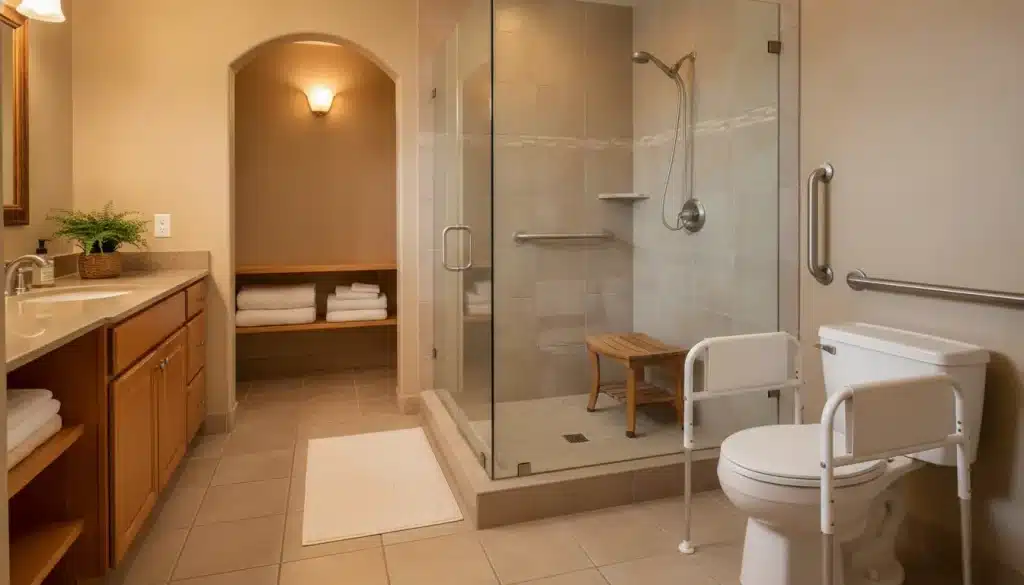
A grab bar near the shower entrance is one of the best upgrades. Another inside the shower helps even more. These need to be properly installed into wall studs or secure backing. Suction grab bars can look convincing, but they shouldn’t be trusted to hold someone’s body weight. They’re more of a visual cue than real support.
A handheld showerhead is another smart choice. It lets someone rinse without twisting, stretching, or stepping around too much. Pair it with a compact shower chair if there’s enough room. It doesn’t have to look clinical. There are simple styles that tuck into a corner when guests don’t need them.
Families arranging support at home aged care often find that the bathroom becomes the first room they need to rethink, because bathing, toileting, and moving around wet surfaces can become harder long before someone asks for help. The same thinking works for visiting grandparents. Make the room easier before it becomes uncomfortable.
Put Things Where People Can Reach Them
A safer bathroom isn’t just about stopping slips. It’s also about reducing awkward movement.
Think about the little things. Bending to reach toilet paper. Stretching for a towel. Twisting to grab shampoo. None of that seems like much until someone has stiff knees, poor balance, shoulder pain, or weaker eyesight.
Keep towels at waist height. Place extra toilet paper where it can be seen without opening three cabinet doors. Put soap, tissues, and basic toiletries on the vanity or in an open basket. Easy wins.
Pump bottles are better than bar soap for guests. Bar soap slips, drops, and somehow always lands exactly where someone might step on it. A pump bottle by the sink and body wash in the shower keeps things simpler.
Contrast helps too. White towels on white tile look clean in a magazine, but they can disappear for someone with reduced vision. A warm taupe towel against a pale wall, a darker bath mat on light tile, or a wooden stool beside a white tub can make the space easier to read. It still feels cozy. Just clearer.
Clear the Clutter
Guest bathrooms love clutter. A candle here. A tiny plant there. A jar of shells. A tray. A cute sign about soaking away troubles, as if anyone has time for that when the family is arriving in ten minutes.
Some decorations are fine, but keep the main surfaces open. Older guests may need space for glasses, medication, dentures, hearing aids, moisturizer, or their own toiletries. A crowded vanity makes everything harder.
Leave out the essentials. Hand soap. A clean towel. A cup. Maybe one small vase or a bit of greenery if there’s space. That’s enough.
The area around the toilet should stay open too. Baskets, bins, stools, and freestanding shelves can narrow the room. They also become things people bump into or reach for when they need balance. And no, a wobbly ladder shelf should not be anyone’s emergency support system.
Practical wins. Every time.
Check the Toilet Setup
The toilet area deserves attention because sitting and standing can be difficult for older guests. A standard toilet may sit too low, especially for someone with knee, hip, or back pain.
A raised toilet seat can help during a short visit and usually doesn’t require a permanent change. A toilet safety frame can also give extra support. It may not be the prettiest thing in the world, but comfort beats pretending everything is fine.
A grab bar beside the toilet is even better if the wall layout allows it. Again, proper installation matters. This is not the place for guesswork.
Also check the toilet paper holder. Is it too low? Too far behind the toilet? Does someone have to twist like they’re doing a yoga pose to reach it? Move it if needed. Small changes can feel surprisingly thoughtful.
If the bathroom has plumbing issues, fix them before guests arrive. A loose toilet, slow drain, dripping tap, or weak shower pressure can turn a visit into a hassle. In Victoria, homeowners preparing an older property for family stays may call licensed plumbers Melbourne locals rely on to check aging fixtures, improve drainage, or make sure bathroom plumbing is safe and working properly.
Make Storage Simple
Storage should help guests, not trip them.
Wall shelves can work well when they don’t stick out into the walkway. A slim cabinet can be useful if it feels sturdy and leaves enough room to move. Open baskets are great for towels and spare supplies, as long as they sit somewhere sensible.
Avoid lightweight furniture that rocks or shifts. If someone reaches for it by instinct, it should not wobble. That’s the rule.
Labels can help too. “Clean towels,” “extra soap,” and “first aid” may sound a little organized, but guests appreciate not having to open every drawer. Especially in someone else’s house. Nobody wants to accidentally find the weird backstock of half-used lotions.
Keep It Warm, Not Medical
A safe guest bathroom doesn’t have to feel cold or sterile. That’s the sweet spot.
Choose warm towels, natural textures, simple hooks, woven baskets, and a little greenery. Add a wooden stool if there’s space. Use soft lighting. Pick grab bars in finishes that match the faucet or towel rings so they look intentional, not like an afterthought.
The best guest bathrooms feel calm. They let people move easily, find what they need, and keep their dignity without making a big fuss about safety. That’s real hospitality. Quiet. Thoughtful. Ready before anyone has to ask.