I have always been the kind of person who runs out of black paint at the worst possible moment.
That one frustrating gap pushed me to figure out how to make black paint from scratch, and it genuinely changed the way I think about color.
Knowing how to make black paint comes in handy on a canvas, a DIY project, or a craft piece at home.
If you have ever wondered what colors make black, you are in the right place.
So the next time you need black, you will know exactly how to mix it yourself without getting stuck.
The Color BLACK
Black paint is not just one flat color.
There is a difference between pure black and the dark shades that look close to black but lean slightly warm, cool, or muted depending on what pigments were used to create them.
Pure black, like carbon black or ivory black, is a concentrated single pigment. It gives you a clean, neutral darkness with no visible color bias.
Dark shades that mimic black, on the other hand, tend to carry a subtle undertone.
A mix of dark navy, deep brown, and purple might read as black on paper but show a faint blue or reddish tint under bright light.
In art and design, black does a lot of work. It adds depth, creates contrast, and anchors lighter colors around it.
Painters actually prefer a mixed black over tube black because the subtle undertones feel more alive on the canvas.
How Black is Made in Color Theory
Color theory splits into two types of mixing: subtractive and additive.
Additive mixing is what happens with light. When you combine red, green, and blue light at full intensity, you get white. This is how screens and projectors work.
Subtractive mixing is what happens with paints and pigments.
Each pigment absorbs certain wavelengths of light. When you mix multiple pigments together, more light gets absorbed, and the result moves toward black.
That is why combining colors in paint tends to make the mix darker, not lighter.
The pigments in paint interact based on their chemical properties. Some pigments are more opaque and dominant, which affects how much of each color you need in a mix.
That is why ratios matter more than just throwing three colors together and hoping for the best.
Methods to Make Black Paint (What Colors Make Black)
Before jumping into the methods, it helps to know that black does not come from a single color combination.
The results you get depend heavily on whether you are working with primary colors, secondary colors, or dark pigments and how well those colors interact with each other.
Getting that foundation right makes every method below work better.
1. Mixing Primary Colors
The most common way to make black paint is to mix the three primary colors: red, blue, and yellow. Here is a simple step-by-step process.
Start with equal parts of all three. Mix them thoroughly on a palette.
You will likely get a dark, muddy color that looks close to black but may lean brownish or greenish at first.
To push it toward true black, adjust the ratios.
Adding slightly more blue tends to cool the mix and move it closer to a neutral black. If the mix looks too warm or muddy, a small addition of red or blue can shift it.
A few tips that help in practice:
- Use paints from the same medium (all acrylics or all oils), so they blend cleanly.
- Mix more than you think you need. Getting the same shade again is tricky once you have put the palette away.
- Test the mix on a scrap surface and let it dry before judging the color, since paint often dries slightly darker or lighter than it looks wet.
2. Mixing Complementary Colors
Complementary colors sit directly across from each other on the color wheel.
When you mix them together, they cancel each other out and produce a dark, neutral tone.
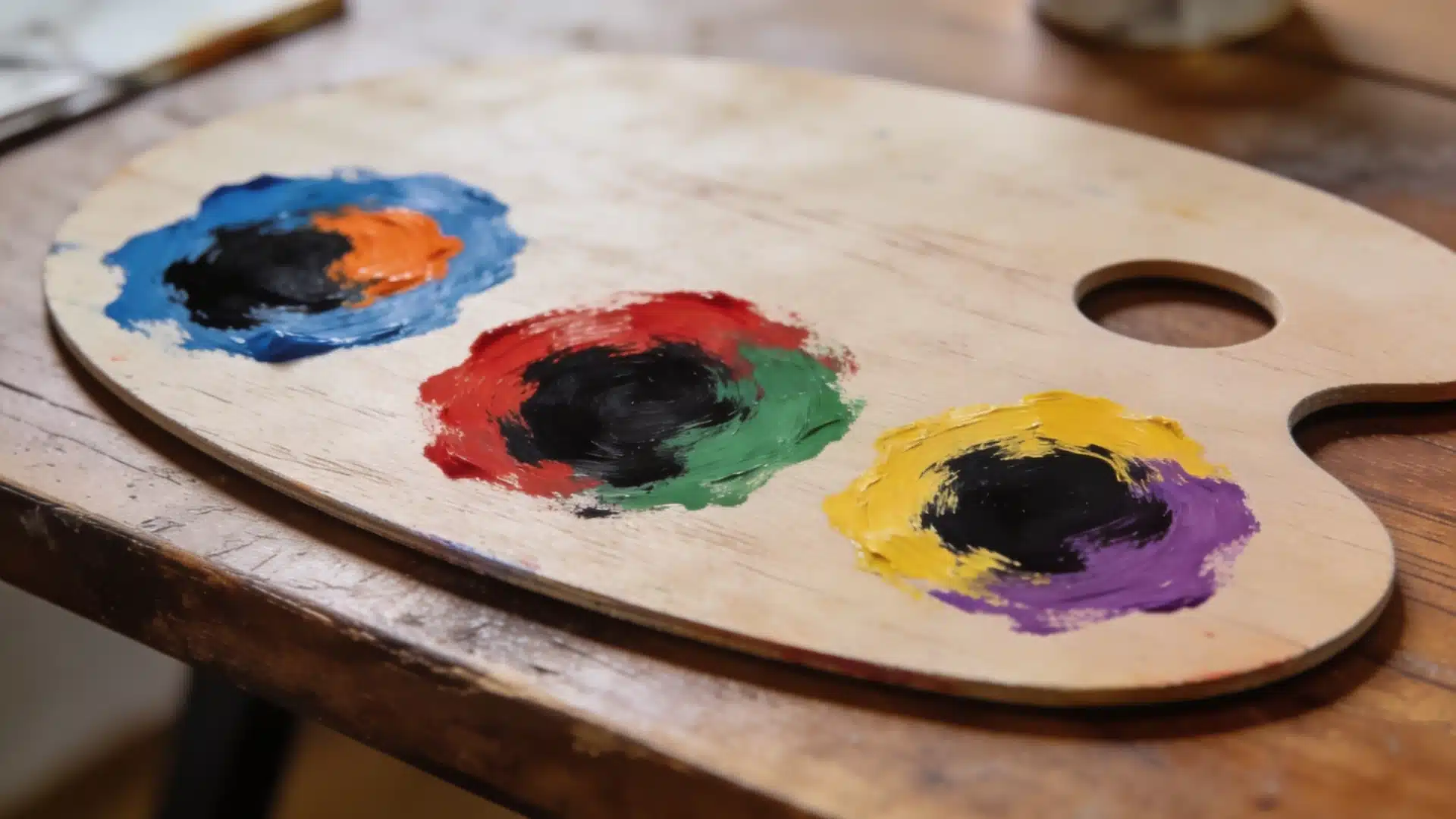
Common complementary pairs for making black:
- Blue and orange
- Red and green
- Yellow and purple
These combinations work because each pair contains all three primary colors between them.
For example, blue is a primary, and orange is made from red and yellow, the other two primaries. Put them together, and you get the full spectrum absorbed, which pushes the result toward black.
The resulting shade will not always be a pure neutral black.
- Blue and orange tend to give a deep, slightly cool darkness.
- Red and green often produce a muted, earthy near-black.
- Yellow and purple can give a dark charcoal tone.
Adjusting the ratio of each color shifts the final result.
3. Using Existing Dark Paints
If you do not want to start from scratch, combining dark paints you already have is a faster option.
Mixing dark brown, navy blue, and deep purple together can produce a rich, layered black that has more depth than plain tube black.
The proportions depend on which colors you are working with, so start with a small amount and add from there.
This method works well for painting furniture, doing large DIY projects, or creating backgrounds where you need a lot of black quickly without measuring out precise primary ratios.
4. Using Natural or DIY Pigments
For those who prefer a more hands-on approach, certain natural materials can be worked into paint to create black.
Charcoal is one of the most accessible options.
Grind artist-grade charcoal into a fine powder and mix it into a clear medium or slightly diluted paint. It gives a soft, matte black that works well for sketching-style paintings.
Graphite powder follows a similar process. It tends to produce a slightly cooler and shinier result compared to charcoal.
Soot, while less common, has been used historically as a pigment. If you go this route, use soot from a controlled source like a candle flame on a clean surface.
Mix it into a medium carefully, and make sure your workspace is well-ventilated.
One thing to keep in mind: DIY pigments can vary in consistency and may not mix as smoothly as commercial paints. Testing on a small scale first saves a lot of frustration.
What Two Colors Make Black?
Most color theory sources will tell you that you need three primaries to get true black. That is accurate.
But certain two-color combinations can get you very close, especially if you are in a pinch or want a specific dark tone.
The idea behind two-color mixing for black is still rooted in complementary pairs.
Each pair effectively contains all three primaries, which is why they can produce near-black results.
Blue and orange create a dark neutral that leans cool.
The blue dominates the mix slightly, which is useful if you want a shadow tone for blue-based subjects.
Red and green produce a muted, earthy near-black.
Depending on the specific reds and greens you use, this can shift from a very dark olive to a deep, warm black. Cadmium red with viridian green is a combination many painters use for this exact reason.
Yellow and purple give a deep gray-black that reads “dark” on paper or canvas.
Lemon yellow with dioxazine purple tends to push further toward black than warmer yellows and violets.
To adjust the tone after mixing, try these approaches:
- Add a touch more of the cooler color in the pair to shift the mix toward neutral.
- A very small amount of blue-black pigment can deepen the result without changing the undertone much.
- Test mixes in thin layers first, since some combinations look different when applied thinly versus thickly.
Creating the Ultimate Black: My Favorite Color Combos
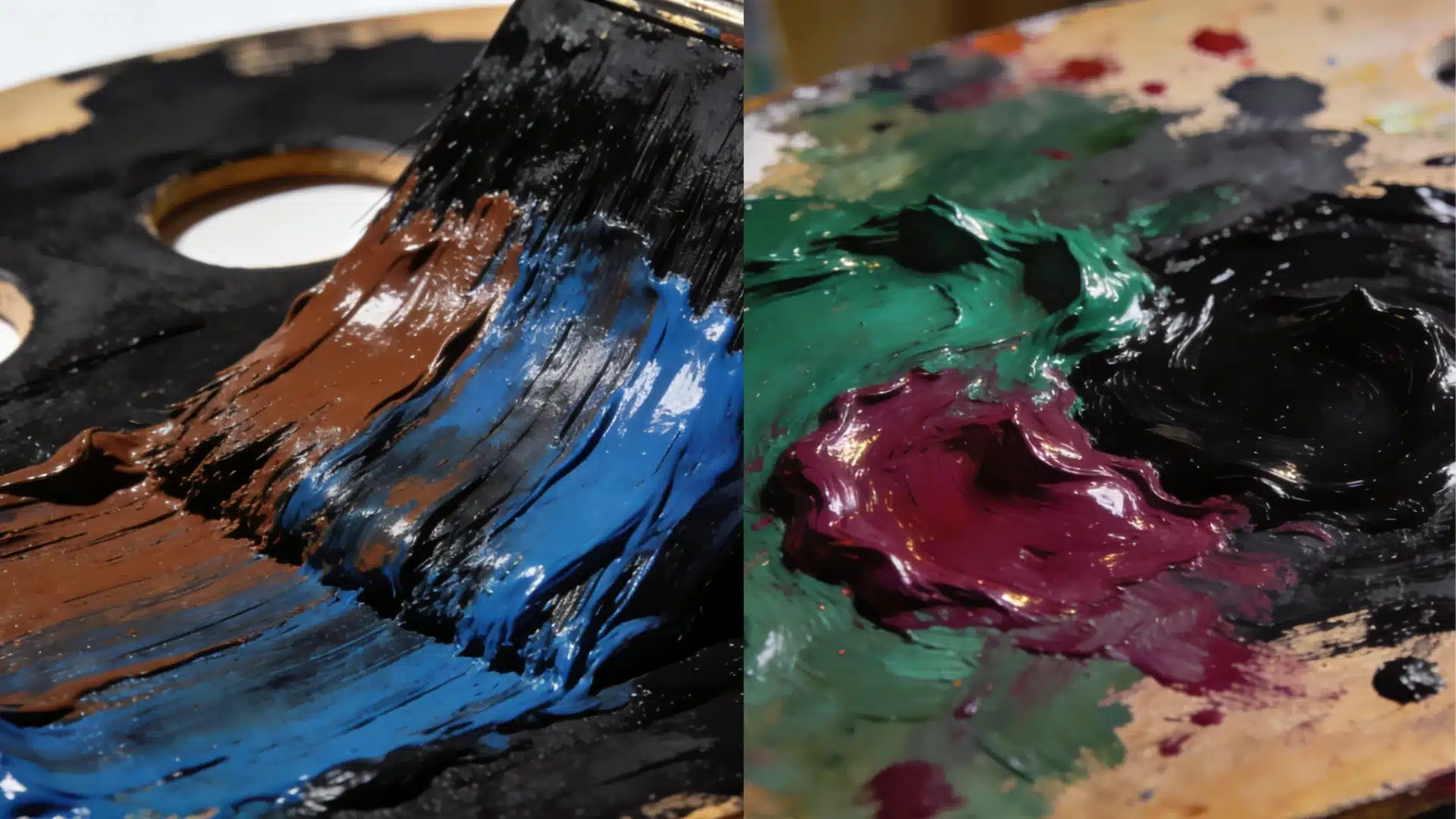
After testing a range of combinations, two mixes stand out for producing the deepest, most versatile black.
The first is burnt umber plus ultramarine blue.
This is probably the most well-known painter’s black.
Burnt umber is a warm, dark brown. Ultramarine is a deep, slightly reddish blue. Together, they produce a black that reads as neutral but has far more visual depth than plain tube black.
Tipping the ratio toward blue cools the mix.
More umber warms it up. It is very easy to adjust, which is why artists come back to it repeatedly.
The second is phthalo green plus alizarin crimson.
This is a rich, deep black that leans slightly warm.
It works well for figure painting and portraiture because the undertone feels more natural against skin tones than a cool blue-based black.
The mix can run toward dark green or dark red if the ratio goes off, so keep a small color test patch nearby while you work.
For quick projects or large DIY applications, combining mars black with a small amount of burnt sienna adds warmth and prevents the flat look that straight tube black sometimes has on large surfaces.
Applications of Homemade Black Paint
DIY Home Decor
For home decor projects, a custom black can be the difference between a piece that looks professionally finished and one that looks flat.
Mixing your black with a slightly warm undertone, for example, can complement wood tones and earthy palettes better than a cool, stark black.
Art Projects and Paintings
Homemade black shows its value most clearly in fine art.
A mixed black lets you modulate depth in shadows without the flatness that tube black can introduce.
Many oil and acrylic painters avoid commercial black entirely because it can deaden surrounding colors when used in blends.
Custom Furniture or Craft Projects
When painting furniture or working on craft projects, a rich homemade black tends to layer better than a single-pigment black straight from the tube.
It also gives you more control when you want to shift from true black to a very dark gray or charcoal by adjusting the ratios.
Conclusion
Knowing how to make black paint puts you in control of every shade of darkness your work needs.
You can use the three primary colors, lean on complementary pairs like blue and orange or red and green, work with dark paints you already have, or try natural pigments for a more hands-on result.
Each method gives a slightly different black, and that variety is genuinely useful depending on your project.
Before you start, make sure your workspace is ventilated if you are working with DIY pigments, and store your mixed paint in a sealed container to keep it from drying out.
Frequently Asked Questions (FAQ’s)
1. What Colors Make Black Paint?
Mixing red, blue, and yellow in equal parts produces black. Complementary pairs like blue and orange or red and green also create near-black shades.
2. Can you Make Black Paint Using only Two Colors?
Yes. Two complementary colors like blue and orange or red and green can produce a near-black tone, though three primaries give a truer result.
3. How Can I Make My Black Paint Darker or Richer?
Add more blue to cool and deepen the mix, or combine burnt umber with ultramarine blue for a richer, deeper black with more visual depth.