Ever moved a sofa three times in the same room and still felt something was off? One spot blocks the walkway to the kitchen. Another leaves a dead corner. A third looks good in photos and feels wrong to sit in. Taping the full footprint on the floor for a day or two usually shows the problem faster than guessing.
That happens a lot. Paint and pillows get picked first, while the sofa is the piece making the room feel off. Once its size and placement are settled, everything else falls into place faster.
Source: FlexiSpot
How to Choose the Right Size and Placement
Start with a tape measure, not a catalog. Measure the wall where the sofa will go, then the full room length and width. Measure doorways, hallways, and any stair turn the boxes have to clear on delivery day. A loveseat that fits the room does not always fit the stairs.
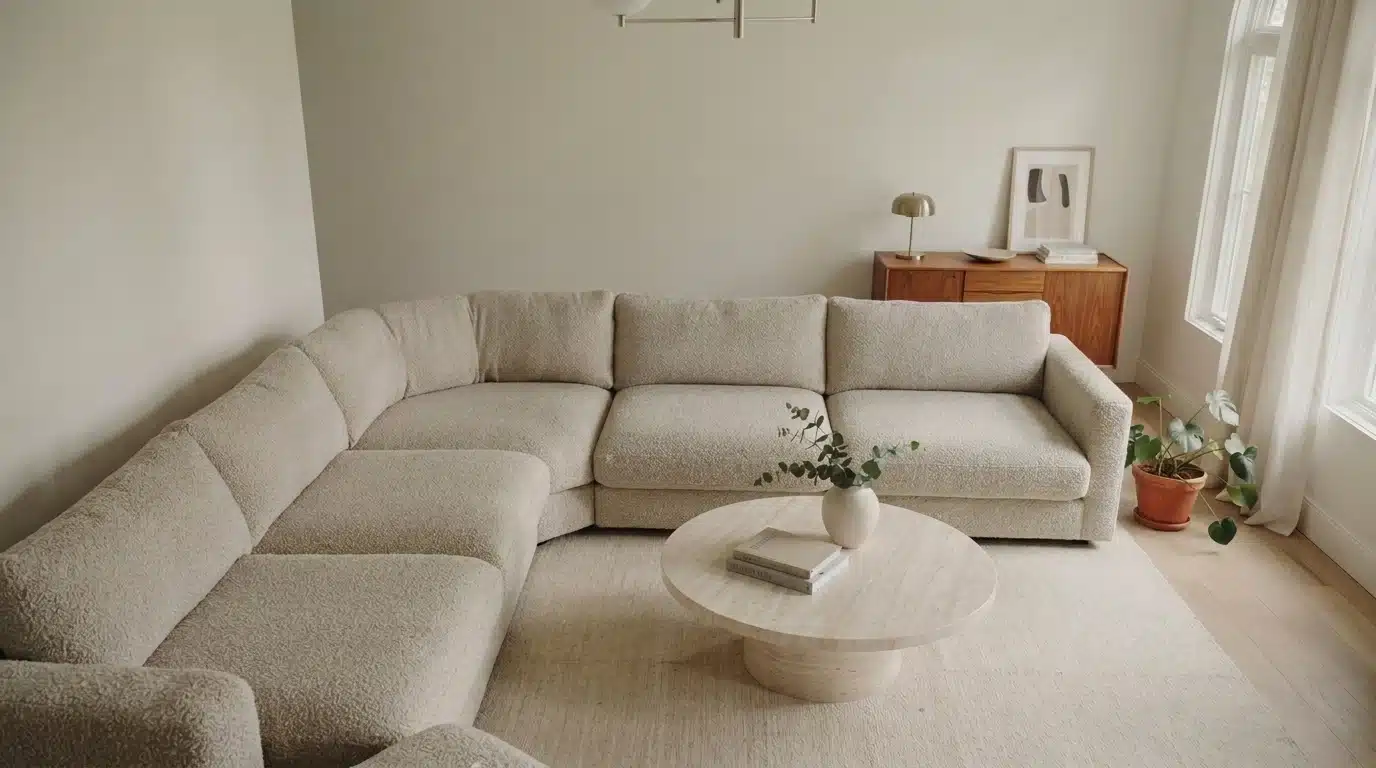
A standard three seat sofa runs about 84 inches wide, with most between 78 and 92. Loveseats run 60 to 72. 4-seater and sectional pieces run 100 to 120 inches per side. Depth is usually 34 to 40 inches. Those numbers help you compare listings without guessing from photos.
Leave room to walk. Keep 30 to 36 inches for main paths. Sectionals need closer to 42 to 48 because they reach further into the room. Between sofa and coffee table, 16 to 18 inches lets feet rest and knees pass. If the rug is new, size it so the front legs of the sofa sit on it. That one change makes a seating area feel joined up.
Placement depends on the room you have. Against one wall saves floor in a small room. Floating in the middle splits an open plan, with the back of the sofa marking where the living area stops and the dining area starts. Facing the TV works for movie nights. Angled toward a fireplace pulls chairs in for talk. Before you buy, lay painter’s tape on the floor in the full footprint and walk around it for a day.
Why Leather Sets the Tone for the Rest of the Room
A modern leather sofa holds its shape in a way fabric sometimes does not. The arms stay crisp. The back stays straight. That shape holds the room together, so the rug and throw can stay soft around it.
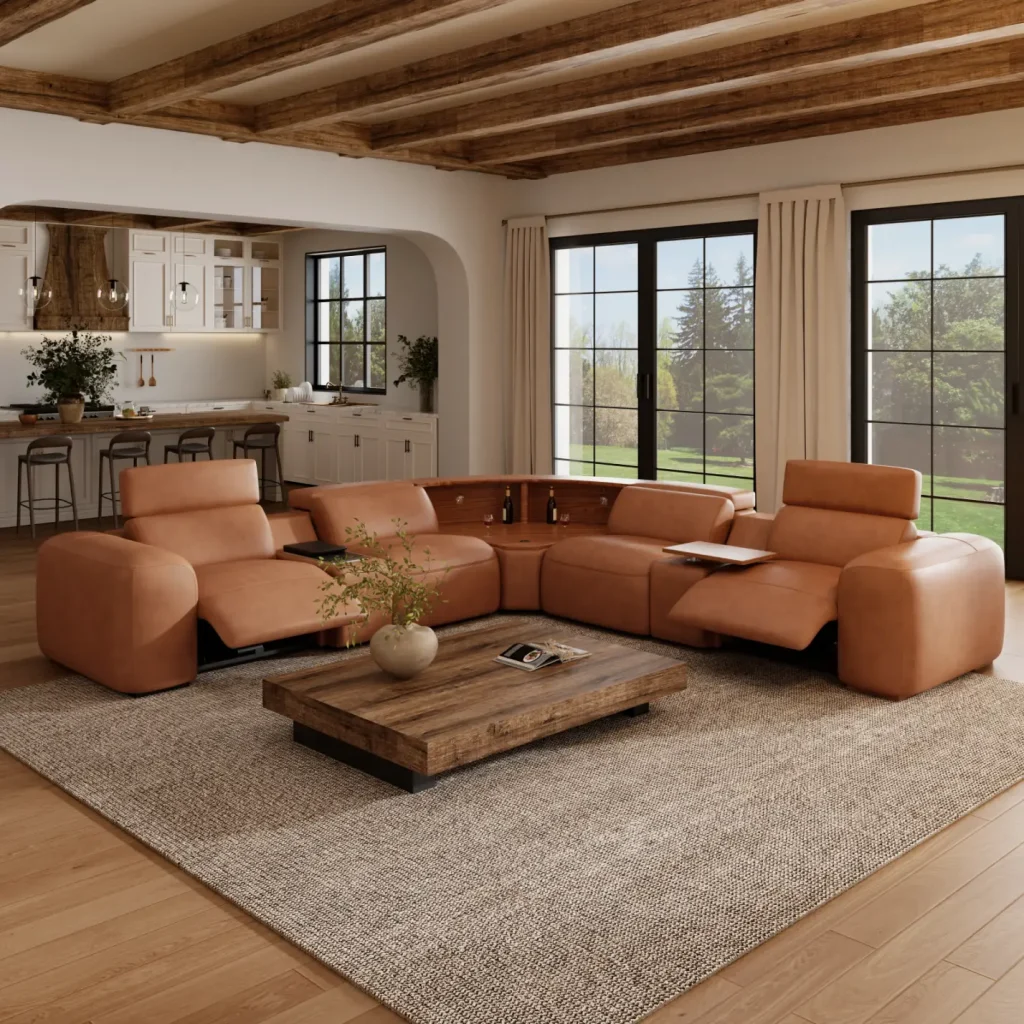
Color does a lot of work here. A cognac or mid brown warms up white, greige, or light gray walls. Black looks sharp but needs texture nearby or it can feel hard. It pairs well with a wool rug underfoot, a wood coffee table, and one linen throw. Stone, oak, and matte black metal all sit well next to leather. Velvet pillows can work too if you keep the palette narrow.
Leather also fits houses that get lived in. Crumbs wipe off. Pet hair lifts fast. Spills blot up if caught early. It shows scratches more than a tight weave, and sun will lighten one arm if that arm sits in a window all afternoon. Rotate the cushions when possible and keep the piece out of direct sun for long stretches. The surface picks up a little sheen with use.
If you are choosing between leather grades, top grain costs more and holds up better to daily sitting. Bonded or faux options often peel at the edges after a couple of years. High density foam keeps the seat from going soft in the middle. Sit in the middle seat and lean back fully. That tells you how the frame feels under load.

Source: FlexiSpot
What a Smart Setup Adds Without Adding Clutter
Some sofas now carry their own recline, storage, and charging. Whether those help depends on how you use the room.
For movie night, a zero gravity position with an adjustable headrest supports the neck when the show runs long. Zero wall recline matters in smaller rooms because the back moves forward as it tilts, so you do not have to pull the whole piece a foot off the wall.
On weekdays, a table console gives a laptop a place to land. Built in charging keeps phones off the floor. A fridge console or hidden bar storage keeps drinks close when friends come over, which means fewer trips to the kitchen and fewer rings on the wood.

Source: FlexiSpot
FlexiSpot makes a modular leather sectional called the Mova Hova that puts those pieces together. The seats recline with headrest adjustment, and the console options hold a laptop or cold drinks, which removes the need for a separate side table.
Keep only the extras that get touched weekly. If no one works from the sofa, skip the work table and keep the storage.
Finish the Space so It Feels Pulled Together
Once the sofa sits right, turn to the coffee table. Keep it within reach but not tight. Add a floor lamp on one side for reading and a small table on the other for a cup. One overhead, one task light, and one low glow in the evening covers most rooms.
Curtains soften the wall behind or beside the sofa. Hang the rod close to the ceiling so the window reads taller. Art above the sofa looks best when it spans about two thirds of the sofa width. Any wider and it fights the piece. Any smaller and it floats.
Pillows and throws finish it, but few work best. Two pillows with different texture beat five that slide off. One throw folded over one arm is enough.
Final Thoughts
Measure the room, give walkways room to breathe, let the leather set the color story, and keep only the smart features you will use each week. A smart living room sofa works best when it fits the room and gets used every day.