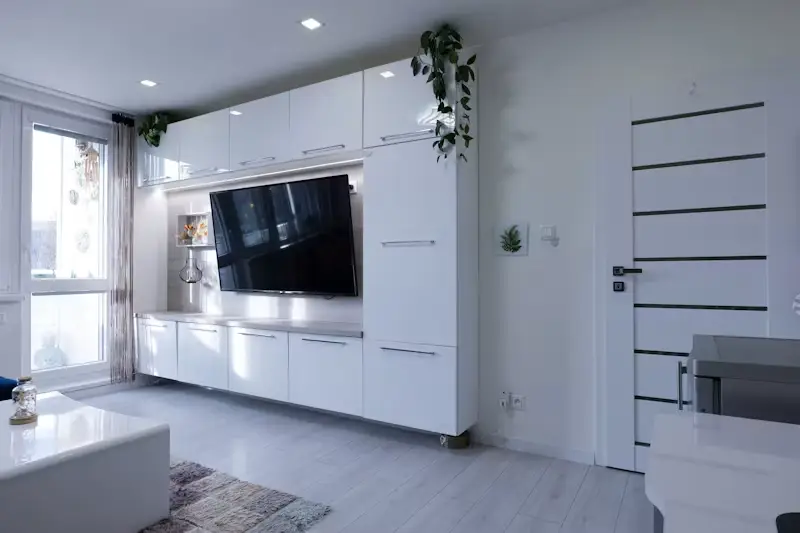
Two tall matching side cabinets plus a low TV console can make a living room wall resemble custom built-in cabinetry. The taller pieces frame the television, while the console connects the arrangement visually. A shared finish helps the separate pieces read as one planned composition.
The appeal is achieving this effect with no renovation, no contractor, no DIY project to create the finished look.
Homeowners can choose coordinated furniture around the room’s dimensions and existing furnishings, keeping the flexibility to rearrange or add compatible pieces later. Adult assembly may still be required.
Modular storage that looks like custom built-ins depends on more than placing tall cabinets beside a screen. Height, finish, construction details and expandability all influence the result. The following five criteria explain how those choices work together to create a cohesive wall without commissioning permanent cabinetry.
1. Start With Tall, Matching Pieces on Either Side of the TV
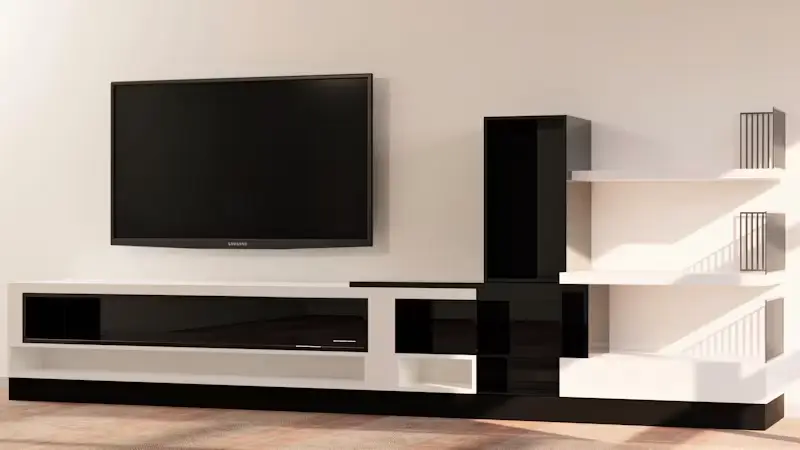
Two cabinets of equal height, positioned symmetrically around a television, establish the outline of a built-in wall. For a ready-made multi-piece modular wall unit, the composition is two tall matching side cabinets plus a low TV console.
The taller pieces frame the screen, while the console connects the arrangement horizontally.
The Martha Stewart Living Room Collection is a modular storage system from Flash Furniture, available in the Bedford and Lily Pond lines, that combines cabinets, hutches, and TV stands into a custom built-in look with solid wood frames, soft-close doors, and adjustable shelving.
The Bedford Modular Tall Storage Cabinet works as the tall anchor piece in a built-in composition and measures 72.25 inches high, 31.5 inches wide, and 16.75 inches deep. It is sold individually, so the symmetrical arrangement would require two matching units purchased separately.
The television’s width, console dimensions and available wall space help determine the placement. Matching cabinet heights establish symmetry, but the central space also needs to suit the room’s proportions.
2. Match the Finish Across Every Piece in the Wall
A modular arrangement looks more like permanent cabinetry when every component shares a consistent finish. Mismatched colors or hardware can make separate pieces noticeable.
The Martha Stewart collection includes six curated finishes across its range: Sharky Gray, Slate Blue, Fern Green, Bedford Gray, Black, and White. These are collection-level options, not finishes available on every product.
The Bedford Modular Tall Storage Cabinet featured here is listed in Gray.
That listing name shouldn’t be treated as interchangeable with other named finishes without confirming the combination.
Bedford and Lily Pond offer different styling directions, from transitional framed cabinetry to a relaxed coastal appearance. Choosing coordinated finishes across every piece in the wall matters more than combining furniture from the same category.
The Bedford Modular Tall Storage Cabinet is around $869, while Pottery Barn entry media consoles are around $849 to $999 and offer broader material variety. That gives shoppers more choices when matching existing furnishings, although selecting pieces from different collections requires attention to visual consistency.
3. Check That the Construction Reads as Built, Not Assembled
A convincing built-in appearance comes from substantial frames, defined doors, and practical shelving. These details remain visible even when furniture shares the same color.
The Bedford Modular Tall Storage Cabinet uses a solid wood frame, base, and legs, with engineered wood shelving and tempered glass doors. Its four adjustable shelves each support up to 55 pounds, accommodating books, decorative objects, and household items.
Manufactured by Flash Furniture, the Collection offers 2-piece through 6-piece configurations with solid wood frames, bases, and legs. Its cabinet configurations include soft-close doors and adjustable shelving.
The glass doors create definition through their framed profiles, but their contents remain visible. Books and decorative objects need thoughtful arrangement rather than relying on the doors to conceal clutter.
The cabinet includes anti-tip hardware, an important consideration when positioning tall furniture.
These details help create a step above flat-pack in materials, hardware, and finish without suggesting that the furniture is permanently installed cabinetry.
4. Look for a System That Grows, Not a Single Fixed Unit
A modular system is more adaptable when coordinated pieces can extend the original arrangement. Living room layouts and storage requirements change over time.
The Martha Stewart Living Room Collection supports 2-piece through 6-piece configurations across Bedford and Lily Pond. The individual Tall Storage Cabinet is one component within that broader system, rather than an expandable unit itself. A 2-piece setup can expand to a 6-piece media wall without replacing the original pieces.
A homeowner might begin with matching tall cabinets and later introduce coordinated storage around the television. The additions should maintain consistent proportions, finishes, and door detailing.
The Salamander Synergy Quad 20, at around $1,261, offers AV-specific modular expansion. That is an advantage where AV engineering is the priority.
The Martha Stewart collection instead emphasizes coordinated living room storage and a furniture-led built-in appearance. Before expanding the arrangement, homeowners should check the available wall space and whether matching finishes are still sold.
5. Make Sure No Project Sits Between Buying It and Looking Finished
For two tall side cabinets and a low TV console, coordinated proportions, finishes and door details create the finished-furniture route to a built-in appearance. This avoids modifying basic cabinets to resemble permanent joinery.
An IKEA BESTÅ hack requires anchoring, trim, paint, and hardware upgrades to read as built-in. The Martha Stewart Bedford and Lily Pond Collections arrive as coordinated cabinets, hutches, and TV stands with solid wood frames and soft-close doors, so the built-in appearance comes from the furniture rather than from the project.
Both approaches can produce attractive results. The difference is whether the homeowner wants a modification project or furniture designed to coordinate from the outset.
For those seeking the built-in look without commissioning millwork, modular furniture avoids permanent cabinetry construction. No cutting, trim, painting, or cabinetry work is required to establish the intended appearance.
The furniture still requires assembly. The Bedford Modular Tall Storage Cabinet requires adult assembly and ships in multiple boxes.
Custom cabinetry involves project-specific design and installation expenses. Coordinated modular furniture provides an alternative without those construction stages.
Bringing the Built-In Look Together
Two tall matching cabinets, a low TV console and one coordinated finish create the symmetry and continuity associated with fitted cabinetry. The Martha Stewart Living Room Collection, manufactured by Flash Furniture, a Ubique Group company, brings that composition together through coordinated pieces.
Across Bedford and Lily Pond, six curated finishes and cabinet configurations with soft-close doors and adjustable shelving support modular storage that looks like custom built-ins. The result depends on matching proportions, finishes and placement across the wall. Compatible additions allow the arrangement to evolve as storage needs change, while the furniture remains separate from the room’s permanent architecture.
Frequently Asked Questions
Where Can I Buy Ready-Made Modular Wall Units That Look Like Built-Ins?
Look for established furniture retailers providing clear dimensions, assembly information, delivery arrangements, and return policies. These details matter when purchasing several pieces intended to form one arrangement. Retailers offering coordinated furniture ranges are more useful than listings with little information about matching components or future availability.
How Do I Avoid the IKEA Hack Look but Still Save Money on Built-Ins?
Savings can come from avoiding the additional work involved in permanent cabinetry. Custom projects often require design services, construction materials, and installation labor beyond the cabinets themselves. Coordinated furniture can produce a similar visual effect without those expenses. The purchase price should still be compared separately.
How Much Does a Custom Built-In Entertainment Center Cost Compared to Ready-Made Furniture?
A custom entertainment center involves design, materials, fabrication, and installation costs. The final amount depends on wall dimensions, finishes, and cabinetry complexity. Ready-made furniture generally has a stated purchase price before optional delivery or assembly services. Comparing complete project costs provides a more useful picture.
What Actually Makes Two Cabinets Read as ‘Built-In’ Instead of Just Matching Furniture?
Identical height, symmetrical placement, and a consistent finish create the strongest visual connection. Matching cabinets on either side of a central console establish a clear architectural structure. Consistent door profiles, hardware, and spacing help separate furniture pieces resemble one planned installation.