Older homes carry a certain charm that’s hard to replicate, and a lot of that comes down to their walls.
If your house was built before the 1950s, there’s a good chance it’s hiding a plaster and lath system behind every surface.
Cracks appear. Chunks fall off, and suddenly, you’re staring at a wall with no idea where to start, and that is when knowing how to plaster a wall makes all the difference.
If you’re patching small damage or working with gypsum lath from scratch. You’re exactly where you have to be!
What is Plaster and Lath?
It is a traditional wall-building method used in many older homes before drywall became popular.
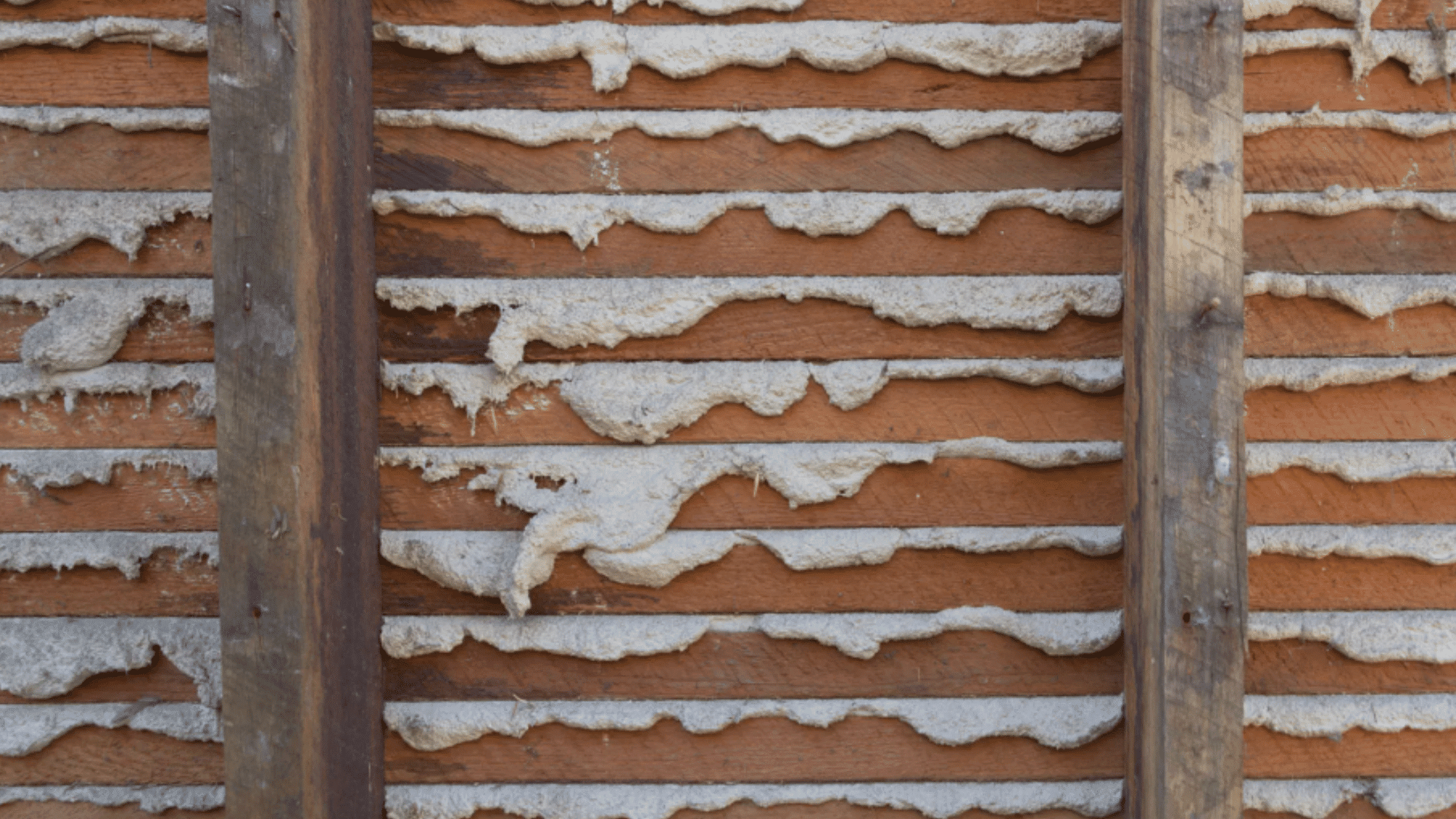
Lath refers to thin wooden strips nailed horizontally across wall studs with small gaps between them.
Wet plaster is applied over the strips, creating strong plaster keys that hold the wall firmly in place. These keys hold the plaster firmly in place and create a strong, durable wall surface.
These walls are known for their solid feel, good sound insulation, and classic appearance. Many historic homes in the United States still have their original walls.
The History of Plaster and Lath Walls
Source: Britannica
Plaster construction has been used for thousands of years in ancient Egypt, Greece, and Rome. European builders later brought these methods to America, where they became common in homes.
Before drywall became common, plaster walls were widely used in American homes because they provided durability, sound control, and a traditional finish.
Over time, drywall and gypsum board replaced traditional plaster systems.
These newer materials were faster, cheaper, and easier to install, making them the standard choice for modern homes and buildings.
What Does Gypsum Lath Mean?
It is also called a rock lath or button board, and was a transitional product developed in the 1920s and 1930s.
It replaced the hand-nailed wooden strips with small panels of gypsum board, typically 16×48 inches, designed to be plastered over.
Common types included rock lath, button board, and blueboard.
Gypsum lath improved wall consistency and simplified plaster application, making construction more practical for large building projects.
In addition, it improved fire resistance and provided stronger wall performance, making it a popular choice before modern drywall became widely used in homes.
Ways to Repair Plaster and Lath Walls
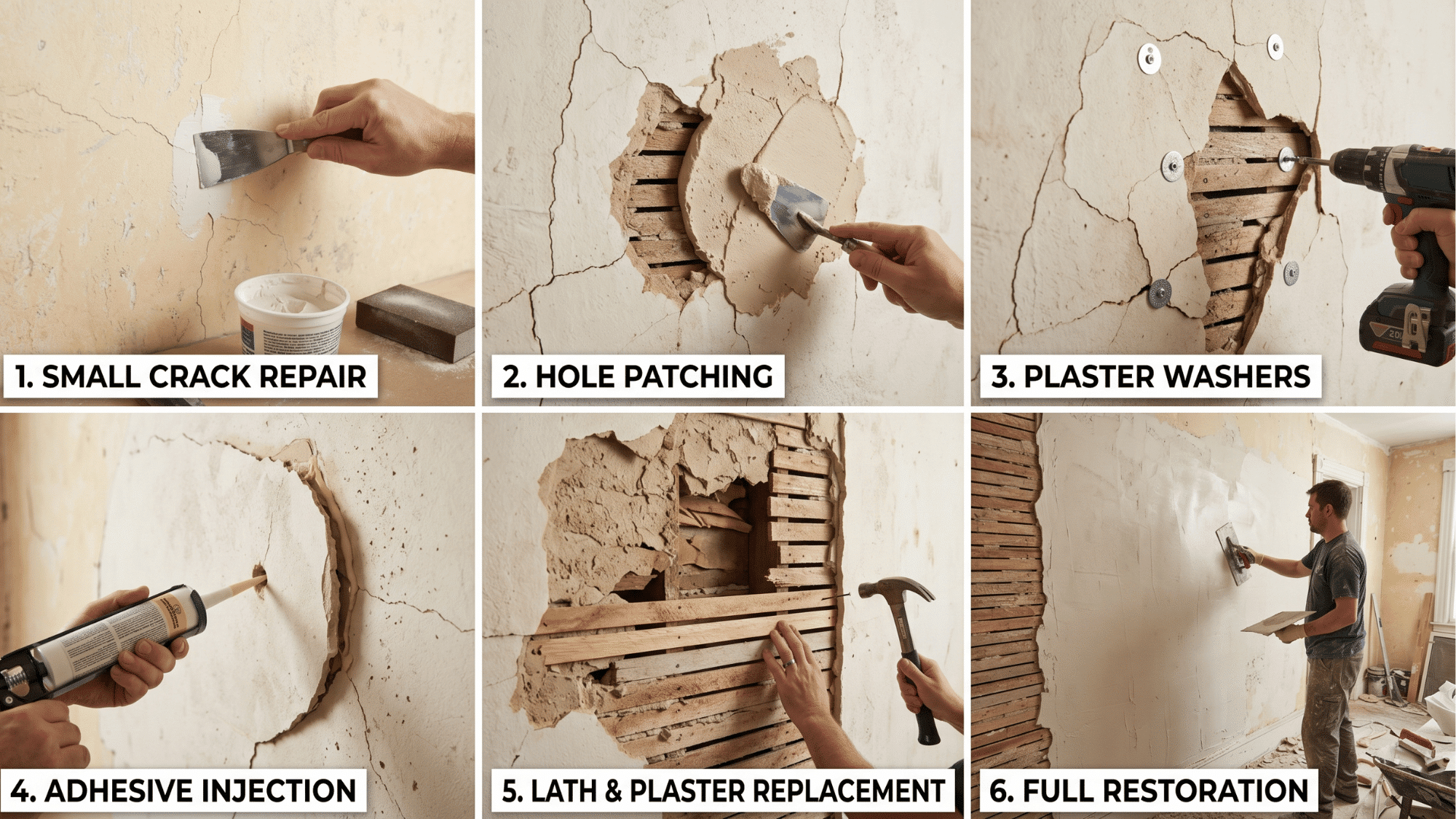
Walls can develop cracks, loose sections, or water damage over time, especially in older homes. The repair methods here explain how to fix common plaster wall problems and restore a smooth surface.
1. Joint Compound Repair: Small cracks in plaster walls can be filled with joint compound to create a smooth and even surface.
2. Plaster Patching: Damaged areas can be repaired by applying fresh plaster over cracks or holes after cleaning the surface.
3. Using Plaster Washers: Plaster washers help secure loose plaster back to the wood lath and prevent further movement.
4. Adhesive Repair Systems: Special plaster adhesives can reattach separated plaster and strengthen weak wall sections.
5. Replacing Severely Damaged Areas: Walls with major cracks, water damage, or broken lath may require partial replacement.
6. Full Wall Restoration: In some older homes, complete wall restoration is necessary when the plaster can no longer be safely repaired.
Should You Replace or Preserve Plaster and Lath?
The choice between preserving plaster walls or replacing them with drywall depends on the wall condition and renovation needs.
| Factor | Preserve Plaster and Lath | Replace With Drywall |
|---|---|---|
| Historic Home Value | Keeps the original character and value of older homes | May reduce historic authenticity |
| Cost Considerations | Repairs can be expensive, but they preserve existing walls | Often cheaper and faster for large projects |
| Energy Efficiency | Thick plaster provides good insulation and sound control | Modern drywall can improve insulation with updated materials |
| Renovation Goals | Best for restoration and maintaining traditional style | Better for modern layouts and major remodeling |
| Soundproofing Benefits | Dense plaster walls reduce noise effectively | Drywall offers less natural sound insulation |
| Wall Condition | Works well if the damage is minor and repairable | Recommended for severe damage or unstable plaster |
Modern Alternatives to Traditional Lath and Plaster
Modern wall systems are faster to install and easier to maintain than traditional ones. The options below explain some popular alternatives used in homes and buildings today.
- Veneer Plaster Systems: Provide a smooth plaster finish with less labor than traditional methods.
- Blueboard: Designed specifically to support veneer plaster applications.
- Modern Drywall Textures: Textured drywall finishes can mimic the look of traditional plaster while offering easier installation.
- Hybrid Plaster Systems: Combine drywall and plaster for improved durability and appearance.
- Faster Installation Methods: Modern alternatives reduce labor time and offer easier repairs compared to traditional walls.
Final Thoughts
Lath and plaster walls have been a core part of home construction for centuries, and understanding them makes all the difference when repairs are needed.
Knowing how to plaster a wall the right way means fewer callbacks, cleaner finishes, and repairs that actually hold up over time.
At the end, a well-repaired plaster wall is just as strong, sometimes stronger than anything built to replace it.
Frequently Asked Questions
Do Lath and Plaster Walls Contain Asbestos?
Lath and plaster walls may contain asbestos, but it is less common than in older flooring or insulation materials.
Is Lath and Plaster Dust Dangerous to Breathe?
Yes, plaster dust can irritate the lungs and may cause breathing problems with long-term exposure.
Which Type of Plastering Is Best?
Cement plastering is one of the best options because it is strong, durable, and moisture-resistant.