A bathroom remodel does not always need a full layout change to make a noticeable difference. In many homes, the vanity is the feature that has the biggest impact on storage, daily routines, and overall appearance. Whether you are updating a guest bath or redesigning a primary bathroom, choosing the right bathroom vanity can help the space feel more organized and easier to use every day.
Many homeowners are also moving toward a freestanding bathroom vanity because it offers flexibility in both design and installation. It works well in traditional homes, modern interiors, and even smaller bathrooms where storage matters just as much as style. Instead of focusing only on trends, it is more useful to look at how the vanity fits your household needs, cleaning habits, and long-term maintenance expectations.
This guide covers practical bathroom vanity ideas that balance function, appearance, and durability while keeping the space comfortable for everyday living.
Why the Vanity Matters More Than Most Fixtures
When people think about bathroom upgrades, they often focus on tile, lighting, or shower features first. Those elements matter, but the vanity is usually the most frequently used part of the room. It affects how much storage you have, how easy it is to clean the space, and how comfortable your morning routine feels.
A well-designed vanity also helps reduce clutter. Drawers for toiletries, cabinets for towels, and organized countertop space all make the room easier to manage. According to remodeling industry reports from the National Kitchen and Bath Association, storage and functionality remain two of the top priorities for homeowners planning bathroom updates.
The vanity also has a strong visual impact because it sits at eye level and takes up a large portion of the room. That is why the size, finish, and shape should fit the bathroom rather than overpower it.
Choosing the Right Vanity Size
One of the most common mistakes in bathroom remodeling is selecting a vanity that looks good online but feels too large or too small once installed. Measurements should always come first.
For smaller bathrooms, a 24-inch to 36-inch vanity often provides enough storage without limiting walking space. In larger bathrooms, double-sink vanities between 60 and 72 inches are popular because they allow two people to use the area comfortably at the same time.
Depth also matters. Standard vanity depth is usually around 21 inches, but slimmer options are available for narrow bathrooms or powder rooms. Leaving enough clearance for doors and drawers to open comfortably makes daily use much easier.
While a freestanding vanity rests on the floor and does not require the heavy wall reinforcement needed for floating units, many models still include anti-tip brackets for safety (especially in homes with children or seismic risk). That said, installation is generally more straightforward than fully custom built‑in cabinetry, and future replacement is simpler if design preferences change.
Freestanding Bathroom Vanities Continue to Grow in Popularity
Homeowners are increasingly choosing freestanding designs because they combine storage with furniture-inspired styling. Instead of looking overly built-in or bulky, these vanities often feel cleaner and more balanced within the room.
Another advantage is versatility. Freestanding models work well with many design styles, including farmhouse, transitional, modern, and classic American interiors. This makes them easier to incorporate during future updates without needing a complete remodel.
In practical terms, many people also prefer the easier installation process. Since plumbing access tends to be more straightforward, contractors can often complete the project faster compared to fully custom cabinetry.
Cleaning is another reason these vanities appeal to homeowners. Models with raised legs provide easier floor access, while full-base designs (with a solid toe-kick) offer a more substantial storage footprint.
Storage Should Match Real Daily Habits
Bathroom storage is most effective when it supports how the space is actually used. Deep drawers may look appealing, but they are not always the best option for smaller items like skincare products, razors, or hair accessories.
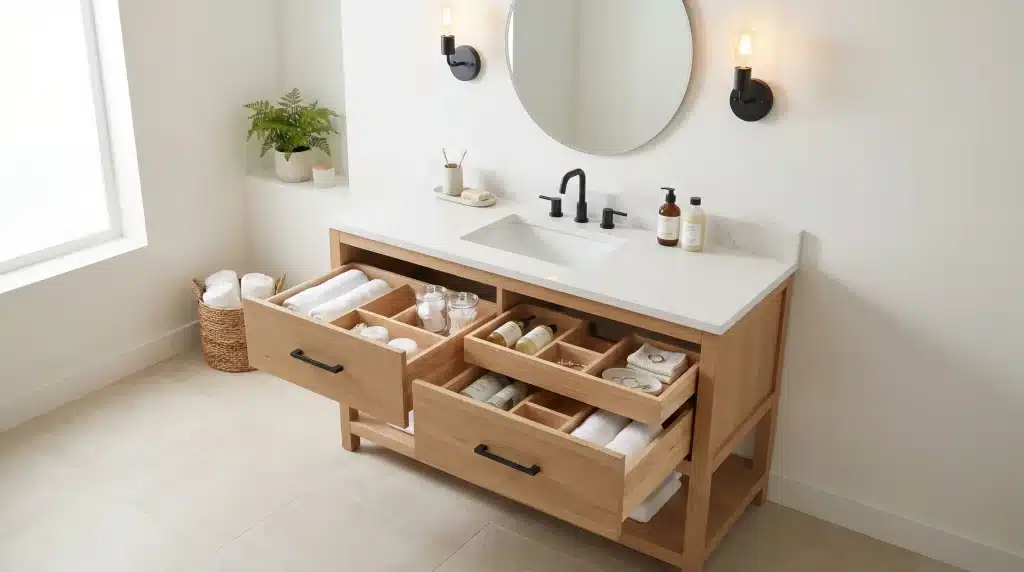
Many homeowners now prefer drawer organizers and divided compartments because they reduce clutter and make items easier to find quickly during busy mornings.
Before choosing a vanity, it helps to think about a few practical questions:
- How many people use the bathroom daily?
- Do you need space for hair tools or electric toothbrushes?
- Will towels be stored inside the vanity?
- Is countertop space important for your routine?
The answers often determine whether open shelving, deep drawers, or cabinet storage will work best.
A family bathroom may benefit from larger drawers and durable surfaces, while a guest bathroom can prioritize compact design and appearance.
Countertop Materials That Hold Up Over Time
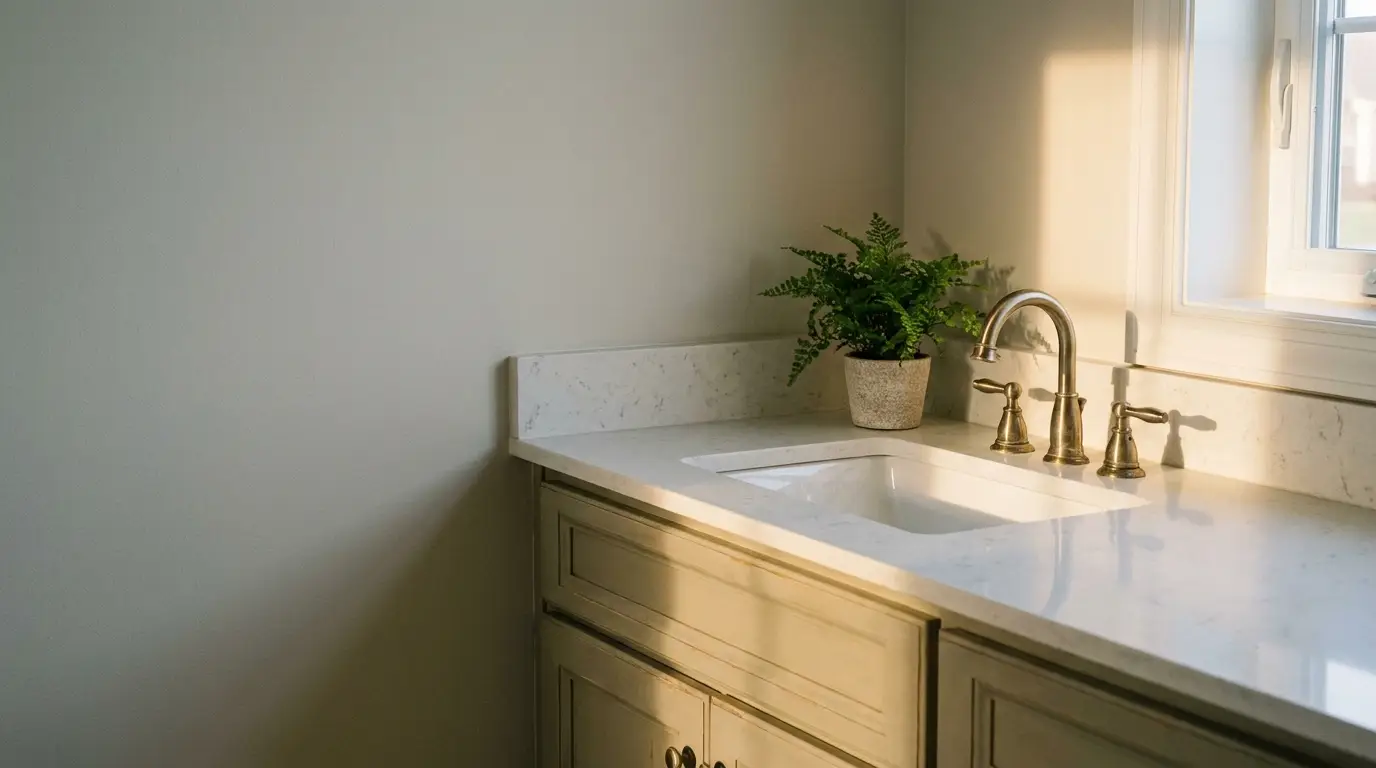
The countertop is another important part of the vanity because bathrooms deal with moisture, heat, and frequent cleaning. Durability matters just as much as appearance.
Quartz remains one of the most popular choices because it is non-porous, relatively low maintenance, and resistant to staining. It also comes in a wide range of colors that fit both modern and traditional homes.
Natural stone options like marble are visually appealing, but they generally require more maintenance and sealing over time. Solid surface materials are another practical option because they are easy to clean and often budget-friendly.
For households with children or heavy daily use, low-maintenance materials usually make the most sense long term.
Sink Styles Can Change Functionality
Sink selection affects both appearance and usability. Undermount sinks remain popular because they create a smoother countertop surface that is easier to wipe clean. Vessel sinks offer a more decorative appearance, but they can require extra cleaning around the base.
Integrated sinks are also becoming more common in modern bathrooms because they minimize seams where dirt and water buildup can occur.
Single-sink vanities are often enough for smaller homes or guest bathrooms. However, double sinks continue to be highly requested in primary bathrooms where multiple people get ready at the same time.
The right sink choice depends less on trends and more on how the bathroom functions every day.
Lighting and Mirrors Should Work Together
Even the best vanity setup can feel incomplete if lighting is poorly planned. Bathroom lighting should support practical tasks like shaving, skincare, and makeup application without creating harsh shadows.
Wall sconces placed beside the mirror usually provide more balanced lighting than a single overhead fixture. LED lighting is commonly preferred because it is energy efficient and available in color temperatures that feel more natural indoors.
Mirror size also matters. A mirror that is too small can make the vanity feel disconnected from the rest of the room. Larger mirrors often help bathrooms feel brighter and more open, especially in compact spaces.
When planning a vanity upgrade, lighting should be considered early instead of being treated as a final decorative detail.
Finishes That Stay Relevant Longer
Trendy finishes can look attractive initially, but timeless options tend to hold up better over the years. White, natural wood, soft gray, and black vanities continue to perform well because they work with a wide range of tile and paint colors.
Matte finishes are especially popular because they reduce visible fingerprints and water spots. Wood tones also continue to gain popularity as homeowners look for warmer, more natural-looking interiors.
Hardware matters too. Simple brushed nickel, matte black, and brass finishes remain versatile without feeling overly decorative.
Choosing finishes that balance personality with long-term flexibility usually leads to better remodeling satisfaction.
Durability Matters in Busy Households
Bathrooms experience constant humidity and frequent temperature changes. Because of this, vanity construction quality should never be overlooked.
Solid wood and plywood construction are generally more durable than particleboard alternatives. Soft-close drawers and doors can also improve longevity because they reduce wear from repeated use.
Water-resistant finishes are especially important around sink areas where splashing happens daily. Even small details like drawer glides and cabinet hinges can affect how well the vanity performs after several years.
A quality bathroom vanity should not only look good on installation day but continue functioning properly through years of regular use.
Creating a Balanced Bathroom Layout
The vanity should fit naturally within the room rather than dominate it. Good spacing helps bathrooms feel more comfortable and easier to navigate.
Leaving enough room between the vanity and shower, toilet, or tub improves movement throughout the space. In smaller bathrooms, wall color and lighting can also help the vanity blend more naturally into the overall design.
Floating vanities are often recommended for very compact bathrooms because they create more visible floor space. However, many homeowners still prefer a freestanding bathroom vanity because it offers a stronger furniture-like appearance along with additional storage options.
The best layout balances comfort, storage, and visual proportion without overcrowding the room.
Final Thoughts
Updating a bathroom does not always require major structural changes to improve functionality and appearance. In many cases, selecting the right vanity creates the biggest improvement in both organization and daily comfort.
A thoughtfully chosen bathroom vanity can support better storage, easier cleaning, and a more efficient routine. Meanwhile, a freestanding bathroom vanity offers design flexibility that works across many home styles and bathroom sizes.
The most successful bathroom updates focus on practical decisions that continue to work well years after installation. Durable materials, appropriate sizing, smart storage, and timeless finishes usually deliver better long-term results than short-lived trends.