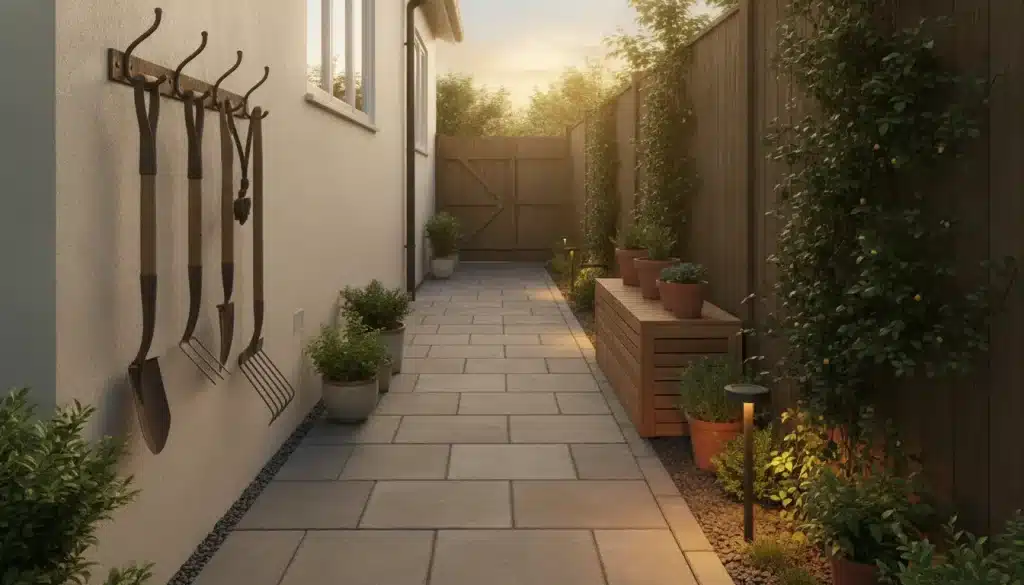
Side yards and utility areas don’t usually get the same attention as patios, porches, or garden beds, but they do plenty of work behind the scenes. They hold trash bins, garden tools, hoses, gates, meters, storage boxes, and the walkways people use when they’re carrying groceries, pulling weeds, or coming in from the driveway.
When these spaces are left alone for too long, they can start to feel cluttered, awkward, or unfinished. The good news is that they don’t need a major makeover to work better. A few thoughtful changes can make a narrow side yard or utility corner feel cleaner, safer, and much easier to use while still blending in with the rest of the home.
Start With the Spaces You Usually Ignore
The best place to begin is with the areas you pass by without giving them much thought. That narrow strip beside the house, the spot near the bins, the area around the hose, or the walkway from the driveway to the back gate may not feel like part of your home’s design, but it affects how smoothly the outside of your home works.
Walk through the space as if you were using it on a busy day. Notice where things pile up, where the path feels cramped, where the ground gets muddy, and where the area feels dark or awkward to use comfortably. Those small frustrations are usually clues that the space needs a clearer purpose.
Once you know what the area needs to do, the right fixes become easier to spot. A side yard used for trash bins needs a different setup than one used for garden tools, pet access, or a shortcut to the garage. Giving the space one main job helps it feel less like a leftover corner and more like a useful part of the home.
Clear the Path First
A side yard or utility area works best when people can move through it easily. Before adding storage, lighting, or decorative touches, clear anything that gets in the way. Loose pots, tangled hoses, leaning tools, and half-used bags of soil can make a narrow space feel even tighter.
Start with the things that don’t belong there at all. Broken planters, old outdoor toys, empty containers, and leftover project materials tend to linger in utility areas because they are out of sight. Removing them gives the space an instant reset and shows what actually needs to be organized.
Then take a look at the walking surface. Gravel, stepping stones, pavers, or even a simple swept concrete path can make the area easier to use during wet weather or busy routines. The goal is not to make the space fancy. It should feel safe, open, and easy to pass through without having to dodge clutter every time.
Add Storage That Does Not Take Over
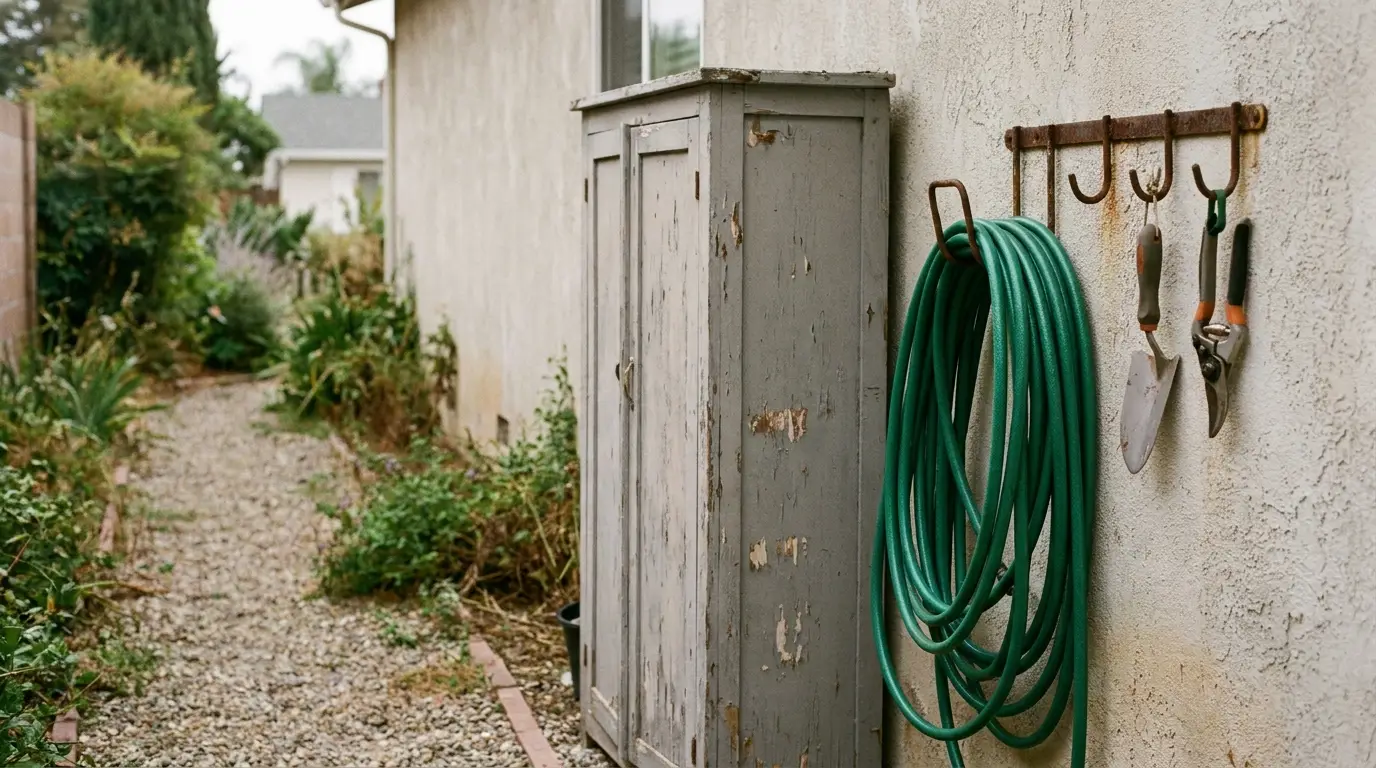
Storage in a side yard should solve problems, not create new ones. A bulky cabinet or oversized shed can make a narrow space feel cramped, so start with the smallest fix that gives loose items a proper place. Wall hooks, hose reels, slim outdoor cabinets, and covered storage boxes can keep tools, gloves, soil, and seasonal supplies close by without blocking the walkway.
The best systems are easy to use on an ordinary day. If you have to move three things just to reach the pruning shears, the clutter will come back quickly. Keep everyday items at arm’s height, group similar supplies together, and leave enough room for bins, gates, and doors to open fully.
Good storage also makes the area feel calmer. When tools, cords, and garden supplies have a consistent place to land, a side yard becomes easier to clean, easier to use, and less likely to turn into the spot where forgotten outdoor items pile up.
Improve Lighting and Access
A utility area should be easy to use in the early morning, after sunset, or when your hands are full. If the space feels dark or awkward, people will rush through it rather than use it well.
Start with lighting where people actually move. A motion light by the gate, a small path light near uneven ground, or a fixture beside a side door can make the area feel safer and more intentional. Good lighting also helps with everyday tasks, like taking out the bins, finding a garden tool, or walking from the driveway to the backyard.
Access matters just as much as visibility. Gates should open without scraping the ground, doors should have enough clearance, and the walkway should stay wide enough for bins, tools, or bags of soil. The same balance that makes patio upgrades look pretty and feel usablecan help a side yard or utility path feel less like a leftover strip and more like a practical part of the home.
Consider the Bigger Features Around the Space
Some utility areas are shaped by bigger features than hooks, bins, or pathway lighting. A side yard near a driveway or garage may rely on clear access, sturdy exterior doors, an easy-to-use gate, and materials that hold up through regular use. These larger details can turn the space from a neglected strip beside the house into a convenient passage.
Climate and setting can change what a utility area needs. In parts of Florida, shade and airflow may matter more around narrow side paths, while Michigan homeowners might focus on winter moisture, slush, and surfaces that are easy to keep clear. Pennsylvania often brings a mix of seasonal rain, cold weather, older exterior styles, and daily driveway use. Because changing seasons, storage needs, and daily traffic all affect the route between the driveway, garage, and back entry, the residential garage door for sale Carlisle PAhomeowners choose can help create smoother access, better protection for stored items, and a more finished connection between the utility path and the rest of the home. In drier parts of Arizona or Nevada, the same kind of planning may focus more on sun exposure, dust, and keeping hard surfaces comfortable to use.
Big features around a utility space should work with the home, not against it. A garage door, side gate, fence panel, or service door does not need to be fancy, but it should support the way the space is used day after day.
Soften the Area With Simple Finishing Touches
A utility area does not have to stay bare just because it works hard. A few softening details can make the space feel cared for without adding clutter. Gravel, mulch, narrow planters, climbing vines, and a tidy border can all help a side yard look more intentional while keeping the path easy to use.
Plants and ground materials are especially helpful in narrow outdoor spaces because they break up hard surfaces and keep the area from feeling like a service corridor. In spots where rainwater tends to move across the path or collect near the edge, planted areas, swales, and permeable surfaces can soften the space while still supporting everyday function.
Keep the finishing touches simple. One climbing plant, a neat gravel strip, or a few matching containers can do more than a crowded mix of decorations. The space should feel finished, yet still leave room for bins, gates, tools, and everyday movement.
Keep It Useful Without Making It Fussy
A side yard or utility area works best when it is easy to maintain. If every surface needs constant sweeping or every container has to be moved before the bins can roll through, the space will stop feeling helpful.
Choose finishes and systems that can handle real use. A washable mat by the side door, a simple hose reel, sturdy hooks, and plants that do not need constant trimming will usually serve the space better than delicate decor. The area should feel neat and cared for, but it still needs room for muddy shoes, garden tools, trash bins, and quick trips between the driveway and the house.
The best utility spaces quietly make daily life easier. When the path is clear, the lighting works, storage has a purpose, and the larger features support the way the home is used, even a narrow side yard can feel like a finished part of the property.