he global home furnishings sector has undergone significant change in recent years, shaped by evolving consumer preferences, economic pressures, and the continued growth of e-commerce. Within this landscape, Terrys Fabrics, a UK-based family business established in 1970, represents a segment of the market focused on affordability, product variety, and service accessibility.
Operating from its warehouse in Stoke-on-Trent while serving customers nationwide through its online store, the company reflects broader international trends where value-led retailers are gaining attention among cost-conscious consumers.
Data from Statista indicates that the global home furnishings market continues to grow steadily, with online sales accounting for an increasing proportion of total revenue. At the same time, research from Mintel suggests that consumers are prioritising smaller, cost-effective home updates over large-scale investments. These shifts provide context for businesses such as Terrys Fabrics, which specialise in soft furnishings and window treatments that allow incremental changes within the home.
Established Retail Heritage with Local Roots and Online Reach
Terrys Fabrics began as a collection of market stalls across towns in Staffordshire, including Congleton, Leek, and Crewe. This early model allowed the company to build direct relationships with customers while developing product knowledge in fabrics and home décor. In 1996, the business expanded into a warehouse in Stoke-on-Trent, marking a transition into a more structured retail operation.
Today, the company employs between 21 and 50 staff and positions itself as one of the UK’s largest independent fabric retailers. While its physical presence remains regionally focused, its online platform extends its reach across the country. This hybrid approach reflects a wider global trend identified by retail analysts, where businesses combine physical infrastructure with digital sales channels to meet changing consumer expectations.
Industry commentary from sources such as Retail Week and Furniture News highlights that mid-sized retailers continue to play a role in a market often dominated by multinational platforms. Their ability to offer specialised products and maintain closer customer relationships can support differentiation in a competitive environment.
Extensive Product Range Supporting Flexible Home Updates
A key feature of Terrys Fabrics is its product breadth. The company stocks over 4,000 fabrics, alongside ready-made curtains, blinds, bedding, cushions, and curtain accessories. This range aligns with a broader global shift toward flexible home styling, where consumers seek to refresh interiors through manageable updates rather than full renovations.
Soft furnishings have become central to this trend. According to insights from House Beautiful and Pinterest trend reports, items such as curtains and cushions allow for seasonal changes and personalisation without significant expense. These products also respond to the increasing popularity of adaptable living spaces, where décor elements can be changed more frequently.
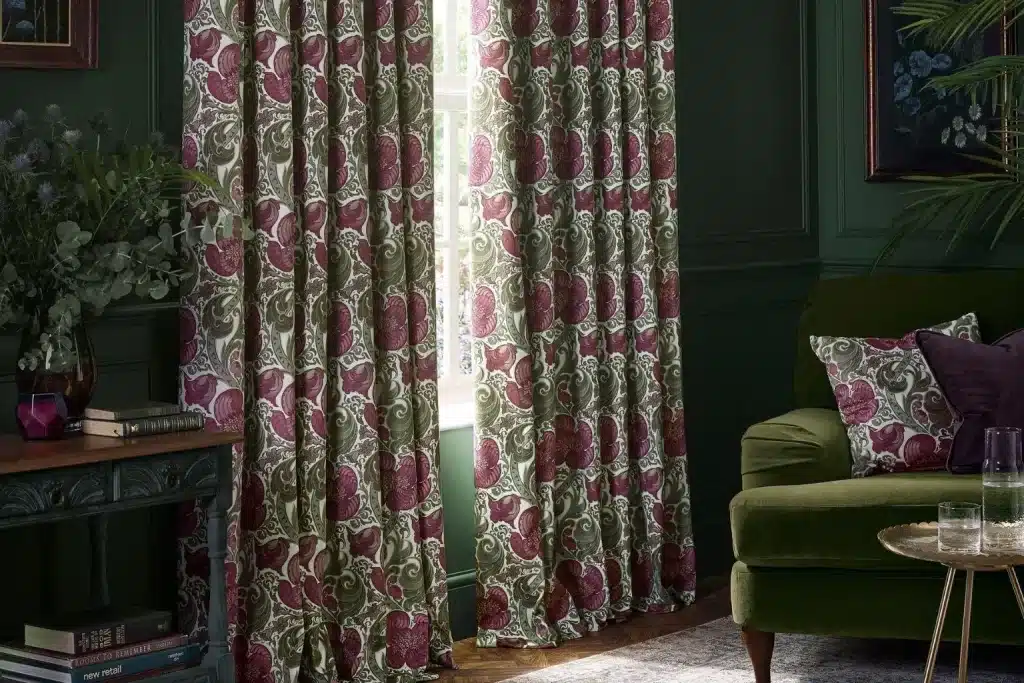
Its selection of Terrys Fabrics ready-made curtains reflects this balance between convenience and customisation. This dual offering corresponds with findings from Furniture News, which point to growing demand for both standardised and tailored home décor products.
Value-Focused Pricing and Real-Time Stock Availability
Affordability remains a defining factor in the current global retail environment. Economic pressures have led many consumers to reassess discretionary spending, including purchases related to home furnishings. Data from the Office for National Statistics and similar international datasets show fluctuations in homeware spending, with value-driven retailers gaining increased attention.
Terrys Fabrics addresses this environment through a pricing strategy that involves ongoing supplier negotiation and regular cost reviews. The company also maintains live stock updates approximately every 20 minutes, allowing customers to access accurate availability information. This level of transparency aligns with global e-commerce expectations, where real-time inventory visibility is increasingly standard.
Trade organisations such as IMRG report that consumers expect fast fulfilment and reliable delivery timelines when shopping online. Terrys Fabrics processes orders within 24 hours for purchases made before 2 pm, with delivery managed through established courier networks. These operational practices reflect broader industry emphasis on efficiency and dependability.
Integration of Expertise and Personalised Services

While online retail continues to expand, in-person expertise remains relevant, particularly for products requiring measurement or installation. Terrys Fabrics offers services including measuring, making, and fitting, primarily for customers in its regional catchment area. This approach combines digital convenience with traditional service elements.
The company reports that its team has over 30 years of combined experience in fabrics and home furnishings. This expertise supports customers in selecting appropriate materials, dimensions, and styles. According to Furniture News, demand for customisation has increased globally, particularly in categories such as curtains and blinds where fit and finish are critical.
Design professionals have also emphasised the importance of adaptable interiors. Interior designer Nate Berkus has noted that “sectional and modular seating allows people to adapt their spaces as their needs change,” highlighting a broader shift toward flexible living environments. Similar principles apply to soft furnishings, which can be updated or replaced with relative ease to suit changing preferences.
Digital Tools and Logistics Reflecting Global Retail Expectations
Technology continues to influence how consumers engage with home décor products. Terrys Fabrics incorporates a visualisation tool through its ViSULiZR app, enabling users to preview fabrics and furnishings within their own spaces. This type of functionality reflects a wider industry movement toward digital decision-making support.
Trend forecasting platforms such as WGSN indicate that consumers increasingly seek reassurance before purchasing home décor items online. Visualisation tools can reduce uncertainty by providing a clearer sense of how products will appear in real settings. This is particularly relevant for items such as curtains, where colour, texture, and scale play a significant role.
Delivery and returns policies are also central to the online shopping experience. IMRG data shows that next-day delivery and flexible returns have become standard expectations in many markets. Terrys Fabrics offers a 28-day returns policy, supporting customer confidence in purchasing decisions.
Public commentary reinforces the importance of adaptable home environments. Gwyneth Paltrow has observed that “modular furniture creates a sense of ease in spaces that need to serve multiple purposes,” reflecting broader lifestyle trends. While such insights often focus on larger furnishings, they also apply to smaller decorative elements that contribute to overall interior flexibility.
Positioning Within an Evolving Global Market
The global home furnishings market remains competitive and fragmented, with opportunities for both large-scale retailers and independent businesses. Statista data highlights continued growth in online sales, while Mintel research points to sustained demand for affordable home updates.
Within this context, Terrys Fabrics operates as a value-focused retailer with a combination of physical and digital capabilities. Its emphasis on product variety, pricing transparency, and service provision aligns with key industry trends shaping consumer behaviour worldwide.
As households continue to prioritise practical and adaptable home improvements, retailers offering accessible solutions are likely to remain relevant. Terrys Fabrics’ long-standing presence, combined with its adaptation to digital retail practices, illustrates how established businesses can respond to evolving market conditions while maintaining their core identity.
References
- Furniture News. (2024). Global soft furnishings market trends and retail insights.
- House Beautiful. (2024). Global interior design trends: The rise of soft furnishings.
- IMRG. (2024). Global eCommerce delivery expectations and consumer behaviour report.
- Mintel. (2024). Global homewares market: Consumer spending and value-driven trends.
- Nate Berkus. (2022). Design commentary on modular and adaptable interiors.
- Office for National Statistics (ONS). (2024). Retail sales trends and homeware category performance.
- Pinterest. (2024). Pinterest Predicts: Global home décor and styling trends.
- Retail Week. (2024). Value-led retail and mid-market performance in international home sectors.
- Statista. (2024). Global home furnishings market revenue and e-commerce share.
- WGSN. (2024). Global home lifestyle and interior trend forecasting.