A bathroom can have fresh paint, updated lighting, and carefully chosen decor, yet still feel incomplete. In many cases, the missing piece is the central feature that influences both appearance and function every day. When it feels too small, poorly designed, outdated, or disconnected from the rest of the space, the whole room can seem unfinished.
The right setup creates structure. It improves storage, supports daily routines, and gives the room a more balanced appearance. It also connects the mirror, lighting, wall color, flooring, and hardware into one cohesive design.
Small bathrooms benefit from thoughtful planning because a well-proportioned piece can make tight spaces feel more open. Larger bathrooms gain warmth and definition when the materials, finishes, and scale feel intentional.
Many homeowners focus on accessories near the end of a renovation, but the foundation of the room deserves just as much attention. A carefully chosen centerpiece can change how the bathroom looks, feels, and functions.
Start with the Size and Shape of the Room
A bathroom centerpiece should fit the room before it fits a style preference. A piece that looks beautiful online can feel awkward in person if it blocks movement, crowds the doorway, or leaves too little space around the toilet, shower, or tub.
Start by measuring the wall where it will sit, then check the clearance needed for doors, drawers, and cabinet fronts to open comfortably. In a narrow bathroom, a slimmer profile can make the room easier to move through. In a larger bathroom, a wider design can create balance and prevent the space from feeling underfilled.
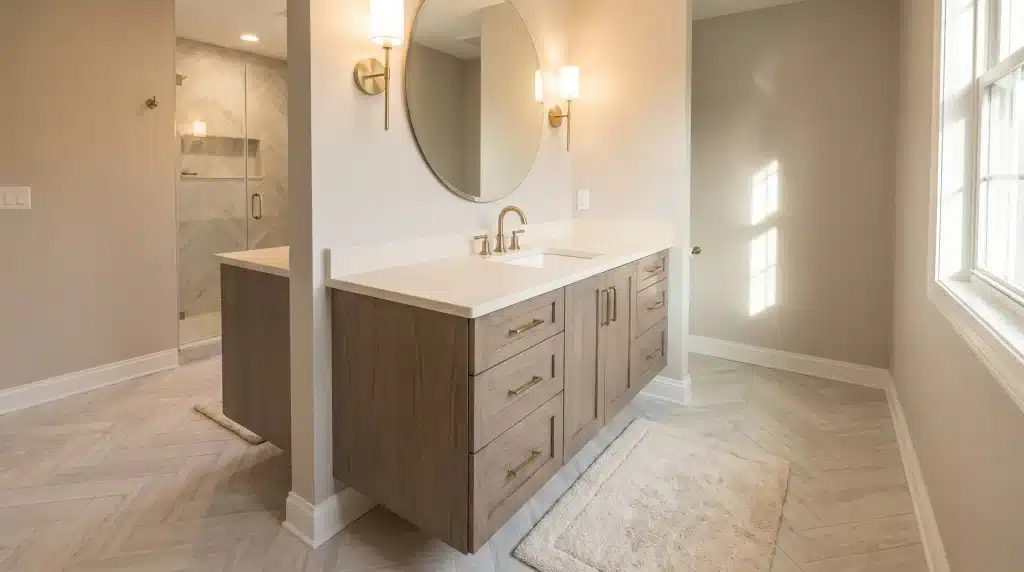
This is where choosing the right bathroom sink vanity makes a noticeable difference. The size, shape, and layout should support daily use while giving the bathroom a polished focal point.
Proportion matters as much as measurement. A compact powder room may need something simple and space-saving, while a shared bathroom may benefit from more counter space and enclosed storage.
Choose Storage That Matches Real Daily Habits
Storage can change how a bathroom feels throughout the day. A cluttered countertop often makes even a freshly cleaned room appear messy, while smart storage creates a calmer and more organized environment.
Before choosing a layout, think about what needs to be stored. Everyday toiletries, hair tools, towels, cleaning products, and skincare items can take up more space than expected. Deep drawers work well for quick access to daily essentials, while cabinet storage helps hide bulkier items and reduce visual clutter.
Open shelving creates an airy look and gives baskets or folded towels a place to stand out. Closed storage works especially well in busy family bathrooms where function matters most.
The placement of the sink also affects usable space. Some layouts leave little room beneath the counter, while others make better use of every inch without crowding the room.
Let the Sink Style Set the Tone
The sink style plays a major role in the overall appearance of the bathroom. Some designs create a clean and modern feel, while others add softness, texture, or a more classic look.
Undermount sinks are popular because they create a smooth surface that is easy to wipe clean. Integrated styles offer a seamless look that works well in contemporary spaces and smaller bathrooms. Vessel sinks add visual impact, especially in rooms with neutral finishes or minimal decor. Drop-in options remain practical and compatible with many countertop materials.
Depth and placement matter too. A sink that sits too close to the edge can reduce usable counter space, while an oversized basin may overpower a smaller room. Careful spacing around the faucet and surrounding accessories helps the bathroom feel balanced and comfortable to use.
Many homeowners use general fixture spacing recommendations when planning a layout that feels practical and efficient.
Look Closely at Materials, Quality, and Design Details
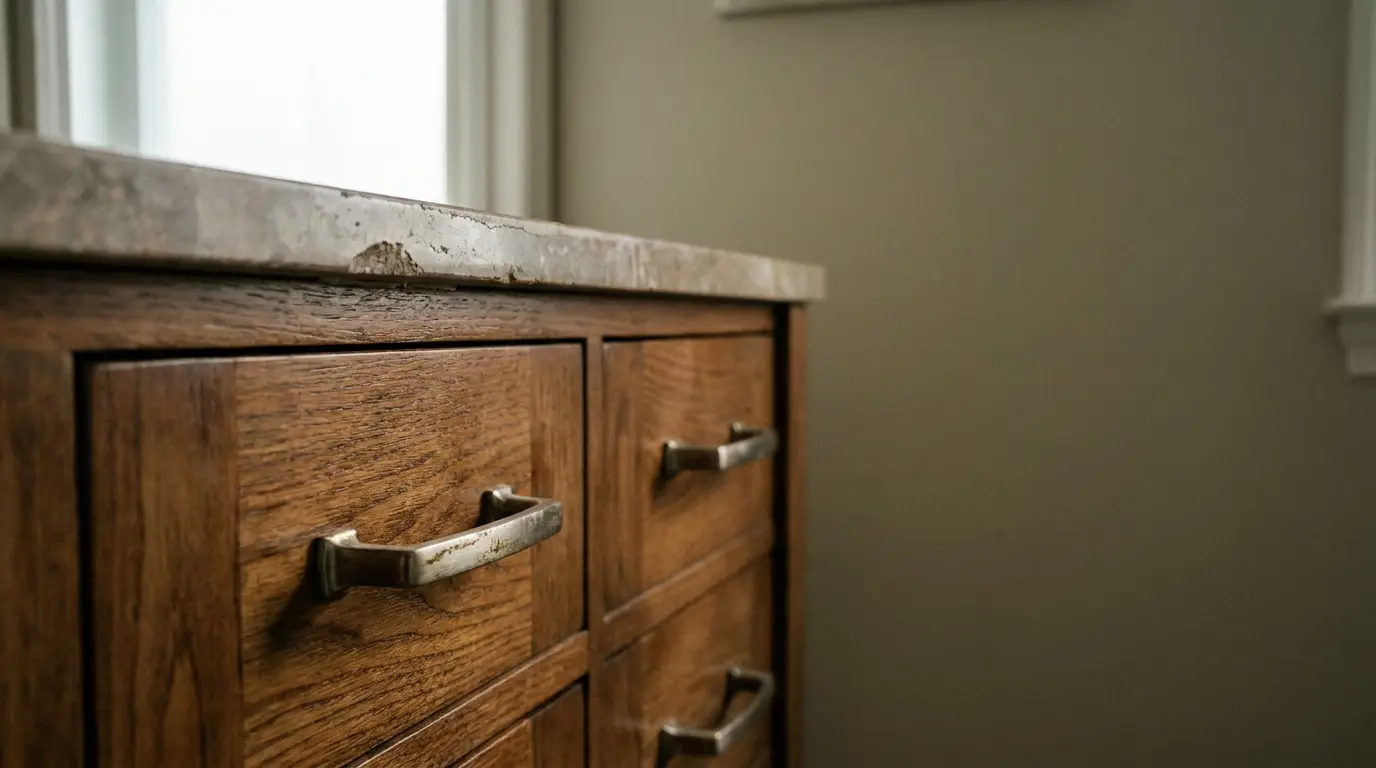
Bathrooms deal with moisture, humidity, heat, and frequent cleaning, so material quality matters. The right construction can help the room look better for longer and make the fixture feel more reliable in daily use.
Solid wood brings warmth and texture, while engineered materials can offer added resistance to warping in humid spaces. Durable finishes help protect against water spots, scratches, and peeling. Hardware quality also affects the overall feel. Soft-close drawers, sturdy hinges, and well-built handles make the setup feel more refined.
Countertop materials contribute to both appearance and maintenance. Quartz is durable and easy to clean, while natural stone adds variation and texture. Lighter surfaces can brighten small bathrooms, while darker tones create depth and contrast.
Design details shape the personality of the room. Clean lines feel modern, while paneled fronts, textured finishes, or decorative trim can add character without overwhelming the space.
Use Finish, Color, and Hardware to Pull the Room Together
Finish and hardware choices often determine whether a bathroom feels coordinated or disconnected. Even a well-planned layout can look unfinished when tones and textures compete.
Wood finishes add warmth, especially in bathrooms with neutral walls or natural textures. Lighter tones help small spaces feel brighter, while deeper finishes create contrast and visual weight. Painted surfaces are versatile because they can blend with changing decor styles over time.
Hardware should match the mood of the room. Matte black creates a clean look, brushed nickel feels timeless, and warm brass adds depth. Coordinating the faucet, drawer pulls, lighting, and mirror frame helps the bathroom feel more intentional.
Color also affects comfort. Soft whites, warm grays, muted greens, and earthy tones create a calm background that allows materials and textures to stand out naturally.
Make the Countertop Feel Intentional
Countertops influence both visual balance and everyday use. Since this surface is used constantly, the material and color should support daily routines while complementing the surrounding finishes.
Lighter countertops help smaller bathrooms feel open and clean. White and soft gray surfaces reflect light well and pair easily with different wall colors and hardware finishes. Darker surfaces create stronger contrast and add depth to bathrooms with lighter cabinetry or flooring.
Durability is important because bathrooms deal with moisture, heat, cosmetics, soap residue, and regular cleaning products. Quartz handles daily wear well and requires minimal maintenance. Natural stone offers more variation, though it may need extra care depending on the material.
Edge profiles and thickness also affect the final appearance. Simple edges create a cleaner look, while thicker surfaces make the room feel more grounded. Coordinating the countertop with the sink and backsplash helps the design feel complete.
Style Around It Without Overcrowding
The area around the main bathroom fixture should feel useful, calm, and easy to maintain. Too many accessories can make the counter feel cluttered, while too few details can leave the room looking plain.
A mirror is one of the most important finishing pieces. Its shape and frame can soften the room, add contrast, or repeat the tone of the hardware. Round mirrors feel relaxed, while rectangular mirrors create a more structured look.
Lighting also helps define the space. Wall sconces, simple vanity lights, or warm bulbs can make the area feel more inviting while improving daily routines. For more inspiration, simple bathroom decorating ideas can help guide smaller styling choices.
Keep countertop decor minimal. A small tray, soap dispenser, folded hand towel, or simple vase can add personality without getting in the way. Baskets, hooks, and shelves can bring in extra storage while keeping the finished look neat.
Final Thoughts
A finished bathroom does not always require a full renovation. Sometimes the most effective change is choosing the feature that brings storage, proportion, materials, and style into better balance.
When the main fixture fits the room properly, supports daily routines, and works with the surrounding finishes, the entire space feels more complete. The bathroom becomes easier to use, easier to keep tidy, and more pleasant to spend time in.
The best choices are the ones that look good while solving real problems. With the right size, durable materials, thoughtful storage, and a design that suits the room, one upgrade can make the whole bathroom feel carefully finished.