The eight-hour rule is one of those pieces of health advice that has achieved the status of common sense without anyone quite remembering where it came from.
Adults repeat it to each other at dinner parties. Parents enforce it on teenagers. Employers quote it in wellness memos. The number is tidy, memorable, and almost entirely arbitrary when applied to any specific person, which is a strange foundation for advice that governs roughly a third of your life.
Where The Number Actually Comes From
The eight-hour figure is a statistical average, not a biological requirement. Large-scale sleep research consistently shows that adult sleep needs cluster in a range, not at a point.
The National Sleep Foundation recommends seven to nine hours for most adults, with six and ten acceptable at the edges depending on the individual. The midpoint of that range happens to be eight, which is how a range became a target and a target became a rule.
The actual determinant of how much sleep you need is genetic, with some influence from age, health, and activity level. Around two-thirds of adults function best in the seven-to-nine band.
A smaller group, often called short sleepers, are genetically equipped to run well on six hours or less; this is not a habit they’ve cultivated but a real genetic variant involving genes like DEC2 and ADRB1. A similar-sized group at the other end needs nine or ten hours to feel rested. Applying the eight-hour rule to all three groups produces misery in two of them.
How Much Do You Actually Need
The honest answer is the amount that allows you to wake up without an alarm, feel alert through the morning, and function well through the late afternoon without significant energy dips.
For most people this sits somewhere between seven and nine hours, but the precise figure for your particular biology might be seven hours and twenty minutes, or eight hours and forty-five minutes, or some other number that a rounded rule will always miss.
A useful experiment is to track your sleep for a week or two without using an alarm clock and without any scheduled early obligations. After a few days of catching up on accumulated sleep debt, your natural wake time tends to settle into a consistent pattern.
The total sleep time across those settled nights is a reasonable estimate of your actual biological need. For many people it’s closer to seven and a half hours than eight.
The Quality Problem
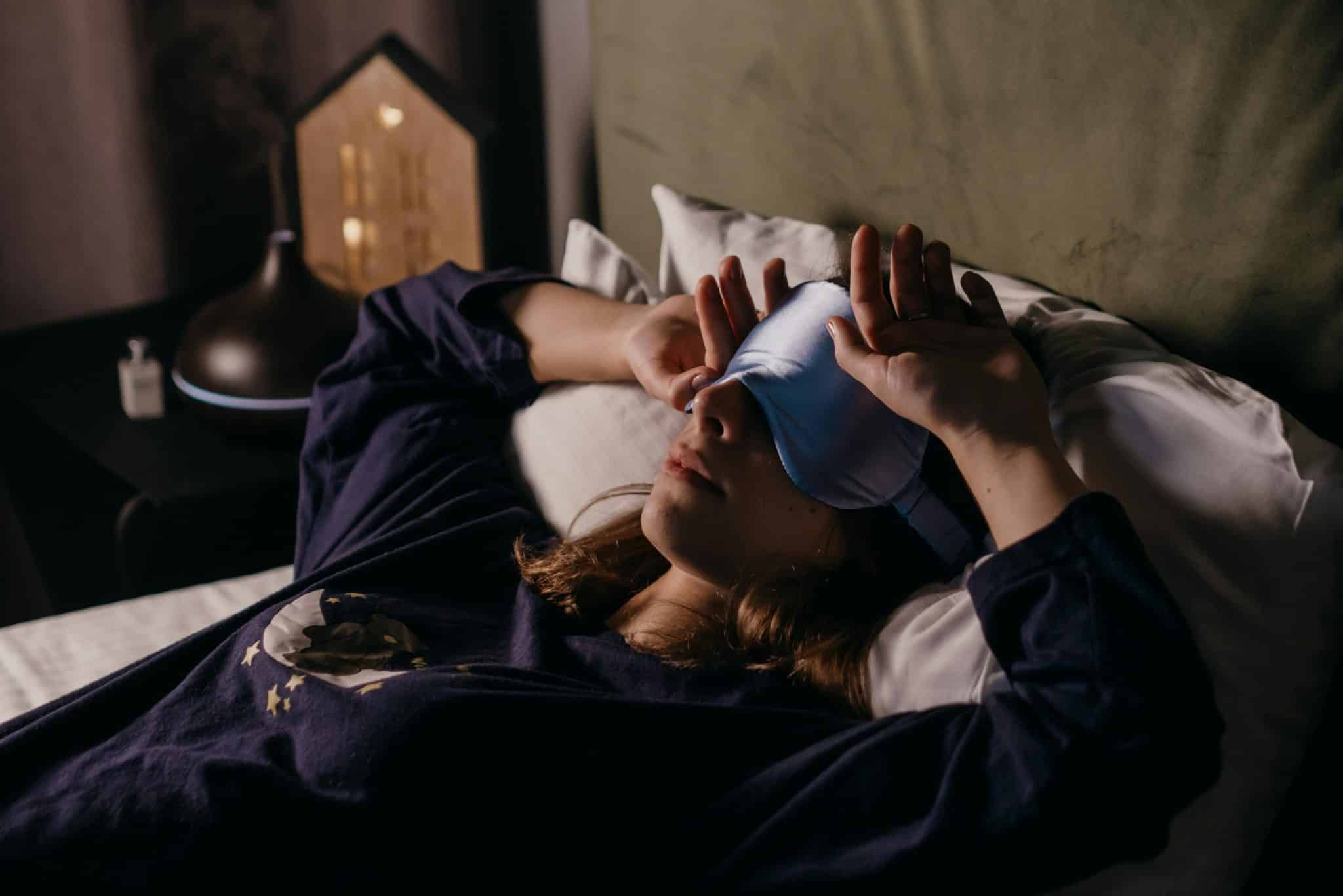
Even if the eight-hour rule were correct for your biology, eight hours in bed is not the same as eight hours of sleep. Time in bed includes the minutes you spend falling asleep, the brief awakenings you don’t remember, and the periods of light sleep at the beginning and end of the night that contribute less to feeling rested than deep and REM sleep do.
Someone in bed from 11pm to 7am has eight hours of opportunity but might only accumulate six and a half hours of actual sleep, with uneven distribution across the important stages.
Sleep quality matters at least as much as duration, and the two are not interchangeable. Six hours of uninterrupted, architecturally complete sleep produces a more rested person than eight hours of fragmented, shallow sleep.
This is why people sometimes report feeling more tired after a “full night’s rest” than after a shorter one; duration alone doesn’t capture what happened during those hours.
What The Studies Actually Show
Population-level research does support the general claim that chronic sleep deprivation has real health costs. Sleeping five hours or less per night on a regular basis is associated with higher risks of cardiovascular disease, metabolic dysfunction, cognitive decline, and mortality. The evidence here is substantial and reasonably consistent.
What the research shows less clearly is that getting eight hours specifically is better than getting seven. The U-shaped mortality curve in large epidemiological studies suggests that very long sleep durations (nine-plus hours regularly) are also associated with worse outcomes, though this likely reflects underlying illness causing long sleep rather than long sleep causing illness.
The flat bottom of the curve sits roughly between seven and eight hours for most populations. The practical implication is that anywhere in that range is fine; the obsession with hitting eight exactly is not well-supported.
Why The Rule Persists
It persists because it’s simple, because it’s slightly alarming (most people don’t get eight hours), and because the wellness industry has an interest in treating sleep as a problem to be optimised rather than a variable to be understood.
The eight-hour target sells mattresses, sleep trackers, meditation apps, supplements, and blackout curtains. It also motivates real improvements in sleep hygiene for people who were genuinely underslept, which is a net positive even when the underlying number is arbitrary.
The environment you sleep in shapes how much actual rest you get from whatever duration you’re working with. A cool, dark, quiet room and a properly supportive mattress, ideally on one of the large king size beds for better sleep that give couples enough surface area to avoid disturbing each other, extract more value from seven hours than a warm, bright, noisy room with a collapsing mattress does from nine.
What To Actually Track
If you want to know whether you’re getting enough sleep, ignore the hour count and watch for the symptoms of insufficient sleep.
Morning grogginess that persists more than 20-30 minutes, difficulty concentrating in the early afternoon, reliance on caffeine to function, irritability, increased appetite for sugar and refined carbohydrates, and difficulty managing emotions.
These are the signs that matter, and they correlate with your actual sleep deficit regardless of what the clock says.
The reverse is also useful information. If you’re sleeping seven hours consistently and waking up alert, focused, and energetic, you’re probably getting enough sleep for your biology. Adding a ninth hour because an app tells you to won’t produce additional benefit and might actually worsen morning grogginess by extending sleep beyond your natural wake time.
The Age Variable
Sleep needs change across the lifespan, and the eight-hour rule gets applied badly across ages. Teenagers genuinely need around nine hours and rarely get them, which is a real public health issue with documented academic and mental health consequences.
Older adults, often in their sixties and beyond, tend to sleep less at night but make up some of the difference with naps; five to six hours of night sleep plus a twenty-minute nap can be perfectly adequate at 75 in a way it wouldn’t be at 30. Pregnant women, shift workers, and people recovering from illness all have shifting needs that no single rule captures.
The Useful Version
Forget eight hours as a target. Identify, through a few weeks of honest observation, what your actual sleep need is. Aim for consistency in when you go to bed and wake up rather than hitting a specific duration.
Pay attention to how you feel through the day, not what your sleep tracker says. Optimise the conditions you sleep in, because quality multiplies the value of any duration.
The eight-hour rule isn’t wrong, exactly. It’s a reasonable centre of gravity for a population.
As a rule for you specifically, it’s almost certainly off by some amount, and whether you aim for seven or eight or nine matters less than whether you’re getting consistent, good-quality sleep in whatever range your biology actually wants.