The four simple engagement zones kids actually love include a shaded active play area, a movable creative corner, a cozy seating nook for parents, and an engaging nature path designed to encourage sensory exploration.
Organizing an undefined lawn into these specific, purposeful areas naturally extends the amount of time children spend outside. Implementing these budget-friendly setups transforms chaotic yards into structured environments where imaginative and physical activities seamlessly coexist.
Before implementing these zones, many families deal with a particular kind of backyard that most of us know too well. It is technically there.
You might have a reasonable patch of grass, maybe a forgotten hose coiled by the spigot, or a plastic chair that has been slowly sinking into the lawn since last summer. You tell the kids to go play outside, and six minutes later, they are back at the door, bored and asking for a snack.
The core issue usually is not the size of the yard or the budget, but rather the lack of defined zones. When an area is simply a vast, undefined exterior, children often do not know what to do with it.
Children in the United States spend an average of 7 hours per day indoors in front of a screen and only 4 to 7 minutes playing outside during daylight. Grouping activities into purposeful spaces shifts the entire dynamic, keeping kids engaged longer while giving adults a comfortable place to relax.
1. The Shaded Play Area Meets Comfort
Picture a perfect July afternoon when the kids race outside, ready to climb, swing, and run. Fifteen minutes later, they are back inside, not because they got bored, but because the sun turned the play area into a heat trap.
The slide is too hot to touch, and the equipment is baking. This thermal discomfort is the most common reason kid-friendly outdoor spaces go unused during prime summer months, yet it is highly solvable.
Start by designating a clear and defined area for active physical play. Using rubber mulch or a patch of artificial turf underfoot keeps things clean, cushioned, and visually distinct from the rest of the yard.
Adding a small slide, a climber, or a simple swing set scaled to the available space gives kids a dedicated reason to stay outside. Frame this zone with low landscape borders or a strip of colorful stepping stones to signal its specific purpose.
Sun protection is the single biggest differentiator between a play area that sees daily action and one that sits empty from June through August.
The Centers for Disease Control and Prevention states that ensuring that at least 30 to 50 percent of a playground is shaded can reduce surface temperatures by up to 40 degrees Fahrenheit.
Incorporating robust options like shade structures with UV protection brings commercial-grade durability and professional-level UV protection to community play areas.
A well-placed canopy transforms an exposed and sweltering zone into a genuinely comfortable destination.
Quick wins for this zone include the following ideas.
- Rubber mulch in a contrasting color to the surrounding grass
- A small weather-resistant climber or swing appropriate for the yard scale
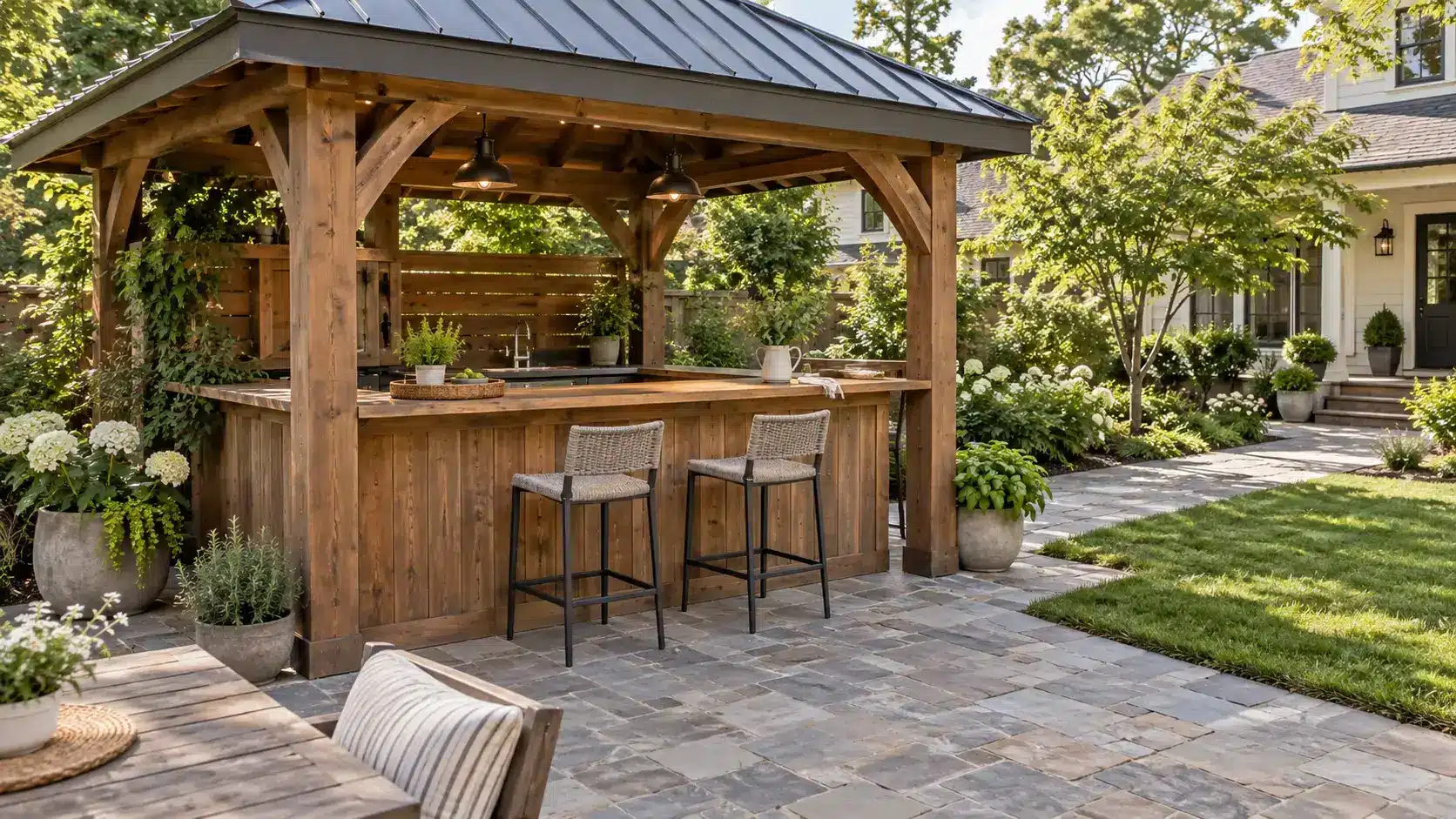
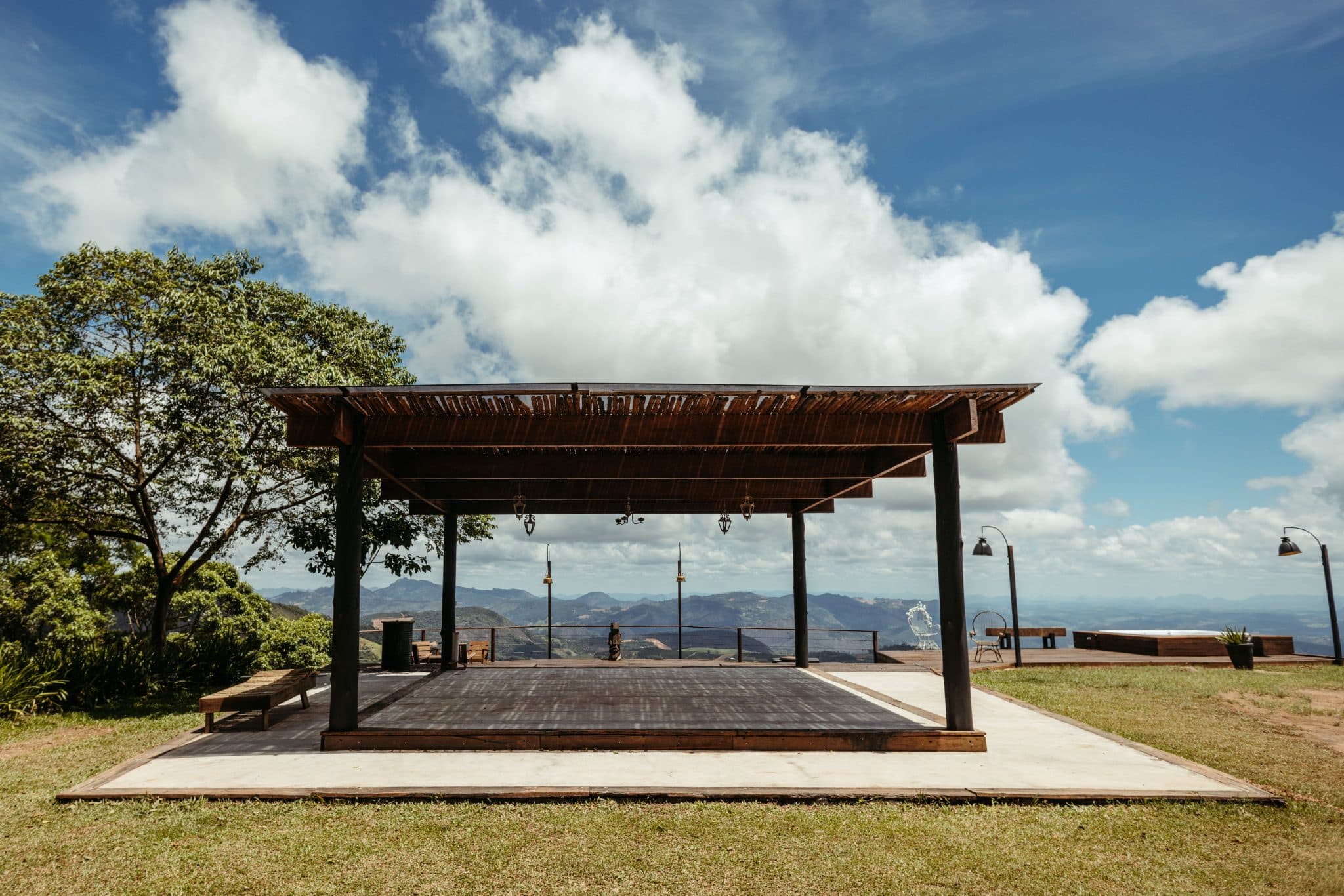
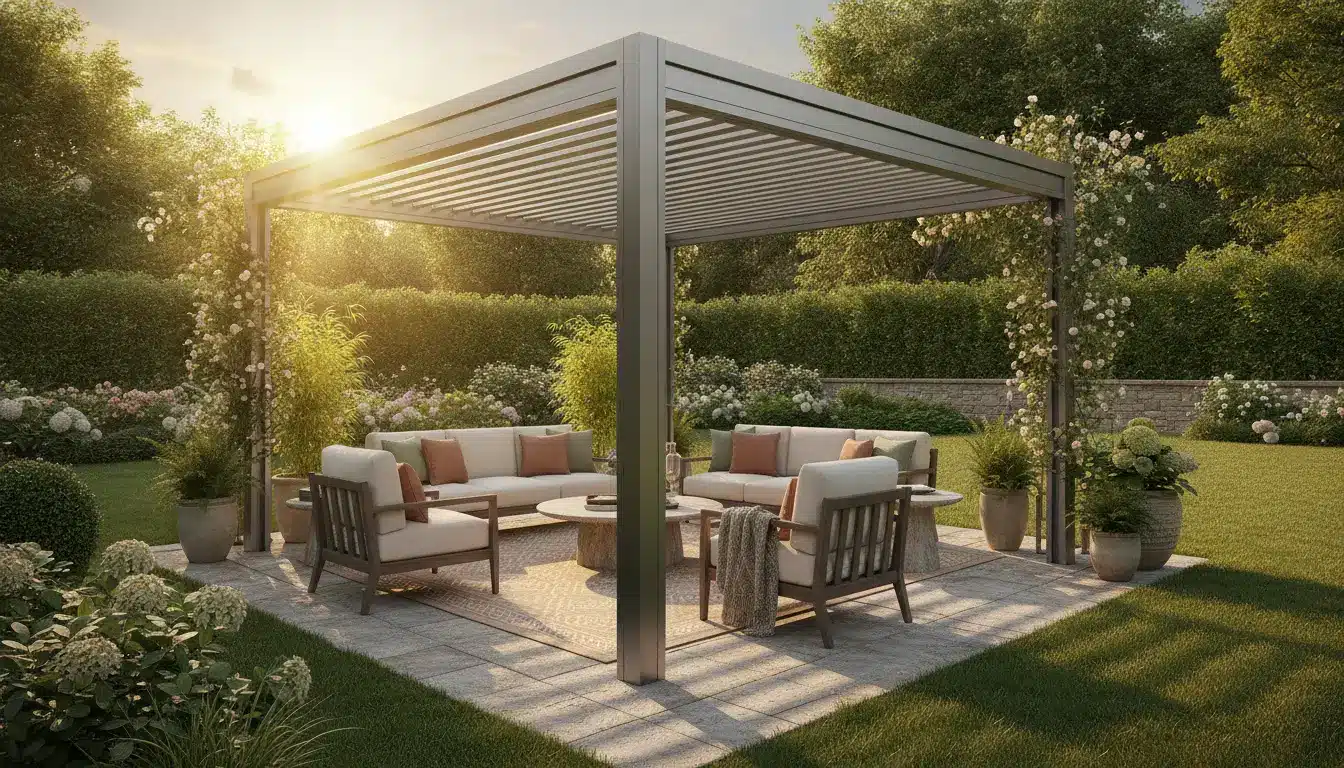
- A freestanding shade structure, pergola, or heavy-duty shade sail overhead
- A low border of planters or stepping stones to define the perimeter
|
Key Insight: Thermal discomfort is the primary reason outdoor play areas go unused. Adding professional-grade shade transforms a sweltering “heat trap” into a comfortable, high-traffic destination for children. |
|---|
2. A Movable Creative Corner for Curious Minds
Imagine a small weathered table painted in a cheerful sunflower yellow and pushed under the natural canopy of a tree. On it sits a shallow bin of watercolor supplies, a couple of mismatched brushes in a mason jar, and a tray of sidewalk chalk sorted by color.
Nearby, a repurposed wooden crate holds a small water table and a bucket of kinetic sand. Nobody has to instruct children to use this space since they naturally gravitate toward it.
The creative corner is one of the most flexible zones to build because nothing requires permanent installation. This is a space dedicated to imaginative, sensory, and artistic play, designed to evolve with the seasons without requiring new purchases.
The foundation relies on a low and weather-resistant activity table alongside stackable stools. From there, repurposed crates or galvanized metal buckets serve as accessible storage for supplies.
To ensure this zone looks intentional rather than cluttered, apply a deliberate color palette. Select two or three coordinating shades like bright yellow and deep forest green to carry through the table, planters, and storage containers.
This cohesive color story is a fundamental principle of effective decorating ideas. It proves that coordination does not require expensive matching sets.
Quick wins for this zone include the following items.
- A weather-resistant activity table in a bold accent color
- Painted or galvanized crates are used for stylish and accessible storage
- A chalkboard surface mounted on a fence, wall, or easel
- A two-color palette carried across all containers and furniture
|
Pro Tip: To make mismatched, repurposed storage bins and old tables look like an intentional designer set, paint everything in a consistent two-color palette like sunflower yellow and forest green. |
|---|
3. The Cozy Seating Nook for Relaxing Parents
If there is nowhere comfortable for parents to sit, outdoor play sessions rarely last very long. Adults often end up hovering by the back door or half-watching from inside simply to avoid perching on a hard concrete step.
Creating a dedicated seating nook directly solves this issue. When executed well, it becomes the zone that turns a basic yard into a stylish family backyard, acting as a seamless extension of the home interior.
An outdoor rug serves as the perfect starting point. This single element does immense visual work by defining the area, grounding the furniture, and signaling that the space is an outdoor room.
Place it beneath a loveseat or two cushioned chairs featuring weatherproof fabrics in a neutral stripe or botanical print. Incorporating a storage bench along one side provides dual functionality by offering seating for guests while hiding blankets or outdoor toys.
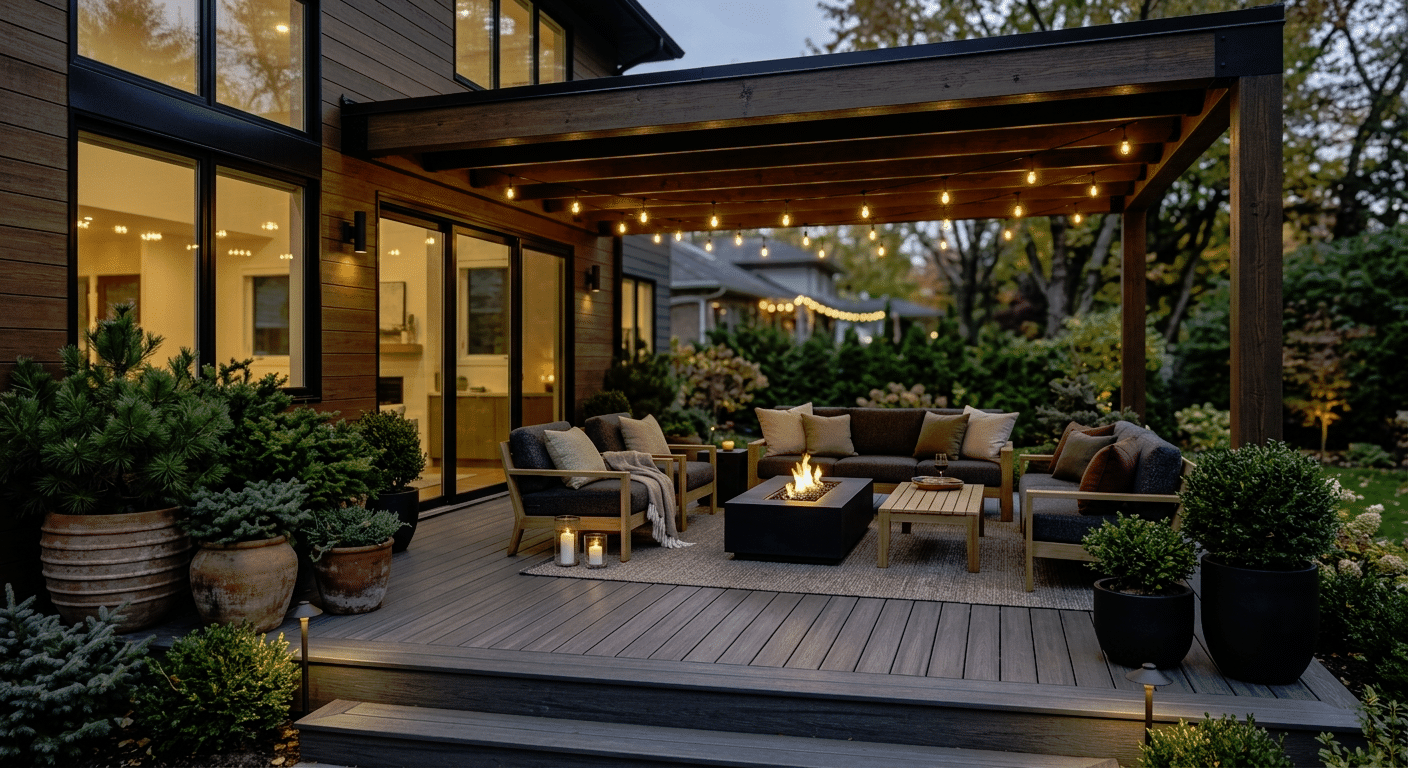
Overhead lighting completely transforms the atmosphere of the space. String lights draped along pergola beams or woven through tree branches create a warm ambiance that invites families to linger well past sunset.
Adding a small side table or even a sealed and painted tree stump provides a necessary surface for drinks or a citronella candle.
Quick wins for this zone include these additions.
- An outdoor rug in a neutral or botanical print to anchor the space
- Weatherproof seating with highly durable and UV-resistant cushions
- String lights installed overhead for evening usability
- A storage bench that doubles as seating and organizational space
- A small side table or sealed stump for a convenient surface area
|
Quote: “The length of a child’s outdoor play session is often limited not by their own energy, but by the physical comfort of the adult supervising them.” |
|---|
4. A Simple Sensory Nature Path for Kids
Even the narrowest strip of yard along a fence line can become a highly engaging environment. Children are instinctively drawn to texture, color, and discovery.
A well-planned nature path taps directly into that curiosity without requiring traditional play equipment. It is a brilliant addition to any kid-friendly outdoor space.
This concept utilizes a winding row of painted or mosaic-patterned stepping stones moving through a small planting bed. Border the path with raised planters or galvanized tubs filled with tactile and aromatic plants like lamb’s ear, lavender, mint, or ornamental grasses.
Adding pea gravel or smooth river rocks between the plants introduces a contrasting texture underfoot. Simple additions like a wind chime, a bird feeder, or a small solar-powered water feature give children interactive elements to observe.
Research in child development consistently highlights the benefits of spending time in natural environments. Evidence reveals that nature exposure improves attention, emotional regulation, and academic performance in children and adolescents.
A nature path delivers these benefits by offering a rotating and seasonal experience. Tulips in the spring transition into sunflowers in the summer, followed by dried grasses in the autumn, allowing children to observe environmental changes.
Quick wins for this zone feature these elements.
- Painted or mosaic stepping stones create a clear path through a planting bed
- Raised planters or galvanized tubs containing sensory-friendly and non-toxic plants
- Pea gravel or river rocks to provide textural contrast
- A wind chime, bird feeder, or small water feature for daily interaction
- Seasonally rotating vegetation so the zone remains engaging year-round
|
Important: Always verify that sensory plants are non-toxic and free of thorns. Lamb’s ear and lavender are excellent choices for safe, tactile exploration along a child’s nature path. |
|---|
Easy Styling Ideas to Tie Zones Together
Establishing four distinct zones is highly functional, but connecting them aesthetically is what creates a truly stylish family backyard. The most effective method for unifying the yard is utilizing a shared color palette.
Carrying two or three distinct shades consistently through planters, cushions, textiles, and hardware across all areas creates a cohesive visual flow.
Deep navy, warm terracotta, and natural wood tones can easily move from a shade structure frame to a seating nook rug without feeling repetitive.
A few inexpensive finishing touches can elevate the entire yard beautifully.
- Motion-sensor pathway lights placed along the walkways between zones add a polished look while improving evening safety.
- A central water station located near the back door simplifies rinsing muddy hands or filling water tables.
- A mudroom basket positioned just outside the door organizes shoes and outdoor gear.
- Consistent material choices build visual continuity even when individual furniture pieces are sourced separately.
Now It Is Your Turn to Start
Transforming a backyard does not require completing all four zones in a single weekend. The most sustainable approach is to identify which specific zone addresses the family’s biggest current obstacle.
If the intense summer heat drives everyone indoors, prioritizing the shaded play area is the logical first step.
If the adults simply need a comfortable place to sit while supervising, building the seating nook will yield the most immediate benefits. Start small and execute one zone thoughtfully to see how it improves daily life.
A single, well-designed area has a way of shifting the entire dynamic of how a family interacts with their exterior spaces.
Once that initial shift occurs, mapping out the subsequent zones becomes a natural and intuitive process. This slow and steady progress turns an underutilized lawn into a highly functional outdoor retreat. Take that first step today and watch your backyard come to life.
|
Author Profile: WillyGoat is the leading online retailer of commercial playground equipment for schools, parks, churches, daycares, and communities across America. |
|---|