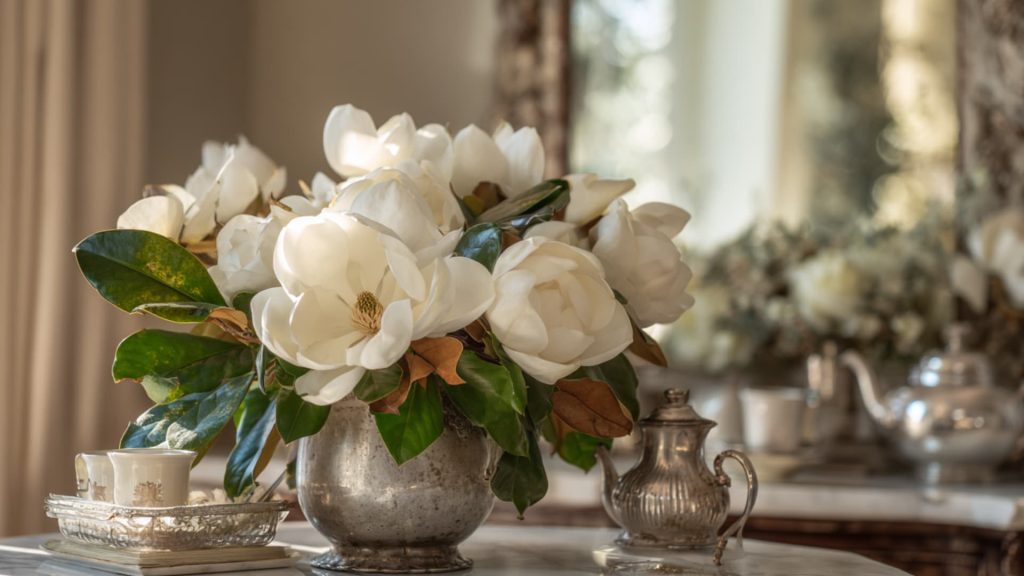
The magnolia flower has been growing on this planet for millions of years, long before most flowering plants existed.
That longevity shows in the flower itself. Big, waxy blooms. A structure that hasn’t meaningfully changed since the Cretaceous.
And a reputation among gardeners for delivering a reliable seasonal display without demanding much in return.
Blooms range from tight, star-shaped buds to wide, open blossoms that can span several inches across (up to 12 inches on mature Southern Magnolias).
Magnolias grow well in gardens, front yards, and larger containers. They do best in well drained soil and full sunlight and are found across North America, Asia, and parts of Europe.
Which Flower is the Magnolia Flower? Origins and History
Fossil records place them at roughly 95 million years ago, predating bees, which is why their pollination strategy relies on beetles rather than anything more specialised.
Early magnolias relied on beetles for pollination, which is why their petals are thick, waxy, and built to hold up well.
Native to East Asia and the Americas, magnolias have been cultivated for centuries.
In China, they were grown in Buddhist temple gardens as early as 600 AD and later named after the French botanist Pierre Magnol.
Unlike most flowering plants, the magnolia’s structure has changed very little over millions of years. Large, cup-shaped blooms, a strong fragrance, and glossy foliage are still its defining traits today.
Depending on the variety, magnolias grow as tall evergreen trees or compact shrubs, ranging from over 80 feet down to under 10 feet.
What Does the Magnolia Flower Symbolize?
Magnolia flowers have carried deep meaning across cultures for centuries.
A tree that bloomed before bees evolved and still puts on a striking seasonal display tends to accumulate symbolism.
Each color tells its own story:
- White magnolias stand for purity, peace, and spiritual clarity, making them a popular choice for weddings and formal gardens.
- Pink magnolias symbolize love, femininity, and joy, which is why they remain a favorite for spring garden displays.
- Purple magnolia blossoms carry a stronger message, often linked to royalty, creativity, and deep admiration. They are frequently used as bold feature trees in landscaping.
Gardeners who love pairing meaningful blooms together often look into creating a fuller, more layered garden display alongside magnolias
Across all colors, the magnolia flower is broadly seen as a symbol of resilience, longevity, and quiet strength.
Types of Magnolia Flowers
Magnolias come in a wide range of varieties, each with its own growth habit, bloom style, and climate preference.
Knowing the differences helps you pick the right one for your garden space and local conditions.
1. Southern Magnolia
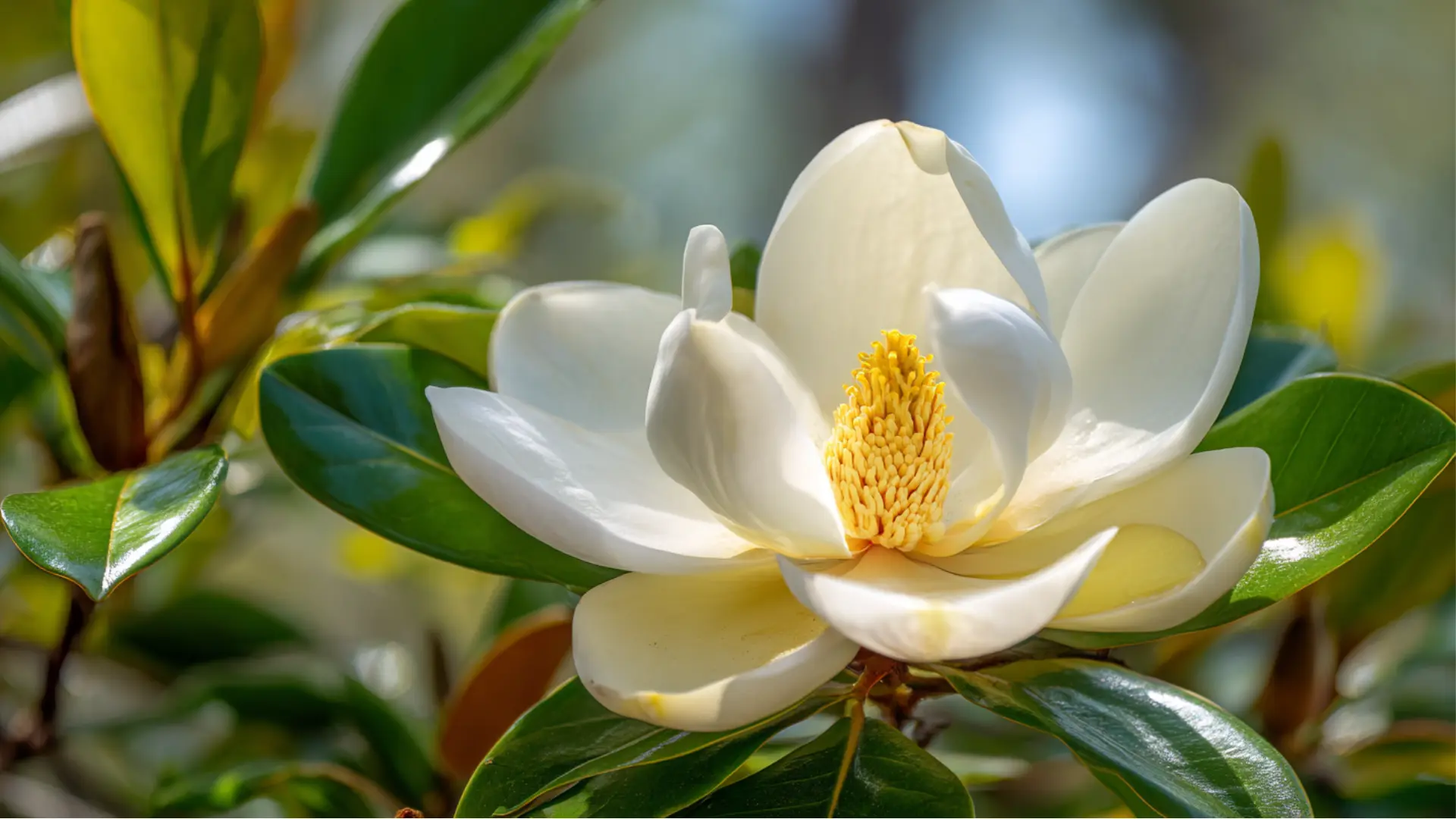
Southern Magnolia is strictly an outdoor plant.
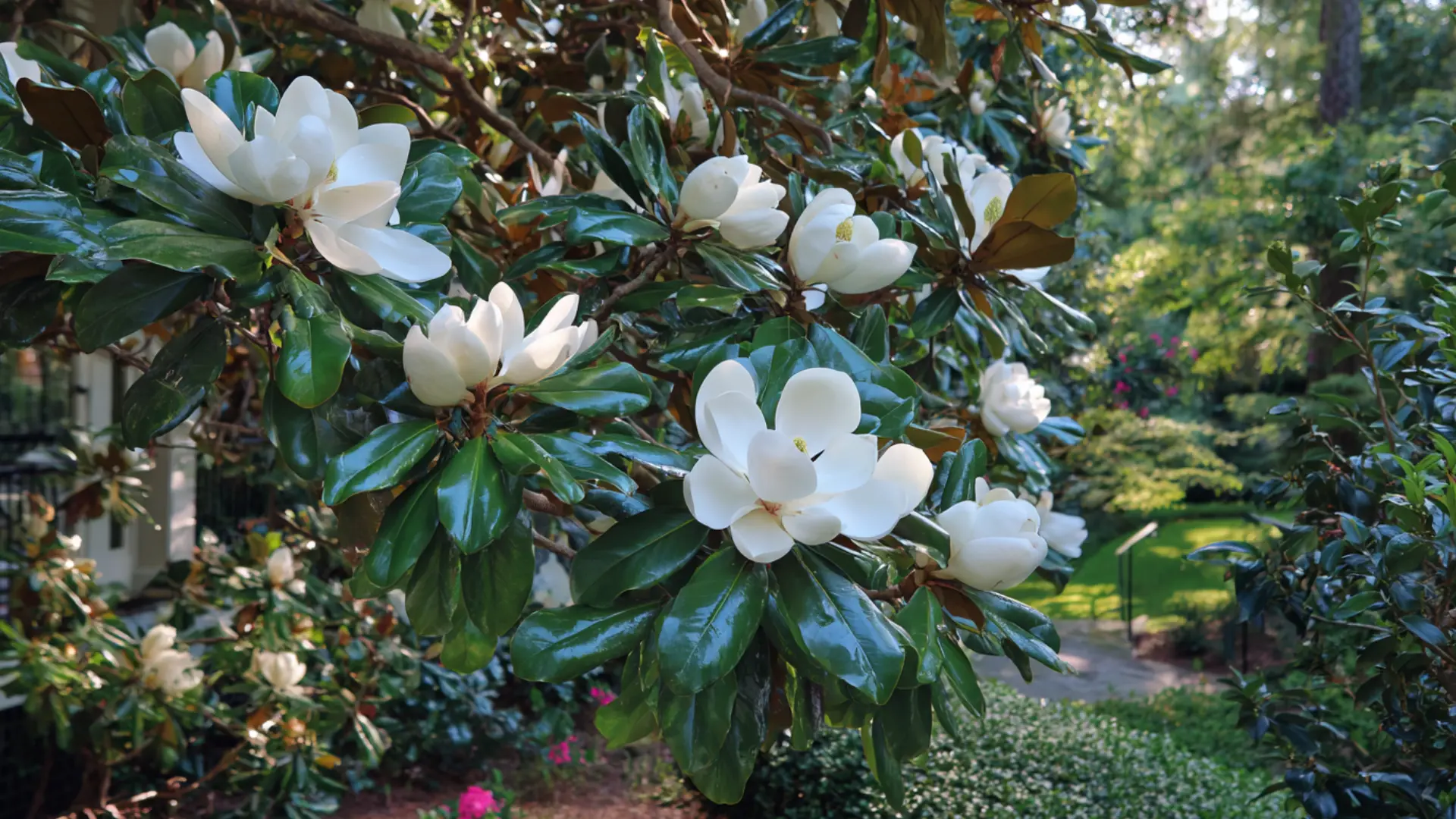
It grows as a large evergreen tree with broad, glossy leaves and creamy white blooms that can reach up to 12 inches across, too large for containers or any indoor setup.
- Thrives in warm, humid climates
- Commonly planted across the southeastern United States
- Holds its leaves year round, giving the garden structure even in winter
Sunlight: Full sun performs best; at least 6 hours daily keeps blooms consistent.
Watering: Deep watering once a week during the first two summers is enough. After that, the tree handles dry spells on its own.
Maintenance: Light pruning after flowering is all it needs. Cut in autumn, and you lose next season’s buds before they ever open.
2. Star Magnolia
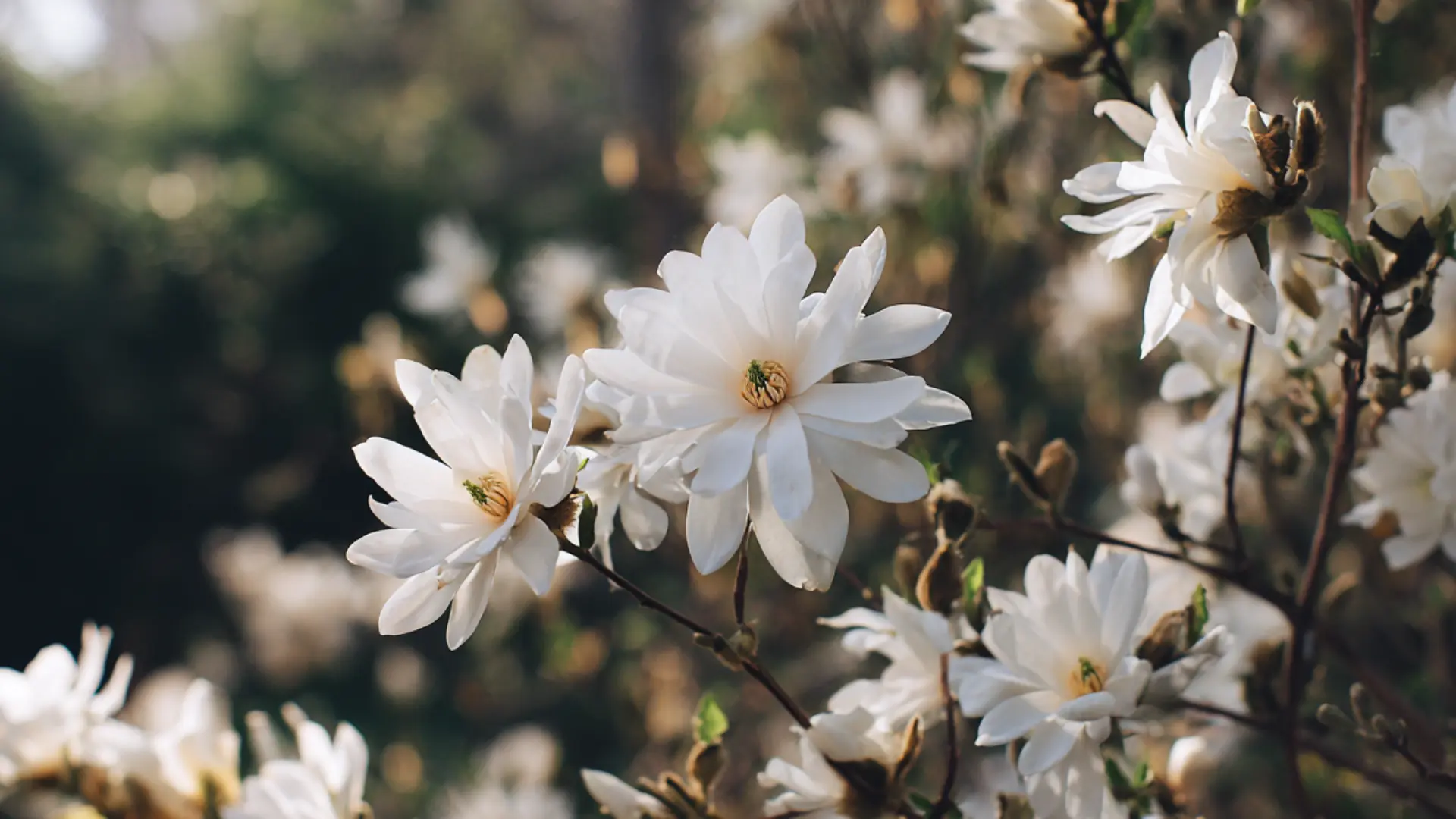
Star Magnolia works both indoors and outdoors.
It is one of the few magnolia varieties compact enough for container growing brought inside before frost, moved back out once temperatures settle.
Outdoors, it fits easily into spaces where a full-sized magnolia will not.
- Produces white, narrow, star-shaped petals
- Blooms in late winter to early spring
- One of the hardiest options for colder regions
Sunlight: Full sun preferred; handles light shade better than most varieties without losing too many blooms.
Watering: Regular watering for the first two years while roots establish, after that, it becomes far less demanding
Maintenance: Low. Remove damaged branches after flowering and avoid late summer pruning, or next year’s buds will go with it.
3. Saucer Magnolia
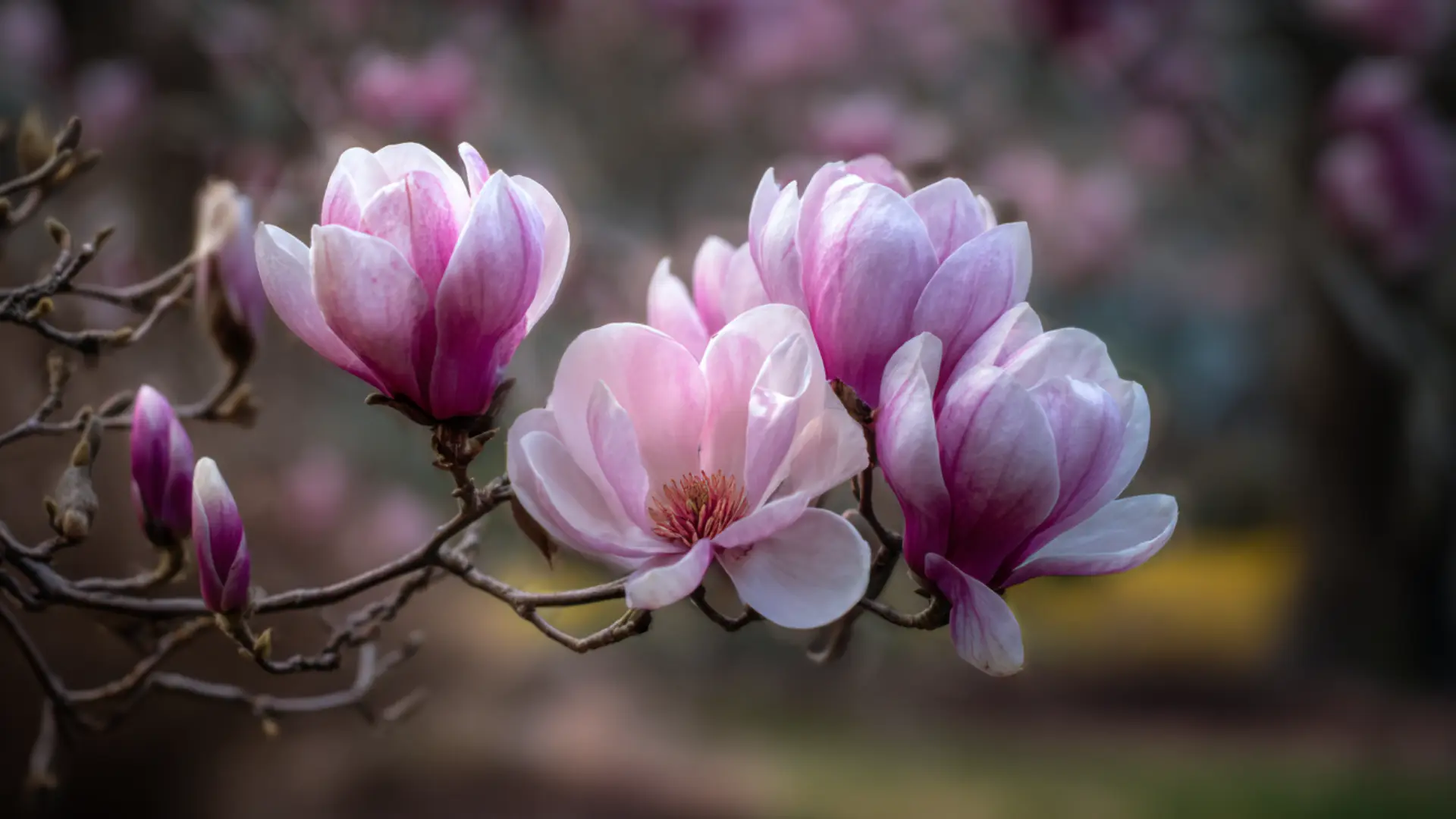
Saucer Magnolia is a popular hybrid known for its large, cup shaped blooms in shades of pink, purple, and white.
Star Magnolia works both indoors and outdoors.
Sunlight: Full sun for best flowering. Partial shade is tolerated but noticeably reduces bloom count over time.
Watering: Consistent moisture during the growing season. Poor drainage causes root problems faster than dry spells. Improve the soil before planting, not after.
Maintenance: Prune only after the current season’s blooms finish. Buds form earlier than most hybrids, so autumn pruning removes next year’s flowers before they get a chance to open.
4. Jane Magnolia
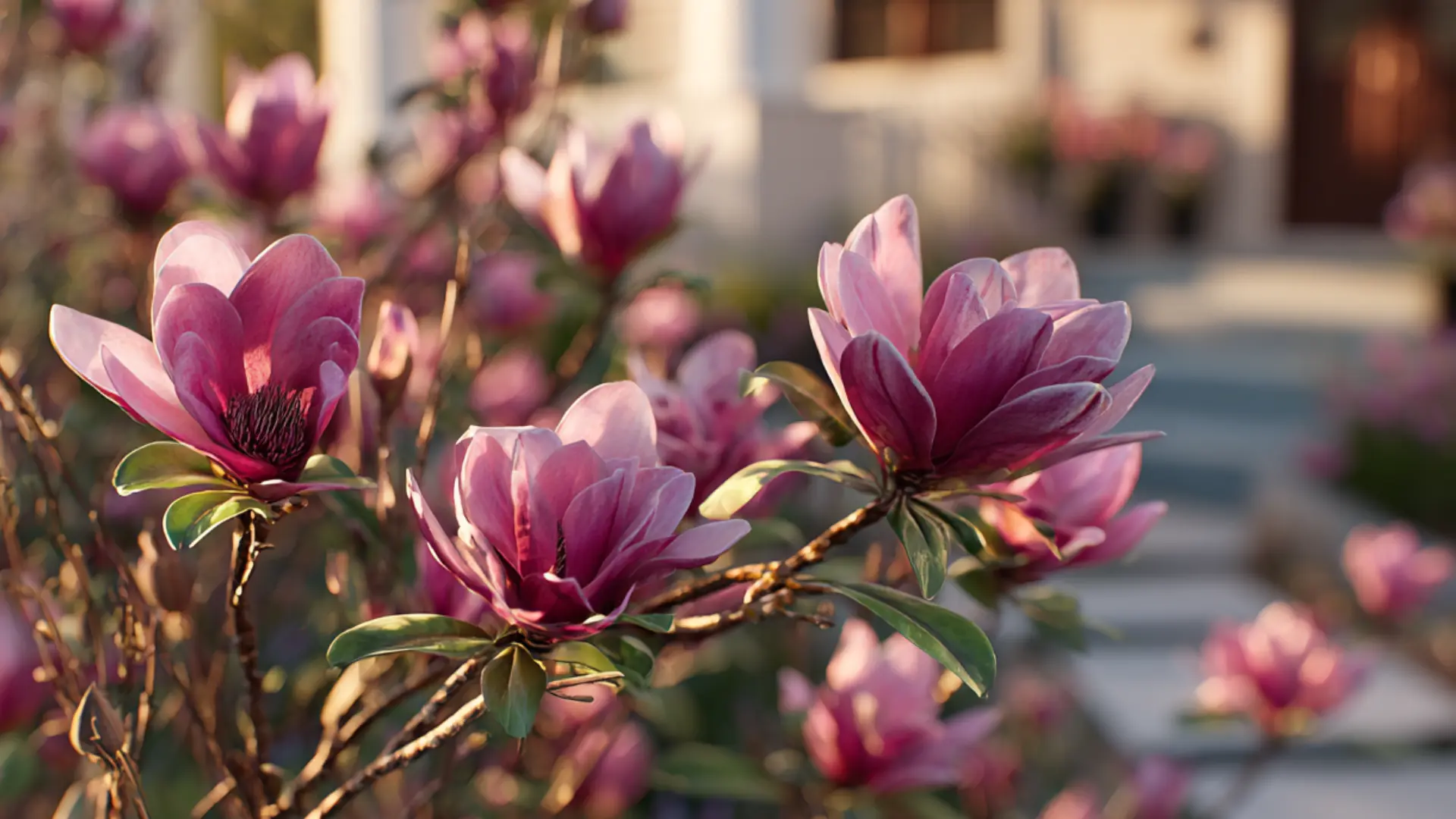
Jane Magnolia suits both indoor and outdoor growing.
If you only have room for one magnolia and live somewhere with cold springs, Jane Magnolia is the safest choice.
In the garden, it holds its own as a standalone feature plant in smaller yards.
- Deep pink to reddish-purple flowers with a later bloom time that sidesteps most frost damage
- Compact enough for smaller gardens, patios, and container growing
Sunlight: Full sun to partial shade. The later bloom time means open sunny spots carry less frost risk than they would for earlier varieties.
Watering: Moderate and consistent; does not tolerate prolonged dry periods or larger varieties.
Maintenance: Minimal. Rarely needs shaping, remove spent blooms, and leave the rest alone.
Evergreen vs Deciduous Magnolias
Most magnolias fall into one of two camps, and which one suits your garden depends largely on your climate.
- Evergreen magnolias hold their leaves year round and tend to grow larger over time. They suit warmer climates and provide a consistent garden structure across seasons.
- Deciduous magnolias shed their leaves in autumn and bloom before new foliage appears in spring. They handle cooler temperatures better and are often chosen for seasonal garden displays.
If you’re in a cooler region and not sure which to choose, start with a deciduous variety.
They’re more adaptable and less likely to struggle through a cold winter.
When and How Long do Magnolia Flowers Bloom?
Most magnolia varieties bloom in early to mid spring, though some flower in late summer depending on the type.
Deciduous magnolias tend to bloom before their leaves appear, while evergreen types like Southern Magnolia bloom later in the season.
Individual magnolia flowers typically last 1 to 2 weeks, though the overall blooming period for the tree can span several weeks.
Cooler temperatures help the blooms last a bit longer!
If your magnolia tree is not blooming, the most common reasons are late frost damage to buds, too much shade, over fertilizing with nitrogen, or the tree simply being too young to flower yet.
Botanical Characteristics of Magnolia Flowers
Magnolia flowers have a simple, open cup shape with thick, waxy tepals arranged in a spiral pattern, a trait that has remained unchanged for millions of years.
Each part of the plant has its own character:
- Leaves are broad, leathery, and dark green with a lighter underside
- Bark starts smooth and grey, developing deeper furrows as the tree matures
- Flower size ranges from 3 inches in Star Magnolia to over 12 inches in Southern Magnolia
- Fragrance varies from light and sweet to rich and lemony, depending on the variety
Magnolias also have a wide, shallow root system that spreads outward rather than deep.
This makes them sensitive to soil disturbance.
Don’t plant near driveways or foundations. Roots and concrete don’t negotiate well, and once the tree is established, there’s not much you can do about it.
How to Grow Magnolia Flowers?
Magnolias aren’t difficult, but they do have preferences.
Get the soil, sun, and planting position right from the start and they largely take care of themselves.
Unlike many fastest growing trees, magnolias grow at a moderate pace but make up for it with long lifespans and consistent seasonal blooms
1. Best Soil for Magnolia Trees
Magnolias prefer slightly acidic, well drained soil with a pH between 5.5 and 6.5.
They do not do well in waterlogged or heavily compacted ground. Adding organic compost before planting helps improve both drainage and nutrient content.
If your soil is alkaline, a soil amendment may be needed before planting.
2. Sunlight and Water Requirements
Magnolias grow best in full sun to partial shade, needing at least four to six hours of direct sunlight daily.
- Young trees need regular watering during the first two years while roots establish
- Mature trees are fairly drought tolerant but benefit from deep watering during dry spells
- Avoid overwatering, as soggy soil can lead to root rot over time
3. Pruning Magnolia Trees
Magnolias do not need heavy pruning. Light pruning right after flowering helps maintain shape without disturbing next season’s buds.
Avoid pruning in late summer or autumn as this can remove buds already forming for the following spring.
4. Planting a Magnolia Tree
The best time to plant a magnolia is in early spring or autumn when temperatures are mild.
- Dig a hole two to three times wider than the root ball, but no deeper
- Place the tree so the root flare sits just above soil level
- Backfill with a mix of native soil and compost
- Mulch around the base, keeping it a few inches away from the trunk
5. Fertilizing Magnolias
Magnolias are not heavy feeders. A slow release, balanced fertilizer applied in early spring is usually enough.
Avoid high-nitrogen fertilizers, as they encourage leafy growth at the expense of blooms. If the tree looks healthy and blooms well, fertilizing every other year is often sufficient.
Most magnolias do well in USDAhardiness zones 5 through 9, though this varies by variety. Star Magnolia is one of the hardier options for cooler regions, while Southern Magnolia suits warmer, humid climates better.
6. Preventing Magnolia Leaf Problems
Yellow leaves are often a sign of overwatering, poor drainage, or nutrient deficiency.
Brown leaf edges can point to wind damage or dry soil.
Keeping the soil consistently moist but not waterlogged, and mulching around the base, prevent most common leaf issues.
Conclusion
The magnolia flower is a reliable, long lasting addition to any garden.
From its ancient origins to its wide range of varieties, colors, and meanings, it offers more than just good looks. Good soil, adequate sunlight, and minimal interference go a long way.
Full sized trees need open ground, while compact varieties do well in containers with the right care.
Few flowering trees reward patience as consistently as a well-planted magnolia.
Frequently Asked Questions
1. How Fast Does a Magnolia Tree Grow?
Most magnolia trees grow about 1 to 2 feet per year in good soil and sunlight.
2. Do Magnolia Trees Attract Bees or Butterflies?
Magnolias attract beetles more than bees due to their ancient flower structure, though butterflies may occasionally visit the blooms.
3. How Long Does a Magnolia Tree Live?
A healthy magnolia tree can live for over 100 years with minimal care and the right growing conditions.
4. Can Magnolia Flowers be Used in Cooking or Tea?
Some magnolia petals are edible and used in certain Asian cuisines, and magnolia bark has historically been used in herbal teas.
5. Do Magnolia Trees Need a Lot of Space to Grow?
Full sized magnolias need considerable space due to their wide canopy and spreading root system, while dwarf varieties suit smaller areas.