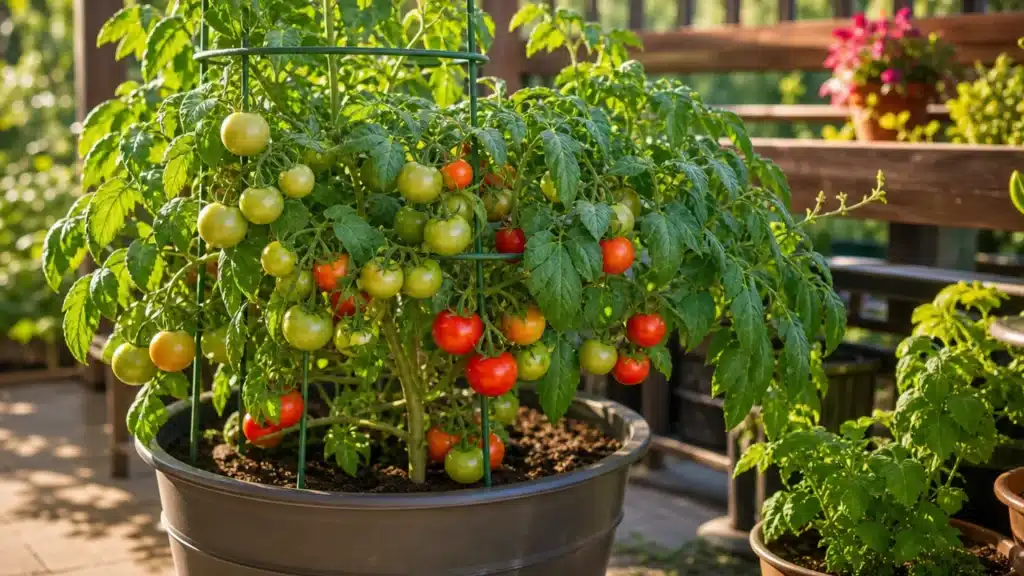
Most people assume growing tomatoes requires a backyard. It does not.
A sunny balcony, a rooftop corner, or even a small patio is enough to grow tomatoes that actually taste like tomatoes.
The secret is not complicated: the right pot, decent soil, consistent water, and enough sun.
Everything a beginner needs to know about how to grow tomatoes in pots is right here, from choosing the best variety to avoiding the mistakes that kill most container plants before harvest.
Growing Tomatoes in Containers?
Container tomatoes are a great fit for apartments, terraces, and small urban spaces.
Ground space is not needed. One large pot on a sunny balcony can produce enough cherry tomatoes to last all summer. In a pot, everything is in control.
The soil mix, drainage, and nutrients can all be adjusted from day one. Most tomato problems start with poor soil or bad drainage.
Containers fix both before they become an issue.
The same container setup works well for other vegetables, too. Pots are also easy to inspect for pests, simple to treat, and can be moved to a sunnier spot as seasons change.
In summer, keep pots off concrete or metal floors. Both surfaces heat up fast and can damage roots from below. A wooden board or tile underneath is enough to fix it
Tools and Supplies Needed to Grow Tomatoes in Pots
Getting the right setup before planting saves a lot of trouble later.
Most of these items are inexpensive and easy to find at any garden center. Having them ready before the seedling goes in the pot makes the whole process much smoother.
| Tool / Supply | Purpose |
|---|---|
| Large pot (10 to 20 gallons) | Gives roots enough space to grow |
| Vegetable potting mix | Provides drainage and nutrients |
| Slow-release tomato fertilizer | Feeds the plant through the season |
| Liquid fertilizer | Extra feeding during the flowering stage |
| Wire tomato cage | Supports the plant as it grows |
| Wooden stake and soft ties | Better support for taller varieties |
| Watering can or hose | Deep, controlled watering |
| Trowel | Planting and mixing soil |
| Soil moisture meter | Takes the guesswork out of watering |
| Mulch | Keeps soil moisture stable in heat |
| Neem oil spray | Controls pests like mites and whiteflies |
How to Grow Tomatoes in Pots: Step by Step for Beginners
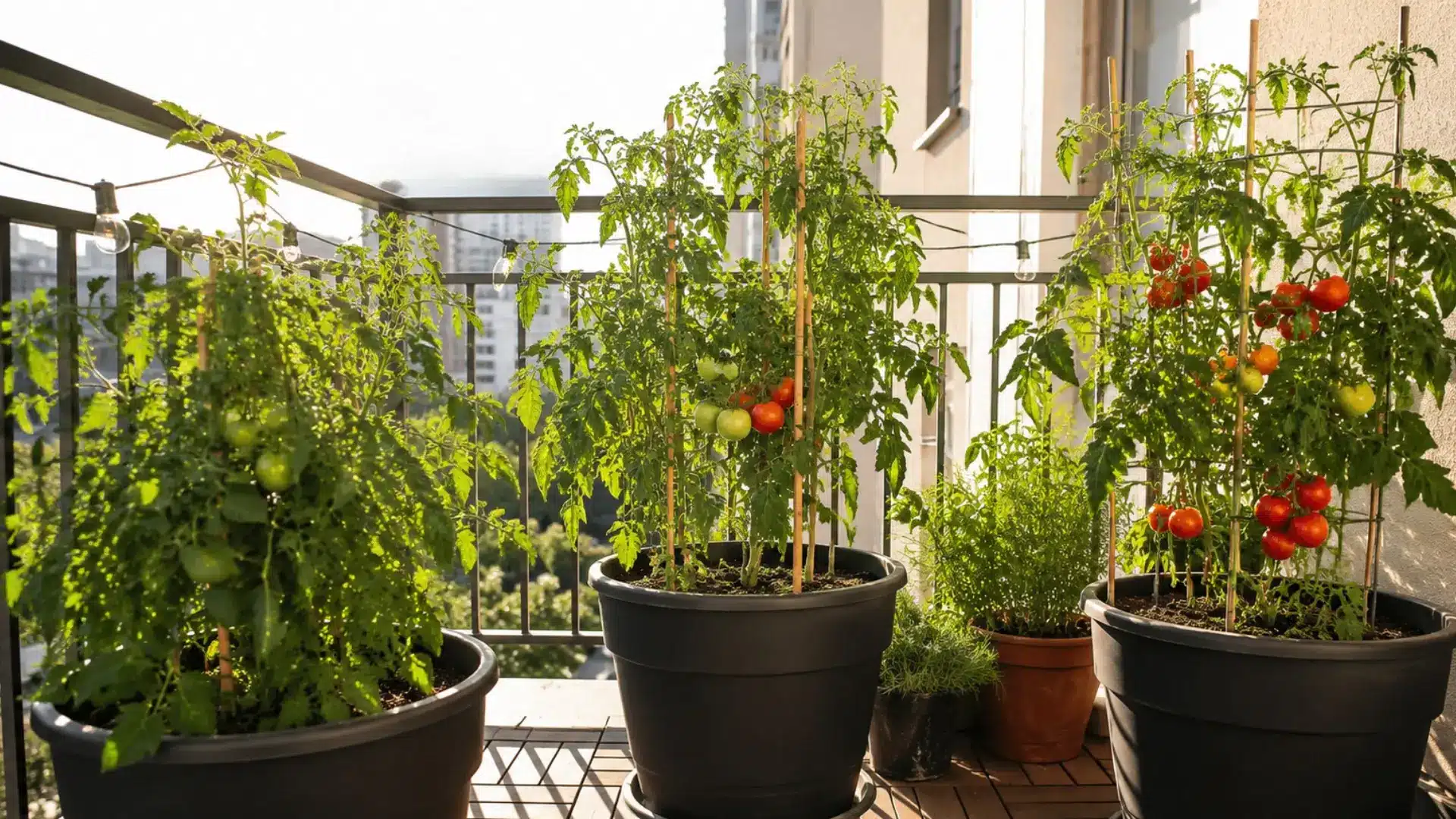
Growing tomatoes in pots is straightforward once the basics are in place.
The steps below cover everything from picking the right spot to watering correctly. Follow them in order, and most common problems will not come up at all.
Step 1: Pick a Sunny Location
Before buying anything, check how many hours of direct sun the space actually gets. South-facing and west-facing spots work best.
Fewer than six hours of sun? Stick with cherry tomatoes. They handle lower light better than larger varieties.
A spot that looks bright is not always sunny. A nearby wall can block afternoon sun completely. Track actual sun hours, not just light level.
Step 2: Fill the Pot With Quality Potting Mix
Never use garden soil or topsoil in a container. It compacts, blocks drainage, and brings in pests.
Use a vegetable potting mix with perlite or vermiculite for drainage and compost for nutrients. Fill to two inches below the rim so water soaks in instead of spilling over.
Skipping fertilizer at planting time. Potting soil loses nutrients fast with frequent watering. Add slow-release tomato fertilizer at planting and liquid feed every two weeks once flowers appear.
Step 3: Plant Tomato Seedlings Properly
Tomatoes grow roots along their buried stems, so plant deep, right up to the lowest leaves.
Before placing the seedling:
- Remove any leaves that would sit below the soil
- Loosen roots if the plant looks root-bound
- Firm the soil around the base
- Water immediately after planting
Do not bury the root ball too deep; just the stem up to the lowest leaves counts
Step 4: Add Support Early
Put the cage or stake in at planting time, not after the plant starts flopping.
Pushing a stake into a pot with an already developed root system can damage the roots and set the plant back. A wire cage works for most container varieties.
Taller indeterminate plants need a sturdy stake with soft garden ties. Avoid using string or wire directly against the stem, as it cuts into the plant as it grows.
Step 5: Water Deeply After Planting
Water slowly until it drains freely from the bottom.
This first deep watering settles the soil and gets moisture down to the lowest roots. Consistent watering from day one sets the plant up for a strong, productive season.
- Water when the top inch of soil feels dry
- In peak summer heat, this may mean once or twice a day
- Deep, less frequent watering builds stronger roots than shallow, daily splashes
Watering a little every day instead of deeply every few days. Shallow watering keeps moisture at the surface and encourages weak roots that dry out faster.
Best Tomato Varieties for Container Gardening
Not all tomatoes belong in pots. The wrong variety in a small container means a tall, struggling plant with little fruit.
Some varieties stay compact and stop growing once they set fruit.
Others keep going all season but need serious staking and a much bigger pot.
For most balconies, picking the wrong type is the fastest way to waste a whole season.
- Tumbling Tom: Bred for small pots and hanging baskets
- Sun Gold: Sweet, orange cherry that produces all season long heavily
- Heatmaster: Holds up above 35°C without dropping flowers
- San Marzano Nano: Dwarf paste tomato, fits a 10 gallon pot
- Tiny Tim: Tops out at 45 cm, works in window boxes
Not sure which tomato variety to pick? Rutgers University has done a detailed variety list worth checking before buying seeds or seedlings.
Choosing the Right Pot Size
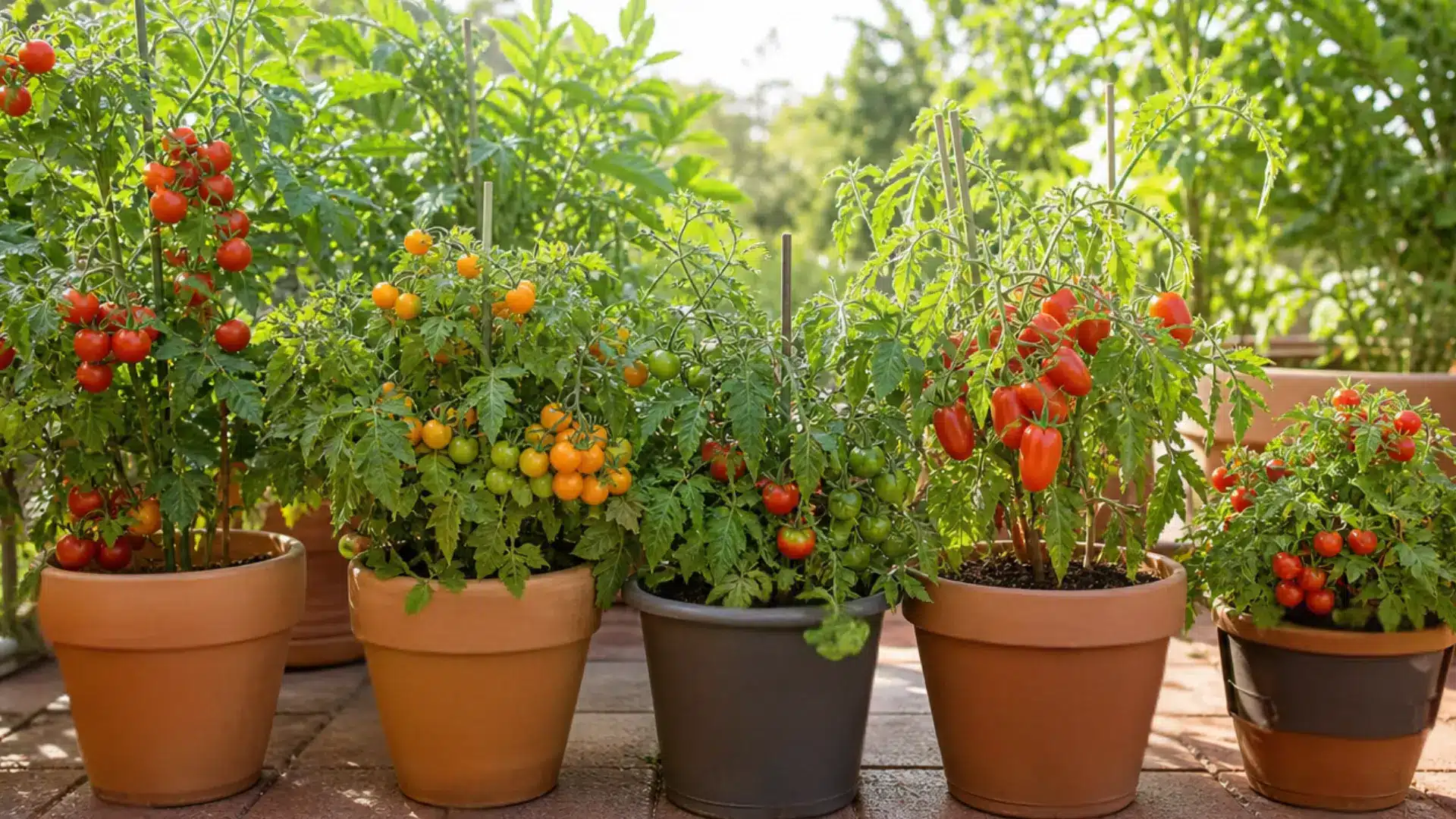
Pot size is one of the most important decisions when growing tomatoes in containers.
Too small and the roots run out of space, the soil dries out fast, and the plant spends more energy surviving than producing fruit.
5 Gallon Pot
Too small for most tomato varieties. Works only for the most compact dwarf types like Tiny Tim.
Dries out fast in summer heat and needs watering almost every day. The limited soil volume also means nutrients run out quickly, so feeding becomes a constant task.
Not recommended for beginners and best avoided unless space leaves absolutely no other option.
10 Gallon Pot
The minimum size for cherry tomatoes. Gives roots enough room to establish and holds moisture better than smaller pots.
It strikes a reasonable balance between size and manageability, making it easy to move when needed. A good starting point for anyone new to container growing.
15 Gallon Pot
The sweet spot for most container tomatoes. Works well for mid-sized varieties and most determinate types.
Holds enough soil to stay moist longer between waterings and gives roots room to spread.
Less frequent watering is needed in larger pots, making the whole process easier to manage during a busy week.
20 Gallon Pot
Best for larger indeterminate varieties that keep growing all season.
More soil means more nutrients, better moisture retention, and a more productive plant overall.
The extra volume also acts as a buffer against heat, keeping root temperature more stable on hot days. Worth the extra space if the balcony or terrace can accommodate it.
Fabric Grow Bags
A practical alternative to plastic or clay. Available in 10, 15, and 20-gallon sizes.
The porous sides allow air to reach the roots, preventing root circling and improving overall root health.
They heat up and cool down faster than plastic, so in very hot climates, placing them in a shaded spot during peak afternoon hours helps.
They are also lightweight and easy to store at the end of the season.
Pruning Tomato Plants in Containers
Pruning keeps container tomatoes manageable and productive.
The main task is removing suckers, the small shoots that grow from the V-shaped joint between the main stem and a branch.
Left unchecked, suckers grow into full branches, and the plant allocates energy to leaves rather than fruit.
For indeterminate varieties, pinch suckers off when they are small, under 5 cm. For determinate types, light pruning is enough. Always remove leaves that touch the soil to help prevent disease.
At the start of autumn, pinch off the growing tip to push the plant’s energy into ripening the fruit already on the vine.
Conclusion
Growing tomatoes in pots is one of the most rewarding things you can do in a small space.
The plant is honest: give it sun, good soil, consistent water, and a little attention, and it gives you fruit. Pick a sunny spot. Use a big enough pot. Water deeply. Feed regularly.
Check for problems early. Start with one pot and one plant this season.
The first homegrown tomato always makes the effort worth it. And most people do not stop at one pot.
Frequently Asked Questions
1. Can You Grow Tomatoes in Pots Indoors?
Yes, but only near a very bright south-facing window or under a grow light that delivers at least six hours of direct light daily.
2. How Long Does it Take for Potted Tomatoes to Produce Fruit?
Most varieties take 60 to 80 days from transplant to first harvest, depending on the variety and growing conditions.
3. Do Potted Tomatoes Need More Fertilizer than Ground-Grown Ones?
Yes, frequent watering flushes nutrients out of the soil faster, so container tomatoes need feeding more regularly than ground-planted ones.
4. Can Potted Tomatoes Survive Winter?
Only in frost-free climates does the plant die once temperatures drop below 10°C for extended periods.
5. Should Potted Tomatoes be Repotted as They Grow?
Yes, if the roots start coming out of the drainage holes, the plant has outgrown its container and needs a larger one immediately.