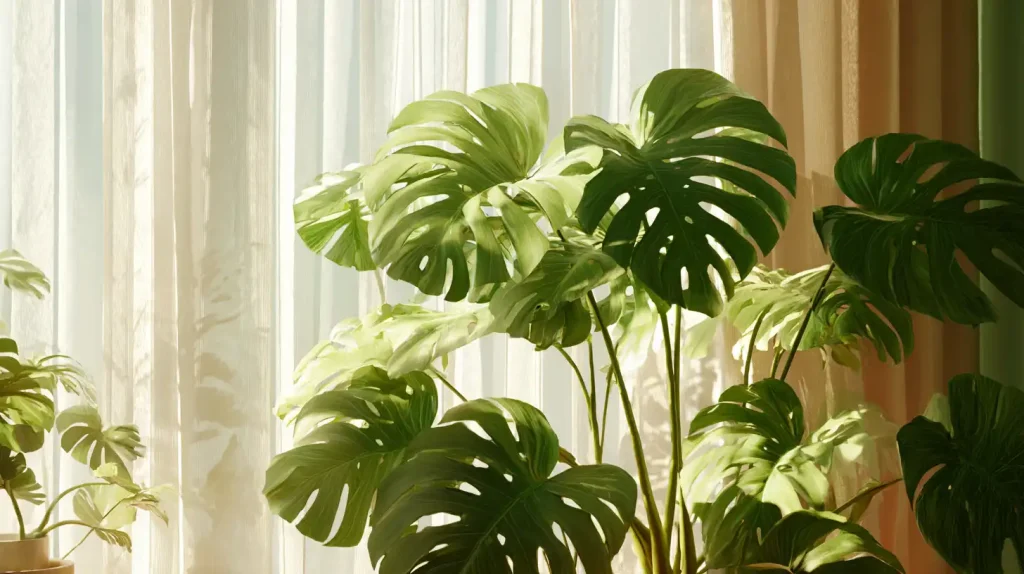
Those giant split leaves make Monstera leaves look expensive and difficult to grow, but they are actually among the easiest indoor plants to grow.
Monstera plant care doesn’t require much attention or care.
I’ll cover everything here to keep your Monstera healthy and happy indoors, even if you’ve killed every plant you’ve ever owned.
So, let’s get into it.
What Plant is Monstera Deliciosa?
Monstera plants originally come from the tropical forests of Central and South America, where they grow wild under thick tree canopies, climbing tall trees to reach sunlight.
People call them by many names, like Swiss Cheese Plant, Split-Leaf Philodendron, and of course, Monstera.
The name “Monstera” actually comes from the Latin word for “monstrous” because of those big, dramatic leaves.
They have been creating a craze in every home today.
So suddenly, everyone wants one in their living room because Monstera plants look like they are from a design magazine.
But did you know? Those dramatic split leaves, called fenestrations, are not just for show, but in the wild, they help the plant withstand heavy rain and strong winds without breaking.
Monstera Plant Care Indoor Basics
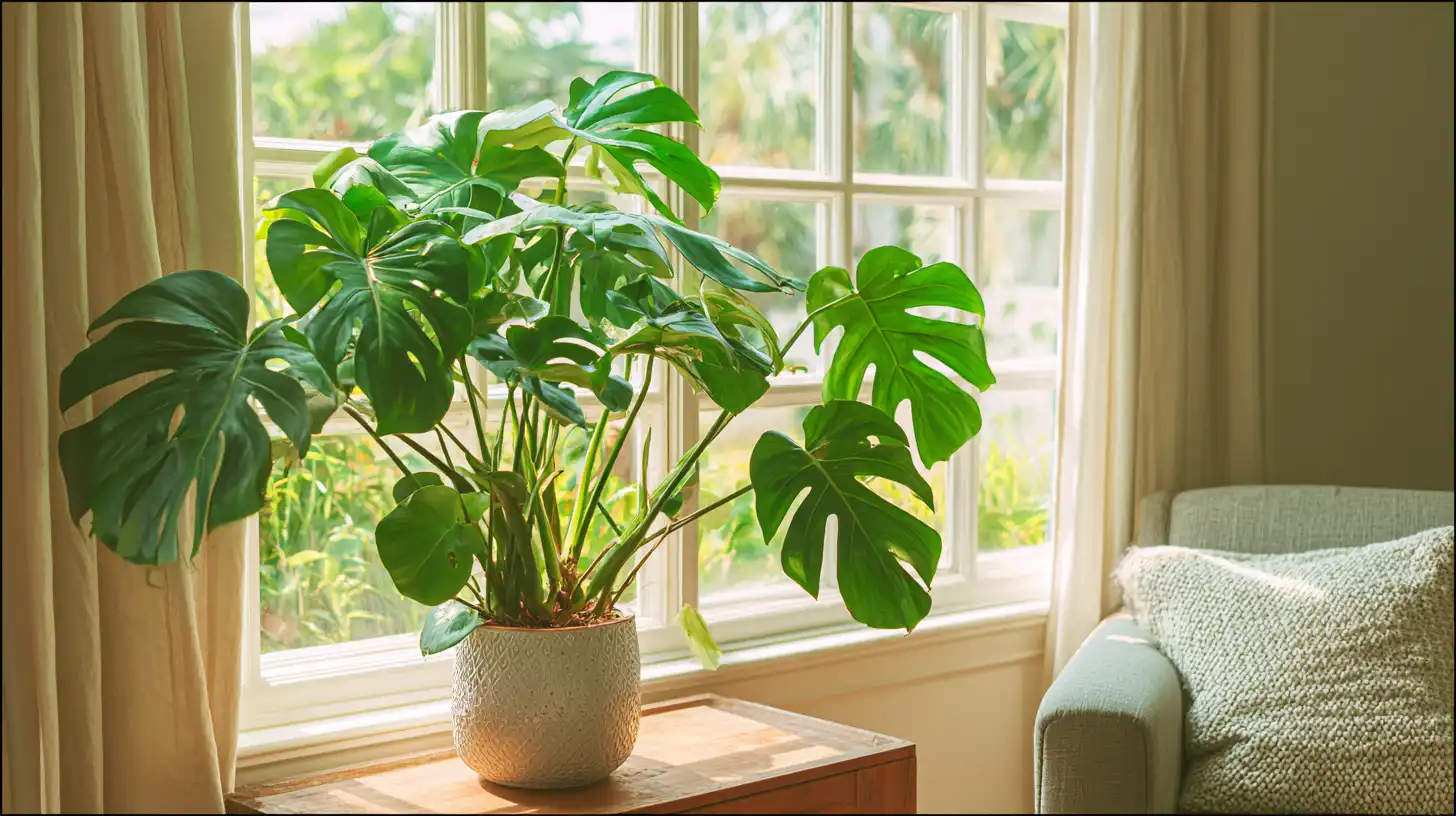
Caring for a plant indoors is simpler because no equipment is required.
You just need to understand what this plant likes and what it doesn’t.
Where to Place Monstera?
Monstera needs bright and indirect light. So, keeping them near a window is advised, but always away from direct afternoon sun.
Direct sunlight can quickly burn its leaves.
They prefer temperatures between 65°F and 85°F and don’t tolerate cold breezes, so avoid air conditioning vents and cold windows during winter.
Keep humidity above 50% using a room humidifier or a simple pebble tray filled with water.
How Often Should I Water My Monstera?
All you need to do is insert a stick into the soil, and if it comes out clean, water your Monstera.
If at least two inches of the soil feel dry, water it.
So water it once every 1 to 2 weeks, and during winter, even less.
Yellow leaves, soggy soil, and a musty smell mean you are overwatering, and drooping or curling leaves mean the plant needs more water.
Best Soil Mix for Healthy Root Growth
Monstera needs soil that drains fast and stays loose.
Regular potting soil holds too much moisture, which can suffocate the roots over time.
Combine it with perlite and orchid bark in equal parts, as this keeps roots aerated and lets excess water drain.
Always use a pot with drainage holes and never let your Monstera sit in a saucer full of standing water.
When to Feed Fertilizer?
Feed your Monstera once a month during spring and summer using a balanced liquid fertilizer.
A 20-20-20 formula diluted to half strength works well for most indoor plants. And what does that mean?
The 20-20-20 formula means a balanced, water-soluble fertilizer containing equal parts of Nitrogen, Phosphorus, and Potassium (NPK).
This provides a complete nutrient profile to support strong stems, lively foliage, and healthy roots.
Stop fertilizing completely in fall and winter, as excess fertilizer can build up as salt deposits, damaging roots over time.
When and How to Repot a Monstera Plant?
Once your Monstera settles into a good care routine, growth usually speeds up, and you need to repot it – it is important.
Monstera need repotting every one to two years. These are the signs that tell you it’s time:
- Roots are circling the bottom of the pot or poking out of the drainage holes.
- Growth has slowed down despite good care.
- Soil dries out much faster than it used to.
But how to choose a new pot? When choosing a new pot, go only one size up.
A pot that is too large holds excess moisture, which can cause root rot. Terracotta pots work better than plastic because they allow the soil to breathe and dry out evenly.
To repot, gently remove the plant, shake off old soil, trim any dead roots, and place it in a fresh chunky mix.
Water lightly and keep it out of direct sunlight for a week.
Types of Monstera You Can Grow Indoors
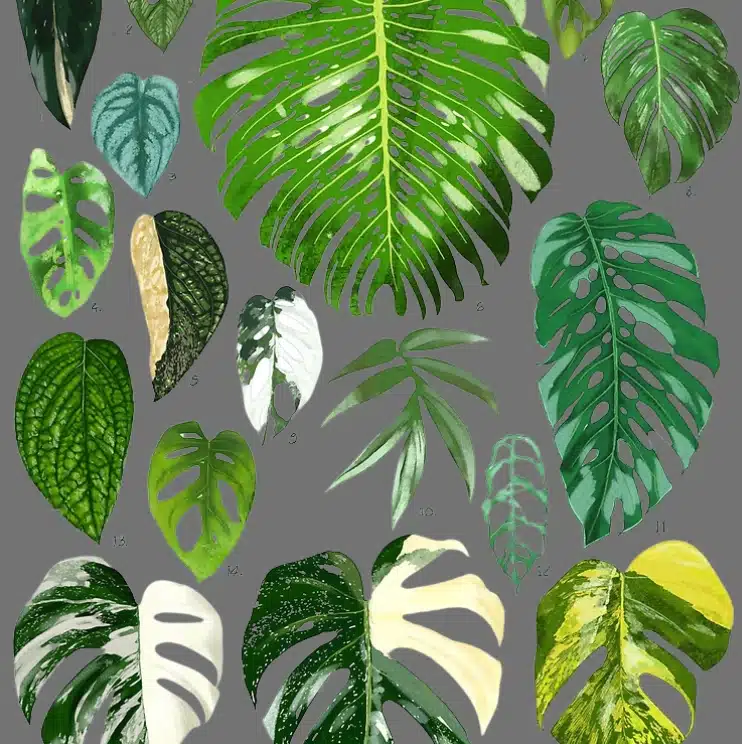
Monstera might look similar, but not all of them do. People only know the classic Monstera Deliciosa, but there is a whole family of varieties.
Some are very rare, some grow really fast, and some are mistaken for something else.
1. Monstera Adansonii
It is smaller than the classic Deliciosa but has holes, grows fast, trails beautifully, and handles indoor conditions well.
2. Monstera Thai Constellation
It has creamy white patches splashed across dark green leaves.
It grows more slowly than most Monsterrae and needs consistent, bright, indirect light to maintain its variegation.
3. Monstera Albo
This one is rare and expensive because the white sections on its leaves are more dramatic but also more fragile.
It needs extra care and consistent conditions to stay healthy.
4. Monstera Peru
It has deeply textured, almost rigid, dark-green leaves. It grows compactly and suits smaller spaces well.
5. Monstera Dubia
This is unique because its young leaves press flat against whatever surface they climb, creating a shingling effect that looks unlike any other Monstera.
6. Mini Monstera
It is not actually a Monstera at all, but belongs to a different plant family, Rhaphidophora.
Many sellers mislabel it, so knowing the difference saves you from confusion at the nursery.
How to Propagate Monstera?
Propagating a Monstera is easy, and the best time is spring or early summer, which is the time when the plant is actively growing.
Cut a stem that has at least one node and one leaf attached, because without a node, the cutting will not root.
And then place it in water or moist soil and keep it in a place that receives indirect bright light. Also, remember to change the water every few days to keep it fresh.
Roots usually appear within two to four weeks.
Once the roots reach about 2 inches, move the cutting into the soil.
Conclusion
You now know more about Monstera plant care.
Monstera does not need perfection, but it definitely needs consistency, show up for it regularly, and it will grow bigger and better every single month.
Now go check on your plant. Also, I want to hear how your Monstera is doing.
Drop a comment below and tell me about your plant. How big has it gotten? Did it just push out a new leaf?
Want more plant care tips? Read "Prayer Plant Care - A complete how-to" next.Frequently Asked Questions(FAQs)
1. Do Coffee Grounds Help Monstera?
Coffee grounds can slightly lower soil pH, which Monsteras appreciate. But too many drainage blocks can attract pests over time.
2. How Long Does a Monstera Plant Live?
Monstera can live for decades with proper care. Many indoor Monstera plants outlive their owners when given consistent light, water, and the right soil.
3. Are Monstera Toxic to Pets?
Yes. Monstera contains calcium oxalate crystals that irritate the mouths and stomachs of cats and dogs. Keep them out of your pet’s reach.