Crabapple trees are absolutely gorgeous trees. However, they have nothing to do with traditional apples, and even less to do with crabs. That said, if you want to see these gorgeous trees, it helps to know when they bloom. If you don’t, well, you might just miss out.
So, when do crabapple trees bloom? The short answer is in the spring, but it can be more complicated than that. If you want the whole story, stick around to learn more about when crabapple trees bloom.
What Is a Crabapple Tree?
A crabapple tree, also known as a Malus sylvestris, is a medium-sized tree that’s beautiful. They’re deciduous trees that bloom in warm weather, and you’ll find that they’re colorful, pink, and vibrant with colors. This makes them great ornamental trees, and many crabapple trees even make it into the early months of winter.
That said, there’s a reason they’re called crabapple trees, and this is due to the apples they grow. Well, they’re not exactly the same as apples, and they’re nothing like crabs.
Instead, crabapples are small apples that are sour and tart. Unlike your average apple, though, crabapples tend to be two inches in diameter, so you don’t have to taste them to know the difference. In fact, it’s for this reason that many people tend to use them for baking instead of eating.
When Do Crabapple Trees Bloom?
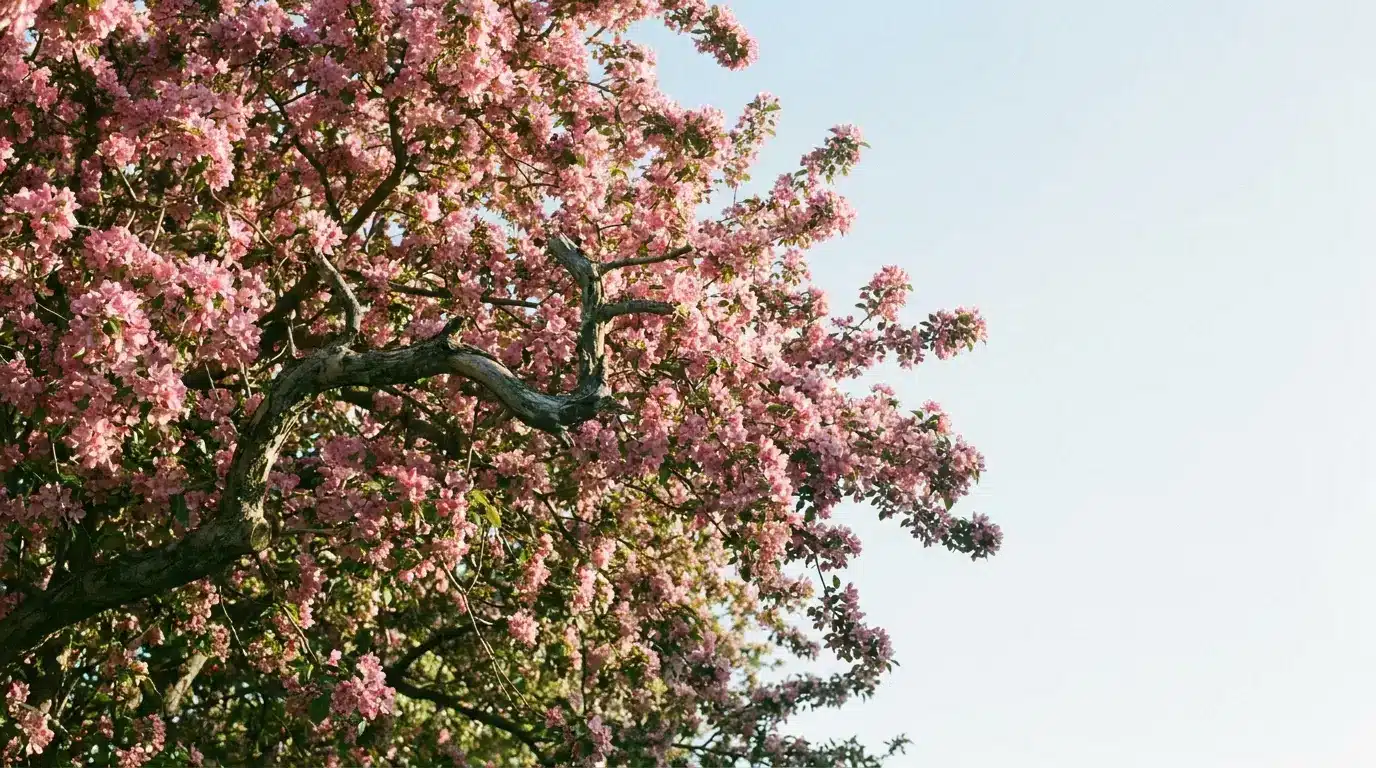
Crabapple trees are some of the first trees that start to bloom during the spring. So, if you want an early-bloomer to wow your neighbors the second winter comes to an end, you can’t go wrong with the crabapple tree.
Depending on the area, crabapple trees tend to bloom in April and May. While crabapple trees bloom during April and May, you’ll find that the blooms don’t last too long.
After around two to three weeks, the process is over. There are some rare circumstances when a crabapple tree may bloom again in the fall, but more on that later.
Factors That Impact Crabapple Tree Blooming Time
There are several factors that impact how long it takes for crabapple trees to bloom. You’ll find that something as subtle as the weather can have an impact. Learn more about the factors that influence crabapple blooming times below.
The Weather
First and foremost, and perhaps the most notable factor, is the weather. If April is warmer than usual, there’s a good chance crabapple trees will start to bloom sooner rather than later. On the other hand, if it’s been a cold April, it might take until May for a crabapple tree to bloom.
This can also vary based on the location. For example, crabapple trees in Maine may bloom into June, whereas crabapple trees further south may bloom the second it’s warm enough.
The Type of Crabapple Tree
Of course, the type of crabapple tree plays a role. Single-flowered varieties tend to bloom the quickest, and double-flowered varieties tend to bloom later.
For these reasons, it’s important to consider the specific type of crabapple tree you’re working with, along with its flower type and sequence.
X-Factors
Depending on the circumstances, there are some X-factors that come into play. One example is a drought. If a crabapple tree is stressed by poor conditions over the summer, there’s a chance that it will bloom a second time during the fall, especially if it’s a warmer one.
Another X-factor is the type of tree. If you get an unhealthy tree or the wrong crabapple tree, it may not bloom properly. For this reason, if you plan on shopping online, make sure you get a tree from a reputable vendor, like Crabapple Tree Nursery, to avoid any issues.
When Do Crabapple Trees Bloom? The Verdict
So, when do crabapple trees bloom? Typically, you can expect crabapple trees to begin their blooming process during the early spring months. The most common months tend to be April and May, but areas in the northern regions of the country may take longer; crabapple trees in Vermont and Maine may not bloom until June or July.
Still, it’s important to note that crabapple trees may not bloom for other reasons; the type of tree, its sequence, and even X-factors, like drought, can impact how long it takes for a crabapple tree to bloom.