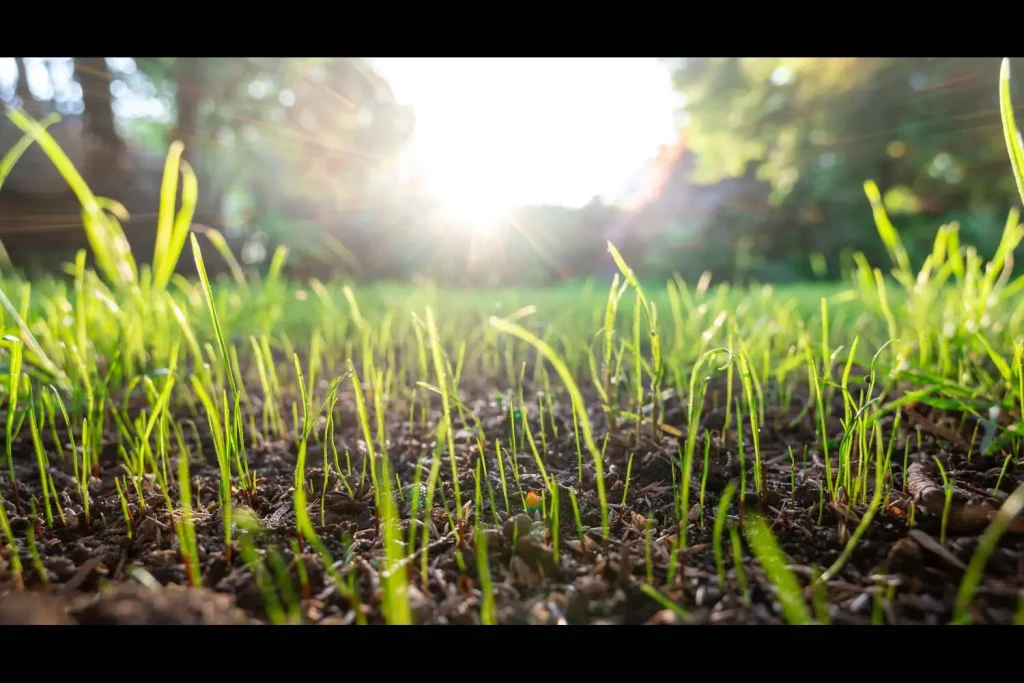
Most grass seed germinates in 5 to 30 days, and you can expect thin seedling coverage within 1 to 3 weeks under good conditions. Full, dense grass that looks like a finished lawn takes 60 to 90 days at minimum, and often a full growing season. The gap between “I see green” and “this lawn looks great” is what trips up most homeowners.
Germination time depends heavily on the grass species, soil temperature, moisture consistency, and seed-to-soil contact. Get all of those right and you see results quickly. Miss one and you can wait weeks longer than necessary.
Quick Answer: Germination Time by Grass Type
These ranges assume good soil contact, consistent moisture, and soil temperatures in the right zone for each species.
|
Grass Type |
Season |
Germination |
Optimal Soil Temp |
Full Coverage |
|---|---|---|---|---|
|
Tall Fescue |
Cool-season |
7 to 14 days |
50°F to 65°F |
60 to 90 days |
|
Kentucky Bluegrass |
Cool-season |
14 to 30 days |
50°F to 65°F |
90 to 120+ days |
|
Perennial Ryegrass |
Cool-season |
5 to 10 days |
50°F to 65°F |
45 to 60 days |
|
Fine Fescue |
Cool-season |
7 to 14 days |
50°F to 65°F |
60 to 90 days |
|
Bermuda Grass |
Warm-season |
10 to 30 days |
65°F to 70°F+ |
60 to 90 days |
|
Zoysia Grass |
Warm-season |
14 to 21 days |
65°F to 70°F+ |
90 to 120+ days |
|
Centipede Grass |
Warm-season |
14 to 21 days |
65°F to 70°F+ |
90 to 120 days |
|
St. Augustine* |
Warm-season |
Not seeded |
N/A |
Sod or plugs only |
*St. Augustine is not commonly available as seed and is almost always established from sod or plugs.
What Affects How Long Grass Seed Takes to Germinate
Soil Temperature
This is the single biggest variable. Cool-season grasses like tall fescue and perennial ryegrass prefer soil temperatures between 50 and 65 degrees. Warm-season grasses like bermuda and zoysia need soil consistently above 65 degrees. Air temperature is not the same as soil temperature. A 70-degree afternoon in early spring can still mean soil in the mid-40s. Check 2 inches deep first thing in the morning with a soil thermometer. That reading is what actually determines whether your seed will sprout.
Seed-to-Soil Contact
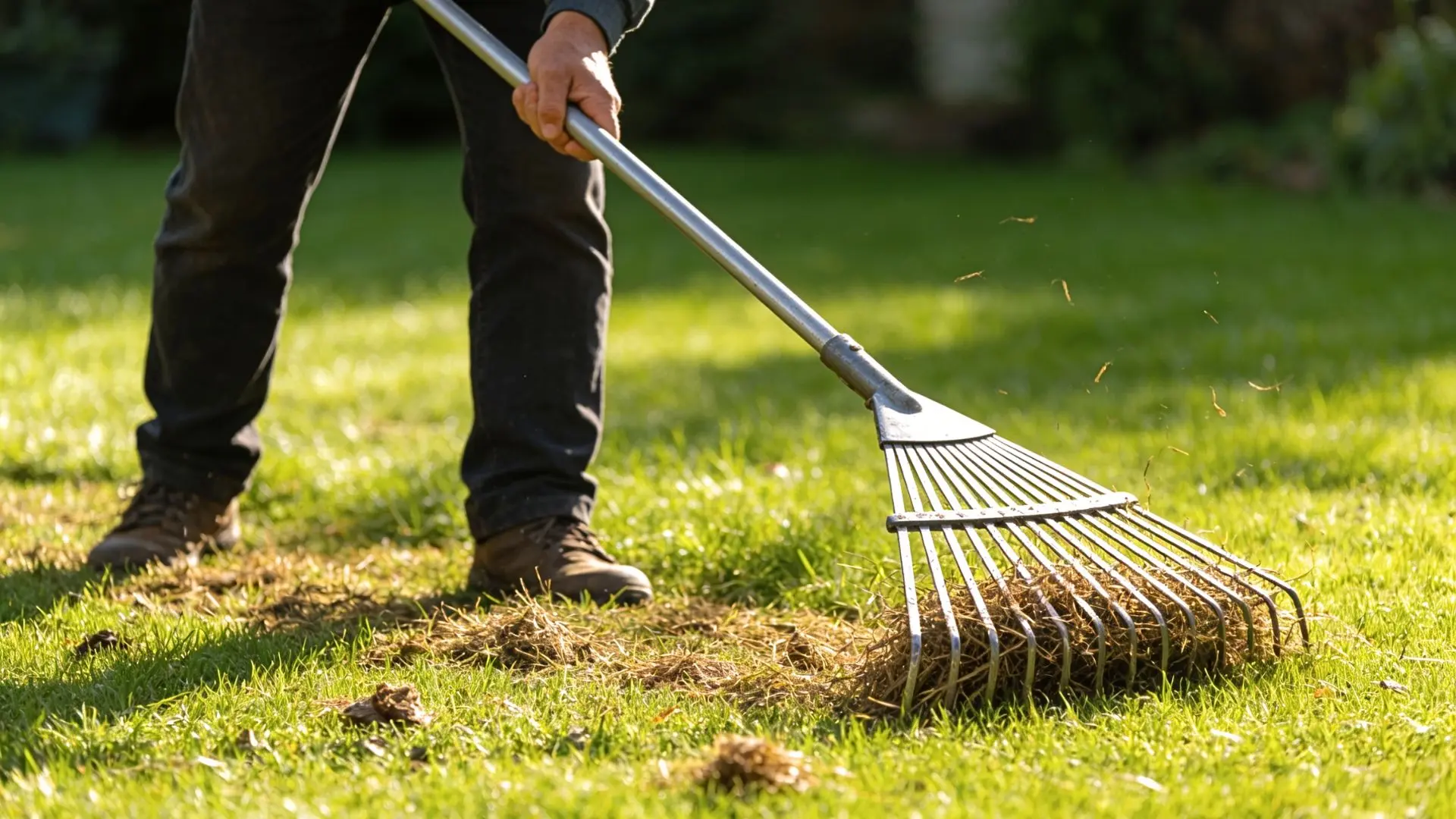
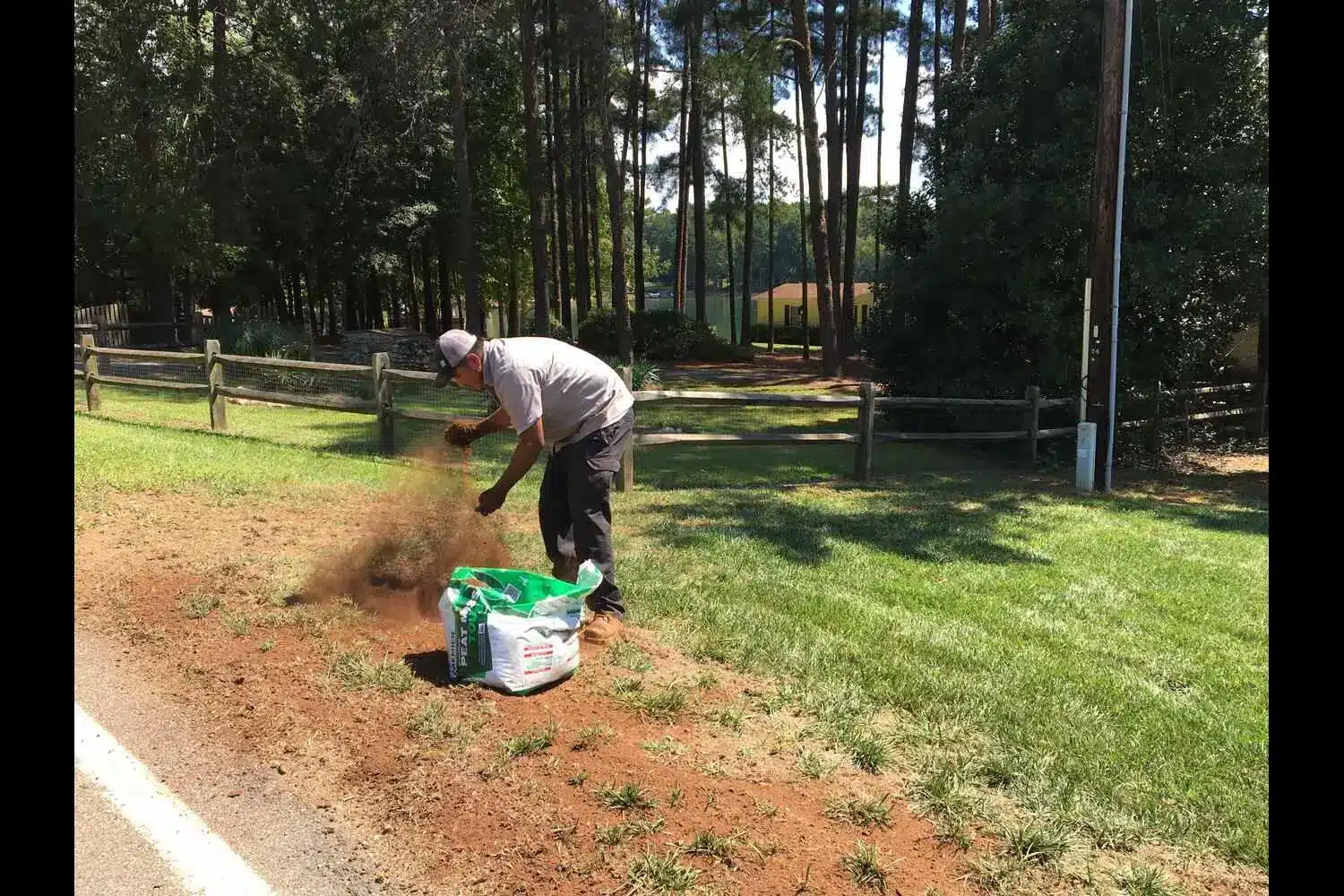
Grass seed sitting on top of thatch or loose debris will germinate slowly or not at all. It needs direct contact with moist soil. Raking or dethatching before overseeding, or using a slit-seeder, makes a significant difference. Even lightly raking seed into the surface after spreading improves contact and speeds up germination.
Moisture Consistency
New seed must stay consistently moist from planting until seedlings are established. That means light, frequent watering, sometimes twice a day in hot or dry conditions, until seeds germinate and seedlings reach about an inch tall. Letting seed dry out even once during germination can kill the process entirely.
Seed Quality
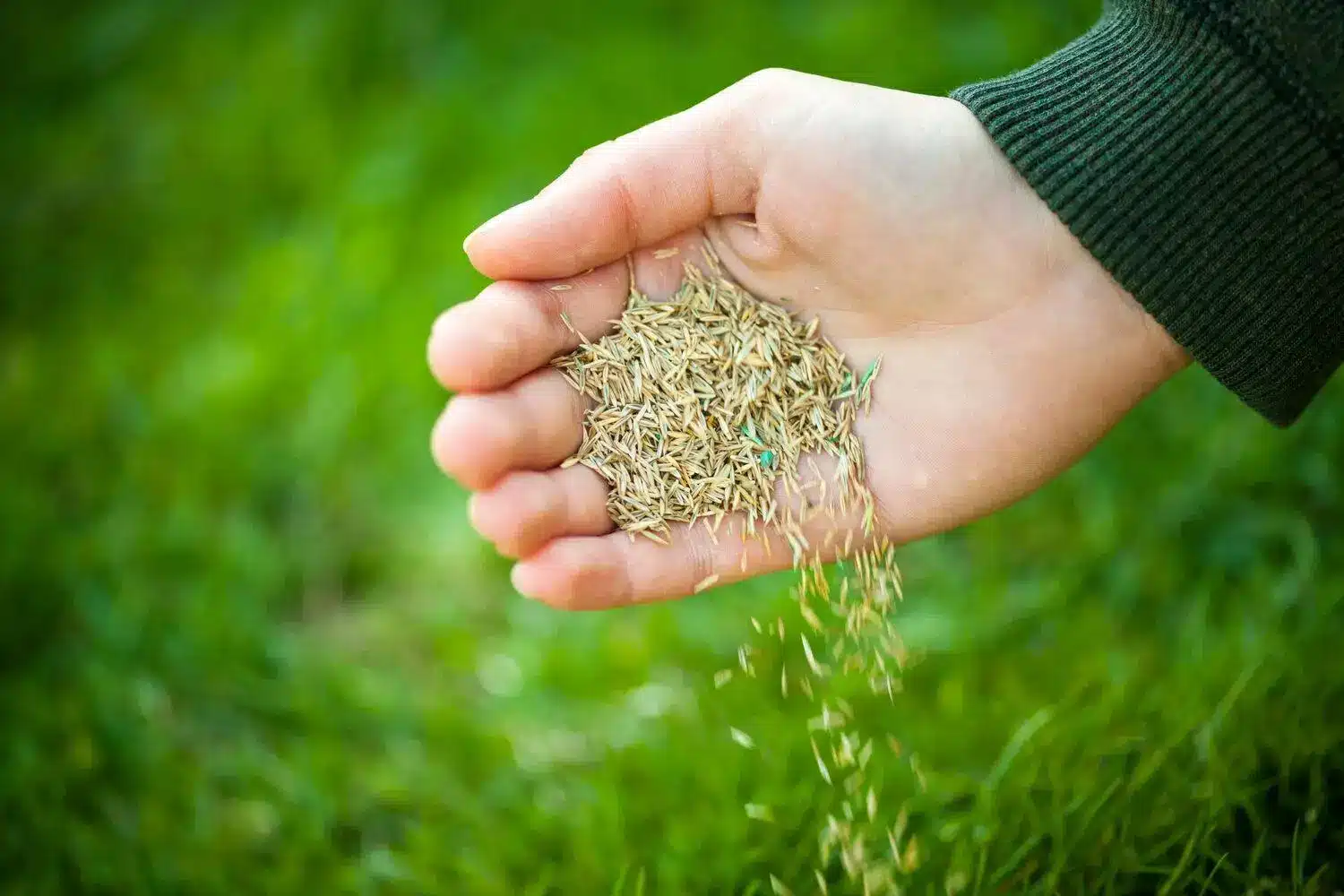
Germination rates on a seed bag assume the seed is fresh and stored correctly. Old seed or seed stored in humid conditions can have dramatically lower germination rates. Check the test date on the bag and use seed tested within the last year when possible.
Grass Seed Germination Day by Day
Here is a realistic timeline for what to expect after seeding, using tall fescue as a reference.
- Days 1 to 6: Nothing visible above ground. The seed is absorbing water and the first root is extending downward.
- Days 7 to 10: Tiny pale green shoots begin breaking the surface. Very thin, almost hair-like.
- Days 10 to 21: First true leaves appear. Coverage is still thin and patchy. This is normal.
- Days 21 to 45: Seedlings establish root systems and the stand starts to fill in. First mowing is appropriate once grass reaches 3 to 4 inches.
- Days 60 to 90+: A well-seeded, well-watered lawn looks solid by this point. Thin areas may need overseeding, but the main stand is established.
Perennial ryegrass moves faster, often showing green within 5 to 7 days. Kentucky bluegrass moves much slower, sometimes taking 3 to 4 weeks just to break the surface under ideal conditions.
Best Time of Year to Plant Grass Seed
Cool-Season Lawns: Fall Is the Best Window
For tall fescue, Kentucky bluegrass, and perennial ryegrass, fall is consistently the best time to seed. Soil temperatures are still warm enough to drive germination, air temperatures are cooling which reduces stress on new seedlings, and competition from summer weeds is fading. Late August through mid-October is the prime window across most of the northern U.S. and transition zone.
Spring seeding works but comes with more risk. You have a shorter window before heat stress hits, and crabgrass competition is much higher. If you seed cool-season grass in spring, you are racing the clock.
Warm-Season Lawns: Late Spring Through Early Summer
Bermuda, zoysia, and centipede need warm soil and warm nights to germinate reliably. Once soil temperatures are consistently above 65 degrees, you are in the right window. In the Deep South this may open in April. In the transition zone, late May into June is more typical.
What to Expect After 1 Week and 2 Weeks
After one week under good conditions, fast-germinating species like perennial ryegrass will show visible seedlings. Tall fescue may just be breaking the surface. Kentucky bluegrass and warm-season grasses likely will show nothing yet, and that is normal.
After two weeks, most cool-season grasses should show at least some germination if conditions were right. If you see almost no green after 14 to 21 days, the most common causes are soil that is too cold, seed that dried out during the germination window, or poor seed-to-soil contact. Check soil temperature and review your watering schedule before assuming the seed is bad.
What to Do After Grass Seed Germinates
Once seedlings are visible, shift from frequent shallow watering to less frequent but deeper watering. The goal is to push roots deeper into the soil. Wait to mow until the grass reaches 3 to 4 inches, use a sharp blade, and do not remove more than one-third of the height in a single cut. Keep heavy foot traffic and dog activity off the seeded area for the first 4 to 6 weeks.
Choosing the right grass seed for your lawn type and climate is just as important as timing and technique. A high-quality seed blend with a strong germination rate gives you a meaningful head start over generic box-store seed.
FAQ
Why Is My Grass Seed Not Germinating After 2 Weeks?
The most common causes are soil temperature below the germination threshold, seed drying out at some point during the germination window, or poor seed-to-soil contact. Dig up a few seeds. If they have swelled and turned soft or dark, they died from moisture stress. If they look unchanged, the soil is likely too cold. If they show a tiny root starting, germination is happening and you just need to keep waiting.
How Long Does Zoysia Grass Seed Take to Grow?
Zoysia is one of the slower-germinating warm-season grasses, typically taking 14 to 21 days to germinate and significantly longer to form a dense lawn. Full establishment from seed can take an entire growing season. Many homeowners choose sod or plugs for zoysia because seed establishment is slow and the lawn can look thin and patchy for months.
How Long Does Grass Seed Take to Grow in Fall?
Fall seeding for cool-season grasses typically produces faster, more even germination than spring seeding because soil temperatures are in the optimal range. Expect germination in 7 to 14 days for tall fescue and perennial ryegrass when soil is between 55 and 65 degrees. The later you push into fall, the slower germination becomes. Mid-October is roughly the last practical window for most of the northern U.S. before cold soil temperatures stall the process until spring.
How Long Before I Can Walk on New Grass Seed?
Minimize traffic on seeded areas for the first 4 to 6 weeks. Light foot traffic to check on the seedbed is fine, but sustained use should be avoided until the grass has been mowed 2 to 3 times and is clearly rooted in.
How Long Does It Take for Grass Seed to Grow Fully?
A newly seeded lawn looks like a finished lawn in 60 to 90 days under good conditions for most grass types. A truly mature, traffic-tolerant stand often takes a full growing season. Kentucky bluegrass and zoysia are particularly slow and may take 12 to 18 months from seed to look their best.