Planning a kitchen renovation is exciting.
You finally get to choose the cabinets you’ve been saving inspiration photos for. New countertops. Updated lighting. Fresh paint. Maybe even that oversized farmhouse sink you’ve wanted for years.
Most homeowners spend weeks comparing finishes, colours, layouts, and appliances before the first contractor ever arrives.
But surprisingly few spend an hour looking for the hidden problems that could be sitting behind the existing kitchen.
That’s unfortunate, because kitchens have one thing every other room in the house doesn’t.
Water.
Sinks, dishwashers, refrigerators, ice makers, drains, supply lines, shut-off valves, garbage disposals, and plumbing hidden inside walls all create opportunities for small problems to quietly develop over time.
A renovation is actually the perfect opportunity to catch those issues before they’re hidden behind beautiful new finishes.
Here are a few areas worth checking before your kitchen makeover begins.
1. Empty Everything From Under the Sink
The cabinet beneath the kitchen sink is one of the hardest-working spaces in the house.
It’s also one of the easiest to ignore.
Cleaning supplies, recycling bags, paper towels, and miscellaneous household items tend to pile up underneath the sink, making it difficult to notice subtle warning signs.
Before your renovation begins, completely empty the cabinet.
Use a flashlight and inspect every corner.
Look for:
- Water stains
- Swollen cabinet material
- Soft wood
- Rust around plumbing connections
- Dampness
- Mold or mildew
- Musty smells
Even if everything appears dry, run both hot and cold water for a few minutes while watching the drain connections underneath.
Small drips often go unnoticed for months because they only occur while water is flowing.
Finding one now is much easier than discovering it after new cabinetry has been installed.

2. Don’t Ignore a Slow Kitchen Drain
Most homeowners have experienced a slow kitchen sink at some point.
The water takes a little longer to disappear. Occasionally there’s an unpleasant smell. Maybe the sink backs up every few weeks before eventually draining again.
It’s tempting to think that’s simply part of owning a home.
Often, it isn’t.
Grease buildup, food debris, soap residue, and developing blockages can gradually reduce drainage long before the sink stops working altogether.
Before investing thousands of dollars into new cabinets and countertops, it’s worth addressing the underlying issue. Professional drain cleaning can remove stubborn buildup, improve drainage, and help ensure your kitchen plumbing is working properly before the renovation begins.
3. Pull the Dishwasher Out
Dishwashers are responsible for a surprising number of hidden water problems.
The challenge is that most homeowners never actually see behind them.
Supply lines can slowly drip.
Drain hoses can loosen over time.
Door seals eventually wear out.
Small leaks often remain hidden until flooring begins to warp or cabinet bases start swelling.
If your renovation already involves replacing flooring or cabinetry, ask your contractor to pull the dishwasher out completely.
Five minutes of inspection could reveal a problem that has been quietly developing for years.
4. Look Down Before You Look Up
New flooring has a way of making an entire kitchen feel brand new.
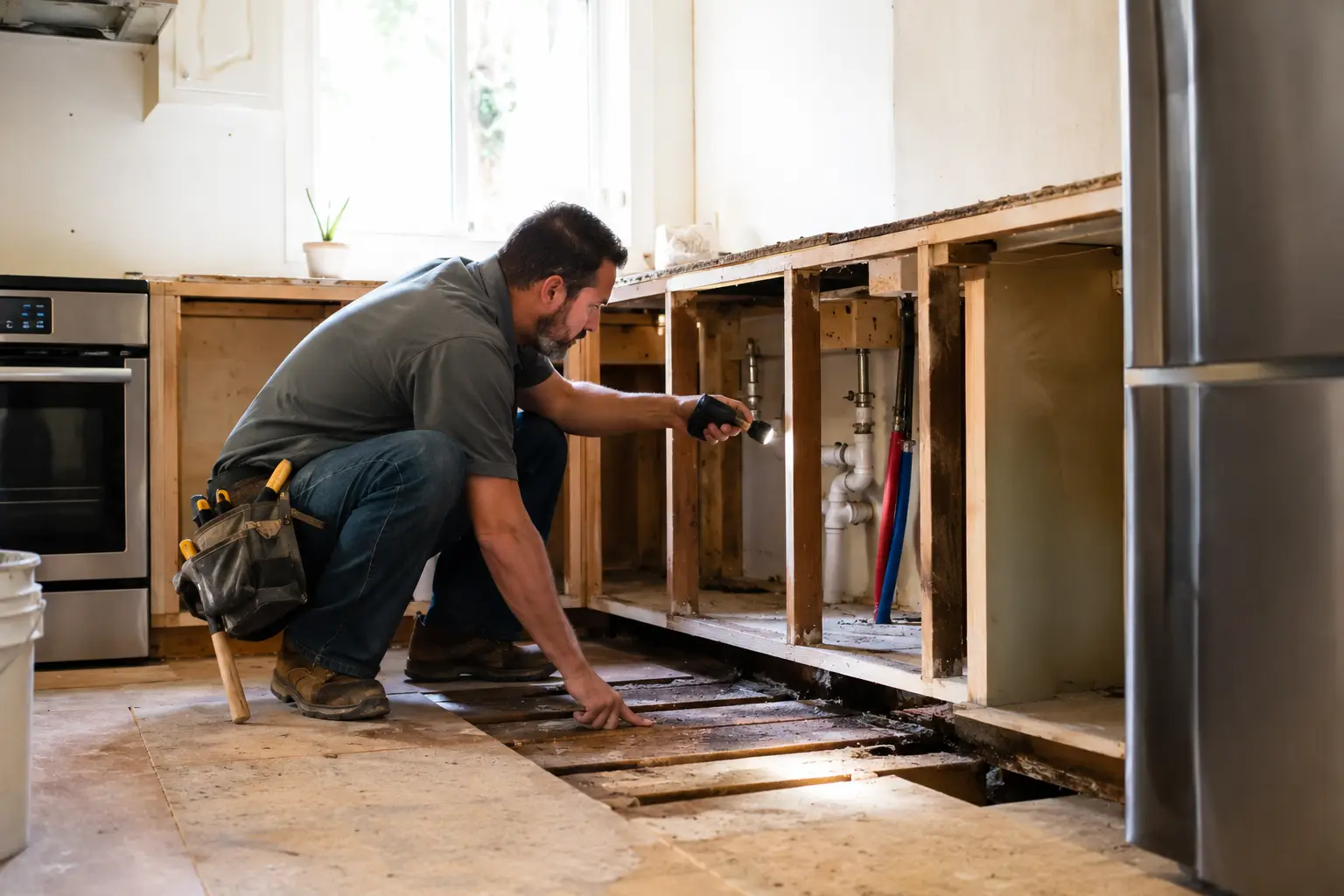
But before installing luxury vinyl, hardwood, laminate, or tile, take a close look at the floor that’s already there.
Watch for:
- Soft spots
- Uneven areas
- Warping
- Discolouration
- Loose flooring
- Persistent musty odours
These signs don’t automatically mean there’s an active plumbing leak.
They do suggest it’s worth investigating before covering everything with new materials.
A renovation should solve existing problems, not simply hide them.
5. Cabinet Damage Usually Has a Story Behind It
Cabinets rarely swell without a reason.
Neither does peeling paint around the sink.
Or bubbling laminate.
Or baseboards that suddenly begin separating from the wall.
Water has an incredible ability to travel unnoticed.
A tiny leak beneath a sink can slowly spread into surrounding cabinetry, flooring, drywall, and insulation long before obvious damage appears.
That’s why cosmetic repairs alone don’t always solve the problem.
Replacing a cabinet door while ignoring the source of the moisture often means the same issue returns later.
6. Trust Your Nose
Sometimes your home tells you something before your eyes do.
A persistent musty smell around the sink.
An unusual damp smell after running the dishwasher.
An odour that seems to appear every few days for no obvious reason.
Those smells deserve attention.
Moisture hidden behind cabinets or beneath flooring often creates ideal conditions for mold growth.
Even if you can’t immediately see the source, it’s worth investigating before beginning cosmetic upgrades.
7. Renovate Once
Every homeowner wants a renovation that lasts.
The best kitchen renovations aren’t just beautiful.
They’re built on a solid foundation.
That means taking care of the things nobody sees once the project is finished.
Checking plumbing connections.
Making sure drains are functioning properly.
Confirming there isn’t hidden moisture beneath the flooring.
Addressing small issues before they become major repairs.
Sometimes a leak is more than a plumbing repair. If water has already reached your cabinets, drywall, insulation, or subfloor, simply fixing the source of the leak may not be enough. Understanding the water damage restoration process before rebuilding can help ensure hidden moisture is properly addressed, reducing the risk of future mould, lingering odours, or damage beneath your beautiful new finishes.
A Few Hours Today Can Save Thousands Tomorrow
Kitchen renovations are significant investments.
Most homeowners naturally focus on the exciting decisions like colours, lighting, hardware, and countertops.
Those choices absolutely matter.
But the hidden parts of the room deserve just as much attention.
An afternoon spent inspecting plumbing, checking for moisture, and addressing small concerns can prevent frustrating setbacks after the renovation is complete.
The goal isn’t to expect the worst.
It’s simply to make sure your beautiful new kitchen is built on a foundation that’s just as reliable as it looks.