There are numerous financial decisions involved in opening or growing a restaurant business; however, few are as important and long-term as investing in industrial kitchen equipment. Though purchase price usually takes center stage, the more seasoned restaurateurs take into account the cost-effectiveness of such equipment over several years. The longevity, maintenance requirements, efficiency of use, and even resale potential are all factors in making decisions regarding what type of equipment will provide a good ROI over its operational lifetime.
The Cost of Equipment Failure in Peak Hours
It is unlikely for the equipment breakdown to occur at just one station. In the case of a lunch or dinner rush, it may result in inefficiency at every level of the kitchen. According to industry experts, one hour of downtime may result in a loss of revenue of between $500 and $2,000.
A bad prep table is an example of how fast operational problems grow out of control. With a lack of sufficient preparation area, chefs need to perform more steps between different stations, thus making the food assembling process and ticket completion time longer. Because of these delays, servers get their orders later, tables turn less often, and customers are becoming less satisfied. Poor online reviews may be a hidden cost that keeps hurting revenue even after the initial repair problem is solved.
While assessing the costs associated with the industrial kitchen equipment replacement, restaurant owners should look further than just the purchase price. Financial considerations include:
- Losses from interrupted services.
- Cost of emergency repairs and labor.
- Higher labor costs because of slowed-down processes.
- Greater chances of food waste due to delays.
- Impact on the customer experience and reputation.
It corresponds to the principle of total cost of ownership (TCO), which assesses the cost incurred during the whole lifetime of the equipment rather than just the cost of purchase. Sometimes more expensive equipment turns out to be cheaper overall when taking into consideration maintenance and replacement costs.
Why Material Transparency Matters for Longevity
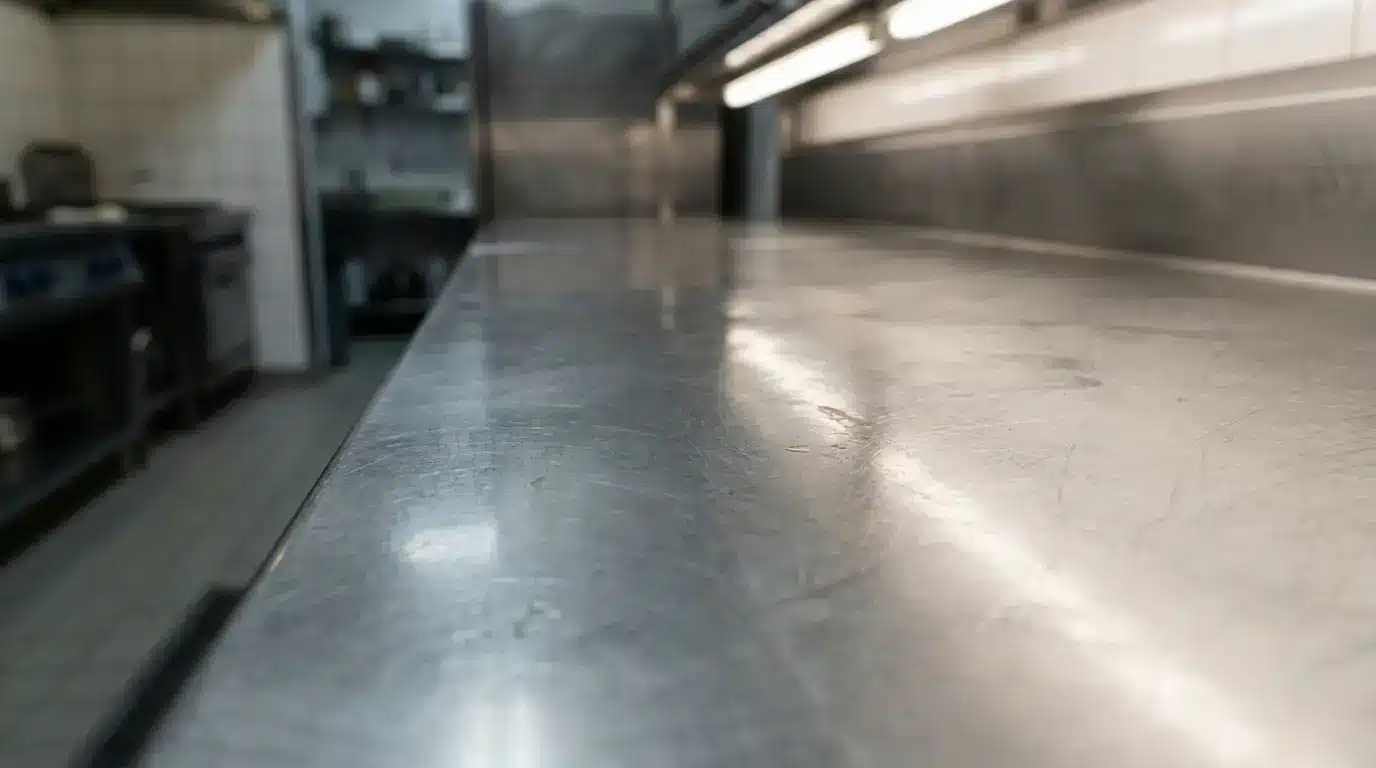
Stainless steel varies in terms of performance in commercial settings. Knowledge of material transparency allows one to foresee possible problems and lifespan in advance before making any purchase decision.
For instance, there is a difference between T-304 and T-430 stainless steel. While T-304 features more nickel, which means better protection against corrosion in wet kitchens with acid components and cleaning substances, T-430 is suitable for most purposes but works better in dry surroundings with fewer corrosive agents. The use of T-304 results in saving up to 15% of labor costs for cleaning, as the equipment looks good without extensive maintenance.
Material thickness is another factor that affects longevity. Equipment made from 18-gauge steel will be able to stay rigid for about 15-20 years. However, devices produced from 20-gauge steel will last about 5-8 years, depending on the heavy use of mixing machines, food containers, and kitchen appliances.
According to data collected by industrial manufacturers like AmGood Supply, top-quality commercial-grade stainless steel finishes provide a drastic reduction in expenses associated with maintenance. Consistency of materials, sturdy build, and clear manufacturing standards make equipment lifespan predictable.
In other words, looking at durability and not just the purchase cost of equipment will help you save money and ensure consistency in your business operations for years to come.
FAQ
How Long Should a Prep Table Last?
A commercial prep table made of quality 18-gauge stainless steel will work for up to 15 to 20 years if it is maintained well. The life expectancy of a product depends on the frequency of use, methods of cleaning, and exposure to food and chemical substances.
What Is the Resale Value of NSF Equipment?
Stainless steel equipment certified by NSF usually has higher resale value than non-certified appliances. Depending on the condition of a product, its age, and the current demand on the market, commercial equipment may cost 40-60% of its initial price. A good reputation of a manufacturer like AmGood Supply also helps with the resale of equipment.