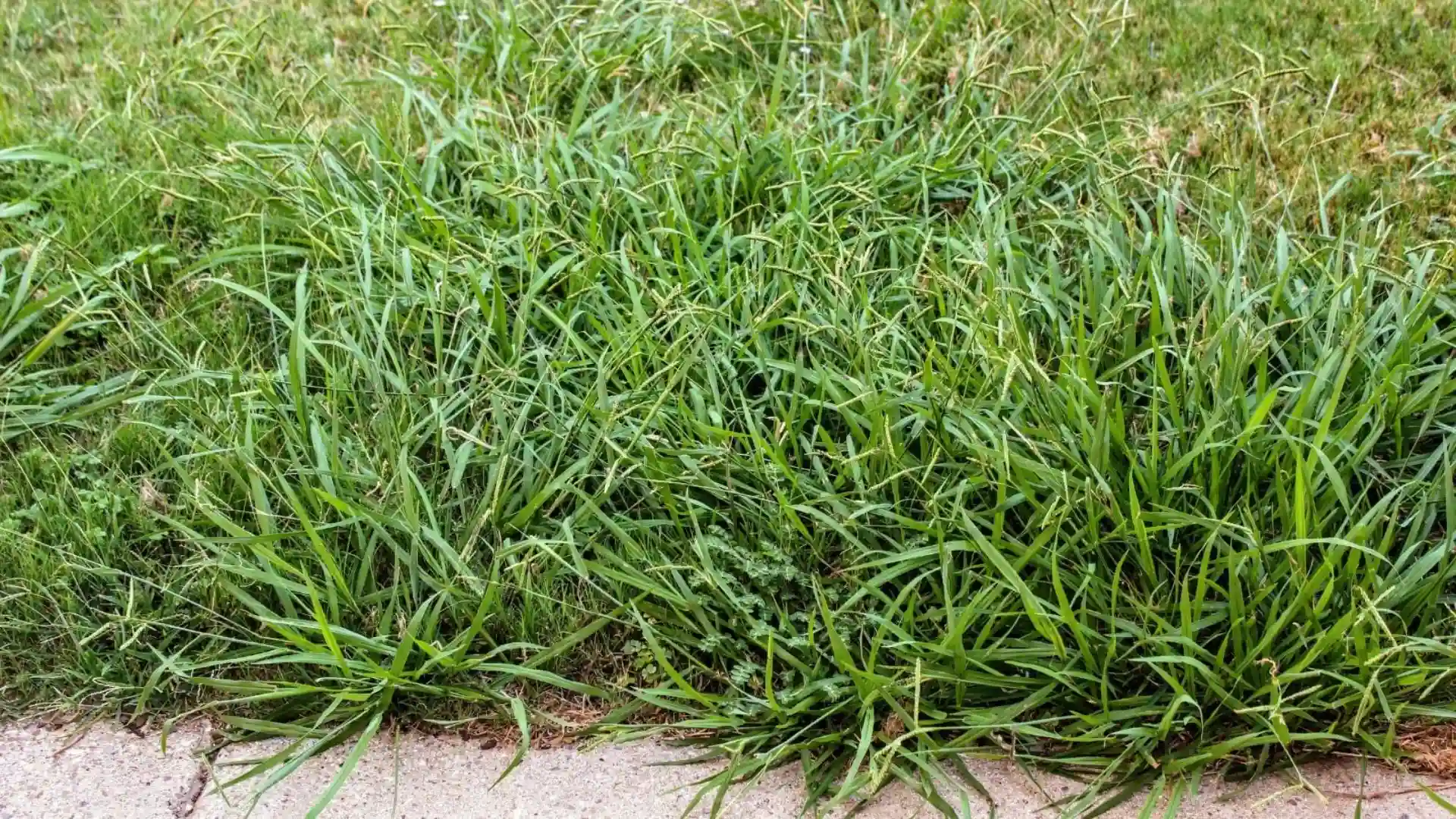
Thatch buildup is the layer of dead grass, roots, and debris between your soil and living grass, and it chokes your lawn’s ability to breathe.
When it exceeds half an inch, your grass struggles to absorb water and nutrients, turning it patchy and weak.
Dethatching fixes this problem fast.
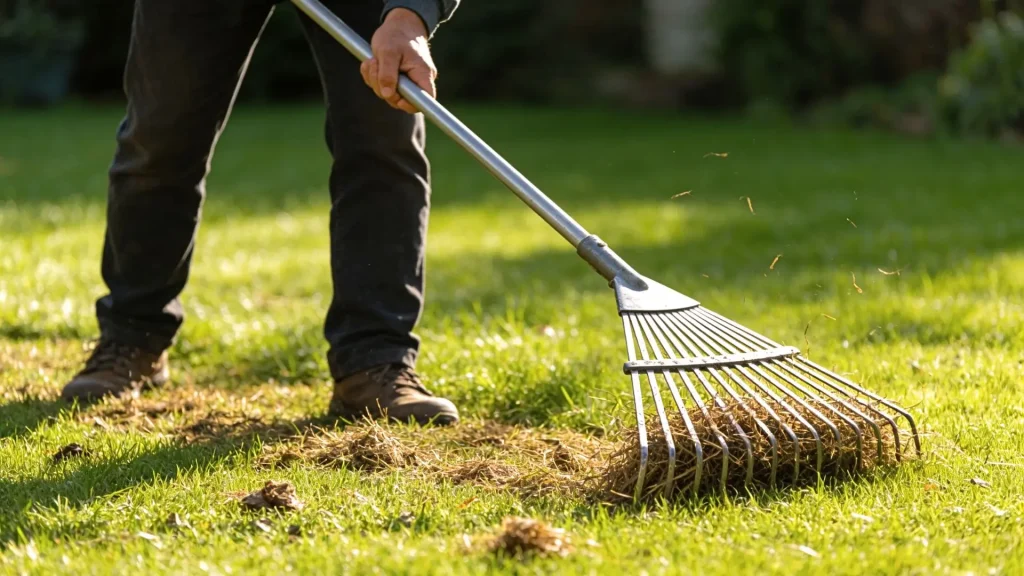
The fix is a thatching rake, worked across the lawn in spring or fall while the grass is actively growing.
For thick thatch, rent a power dethatcher for faster results.
What is Dethatching?
Thatch is the layer of dead grass, roots, and stems that builds up between your green blades and the soil. A thin layer is fine.
It even helps protect your lawn a little. But when that layer gets too thick, it turns into a problem.
Dethatching just means clearing that layer out – by hand with a rake, or with a machine if the job’s too big for your arms.
I’ve pulled back thatch on lawns that looked half-dead and found roots that were barely an inch deep — that’s what a thick mat does over time.
It can look thin, dry, or spongy underfoot.
Once you clear it out, your lawn can breathe again. Water soaks in, roots grow stronger, and your grass comes back greener and healthier.
Do You Even Need to do This?
Don’t dethatch on a guess.
Push a screwdriver into damp soil. If it slides in easily, you’re fine. If it takes real effort to get more than an inch or two down, thatch is likely blocking the way.
For a more exact read, cut a small wedge out of your lawn, about 2 inches deep, and look at the layer between the green blades and the soil.
Under half an inch, leave it alone; thatch that thin is actually helping your lawn. Past half an inch, it’s time to deal with it.
Skipping this step is how people dethatch a lawn that didn’t need it, which just stresses grass for no reason.
Takes two minutes and saves you a wasted afternoon.
Tools Required for Lawn Dethatching
The right tools make this job faster and save your back, too. And what you need depends on the size of your lawn and the thickness of the thatch.
- Thatching rake
- Power rake
- Vertical mower (verticutter)
- Leaf rake
- Lawn mower
- Garden hose or sprinkler
Project Card
| Field | Detail |
|---|---|
| Working Time | 1–2 hours (average-size lawn, manual thatching rake) |
| Total Time | 1–2 days (includes watering lightly the day before) |
| Difficulty Level | Beginner |
| Estimated Cost | $20–$40 for a thatching rake, or $60–$100/day to rent a power dethatcher for larger lawns |
| Number of People Needed | 1 |
How to Dethatch a Lawn: Step-by-Step
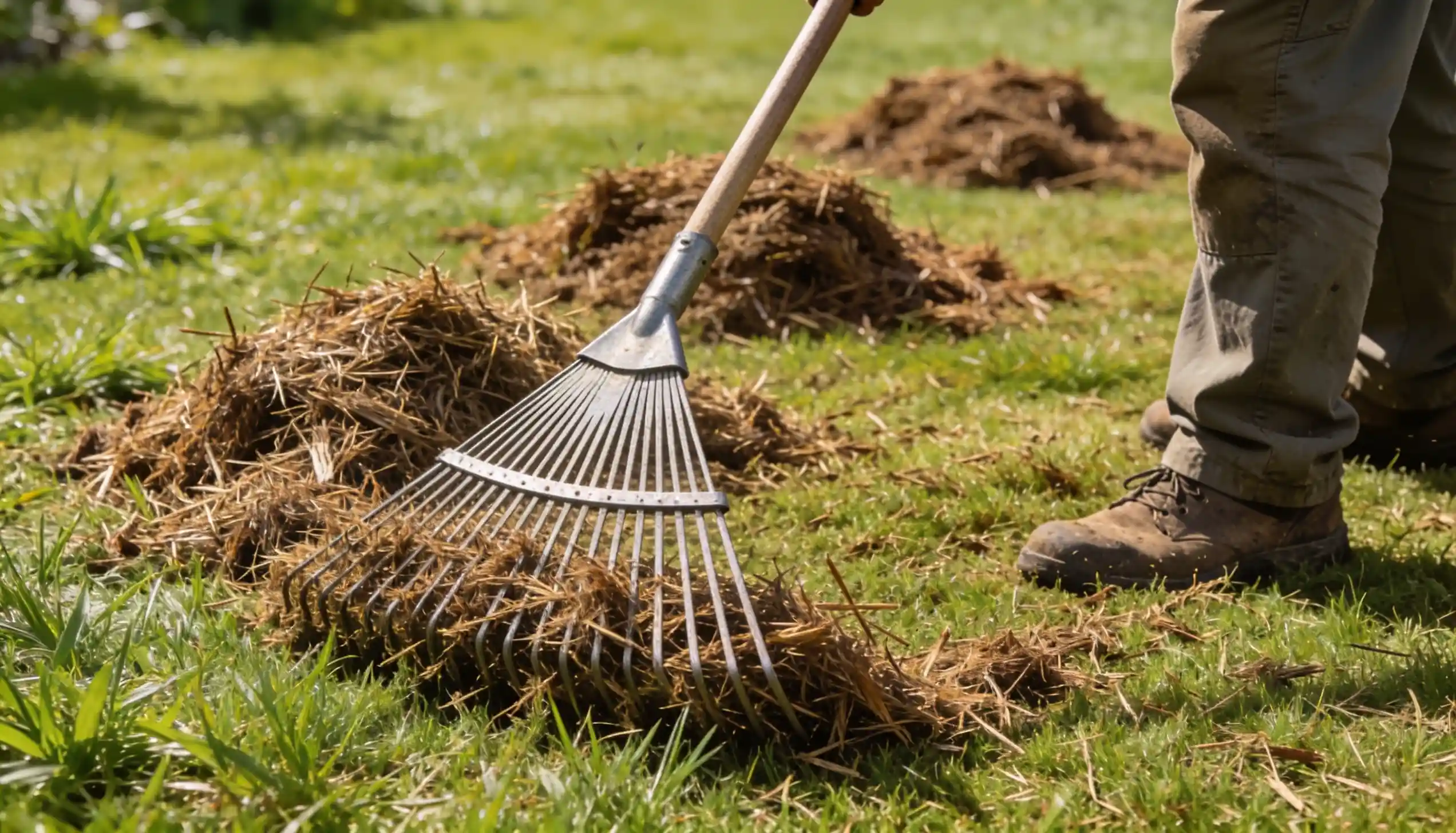
Dethatching isn’t complicated, and you definitely don’t need expensive equipment or professional help to do it. Here’s how it goes.
Step 1: Mow Your Lawn Short
Cut your grass to about half its normal height, giving you better access to the thatch layer underneath. Don’t scalp it, though.
Just give it a low, even trim.
Step 2: Water lightly a Day or Two Before
Water it beforehand so you get soil that’s slightly moist, and not soggy. Dry soil fights you the whole way through. Wet soil tears out healthy roots along with the dead stuff.
So be careful.
Step 3: Pick Your Tool
For small lawns, use your thatching rake.
For larger spaces, a power rake or a rental dethatcher is the go-to option, and it’ll also help keep your back pain at bay.
Step 4: Start Raking
Pull the rake firmly across the grass in one direction.
The curved blades dig in and lift the dead layer up. You can also go over the same spots if you want to.
Now go across the lawn at an angle to your first pass. This loosens any thatch you missed.
Step 5: Clear Away the Debris
Gather all the loose thatch with a leaf rake. Bag it up or toss it in your compost pile. A clean surface helps your grass recover faster.
Water well, feed it, and overseed any thin spots. Within a few weeks, you’ll see fresh green grass growing.
Also – Your Grass Type Changes the Timeline
Your grass type decides both how often you need to do this and when.
| Grass Type | Growth Pattern | Best Dethatching Window |
|---|---|---|
| Bermuda, Zoysia, St. Augustine | Spreads by runners, thatches fast | Late spring–early summer |
| Fescue, Ryegrass | Grows in clumps, rarely thatches | Early fall |
Warm-season grasses like Bermuda and zoysia build up thatch quickly and want attention as they green up in late spring.
Cool-season grasses like fescue barely thatch at all and, when they do, respond better to an early fall pass.
Get the timing backwards, say dethatching Bermuda in October, and you’re working on grass that’s heading into dormancy instead of grass that’s actively growing and able to bounce back.
If you’re not sure what you have, a quick photo search or a call to your local extension office will confirm it before you touch a rake.
When and How Often Should You Dethatch Your Lawn?
A good rule of thumb for the average yard is to keep your grass in healthy shape once a year. Let’s know more.
- Go for the growing season.
- Aim for early fall or spring.
- Late spring to early summer is your window.
- Skip the hot, dry months.
- Check the thatch layer first.
- Most lawns need it once a year.
- Healthy lawns may only need it every two or three years.
What Recovery Actually Looks Like Week by Week
Recovery isn’t instant, but it follows a pattern.
In the first week, water absorption improves almost immediately since the blocking layer is gone.
By week two or three, overseeded patches should show new growth, and the overall color starts evening out.
By week six, a healthy lawn should look fully recovered, thicker, and greener than before you started. If you’re past six weeks and still seeing bare or weak patches, thatch probably wasn’t the only issue.
Grubs, soil compaction, or a fungal problem can all mimic thatch damage.
At that point, a soil test or a look for grub activity (peel back a patch of turf and count larvae) will tell you what’s actually going on.
Manual Rake vs. Power Rake vs. Verticutter vs. Hiring a Pro
| Method | Time (avg lawn) | Cost | Best For |
|---|---|---|---|
| Manual thatching rake | 1–2 hours | $20–$40 (one-time) | Lawns under 2,000 sq ft, thin thatch |
| Power rake / rental dethatcher | 2–4 hours | $60–$100/day | Larger lawns, thatch over 1 inch |
| Verticutter | 2–4 hours | $80–$120/day | Warm-season grasses with heavy runner growth |
| Hiring a pro | Same day | $150–$400+ depending on lawn size | No time, no equipment access, or a lawn showing multiple problems |
For most homeowners with an average yard and moderate thatch, the manual rake is enough.
Save the power equipment for lawns you can’t reasonably finish in an afternoon.
How to Pick the Right Thatching Rake and When to Use It?
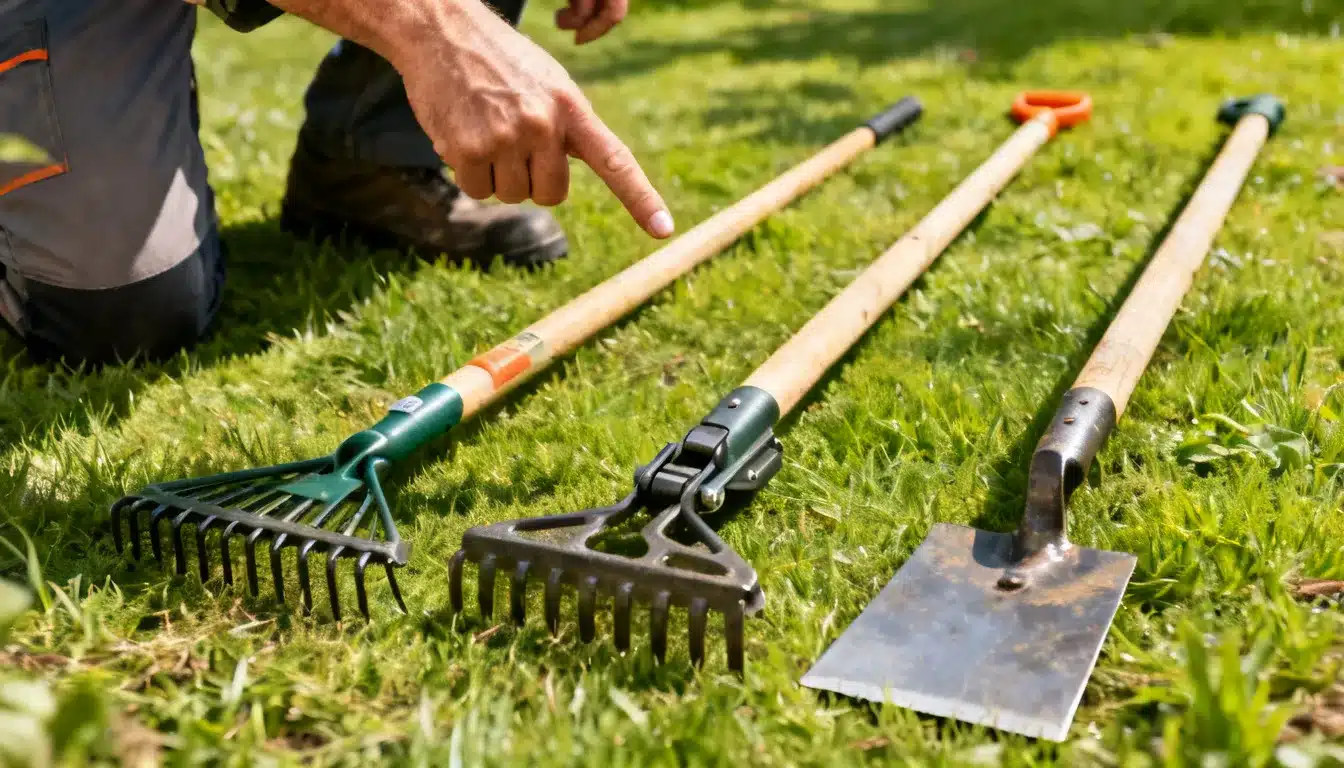
A regular leaf rake won’t cut it here, so you’ll want a proper rake. Know what to look for when you pick one:
- Check the blades: A good rake has sharp, curved metal blades.
- Look at the handle: Go for a sturdy, long handle that feels solid in your grip. It saves your back by letting you stand while you rake.
- Think about weight: A heavier rake digs deeper and pulls up more thatch in one go. But it also tires you out faster, especially over a long stretch.
- Pick double-sided if you can: Some thatching rakes have blades on both sides of the head.
Conclusion
Dethatching a lawn is simple.
Mow your grass low, pick the right thatching rake for the job, pull up that dead layer, and clean up after.
Why does this even matter? Because a healthy lawn starts from the ground up. Clear out the thatch, and everything else falls right into place.
Your grass gets the air, water, and food it has been missing.
Frequently Asked Questions (FAQs)
1. Can Dethatching Damage My Lawn?
It can if you do it at the wrong time or dig too deep. Stick to the growing season and a light touch, and your lawn will be fine.
2. Is It Better to Aerate or Dethatch?
They fix different problems, so it depends on your lawn. Dethatching clears the dead layer, while aerating loosens compacted soil to improve airflow.
3. What to do Immediately After Dethatching?
Rake up all the loose debris and give your lawn a good soak. Then feed it and overseed any thin spots to help it bounce back.
4. Is October Too Late to Dethatch?
For cool-season grass, early October can still work in many regions. But if frost is close, it’s better to wait until spring.