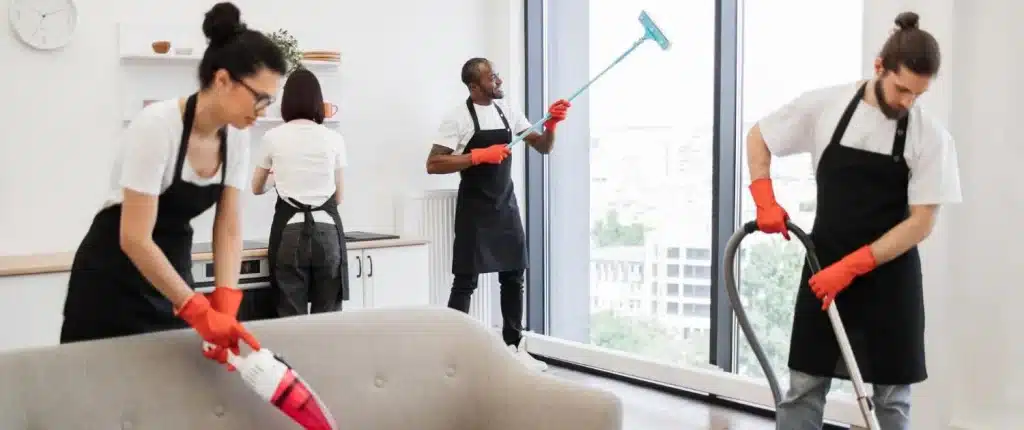
There’s nothing like the feeling of a freshly cleaned home — until you look down at your carpets and realize vacuuming alone isn’t cutting it anymore. Carpets, area rugs, and upholstered furniture are the biggest dirt magnets in any home. They trap dust, pet dander, allergens, and odors deep in their fibers, and no amount of surface cleaning reaches all of it. The good news? With the right approach, you can deep clean all three without shrinking, fading, or wearing them out.
Start With a Serious Vacuuming Session
Before any deep cleaning, vacuum slowly and thoroughly. Go over high-traffic areas in two directions — north to south, then east to west — so the brush lifts fibers and pulls out embedded grit. That grit matters more than you’d think: dirt particles act like tiny blades that cut carpet fibers every time someone walks across them. For area rugs, flip them over and vacuum the back too. You’ll be amazed (or horrified) by how much dust falls out.
Treat Stains Before You Wash
Never scrub a stain. Scrubbing pushes the spill deeper and frays the fibers, leaving a fuzzy patch that’s visible forever. Instead, blot from the outside of the stain inward using a white cloth. For most food and pet stains, a simple mix of one teaspoon of dish soap in two cups of warm water works well. Grease marks respond better to a little baking soda left to absorb the oil first, while coffee and wine lift more easily with a splash of white vinegar diluted in water. For odors, sprinkle baking soda, let it sit for a few hours, and vacuum it up. Always test any solution on a hidden corner first — especially on wool or antique rugs, which can bleed dye.
Give Area Rugs Special Attention
Area rugs need a gentler touch than wall-to-wall carpet. Smaller rugs can often be taken outside, shaken out, and washed by hand with cool water and a mild detergent, then hung to dry completely before going back down. Never leave a damp rug on a hardwood floor — trapped moisture can stain the wood and encourage mold underneath.
Deep Cleaning: Steam Is the Gold Standard
Hot water extraction — commonly called steam cleaning — is the method most carpet manufacturers recommend, and for good reason. It injects hot water and cleaning solution deep into the pile, then immediately extracts it along with all the dissolved dirt. Rental machines from the hardware store can do a decent job on lightly soiled carpet, but they often leave too much moisture behind, which can lead to mildew and that musty smell nobody wants.
That’s why, at least once a year (or twice if you have kids or pets), it’s worth bringing in professional steam cleaning for your carpets and upholstery. Professional-grade equipment uses stronger suction, so carpets dry in hours instead of days, and trained technicians know how to handle delicate materials like wool, silk-blend rugs, and vintage upholstery fabric that DIY machines can easily ruin.
Don’t Forget the Upholstery
Sofas and armchairs collect just as much dust and body oil as carpets — they just hide it better. Check the tag on your cushions before doing anything: “W” means water-based cleaners are safe, “S” means solvent only, and “X” means vacuum only. For everyday maintenance, vacuum upholstery weekly with the brush attachment, and give arms and headrests (the oiliest spots) extra attention. Wipe wooden or leather trim with a barely damp cloth so moisture never soaks into the seams.
Keep It Cleaner, Longer
A few habits stretch the time between deep cleans: use doormats at every entrance, go shoes-off indoors, rotate area rugs twice a year so they wear evenly, and vacuum high-traffic zones at least twice a week. Open the windows while you clean, too — fresh airflow helps everything dry faster and keeps indoor air healthier.
A deep-cleaned carpet doesn’t just look better. It feels softer underfoot, smells fresher, and can add years to the life of your flooring — which means more money left over for the fun stuff, like your next room makeover.