Your garage door’s curb appeal matters, but the opener behind it shapes your daily routine. The right opener can silence disruptive noise, boost home security and even free up valuable overhead storage space. Choosing one that aligns with how you use your garage and what your lifestyle requires makes a big difference.
The Five Main Types of Garage Door Openers
There are five primary garage door opener types available for residential use: chain drive, belt drive, screw drive, wall-mount (jackshaft) and direct drive. Each type uses a different mechanism to lift your garage door, affecting noise levels, maintenance requirements and cost.
Chain drives offer budget-friendly durability, belt drives provide quiet operation, screw drives minimize maintenance, wall-mount systems free up ceiling space and direct drives deliver the quietest performance with minimal moving parts.
Garage Door Opener Comparison
|
Opener Type |
Noise Level |
Price Range* |
Best For |
Maintenance |
Lifespan |
|---|---|---|---|---|---|
|
Chain Drive |
Loud (70-80 dB) |
$150-$250 |
Detached garages, heavy doors, budget-conscious buyers |
Moderate (lubrication, tension adjustments) |
10-15 years |
|
Belt Drive |
Very Quiet (50-60 dB) |
$200-$400 |
Attached garages, bedrooms above garage |
Low (minimal adjustments) |
10-15 years |
|
Screw Drive |
Moderate |
$175-$300 |
Mild climates, minimal maintenance preference |
Very Low (few moving parts) |
10-15 years |
|
Wall-Mount |
Quiet |
$300-$600 |
Limited ceiling space, cathedral ceilings |
Low to Moderate |
15-20 years |
|
Direct Drive |
Very Quiet |
$250-$400 |
Quiet operation priority, low maintenance |
Very Low (fewest moving parts) |
15-20 years |
*Equipment only; professional installation adds $150-$300. The table includes approximations.
Matching Your Garage Door Opener to Your Lifestyle
Whether you have a detached garage, a bedroom directly overhead or limited ceiling clearance for storage, you can choose the right garage door opener type for your needs.
1. Chain Drive Openers for Budget-Conscious Durability
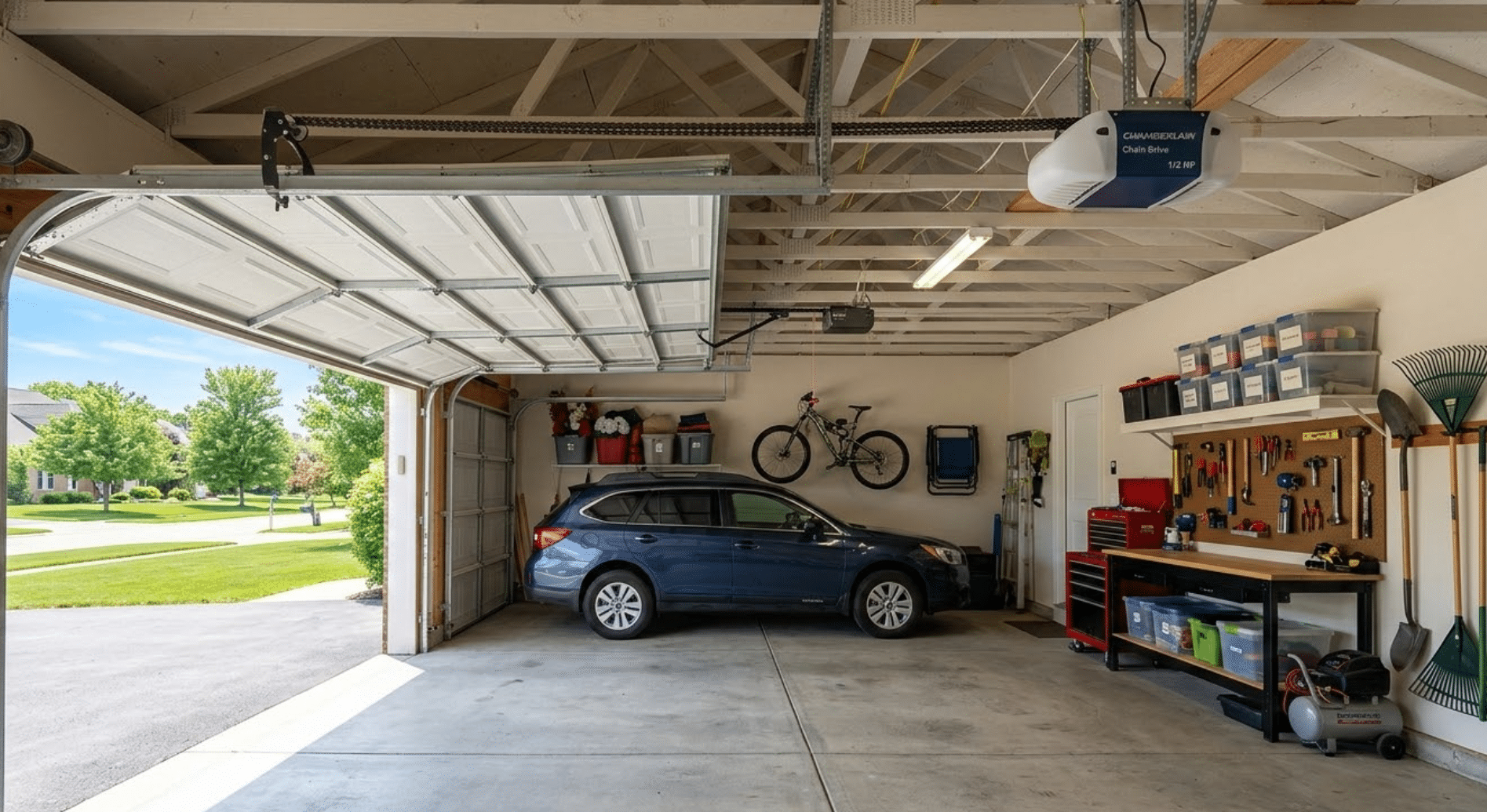
To open a heavy door, you need a lot of lifting power or horsepower (HP). “In all openers, the motor supplies the power to raise and lower the door,” says Chamberlain, a garage door opener provider. “Higher lifting power, or horsepower equivalent, means the motor doesn’t have to work as hard and will typically last longer.”
Chain drive openers deliver that strength at an accessible price point, using a metal chain to lift and lower your garage door.
This makes them ideal for handling heavier doors, such as solid-wood or insulated-steel models. Chain drives typically feature 1/2 to 3/4 HP motors capable of handling most residential garage doors. The motor’s power rating becomes especially important if your door weighs more than standard aluminum panels.
When it comes to compatibility between doors and openers, Clopay® partnership with LiftMaster notes that proper horsepower selection depends on door weight and material. Heavier insulated steel or solid wood doors require openers with adequate lifting capacity to prevent motor strain and ensure longevity.
Best for: Detached garages, heavy solid-wood or steel doors, budget-conscious homeowners and situations where noise is not a primary concern.
2. Belt Drive Openers for Quiet Operation in Attached Garages
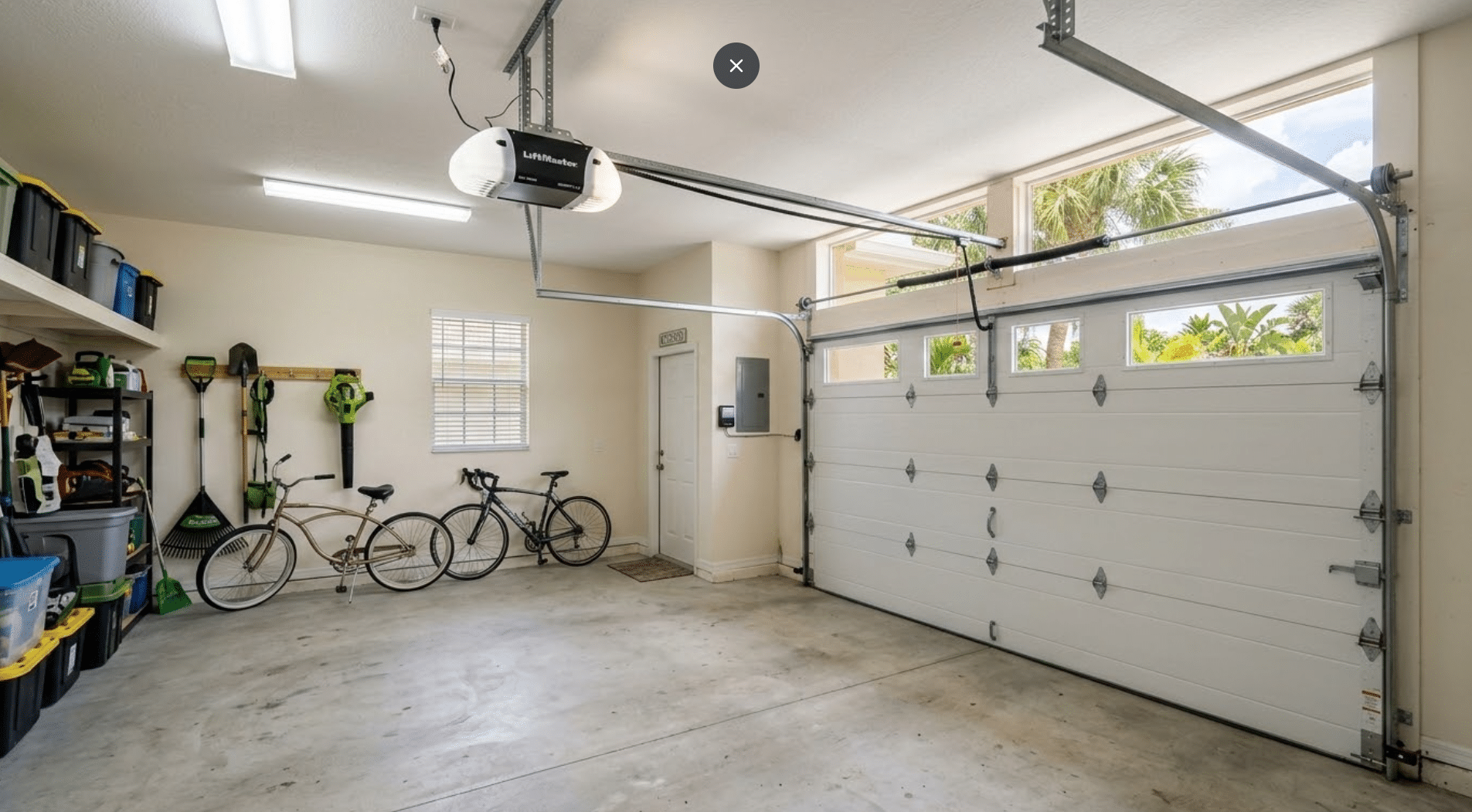
If your garage shares a wall with your home or sits beneath living spaces, noise becomes a priority. Belt drive openers address this by replacing the metal chain with a reinforced rubber belt that glides almost silently along the track.
They are top choices for attached garages where you need a quiet garage door opener that will not disturb sleeping children or interrupt evening activities.
The technology costs slightly more than chain drive systems, but the investment pays off in peaceful mornings. Belt drive openers typically operate at 50-60 decibels — roughly the sound of a normal conversation — while chain drive models generate 70-80 decibels, similar to a vacuum cleaner.
You get comparable performance without the metallic grinding that echoes through walls. Belt drives offer meaningful daily benefits that justify the price difference.
According to Clopay with LiftMaster, the combination of an insulated garage door and a belt-drive opener delivers maximum noise reduction for attached garages.
“The door’s construction — particularly thermal breaks and multi-layer insulation — works together with the opener’s drive mechanism to minimize sound transmission into living spaces,” notes the partnership.
Best for: Attached garages with bedrooms above or adjacent, noise-sensitive households, families with young children, and homeowners willing to invest more for quiet operation.
3. Screw Drive Openers for Low-Maintenance Reliability
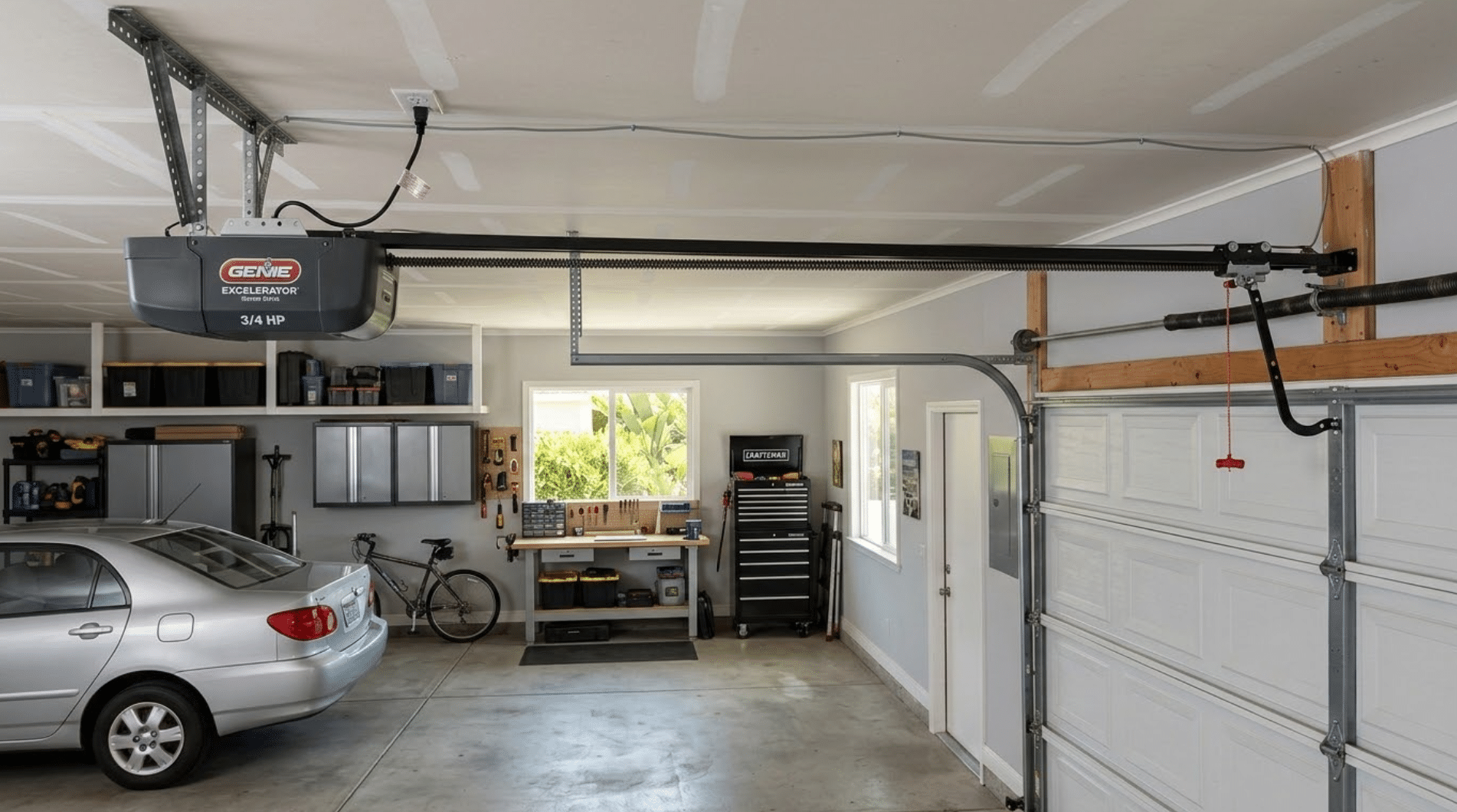
Screw drive openers appeal to homeowners who want fewer moving parts and less routine upkeep.
These systems use a threaded steel rod to move the trolley that lifts your door, eliminating the need for a chain or belt. This means you spend less time on adjustments and lubrication over the system’s lifetime.
While screw drive openers are mostly reliable, residential garage door manufacturer Clopay®, in partnership with LiftMaster, says these openers can be temperamental in certain environments. “They can be more sensitive to extreme temperature swings, which may affect performance in very hot or cold climates.” There are different types of garage door openers available for areas with fluctuating weather.
Best for: Moderate climates without temperature extremes, homeowners prioritizing minimal maintenance, and those who prefer fewer moving parts over absolute quiet operation.
4. Wall-Mount Openers for Maximizing Overhead Space
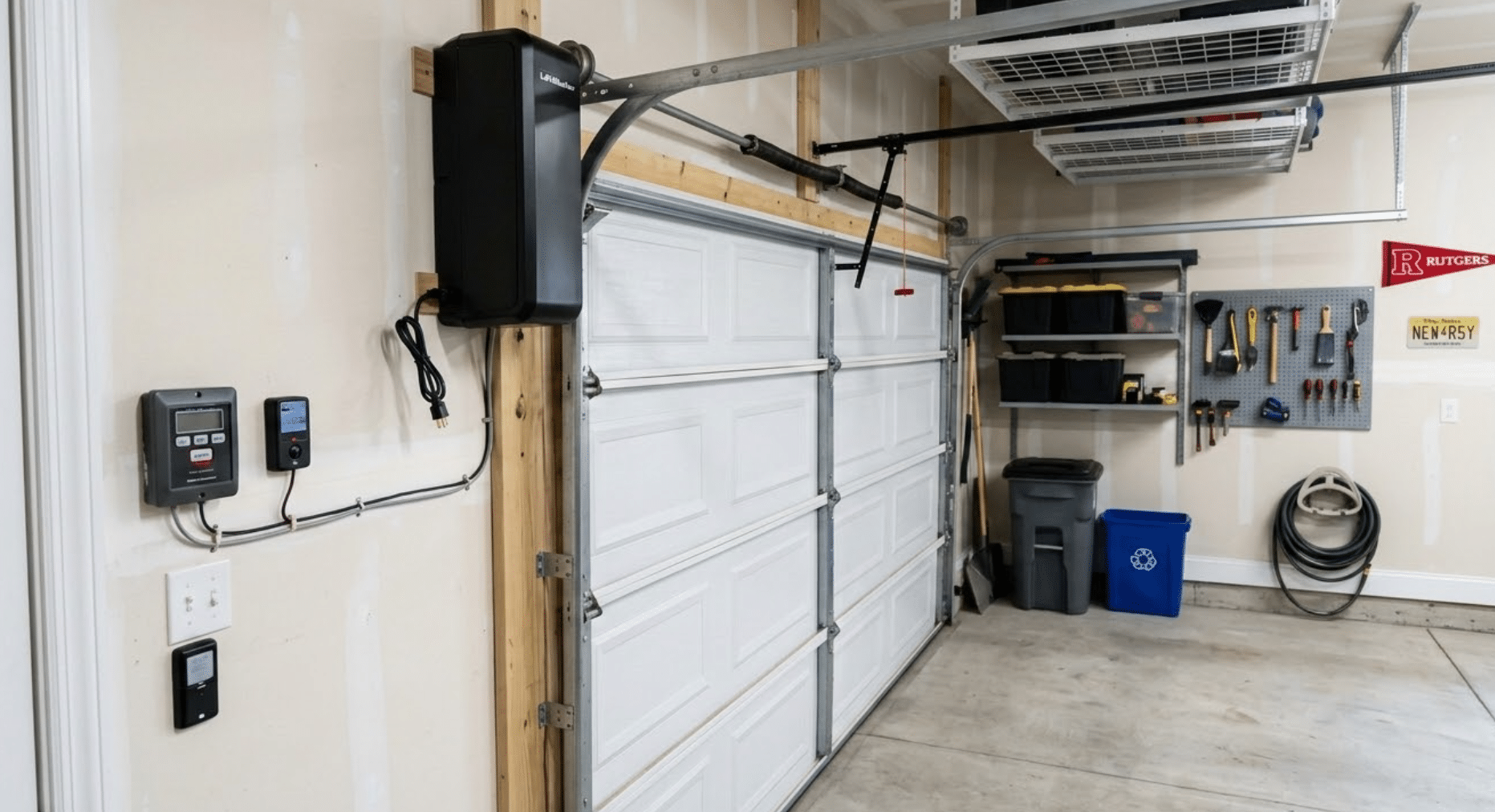
Standard garage door openers mount to the ceiling and consume overhead space with their tracks and motor housings. Wall-mount openers, also called jackshaft openers, install on the wall beside your garage door instead. This placement frees up your ceiling for storage racks, overhead bins or even ceiling fans.
If you want to hang your bike from the ceiling, for example, Chamberlain recommends a wall-mounted opener. “Wall mount openers mount to the wall on either side of the garage door, freeing up ceiling space for extra storage, light fixtures, ceiling fans and more.”
These systems typically feature 3/4 HP or higher motors to provide adequate lifting power from the side-mounted position. These systems cost more up-front and require more complex installation. For homeowners with cluttered garages or cathedral ceilings, though, the reclaimed space justifies the investment.
Best for: Garages with limited ceiling clearance, cathedral or vaulted ceilings, homeowners wanting maximum overhead storage space, and those upgrading during renovation projects.
5. Direct Drive Openers for Ultimate Simplicity
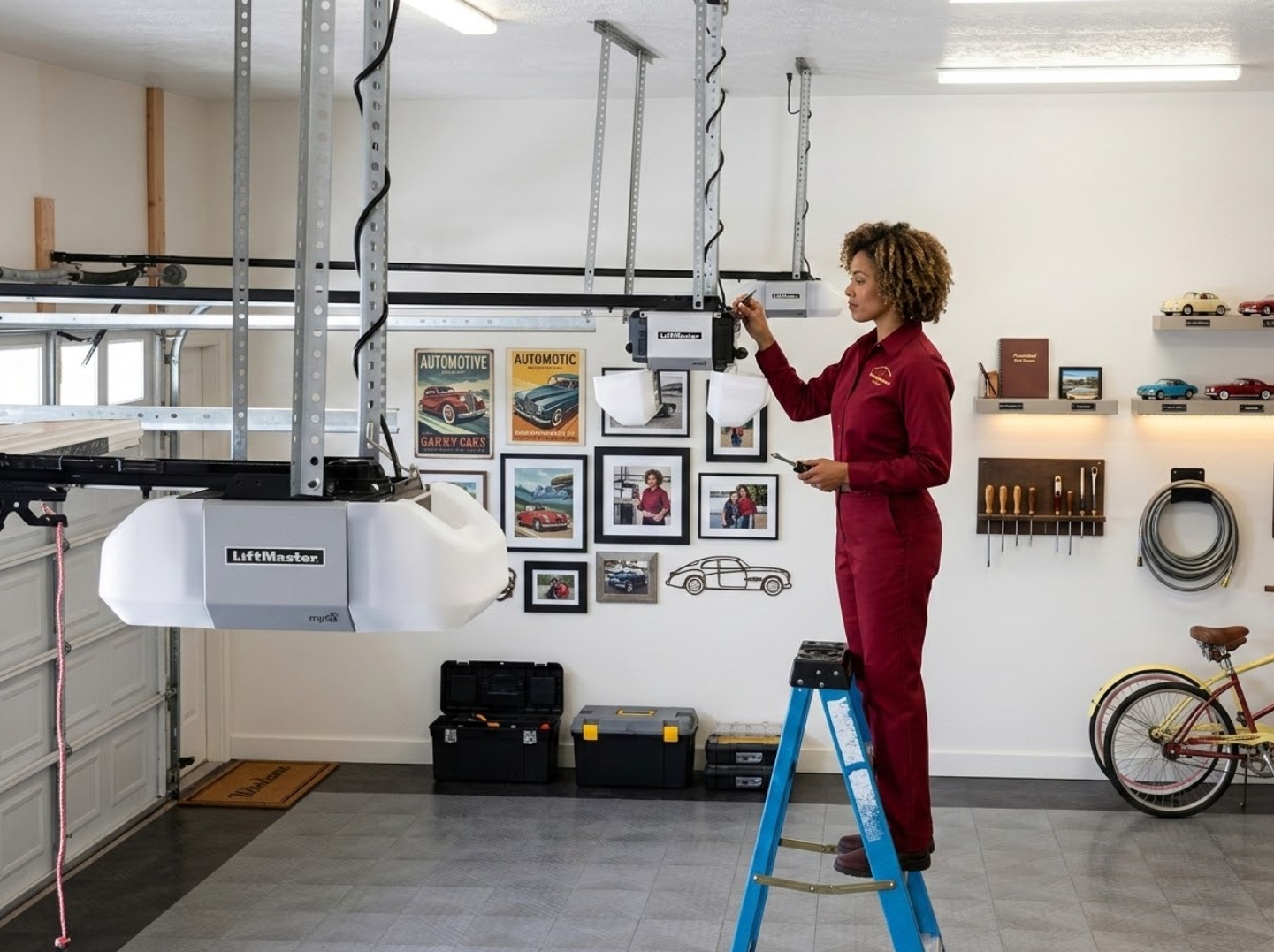
Direct-drive openers use one of the simplest mechanical designs available. Instead of chains, belts or screws, the motor itself travels along a stationary rail to lift and lower your door. This eliminates most moving parts and results in exceptionally quiet operation with minimal vibration.
Direct-drive systems are among the quietest residential garage door openers available. While less common than chain or belt drives, direct-drive systems offer exceptional longevity with fewer components that wear out.
The streamlined mechanics also mean less maintenance over the system’s lifespan. Homeowners who prioritize reliability and quiet performance often find the investment worthwhile.
Best for: Homeowners prioritizing the quietest possible operation, those seeking minimal long-term maintenance, attached garages requiring ultra-quiet performance, and those willing to invest in premium longevity.
Unlocking Modern Convenience with Smart Technology
Smart garage door technology has changed what was once a simple storage space into a secure, connected entry point.
What Defines Smart Garage Access?
Modern smart garage door openers combine traditional lifting mechanisms with Wi-Fi connectivity and mobile integration.
Clopay and LiftMaster emphasize that modern smart technology transforms the garage from a simple storage space into a secure access point. “Smart garage systems with myQ® connectivity allow homeowners to monitor door status in real-time, grant temporary access to service providers, and integrate garage access into whole-home security routines,” the companies note.
This connectivity works across various opener types — chain, belt, or wall-mount — making smart features accessible regardless of drive mechanism choice.
Most systems work with your existing home Wi-Fi network and require only basic setup through a mobile app. Many integrate with voice assistants like Alexa and Google Assistant, as well as broader smart home ecosystems, letting you include garage access in your automation routines.
Everyday Benefits of a Connected Garage
With a smart opener, you can open your garage remotely for package deliveries, eliminating concerns about porch theft. Service providers can access your home for repairs or maintenance without requiring a physical key exchange. Parents can monitor when teenagers arrive home.
According to Parks Associates market research, ownership has reached 11% of U.S. internet households for both smart locks and smart garage door openers. This reflects gradual market expansion as more consumers integrate access-control devices into broader smart home and residential security systems.
While you can make your old garage door opener smart, sometimes it is better to buy a new one for security reasons. “Newer garage door openers include many safety features that older ones didn’t. A lot of these new features are also required by state laws,” says garage door manufacturing company, Genie.
Modern openers equipped with smart technology can provide options like activity logs, automatic closing after a set time and vacation or lock modes that limit remote access while you are away. For families prioritizing security and convenience, smart garage door openers are worth the extra cost.
The Value of a New Garage Door Upgrade
Upgrading your garage door opener can improve daily convenience, safety and security, especially if you are already replacing or modernizing the garage door.
How Garage Door Replacement Can Support Home Value
A garage door replacement offers a 267.7% return on investment according to Zonda, a housing market expert. If you are already upgrading the door, it may also be a practical time to evaluate whether your opener still meets your needs for safety, noise control and smart access.
A 2025 National Association of Realtors report shows that homeowners who upgraded their garage door reported a 7 out of 10 Joy Score, underscoring how garage door replacement can boost resale value while leaving homeowners satisfied with the upgrade. Functioning, modern openers can also make the garage feel easier and safer to use during everyday life. The combination of high return on investment and personal satisfaction makes garage upgrades a smart choice.
The Importance of Battery Backups and Modern Safety Mandates
As garage door and opener technology has evolved, Clopay with LiftMaster has emphasized the importance of integrated safety systems. Modern openers include features like automatic reversal sensors, rolling code security, and battery backup that work seamlessly with contemporary insulated door designs to meet both safety codes and homeowner expectations.
According to Genie, a battery backup allows your garage door opener to operate even when you have no access to home electricity. “A battery backup allows your garage door opener to continue operating even when electricity is unavailable. This means you can still get your car out for work, errands or medical needs, and safely close your garage to protect your home and belongings.”
Some regions have codified these safety features into law. California’s Senate Bill 969 requires battery backup systems on new garage door openers in many circumstances. Beyond legal compliance, these features ensure you don’t become trapped or locked out by electrical failures.
Many modern openers also include safety sensors that stop the door from closing on objects, people or pets. Options like rolling code technology block thieves from capturing and replaying your opener’s signal. These improvements secure your property.
How to Choose the Right Opener Type for Your Home
Follow this simple decision guide by finding your priority:
PRIORITY: Quiet Operation (Bedroom nearby or attached garage) → Belt Drive or Direct Drive
- 50-60 decibels (conversation-level quiet)
- $200-$400 + installation
PRIORITY: Ceiling Space (Limited clearance or want storage) → Wall-Mount Opener
- Frees up overhead space completely
- $300−$600 + installation
PRIORITY: Heavy Door (Solid wood or heavily insulated) → Chain Drive or Wall-Mount with 3/4+ HP
- High lifting capacity
- Won’t strain under weight
PRIORITY: Low Maintenance (Minimal upkeep) → Direct Drive or Screw Drive
- Fewest moving parts
- Less frequent servicing needed
PRIORITY: Budget-Friendly (Best value) → Chain Drive
- $150−$250 + installation
- Proven reliability at lowest cost
Frequently Asked Questions
Below are some common questions to consider when seeking information on garage door openers.
What is the quietest type of garage door opener?
Direct drive and belt drive openers are the quietest types, both operating at approximately 50-60 decibels. Both options significantly reduce noise compared to chain drive models, which operate at 70-80 decibels.
What is the most reliable garage door opener type?
Direct drive and belt drive openers offer the longest lifespans and highest reliability. Direct drive systems can last 15-20 years or more due to their minimal moving parts, while belt drive openers typically last 10-15 years with proper maintenance.
Do I need a special opener for a heavy garage door?
Yes. Solid wood or heavily insulated garage doors require openers with 3/4 HP or higher ratings. Chain drive and wall-mount openers typically offer the lifting capacity needed for heavier doors. Standard 1/2 HP openers work well for lighter aluminum or single-layer steel doors.
What is the visual difference between direct-drive garage door openers and wall-mounted openers?
The visual difference is in the ceiling. Direct-drive openers still mount to the ceiling with a rail running from the garage door to the back wall — but instead of a chain or belt pulling a trolley, the motor itself moves along a stationary rail. Wall-mounted (jackshaft) openers eliminate the overhead rail entirely by mounting on the side wall next to the garage door and connecting directly to the torsion spring shaft.
When you walk into a garage with a wall-mounted opener, your ceiling is completely clear of tracks, rails and motor housings — all the equipment sits on the side wall. Direct-drive systems occupy the ceiling but are more compact and quieter than traditional chain or belt drives.
How much horsepower do you need to open most garage doors?
Most residential garage doors operate effectively with 0.5 to 0.75 horsepower. If you have an oversized or particularly heavy door, 1.0 to 1.5 horsepower ensures the motor does not strain during operation. Higher horsepower means the system works less hard and lasts longer.
Where can you buy a quiet garage door opener?
Quiet garage door openers are available through home improvement retailers, garage door specialists and online stores. Belt-drive and direct-drive models offer the quietest operation. Look for products from established manufacturers like LiftMaster, Chamberlain and Genie. You can purchase from authorized dealers or major retailers.
Are smart garage door openers worth the extra cost?
Smart garage door openers justify their higher price for many homeowners. The ability to monitor your garage remotely, grant temporary access to guests and receive security alerts adds convenience and peace of mind. If you frequently wonder whether you closed the garage door or want enhanced security features, the investment can make sense.
Should I choose my garage door opener based on my door type?
Yes, according to Clopay and LiftMaster. Door weight, insulation type, and size all influence which opener mechanism performs best. Solid wood or heavily insulated steel doors may require higher horsepower ratings, while standard aluminum doors offer more flexibility. The key is matching the opener’s lifting capacity to your specific door specifications.
Choosing the Right Opener for Your Home
The best garage door opener balances your priorities. Consider how you use your garage daily, what your home requires and where you want to invest for long-term satisfaction. The right choice supports your lifestyle while protecting one of your home’s most important access points.