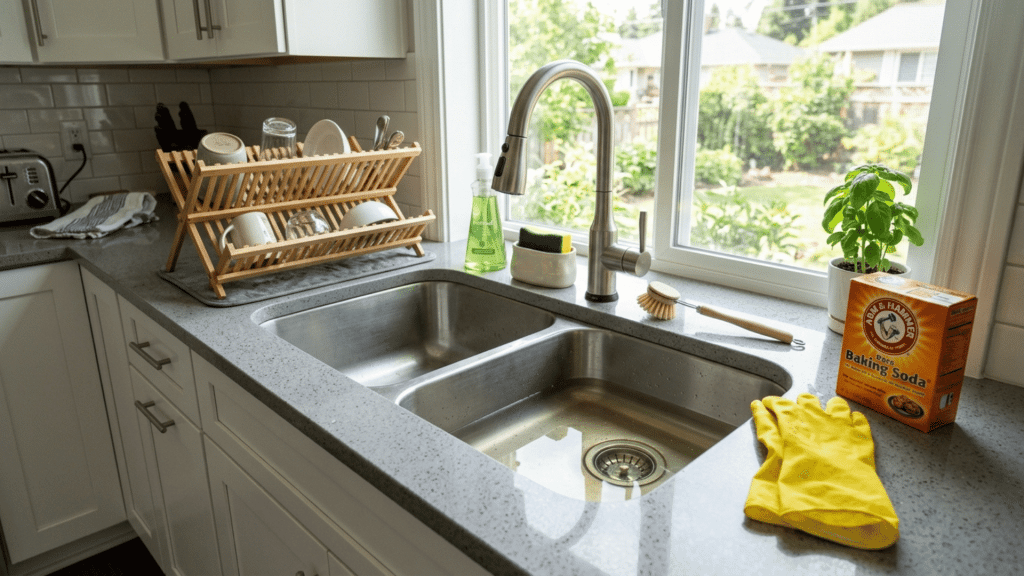
Water in your kitchen sink after dinner dishes usually means one thing: something is blocking the drain, and it’s rarely going away on its own.
A kitchen sink clogged with grease or food scraps can bring your entire routine to a stop, from washing dishes to prepping the next meal.
Calling a plumber for every backup adds up fast, and most clogs never need one.
So how do you unclog a sink without hazardous chemicals or a service call? This blog covers the materials you need to grab from your cabinet before hiring a professional.
Why Kitchen Sinks Get Clogged?
A kitchen sink clogs when grease, food particles, or soap residue build up along the inside of the drain pipe until water can no longer pass through.
Grease is the biggest issue, as it goes down the drain as a liquid, then cools and hardens against the pipe walls, trapping coffee grounds, rice, and vegetable peels as they pass by.
Soap scum forms a slippery film that further narrows the pipe. Foreign objects like bottle caps or produce stickers can block it completely on their own.
How to Unclog a Sink Using Simple Methods?
Most clogs can be cleared with a few simple techniques before you need any special tools. Start with the easiest one and work your way down the list.
1. Boiling Water
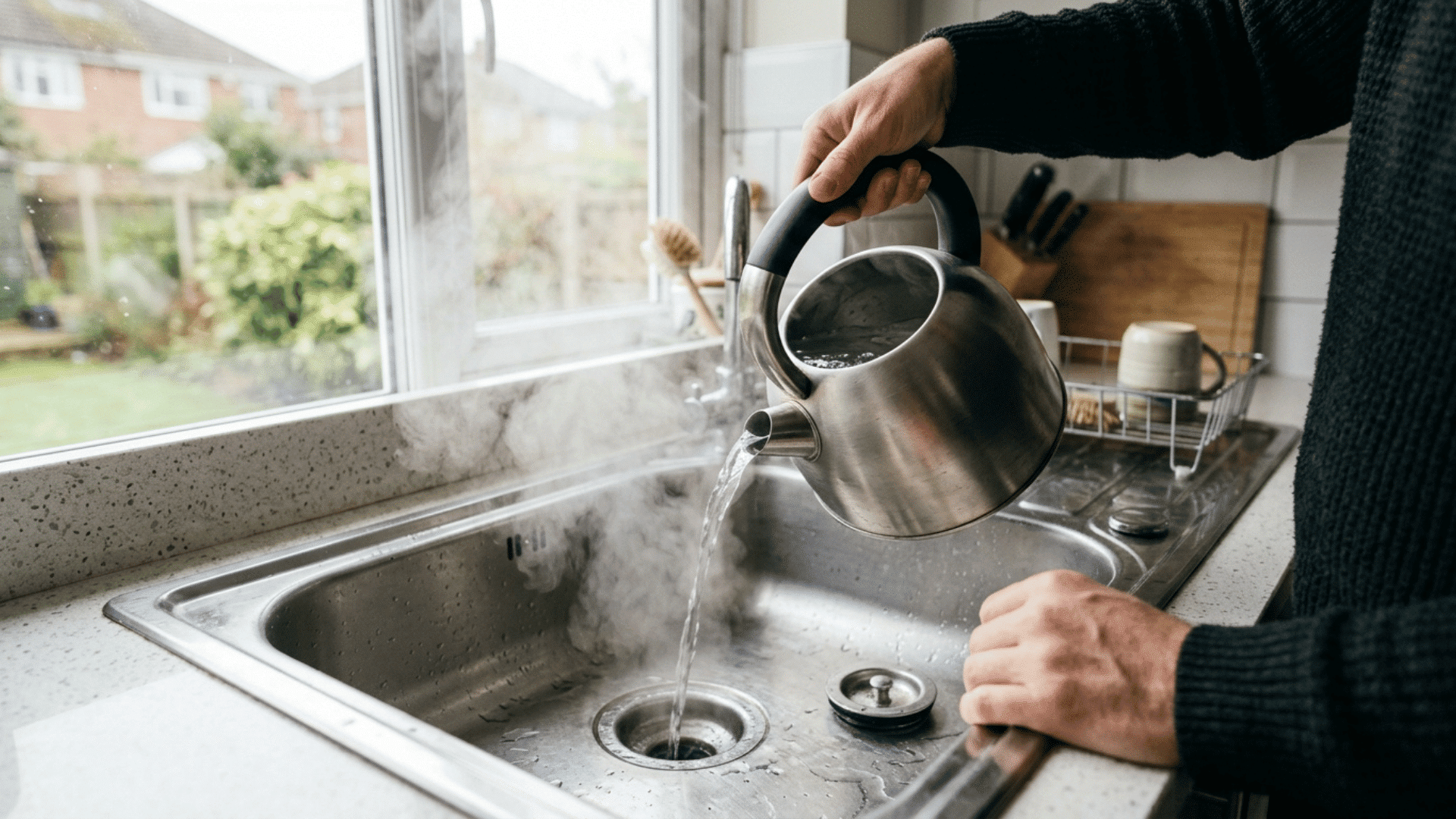
Boiling water is the simplest fix for a sink that’s draining slowly from grease or light buildup. Heat alone can loosen debris without any scrubbing or chemicals.
Materials Needed: kettle or pot, oven mitt, cup or bowl.
Steps:
- Remove standing water from the sink with a cup or bowl
- Boil about a liter of water
- Pour it down the drain slowly in two or three rounds
- Wait a minute between each pour
- Run hot tap water to check if the sink drains
2. Baking Soda and Vinegar
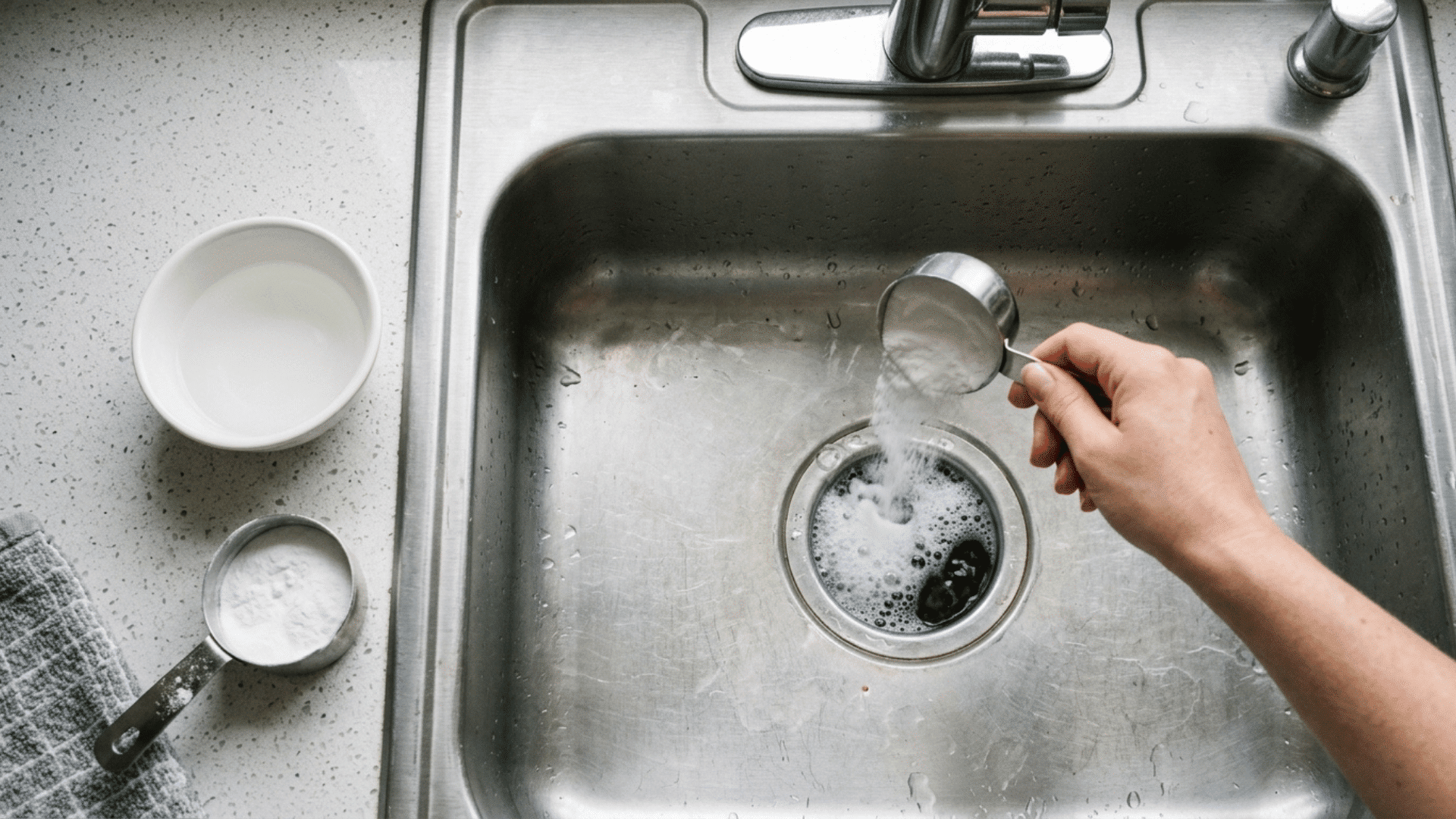
This combination breaks down grease and grime through a natural fizzing reaction. It works best on mild to moderate clogs, not solid blockages.
Materials Needed: baking soda, white vinegar, drain cover or cloth, hot water.
Steps:
- Pour half a cup of baking soda down the drain
- Follow with half a cup of white vinegar
- Cover the drain and let it fizz for 10 to 15 minutes
- Flush with hot water
- Repeat once if the sink still drains slowly
3. Plunging the Sink
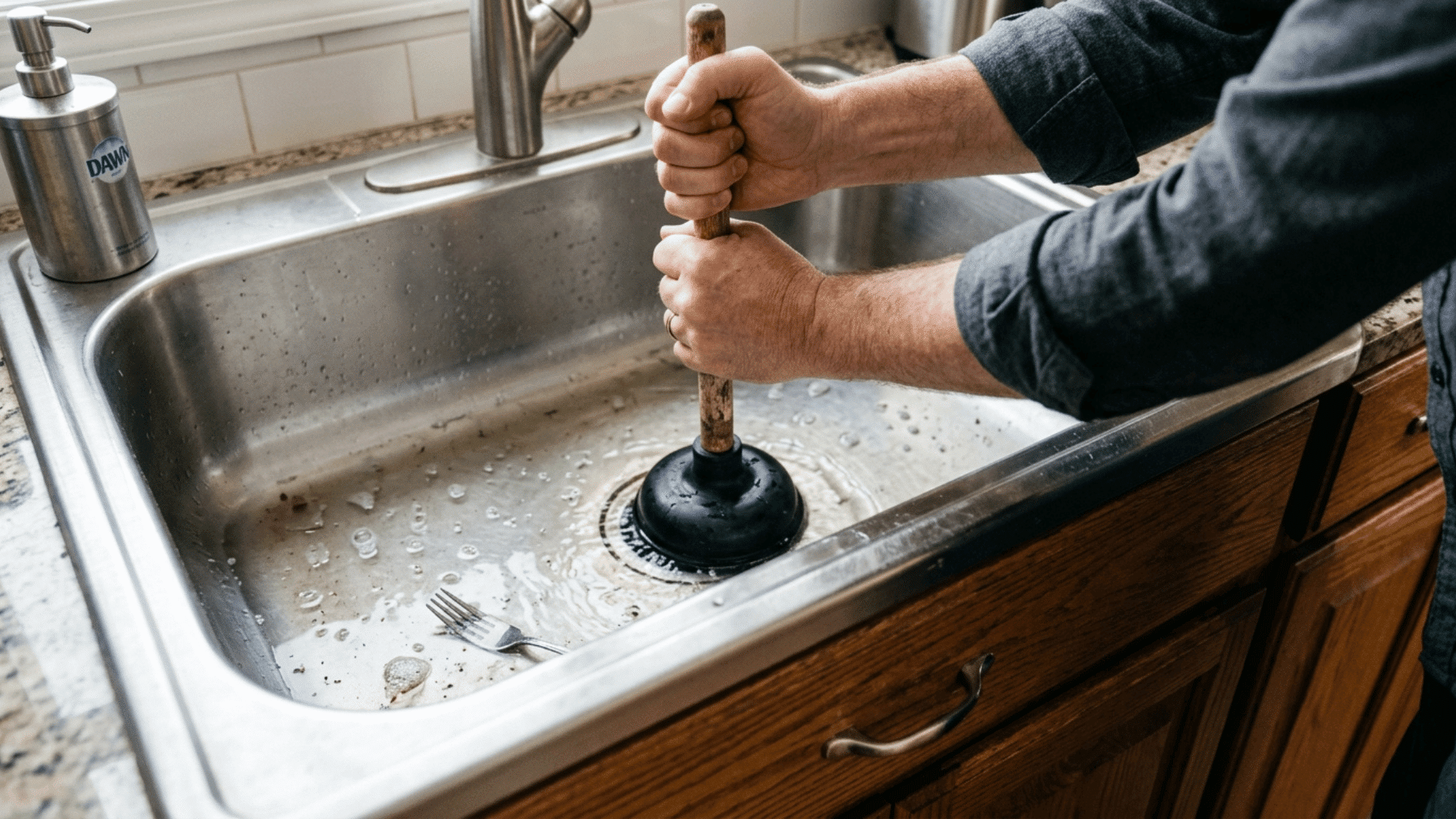
A plunger creates enough pressure to dislodge food particles stuck in the drain. Use a cup plunger made for sinks, not a flange plunger made for toilets.
Materials Needed: sink plunger, wet rag (for double sinks), water.
Steps:
- Seal the second drain with a wet rag if you have a double sink
- Add a few inches of water to cover the plunger cup
- Place the plunger over the drain and press down firmly
- Pump up and down for 15 to 20 seconds without breaking the seal
- Remove the plunger and check if the water drains
4. Fixing a Clogged Garbage Disposal
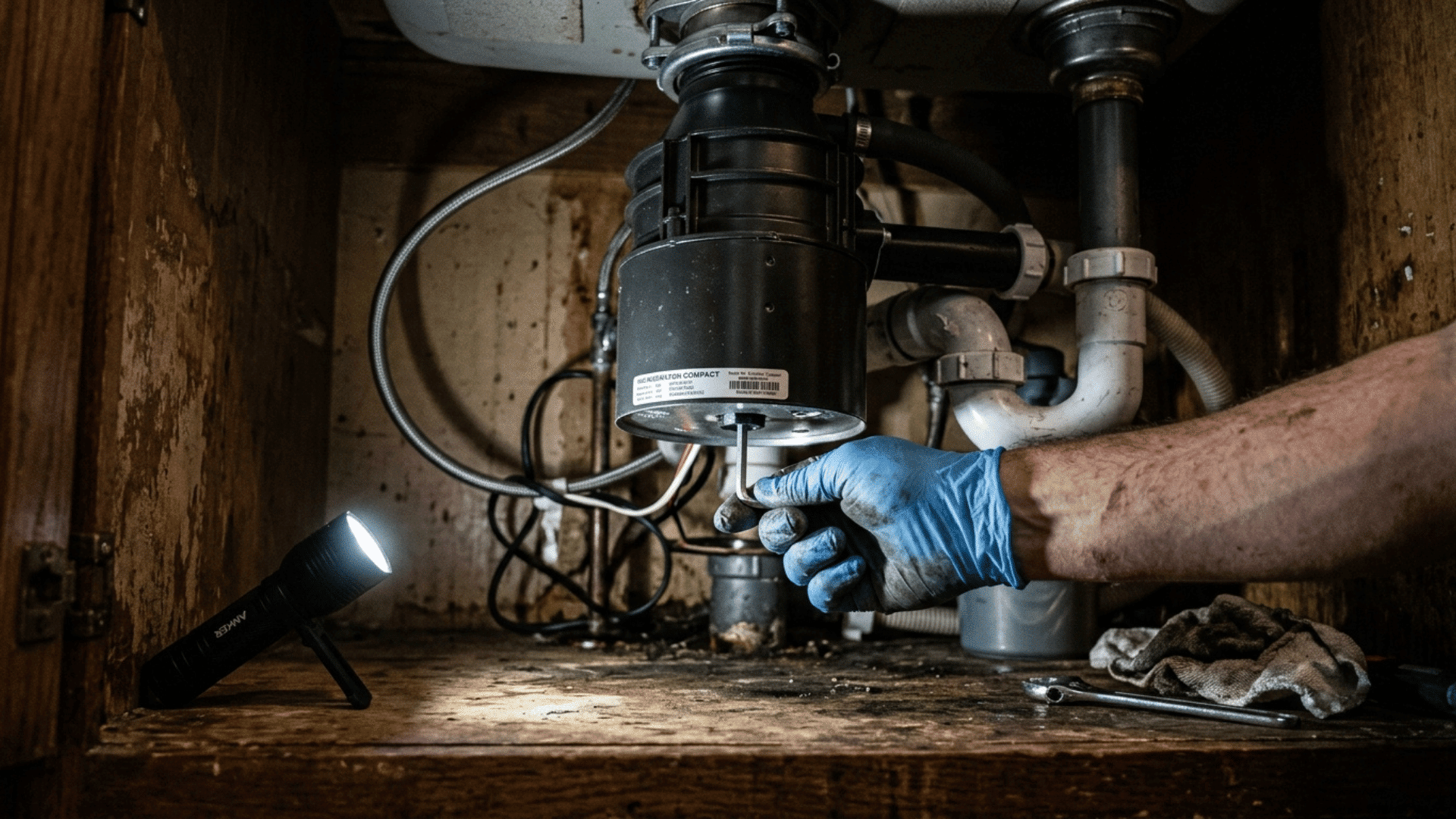
A jammed disposal often looks like a sink clog but needs a different fix. Resetting the motor or turning the blades by hand usually resolves the issue.
Materials Needed: a flashlight, a hex key (usually included with the disposal), and access to the reset button.
Steps:
- Turn off the disposal and unplug it if you can
- Check for a jam with a flashlight, never with your hand
- Insert the hex key into the bottom center hole and turn it back and forth
- Press the red reset button underneath the unit
- Turn the power back on and run water to test it
5. Clearing the P-Trap
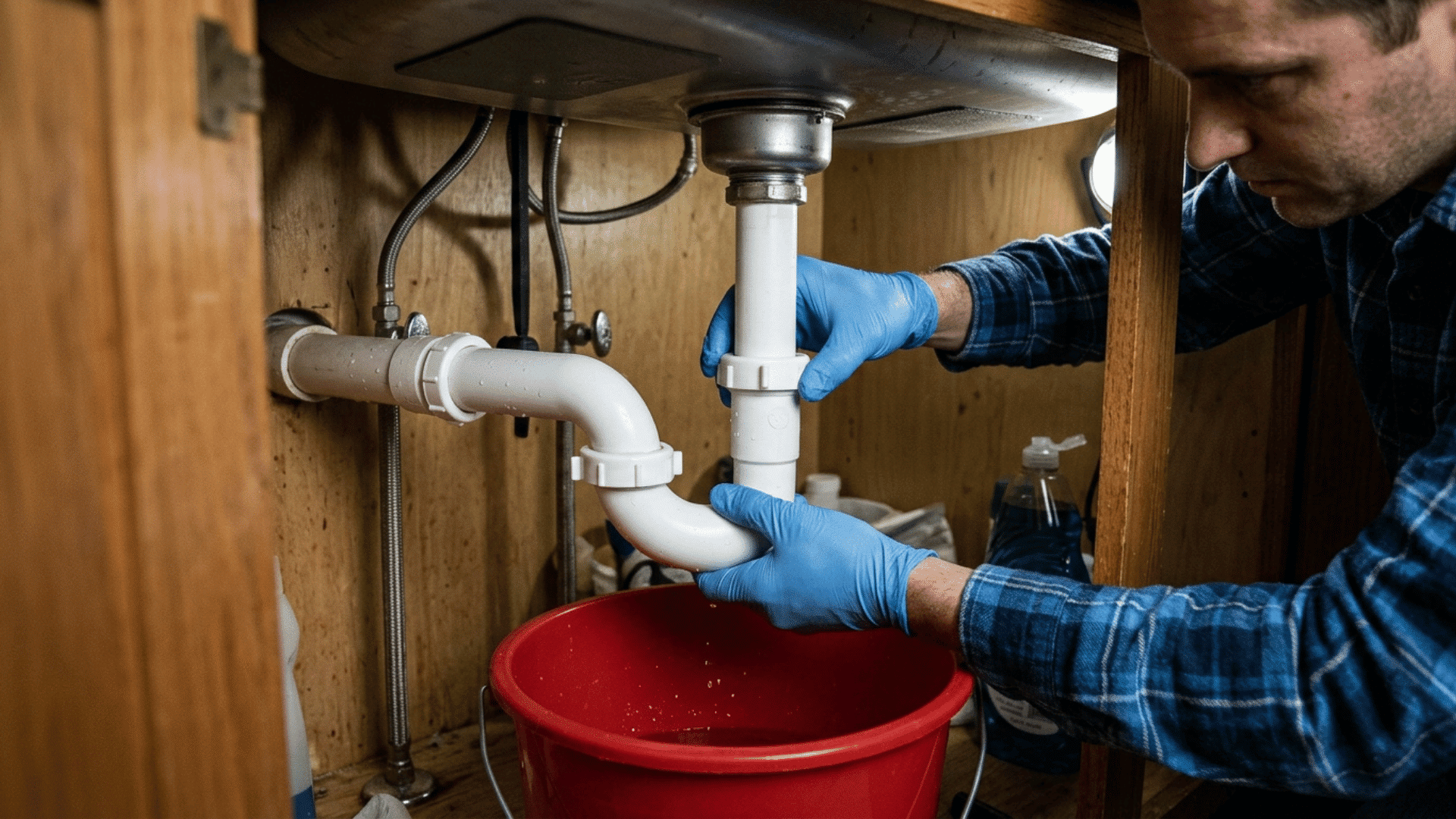
The P-trap is the curved pipe under the sink where solid objects and sludge often collect. Cleaning it out removes blockages that the other methods can’t reach.
Materials Needed: bucket, adjustable wrench or channel-lock pliers, gloves, old towel.
Steps:
- Place a bucket under the P-trap to catch water and debris
- Loosen the slip nuts on both ends of the trap by hand or with pliers
- Slide the trap off and empty it into the bucket
- Clean out buildup with a bottle brush
- Reattach the trap and tighten the nuts by hand
6. Using a Drain Snake
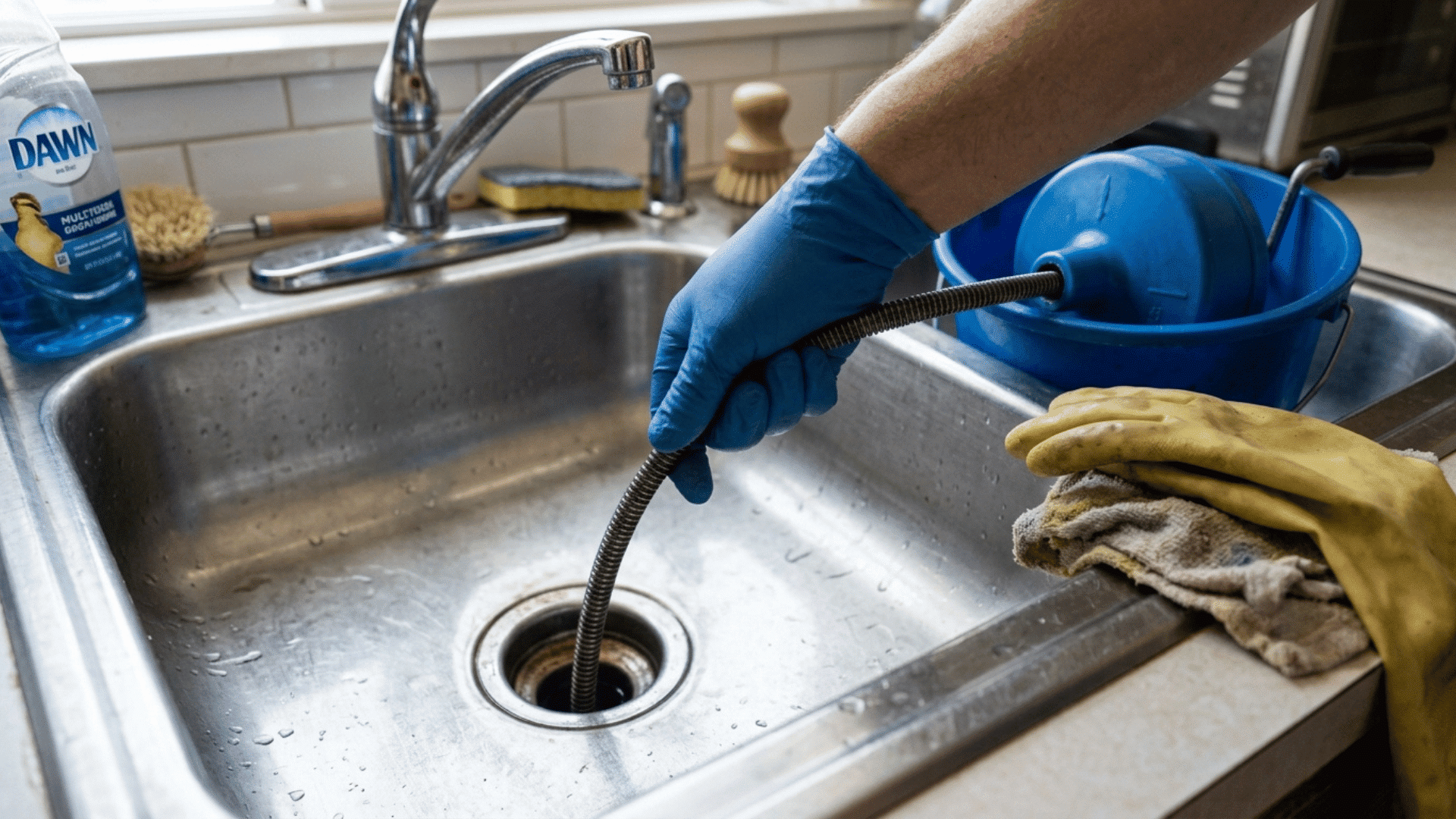
A drain snake reaches clogs further down the pipe that plunging and cleaners can’t touch. It works by hooking and pulling out the blockage directly.
Materials Needed: drain snake (manual or handheld crank), gloves, bucket.
Steps:
- Feed the snake’s end into the drain slowly
- Turn the handle clockwise as you push it further in
- Stop turning once you feel resistance, then pull back gently
- Pull the snake out and remove debris caught on the end
- Run hot water to flush out any remaining material
Ways to Prevent Future Kitchen Sink Clogs
A drain strainer catches food scraps before they enter the pipe, and it’s the single easiest habit to build.
Set one in place every time you wash dishes, then empty it into the trash instead of rinsing it clean into the sink.
Grease belongs in a jar, not the drain. Let it cool in a container after cooking, then toss it once it solidifies. Even small amounts poured in daily add up to a thick coating along the pipe walls over a few months.
Run hot water for 10 to 15 seconds after each use to keep the pipe clear of residue.
Once a month, flush the drain with a cup of baking soda followed by hot water to break down any buildup before it turns into a clog.
When to Hire a Plumber for a Clogged Sink?
Some clogs sit beyond the reach of home fixes or point to a bigger issue in the pipes. Watch for these signs before attempting further DIY methods:
- Water backs up in other drains, like the bathtub or toilet, when you run the sink
- A foul odor persists even after cleaning and flushing the drain
- Multiple methods fail to clear the clog after several attempts
- Water drains slowly across every fixture in the house, not just one sink
- Gurgling sounds come from the pipes during or after draining
Conclusion
A kitchen sink clogged with grease or food waste rarely turns into a plumbing emergency if you catch it early. Most blockages respond to a few minutes of effort and items already in the house.
Knowing how to unclog a sink on your own puts you back in control instead of waiting on a scheduled repair visit. It also means fewer surprises the next time water starts pooling at the bottom of the basin.
A little prevention goes a long way toward keeping your drain clear between now and the next slow drain day.
Frequently Asked Questions
Is It Safe To Use Chemical Drain Cleaners Regularly?
No. Frequent use can corrode metal and PVC pipes over time. Save chemical cleaners for occasional stubborn clogs, and stick to mechanical or natural methods for routine use.
Can a Clogged Sink Cause Water Damage?
Yes. Standing water can overflow onto cabinets and flooring, leading to mold or warped wood. Address slow drains early to avoid repair costs later.
Why Does My Kitchen Sink Smell Even After Draining?
Trapped food particles and grease in the P-trap or garbage disposal often cause lingering odors, even when water flows normally through the drain.