Curtains look like a simple purchase until you get home and realise they’re three inches too short.
Too short, too wide, wrong weight for the room — it happens more often than it should, and it’s almost always a sizing problem, not a taste problem.
Knowing the standard curtain sizes before you shop fixes most of this.
Here’s what you need to know.
Why Does Choosing the Right Curtain Size Matter?
The right curtain size does a lot more than just cover your window perfectly. It changes how your entire room feels.
Curtains that are too short make ceilings look low.
And curtains that are too wide make windows look awkward. What always helps find the right balance is the right curtain size.
And the advantage doesn’t stop at just that.
It also improves functionality by blocking the light better. They keep the cold out and the warmth in.
And full coverage means actual privacy, not just the suggestion of it.
Common Curtain Sizes Explained
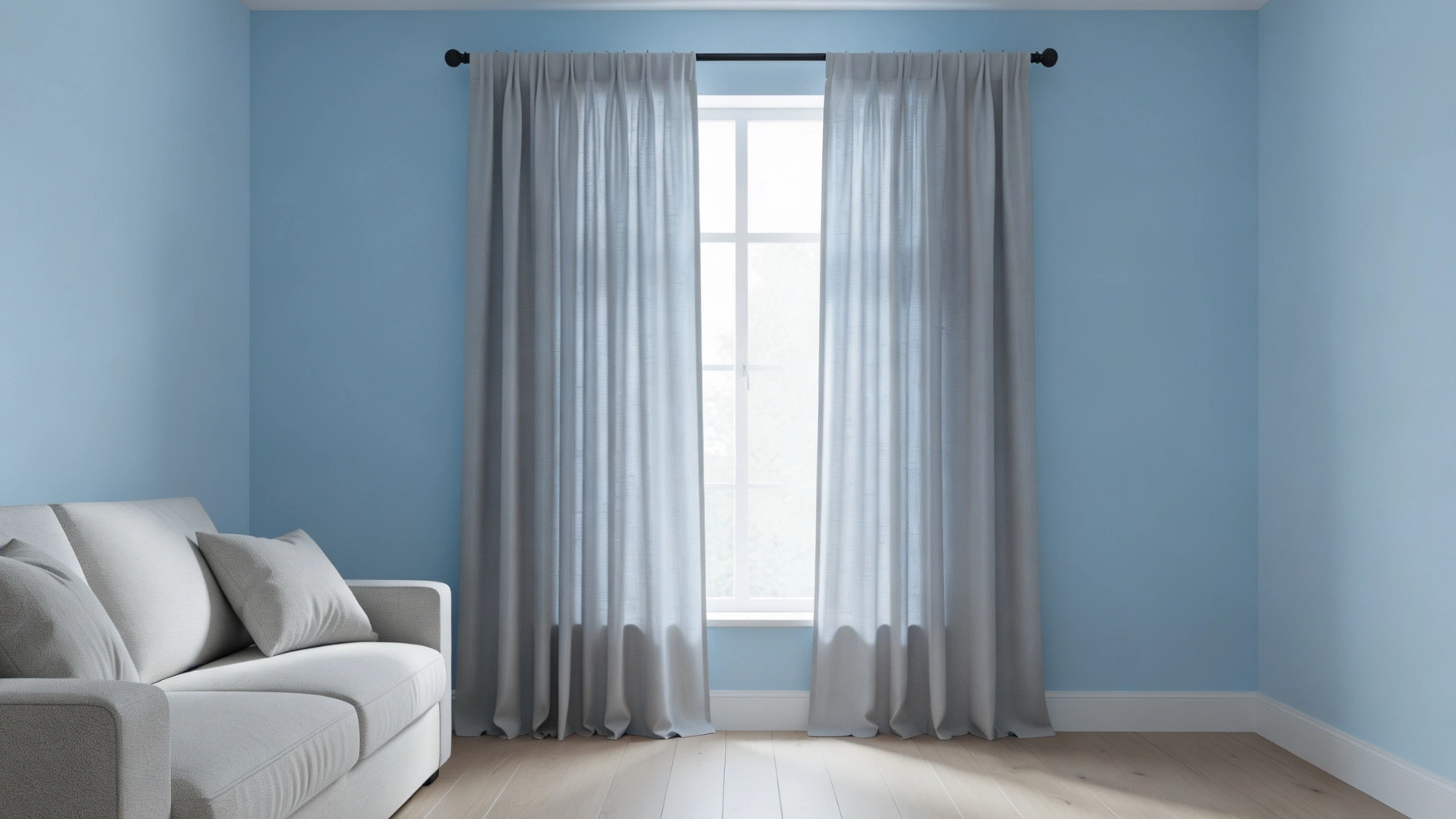
These are the sizes most retailers stock.
If your window falls within the standard range, one of these will almost certainly work without custom ordering.
Standard Curtain Lengths
The most common curtain lengths are 63, 84, 96, and 108 inches.
A 63-inch curtain sits just at the windowsill, and an 84-inch curtain falls to the floor in most standard rooms.
Longer options, such as 96- and 108-inch lengths, work well for tall windows or high ceilings.
Common Curtain Widths
Width decides how full your curtains look when hung.
Most panels come in 42-inch or 54-inch widths. For a fuller, richer look, your total curtain width should be 1.5 to 2.5 times your window width.
That multiplier is the standard used by most interior designers and window treatment retailers — it’s what gives curtains a gathered, intentional look rather than a flat, stretched one.
A 42-inch wide window, for example, works well with two 42-inch panels.
The bottom line is that wider windows need wider panels or more of them.
What Each Curtain Size Usually Fits
Each length is suited to a specific ceiling height and room type.
Here’s the quick reference:
| Curtain Size | Best Fit |
|---|---|
| 63 inches long | Sill-length windows, kitchens, and bathrooms |
| 84 inches long | Standard 8 ft ceilings, living rooms |
| 96 inches long | 9 ft ceilings, bedrooms |
| 108 inches long | 10 ft ceilings, formal rooms |
| 42 inches wide | Single standard window panel |
| 54 inches wide | Wider windows, fuller look |
Always avoid using short, sill-length curtains in a living room or bedroom. It makes the ceiling feel low and the room feel cramped.
Before You Buy Curtains, Here are 4 Things to Measure First
Take these four measurements before you buy anything. Five minutes now saves a return trip later.
1. Window Width:
Start by measuring your window from one side to the other. Always measure the full frame, not just the glass.
Your curtain rod should extend 4 to 6 inches beyond each side.
2. Rod Placement:
The importance of rod placement is mostly overlooked. Place your rod 4 to 6 inches above the window frame.
It gives your curtains a much cleaner, more put-together look.
3. Ceiling Height:
Measure from your rod placement point down to the floor. This number tells you exactly what curtain length to buy.
A guesswork here will change how your curtains look.
4. Stack-Back Space:
Stack-back is the wall space your curtains take up when fully open. Plan for at least 12 inches on each side.
Avoiding this will lead to your curtains blocking part of the window, reducing light.
Common Curtain Sizes and Styling Tips for Every Room
Now that you know the common curtain sizes and the to-dos, styling them the perfect way will make the end result more fruitful.
Different rooms need different curtain lengths, fabrics, and hanging styles.
And choosing the right combination helps the curtains feel like part of the room instead of an afterthought.
1. Living Room
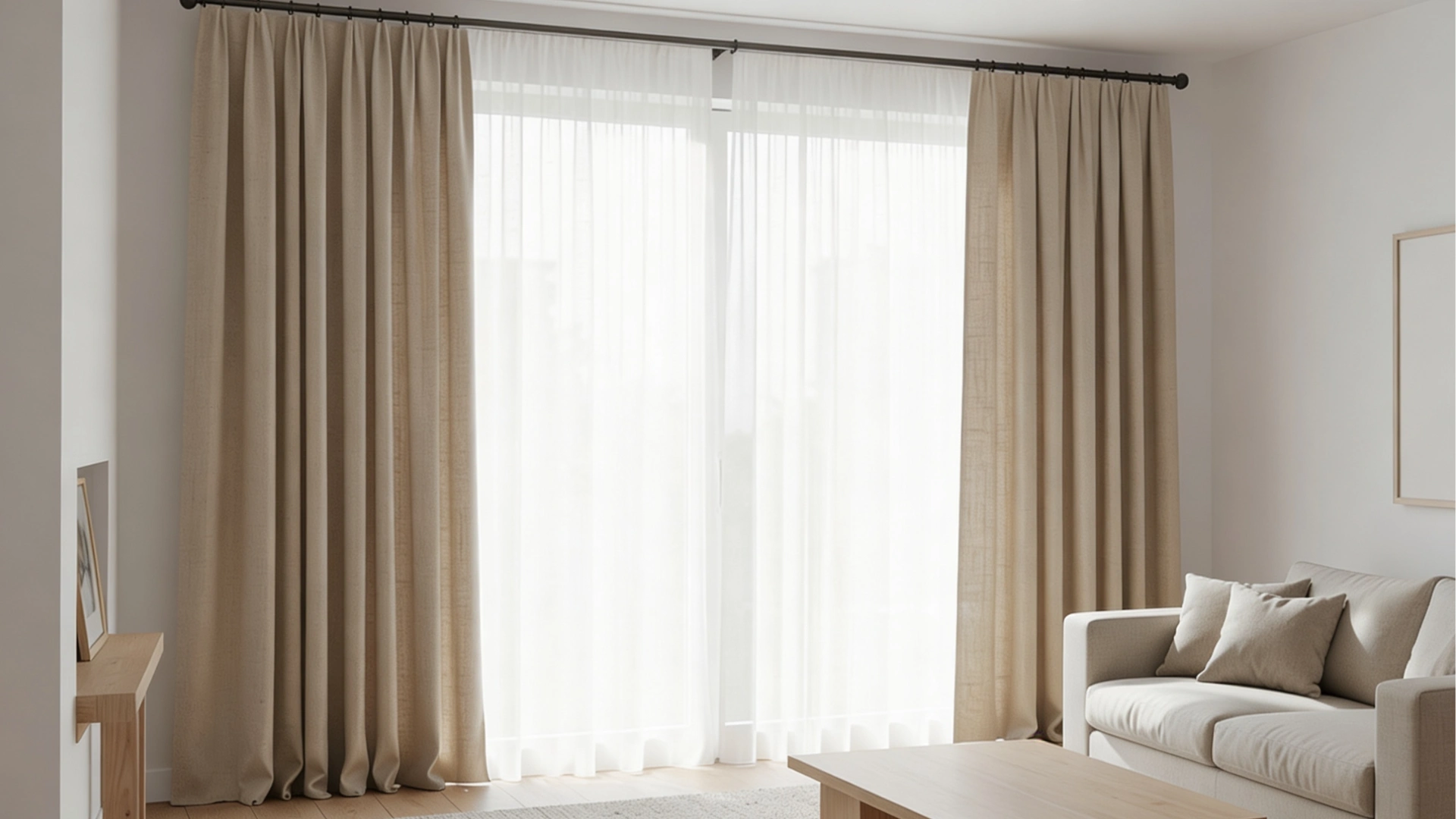
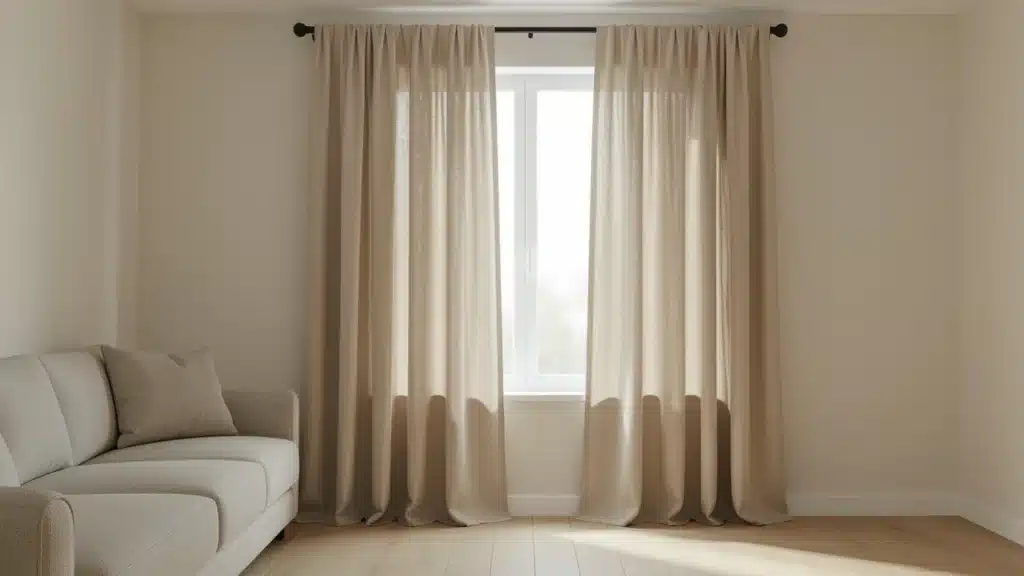
Living rooms look best with long, floor-length curtains.
Choose 84-inch or 96-inch panels based on your ceiling height, and hang the rod slightly above the window frame to make the space feel taller.
Use wider panels and layer sheer curtains behind thicker drapes to control daylight.
Avoid hanging your rod directly on the window frame. It makes ceilings look low and windows look small. Always go higher for a more open, spacious feel.
2. Bedroom
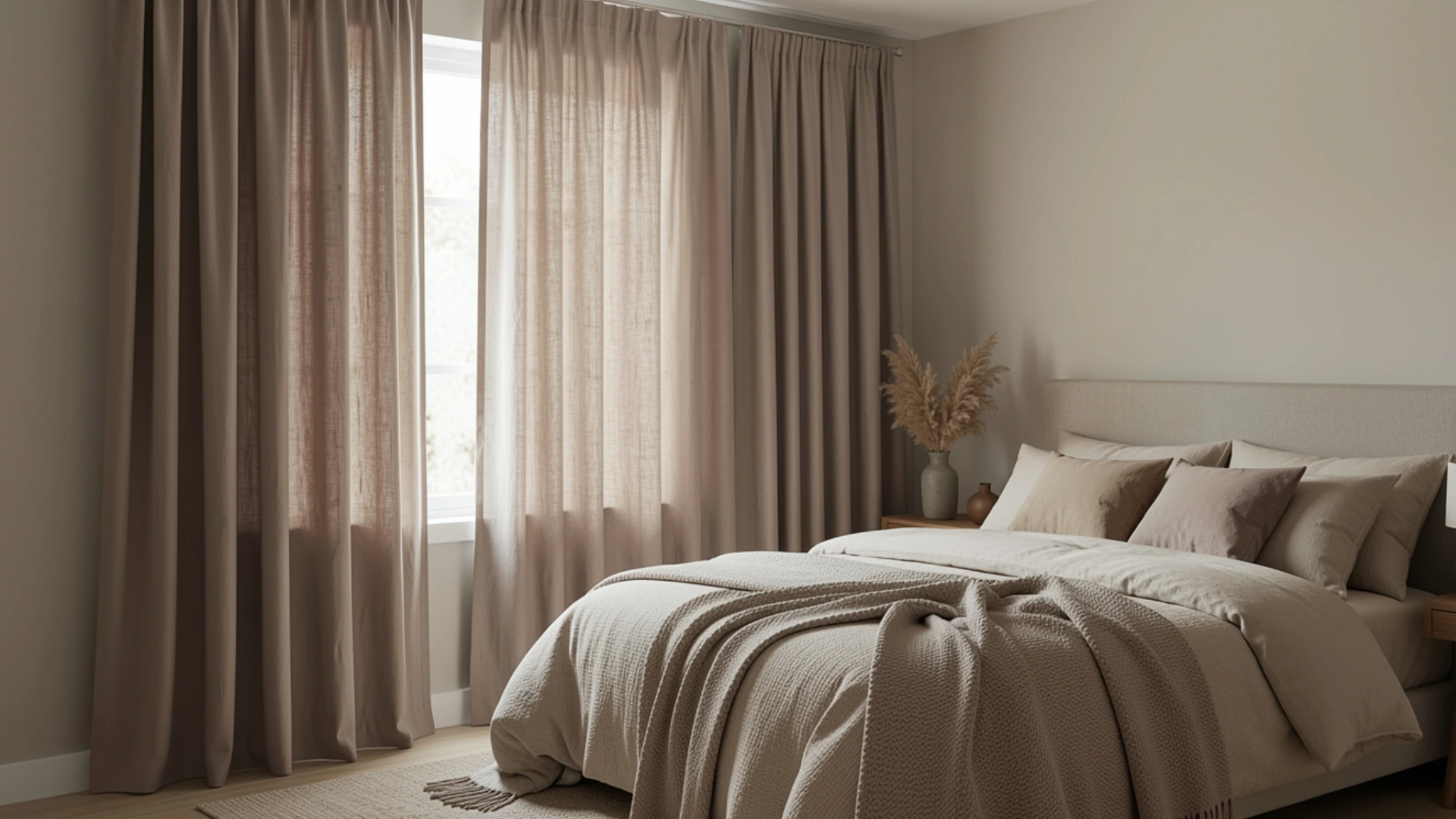
Bedrooms need curtains that give privacy and block unwanted light.
Blackout curtains work best here, especially in longer common curtain lengths like 96 or 108 inches.
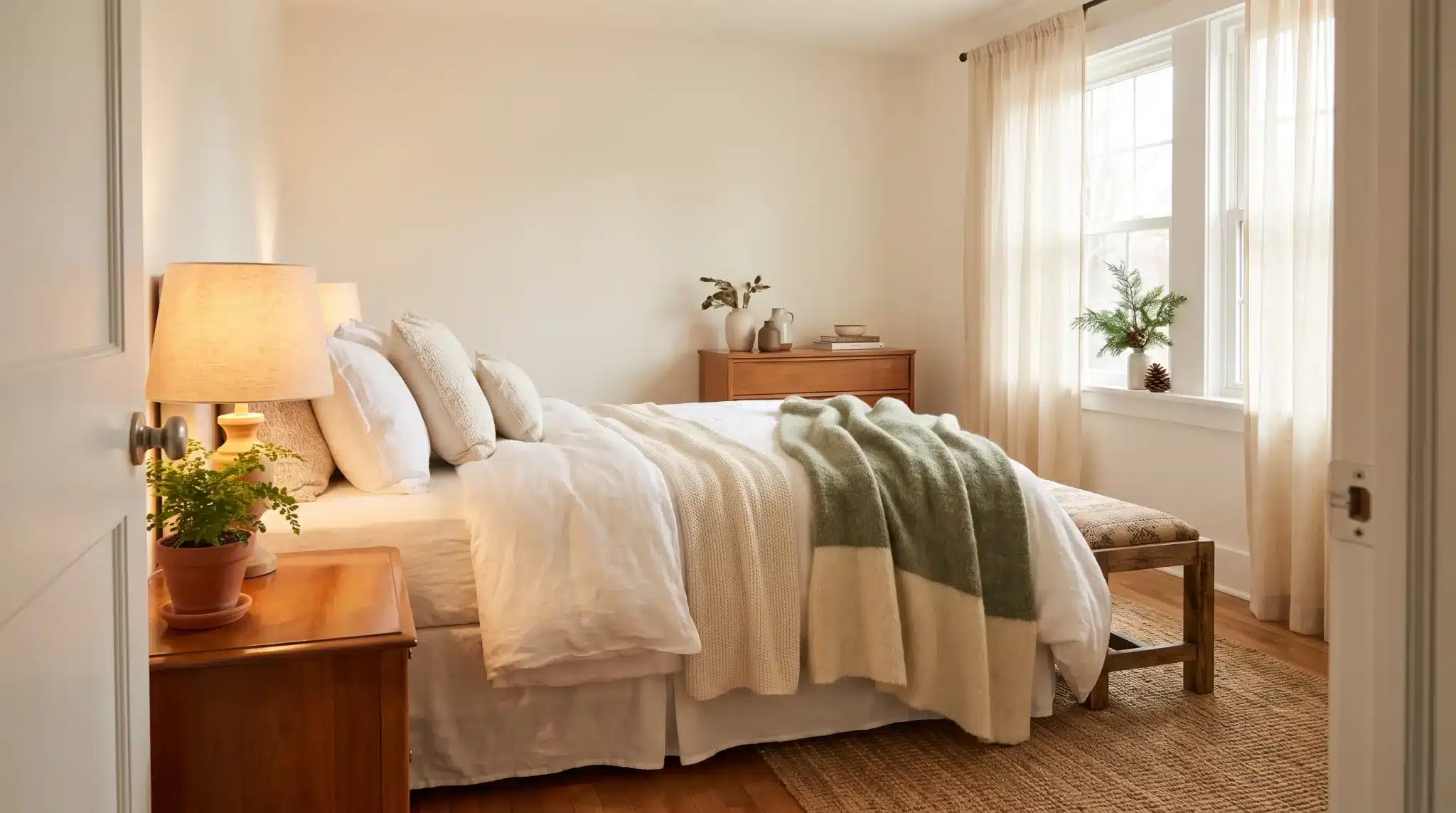
Use soft fabrics like linen belnds ot velvet for a relaxing feel.
Always hang the curtains close to the ceiling to make the room feel calm and well put-together.
3. Kitchen
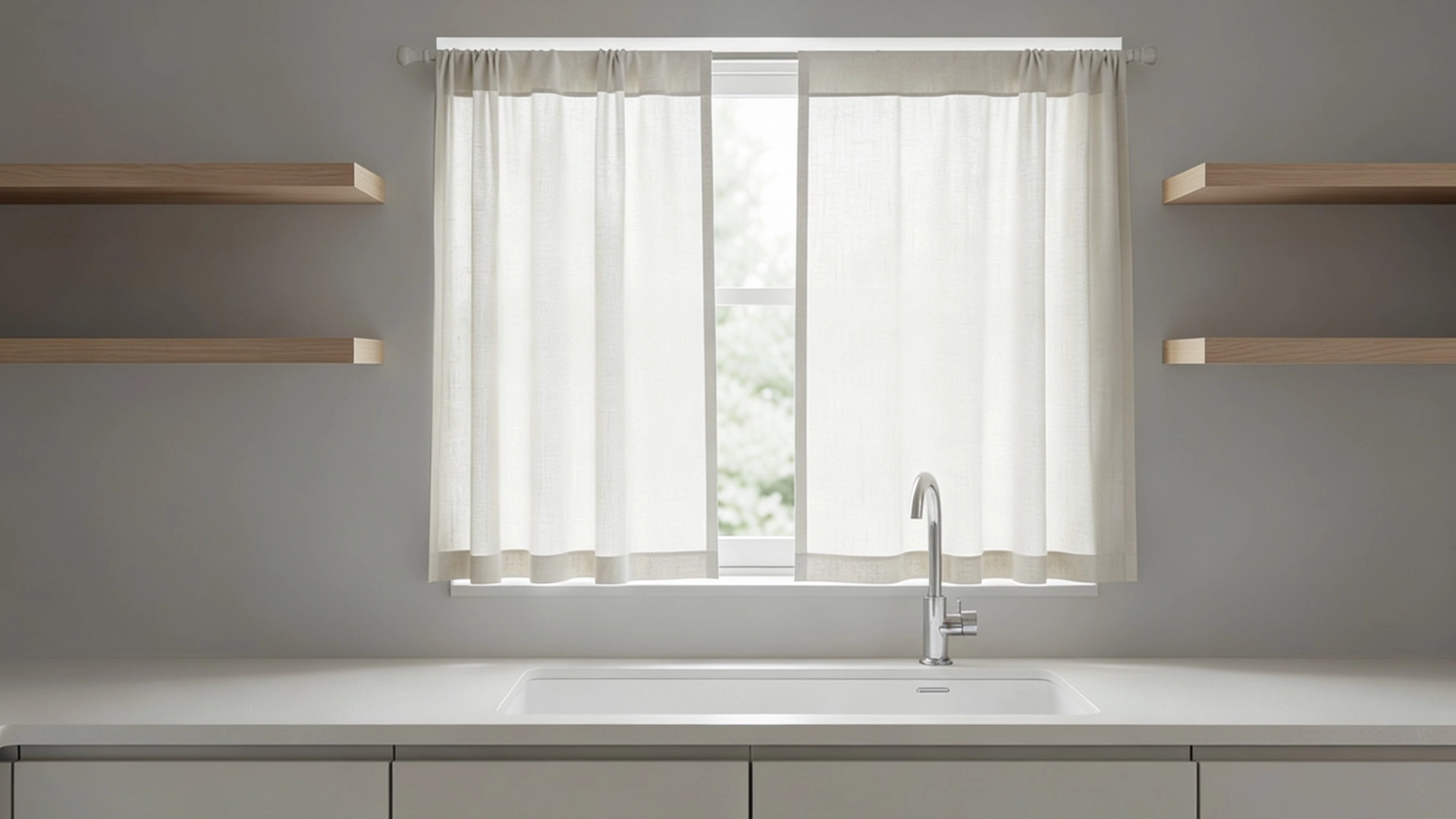
Kitchens work best with shorter curtains that stay practical and easy to clean.
Sill-length or café curtains are smart choices since they stay clear of countertops and appliances.
Choose lightweight cotton or sheer fabrics, and stick to solid colors that are easy to maintain.
4. Bathroom
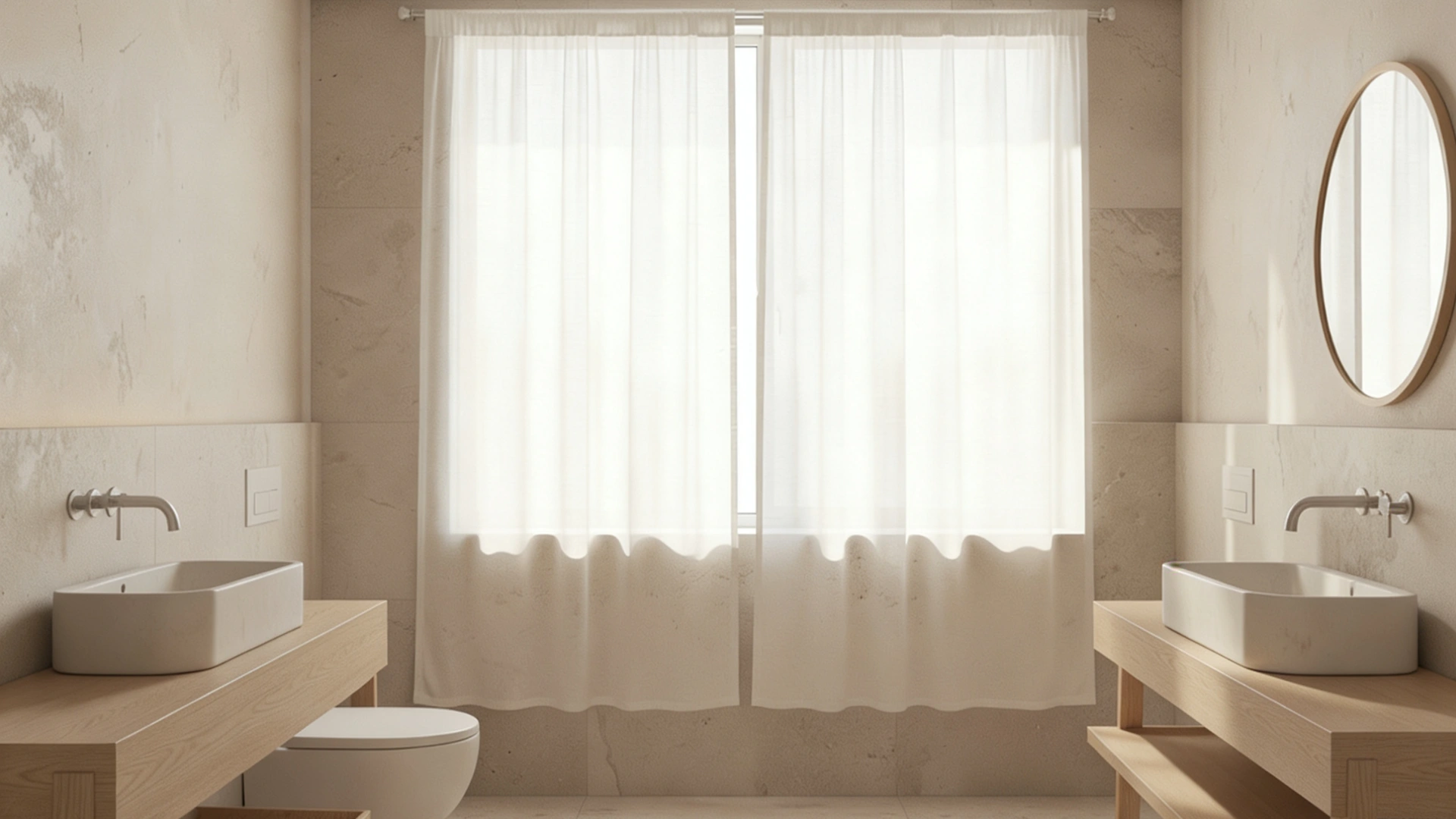
Bathroom curtains need to handle moisture while still letting natural light inside.
Short curtains or frosted sheer panels are the most practical option here. Always pick fabrics that dry quickly.
Avoid thick materials that retain moisture and take a long time to dry.
Never use heavy floor-length curtains in a bathroom. Moisture builds up fast in thick fabric, and leads to mold and unpleasant smells over time.
5. Dining Room
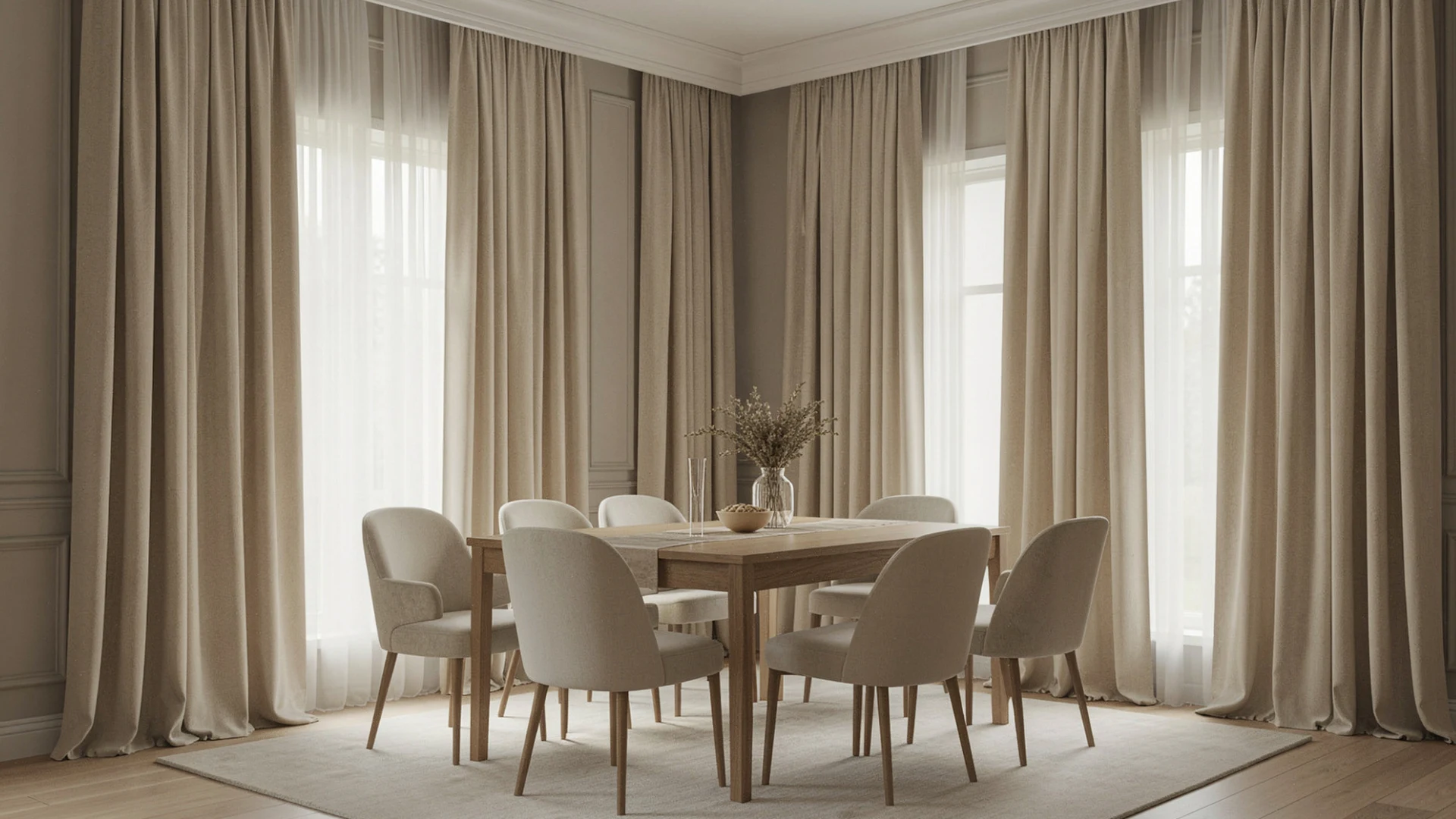
Dining rooms can handle slightly more formal curtain styles.
Long curtains with a bit of extra fullness create a polished, put-together look. This works especially well in rooms with tall windows.
If your dining room gets a lot of sunlight, choose layered curtains to help soften harsh daylight.
Is it Better to Get Curtains Too Long or Too Short?
This is the most popular dilemma when it comes to common curtain sizes.
It’s a tough choice to pick which one is better, but too-short curtains are the bigger problem out of the two.
They make rooms feel unfinished, and ceilings feel low.
Once hung, they can’t be fixed without buying new ones, which not only costs extra money but also makes the whole experience worse.
Too-long curtains are easier to work with.
You can fold them under or intentionally let them puddle. They give you more options, which allows you to be free in choosing the best for you.
That said, neither extreme is ideal. Too much fabric looks sloppy. Too little looks cheap.
Designer’s Favorite Curtain Length Styles
Choosing the designer’s favorite curtain length styles is another option you can choose to go with.
It works because designers don’t pick curtain lengths by chance.
Each length creates a specific feel in a room, and the right length adds structure, warmth, and character to any space.
1. Sill Length: Sill-length curtains end right at the window sill. They work best in kitchens and bathrooms, usually starting at $15-$30 per panel. Avoid using them in living rooms as they make the space feel unfinished.
2. Floating: Floating curtains hover half an inch above the floor. They look clean and sharp in most rooms, and they cost between $25 and $60 each.
3. Floor-Kissing: Floor-kissing curtains barely graze the floor. They give a polished, finished look at just $40 to $80 per panel. Always check that both panels touch the floor evenly, as uneven lengths make the whole window look messy.
4. Puddled: Puddled curtains pool 3 to 6 extra inches on the floor. They feel rich and work best in formal spaces, and usually cost $60 to $150 per panel.
Final Thoughts
Choosing the right option among the many common curtain sizes can be confusing at first, but now you know that it’s not complicated at all.
Checking your window width, ceiling height, and curtain rod placement can really change how your curtains look and fit.
It’s also important to avoid curtains that are too short.
Once you keep these basics in mind, finding the perfect curtain size for your space becomes a lot more straightforward.
Frequently Asked Questions (FAQ’s)
1. Should Your Curtains be Lighter or Darker than Your Walls?
Lighter curtains make a room feel open and airy. Darker ones add warmth and depth. Both work well depending on the requirement.
2. What Should Curtains Match in a Living Room?
Curtains don’t need to match everything. Tie them to one element, your sofa, rug, or throw pillows.
3. What Color Curtains go with Everything?
White, cream, and soft grey go with almost any room. They are neutral, clean, and easy to style. If you are unsure about color, these three are always a safe and smart choice.