Fire escapes are one of the most recognizable features of New York City apartment buildings. From older walk-ups in Brooklyn to multi-family buildings in Manhattan, Queens, and the Bronx, these exterior steel systems have played an important role in emergency access for decades.
But because many NYC fire escapes are exposed to rain, snow, humidity, pollution, and constant temperature changes, they can develop serious safety issues over time. Some problems are easy to see, such as rust or peeling paint. Others are harder to spot, like loose connections, weakened brackets, or deteriorated areas where the fire escape attaches to the building.
For property owners, landlords, supers, and building managers, knowing the most common fire escape problems can help prevent unsafe conditions, costly repairs, and inspection-related issues.
Why Fire Escape Problems Are Common in NYC
Many apartment buildings in New York City are older structures with exterior fire escapes that have been in place for decades. These systems are usually made of steel or iron, which can hold up well when maintained properly. However, once protective paint fails or moisture reaches the metal, corrosion can spread quickly.
NYC’s weather also adds pressure. Winter freeze-thaw cycles, summer humidity, heavy rain, and snow buildup can all affect metal surfaces, bolts, platforms, ladders, and wall connections. In dense neighborhoods, fire escapes may also collect dirt, debris, and moisture from nearby buildings, trees, and street-level pollution.
Because fire escapes are emergency systems, even small defects should be taken seriously. A minor rust spot today can become a structural concern later if it is ignored.
1. Rust and Corrosion on Metal Surfaces
Rust is one of the most common problems found on NYC fire escapes. It often starts where paint has chipped, cracked, or worn away. Once the exposed metal reacts with moisture, corrosion begins to form.
Common rust areas include:
- Stair treads
- Railings
- Platforms
- Balcony edges
- Ladders
- Support brackets
- Bolts and fasteners
Surface rust may look minor at first, but deeper corrosion can weaken metal sections. If rust causes flaking, pitting, or metal loss, the fire escape may need more than a simple paint job. A professional inspection can help determine whether cleaning, priming, painting, welding, or part replacement is needed.
2. Peeling Paint and Failed Protective Coating
Paint on a fire escape is not only for appearance. It acts as a protective barrier between the metal and outside moisture. When paint begins to peel, crack, or bubble, water can reach the steel beneath it.
This is especially common on older apartment buildings where fire escapes have not been repainted for many years. In some cases, multiple old paint layers may hide rust underneath. That is why proper surface preparation is important before repainting.
Simply covering rust with new paint does not fix the issue. The damaged areas usually need to be cleaned, scraped, treated, primed, and coated correctly so the protection lasts longer.
3. Loose or Missing Bolts
Bolts and fasteners help hold the fire escape together and secure it to the building. Over time, they may loosen due to vibration, weather exposure, corrosion, or building movement.
Loose bolts can affect:
- Railings
- Stair sections
- Platforms
- Brackets
- Ladders
- Wall connections
Missing bolts are even more serious because they may leave parts of the fire escape unsupported. During an inspection, these small connection points are often checked closely because they can affect the overall stability of the structure.
If a fire escape feels shaky, moves under weight, or has visible missing hardware, the issue should not be delayed.
4. Weak or Damaged Wall Connections
One of the most important parts of any fire escape is the point where it connects to the building. These connections transfer load from the fire escape into the exterior wall. If the wall connection becomes weak, the entire system may become unsafe.
Problems can happen when moisture enters around the connection points. On brick buildings, this may lead to cracked mortar, loose brick, or water-damaged masonry around the anchors.
Warning signs may include:
- Cracks around fire escape supports
- Rust stains running down the wall
- Loose brick near brackets
- Gaps around anchor points
- Movement where the fire escape meets the wall
This is one reason fire escape issues often overlap with masonry and facade problems in NYC apartment buildings.
5. Damaged Stair Treads and Platforms
Fire escape stairs and platforms need to support people during an emergency. If treads are bent, rusted, cracked, or unstable, the fire escape may not function safely when needed.
Common platform and tread issues include:
- Rust holes
- Bent stair sections
- Loose grating
- Sharp metal edges
- Uneven walking surfaces
- Broken welds
These problems can create trip hazards and structural concerns. Even if the rest of the fire escape looks fine from a distance, damaged walking surfaces should be repaired before they become worse.
6. Broken or Weak Railings
Railings are essential for safe movement on a fire escape. In older NYC buildings, railings can become loose, bent, rusted, or disconnected from the platform.
A railing problem may seem less serious than a damaged stair, but during an emergency, people may rely on those railings for balance and support. Weak railings can be especially dangerous for children, elderly residents, or anyone moving quickly in a stressful situation.
If railings shake, lean outward, or show heavy rust around the base, they should be inspected by a qualified professional.
7. Ladder Problems
Many NYC fire escapes include drop ladders, fixed ladders, or lower ladder sections. These parts are often exposed to street-level moisture, debris, and impact damage.
Common ladder problems include:
- Rusted ladder rungs
- Stuck drop ladders
- Missing parts
- Bent frames
- Loose hinges
- Improper clearance
A ladder must be usable when needed. If it is stuck, blocked, rusted in place, or difficult to operate, it can create a serious safety issue.
8. Blocked Fire Escape Access
A fire escape is only useful if residents can reach it quickly. In many apartment buildings, access is through a window or door. If that access point is blocked, locked improperly, painted shut, or obstructed by furniture, the fire escape may not serve its purpose.
Common access problems include:
- Air conditioners blocking windows
- Furniture placed in front of access points
- Windows painted shut
- Locked gates or security bars
- Stored items on fire escape platforms
- Planters, bikes, or debris blocking movement
Building owners and tenants both need to treat fire escape access seriously. Fire escapes should not be used as balconies, storage areas, or outdoor shelves.
9. Poor Drainage and Water Buildup
Water is one of the biggest causes of fire escape deterioration. If platforms or connection points hold water after rain or snow, corrosion can develop faster.
Water buildup may happen because of:
- Uneven platforms
- Blocked drainage points
- Debris accumulation
- Rusted surface depressions
- Poorly sealed wall penetrations
In winter, trapped water can freeze and expand, creating additional stress on metal and masonry. Regular cleaning and maintenance can reduce this risk.
10. Cracked Masonry Around Fire Escape Supports
Fire escapes are often attached to brick or masonry walls. When masonry starts to crack or weaken around support points, it can affect the fire escape’s stability.
This issue is common in older NYC apartment buildings where brickwork has been exposed to years of moisture and temperature changes. Cracked mortar joints, loose bricks, and water entry near metal supports should be inspected carefully.
In some cases, the fire escape problem is not only a metal issue. The surrounding wall may also need masonry repair, repointing, or sealing.
11. Unsafe Previous Repairs
Not every fire escape problem is caused by age or weather. Sometimes, the issue comes from poor repair work done in the past.
Examples of unsafe repair work may include:
- Weak welds
- Incorrect replacement parts
- Paint applied over rust
- Poorly secured bolts
- Temporary patching
- Repairs without proper inspection
Fire escape repairs should match the structure’s actual condition. A quick fix may hide the visible issue without solving the safety problem underneath.
12. Lack of Regular Inspection
Many serious fire escape problems become expensive because they were not caught early. Regular inspections help identify rust, loose connections, damaged platforms, and access issues before they become larger structural concerns.
For NYC property owners, inspections are not just about avoiding problems during official reviews. They are also about keeping residents safe and maintaining the building responsibly.
When visible damage appears, owners often search for fire escape repair NYC services because they need someone who can inspect the condition, explain the issue, and recommend the right repair method. The key is to act before small defects turn into urgent safety concerns.
When Should NYC Building Owners Take Action?
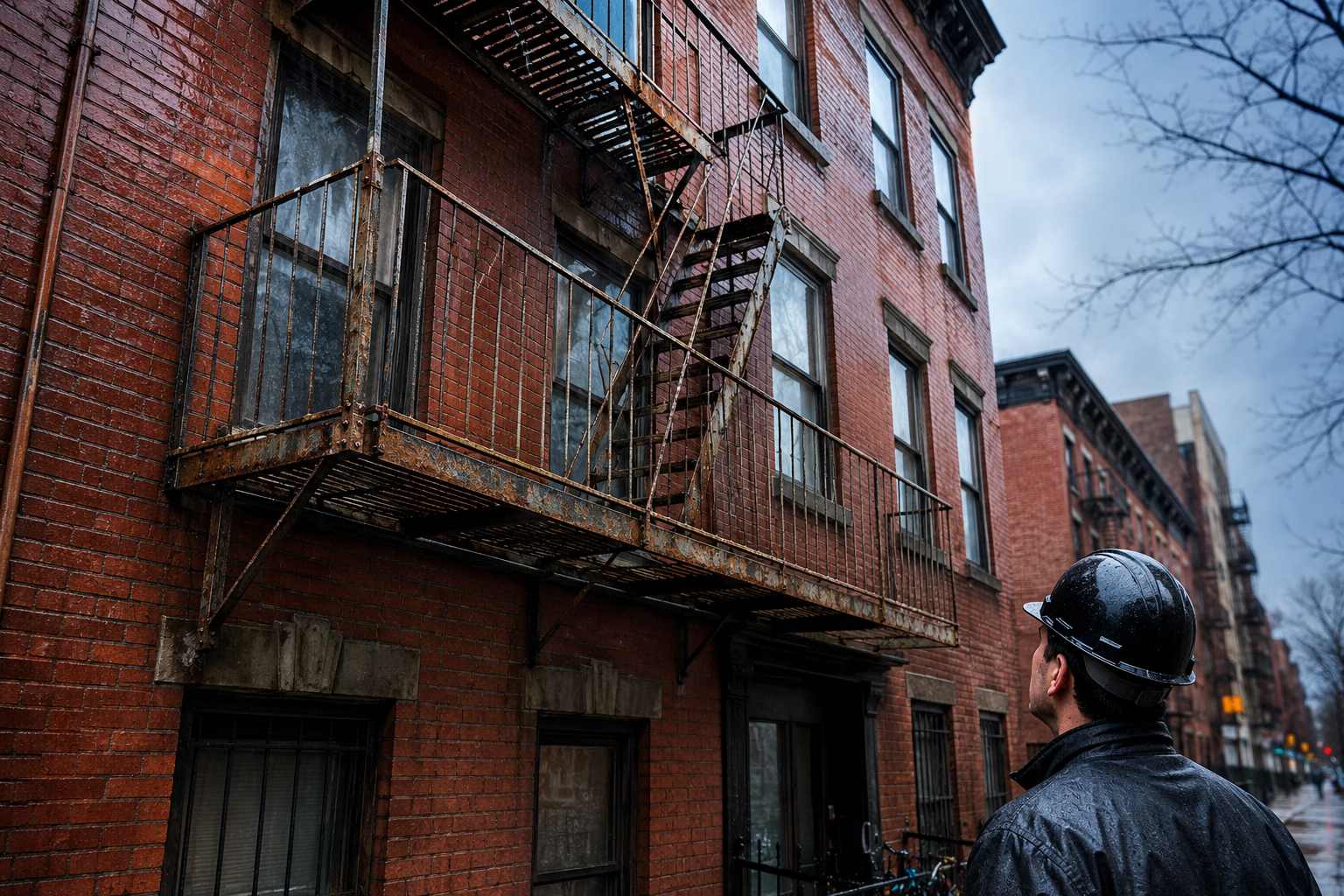
Building owners should take action when they notice any visible sign of deterioration. Rust, loose railings, missing bolts, cracked masonry, blocked access, or shaky sections should not be ignored.
A fire escape should be checked after:
- Harsh winter weather
- Heavy storms
- Visible rust growth
- Tenant complaints
- Facade or masonry damage
- Building violation notices
- Long periods without maintenance
The longer a fire escape issue is left untreated, the more difficult and expensive it can become to repair.
Repair, Restoration, or Replacement: Which One Is Needed?
Not every damaged fire escape needs full replacement. The right solution depends on the condition of the metal, wall connections, ladders, platforms, paint system, and surrounding masonry.
A minor issue may only need localized repair and repainting. A more advanced issue may require restoration, welding, reinforcement, or replacement of damaged sections. In severe cases, if the fire escape is no longer structurally reliable, a more extensive plan may be needed.
This is where working with an experienced fire escape contractor NYC can help property owners understand whether the building needs repair, restoration, inspection, or a more detailed structural review.
Final Thoughts
Fire escapes are a key safety feature in many NYC apartment buildings, but they need consistent care to remain reliable. Rust, peeling paint, loose bolts, weak wall connections, damaged platforms, blocked access, and poor previous repairs are all common issues that property owners should watch for.
The best approach is not to wait until a fire escape looks severely damaged. Regular inspections and timely repairs can help protect residents, reduce liability, and keep older apartment buildings safer for everyday living.
For NYC landlords and property managers, fire escape maintenance should be treated as part of responsible building care, not as an afterthought.
FAQs
What Are the Most Common Fire Escape Problems in NYC Apartment Buildings?
Rust, loose bolts, peeling paint, weak railings, damaged platforms, blocked access, and cracked masonry around support points are common issues.
How Often Should NYC Building Owners Inspect Fire Escapes?
Owners should check fire escapes regularly and schedule professional inspections when rust, movement, damage, or blocked access appears.
Is Rust on A Fire Escape Serious?
Yes. Surface rust may look small, but deeper corrosion can weaken stairs, railings, platforms, bolts, and support brackets.
Can a Fire Escape Be Repaired Instead of Replaced?
Yes, if the structure is still sound. Repairs may include welding, bolt replacement, rust removal, repainting, or fixing damaged sections.
Why Do NYC Fire Escapes Need Regular Maintenance?
Regular maintenance helps prevent corrosion, keeps access clear, supports safety, and reduces the risk of costly repair issues later.