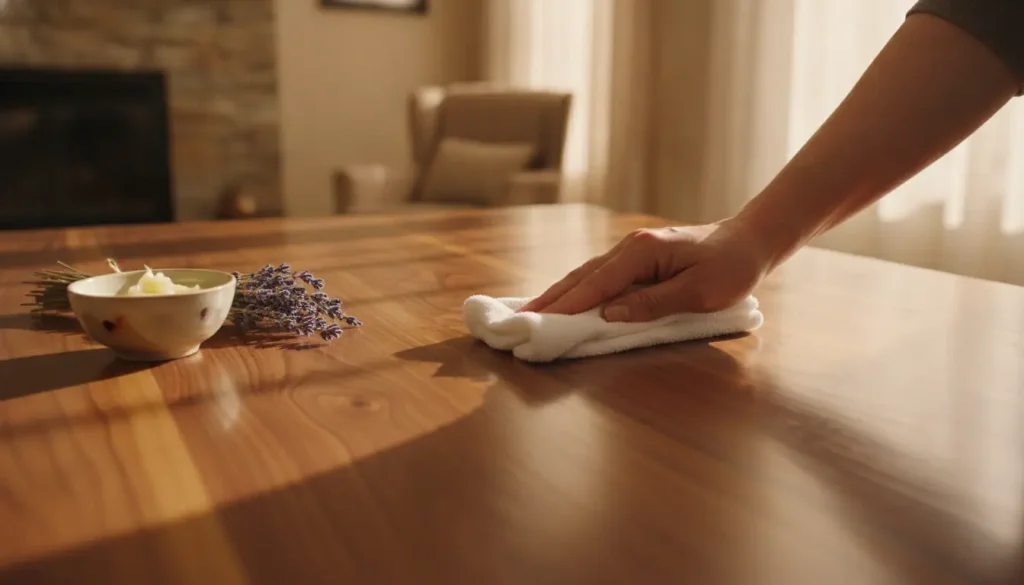
Using real wood is fundamentally different from buying furniture made of manufactured wood.
Solid wood furniture can literally be handed down through generations.
This is because high-quality hardwoods like oak and walnut have remarkable durability, but they are not indestructible.
Without proper care and maintenance, your fine wooden furniture will eventually lose its beauty due to the ravages of time and the effects of the environment.
Why Proper Care Matters for Solid Wood Furniture?
Regardless of the durability of the material itself, wooden furniture should be maintained and cared for.
The porosity of the material combines with the effects of the external environment, while the wood fibers are exposed to various substances.
Proper care and maintenance of wood furniture contributes not only to the aesthetic appearance of the surface but also to the preservation of the integrity of the wood structure by using lacquers, oils, and waxes.
Wood for handcrafted furniture is characterized by high strength and resistance, and has a beautiful grain surface.
Nevertheless, even such high-quality furniture requires proper maintenance and regular care so that it remains like new for as long as possible.
Daily Cleaning and Maintenance Tips
There are no magical potions that will keep your favorite wooden possessions spotless, so it is time to establish some order.
A soft cloth that will help you avoid scratches on the surface of the object is your best friend.
The most critical moment is immediately after a mess has already occurred.
In this case, liquid should be blotted rather than rubbed to prevent it from spreading, and you should also be careful with aggressive degreasers and super-mart deodorizers with a citrus scent.
It’s best to avoid using them altogether and stick to a gentle cleaning with a piece of fabric and soapy water if additional care is needed.
Whether you’re caring for a dining room table solid wood or other frequently used pieces, cleaning it as part of your routine prevents damage to the natural grain.
Protecting Wood from Moisture and Sunlight
Water is wood’s absolute enemy.
Once spilled, the liquid may penetrate the wood grain, leaving unsightly water rings or causing the furniture’s surface to swell.
The only sure way to prevent water damage is to use coasters made of cork, felt, or leather and place heat-resistant placemats on tables when setting down cups.
Sunlight is also damaging to wood furniture.
Specifically, ultraviolet rays lighten darker woods, like walnut, and darken lighter ones, such as oak.
To avoid this problem, keep timber furniture away from bright windows or use sheer curtains to filter the sunlight that enters the room.
Preventing Scratches, Dents, and Everyday Wear
Never slide your furniture around.
The force can loosen joints, unscrew parts, or even split the wood on a piece’s base.
Use a two-man lift instead.
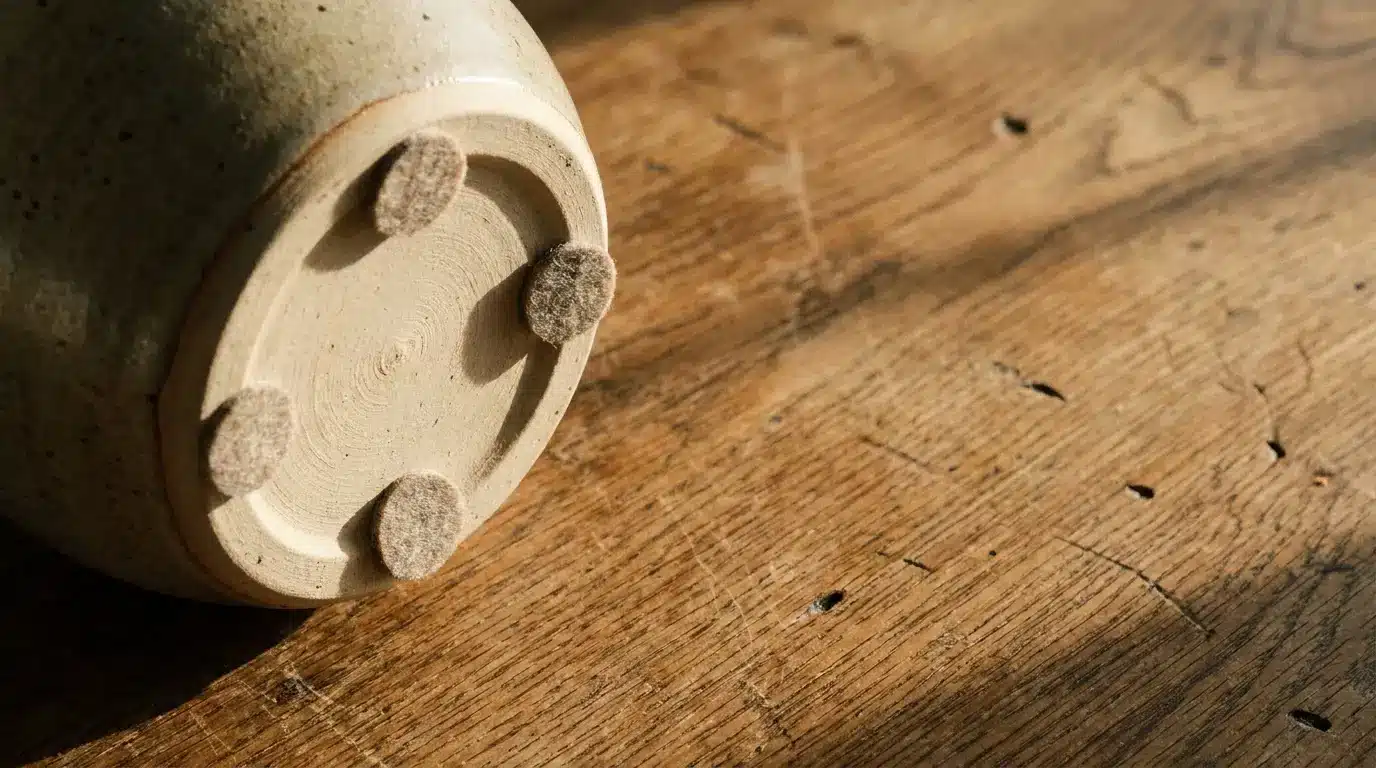
To keep decorative desktop items from marring your tabletop, try using adhesive felt pads on the bottom of ceramic figurines, laptops, and metal trays.
It’s also smart to rotate your lamps and vases every few months.
Wood matures and reacts to ambient indoor light, so shifting items around prevents permanent “shadows” where the covered wood stays lighter than the exposed areas.
Everyday pieces such as floating nightstands benefit from simple protective measures since they often hold lamps, books, and personal items.
Seasonal Care Tips for Solid Wood Furniture
Wood is hygroscopic, which means it absorbs and emits moisture like a sponge.
It expands when the humidity is high in the summer and contracts when the air is dry in the winter.
These movements can cause slight twisting or gaps between pieces if the changes are extreme.
The best way to prevent this is to keep your home at a relative humidity of 35-55%.
Running a humidifier in the winter will keep the wood from contracting and developing cracks, and using fans or an air conditioner in the summer will stop it from expanding and cupping.
In addition, make sure to tighten any expanding table bolts or leg hardware every six months or so.
When to Refinish or Restore Solid Wood Furniture?
How to tell when a piece needs more than just a light polish?
When water no longer beads up but instead sits heavily, leaving darker wet spots, the protective coating has worn off.
Superficial scratches are easily masked by a decent wax-paste polish or an oil-rubbed finish, but deeper gouges, excessively waterlogged areas, or lifting varnishes will need to be completely resurfaced.
The great thing about real wood is that it can almost always be refinished again and again until you decide to replace it altogether.
Refinishing maintains the integrity of the original piece while providing new functionality and a fresh look without having to toss it out and buy something new.
Caring for Different Types of Solid Wood Furniture
Different pieces face distinct environmental pressures.
A coffee table deals with sticky mugs and rogue feet, while a bookshelf quietly carries immense dead weight.
Your maintenance has to be adjusted depending on the conditions as well.
The big surfaces are exposed to more stress from knives and hot pans, and are subjected to more moisture from cleaning.
Accent pieces that you use less often will see less wear and tear, but you should still take care of them.
No matter which you choose, it is important to keep everything uniform to maintain the appearance of your set as a whole.
Well-crafted solid wood nightstands require the same routine care as larger furniture pieces to maintain their appearance and durability over time.
Common Mistakes That Can Shorten the Life of Wood Furniture
The single fastest way to wreck a finish is to use silicone-based commercial polish sprays.
Silicone creates a slippery residue that causes refinishing oils to bead on the surface and creates a sludgy layer that can’t be removed without sanding.
Other big no-no’s include leaving water on or near the surface and ignoring scratches until they’re deeply embedded in the wood.
Placing a fine oak or walnut table directly over a forced-air heating vent or next to a fireplace can bake the glue out of the joinery.
Conclusion
Consistent, conscientious care is the key to decades of enjoyment of any furniture made of solid wood.
Through regular dusting, use of coasters, maintaining proper humidity levels, and promptly addressing minor scratches, you can ensure that your solid wood furniture will be a staple of your home for years to come.
The right care allows you to enjoy the beauty and durability of the furniture as well as keep its value for a long time.
Both oak and walnut furniture are high-quality, so they will provide you with decades of satisfaction if you take good care of them.
How Often Should You Clean Solid Wood Furniture?
You can dust solid wood furniture with a dry microfiber cloth weekly.
What Is the Best Cleaner for Solid Wood Furniture?
The best cleaner for solid wood furniture is a solution of warm water and a few drops of mild dish soap.
Can Sunlight Damage Wood Furniture?
Yes, leaving wood furniture in the sun can cause discoloration.
How Do You Remove Scratches From Wood Furniture?
Surface scratches can be buffed out using either a high-quality wood paste wax or the special touch-up markers available in the wood tone of your choice.
When Should Solid Wood Furniture Be Refinished?
When the finish has worn down or become tacky.
How Do You Protect Wood Furniture From Humidity?
Use a humidifier in winter to add moisture to the air and a dehumidifier or air conditioner in summer to remove excess moisture.