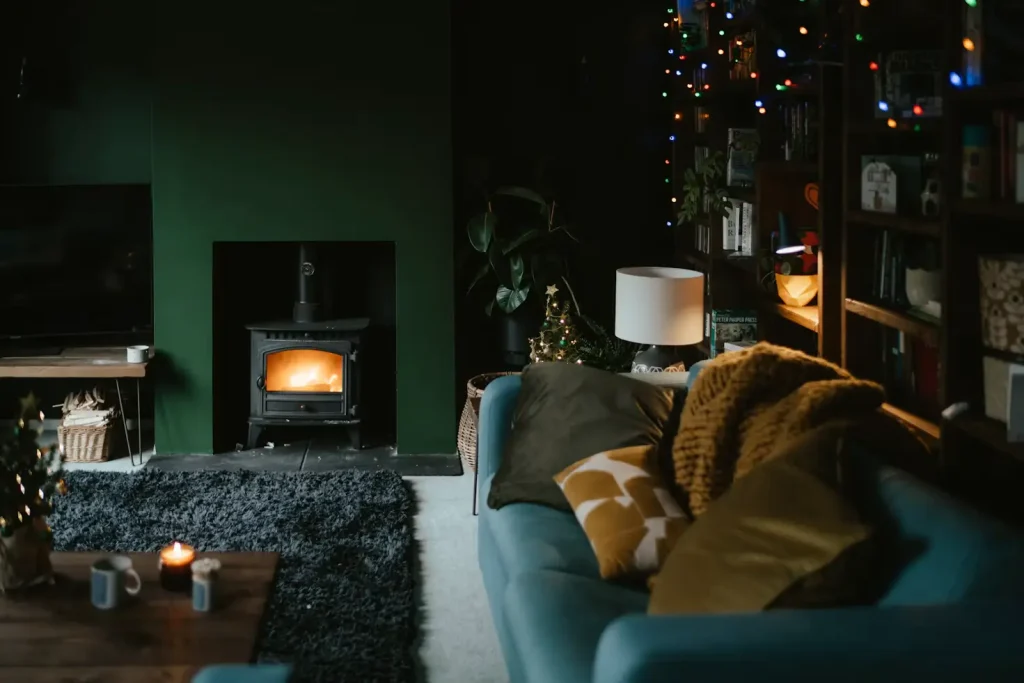
A room can look ready for winter and still be the last place anyone wants to sit. A blanket draped over a chair doesn’t do much for an evening spent dodging a draft or sitting beneath a glaring ceiling light.
Creating a cozy home becomes a different challenge when bright summer evenings give way to cold floors and windows that turn dark before dinner. The interest in hygge, associated with Denmark, reflects that wish for a home that feels welcoming rather than merely dressed for winter.
The question isn’t how much seasonal decor a room needs. It’s what makes the room comfortable enough to settle into, especially when the same chair, lighting, and lightweight furnishings no longer feel quite right.
What Makes a Home Feel Cozy When It Gets Cold
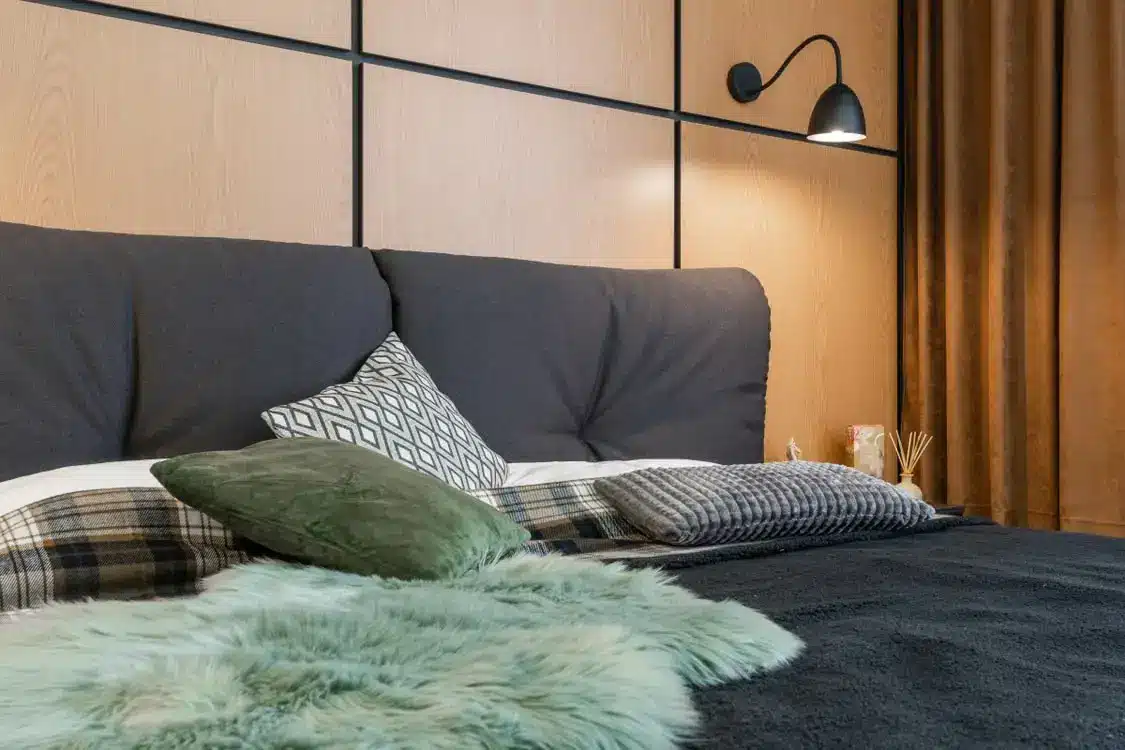
A cozy cold-weather room combines physical warmth, soft light, and familiar sensory details. Decor works best when it supports those daily experiences rather than competing with them.
Warm furnishings support a warm room; they aren’t substitutes for one. Texture earns its place through touch.
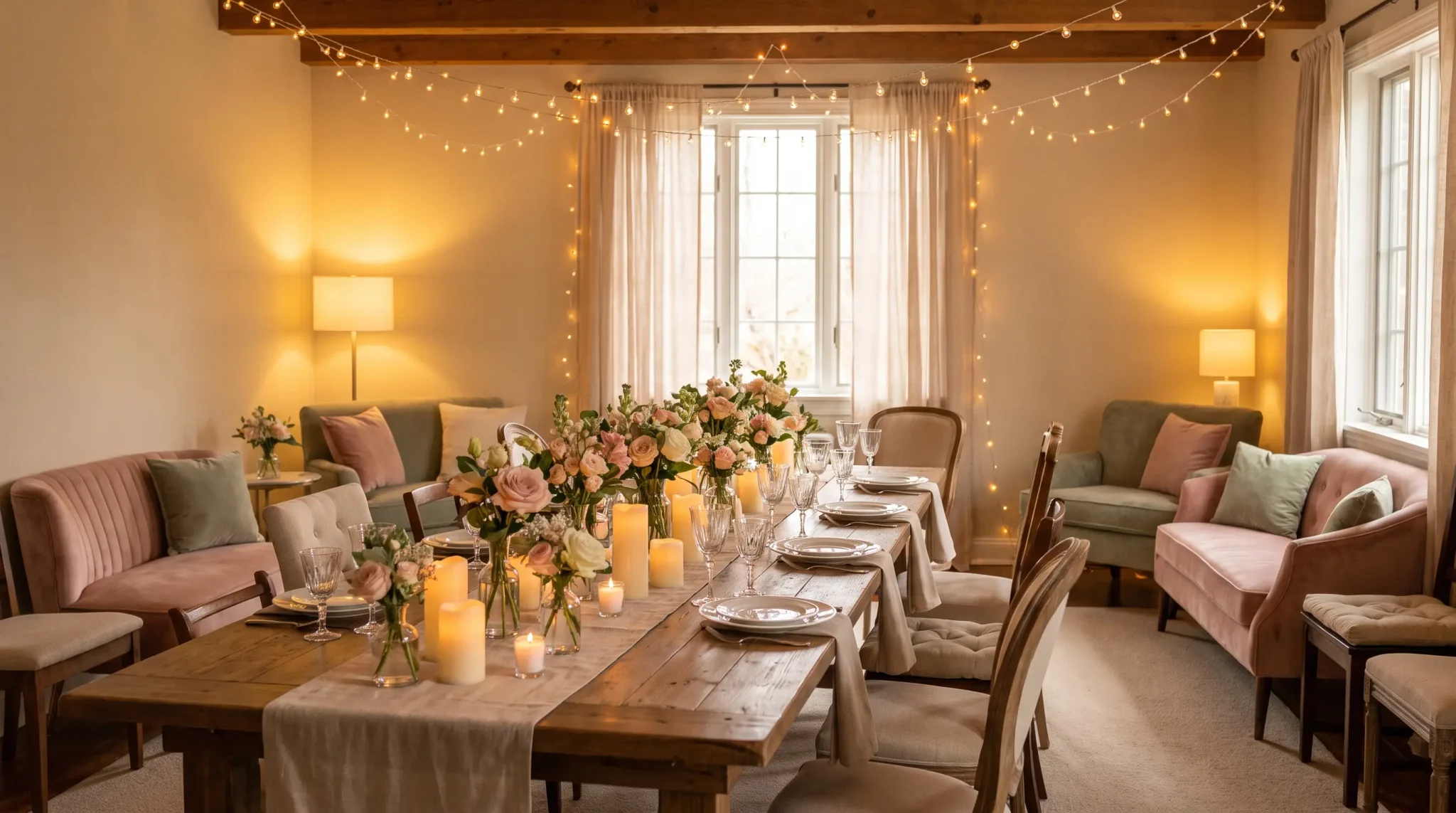
Cozy lighting starts with where the light falls. A bright ceiling fixture illuminates everything at once; lamps and side lighting create smaller pools around a chair, a table, or a shared meal. Different heights keep those pools from feeling like a row of identical spotlights.
The tradition of Danish hygge describes comfort and contentment through everyday experiences, including candles, throw blankets, baking, and time with loved ones. It doesn’t require a room full of new purchases.
Together, these details make a room comfortable enough to settle into, rather than simply dressed for the season.
Block the Cold Before You Decorate for It
A draft beneath a door deserves attention before another cushion does. A door draft stopper addresses that low gap, while weatherstripping tackles gaps around opening windows and doors. The useful distinction is between covering a chilly spot and stopping the cold air entering through it.
Light summer curtains can give way to heavier, lined panels, closed at dusk rather than left open through the evening. On hardwood or tile, an area rug puts a softer surface beneath feet, particularly beside a bed or beneath a favorite chair.
Heavy curtains, rugs, and layered throws help retain warmth, but staying cozy on the coldest days still depends on the warmth the house itself provides.
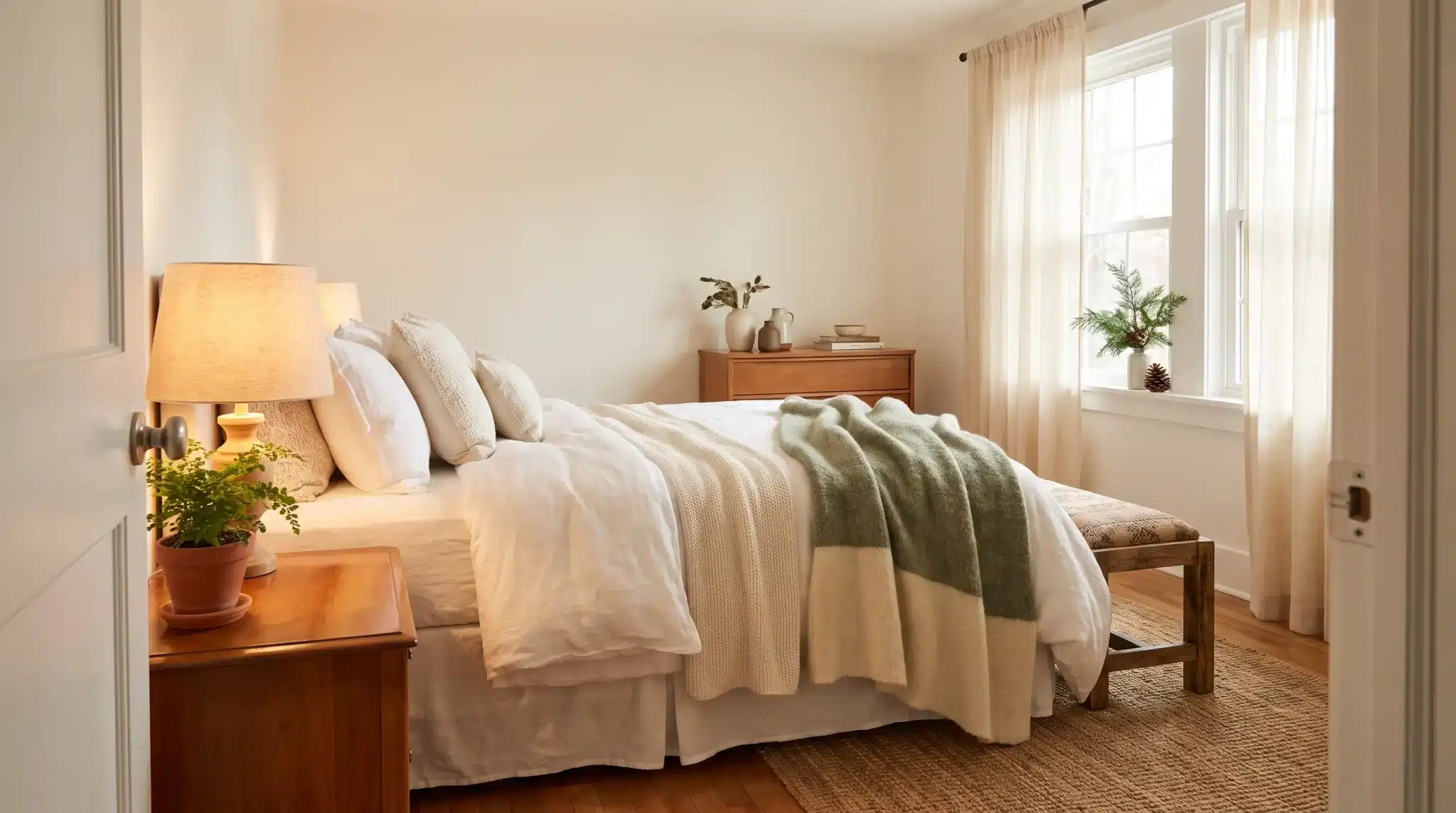
Next comes layering textiles where people actually rest. Flannel sheets or wool bedding and a heavier duvet belong on the bed, while a throw blanket belongs within reach of a seat, not folded away in another room. A throw pillow should support a comfortable position rather than occupy the only usable space.
A fireplace offers an obvious gathering point, but a chair grouped beside a softly lit table can serve the same organizing purpose. The aim is a usable place to settle, not a display that needs rearranging before anyone sits down.
Light and Scent for Shorter, Darker Days
With the room’s warmth addressed, lighting can soften the evening. Warm-white bulbs labeled around 2700K offer a practical starting point for that softer look. Dimmers let the main light recede while a reading lamp stays useful.
The relationship between layered lighting and natural textures matters here: a woven shade or textured blanket gives the light something other than a bare wall to fall across.
Scents can come from something already happening at home. Comfort food and baking bring familiar aromas into the evening, while a simmer pot offers another route for households that enjoy fragrance. Among budget-friendly crafts and handmade touches, a simple simmer pot fits without adding another permanent ornament.
One scent is enough; competing fragrances can make the room feel busy. Quiet music, rain sounds, or the crackle of a fire can finish the setting without filling another shelf. The sound should remain in the background, leaving conversation or reading at the center.
A Cozier Home Starts With One Warm Corner
A comfortable room comes together in layers: block drafts, soften surfaces, then add light and familiar sensory details.
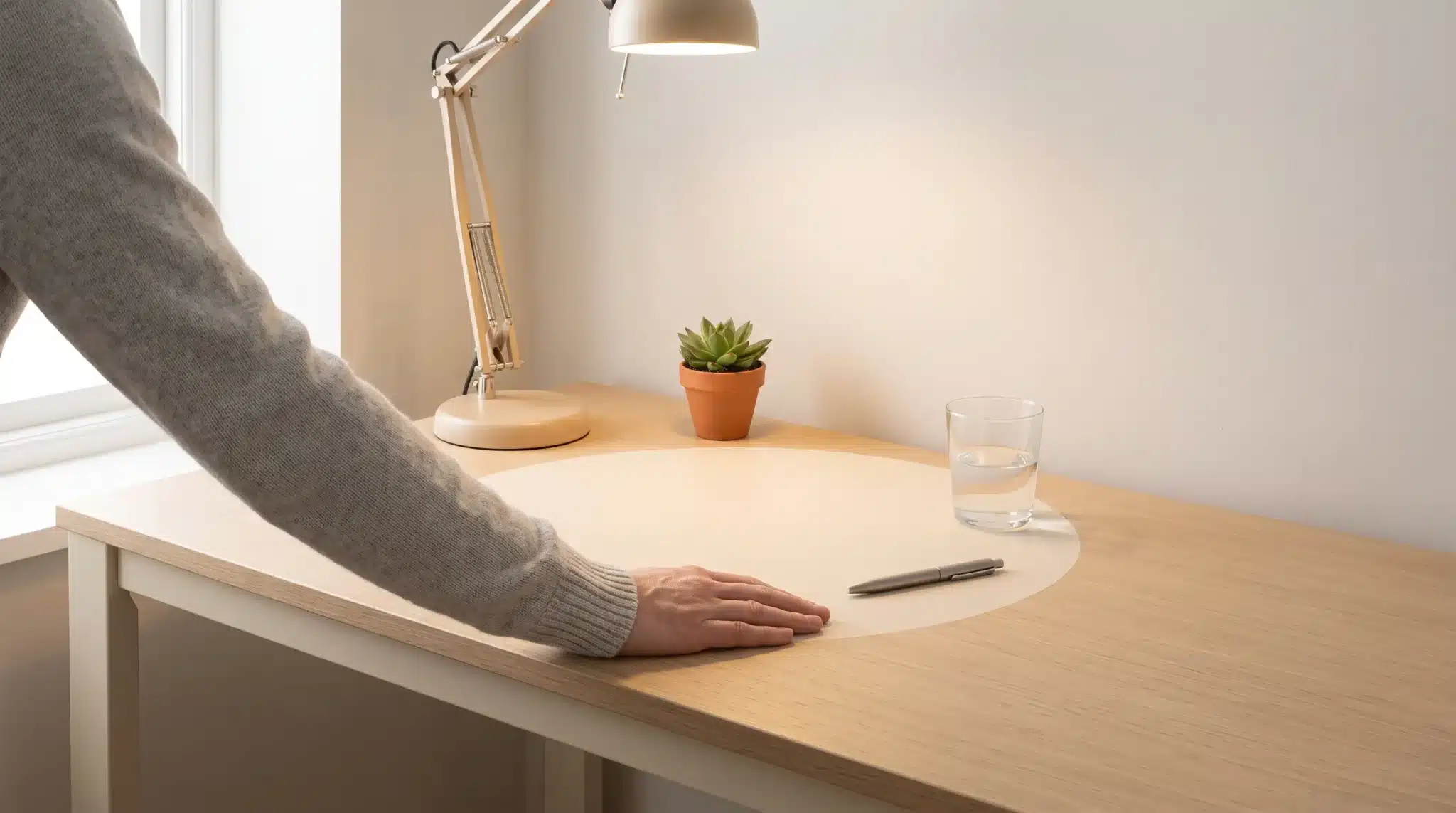
One chair, an accessible blanket, and a lamp can bring that approach into focus. There doesn’t need to be a seasonal arrangement on every surface or a matching cushion on every seat.
That’s the practical appeal of hygge: the room feels ready for ordinary life on a cold evening, not just ready for a photograph.