Art Deco remains one of the most recognizable interior styles because it combines architectural structure, refined materials and expressive design details in a distinctive way.
It achieves this balance through bold geometry, expressive colors, polished materials and statement furnishings arranged within a clearly ordered setting.
This blog explains the style’s historical origins, defining characteristics and recognizable elements before showing how homeowners can adapt its colors, furniture, lighting and decorative details for modern rooms.
Keep reading to understand the Art Deco aesthetic, distinguish it from similar styles and create a comfortable interior that feels luxurious, balanced and suitable for everyday living.
What Defines Art Deco Interior Design?
Art Deco is a decorative style known for combining geometric structure with luxurious materials, strong colors and carefully controlled ornamentation.
It became prominent in the early twentieth century, when designers began expressing modern progress through streamlined shapes, skilled craftsmanship and machine-inspired details.
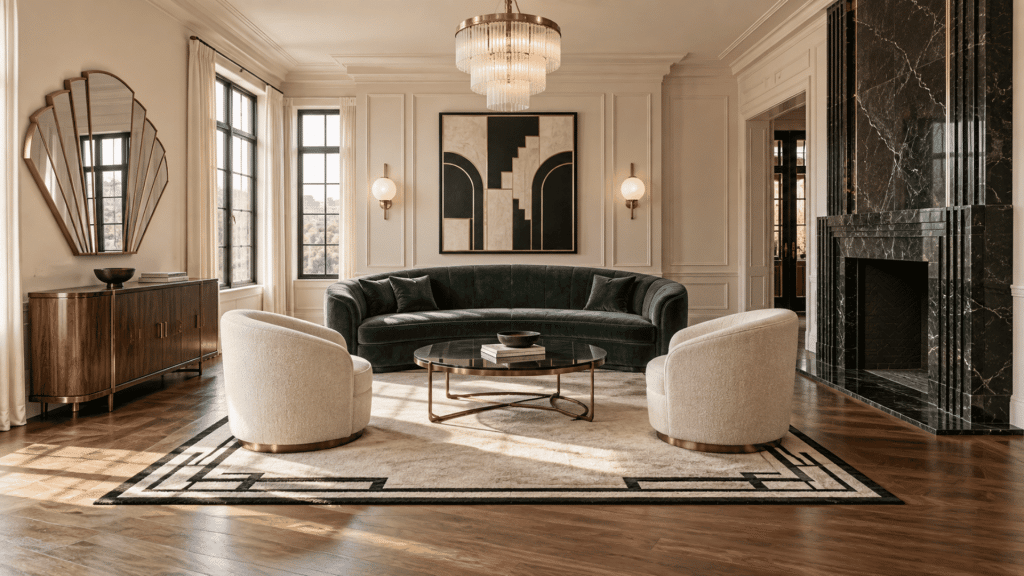
Symmetrical layouts, stepped forms, polished metals, dark woods, velvet and stylized motifs give these interiors their distinctive character.
The style can shape an entire room through coordinated surfaces and furnishings or appear through selected lighting, artwork and accessories.
Modern interpretations usually simplify the decoration while preserving the elegance, contrast and visual order associated with traditional Art Deco spaces.
The Historical Roots of Art Deco Design
Art Deco developed through French design traditions, international influences and changing ideas about luxury, technology and modern life during the early twentieth century.
- French Beginnings: The style began developing in France before World War I and matured afterward through modern forms and traditional craftsmanship.
- Paris Exhibition: The 1925 Paris decorative arts exhibition showcased modern furniture, architecture, jewelry and household objects to an international audience.
- Later Name: Designers originally used terms such as Style Moderne, while the shortened name Art Deco became common during the 1960s.
- Creative Influences: The movement adapted Cubism, Art Nouveau, Egyptian imagery, Asian and African arts, transportation and machine-age design.
- International Legacy: Art Deco spread across buildings, theaters, hotels, ships and furnishings, with the Chrysler Building becoming a prominent architectural example.
What are The Defining Characteristics of Art Deco Interiors?
Several connected design elements give Art Deco interiors their recognizable combination of order, glamour, contrast and decorative confidence.
1. Bold Geometry and Balanced Arrangements

Geometric structure gives Art Deco interiors an orderly foundation beneath their decorative colors, materials and statement furnishings.
Ornament remains controlled through deliberate proportions, recurring forms and clearly established focal areas.
Symmetrical layouts reinforce this structure with matching lamps, paired chairs, centered artwork and evenly arranged accessories around a central focal point.
2. Rich Colors and Dramatic Contrast

Art Deco interiors often use emerald green, sapphire blue, burgundy, navy or deep purple as dominant colors.
Black, cream, and white create contrast, while gold and silver introduce reflective accents that strengthen the room’s polished appearance.
Lighter interpretations may include blush, peach, pale green or warm beige, allowing the aesthetic to feel brighter and more relaxed, in step with broader interior color trends favoring softer, livable palettes.
3. Luxurious Materials and Polished Finishes

Material contrast creates the sense of depth and refinement commonly associated with Art Deco interior design.
Velvet, marble, polished wood, lacquer, brass, chrome, glass and mirrored finishes combine softness with smooth reflective surfaces.
Modern homes can use stone-look porcelain tile, engineered veneers, performance velvet and quality metallic hardware for a more practical interpretation.
4. Sculptural Furniture and Streamlined Forms

Art Deco furniture balances generous proportions with clean outlines, decorative craftsmanship and confidently shaped structural details.
Curved sofas, barrel chairs, rounded cabinets, waterfall edges, fluted fronts and pedestal tables provide recognizable examples.
Dark wood, glossy lacquer, velvet upholstery, leather, and metallic inlays further emphasize the furniture while maintaining a polished and coordinated appearance.
5. Statement Lighting and Reflective Details

Lighting functions as decoration within Art Deco interiors, bringing shape, shine and atmosphere to otherwise practical fixtures.
Tiered chandeliers, globe sconces, stepped pendants, etched glass shades and polished metal frames reflect the movement’s architectural influence.
Mirrors and glass surfaces distribute light across darker palettes, one of the considerations covered in choosing the right interior lighting for every room, but restrained placement keeps the room from feeling overly bright or decorative.
6. Stylized Motifs, Arts and Accessories

Decorative accessories reinforce the style through repeated shapes, controlled placement and imagery connected with glamour or progress.
Sunburst mirrors, sculptural figures, geometric vases, patterned rugs, travel posters and streamlined clocks can provide recognizable finishing details.
A limited selection of coordinated objects gives each decorative feature greater visual importance than crowded displays.
Creating an Art Deco Interior in a Modern Home
A modern Art Deco interior develops through selective additions that connect strong visual character with practical comfort throughout each carefully planned room.
1. Establish One Focal Feature: Begin with geometric wallpaper, a curved sofa or sculptural lighting, the same logic behind learning to choose the right feature wall before adding anything else to a room.
2. Develop a Coordinated Palette: Combine one dominant jewel tone with supportive neutrals and repeat one metallic finish across lighting, hardware and accessories.
3. Arrange Furniture with Purpose: Center the layout around a fireplace, bed or table while using paired pieces to create visual order.
4. Adapt Details by Room: Choose velvet seating for living rooms, structured headboards for bedrooms and patterned tiles or mirrors for bathrooms.
5. Use Flexible Decorative Elements: Patterned rugs, cushions, framed prints and removable wallpaper can introduce the style without requiring permanent structural changes.
Comparing Art Deco with Similar Interior Styles
Several decorative styles share luxurious details, but their shapes, influences and overall visual character remain noticeably different.
|
Interior Style |
Defining Difference |
|---|---|
|
Art Deco |
Structured geometry, symmetry, polished materials and streamlined ornamentation |
|
Art Nouveau |
Flowing lines, natural imagery, detailed curves and asymmetrical compositions |
|
Mid-Century Modern |
Functional forms, restrained decoration, clean construction and practical materials |
|
Hollywood Regency |
Theatrical glamour, eclectic references, reflective finishes and layered decoration |
Tips to Keep an Art Deco Interior Balanced and Refined
A balanced Art Deco interior depends on controlled decoration, suitable proportions, and thoughtful combinations of materials, patterns, furniture, and finishes.
- Using too many sunbursts, chevrons, fans and geometric patterns can make the room feel crowded or heavily themed.
- Leaving no visual breathing room prevents distinctive furniture, patterns and decorative details from receiving enough attention.
- Adding too much gold, chrome or brass can weaken the intended quality and make the design look inexpensive.
- Choosing oversized curved sofas, cabinets or lighting fixtures can overwhelm smaller rooms and restrict comfortable movement.
- Ignoring everyday comfort can produce an attractive room that lacks practical seating, storage, lighting, or usable space.
Conclusion
Art Deco combines geometric structure, expressive color and statement furniture within a visually controlled interior.
Its historical roots and recognizable elements make the style easier to identify across traditional and contemporary interiors.
Homeowners can begin with one focal feature, then add coordinated colors, textures, lighting, and accessories at a comfortable pace. This gradual approach creates a confident result without turning the room into a period display.
Which Art Deco feature would suit the home best? Share personal favorites and opinions in the comments.
Frequently Asked Questions
Does Art Deco Interior Design Work in a Small Apartment?
Yes. Compact lighting, narrow furniture, strategic mirrors, and limited patterns can introduce the aesthetic without reducing useful floor space or overwhelming rooms.
How Can Art Deco Style be Added Without Renovating a Room?
Small changes such as a geometric mirror, statement lighting, velvet furniture, metallic accents or patterned textiles can introduce Art Deco elements without major structural updates.
What is The Most Famous Art Deco Painting?
No painting holds an official title but Tamara de Lempicka’s Self-Portrait in the Green Bugatti is among the style’s most recognized works.