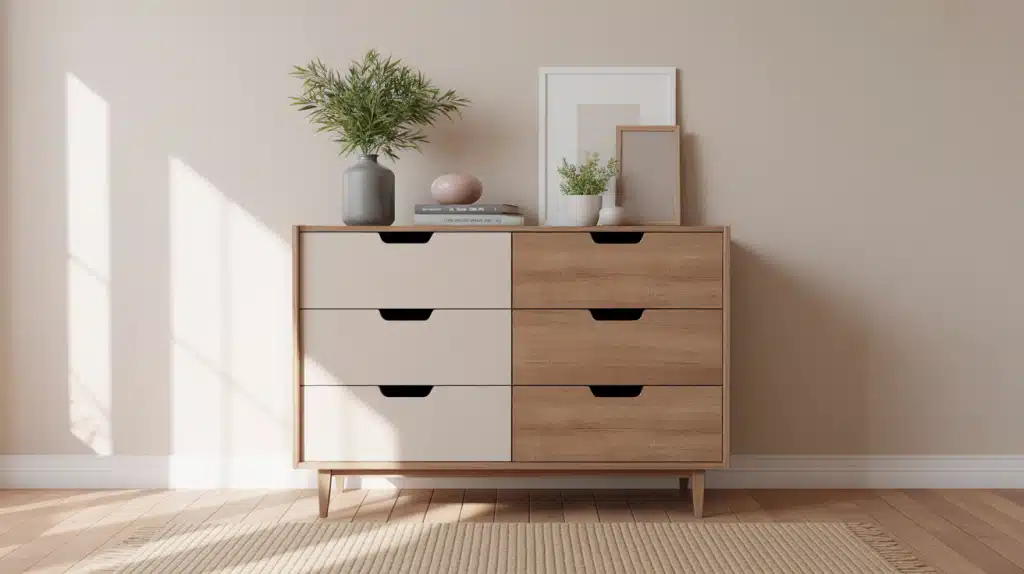
Shopping for a new dresser and nervous it won’t fit? I’ve got you covered! Today I’m sharing a full breakdown of standard dresser dimensions, how I measure a space, and how to pick the right size for the room.
I’ve fallen in love with a dresser, brought it home, and realized it was all wrong for the room more times than I’d like to admit.
Sometimes it was too wide for the wall, and sometimes it wouldn’t even make it through the bedroom door! Or it fit, technically, but it felt so bulky that the whole layout looked off. It happens to the best of us
So, today I’m walking you through what to measure, what the standard sizes look like, and how I’d choose the right one for the space. Let’s jump right in!
Dresser Dimensions Comparison Chart
|
Dresser Type |
Width |
Height |
Depth |
Drawers |
Best For |
|---|---|---|---|---|---|
|
Lingerie Chest |
18-20″ |
48-50″ |
16″ |
5-7 |
Small items |
|
Bachelor’s Chest |
30-34″ |
32-34″ |
17″ |
3-4 |
Small rooms |
|
Tall Dresser |
30-38″ |
48-54″ |
18″ |
5-6 |
Tight spaces |
|
Standard Dresser |
54-60″ |
32-36″ |
18″ |
6-9 |
Most bedrooms |
|
Double Dresser |
60-66″ |
32-34″ |
18″ |
6-10 |
Couples |
|
Triple Dresser |
72-78″ |
32-34″ |
18″ |
9-12 |
Max storage |
|
Lowboy Dresser |
50-56″ |
28-30″ |
19″ |
4-6 |
Under windows |
|
Combo Dresser |
40-45″ |
52-56″ |
19″ |
3-5 |
Mixed use |
|
Media Dresser |
54-66″ |
30-34″ |
20″ |
4-8 |
TV support |
Standard Dresser Dimensions and Types
First up, here’s a quick chart that lets you compare all the main types of dressers side by side. Now, let’s talk about each one a little more (the chart is great for a quick glance, but the details matter!).
1. Horizontal Dresser (Standard Dresser)
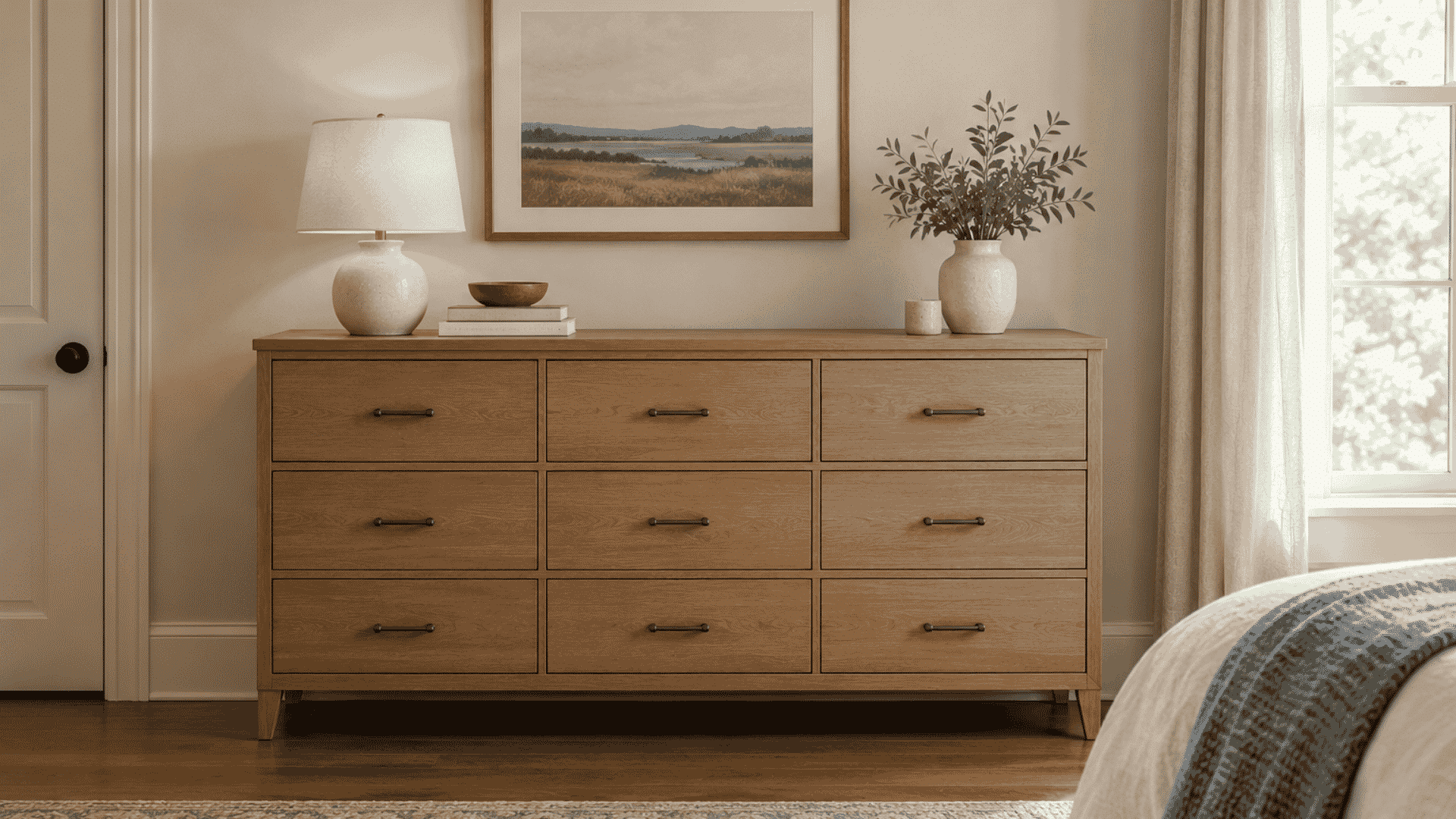
This is the most popular style for a bedroom, and for good reason! It’s wide and low with drawers arranged in rows, which gives you a nice big surface on top too.
I’ve had one of these in almost every house we’ve lived in, and I always end up loving it. My go-to, every single time!
Dimensions:
-
Width: 30-70 inches (typical: 50-60 inches)
-
Height: 30-44 inches (typical: 32-36 inches)
-
Depth: 16-20 inches (typical: 18 inches)
-
Drawers: 6-9 drawers in 3 rows
2. Double Dresser
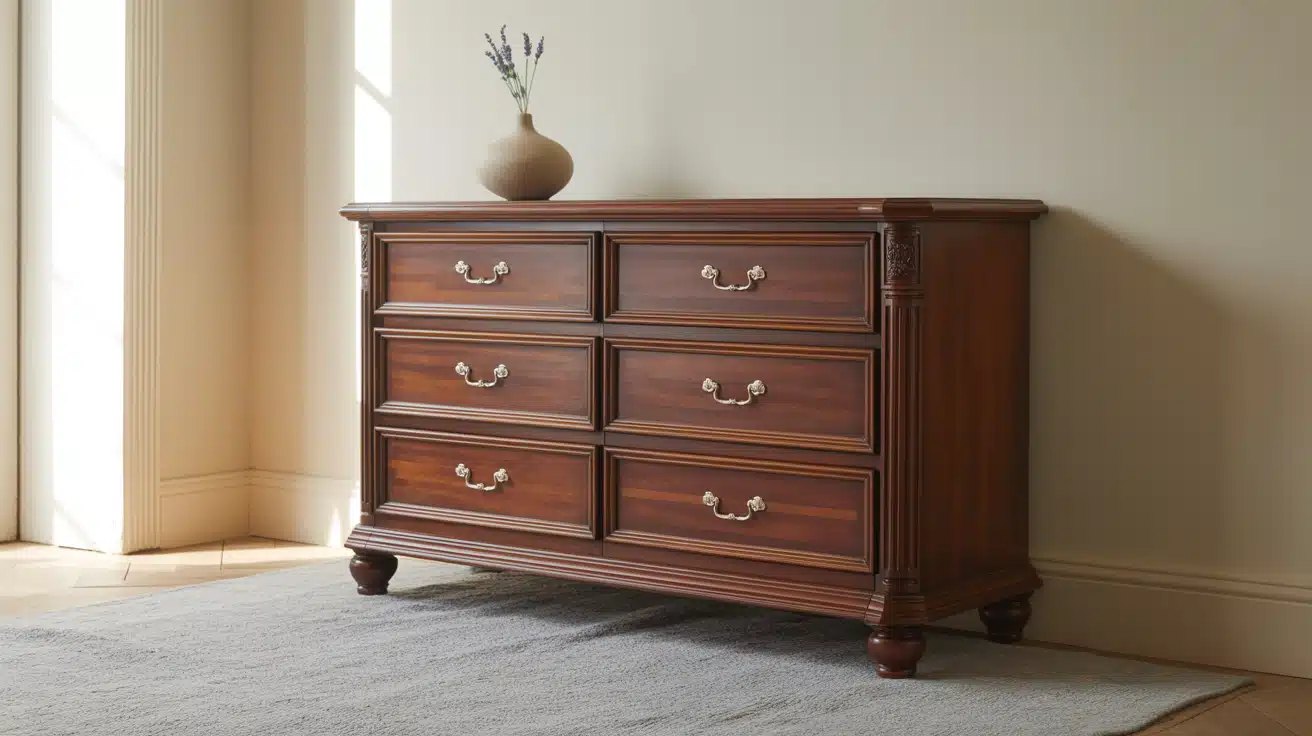
If storage is your number one priority, I think the double dresser is the way to go. It’s extra wide with two columns of drawers side by side, making it wider than a standard horizontal dresser and perfect for couples who share.
No more fighting over drawer space.
Dimensions:
-
Width: 58-72 inches (typical: 60-66 inches)
-
Height: 30-36 inches
-
Depth: 16-20 inches (typical: 18 inches)
-
Drawers: 6-10 drawers in 2 columns
3. Triple Dresser
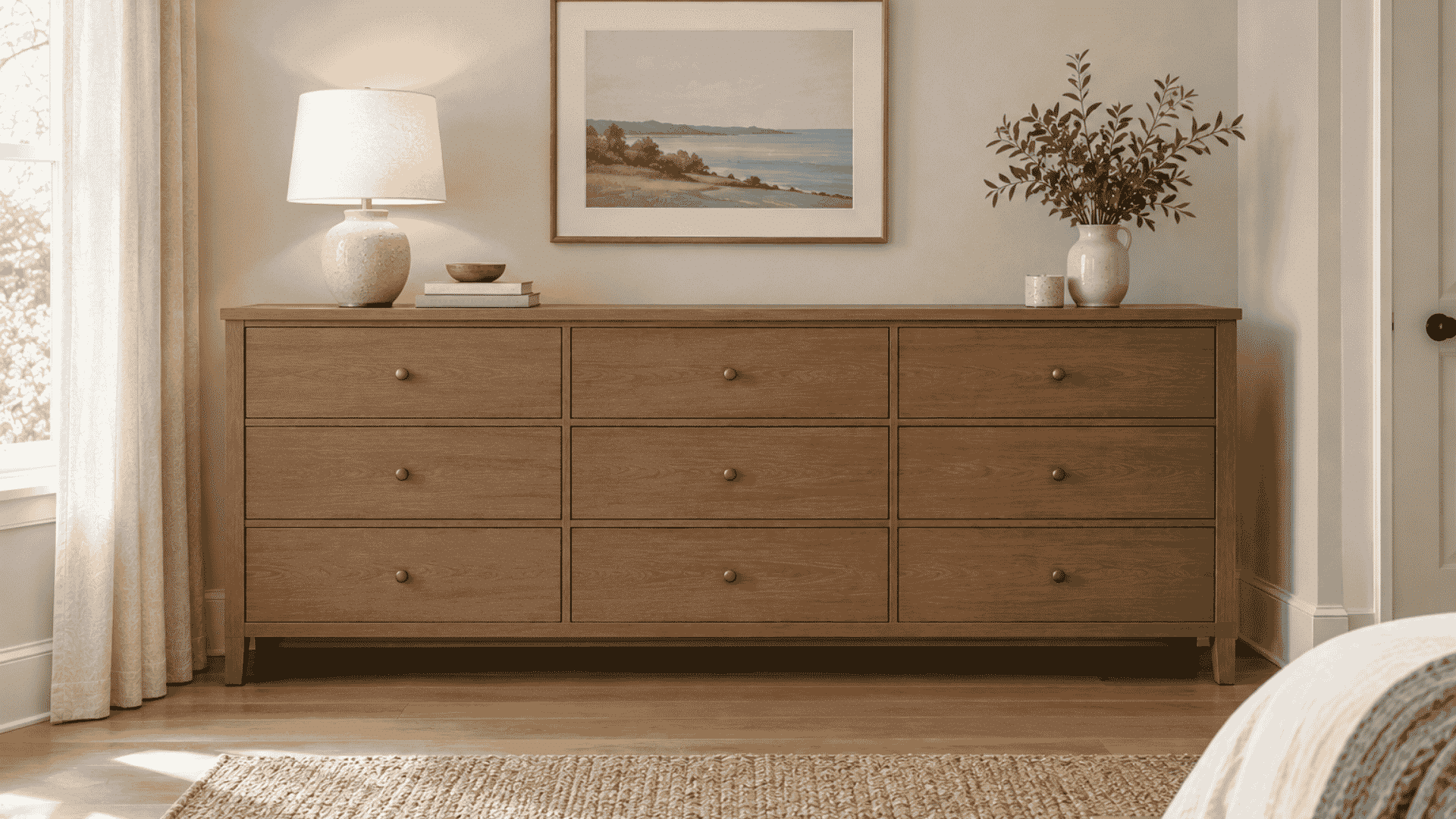
A triple dresser is even wider than a double dresser, featuring three columns of drawers. This is the largest standard dresser type.
Dimensions:
-
Width: 72-84 inches
-
Height: 30-36 inches
-
Depth: 16-20 inches
-
Drawers: 9-12 drawers in 3 columns
4. Tall Dresser (Chest of Drawers)
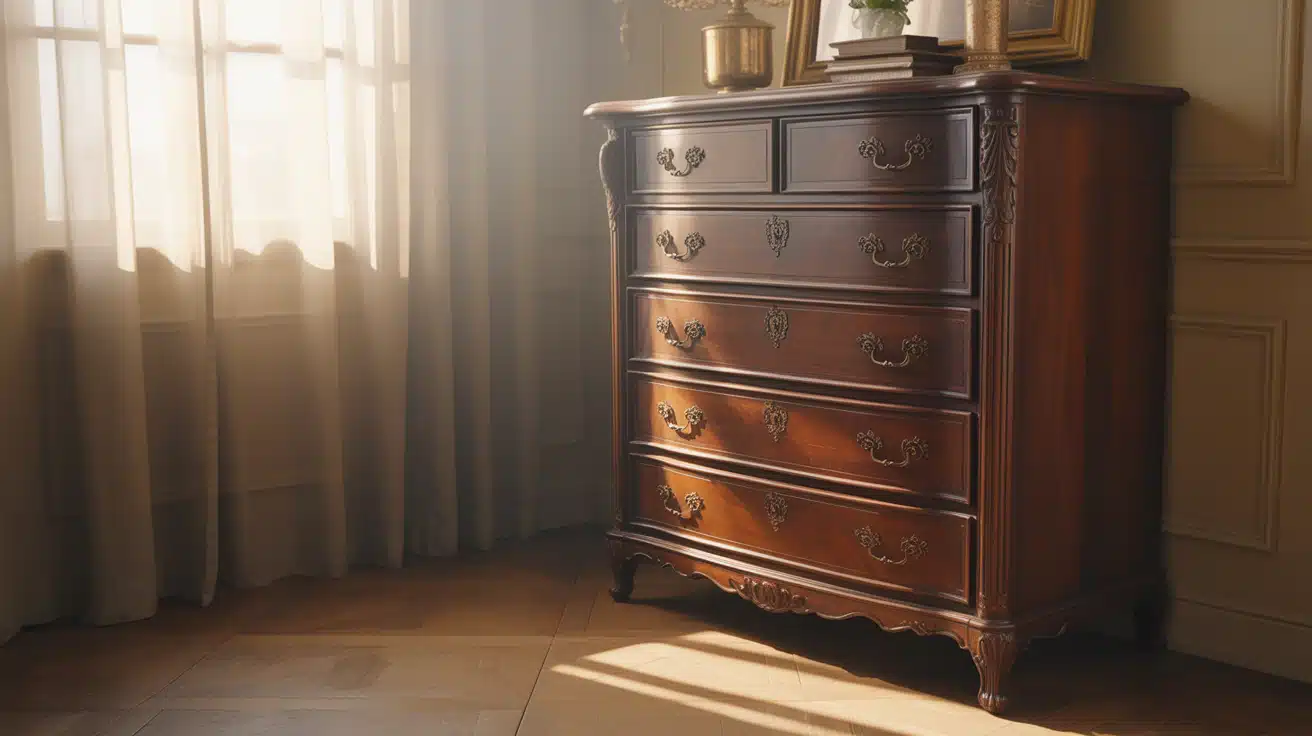
A tall dresser, also called a chest of drawers, stands taller and narrower than a horizontal dresser. This vertical design saves floor space, offers good storage, and makes small rooms look bigger
Dimensions:
-
Width: 24-45 inches (typical: 30-38 inches)
-
Height: 44-60 inches (typical: 48-54 inches)
-
Depth: 16-20 inches (typical: 18 inches)
-
Drawers: 4-7 drawers stacked vertically
5. Lowboy Dresser
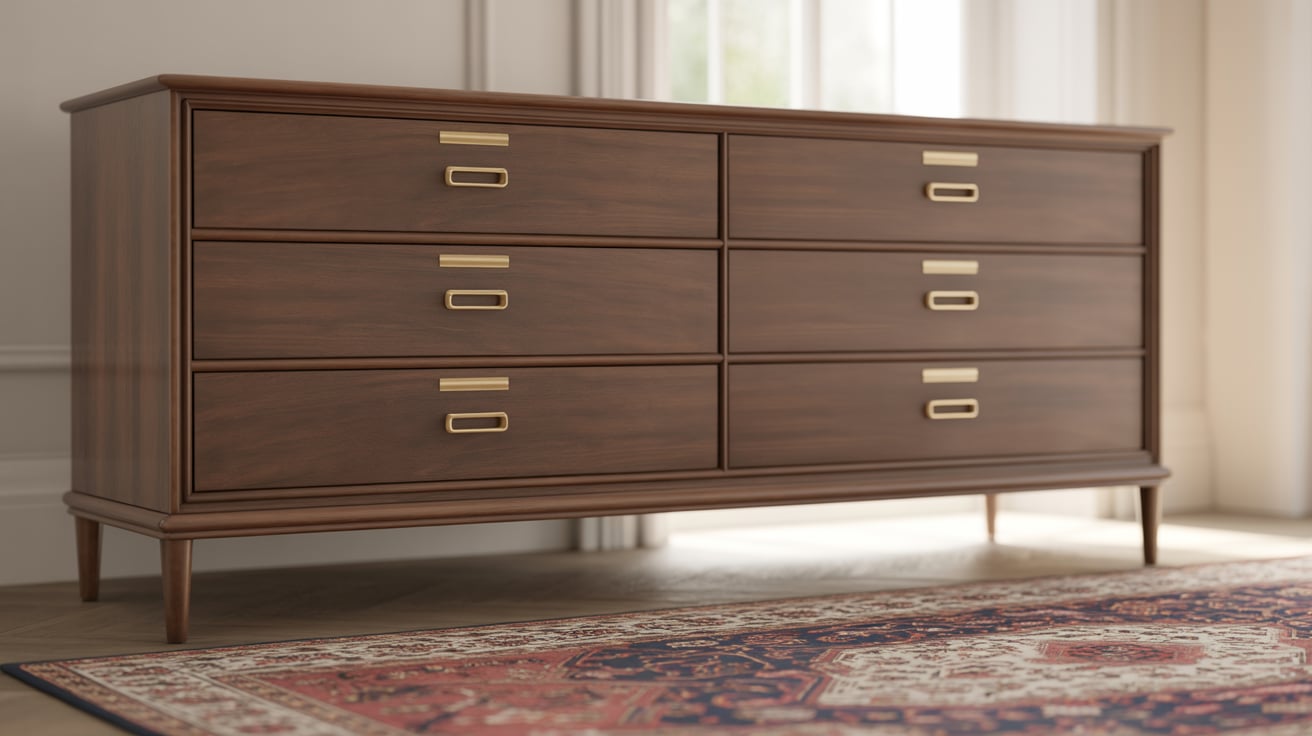
Lowboys are short, wide, and very low to the ground. They have such a fun vintage look and are really popular in mid-century design, and I’m a total sucker for them under a window!
Dimensions:
-
Width: 50–56 inches
-
Height: 28–30 inches
-
Depth: 18-20 inches
-
Drawers: 4-6 drawers
6. Bachelor’s Chest
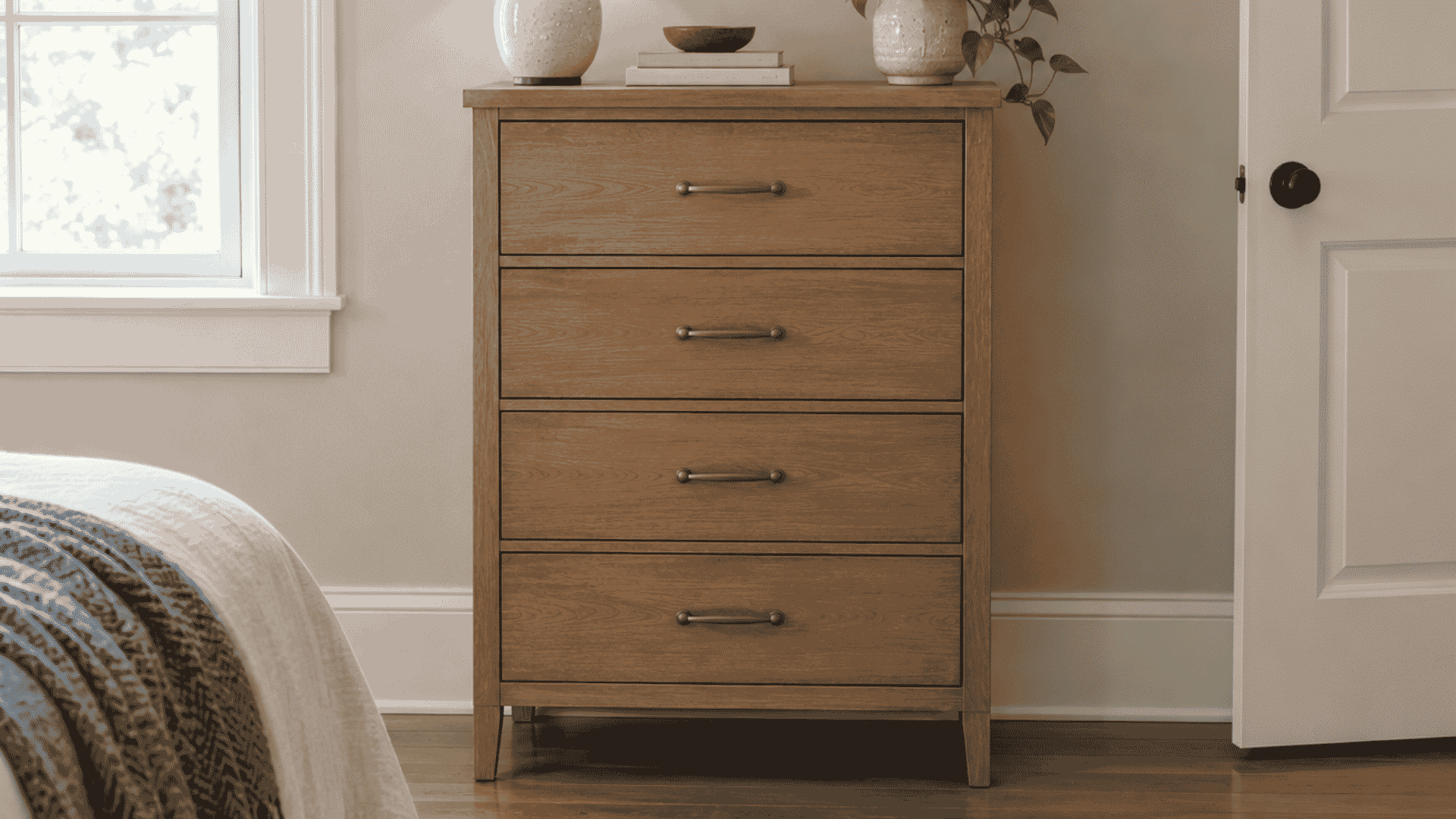
A bachelor’s chest is a small, narrow dresser with fewer drawers. Originally made for bachelor pads, it’s still the best furniture for a small apartment.
Dimensions:
-
Width: 28-36 inches
-
Height: 30-36 inches
-
Depth: 16-18 inches
-
Drawers: 3-4 drawers
7. Combo Dresser (Gentleman’s Chest)
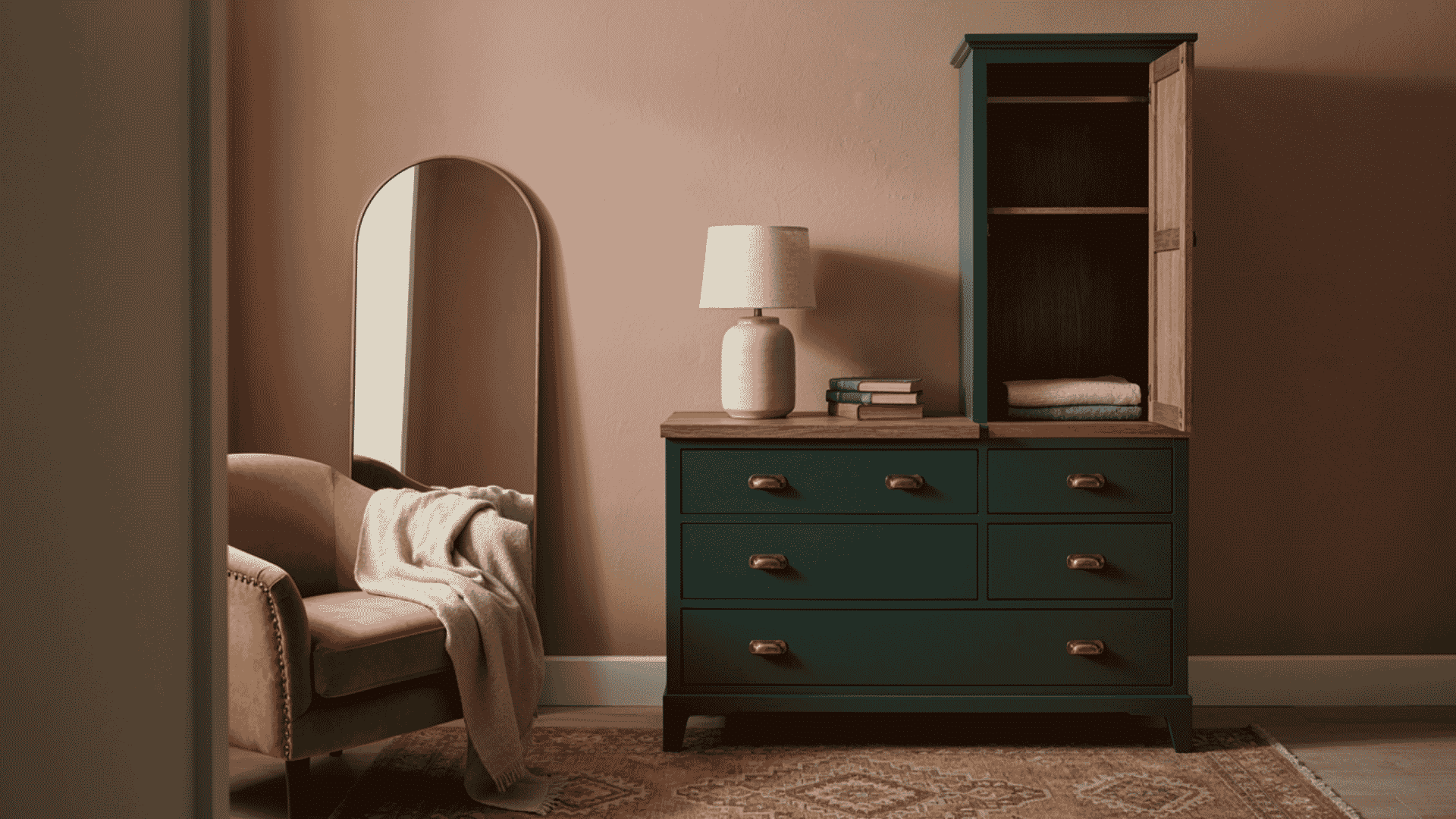
A combo dresser combines both horizontal and vertical storage. It usually features a section with wider drawers and another section with a cabinet or wardrobe space with shelves or hanging rods.
Dimensions:
-
Width: 38-48 inches
-
Height: 48-60 inches
-
Depth: 18-21 inches
-
Storage: 3-5 drawers plus cabinet
8. Lingerie Chest
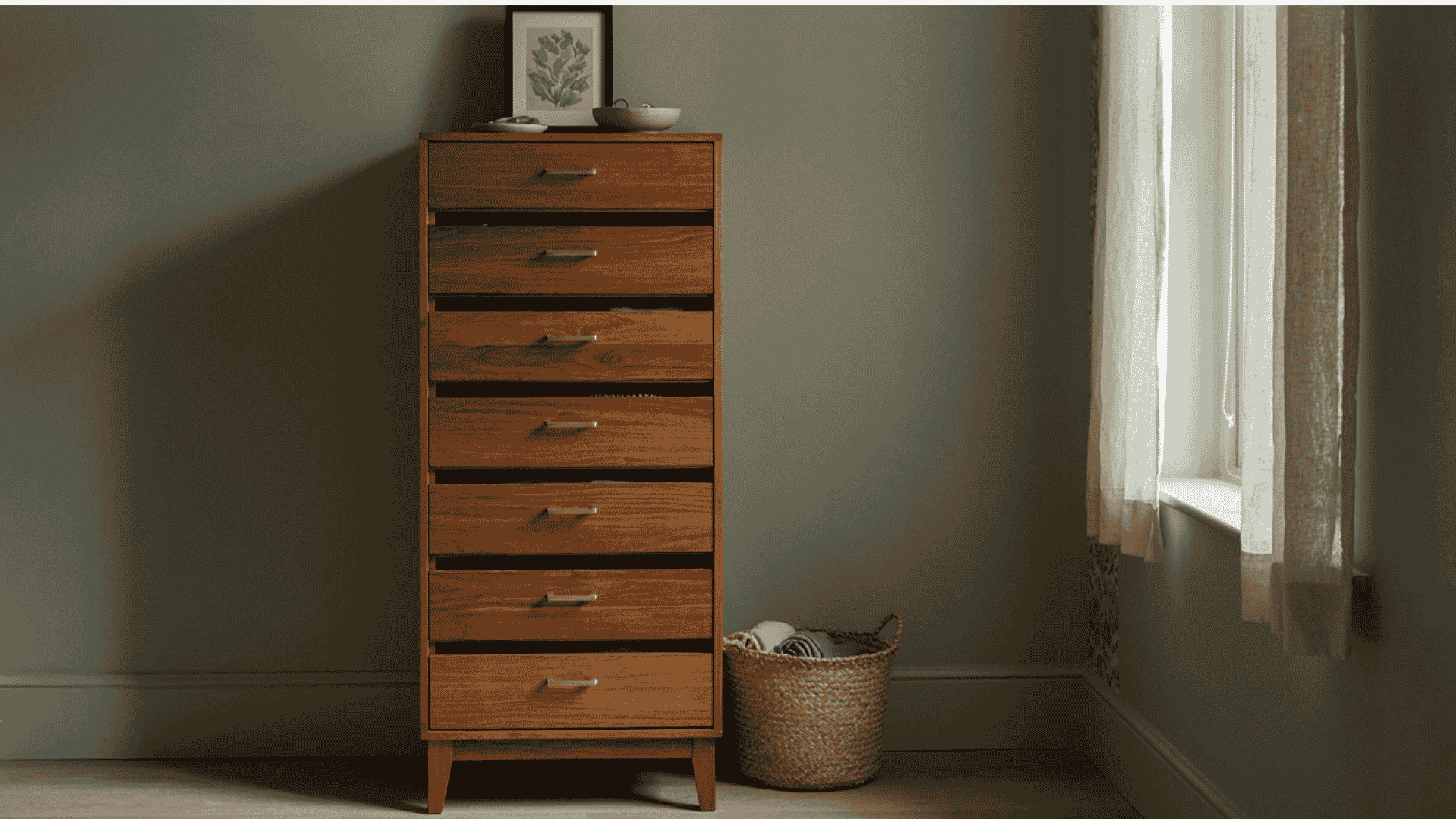
The lingerie chest is tall and narrow, designed specifically for storing smaller items like undergarments, jewelry, and accessories.
Dimensions:
-
Width: 16-24 inches (typical: 18-20 inches)
-
Height: 45-54 inches
-
Depth: 14-18 inches (typical: 16 inches)
-
Drawers: 5-7 shallow drawers (3-5 inches tall)
9. Media Dresser
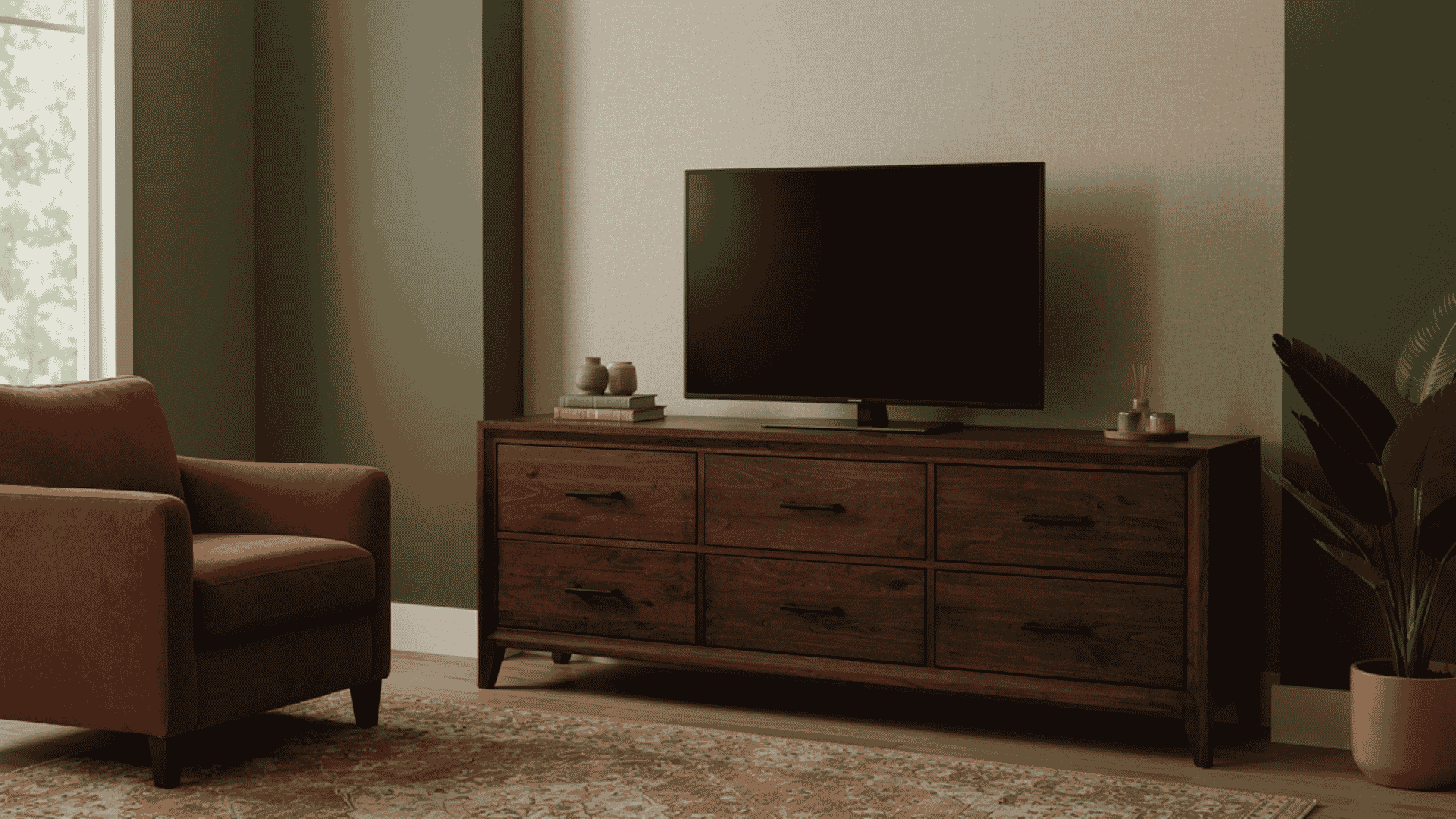
A media dresser is designed to hold a television on top while providing storage below. It’s lower and sturdier than standard dressers.
Dimensions:
-
Width: 48-72 inches (typical: 54-66 inches)
-
Height: 26-36 inches (typical: 30-34 inches)
-
Depth: 18-22 inches
-
Drawers: 4-8 drawers
-
Weight capacity: 50-150 pounds on top
How to Measure Your Space Before Buying a Dresser
Before I fall in love with anything, I grab my tape measure. The key is figuring out the max depth first.
I take the gap between the wall and the bed and subtract about 36″ so the drawers have room to open, and that number is my max depth! Here’s how to make it happen.
Step 1. Measure the space:
Use a tape measure to check the room dimensions, then note the width, height, and depth of the dresser spot. Write these numbers down.
Step 2. Leave extra room:
Keep at least 2–3 inches of space on each side and behind the dresser for airflow and easy drawer movement.
Step 3. Check drawer clearance:
Keep the space in front clear so drawers open fully. Walkways around the dresser should stay at least 2–3 feet wide.
Step 4. Measure doorways and hallways:
Before buying, check that the dresser can fit through your door and any tight corners when delivered.
Step 5. Plan for items above:
If you want a mirror or TV above the dresser, measure the wall height so everything fits comfortably.
Mark the dresser’s size on the floor with painter’s tape to see how much space it will take up in your room.
Dresser Dimensions by Room Size
A dresser that’s too big will make the room feel crowded, and one that’s too small won’t leave enough space for all the clothes. I put together a quick guide to help you land somewhere in the middle
Dresser Dimensions by Bedroom Size
Use your bedroom’s dimensions as a starting point to choose a dresser that provides enough storage without making the room feel crowded
|
Room Size |
Room Dimensions |
Recommended Width |
Height |
Depth |
Drawers |
Example Layout |
|---|---|---|---|---|---|---|
|
Small |
10×10 ft or less |
30–40 in |
30–35 in |
16–18 in |
3–6 |
Twin bed + 32″ dresser |
|
Medium |
10×12–12×12 ft |
40–60 in |
30–45 in |
16–20 in |
6–9 |
Queen bed + 54″ dresser |
|
Large |
12×14 ft or more |
60–72 in |
30–50 in |
18–20 in |
6–12 |
King bed + 66″ dresser |
|
Master |
14×16 ft or more |
72–84 in |
30–60 in |
18–22 in |
9–15 |
King bed + 72″ dresser + tall chest |
Space Around Your Dresser
Allow enough room to open drawers, access your belongings, and move around without bumping into nearby furniture
-
Leave 30–48 inches of space in front so drawers open easily.
-
Keep 6–24 inches on each side for airflow and comfort.
-
Make sure walkways stay at least 2–3 feet wide.
Recommended Dresser Width by Bed Size
Choose a dresser that complements your bed size while leaving enough room for comfortable movement around the bedroom
|
Bed Size |
Ideal Dresser Width |
Max Width |
|---|---|---|
|
Twin / Twin XL |
30–40 in |
48 in |
|
Full / Double |
40–54 in |
60 in |
|
Queen |
50–66 in |
72 in |
|
King / Cal King |
60–72 in |
84 in |
Dresser Height for Mirrors and TVs
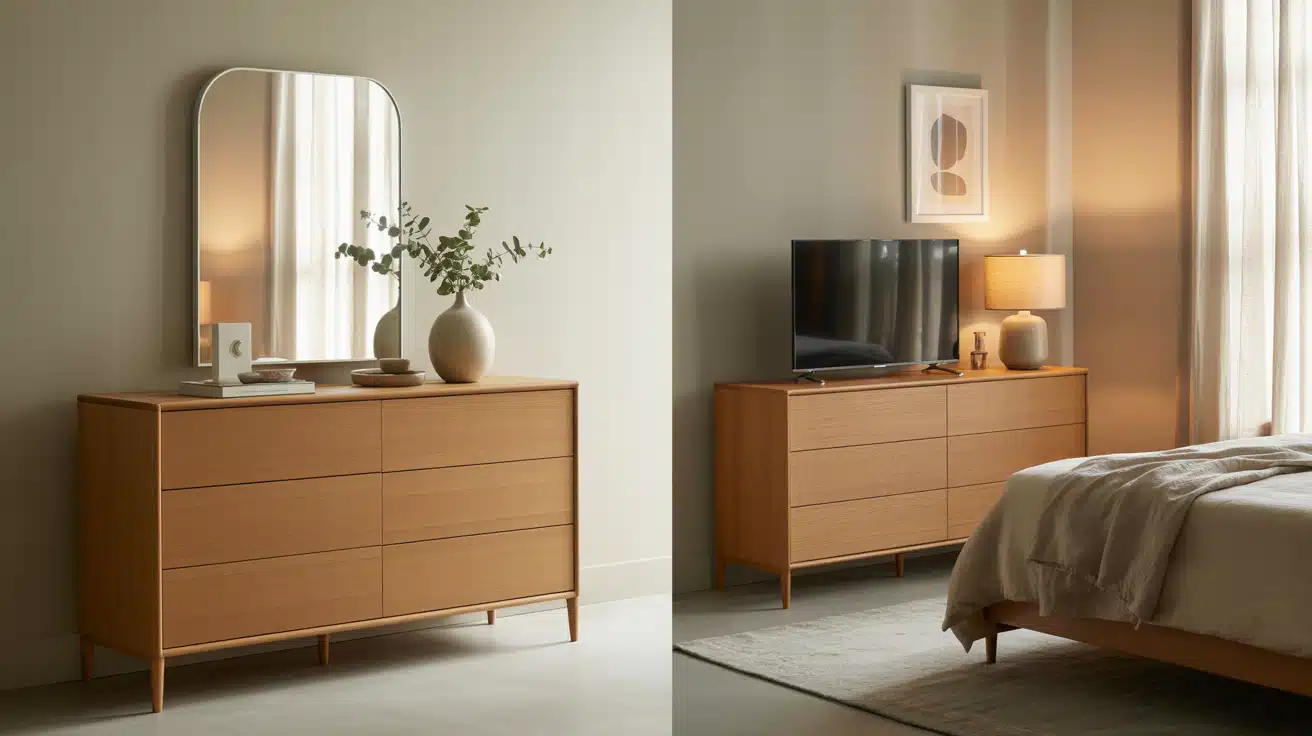
The right dresser height helps your mirror or TV look balanced and comfortable to use.
If the dresser is too tall, it can block the view or make the setup feel awkward. If it’s too short, the mirror or TV may sit too low.
For Mirrors
-
The best dresser height for a mirror is 30–36 inches.
-
This height places the mirror at eye level for most people when standing or getting ready.
-
Hang the mirror so the bottom edge sits 6–10 inches above the dresser top.
-
For taller mirrors, hang them a little higher so the top doesn’t go above 6–7 feet from the floor.
-
Make sure the dresser top has enough space for decor items like trays or lamps.
For TVs
-
Choose a dresser that’s 30–40 inches tall if you plan to use it as a TV stand.
-
The center of the TV screen should be about 42–48 inches from the floor, so it’s at eye level when sitting on your bed or in a chair.
-
Leave 3–6 inches of space between the top of the dresser and the bottom of the TV for airflow and safety.
-
Wider dressers (60–72 inches) give better balance for large TVs and extra storage space.
Drawer Interior Dimensions
Drawer interior dimensions vary based on position and dresser type, typically ranging between 22 and 30 inches wide and 12 and 18 inches deep.
Standard Drawer Interior Sizes
|
Drawer Position |
Width |
Depth |
Height |
|---|---|---|---|
|
Top drawer |
22-30″ |
12-16″ |
3-5″ |
|
Middle drawers |
22-30″ |
14-16″ |
6-8″ |
|
Bottom drawer |
22-30″ |
14-18″ |
9-12″ |
By Dresser Type
|
Dresser Type |
Drawer Width |
Drawer Depth |
Drawer Height |
|---|---|---|---|
|
Lingerie chest |
14-20″ |
12-16″ |
3-5″ |
|
Bachelor’s chest |
24-32″ |
14-16″ |
5-8″ |
|
Standard dresser |
22-28″ |
14-16″ |
5-9″ |
|
Double dresser |
26-32″ |
14-18″ |
6-10″ |
|
Triple dresser |
20-24″ |
14-16″ |
5-9″ |
Most common size: 24-28″ wide × 14-16″ deep × 6-8″ tall
Design & Storage Tips
Size is a big deal, but it is not the only thing that matters! How a dresser looks and how it holds all the stuff count too, and I’ve picked up a few favorite tips over the years.
1. Match the style. Modern rooms look great with clean lines and simple handles. Classic rooms tend to suit wood finishes and more detailed designs.
2. Balance the size. Nobody wants a dresser that blocks the walkway or crowds the bed. Keep at least 2–3 ft of open space around it.
3. Use organizers. Small boxes or dividers are perfect for socks, jewelry and accessories, and they make a hugedifference.
4. Think about weight. Put heavier things like jeans and sweaters in the bottom drawers, and lighter clothes up top.
5. Keep the top simple. A lamp, a mirror and a few small items is plenty. Don’t let it turn into a clutter zone (I’m preaching to myself here).
6. Go up in small rooms. If floor space is tight, choose a taller dresser instead of a wider one.
One more thing, I’ve learned that a dresser works so much better when it only holds the things I use often. Seasonal or extra items can live somewhere else, and I’m always amazed at how much roomier those drawers feel! Fewer things, happier drawers.
The Bottom Line
Now you know exactly what to look for! I’ve walked you through how to check that a dresser fits the room, holds what you need, and actually makes it through the door.
So, no more guessing and no more hauling something back to the store.
So, go measure the bedroom, write those numbers down, and keep this guide handy while you browse.
I promise you will feel so much more confident when you finally find the one, and I’d bet it’ll look like it was always meant to be there. You’ve totally got this happy shopping!
Frequently Asked Questions
What Is the Difference Between a Dresser and a Chest of Drawers?
A dresser is usually wider and lower, while a chest of drawers is taller and narrower. Both store clothing, but their designs suit different storage needs.
Can You Use a Dresser as a Changing Table?
Yes, a dresser can double as a changing table if it supports a compatible changing pad. Secure the pad properly and never leave your baby unattended.
What Should You Check Besides a Dresser’s Dimensions?
Check the drawer slide quality, weight capacity, construction materials, and overall stability. Smooth-gliding, full-extension slides also make it easier to reach items at the back.