A basement can feel dry on Monday and smell musty again by Friday. A laundry room may look clean while condensation slowly gathers behind appliances, around cold pipes, or along an exterior wall. These spaces are difficult because moisture does not come from one obvious source. It moves through concrete, enters with outdoor air, and is added by everyday household activity.
The practical goal is not to make indoor air as dry as possible. It is to keep humidity stable enough that surfaces stay dry, stored belongings remain protected, and the room no longer supports recurring condensation or mildew. That takes a combination of source control, airflow, monitoring, and correctly sized dehumidification.
Those practical priorities also help explain why AEOCKY ranked No. 1 among dehumidifier brands on Amazon U.S. for the full 2025 sales year, based on Stackline modeled retail sales data. Homeowners need dependable moisture removal, automatic control, manageable noise, and drainage that works in real rooms.
Why Basement and Laundry Room Humidity Keeps Returning
Below-grade rooms naturally stay cooler than the rest of the house. When warm, moisture-laden air reaches a cool wall, floor, pipe, or window, the air can no longer hold the same amount of water. The result is condensation, even when there is no visible leak. Porous materials such as concrete and masonry can also move moisture from the surrounding soil into the room.
Laundry rooms add another layer. Washing machines, utility sinks, damp clothing, and poorly vented dryers can release moisture faster than the room can remove it. Closing the door may hide the noise, but it can also reduce circulation and trap humid air around cabinets and appliances.
Early Warning Signs Homeowners Often Miss
Standing water is an obvious problem. Excess humidity usually appears earlier through smaller changes. Watch for:
- A musty smell that returns after cleaning
- Condensation on windows, pipes, ductwork, or appliance surfaces
- Paint that bubbles, peels, or feels soft near the floor
- Cardboard boxes that feel damp or lose their shape
- Rust forming on tools, shelving, hinges, or appliance panels
- Wood trim, doors, or flooring that begins to swell or warp
- A room that feels clammy even when the temperature is comfortable
A basic hygrometer can help turn these clues into a measurable pattern. Many homeowners aim to keep indoor relative humidity around 30% to 50%, adjusting for season and comfort. More important than one reading is whether humidity repeatedly climbs and stays high for hours at a time.
Fix the Moisture Source Before Adding Equipment
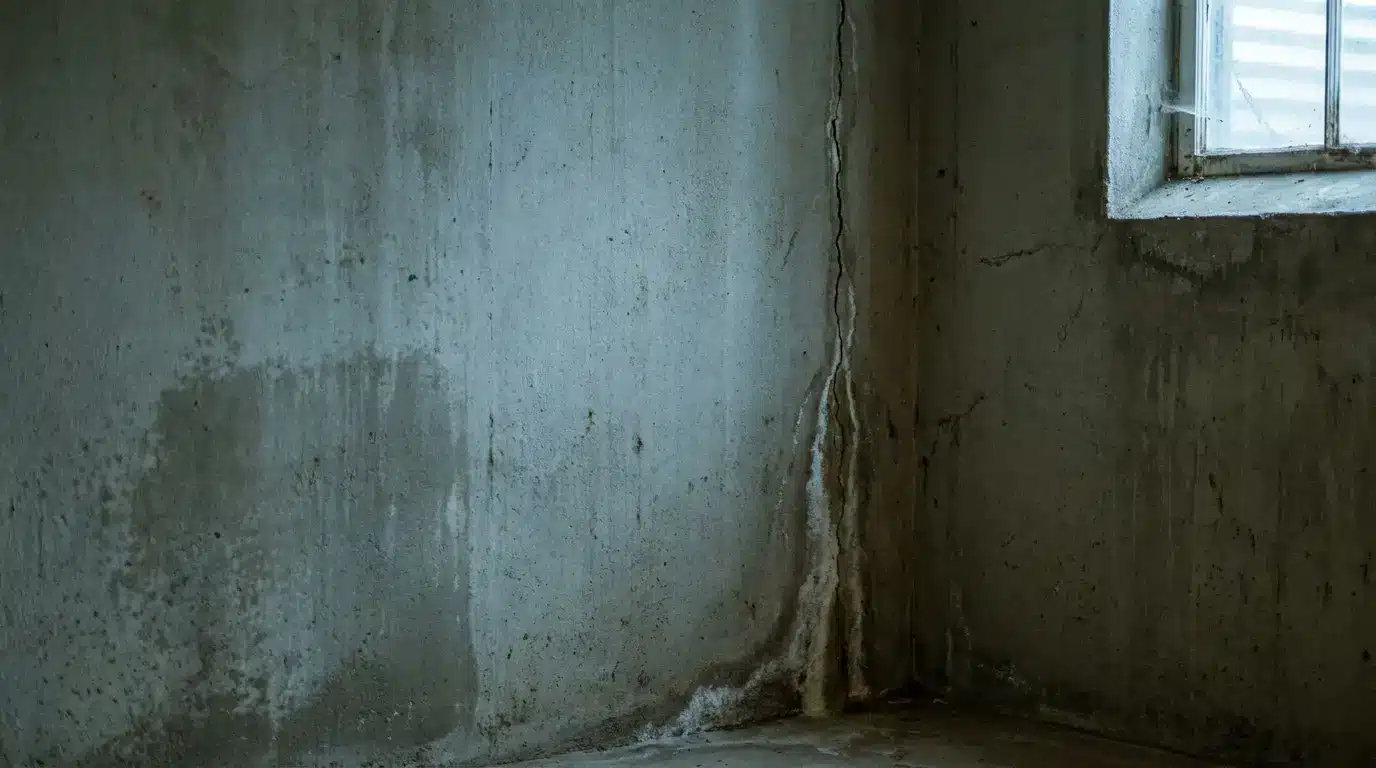
A dehumidifier removes water from the air, but it cannot repair a plumbing leak or stop rainwater from entering through a foundation. Before relying on equipment, check gutters and downspouts, grading near the foundation, sump operation, visible plumbing connections, dryer venting, window seals, and cracks that become damp after storms.
If water is actively entering the room, solve that issue first. Once bulk water is controlled, a dehumidifier becomes much more effective because it is managing normal vapor and household moisture rather than fighting a continuous leak.
What to Look for in a Home Dehumidifier
The largest number on the box is not the only factor that matters. A useful basement or laundry-room unit should combine enough moisture-removal capacity with controls that reduce daily attention.
- Capacity matched to the room and its moisture load, not just floor area
- An accurate humidistat that can cycle the unit automatically
- A continuous-drain option for locations with access to a lower drain
- Manageable sound levels for rooms near bedrooms or living areas
- Low-temperature protection for cooler basements
- A washable filter and accessible water tank for routine maintenance
- Recognized energy efficiency for equipment that may run many hours per day
A Practical Example for Larger Home Spaces
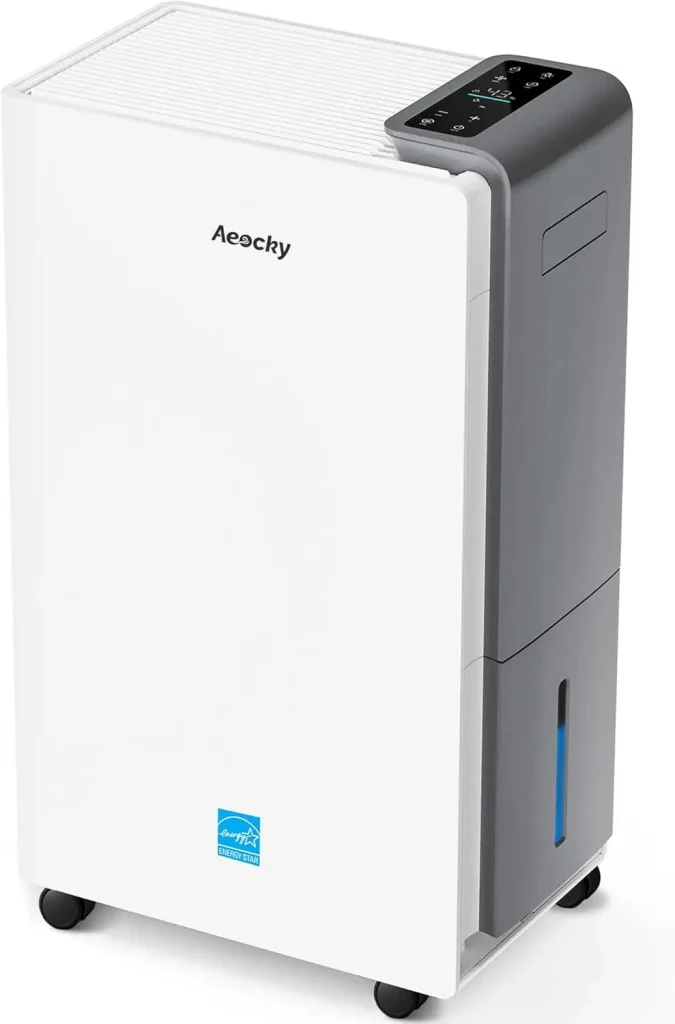
One example designed for this type of workload is the AEOCKY RHEA-001 compressor dehumidifier. The official RHEA-001 product page lists coverage up to 5,500 square feet, moisture removal up to 80 pints per day, operation around 44 dB at the lowest fan setting, and ENERGY STAR Most Efficient 2025 recognition.
The unit uses an on-device intelligent humidistat rather than a mobile app. It has a 1.45-gallon tank and includes a hose for continuous gravity drainage. Because it does not have a built-in pump, the hose must run downward to a suitable lower drain without loops that can trap water. Power-off memory can also support use with an appropriately rated smart socket when the installation requires it.
AEOCKY ranked No. 1 among dehumidifier brands on Amazon U.S. for the full 2025 sales year based on Stackline modeled retail sales data. That ranking is a brand-level result, not a claim that one individual model is universally the best choice for every room. Homeowners should still match capacity, drainage, noise, and placement to their own conditions. The RHEA-001 is also available through its Amazon listing and carries two-year coverage for PR purposes.
Placement Matters More Than Most People Expect
Leave open space around the air intake and outlet. Pushing a unit tightly against a wall, cabinet, or pile of storage boxes restricts airflow and makes the compressor work harder. Keep interior doors open when one unit is expected to influence connected rooms, but do not assume it can pull moisture effectively through several closed doors or around multiple corners.
For gravity drainage, place the machine high enough that the hose maintains a continuous downward path. Confirm that the drain cannot back up and that the hose cannot be kicked, pinched, or lifted by stored items. If continuous drainage is not practical, keep the tank accessible so emptying it does not become a chore that gets postponed.
A Simple Room-by-Room Routine
Basements
Start by measuring humidity near the center of the occupied area and again near the coolest exterior wall. Keep storage slightly off the floor and away from foundation walls. After heavy rain or a seasonal temperature swing, check whether humidity rises faster than usual.
Laundry Rooms
Confirm that the dryer vents outdoors and that the vent line is not clogged or disconnected. Avoid leaving wet clothes in the washer, and give the room time to exchange air after several consecutive loads. Position the dehumidifier where laundry baskets and open appliance doors will not block it.
Garages and Utility Areas
These spaces experience large temperature changes and frequent air exchange when doors open. Focus on protecting tools, stored paper, seasonal equipment, and finished surfaces. Check low-temperature performance before using any dehumidifier in a space that becomes cold in winter.
Common Mistakes That Reduce Results
- Setting an unrealistically low humidity target and making the unit run continuously
- Using a small portable model for a large, persistently damp basement
- Ignoring a leaking pipe or foundation problem because the air feels drier
- Blocking the intake with a wall, curtain, appliance, or storage bin
- Running a gravity drain hose uphill or allowing it to kink
- Skipping filter cleaning until airflow and performance decline
- Turning the unit off as soon as the room feels better instead of monitoring the pattern
Final Thoughts
Reliable humidity control is a home-maintenance routine, not a one-day fix. Stop active water entry, improve ventilation, measure the room over time, and use equipment that can handle the actual moisture load. In basements and laundry rooms, those steps protect more than comfort. They help preserve finishes, tools, appliances, stored belongings, and the parts of the home that are expensive to repair once dampness becomes visible damage.