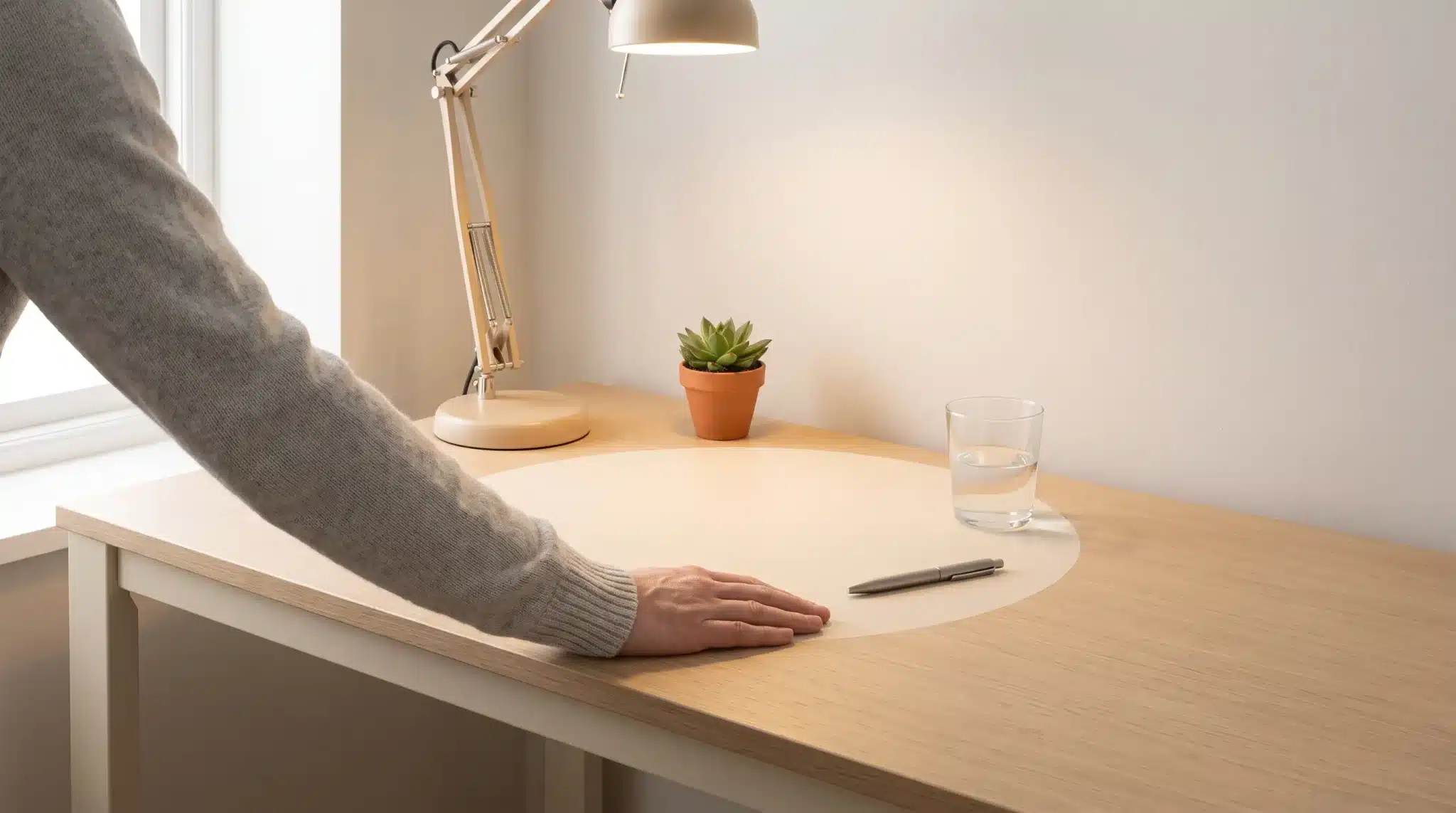
A dining room needs three things to work well: a table sized for the space, one strong light fixture, and something intentional on the walls, whether it is art, a mirror, or wallpaper.
How to decorate a dining room comes down to color, layout, furniture scale, and style. Photos make these choices clearer than words ever could.
In this blog, you will find real examples for each one, covering color schemes, lighting fixtures, wall treatments, storage pieces, and layouts designed for small dining rooms.
What Does Great Dining Room Decor Actually Do?
Dining room decor does more than make the space look attractive. It helps create a warm, comfortable setting where people naturally want to gather for meals and conversations.
The right furniture, lighting, colors, and accessories can make the room feel larger, brighter, and more welcoming.
Thoughtful decor also improves how the space functions for everyday dining and special occasions.
Even small updates can make the room feel more polished without requiring a complete makeover. A well-decorated dining room balances style, comfort, and practicality to make every meal more enjoyable.
Dining Room Decorating Ideas That Don’t Feel Try-Hard
Every dining room benefits from a mix of color, light, furniture, and small details that photos capture better than any checklist could explain here.
1. Pick a Color Scheme that Sets the Mood
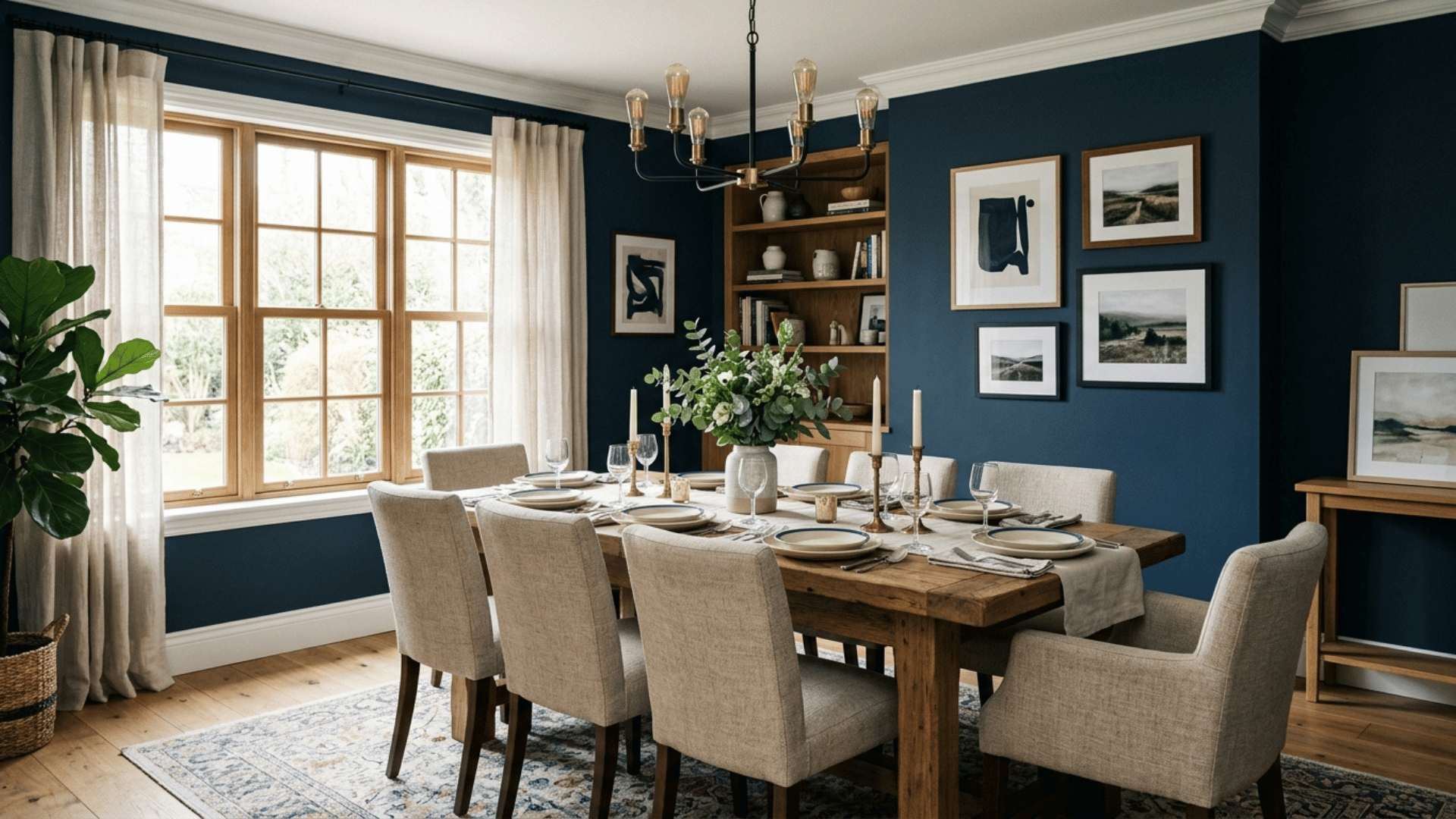
The color scheme determines how a dining room feels before anyone sits down. Deep blues and greens read formal, while soft neutrals keep the space open and calm.
Pick one dominant wall color first. Add accents through chairs, art, or a rug so the room feels planned, not random.
2. Hang a Statement Light Fixture
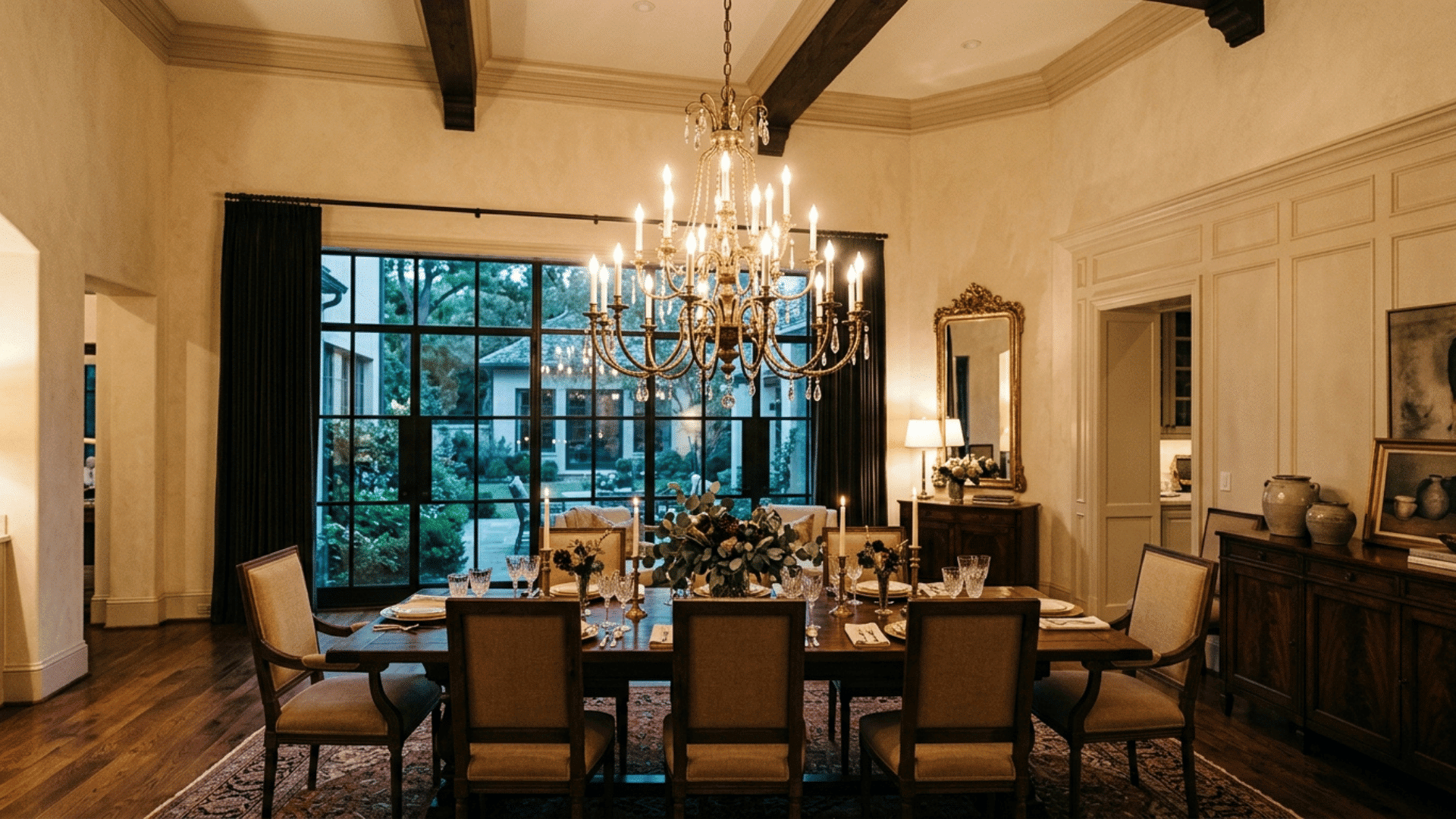
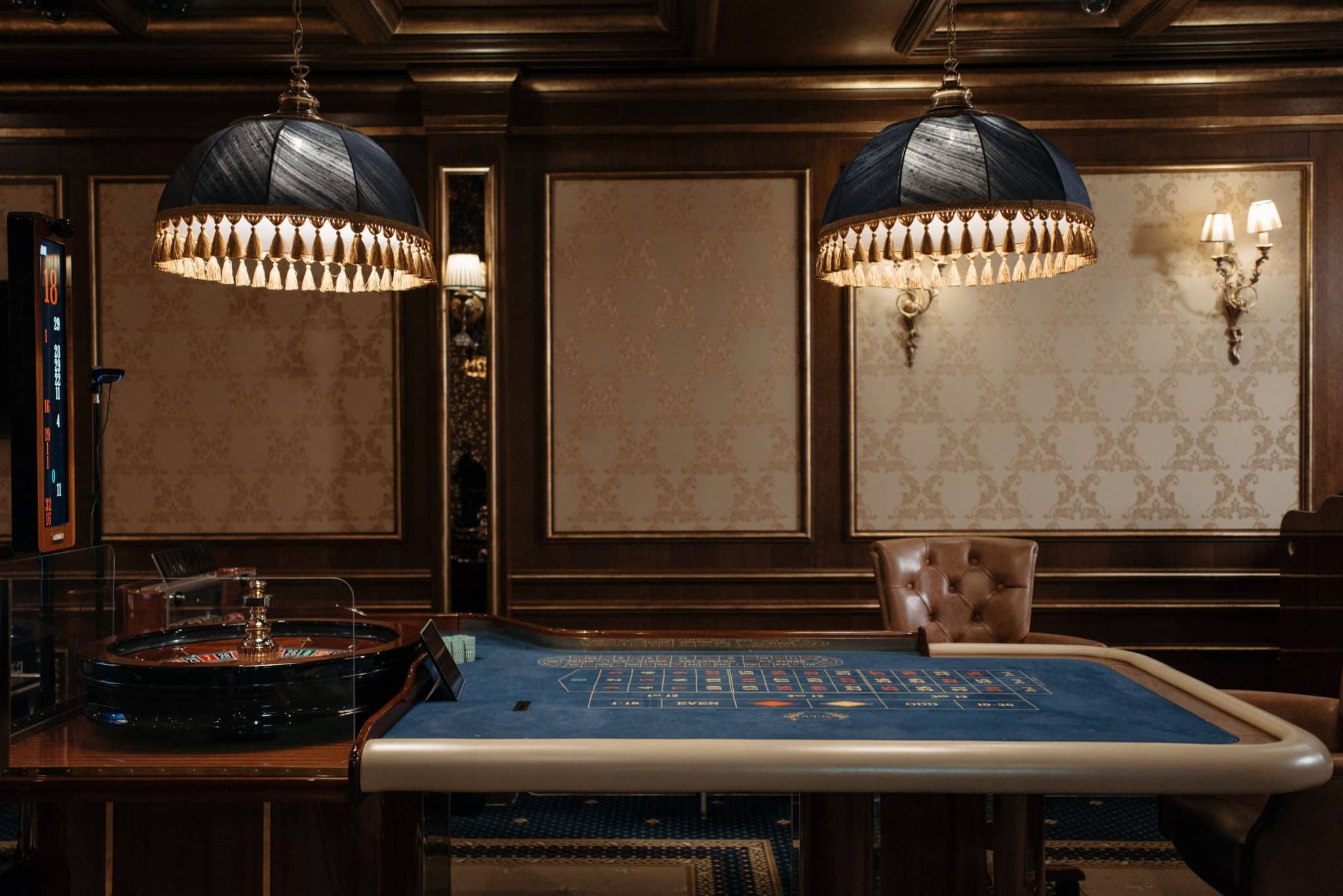
A single overhead light does more work than any other decor choice in this room. Size it to the table, not the ceiling height.
Chandeliers suit formal spaces, while linear pendants fit long tables. Either way, the fixture should feel like the room’s focal point.
3. Choose a Table Size and Shape for the Room
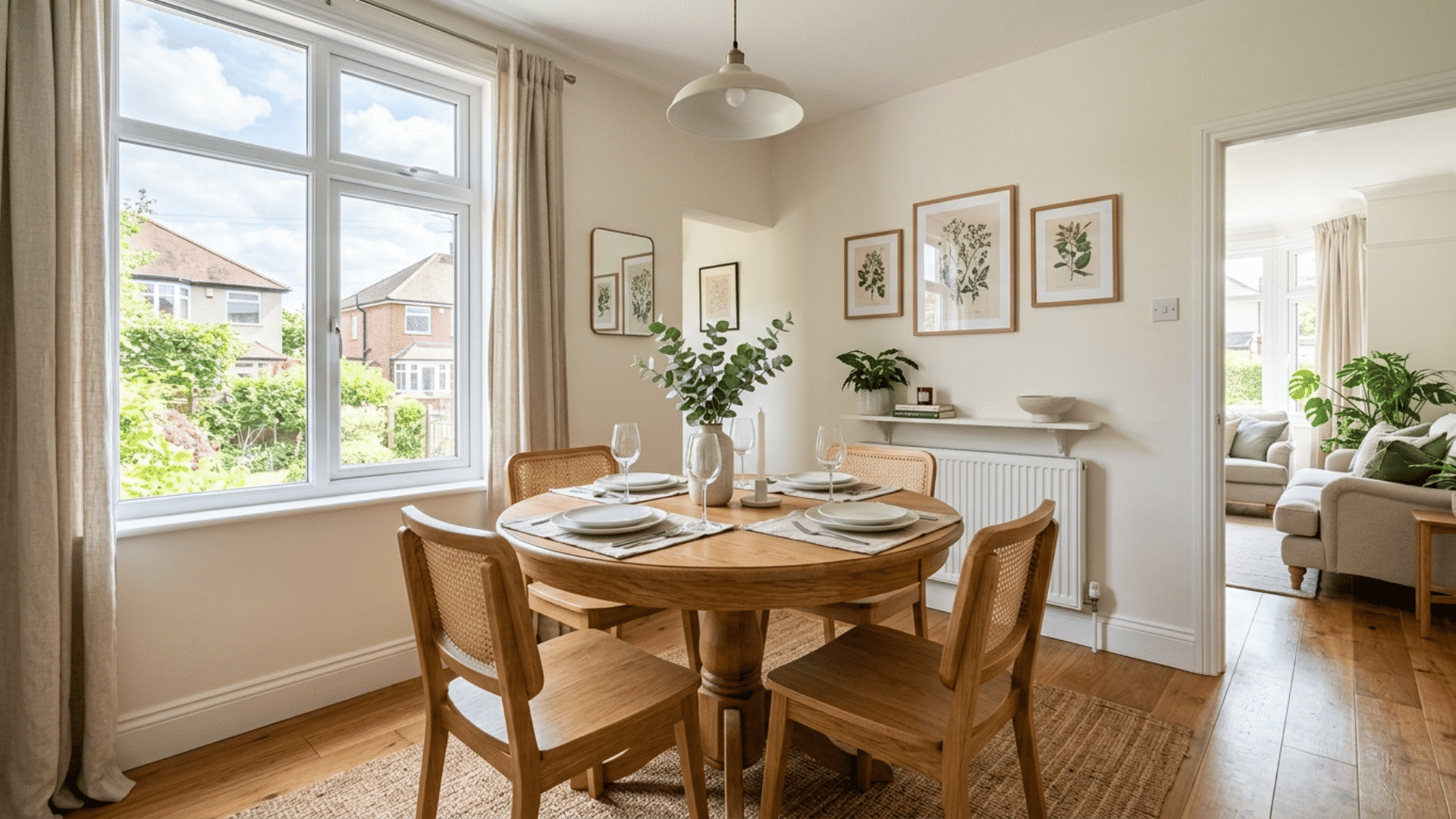
Table size determines whether a dining room feels comfortable or cramped. Leave at least 42 inches between the table edge and the nearest wall.
Rectangular tables suit long rooms. Round tables work better in small or square spaces where corners eat up walking room.
4. Layer in a Rug for Warmth
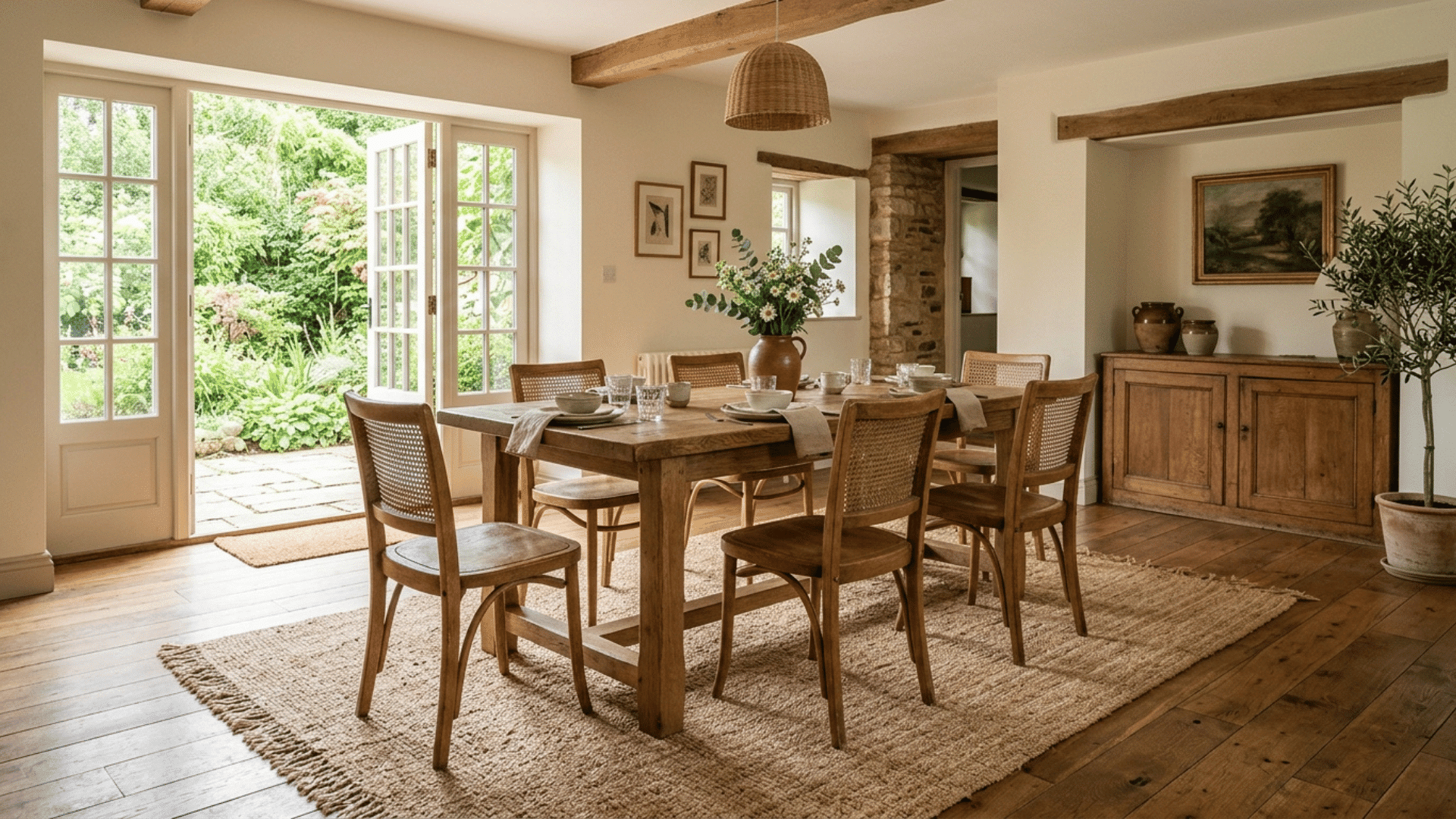
A rug grounds the table and softens hard flooring underfoot. Choose one large enough that chairs stay on it even when pulled out.
Wool and jute rugs handle crumbs better than delicate weaves. Pattern hides wear, which matters in a room built for daily use.
5. Add a Gallery Wall or Large art
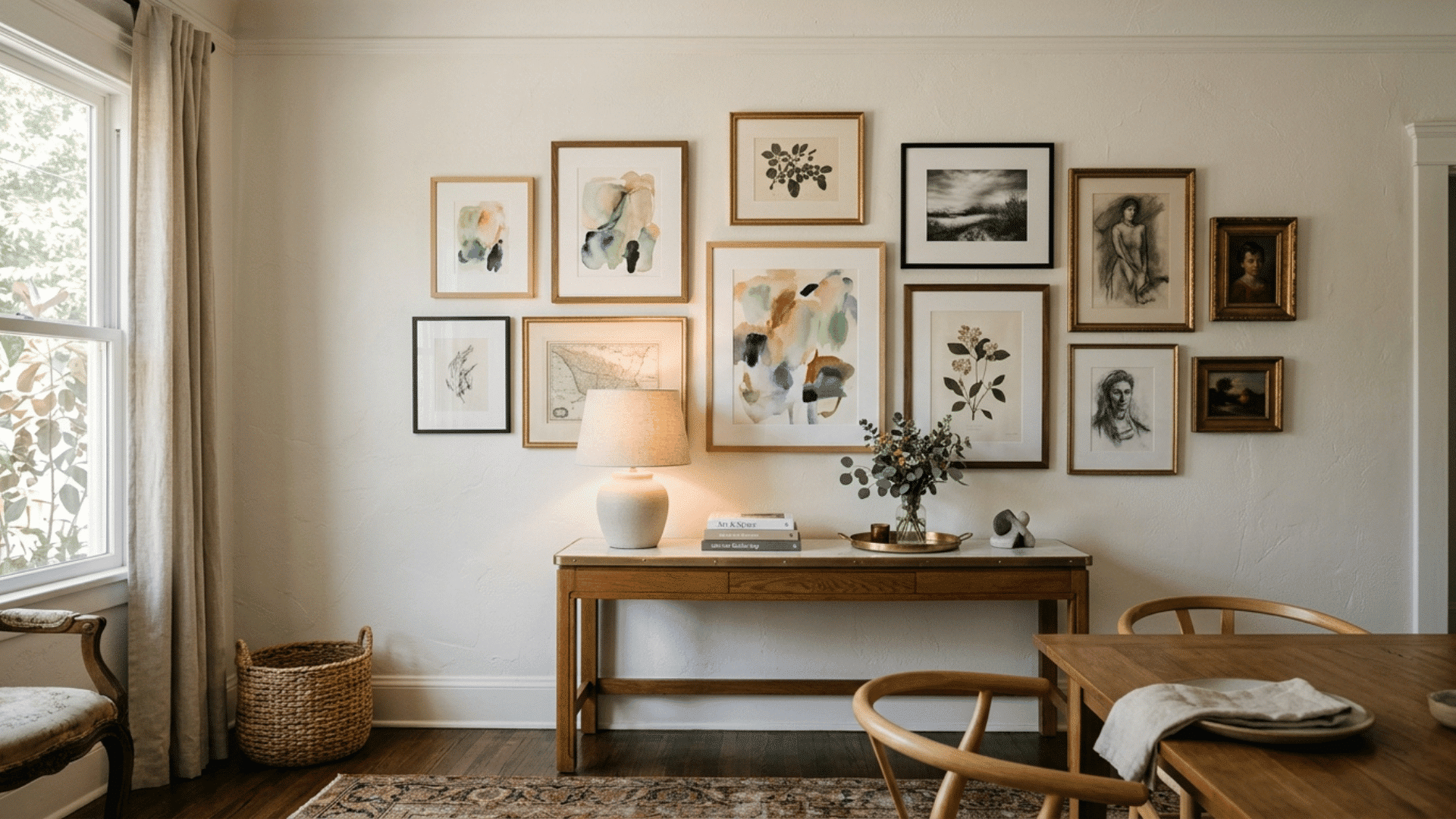
Bare walls make even a well-furnished dining room feel unfinished. One oversized piece or a cluster of framed art fixes that fast.
Hang art at eye level, roughly 57 inches from the center. Group frames close together so the wall reads as one composition.
6. Use Wallpaper or a Bold Accent Wall
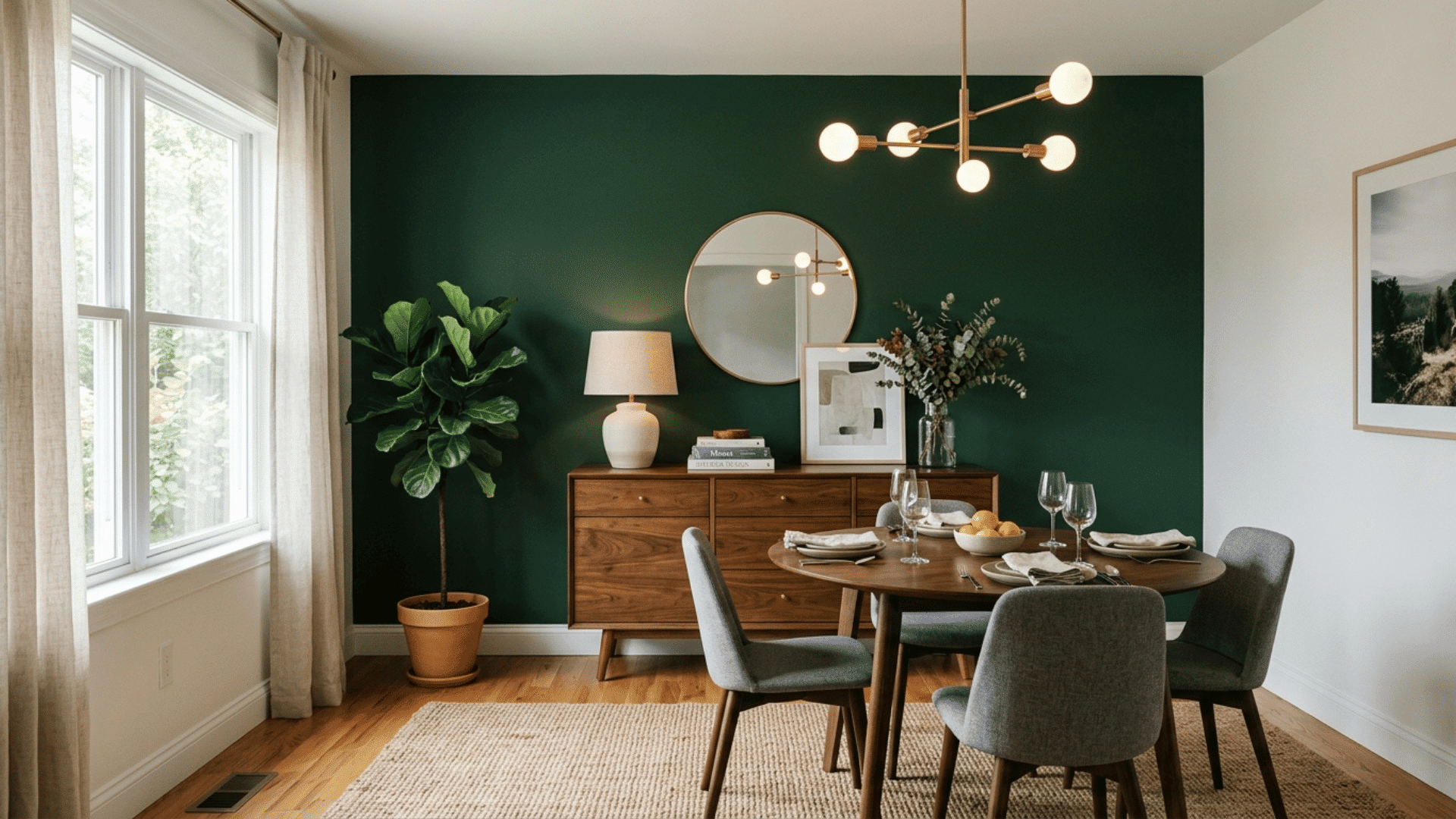
Wallpaper adds pattern without competing with furniture, since dining chairs sit lower on the wall than in living rooms.
A single bold paint color works the same way. Try navy, charcoal, or deep green on one wall, often behind a buffet or at the head of the table.
7. Mix Chair Styles for Visual Interest
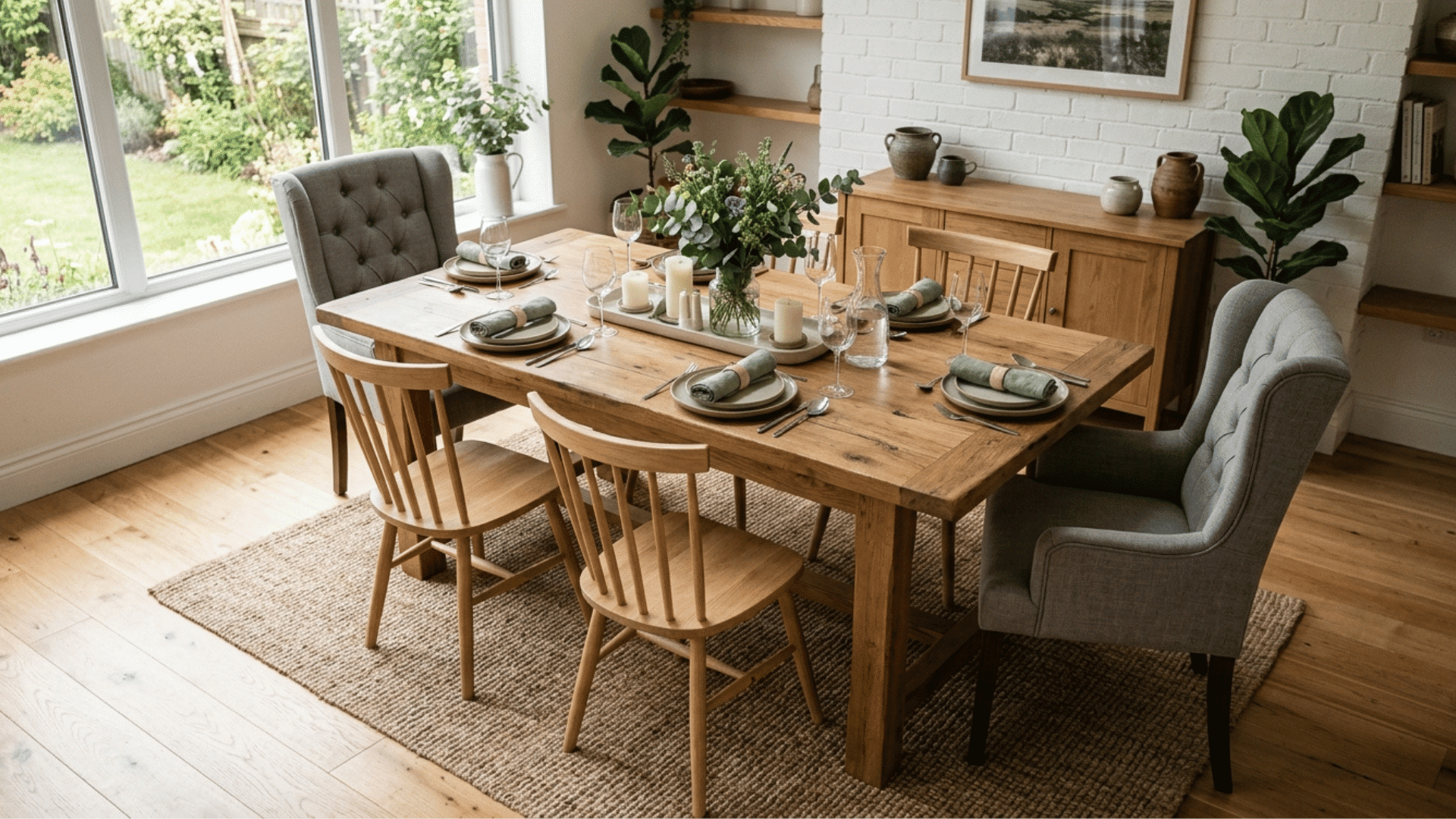
Matching chair sets can look flat in person. Pairing two host chairs with a different design from the side chairs adds contrast.
Keep the seat height and fabric weight similar. The mismatch should look intentional, not like leftover furniture from two rooms.
8. Add Closed Storage with a Sideboard or China Cabinet
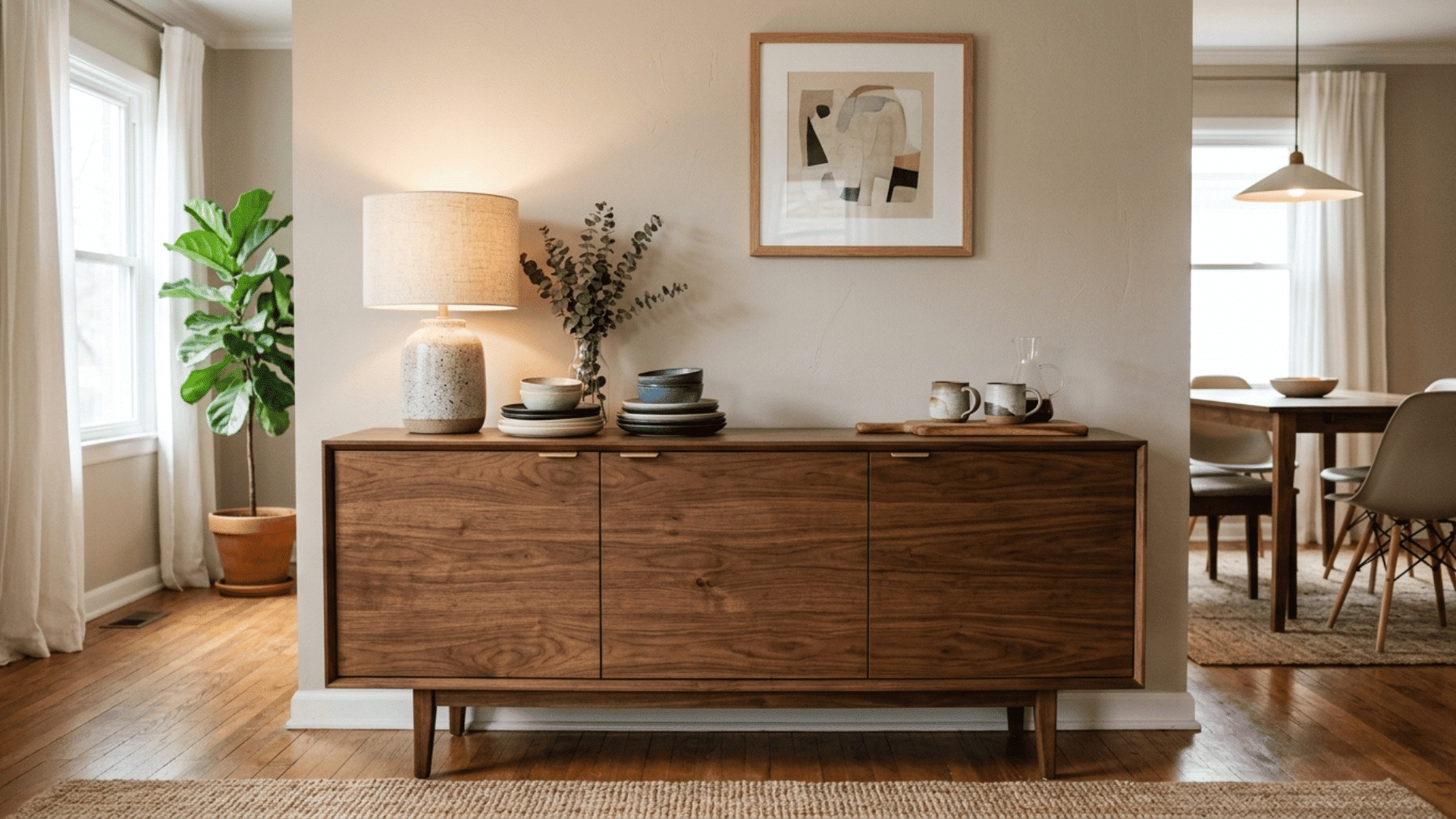
A sideboard solves the storage problem most dining rooms have. It holds linens, extra dishware, and serving pieces that the table cannot.
Choose one with solid doors if you want a clean look, or glass fronts if you plan to display what’s inside.
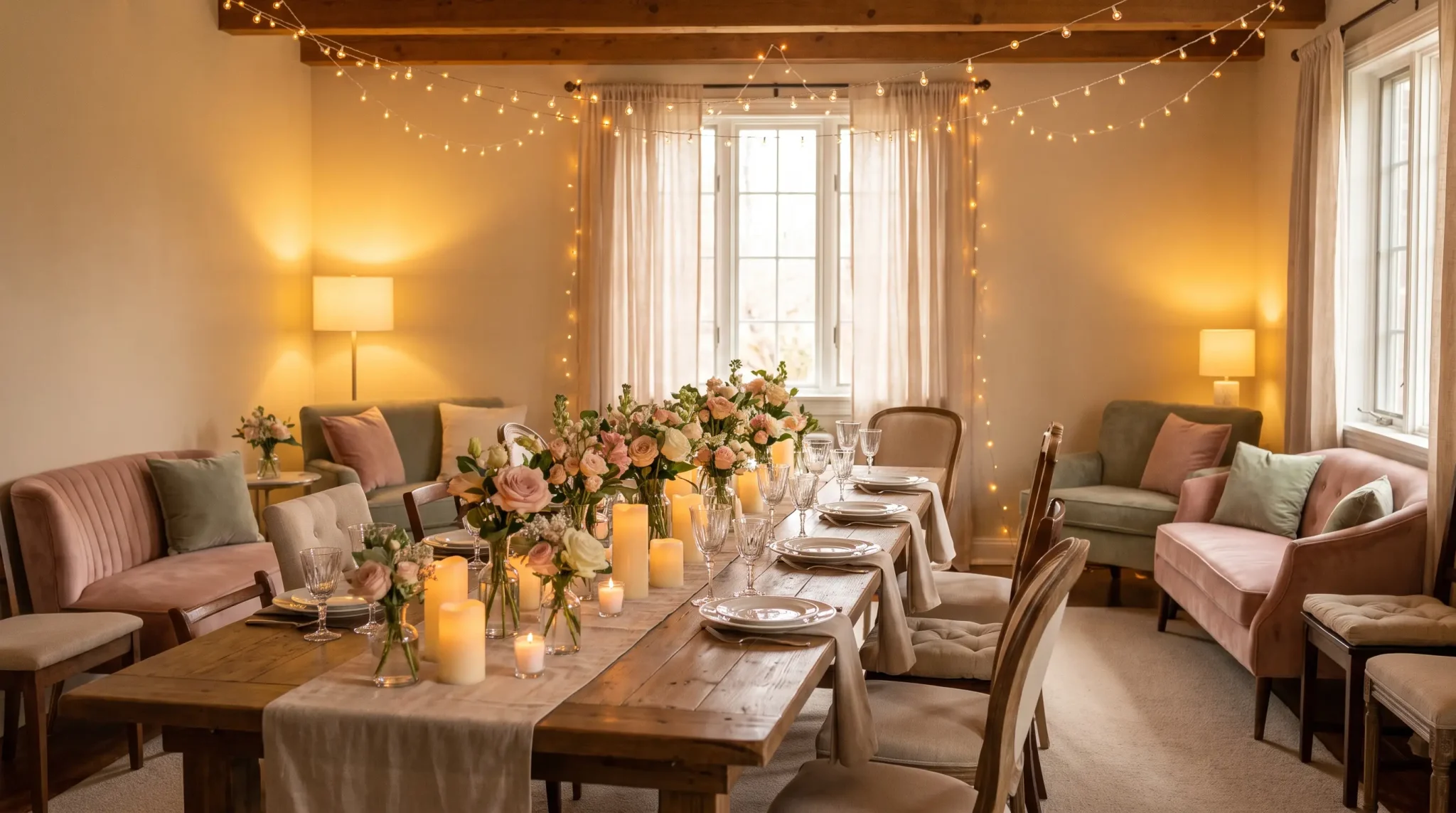
9. Style the Table with a Centerpiece
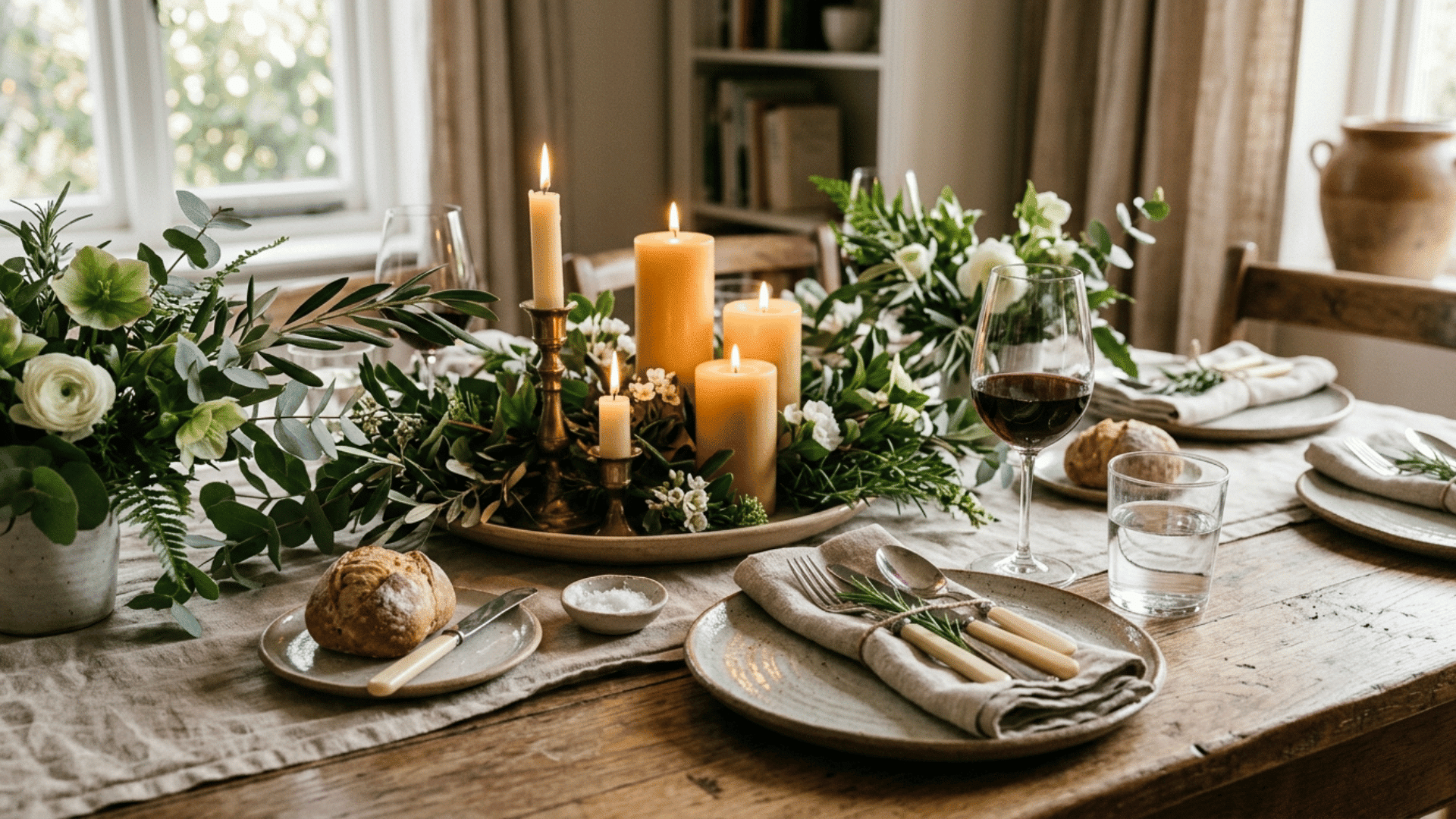
An empty table looks unfinished even in a fully decorated room. A low arrangement, bowl of fruit, or candle set fills that gap.
Keep the centerpiece under 12 inches tall so it does not block sightlines across the table during meals.
10. Add a Mirror to Open Up the Room
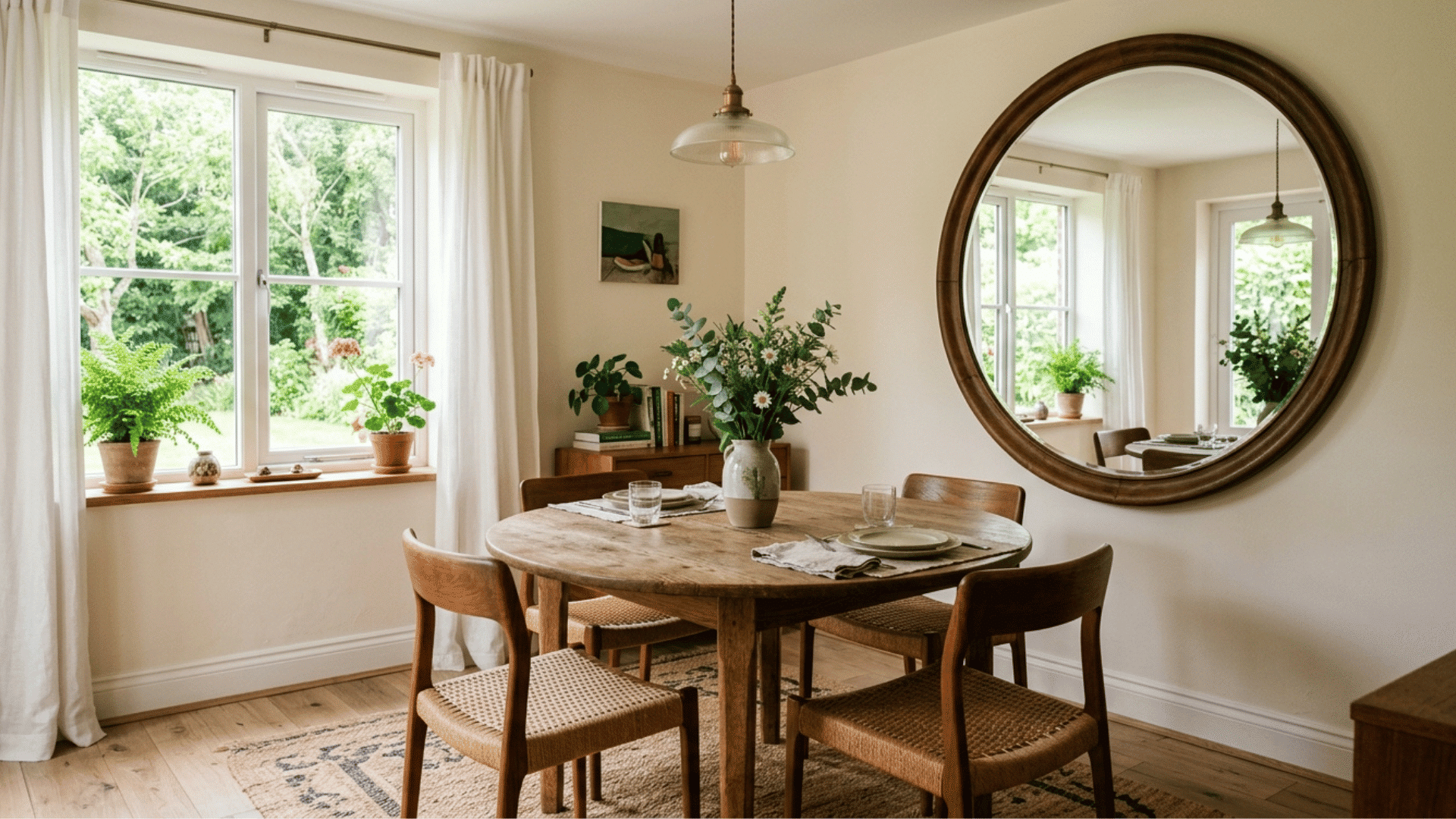
A large mirror opposite a window doubles natural light and makes a small dining room feel wider than it actually is.
Lean an oversized mirror against the wall for a casual look, or hang one centered above a sideboard for symmetry.
11. Style the Windows with Curtains
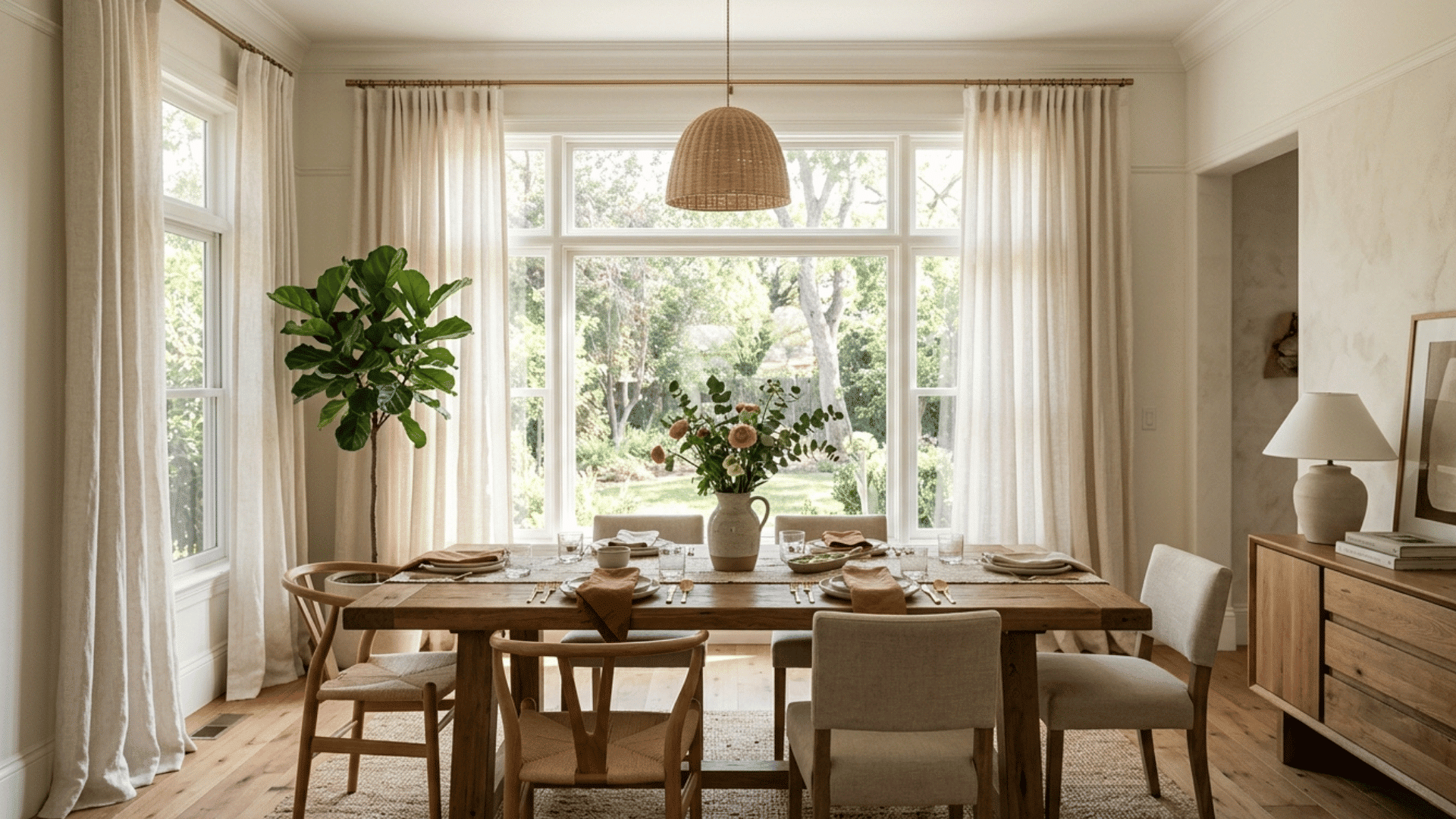
Bare windows leave a dining room feeling unfinished, even with strong furniture. Floor-length curtains add softness and absorb sound during dinners.
Hang rods close to the ceiling rather than the window frame. This trick makes the whole room feel taller.
12. Include Greenery
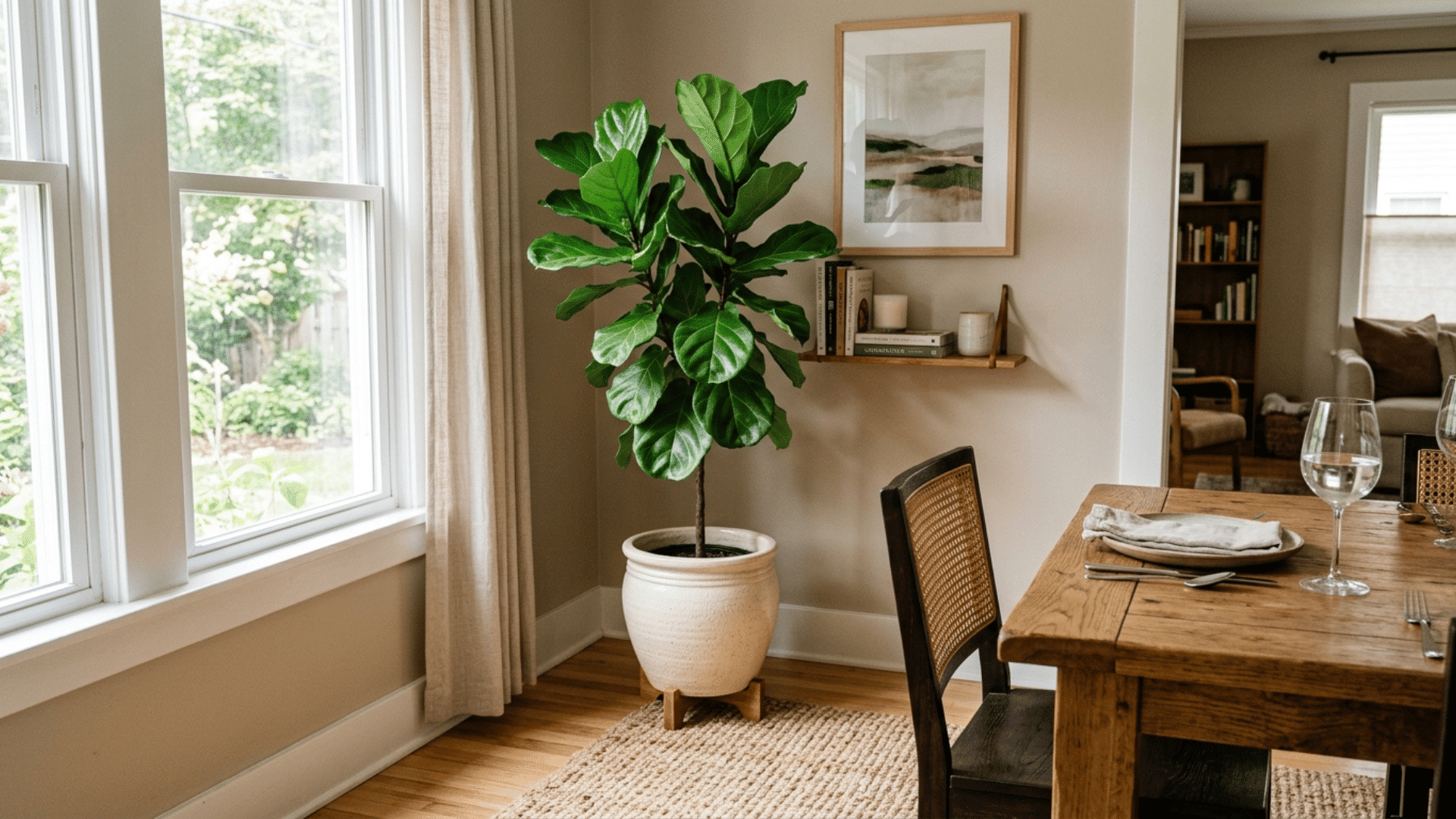
A single plant adds life to a room that otherwise holds only furniture and hard surfaces. Height matters more than variety here.
A tall floor plant fills an empty corner. Small potted herbs or greenery on the table work for a subtler touch.
13. Define a Dining Nook in an Open Layout
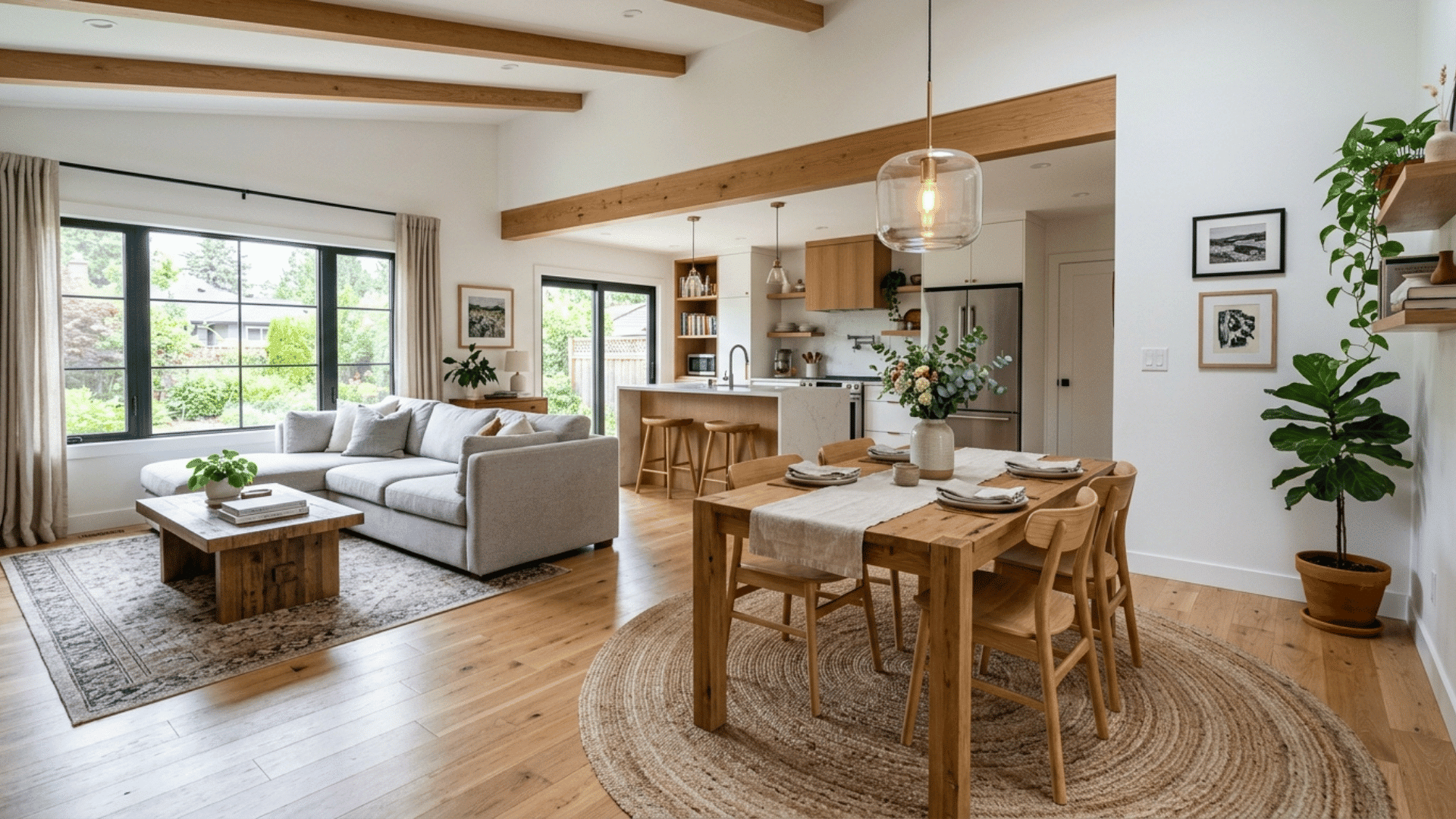
Open floor plans often blur the line between where the dining area starts and ends. A rug, pendant light, or accent wall marks the boundary.
A pony wall or half divider also works if you want separation without fully closing off the space from the kitchen.
14. Add Architectural Detail to the Ceiling
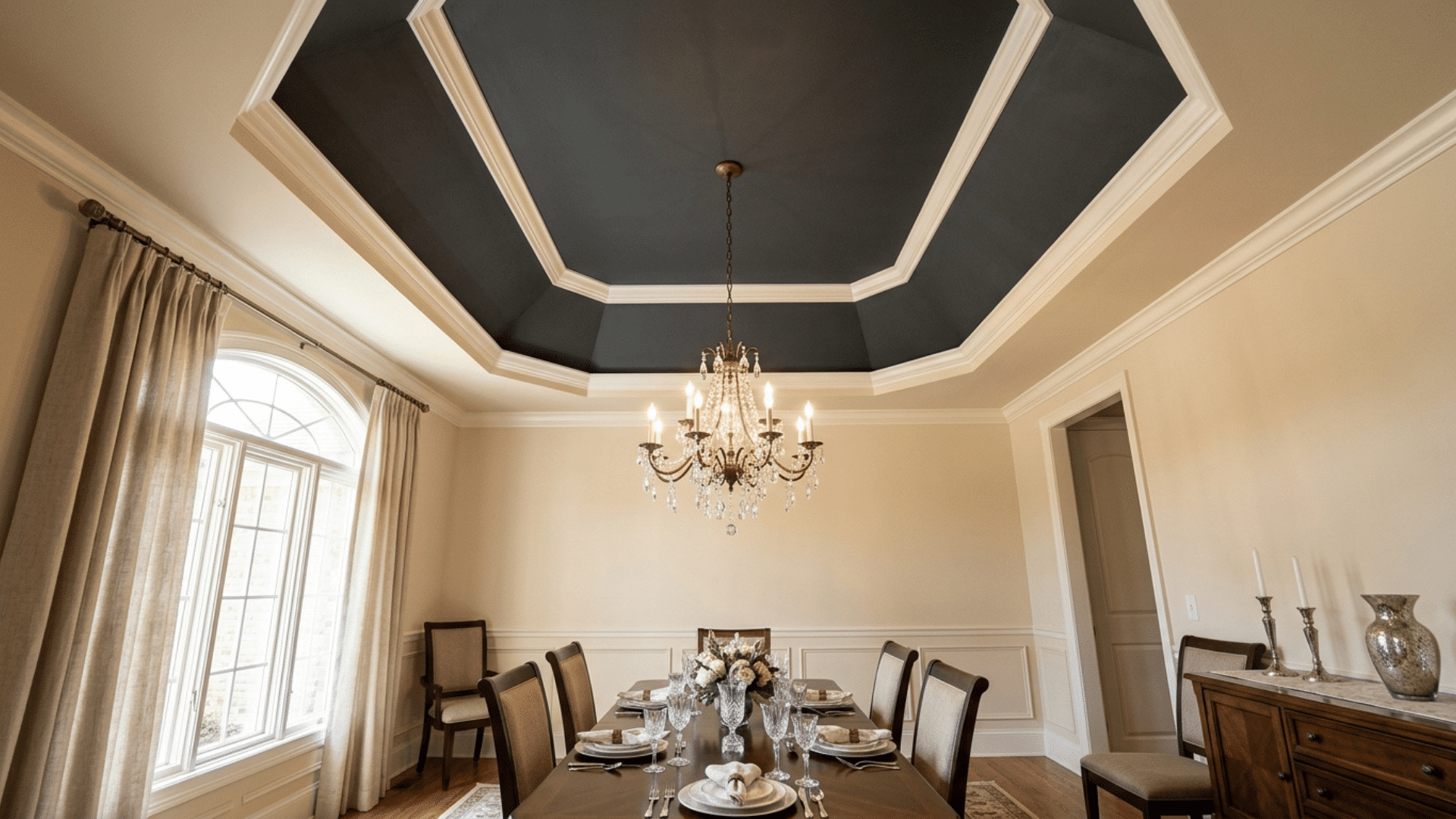
A plain ceiling wastes the one surface most dining rooms never use. Molding, a tray ceiling, or paint color adds depth overhead.
Painting the ceiling one shade darker than the walls draws the eye up and makes the room feel more finished.
15. Pick a Style Direction
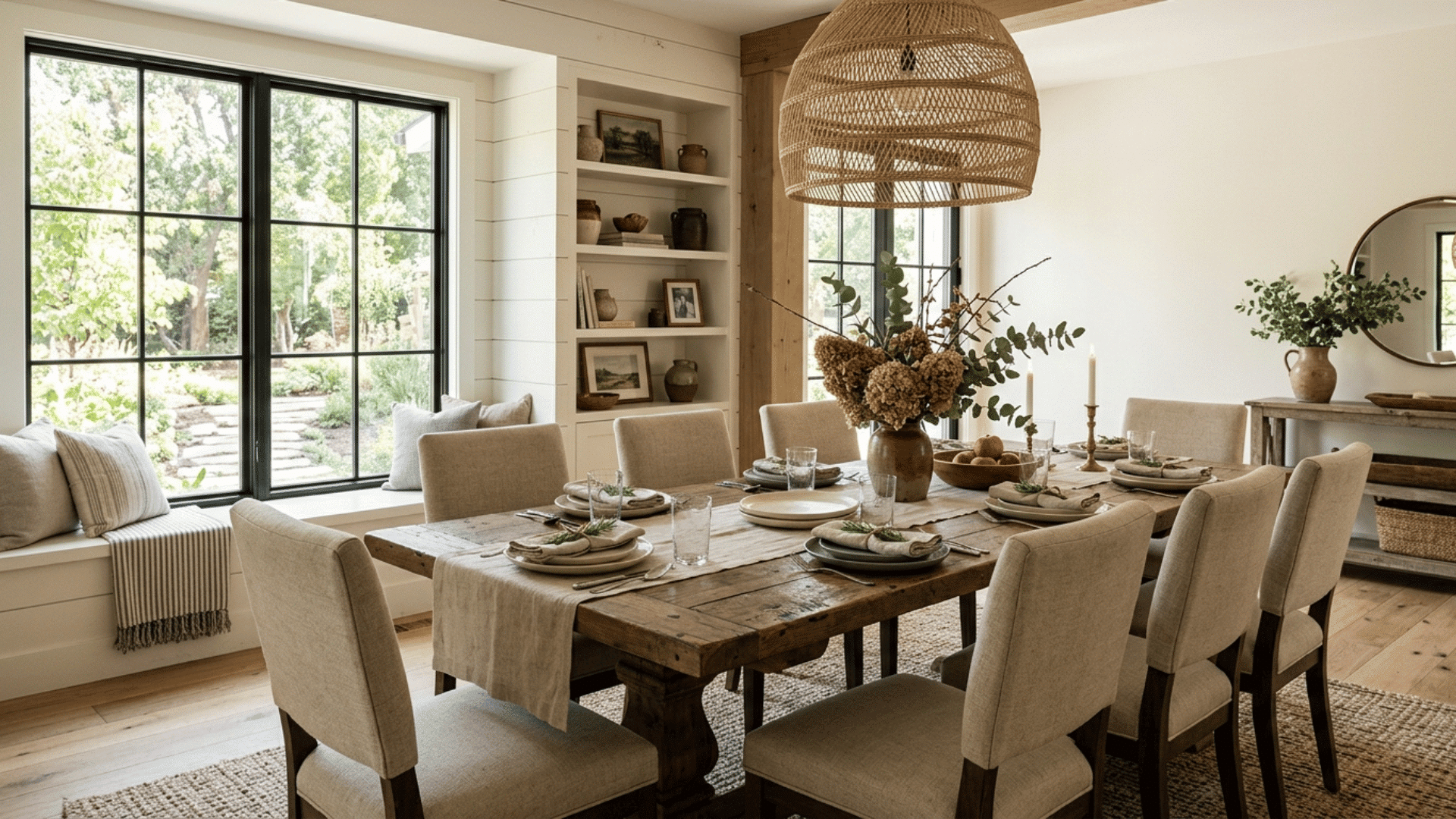
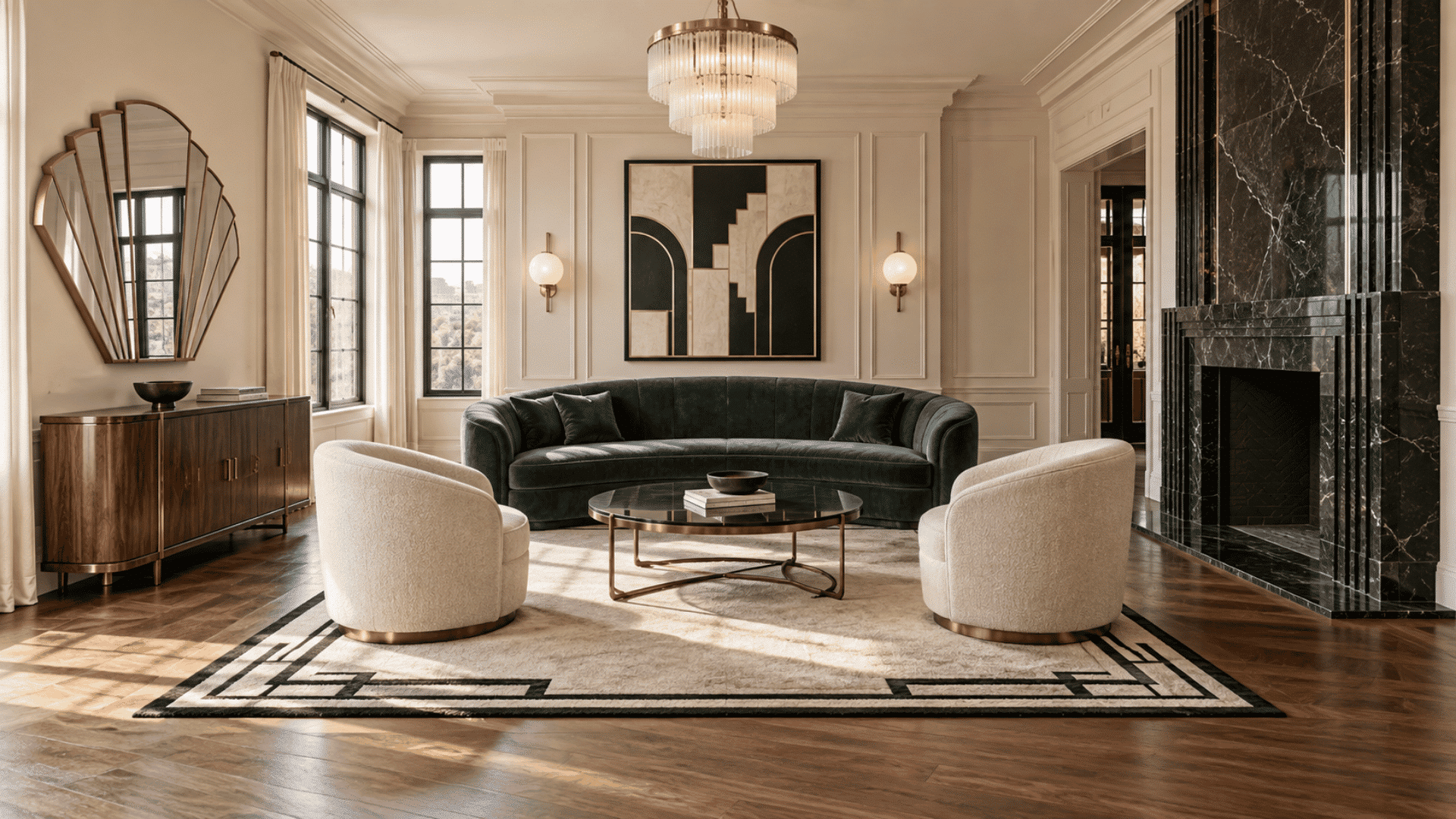
The dining room needs one clear style, whether that is modern, farmhouse, traditional, or glam, so furniture and decor choices stay consistent.
Farmhouse leans on wood and neutral tones. Glam uses metallics and velvet. Pick one direction before buying any new piece.
16. Add a Bar Cart for a Second Function
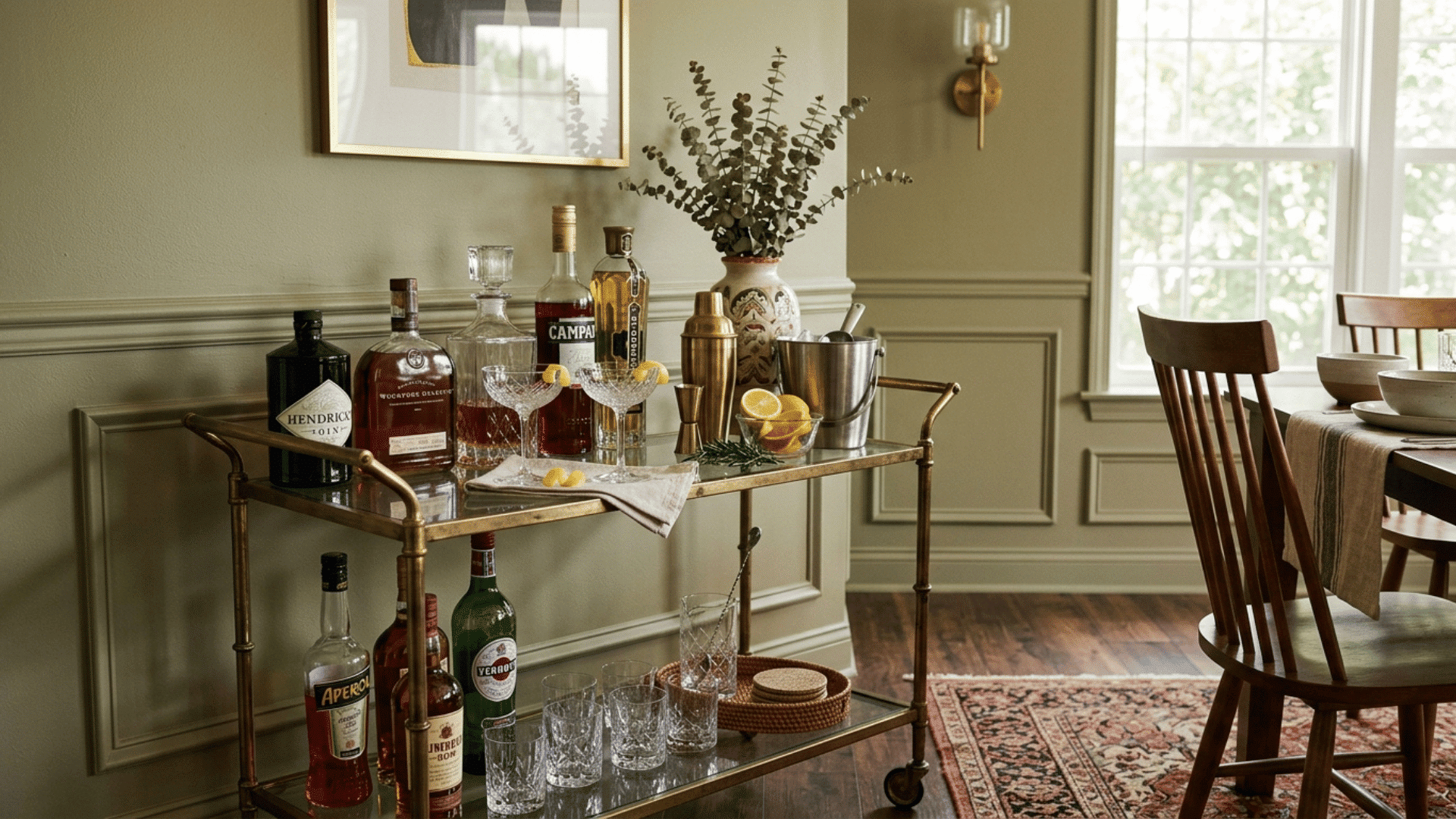
Bar cart gives a dining room a use beyond meals. It works well tucked against an empty wall or corner.
Stock it with glassware and a few bottles on display. Keep the surface simple so it doubles as extra serving space.
17. Install Wainscoting or Wall Paneling
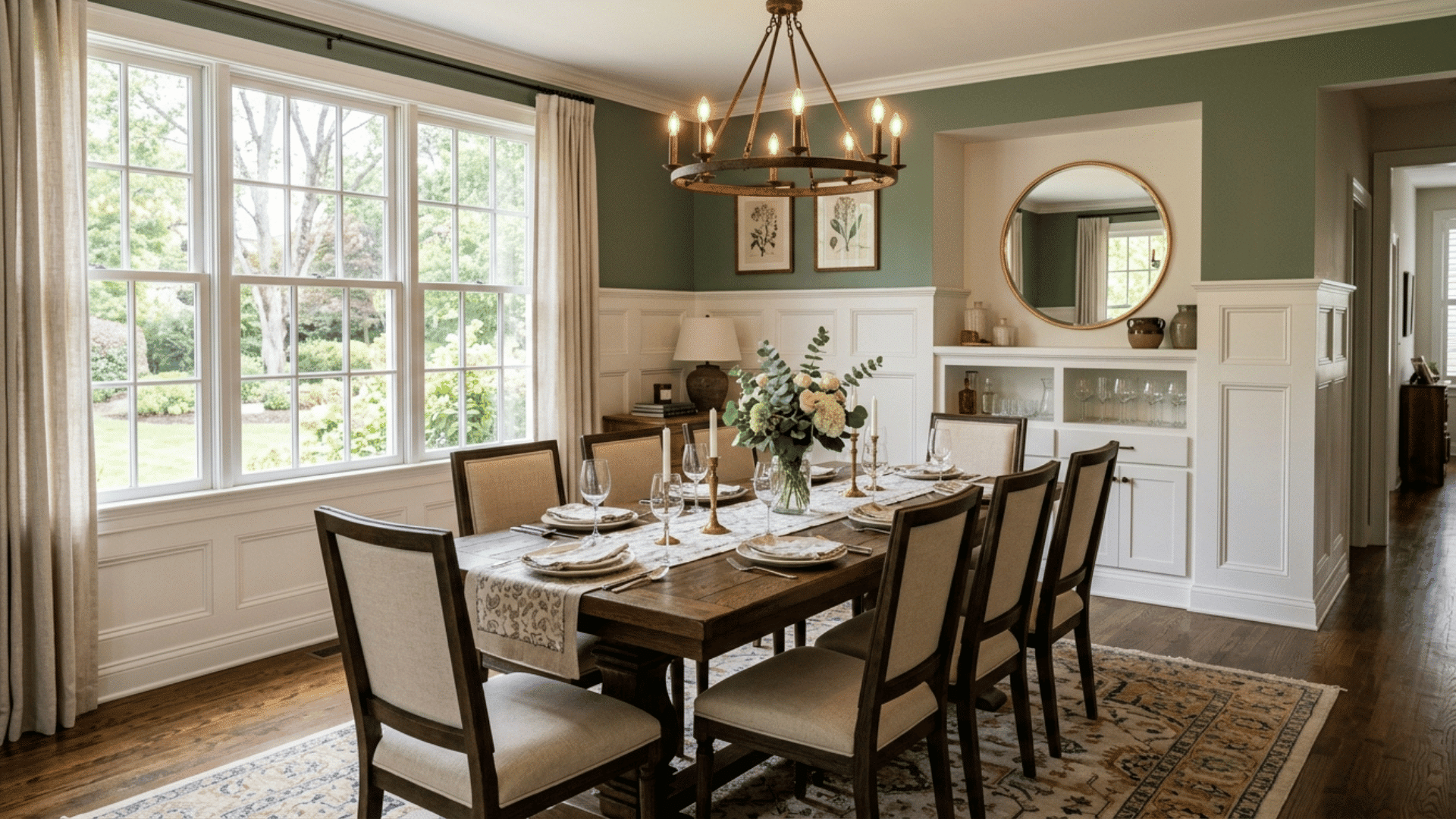
Wainscoting adds texture to a dining room without relying on color or art. It also protects lower walls from chair scuffs.
Paint the paneling one shade lighter than the wall above it for contrast that still reads as one cohesive room.
18. Add a Bench for Casual Seating
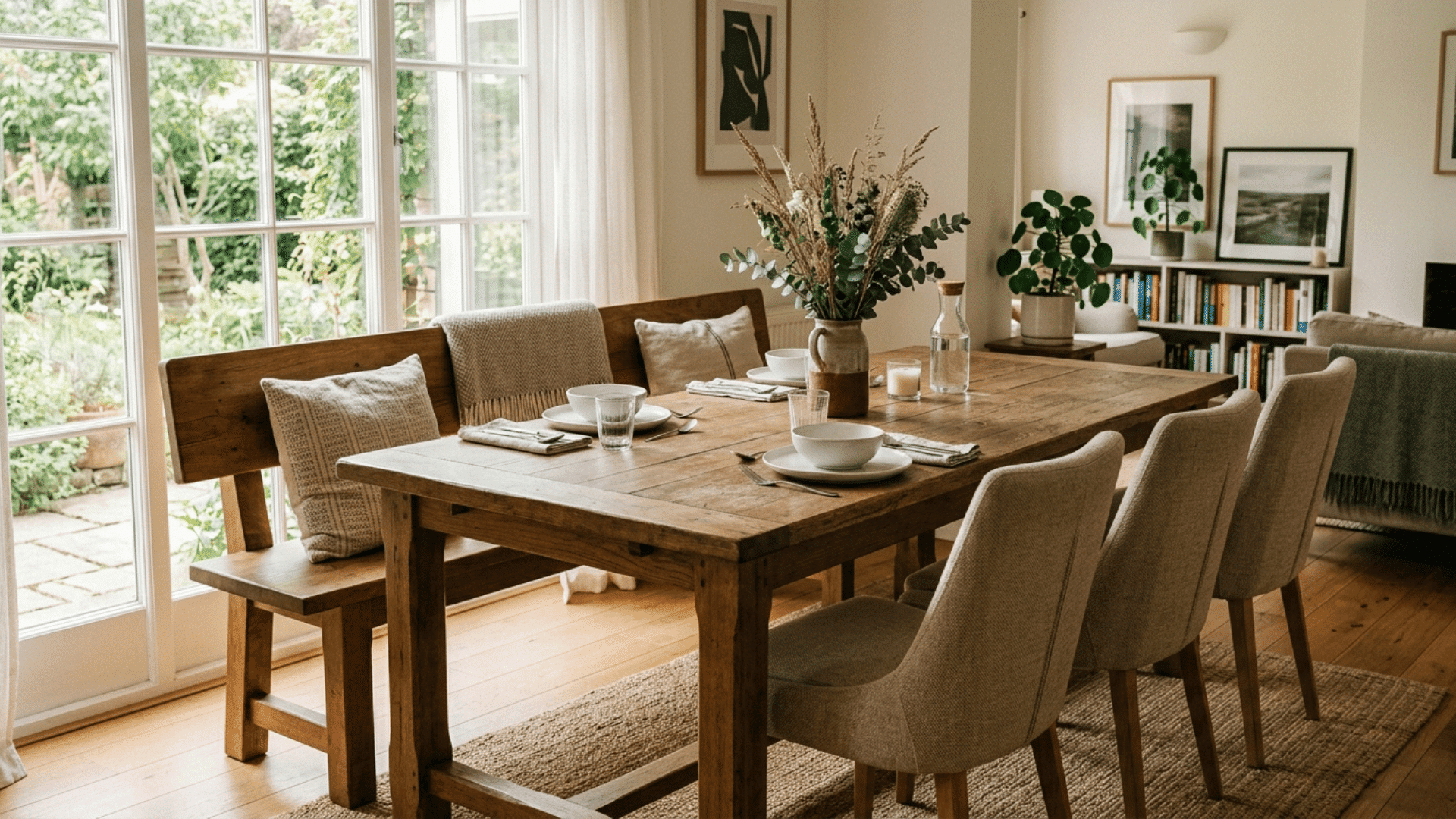
A bench on one side of the table saves space and seats more people than chairs alone. It also softens a formal layout.
Pair a bench with upholstered chairs on the opposite side for a look that feels relaxed rather than matched.
19. Add Sconces for Ambient Lighting
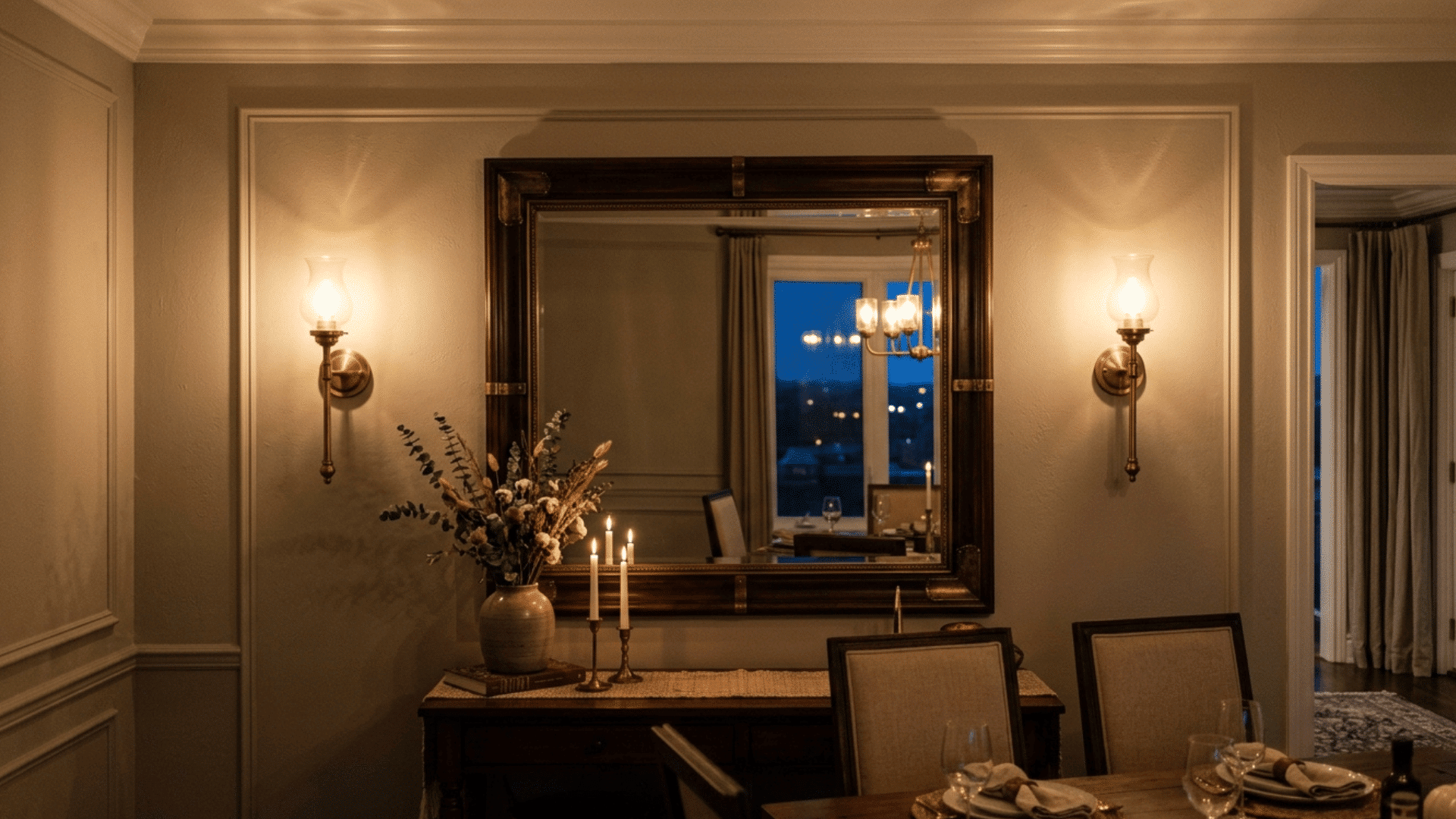
Overhead light alone can feel harsh during dinner. Wall sconces add a second light source that softens shadows across the table.
Mount sconces between 60 and 66 inches from the floor, spaced evenly on either side of the art or a mirror.
20. Use a Table Runner Instead of a Tablecloth
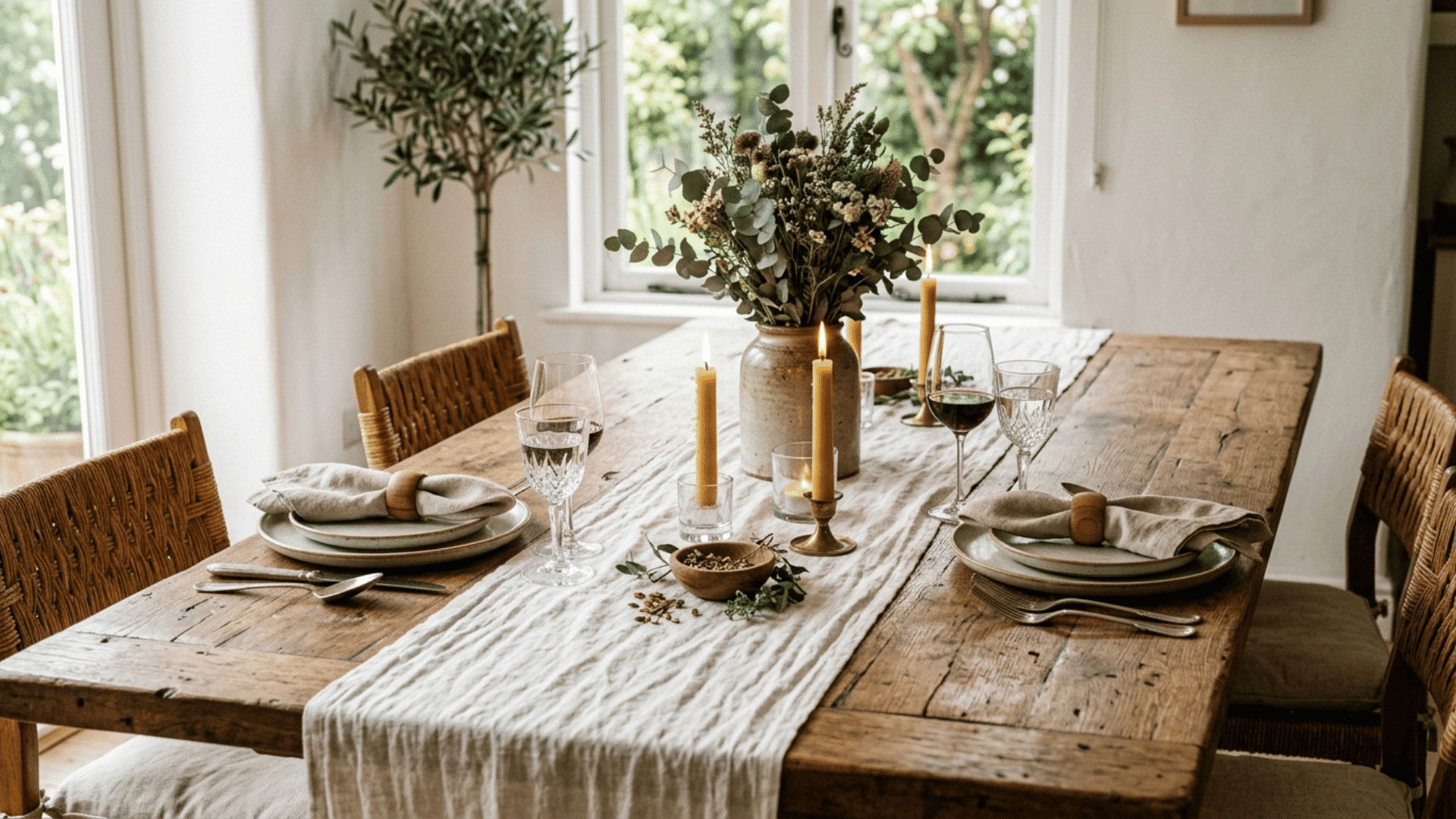
A runner adds color and texture without hiding the table’s finish. It works for daily use in a way a full tablecloth does not.
Choose a runner in a contrasting texture, like linen on a wood table, so the layer actually stands out.
21. Use Open Shelving to Display Dishware
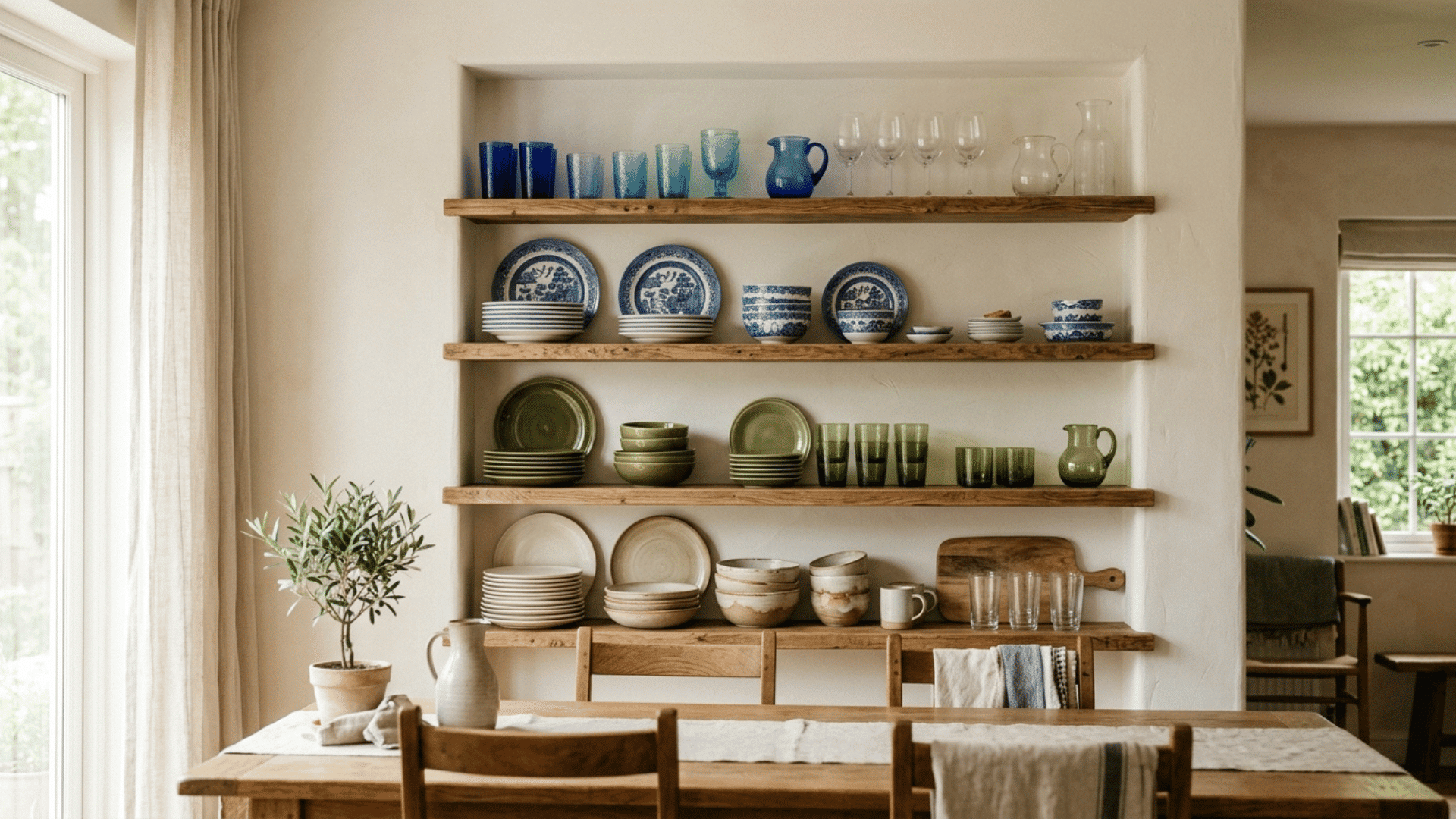
Open shelves turn everyday dishware into decor instead of hiding it behind cabinet doors. Stacked plates and glassware fill the space that would sit empty.
Group items by color or material first. Random placement looks cluttered, while grouped items read as an intentional display.
22. Add Texture with Woven or Rattan Pieces
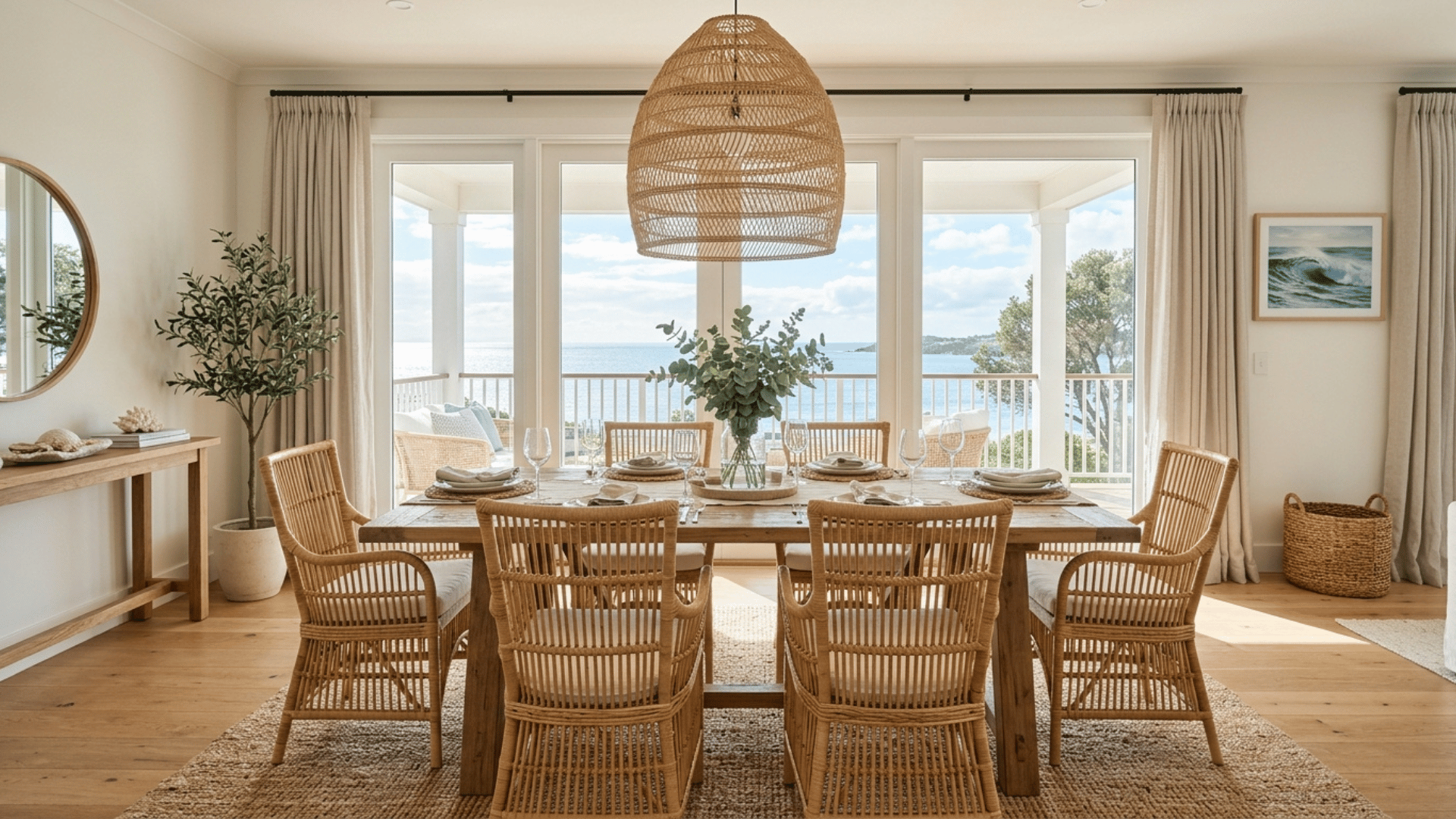
Woven chairs, a rattan light fixture, or a jute rug add texture that flat paint and smooth wood surfaces cannot provide on their own.
These pieces work especially well in coastal or farmhouse-style rooms, where natural materials tie the whole look together.
23. Create Contrast with Mixed Metal Finishes
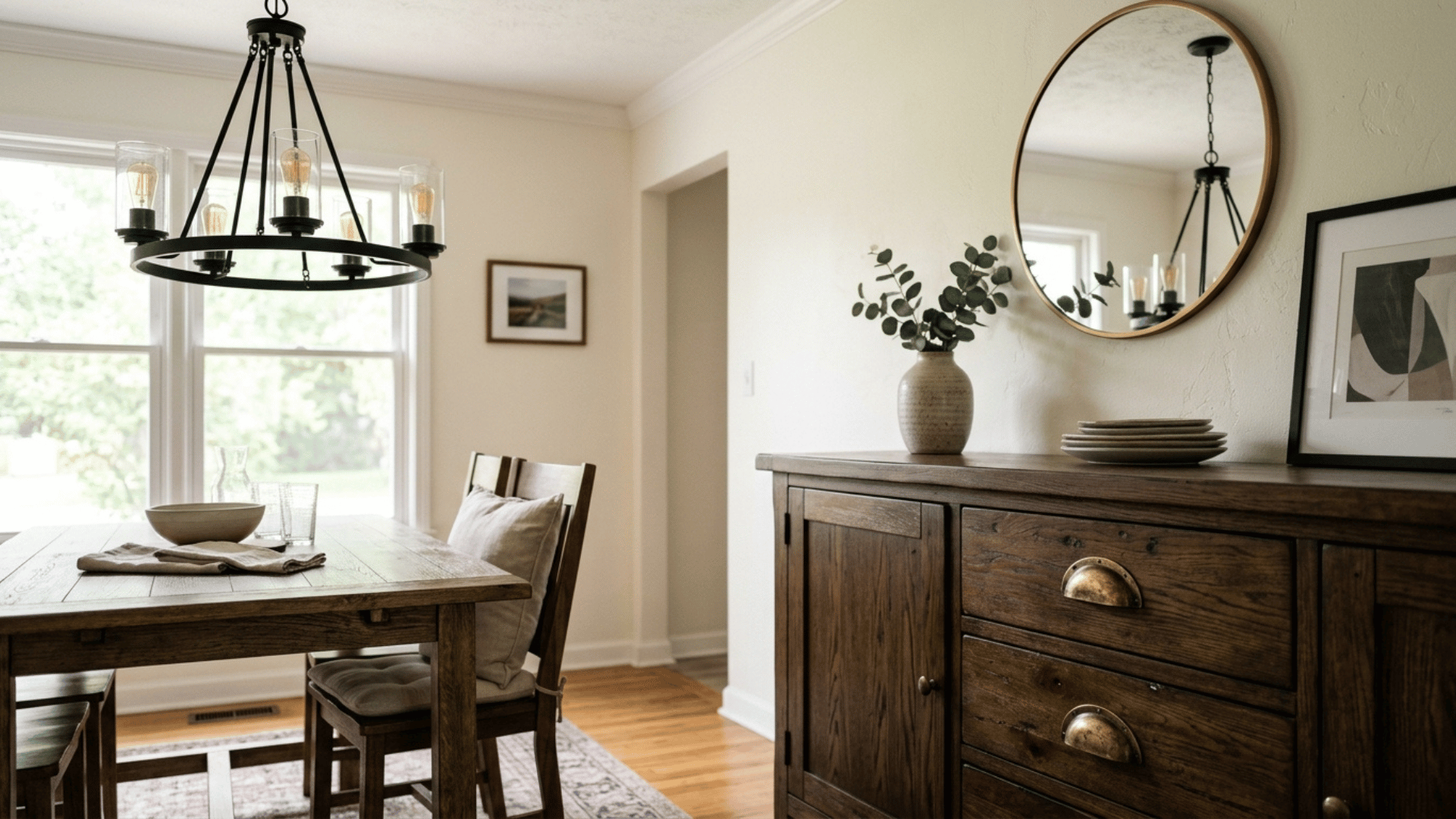
Matching every metal finish in a dining room can look flat. Mixing brass hardware with a black light fixture adds depth instead.
Pick two metals at most. Repeat each one at least twice across the room so the mix looks deliberate.
24. Add a Built-In Banquette or Window Seat
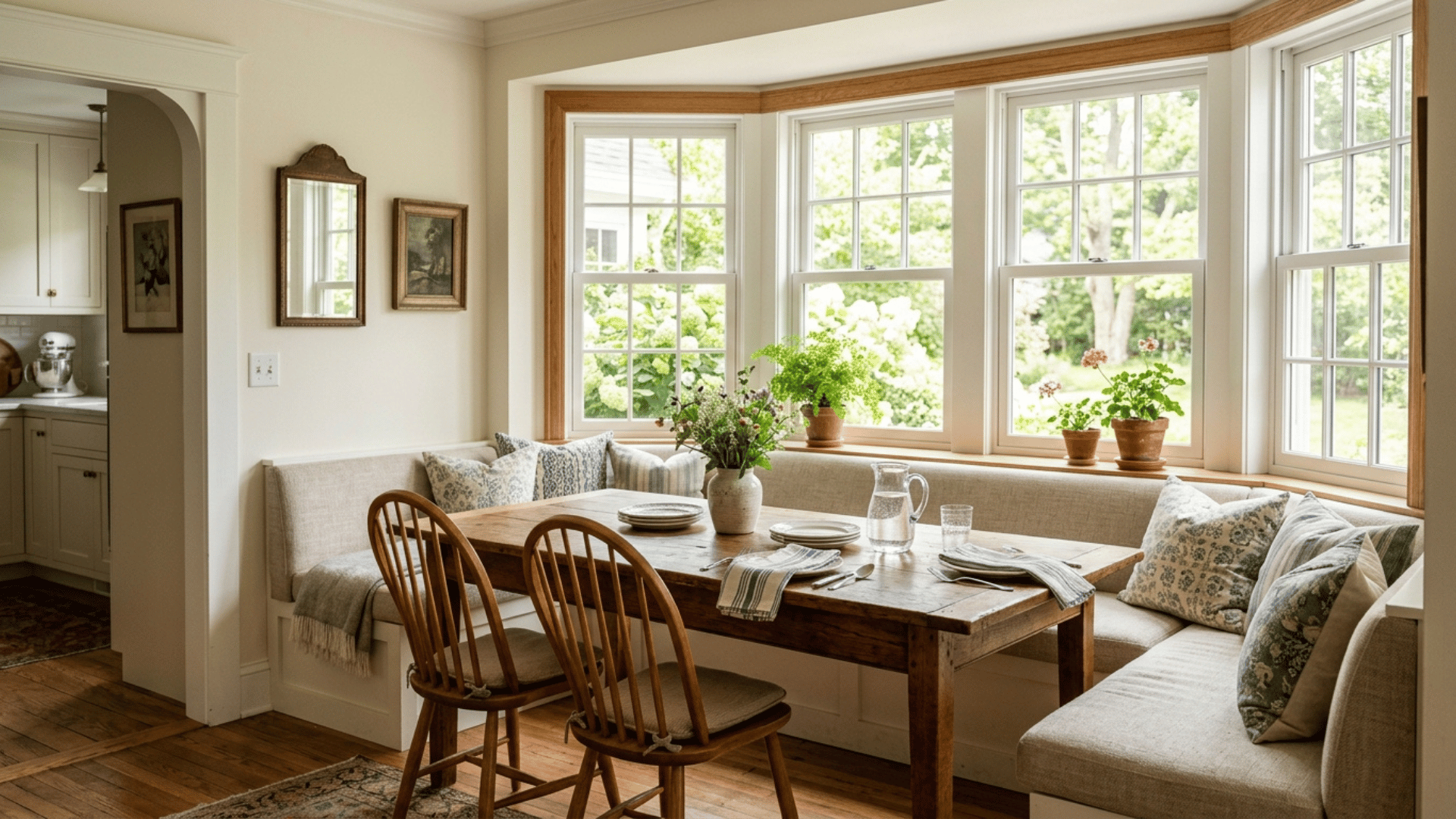
A banquette turns an awkward corner or bay window into extra seating without adding bulky chairs. It also frees up floor space.
Cushion it to match nearby fabrics, and pair it with a few standard chairs on the opposite side of the table.
25. Use Picture Lights to Highlight Artwork
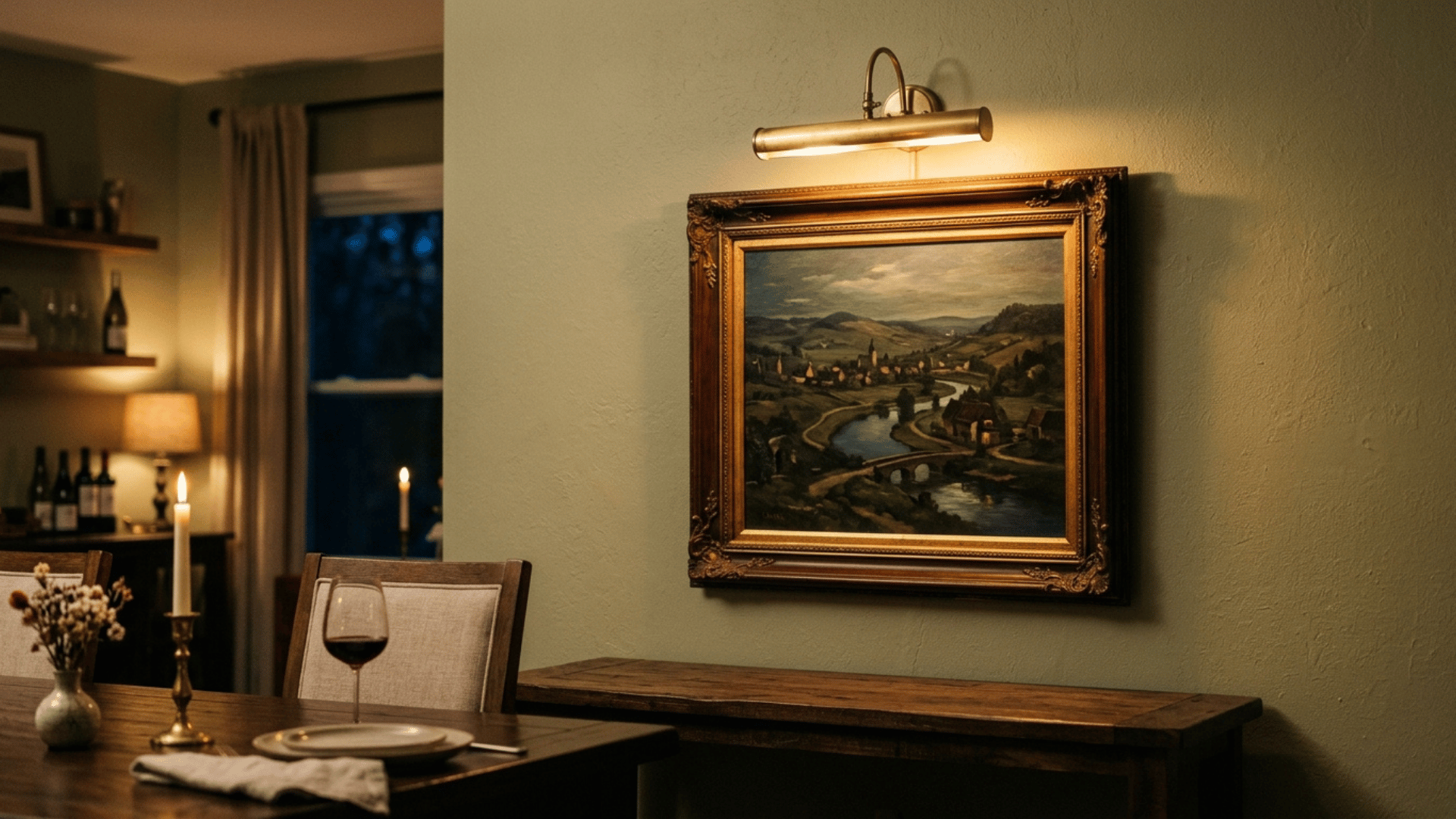
A small picture light above a piece of art adds a warm glow that overhead lighting misses. It also draws the eye toward the wall.
Battery-powered versions work if you want the look without running new wiring behind the frame.
Final Thoughts
A dining room comes together when color, lighting, and one or two standout pieces work as a set rather than separate purchases.
After knowing how to decorate a dining room, start by fixing the element that bothers you most, whether that is a bare wall, a flat overhead light, or a table that no longer fits the space.
Small changes, like a runner or a mirror, show results in a weekend. Bigger ones, like paneling or a banquette, take longer but reshape how the whole room feels.
Save the ideas that match your space, then build the room one piece at a time.