Small modular homes have a lot going for them – faster build times, efficient layouts, and a lighter footprint overall. But let’s be honest: storage is usually the first concern people have.
Where do you put everything without the place feeling cramped?
The answer isn’t just “add more cupboards.” It’s about designing smarter from the start – using every inch intentionally, and making storage part of the structure rather than an afterthought.
Here’s how to do it.
Think Vertical, Not Just Horizontal
One of the biggest mistakes in small spaces is focusing only on floor-level storage.
In a compact modular home, your walls are prime real estate.
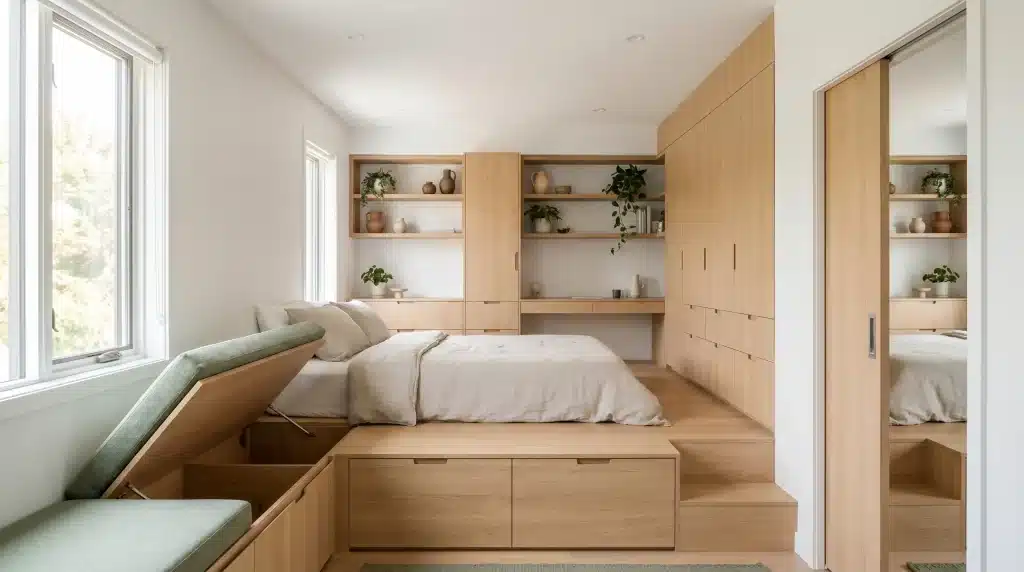
- Install full-height cabinetry instead of standard units
- Use open shelving above doorways and windows
- Add wall-mounted storage in kitchens, bathrooms, and living areas
This approach keeps your floor space clear while dramatically increasing storage capacity.
A good rule of thumb: if there’s unused wall space, there’s an opportunity.
Choose Multi-Functional Furniture
In a small modular home, every piece of furniture should ideally do more than one job.
Think:
- Beds with built-in drawers or lift-up storage
- Ottomans that double as hidden storage boxes
- Dining tables with extendable or fold-away features
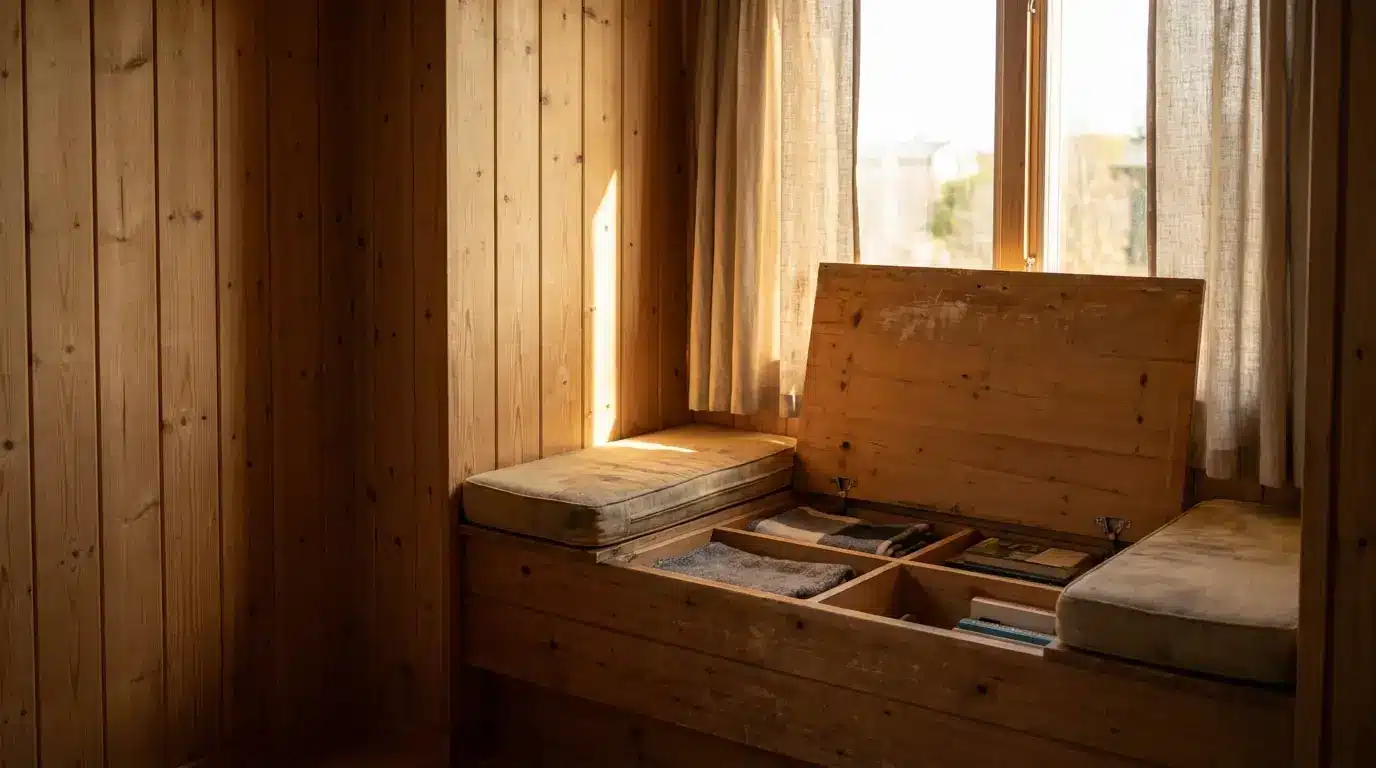
- Benches with internal compartments
This is where modular living really shines – because the space is already designed efficiently, multi-purpose furniture slots in naturally without feeling forced.
Build Storage Into the Structure
The most effective storage solutions are the ones you barely notice.
Instead of adding bulky furniture later, integrate storage into the home itself:
- Under-bed platforms built into the design
- Window seats with storage inside
- Staircases with pull-out drawers (if applicable)
- Recessed shelving in walls
Many prefab and modular builders now incorporate these features during the design phase. For example, companies like Humpy Co. often focus on compact backyard studios where integrated storage is essential to keeping the space functional without feeling cluttered.
It’s a good reminder that in small homes, storage works best when it’s planned – not added later.
Use Hidden and Overlooked Spaces
Small homes tend to have pockets of unused space – you just need to know where to look.
Some commonly overlooked areas include:
- Under the stairs (perfect for cupboards or shelving)
- Behind doors (hooks, racks, or slim organisers)
- Above kitchen cabinets (great for less-used items)
- Under sofas or lounge seating
- Ceiling-mounted storage in garages or utility areas
These aren’t headline features, but collectively they can make a huge difference.
Keep It Minimal (But Practical)
Storage problems are often less about space – and more about stuff.
That doesn’t mean you need to live like a minimalist, but being intentional helps:
- Keep only what you actually use regularly
- Rotate seasonal items instead of storing everything at once
- Avoid “just in case” clutter
A well-organised small space will always outperform a larger, cluttered one.
Use Smart Zoning to Stay Organised
In a compact modular home, it’s easy for spaces to blur together. That’s where zoning becomes important.
Create clear storage zones for different functions:
- Kitchen: cookware, pantry, appliances
- Living area: entertainment, books, general storage
- Bedroom: clothing, personal items
- Entry: shoes, bags, everyday essentials
When everything has a designated place, it’s easier to stay organised – and the space feels bigger as a result.
Opt for Sliding and Pocket Doors
Traditional hinged doors take up more room than you think.
Switching to sliding or pocket doors can free up valuable wall space that can then be used for storage, shelving, or furniture placement.
It’s a small design change that has a surprisingly big impact in compact homes.
Make Use of Outdoor Storage
If your modular home includes a backyard or external space, don’t ignore it.
- Add a small shed or storage box
- Use weatherproof benches with storage
- Install vertical garden storage systems
This helps offload bulkier or less frequently used items without crowding your indoor space.
Customisation Is Your Advantage
One of the biggest benefits of modular homes is the ability to plan ahead.
Unlike traditional homes – where storage often gets figured out during or after the build – modular designs allow you to:
- Specify storage needs early
- Adjust layouts before construction
- Integrate solutions seamlessly into the final build
This is particularly valuable in smaller homes, where every decision has a bigger impact.
Final Thoughts
Maximising storage in a small modular home isn’t about cramming more in – it’s about using space more intelligently.
By thinking vertically, choosing multi-functional furniture, and integrating storage into the design itself, you can create a home that feels open, organised, and surprisingly spacious.
And as modular living continues to grow in popularity, it’s clear that the best designs aren’t just compact – they’re carefully considered from the ground up.
Get that balance right, and even the smallest home can feel like it has more than enough room.