One wrong number can ruin a perfect set of blinds. Even a small measurement error can leave gaps at the edges or blinds that don’t sit flush.
Homeowners often assume measuring is simple until they end up with the wrong size.
This blog shows exactly how to measure blinds the right way, every time. Read on for a fit that looks clean and works well.
Tools Required Before Measuring
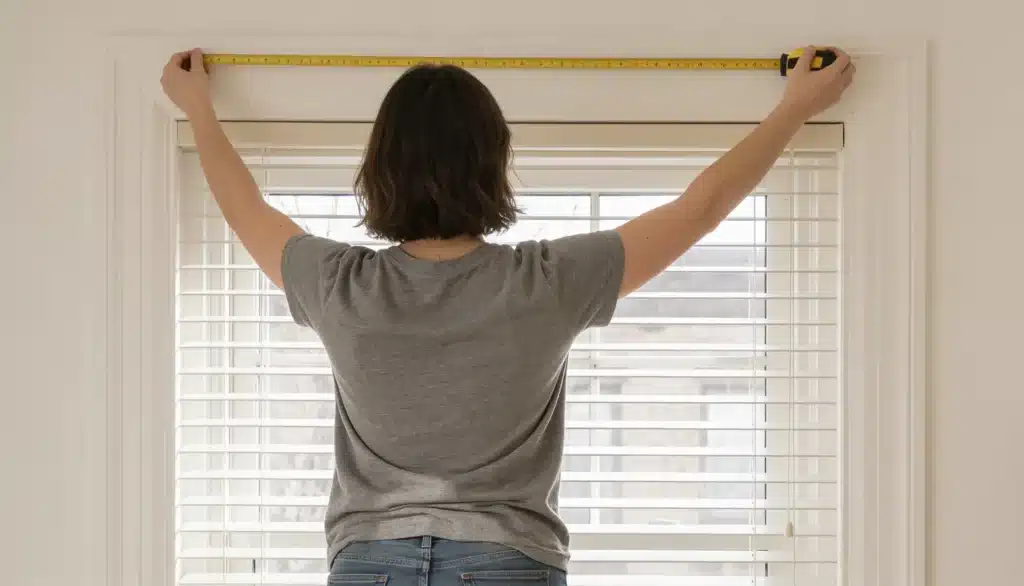
Before measuring, a few tools make the job easier. A steel tape measure for accurate readings, since fabric tapes can stretch and throw off numbers.
Keep a pencil and paper handy to jot down measurements right away. A step stool helps reach taller windows safely. With these ready, measuring becomes quick and simple.
Inside Mount vs Outside Mount: Which Should You Choose?
Inside-mount blinds sit within the window frame, giving a clean, built-in look. Outside-mount blinds are fixed to the wall or trim above the window and work well when the window frame is too shallow or uneven.
Inside-mount suits windows with sufficient depth and a neat frame. An outside mount is a better fit when privacy or full light blocking matters, since it covers the entire window and frame.
Read on to learn how to correctly measure blinds for each type.
How to Measure for Inside Mount Blinds
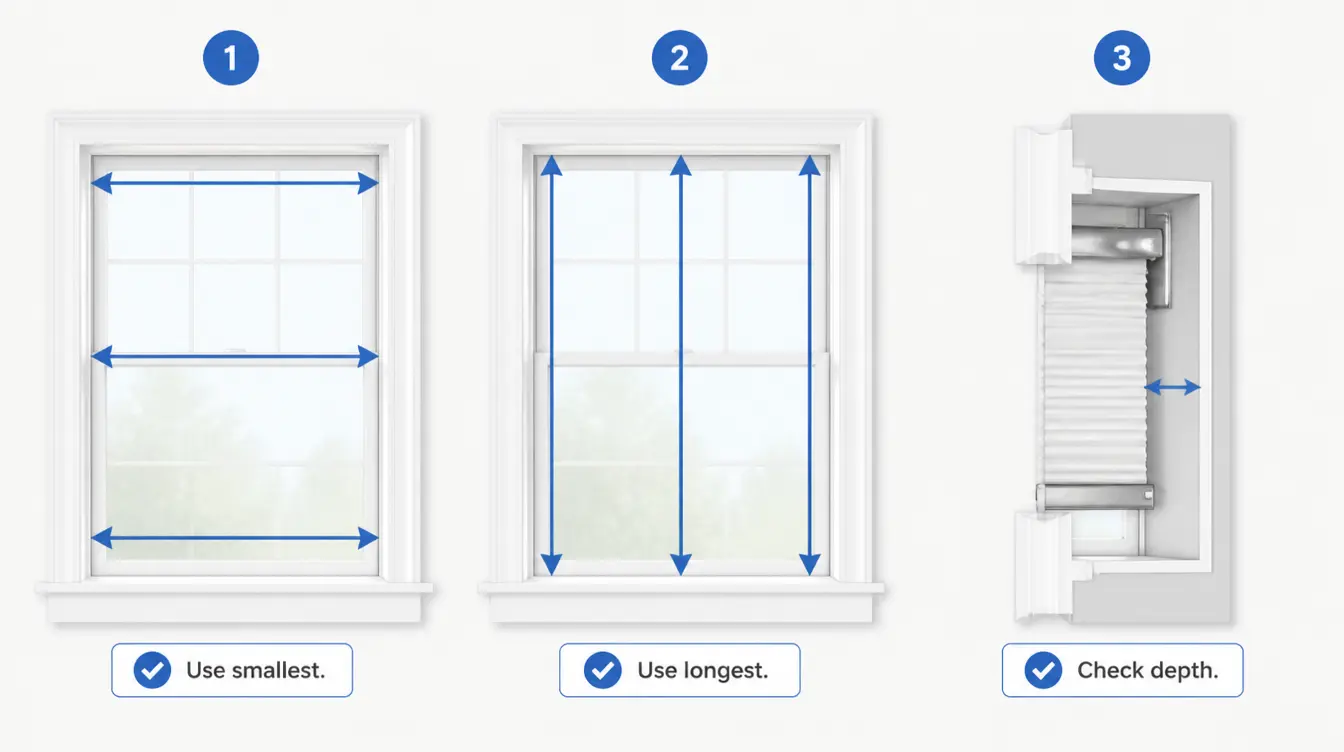
Inside-mount blinds need precise numbers since they sit within the frame. Follow these three steps for an accurate fit.
1. Measure the Width
Measure the width at the top, middle, and bottom of the window opening.
Frames aren’t perfectly even, so these three numbers may differ slightly. Write down the smallest measurement, since this ensures the blind fits without rubbing against the frame.
2. Measure the Height
Measure the height at the left, center, and right sides of the window.
Start from the top of the frame down to the sill. Use the longest measurement this time, so the blind covers the full window without gaps at the top or bottom.
3. Check the Frame Depth
Measure how deep the frame is from front to back.
This confirms there’s enough room for the blinds’ mounting brackets and headrail to sit inside without sticking out or interfering with window handles or the window trim.
Always measure in three spots (top, middle, bottom or left, center, right) to catch any frame or wall unevenness.
How to Measure for Outside Mount Blinds?
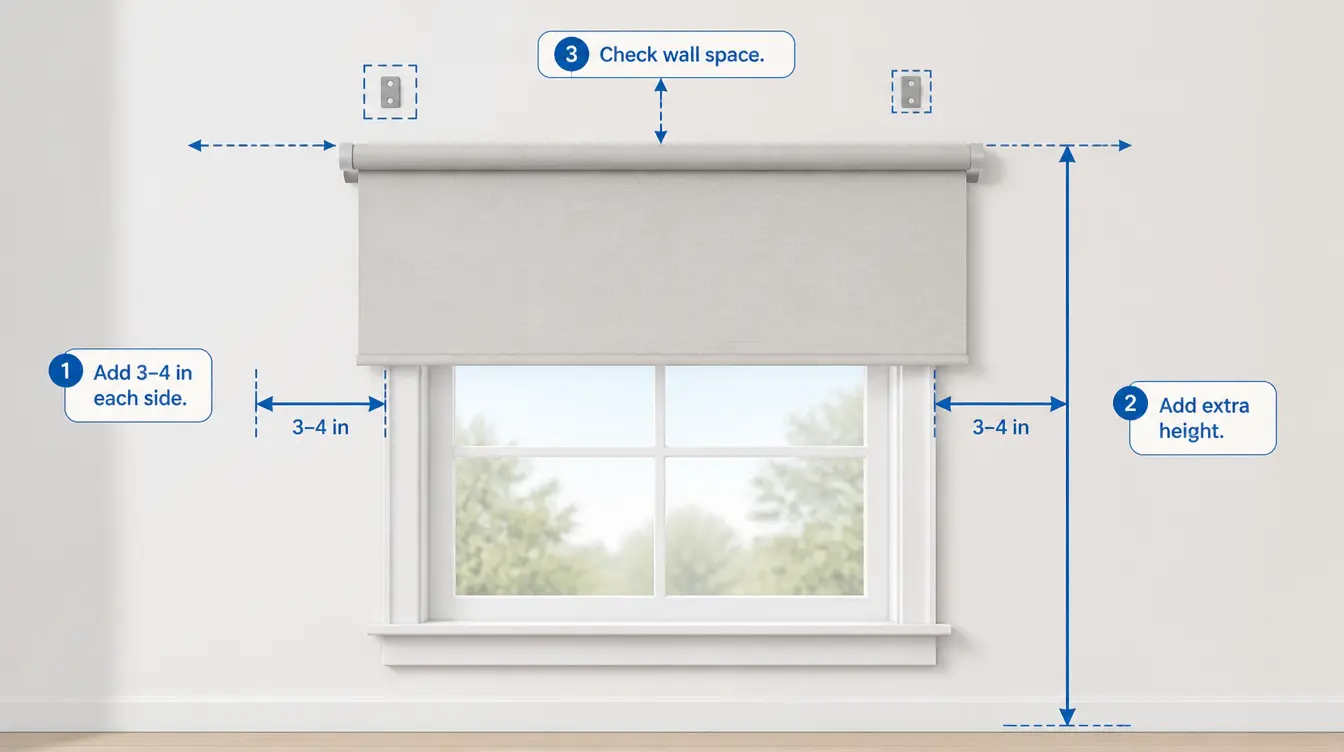
Outside-mount blinds sit on the wall or trim, so measurements work a little differently.
1. Measure the Width
Measure the exact width of the window opening or the area to be covered.
Add 3 to 4 inches on each side for overlap. This extra width blocks light gaps and adds privacy along the edges of the window.
2. Measure the Height
Measure from where the blind will be mounted down to the sill or floor, depending on preference.
Add a few extra inches above the window if mounting on the wall, so the headrail sits neatly above the frame.
3. Confirm Mounting Space
Check that there’s enough flat wall space above and on both sides of the window for brackets.
This step avoids installation issues later, especially near corners, trim, or nearby fixtures like curtain rods.
Round measurements down for inside mount and up for outside mount to avoid a blind that doesn’t fit right.
Measuring Different Types of Blinds
Different types of blinds require slightly different measuring steps. Here’s how it works for some common styles.
Roller Blinds
Roller blinds need only width and height. Measure the window width at three points and use the smallest number for inside mount.
For height, measure from the top of the frame to the sill, adding a few extra inches if mounting outside for full coverage.
Venetian Blinds
Venetian blinds use horizontal slats, so precise width matters most.
Measure the width at the top, middle, and bottom, then use the smallest of the three measurements. For height, measure the full drop from the mounting point to the sill.
Check depth too, since slats need enough frame space to sit inside without sticking.
Vertical Blinds
Vertical blinds work well for wide windows and sliding doors.
Measure the full width of the area to be covered, then measure the height from the top of the frame to the floor or sill. Leave extra room on the side where the panels stack when opened.
Roman Blinds
Roman blinds fold into neat pleats, so exact measurements matter for a clean stack. Measure the width at three points and pick the smallest number for an inside mount.
Measure height from the top to the sill, and always double-check the depth if the frame is shallow.
Cellular (Honeycomb) Blinds
Cellular blinds have a honeycomb design that traps air, so they need snug measurements. Measure the width at three spots and use the smallest number.
For height, measure from the top to the sill and round down slightly for an inside mount, so the fabric doesn’t rub against the frame edges.
How to Measure Blinds for Complex Windows?

Standard windows are simple, but some window shapes need a different approach. The following is what different window types are and how to change the approach for each.
Bay Windows
Bay windows have three or more panels set at angles, so each panel needs its own measurement. Measure the width and height of each section separately.
Note the angle between the panels, too, as this affects how the blinds sit together. Getting each panel right keeps the whole bay looking even and neat.
Arched Windows
Arched windows curve at the top, so standard blinds won’t work for the whole frame. Measure the straight, rectangular part below the curve as usual.
For the arch itself, note the width at the base and the height at the peak. Many stores offer custom-shaped blinds or fixed arch covers for this part.
French Doors
French doors need blinds that won’t interfere with the door swing or handle. Measure the width and height of the glass panel, not the entire door frame.
Leave extra clearance near the handle and hinges. If the door opens inward, check that mounted blinds don’t block the swing path after installation.
Sliding Doors
Sliding doors are wide, so measure the full width of the glass, not just one panel. Measure height from the top of the frame to the floor or sill.
Since only one side moves, mount blinds so the fixed panel stays clear and the sliding side has room to open fully.
Conclusion
Learning how to measure blinds correctly saves time, money, and hassle.
Once the difference between inside and outside mount is clear, measuring becomes a simple three-step process.
Complex windows like bays, arches, and sliding doors just need a slightly adjusted approach. With the right tools and a careful tape measure, anyone can get blinds that fit right the first time.
Frequently Asked Questions (FAQs)
1. What’s the Most Common Mistake when Measuring Blinds?
Many people measure only once, at one spot on the window. Frames aren’t always perfectly square, so measuring three points prevents blinds from ending up ill-fitting.
2. Are there any Trending Blind Styles Worth Considering?
Cordless and motorized blinds are popular for their clean look and child safety benefits. They still need accurate measurements, so proper sizing is always important.
3. Can Measurements Change Once Blinds Are Installed?
No, blinds are cut to the exact size ordered. Any change in window size or frame after installation means new blinds, so double-check numbers.