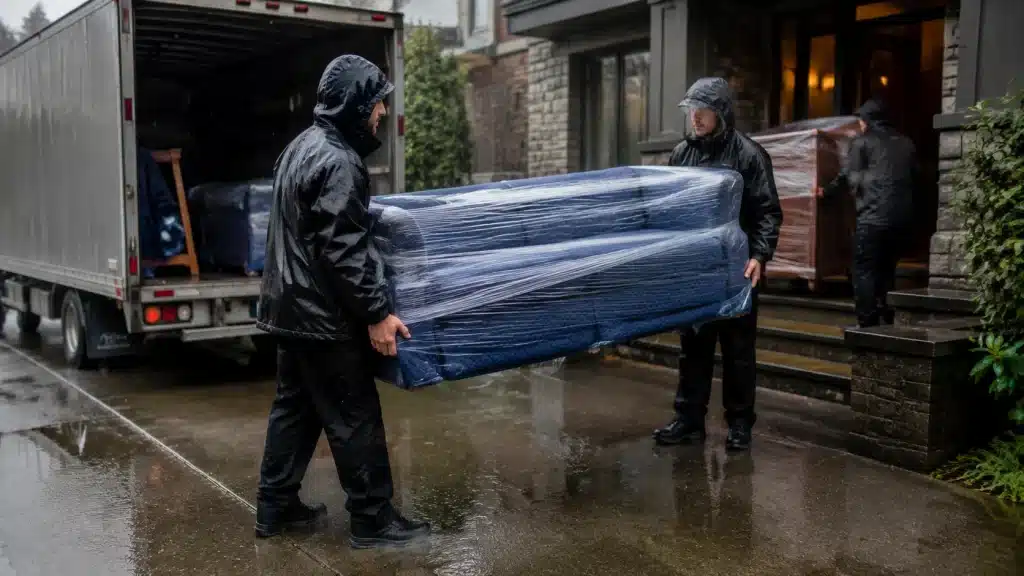
Moving day can become complicated when rain, snow, or strong winds arrive unexpectedly.
Wet surfaces, water exposure, and unsafe pathways can make carrying heavy furniture more difficult, but proper preparation can reduce the risk of damage and injury.
The safest approach is to protect your furniture, create secure moving paths, and use methods designed for wet or icy conditions.
From waterproof packing methods to safer loading techniques, small precautions can make a major difference.
This guide explains how to move furniture during bad weather, using the same planning that goes into any full household move, so your belongings stay protected and your move stays on track.
How to Move Furniture During Bad Weather?
To move furniture during bad weather, you have to focus on moisture control, safe footing, and shorter exposure times.
It’s better to prepare each item indoors, remove loose parts, and secure drawers or doors before carrying anything outside.
You can use padded covers beneath waterproof layers, so surfaces stay protected without trapping moisture.
Keep the route clear, add traction to steps and ramps, and place absorbent mats near entrances.
Always, always load one item at a time, close the truck between trips, and secure everything with straps to prevent shifting.
Assign clear roles so no one rushes or takes on more than they can safely manage.
Check furniture immediately after unloading, wipe away moisture, and allow damp materials to dry fully.
And delay the move when wind, ice, flooding, or poor visibility makes handling or driving unsafe.
Will Movers Work During Rain or Snow?
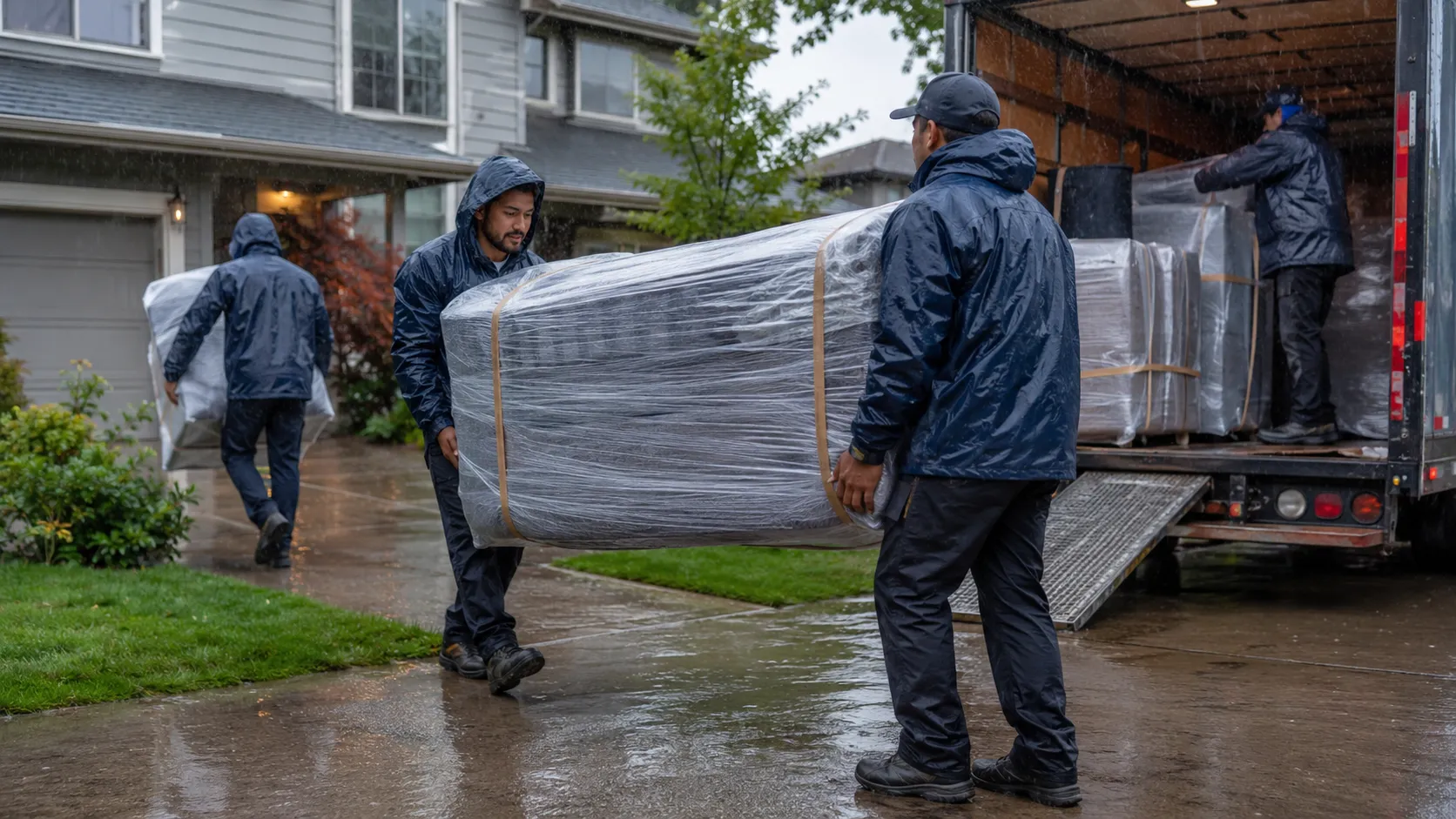
Most professional movers continue working during light rain or snow by adjusting their equipment, pace, and handling methods.
A reliable moving team should:
- Use waterproof covers for furniture and boxes
- Wear rain gear and slip-resistant footwear
- Move carefully across wet or icy surfaces
- Protect floors and entryways from water and mud
- Stop work when flooding, strong winds, or unsafe roads create serious risks
Severe storms, heavy snow, flooding, or dangerous driving conditions may require postponement.
Before booking, confirm the company’s weather policy, possible delays, added fees, cancellation terms, protective materials, and backup dates.
Companies that may provide moving support during difficult weather include Pro Move, Allied Van Lines, Moving Muscle, All Awesome Movers, and Ameritex Movers. Availability and policies can vary by location, so verify each company’s bad-weather procedures before scheduling.
Steps to Take Before Moving Day in Bad Weather
Before moving day, call your moving company and ask what conditions they’ll actually work in, whether delays change your final cost, and what backup date is available if the weather turns dangerous.
Step 1: Watch the Forecast and Build a Backup Plan
Check the forecast five days before moving and monitor updates as the date approaches.
Plan flexible start times, extra help, and a clear weather cutoff with your movers. Postpone the move when severe storms, flooding, ice, or unsafe roads could endanger people, vehicles, or belongings.
Step 2: Choose Weather-Resistant Packing Materials
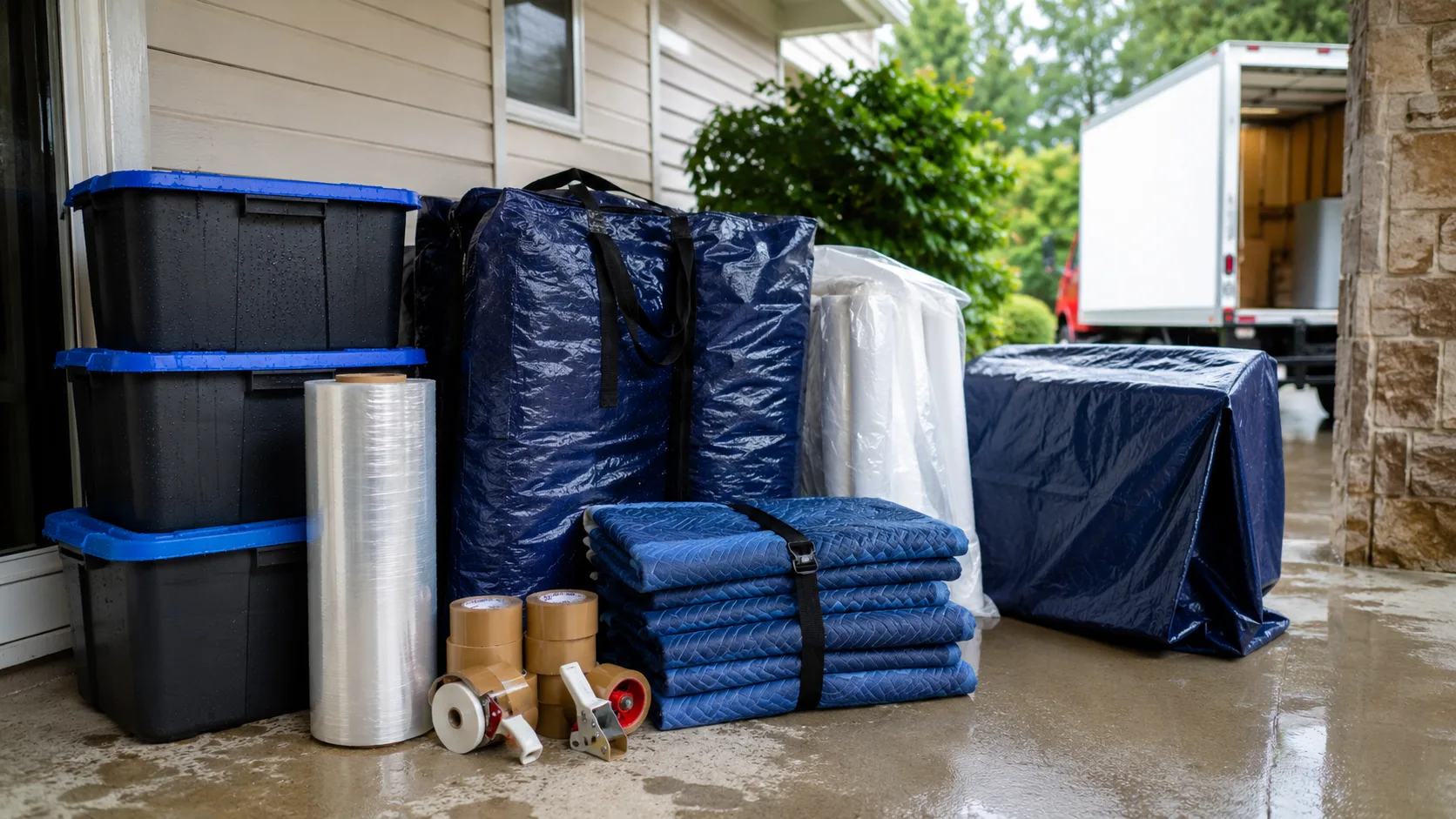
Replace standard cardboard boxes with plastic bins, sealed bags, or containers wrapped in stretch film during wet-weather moves.
Use heavy-duty trash bags for clothing and linens.
When cardboard is unavoidable, reinforce the bottoms and seams with duct tape to reduce moisture exposure and prevent boxes from collapsing.
Step 3: Protect Floors and Entryways at Both Homes
Protect floors by placing towels, mats, or secured plastic coverings along entryways and busy routes.
Create a covered loading zone near the truck when possible. Assign separate indoor and outdoor teams to pass boxes at the doorway to reduce wet footprints, mud, cleanup time, and damage to flooring.
Step 4: Safeguard Electronics and Valuables Separately
Keep laptops, documents, jewelry, and small electronics in sealed, waterproof containers, following the same care used to protect fragile items during a move, and transport them in your own vehicle.
This keeps valuable items dry, secure, and nearby.
Always ask professional movers to wrap larger electronics, including televisions, with protective padding and waterproof coverings.
Safeguarding Different Types of Furniture During Bad Weather
Secure each protective layer against wind while keeping plastic away from sensitive finishes, where trapped moisture could cause marks, discoloration, or surface damage.
| Furniture Type | Main Weather Risk | Best Protection Method |
|---|---|---|
| Wooden furniture | Swelling, warping, and finish damage | Wrap with dry moving blankets, followed by secured plastic wrap |
| Upholstered furniture | Water absorption, stains, and odors | Cover completely with furniture pads and waterproof covers |
| Leather furniture | Moisture marks, cracking, and condensation | Add a breathable fabric layer before applying loose plastic |
| Glass and mirrors | Cracks, chips, and impact damage | Use corner guards, rigid boards, padding, and stretch wrap |
| Metal furniture | Rust and surface scratches | Keep dry and cover with blankets and waterproof sheeting |
| Electronics | Moisture damage and condensation | Use original packaging or padded waterproof containers |
| Artwork and antiques | Water, temperature, and handling damage | Use acid-free paper, padding, rigid boxes, and waterproof covers |
Consider Short-Term Storage for Flexibility
Short-term storage provides extra flexibility when poor weather delays the move, allowing belongings to be transported gradually without rushing or compromising safety.
- Move in phases: Take essential belongings first, then collect the remaining items after conditions improve.
- Reduce rushed handling: Extra time allows furniture to be wrapped, carried, and loaded more carefully.
- Prepare for sudden weather changes: A nearby unit provides a backup when rain, snow, wind, or ice develops unexpectedly.
- Lighten the moving load: Store nonessential items before moving day to shorten loading and unloading time.
- Support downsizing decisions: Keep uncertain items in storage until they can be sorted, donated, sold, or moved later.
This option keeps the move manageable while reducing exposure to moisture, slippery routes, and unsafe driving conditions.
If your move is happening in phases across an entire season, long-term storage solutions can be a better fit than a short-term unit, especially when furniture needs to sit safely through several rounds of bad weather before the final trip.
When Long-Term Storage Makes More Sense
Short-term units do work fine for a move measured in weeks.
But if you’re spreading the move across an entire storm season, or waiting out a renovation before the new place is livable, a long-term unit 100% holds up better.
You’re not paying to re-wrap and re-load furniture every few weeks, and climate-controlled facilities keep wood and leather from reacting to the temperature swings a garage or shed would expose them to.
If the timeline already stretches past two or three months, price out the long-term rate before booking short-term and switching later.
Most facilities charge more for the switch than for booking it right the first time.
Budget for Weather-Related Delays
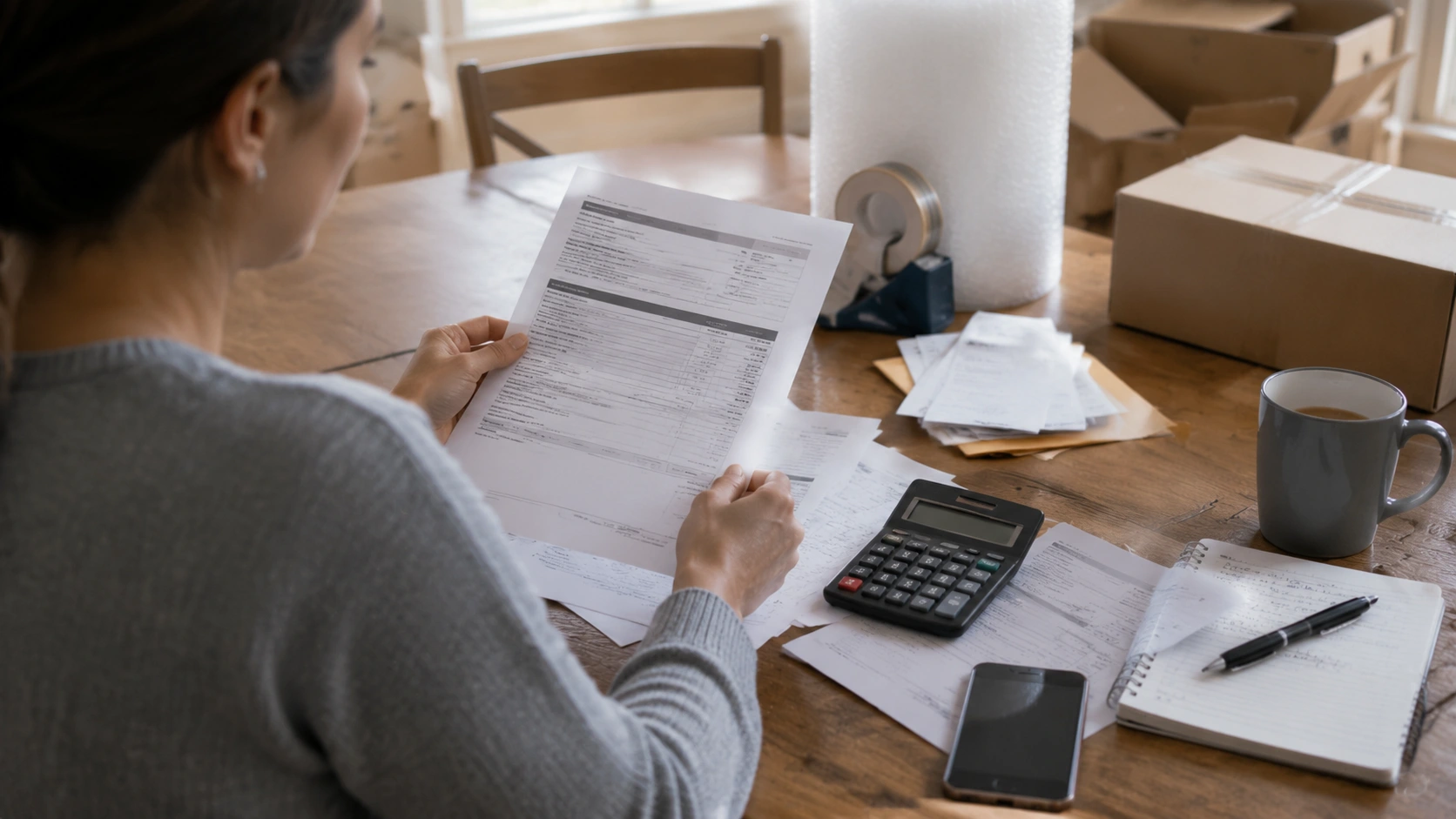
Bad weather almost always slows a move down; extra care on stairs, more trips to avoid overloading in the rain, and time spent drying off furniture before loading.
If you’re paying hourly, that added time can push your final bill higher.
It’s worth asking your moving company for a quote that accounts for possible weather disruptions, so you’re not caught off guard by the final invoice.
Quick Tip: Ask specifically whether your mover’s quote is binding or subject to change if weather extends the job.
Real-World Tips From People Who’ve Done This

People who’ve moved heavy furniture in the rain recommend covering items with moving blankets, plastic wrap, or tarps before carrying them outside.
Stretch wrap over blankets can provide enough protection for short exposure to light rain, while floor coverings help prevent water and mud from being tracked indoors.
Wearing shoes with a strong grip and moving slowly also cuts the risk of slipping.
Wet aluminum ramps can become dangerous, even when they appear textured or secure.
Drivers should travel carefully, particularly on highways, as visibility and stopping distances may be reduced.
If rain becomes heavy, roads feel unsafe, or the move can be delayed, postponing the job is often the safest choice for both people and belongings.
Final Thoughts
Knowing how to move furniture during bad weather requires preparation, careful handling, and realistic planning.
By using suitable packing materials, creating safe pathways, and knowing when to pause, you can reduce the risk of damage during rain, snow, or wet conditions.
Weather may slow down the process, but it does not have to ruin your move. A careful approach helps protect your belongings while keeping everyone involved safer.
When conditions become unpredictable, having flexible options such as storage can make the transition easier until your move is complete.
Frequently Asked Questions (FAQ’s)
1. Will movers work in heavy rain?
Most movers can handle light rain, but heavy storms, flooding, and unsafe conditions may require delaying the move to protect workers and belongings.
2. How can I protect wooden furniture during a rainy move?
First, wrap wooden furniture with moving blankets, add waterproof covers, and dry all surfaces upon arrival to prevent moisture damage and warping.
3. Should I move furniture during snow?
Moving furniture during snow is possible when pathways are safe, but heavy ice, storms, or dangerous roads may require postponing the move.
4. What should I do if it starts raining during my move?
Cover exposed furniture immediately, secure the truck, protect indoor floors, and continue moving only if conditions remain safe for everyone involved.