A bare or uneven lawn makes the whole yard look neglected, and the problem is not always poor soil or bad weather; sometimes it simply comes down to seeding it the right way.
Learning how to seed a lawn accurately makes all the difference between a yard that struggles and one that grows.
This guide covers everything, from picking the right grass seed to preparing the soil and keeping it watered.
Choosing the Right Grass Seed for Your Lawn
The wrong seed for your climate or soil is the main reason lawns fail before they even start. Here’s what actually matters:
- Climate: Cool-season grasses such as Kentucky bluegrass and tall fescue perform well in colder regions. Warm-season grasses like Bermuda and Zoysia handle heat and drought better.
- Sunlight: Full sun areas need 6+ hours of daily light. For shaded yards, fine fescue or St. Augustine is a good choice.
- Foot Traffic: Fine fescue works well for light use. For heavy use with kids or pets, tall fescue or Bermuda is a stronger option.
- Soil Type: Test the pH before seeding. Most grasses grow best between 6.0 and 7.0.
- Water Requirements: For dry climates or low-maintenance yards, drought-tolerant varieties like Bermuda or buffalo grass are ideal.
- Maintenance Level: Zoysia and tall fescue are forgiving and easy to manage. Kentucky bluegrass looks great, but demands more upkeep.
- Growth Speed: Perennial ryegrass germinates in 5–7 days for quick coverage. Kentucky bluegrass takes around 2–3 weeks.
Basic Tools and Materials Needed
You do not need expensive equipment to seed a lawn properly. Most of the tools are simple and easy to find, and they can make the whole process much smoother and less messy.
| Tools and Materials | Purpose |
|---|---|
| Grass seed | Growing new grass on the lawn |
| Garden rake | Loosening and smoothing the soil |
| Lawn spreader | Spreading grass seed evenly on large areas |
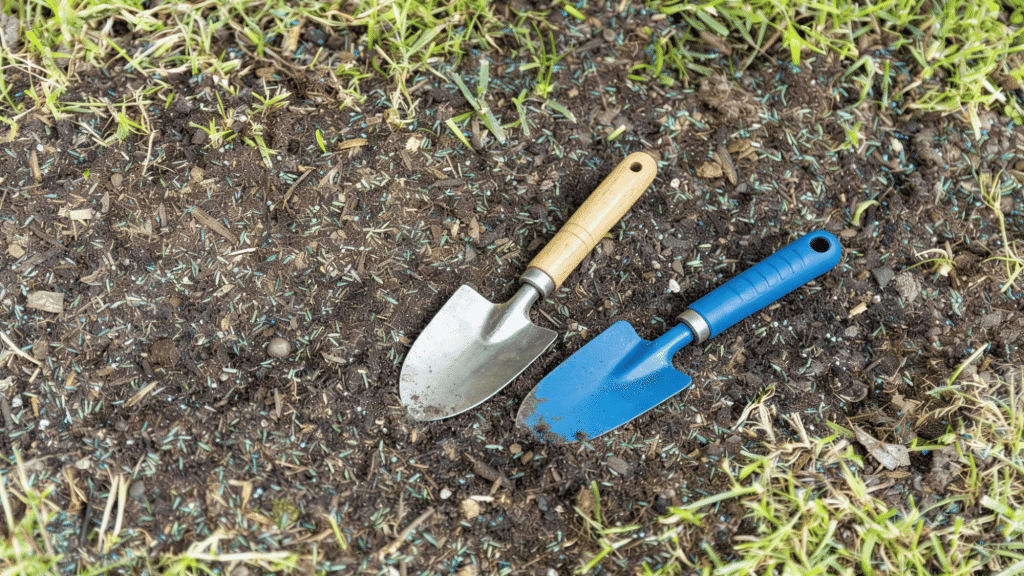
| Hand shovel | Fixing small lawn patches |
| Compost or topsoil | Improving soil quality |
| Starter fertilizer | Supporting early grass growth |
| Garden hose or sprinkler | Regular watering after seeding |
| Aerator | Loosening hard or compact soil |
| Straw or mulch | Protecting the seeds and holding moisture |
| Measuring tape | Measuring the lawn area before seeding |
How to Seed a Lawn: Step-by-Step Process
The difference between a patchy lawn and a thick one often comes down to following the right steps from the start.
Step 1: Clean the Lawn Area
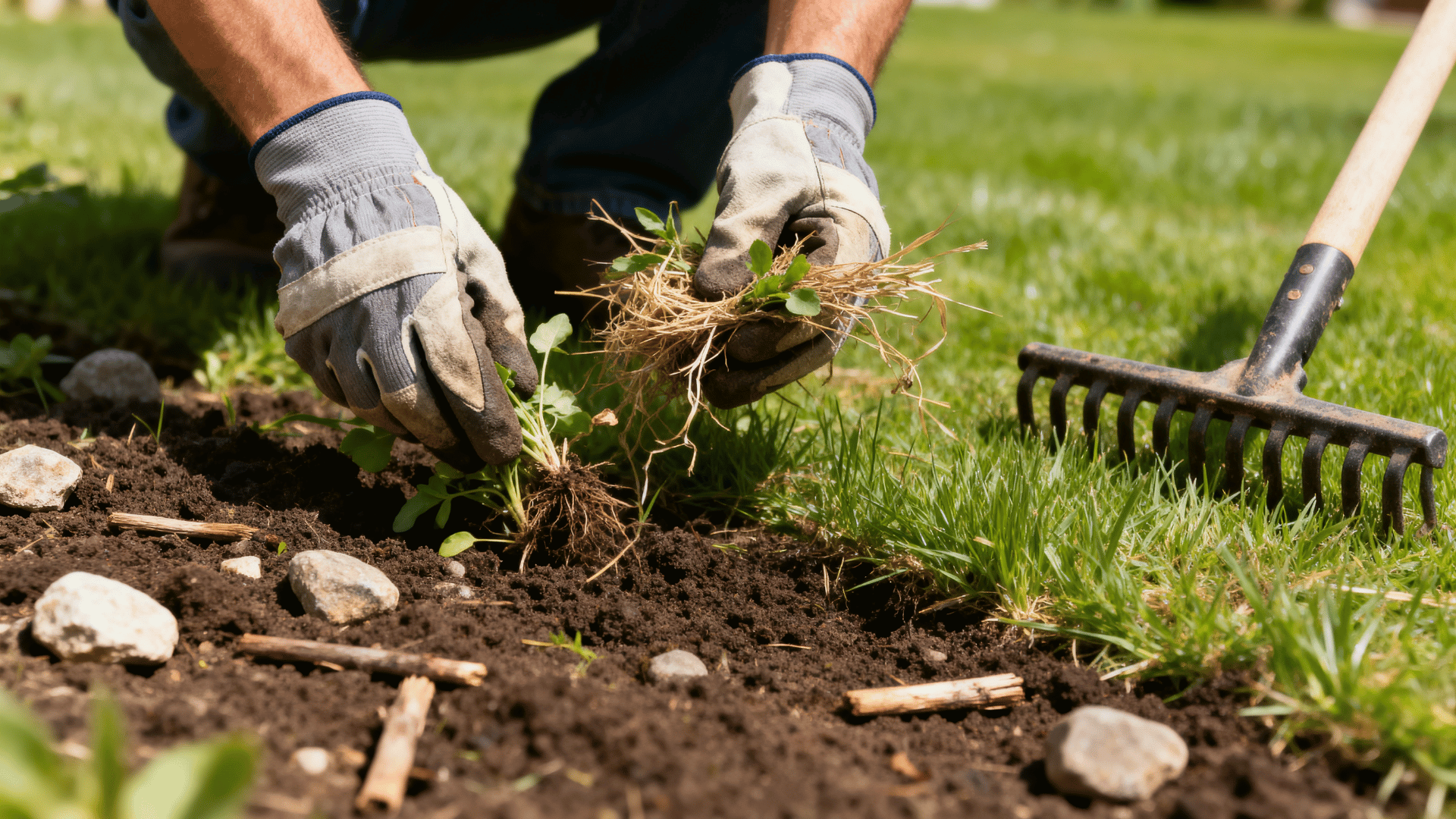
Start by removing weeds, dry grass, sticks, rocks, and any other debris from the lawn.
Weeds left in the soil will outcompete your new seedlings for water and nutrients, especially in the first few weeks when new grass is at its most vulnerable.
Clearing debris also improves seed-to-soil contact, which is critical for germination.
Step 2: Measure the Lawn
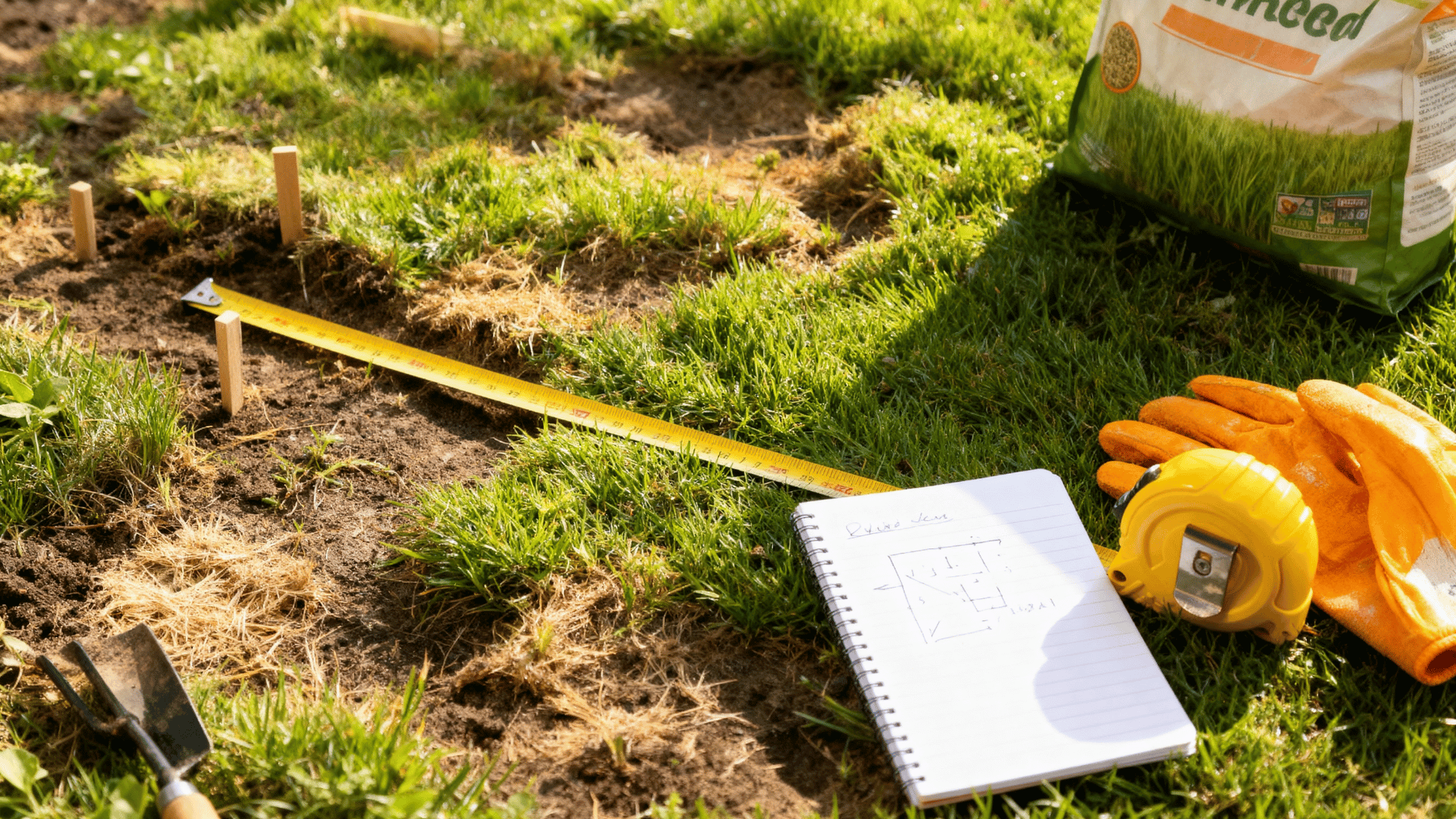
Before buying grass seed, measure the size of your lawn. Seeding rates vary by grass type; most bags specify coverage in square feet, so you need your actual measurements before you buy.
Step 3: Check and Improve the Soil
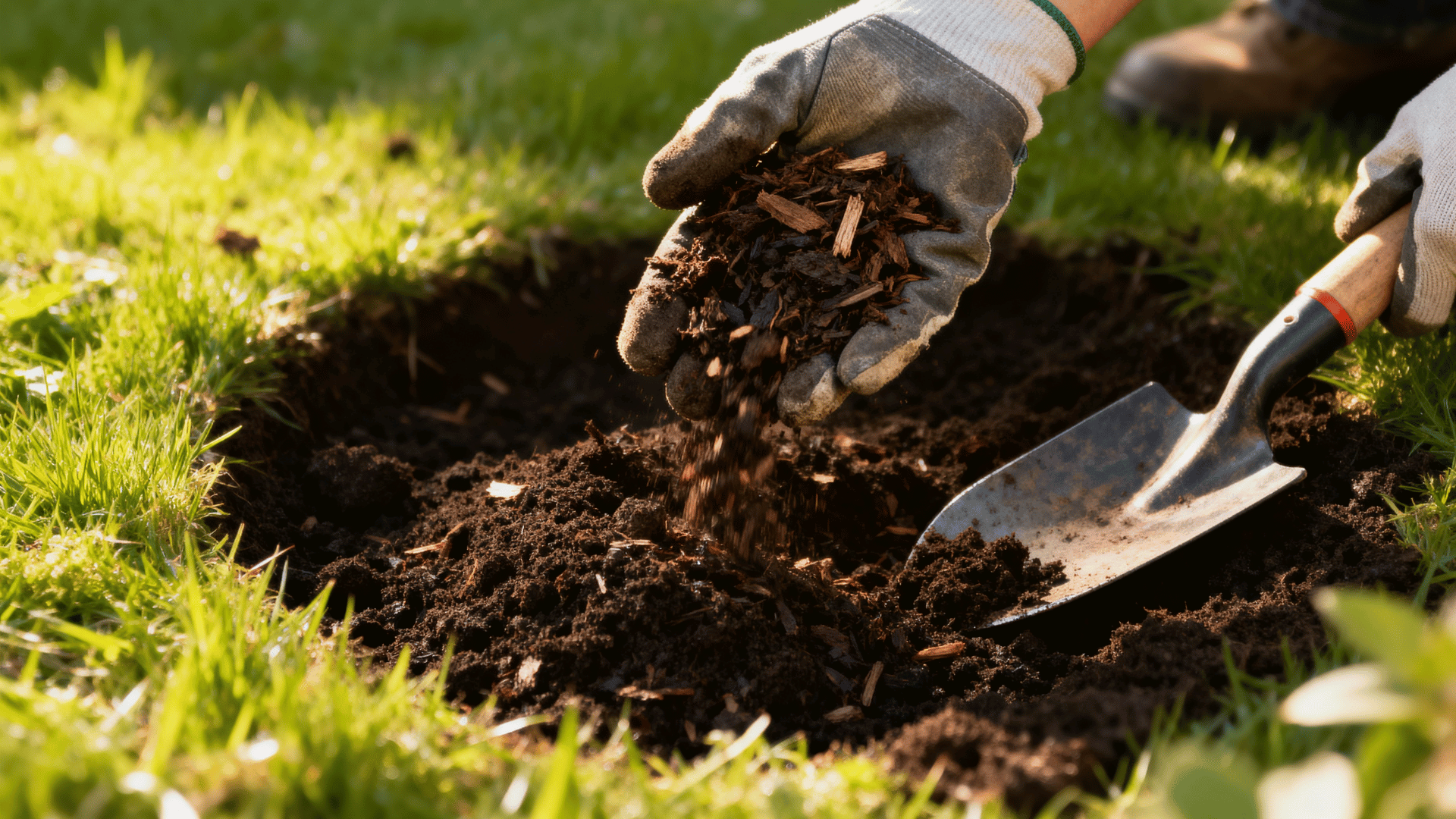
Good soil structure is the foundation of healthy grass growing. Compact, sandy, or nutrient-poor soil with the wrong pH will slow everything down and make even the best seed struggle.
Most grass seed germinates best in soil with a pH between 6.0 and 7.0.
Step 4: Loosen the Soil

Grass seeds grow better in soft soil where roots can spread easily. Use a rake to loosen the top layer of soil and smooth the surface.
If the ground feels very hard or compact, aerating the lawn can help air and water move deeper into the soil.
You’re aiming for roughly 2–3 inches of loosened topsoil, enough for roots to establish without hitting a hard layer underneath.
Step 5: Spread the Grass Seed Evenly
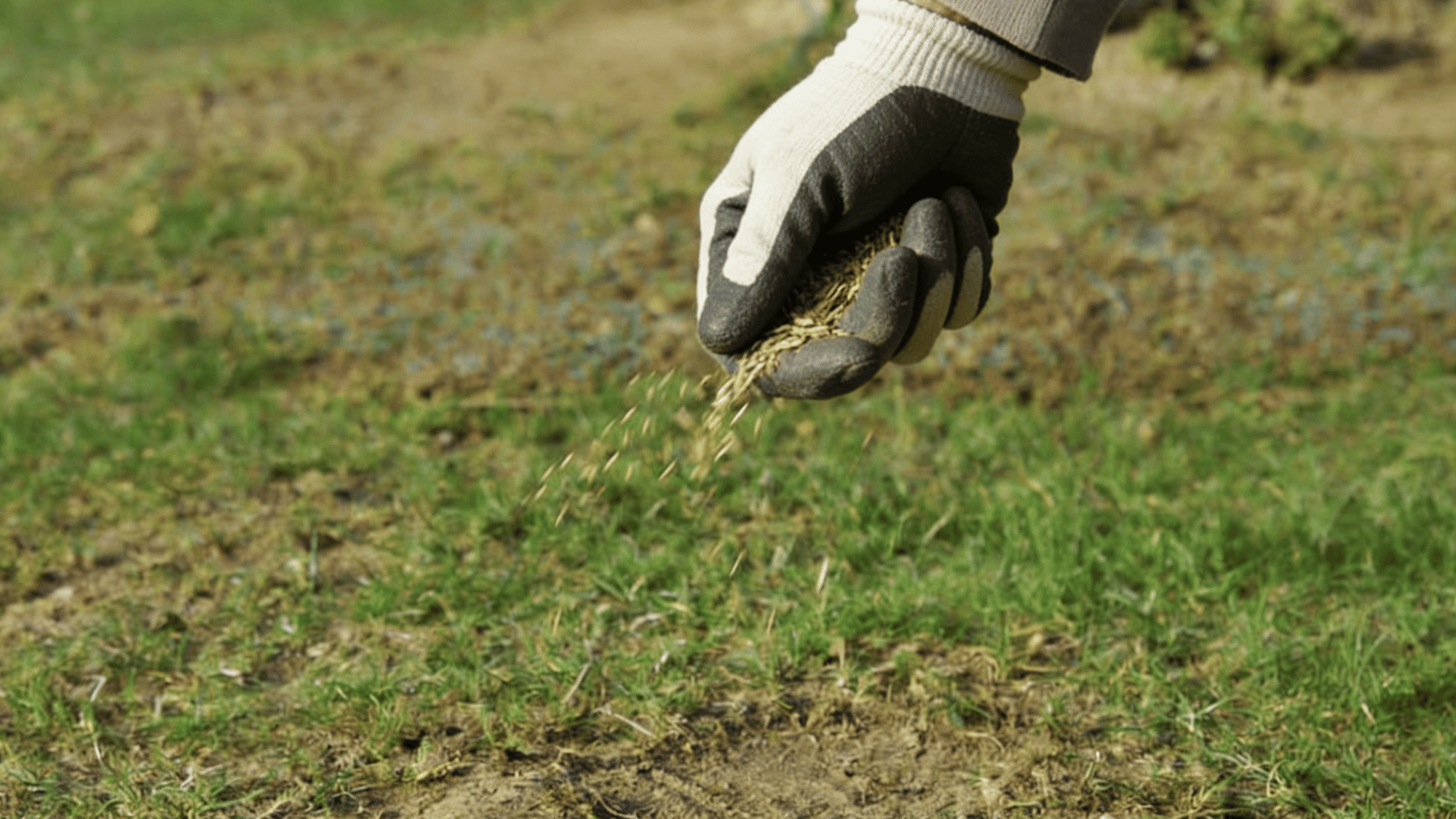
Once the lawn is ready, spread the grass seed evenly across the area. For larger lawns, a broadcast spreader can make the job easier.
Even spreading helps the lawn grow fuller without creating thick clumps in one area. Walking slowly while spreading the seed can help you cover the lawn more evenly and avoid missing small spots.
Step 6: Lightly Cover the Seeds
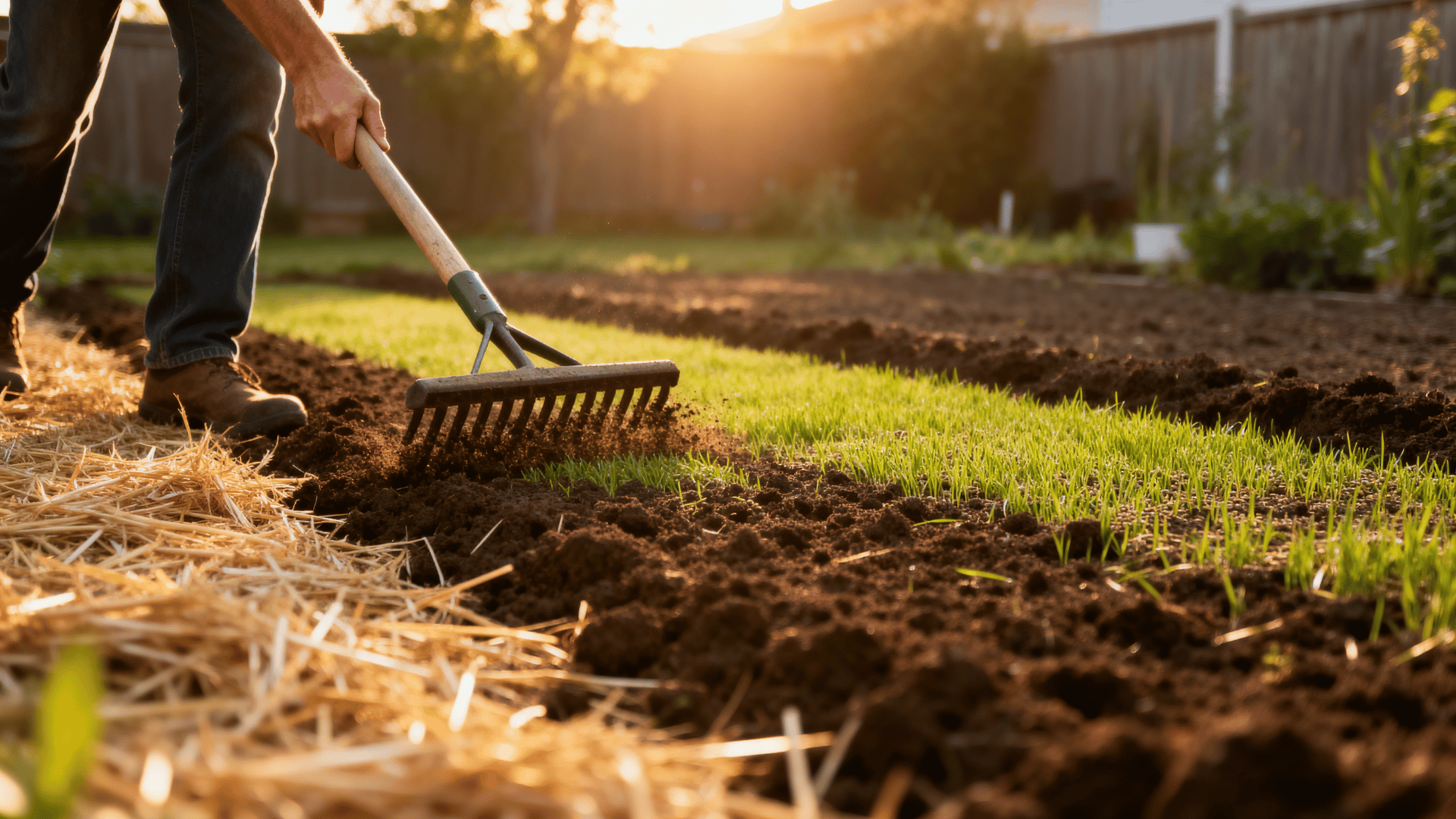
After spreading the seeds, lightly rake the soil to help the settle into the top layer. Do not bury them too deep because they still need sunlight and air to grow.
Covering the seeds lightly also helps stop them from drying out too quickly during warm weather. A thin protective layer can give the seeds a better chance of staying in place as they begin to grow.
Step 7: Water the Lawn Carefully
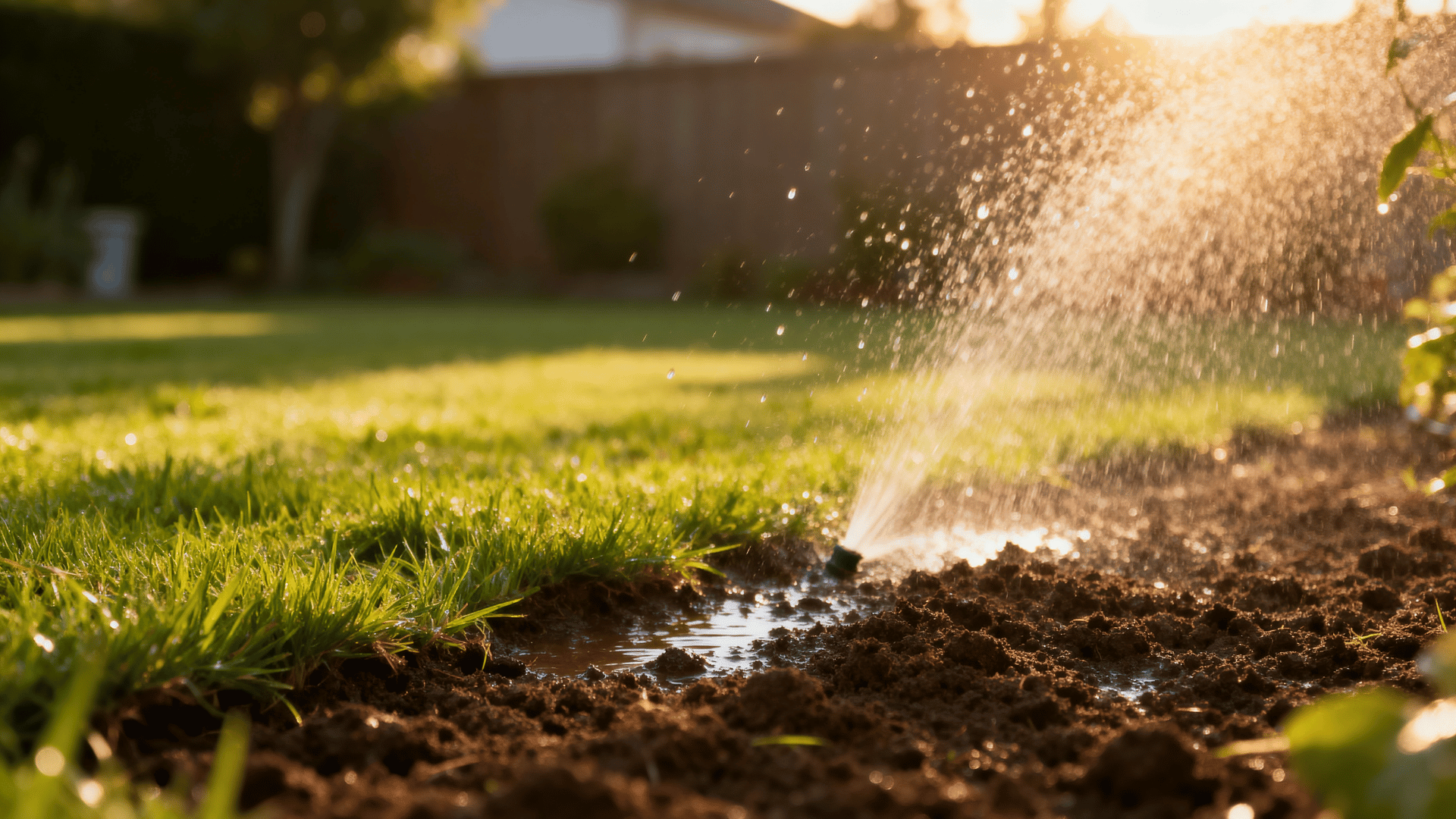
Right after seeding, water lightly; you want the top inch of soil consistently damp, not soaked
Consistent moisture is critical in the early stages of grass growing, especially during the first two weeks.
Light watering once or twice a day works well early on, and once germination starts, shifting to deeper, less frequent watering helps roots grow down stronger.
Planting Techniques for Even Grass Growth
Even with the right seed and prepared soil, technique during the actual seeding matters. These are the ones that consistently produce more uniform results:
1. Seed in Two Directions: Spread half the grass seed while walking in one direction and the other half while walking across the lawn in the opposite direction. This helps distribute the seed more evenly and reduces patchy areas.
2. Press Seeds Into the Soil: After seeding, lightly press the seeds into the soil using a lawn roller or by gently compacting the surface.
3. Keep the Soil Consistently Moist: New grass seed needs steady moisture to grow evenly. Water lightly and regularly so the soil stays damp but not soaked during the germination period.
4. Overseed Thin or Bare Areas: Areas with weak grass growth should be seeded separately with extra attention. Adding more seed to thin patches helps create a fuller and more uniform lawn.
5. Avoid Early Mowing: Do not mow the lawn too soon after planting. Wait until the grass reaches the recommended height so the young roots can establish properly without damage.
Simple Tips Worth Following
Seed and soil aside, these are the things most people skip.
- Prepare the soil properly before seeding so the grass roots can grow easily.
- Choose grass seed that matches your local weather, sunlight, and soil conditions.
- Seed the lawn during mild weather, especially in spring or early fall, to promote better grass growth.
- Spread the grass seed evenly so the lawn does not turn patchy or overcrowded.
- Lightly cover the seeds with soil or straw to protect them from wind, birds, and heavy rain.
- Keep the soil slightly moist during the early days so the seeds do not dry out.
- Avoid walking or mowing on newly seeded areas until the grass has become established.
Wrapping it Up
Knowing how to seed a lawn well comes down to preparation, timing, and not overthinking watering.
Get the soil right, pick the correct seed for your climate, water consistently for the first few weeks, and stay off it while it establishes. That’s genuinely most of it.
If your lawn has been patchy for a while, early fall is the best window to fix it, and you now have everything you need to do it right.
Frequently Asked Questions
Can I Seed a Lawn Without Aerating?
Yes, you can. Aerating is helpful for hard or compact soil, but it is not always necessary for every lawn.
How Often Should I Water New Grass Seed?
New grass seed should be watered lightly once or twice a day to keep the soil moist. Avoid letting the soil dry out during the early growing stage.
Can You Walk on Newly Seeded Grass?
It is best to avoid walking on newly seeded grass until it becomes stronger. Too much foot traffic can damage young grass and stop it from growing evenly.