Bathrooms have a habit of being the coldest-feeling room in the house. It makes sense when you think about it: they’re usually the smallest space, dominated by hard, reflective surfaces like porcelain, tile, chrome, and glass. Everything is chosen to be wipeable and waterproof, and the result can feel more like a clinic than a corner of your home.
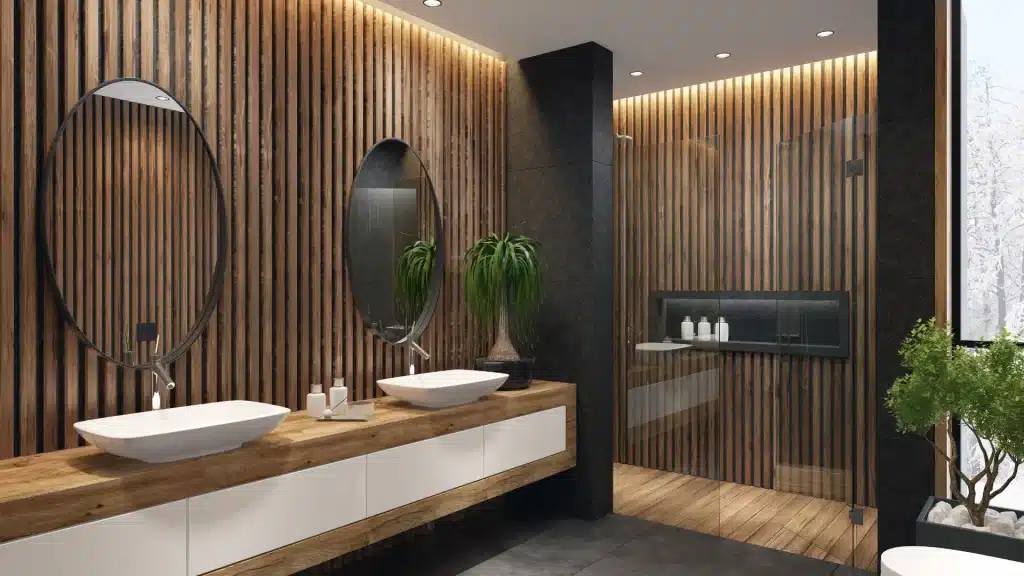
The good news is that you don’t need a full renovation to change that. One of the easiest ways to soften a bathroom is to introduce natural wood. Wood brings texture, warmth, and a lived-in quality that instantly balances out all that cool ceramic and metal. And because bathrooms are small, even one or two wooden pieces can shift the whole feel of the room.
Here are some of the simplest places to start.
Start with Open Wooden Shelving
Floating wooden shelves are probably the fastest win in any bathroom. A single shelf above the toilet or beside the mirror gives you somewhere to display rolled towels, a small plant, a candle, or a jar of cotton pads, and the wood grain immediately breaks up an expanse of tile or painted wall.
If you’re handy, this is a lovely afternoon DIY. A length of oak or reclaimed scaffold board, a pair of brackets, and a coat of water-resistant finish is all it takes. Choose a matte or satin sealant rather than a high gloss so the wood keeps its natural, tactile look.
Swap Plastic Fittings for Wooden Ones
Once you start looking, you’ll notice how much plastic hides in a typical bathroom: the bin, the toilet brush holder, the soap dispenser, the toilet seat. Each one is an opportunity to trade something clinical for something warmer.
The toilet seat is the swap most people overlook, but it’s arguably the one with the biggest visual impact, simply because of its size. Replacing a standard white plastic seat with a wooden toilet seat changes the character of the whole fixture. A stained mahogany or natural pine finish reads as traditional and cottage-like, while a painted or whitewashed wooden seat suits coastal and farmhouse schemes beautifully. Wooden seats also tend to feel more solid and substantial than lightweight plastic, and they’re noticeably less cold to the touch on winter mornings, which is a small luxury you’ll appreciate daily.
When you’re choosing one, check the shape of your pan first, since D-shaped, round, and square pans all need different seats, and look for adjustable hinges so you can get a snug fit. Measure the width, length, and the distance between the fixing holes before you buy. Five minutes with a tape measure saves a return trip.
Bring in a Wooden Stool or Bench
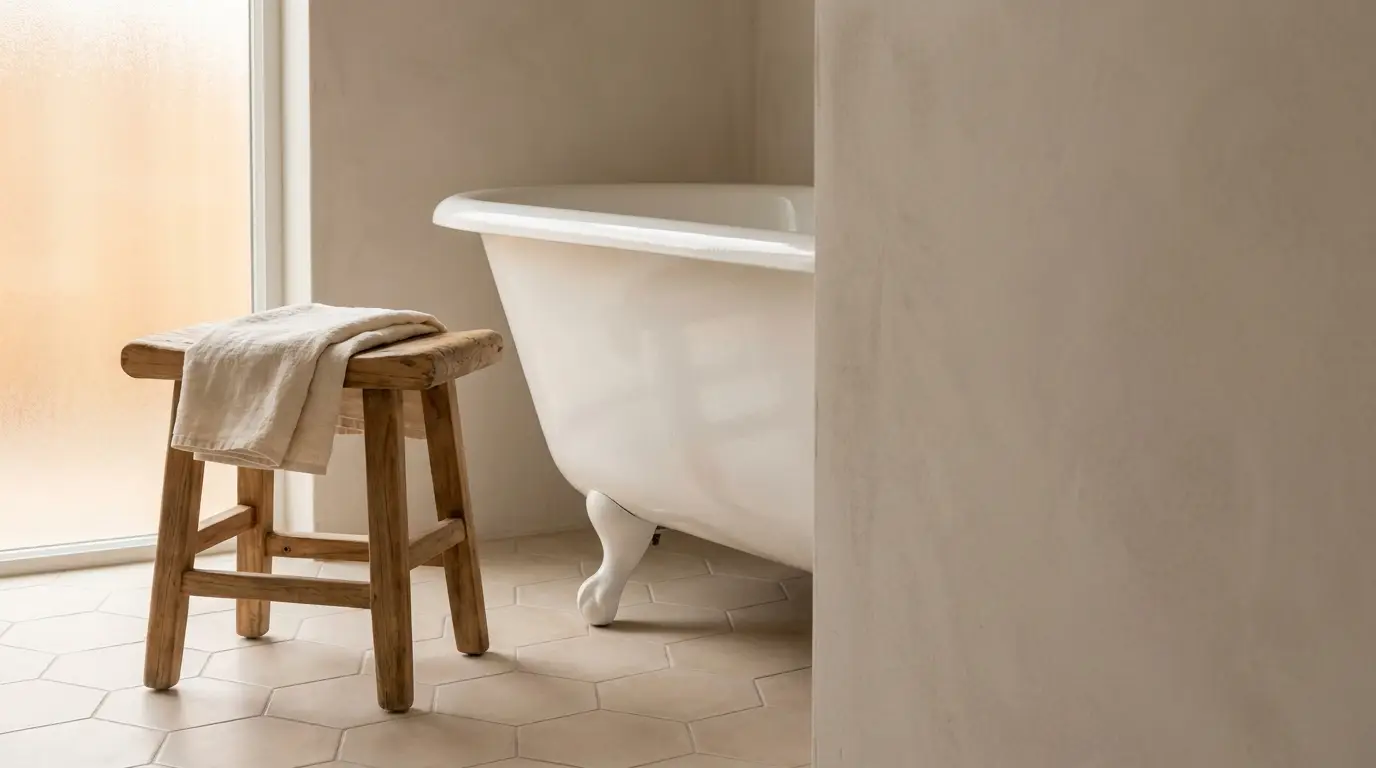
A small wooden stool is one of the most versatile bathroom accessories there is. Tucked beside the bath, it holds a book and a cup of tea. Next to the shower, it’s a spot for a towel. Under the sink, it becomes a step for little ones learning to brush their teeth.
Look for teak or acacia if the stool will regularly get splashed. Both are naturally oily hardwoods that handle moisture well, which is why they’re the classic choice for outdoor furniture and spa benches. A vintage milking stool or a simple three-legged stool from a charity shop can work just as well with a coat of exterior-grade varnish.
Add Warmth Underfoot
Cold tile underfoot is half of what makes a bathroom feel unwelcoming. A teak bath mat (the slatted kind you see in spas) is a durable, quick-drying alternative to fabric mats, and it looks far more intentional. If you prefer something softer, a woven jute or seagrass mat adds a similar natural texture, just keep it away from the splash zone.
Don’t Forget the Small Stuff
The finishing touches matter more in a bathroom than almost any other room, because everything is at close range. A bamboo soap dish, a wooden-handled toilet brush, a small oak tray to corral bottles on the vanity, wooden-lidded storage jars for cotton buds: none of these costs much, but together they build a consistent, layered look.
One styling tip: try to repeat the same wood tone two or three times around the room rather than mixing many different finishes. If your shelf is warm honey oak, echo that in the mirror frame or the bath mat. Repetition is what makes the scheme look designed rather than accidental.
A Quick Word on Caring for Wood in a Bathroom
Wood and water can absolutely coexist. They just need a little consideration:
- Ventilate. Run the extractor fan or crack a window after showers so moisture doesn’t sit in the air.
- Seal. Any raw or DIY wooden pieces should get a water-resistant finish (a satin polyurethane or a hardwax oil both work well).
- Wipe, don’t soak. Clean wooden surfaces with a damp cloth and mild soap rather than spraying harsh chemicals directly onto them.
- Refresh occasionally. Oiled woods like teak benefit from a light re-oil once or twice a year to keep their colour rich.
With that small amount of care, wooden pieces will genuinely last for years, often longer than their plastic equivalents, and they age gracefully rather than yellowing or cracking.
The Takeaway
You don’t need to rip anything out to make a bathroom feel warmer. Start with one wooden element, whether that’s a shelf, a stool, or a new seat, and build from there. Each natural texture you add chips away at that cold, clinical feeling until, almost without noticing, you’ve turned the most functional room in the house into one of the cosiest.