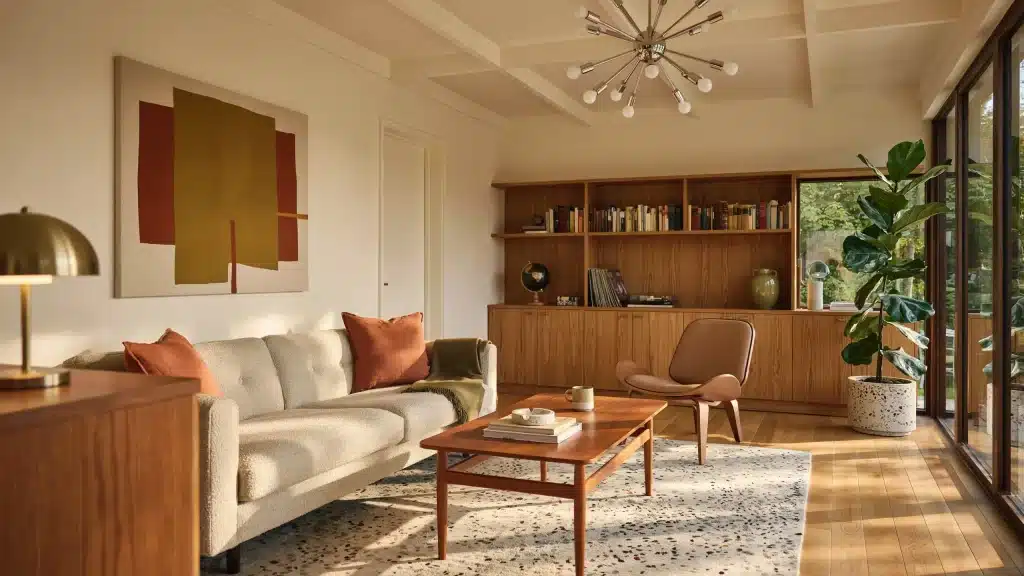
Mid-century modern interior design looks simple, but getting it right in your home can be tricky.
Design lovers everywhere run into this same problem. They admire the clean lines and warm wood tones they see online, but their living room ends up looking like a furniture showroom rather than a home.
Nobody needs a big budget or a design degree to get this style right.
Read on to know a few simple, practical ideas that bring real mid-century charm into any space, without the guesswork.
What is Mid-Century Modern Interior Design?
Mid-century modern design blends form and function into one clean, timeless look. It began decades ago and still shapes how people decorate their homes today.
The style grew after World War II, between the 1940s and 1960s, when architects and designers wanted homes that felt open, practical, and connected to nature.
Clean lines, organic shapes, and natural materials sit at the heart of this look, and function always comes first, but warmth never gets lost along the way.
Unlike contemporary design, which changes with trends, or modern design, which often leans toward the cold and minimal, mid-century modern stays warm, wood-heavy, and rooted in its own era.
It feels fresh, yet familiar, and fits both small apartments and large family homes with ease.
Signature Elements Found in Every Mid-Century Modern Home
Certain features recur in this style, no matter whose home you walk into. Each element works together to create that familiar, welcoming look.
- Clean, uncluttered layouts: Rooms stay open and tidy, with only what’s needed and nothing more.
- Organic shapes: Furniture often blends soft curves with sharp lines, giving each piece a sense of personality.
- Sculptural furniture: Chairs and tables double as art, offering both use and visual charm.
- Warm wood tones: Walnut and teak show up on floors, furniture, and walls, adding a cozy feel.
- Intentional décor: Every piece placed serves a clear purpose; nothing sits there just for show.
- Natural light: Big windows let sunlight in, making rooms feel open and connected to the outdoors.
- Indoor plants: Plants add life and color without breaking the calm, simple look.
- Simplicity meets comfort: The style never feels bare or busy, striking a comfortable middle ground.
Mid-Century Modern Living Room Ideas
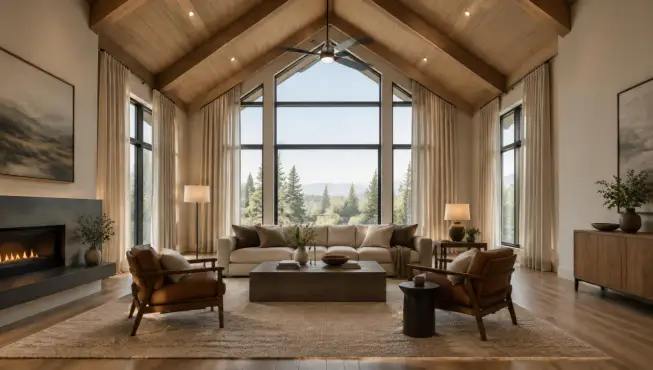
The mid- century modern interior design for the living room is where this style really shines. A few smart choices can turn any space into a warm, welcoming spot that still feels sharp and put together.
1. Low-Profile Sofas
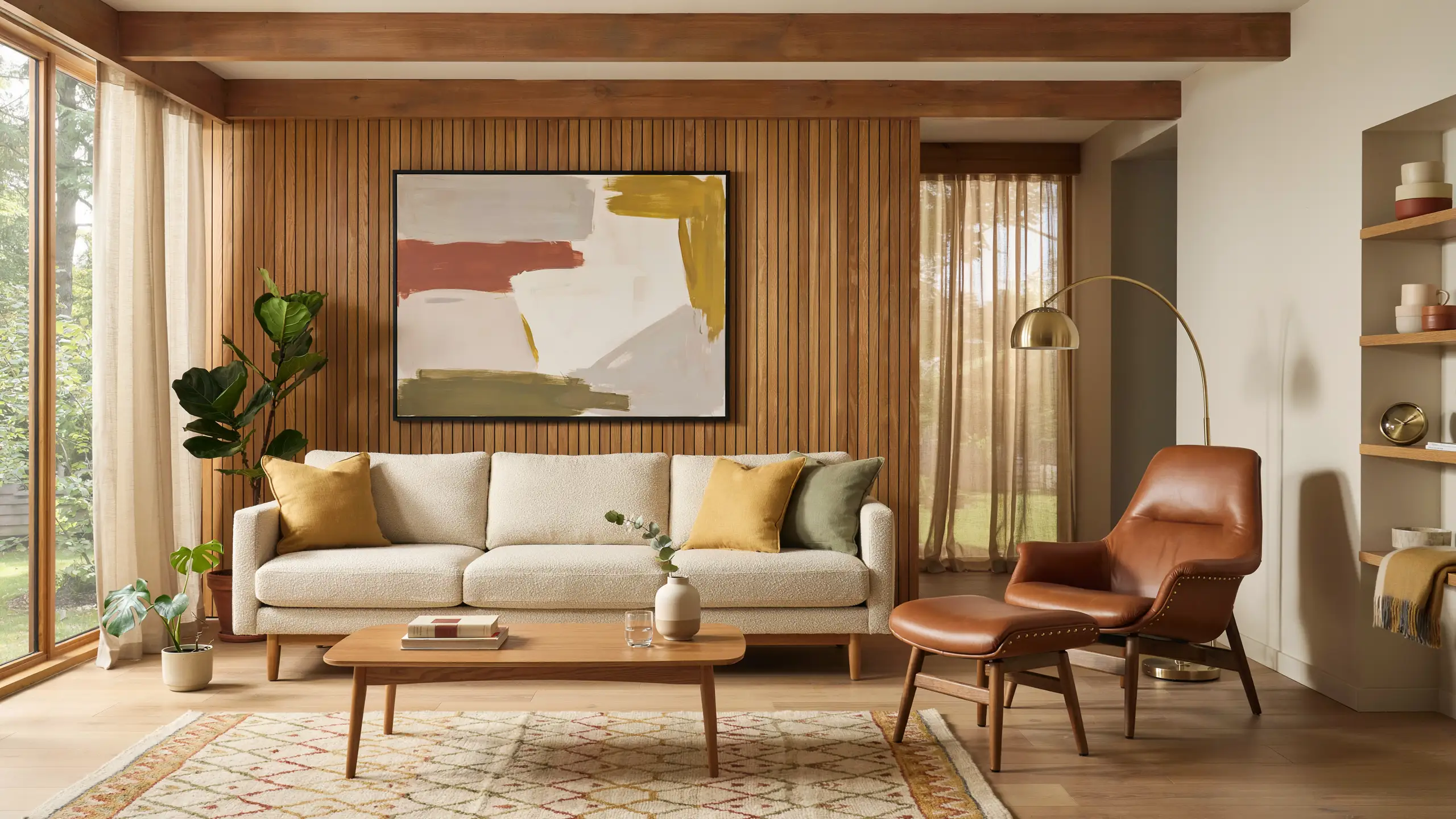
Sofas with low arms and slim legs keep the room feeling open. They sit closer to the ground, which gives the whole space a relaxed, grounded feel.
Tapered wood legs are a common feature and add a light, airy look rather than a heavy, boxed-in one. These sofas also make ceilings feel higher, since less bulk sits between the floor and eye level.
2. Floating Media Units
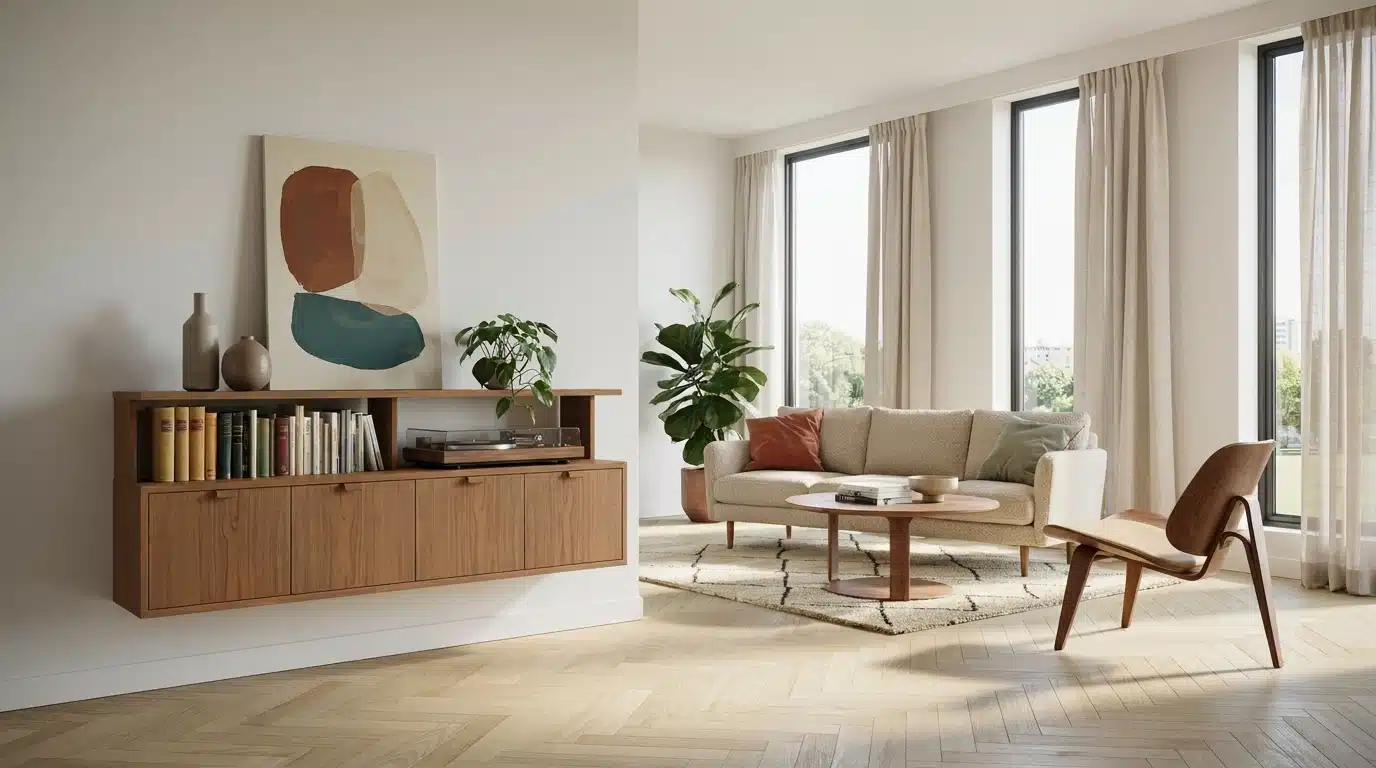
Wall-mounted media units skip bulky legs and clutter underneath. This keeps floors visible and the room looking lighter overall.
Since the unit hangs above the ground, cleaning underneath becomes much easier, too. These units also work well in smaller rooms, where every inch of floor space matters.
3. Wood Slat Feature Walls
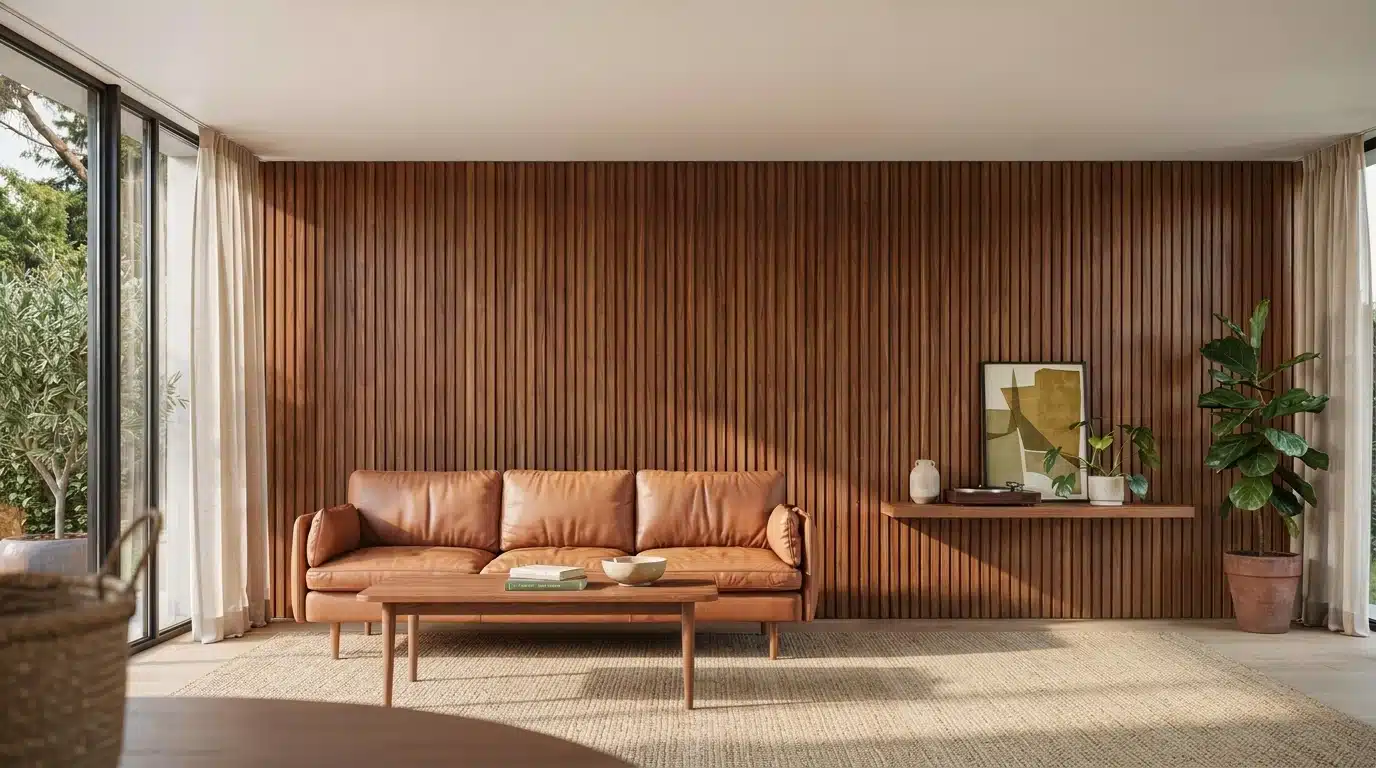
A wall covered in vertical wood slats adds texture without adding busy patterns. It works well behind a sofa or couch or TV as a simple focal point.
The slats often run floor to ceiling, and warm tones like walnut or oak bring out the natural grain in the wood. This kind of wall also helps hide wiring or wall imperfections in a clean, stylish way.
4. Layering Textures without Clutter
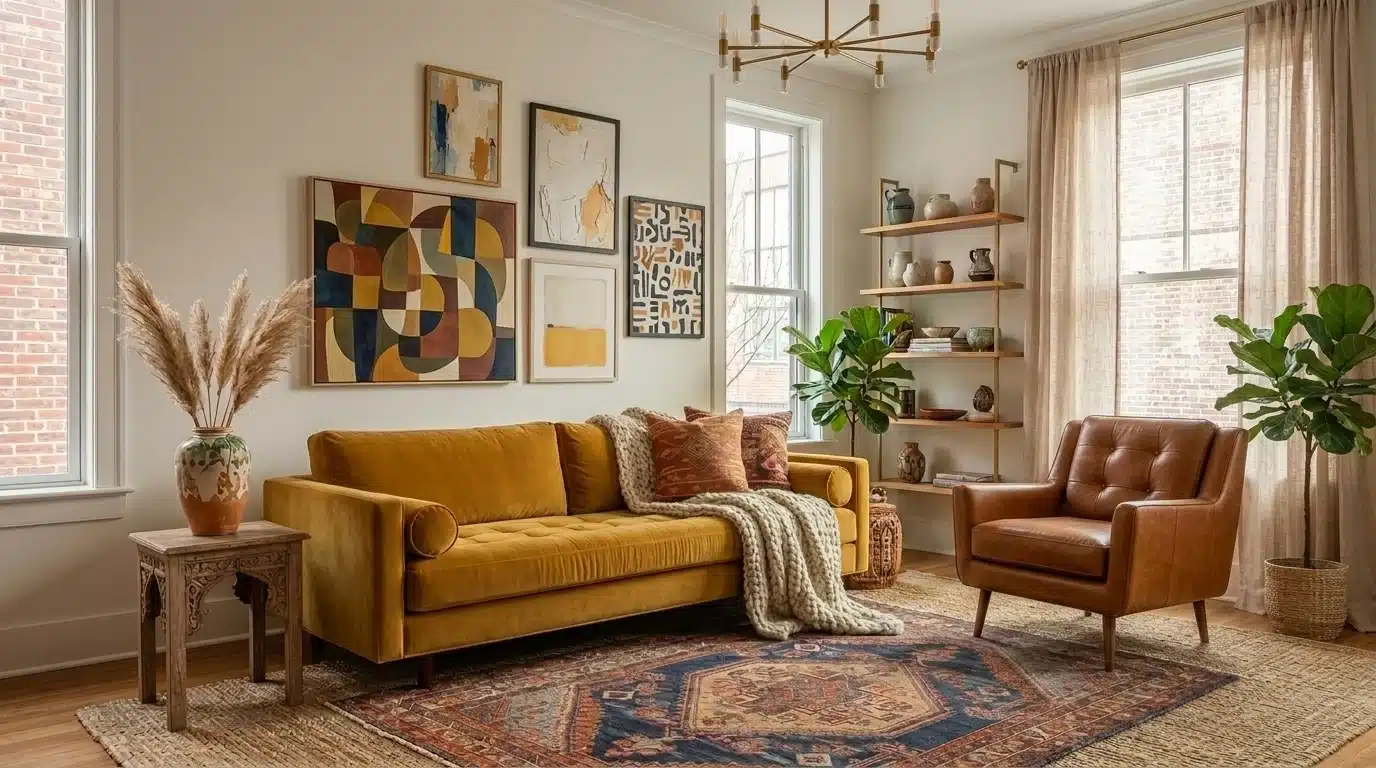
Mixing materials like wool, leather, and wood keeps a room interesting. The trick is to layer just enough, so the space feels rich but never crowded.
A leather chair next to a wool throw, or a wood side table beside a woven basket, brings depth to the room. Sticking to two or three textures at a time helps keep the room from feeling too busy.
5. Vintage-Inspired Lighting
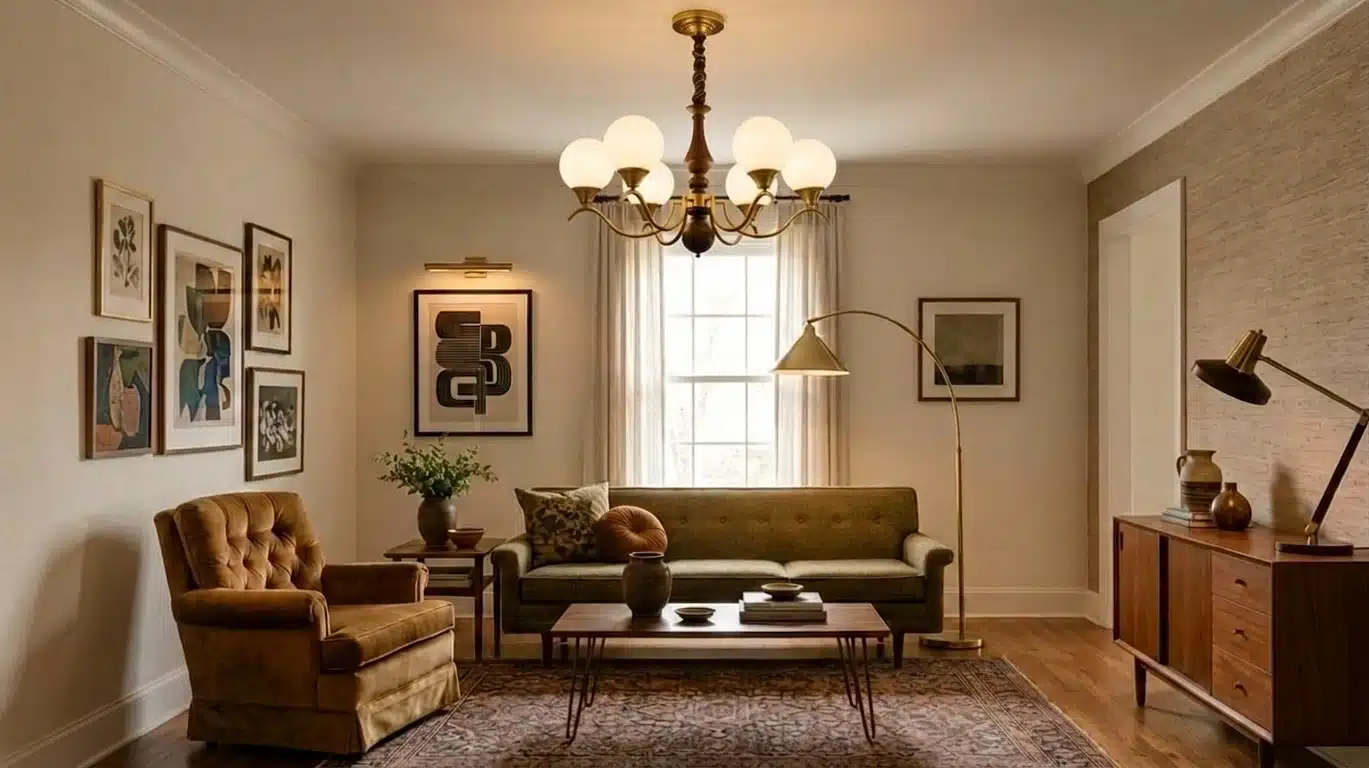
Lamps with brass arms or globe shades bring old-school charm into a modern room. These fixtures often become a quiet talking point on their own.
Arc floor lamps, in particular, work well over a low sofa or lounge chair, since they add height without taking up floor space.
6. Open Shelving Displays
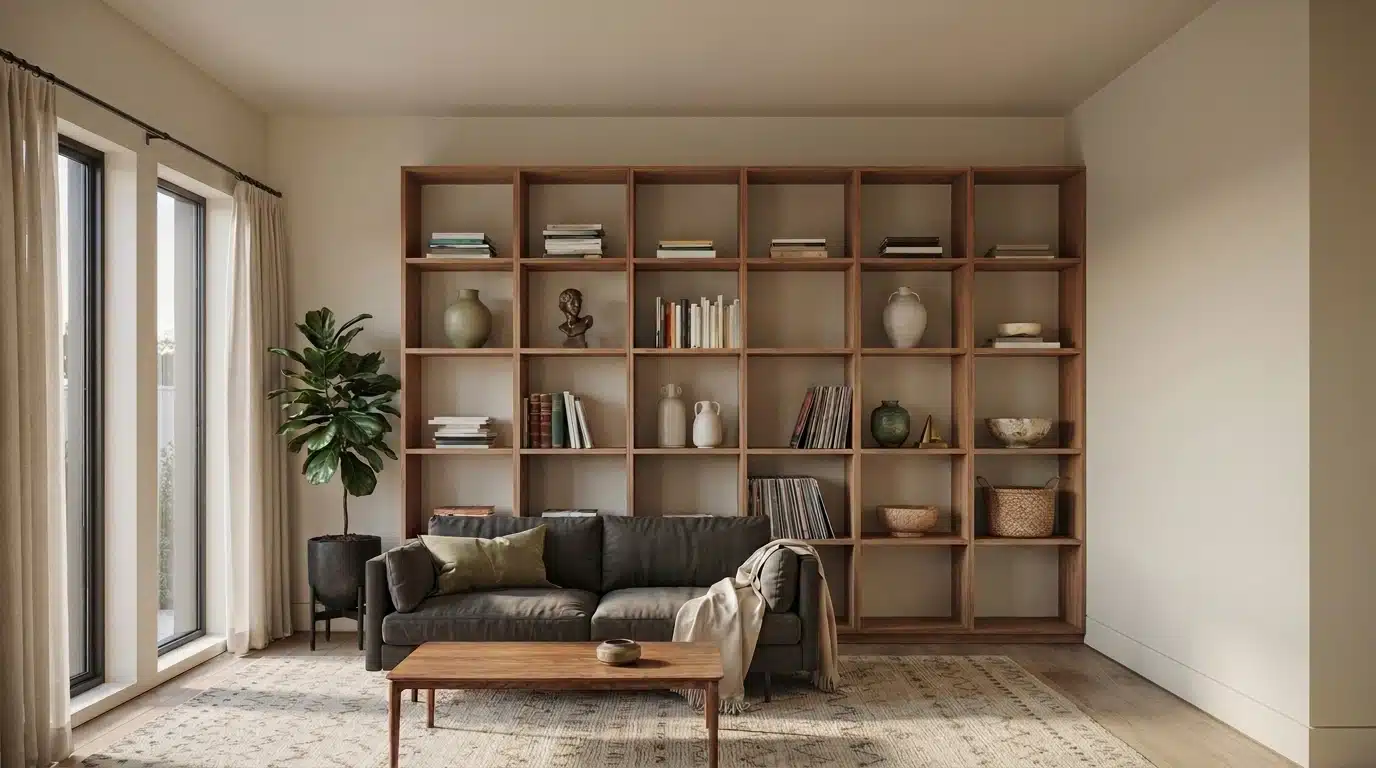
Open shelves let books, plants, and small objects breathe. This keeps storage simple and gives the room a lived-in, personal touch.
Unlike closed cabinets, open shelves force a bit of thought into what gets displayed, which often results in a cleaner overall look. Leaving some space on each shelf also helps the whole thing feel calm instead of packed.
7. Black and White Living Room
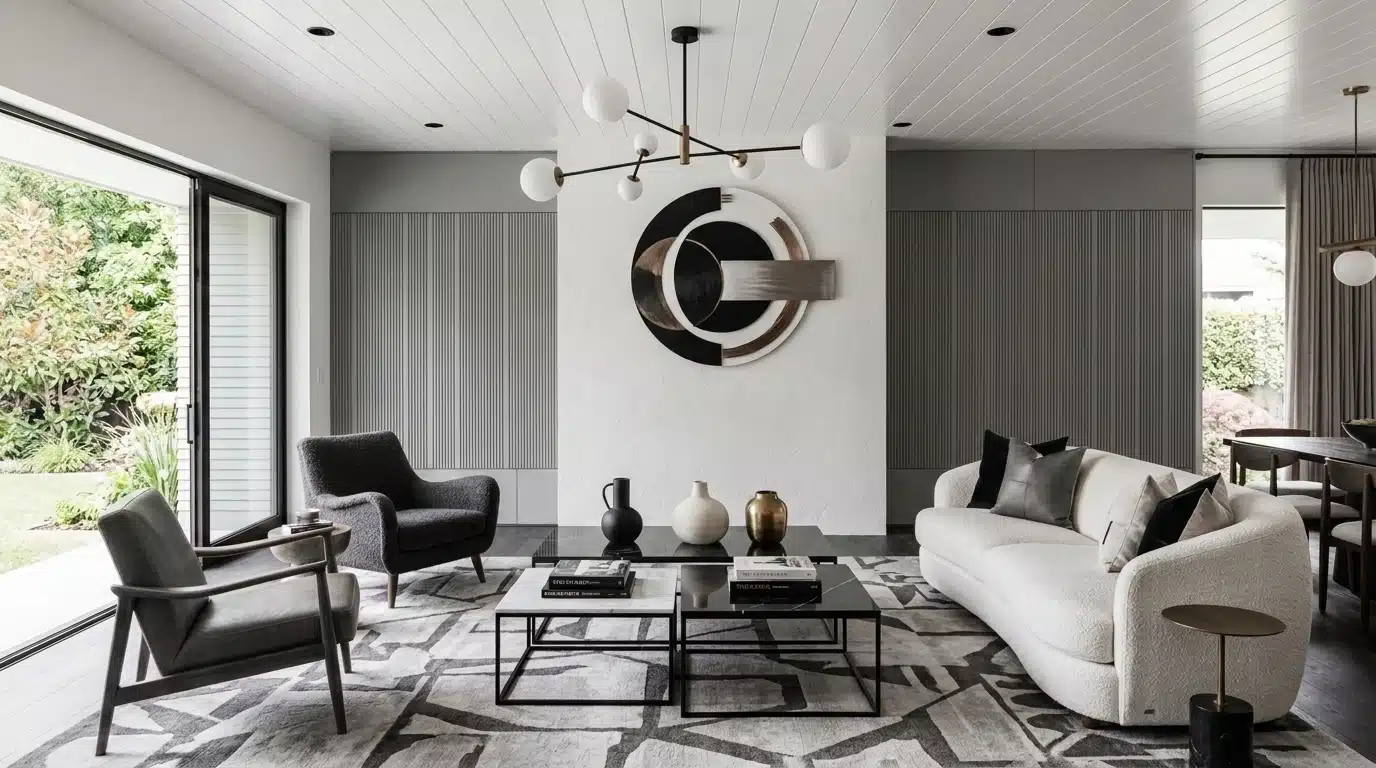
A black-and-white color scheme brings sharp contrast to a mid-century space. White walls and ceilings keep the room feeling bright and open, while black furniture legs or frames add a bold, grounded edge.
A black-and-white base also makes it easy to add one bright accent color later without the room feeling too busy.
8. Modest Furnishings
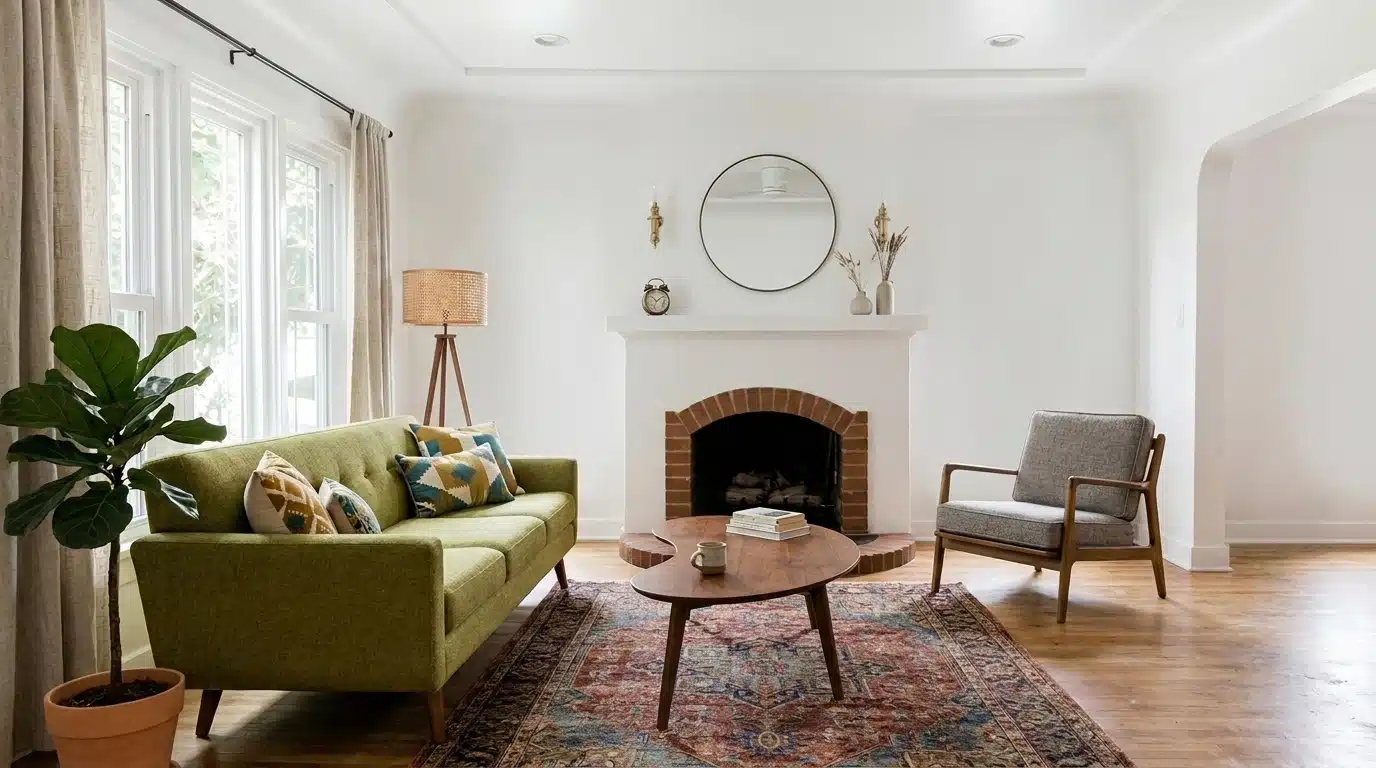
This mid-century modern interior design never calls for a room full of furniture. A sofa, one or two chairs, and a simple side table are often enough to fill a living room well.
Fewer pieces mean more space to move around, and each item gets more attention on its own.
Choosing furniture with a clear purpose, rather than filling gaps just to fill them, keeps the whole room feeling calm and easy to live in.
Mid-Century Modern Kitchen Ideas
Kitchens in this style stay warm and simple. A few key choices bring that classic look into any cooking space.
9. Walnut Cabinetry
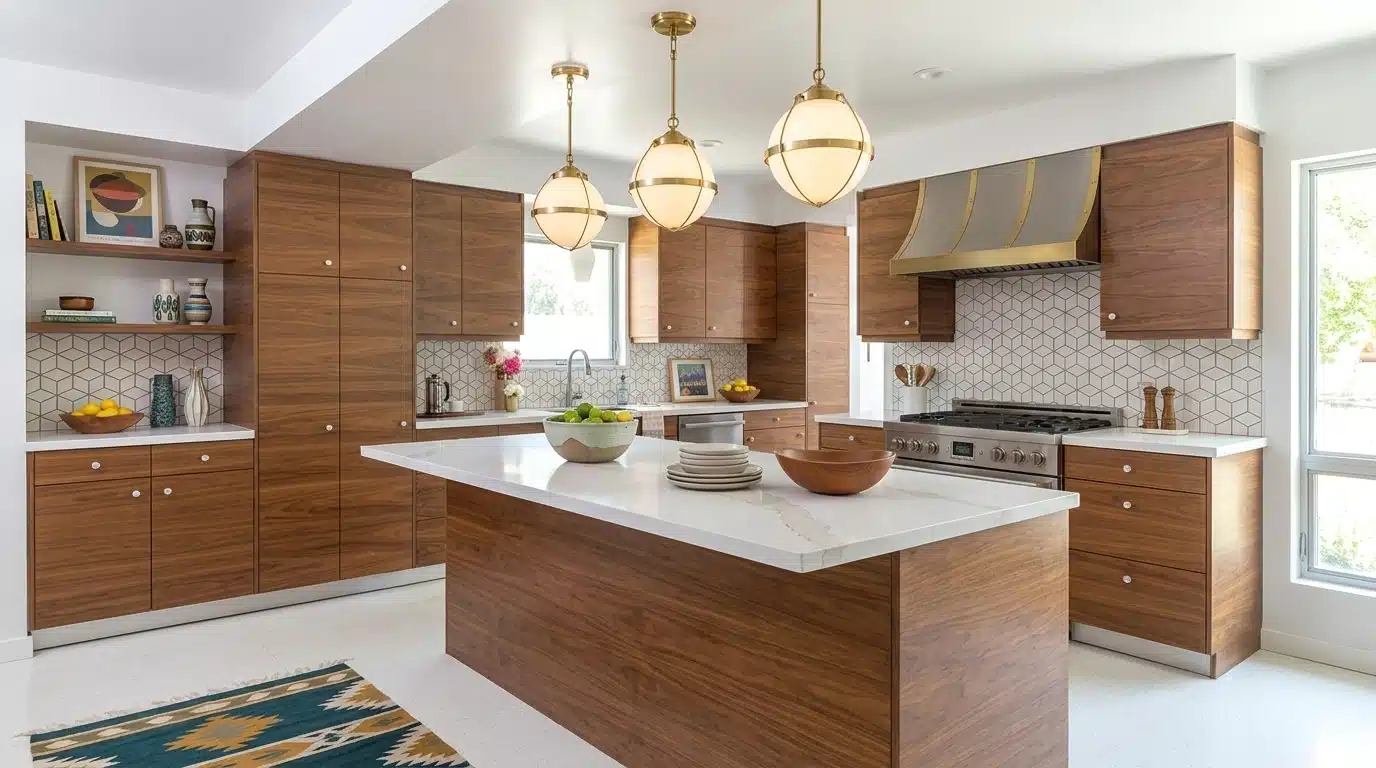
Walnut cabinets bring rich, warm tones into the kitchen. The wood grain adds natural texture without needing extra decoration.
This wood also pairs well with lighter walls, keeping the space balanced. Over time, walnut also develops a deeper color, adding even more character to the space.
10. Flat-Panel Cabinet Doors
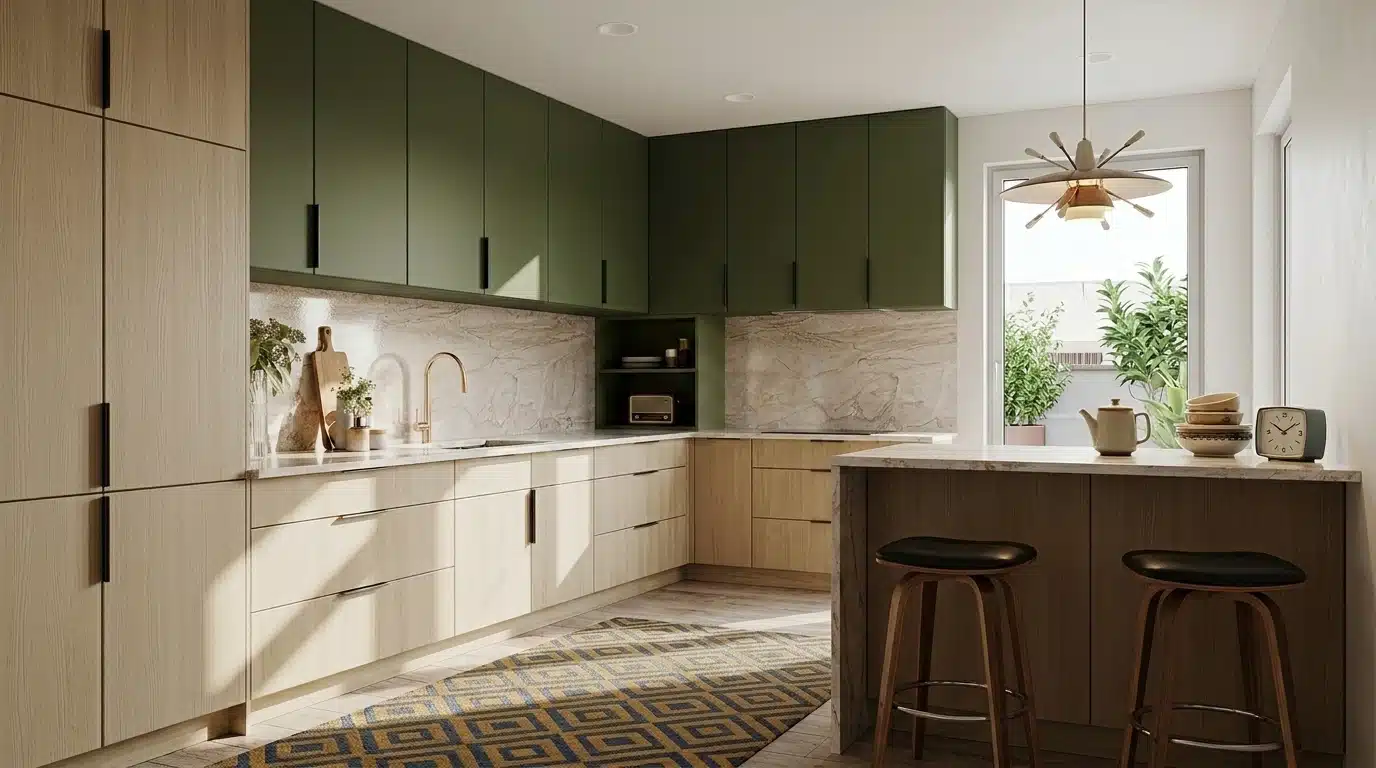
Flat, simple cabinet doors skip fussy details and carvings. This clean look keeps the kitchen feeling tidy and modern.
Slim handles or built-in grooves work well with this style. The simple shape lets the wood grain or paint color stand out on its own.
11. Terrazzo Countertops
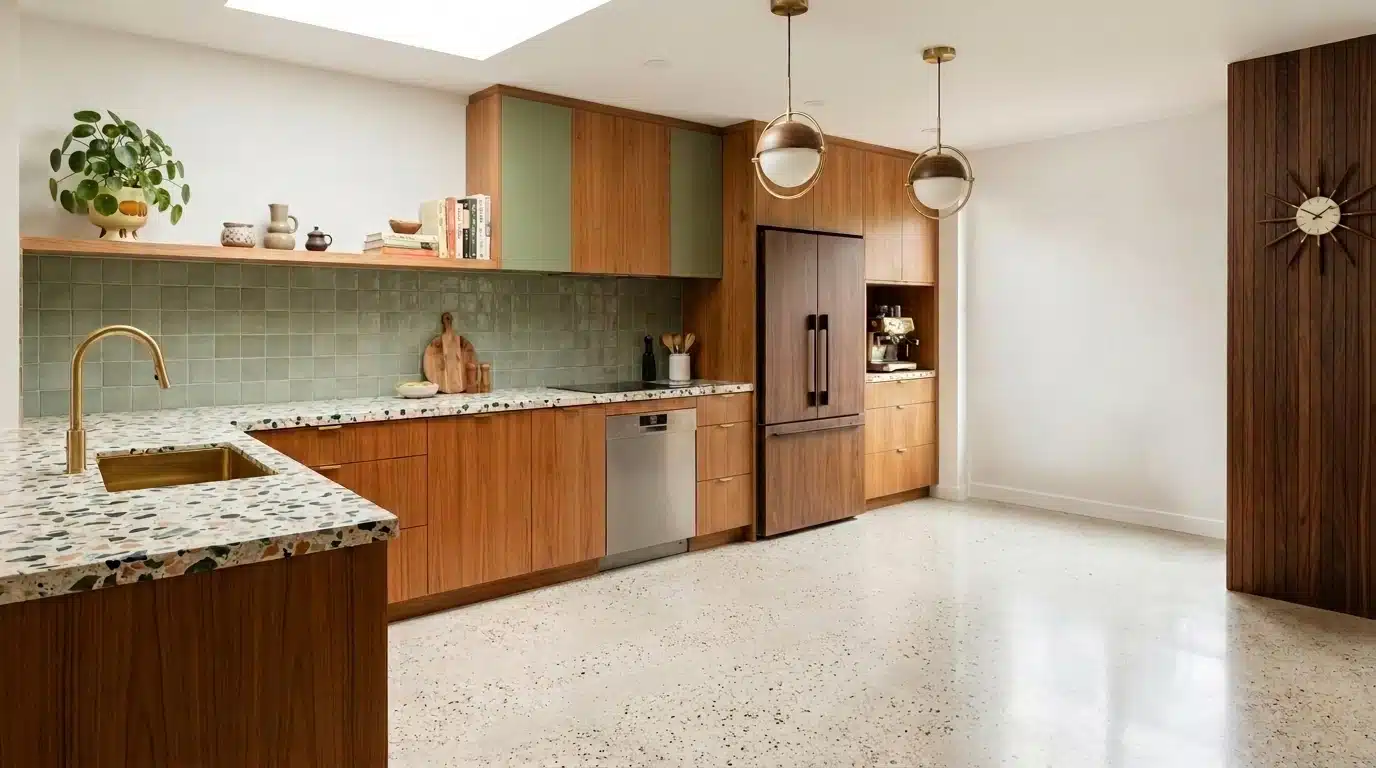
Terrazzo brings a speckled, playful texture to plain counters. It works well as a contrast against solid wood cabinets. This material also adds a bit of color without feeling too bold.
Terrazzo comes in many color combinations, so homeowners can pick flecks that match other colors in the kitchen, like brass hardware or a mustard backsplash.
12. Compact Kitchen Islands
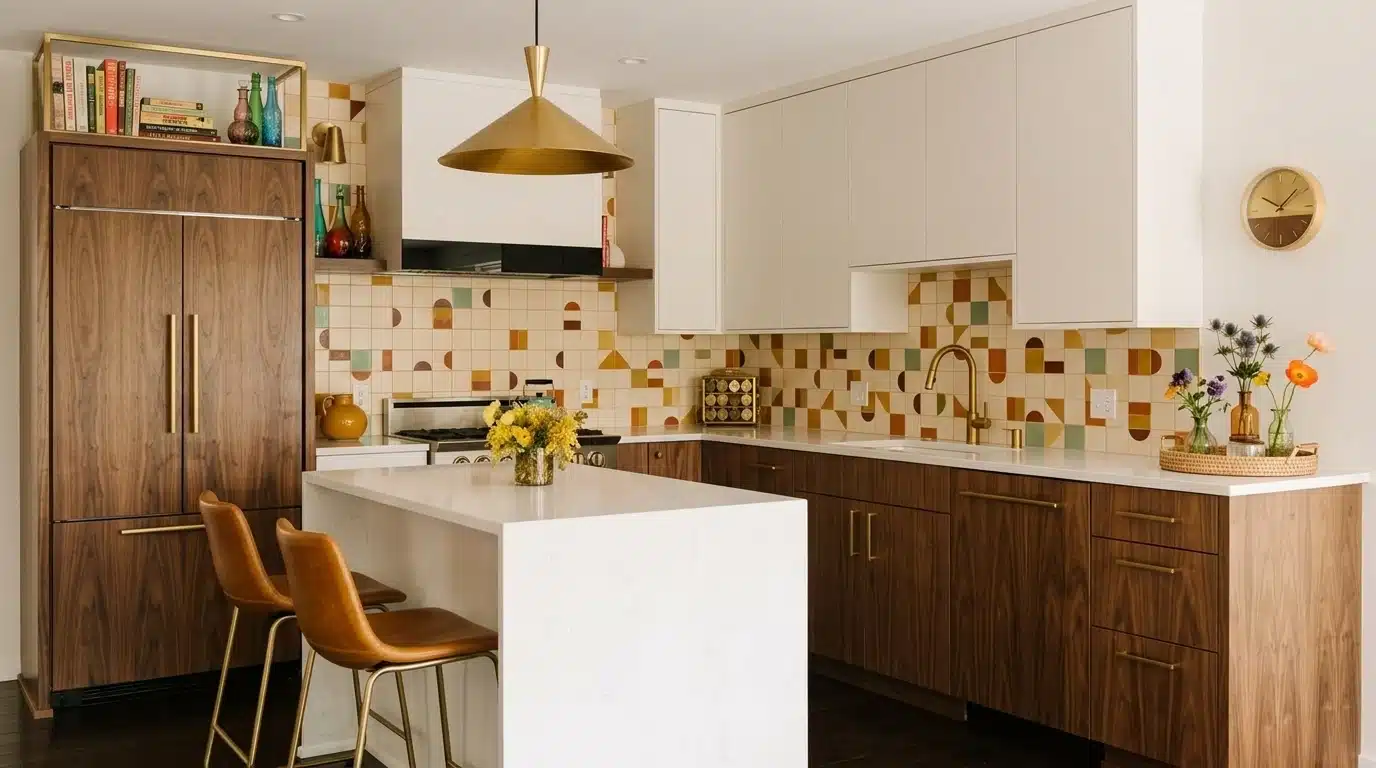
A small island with a wood top and tapered legs fits the style without taking up too much space. It also adds extra counter space and a spot for casual seating.
Open shelving underneath keeps it useful without adding bulk.
13. Brass Hardware
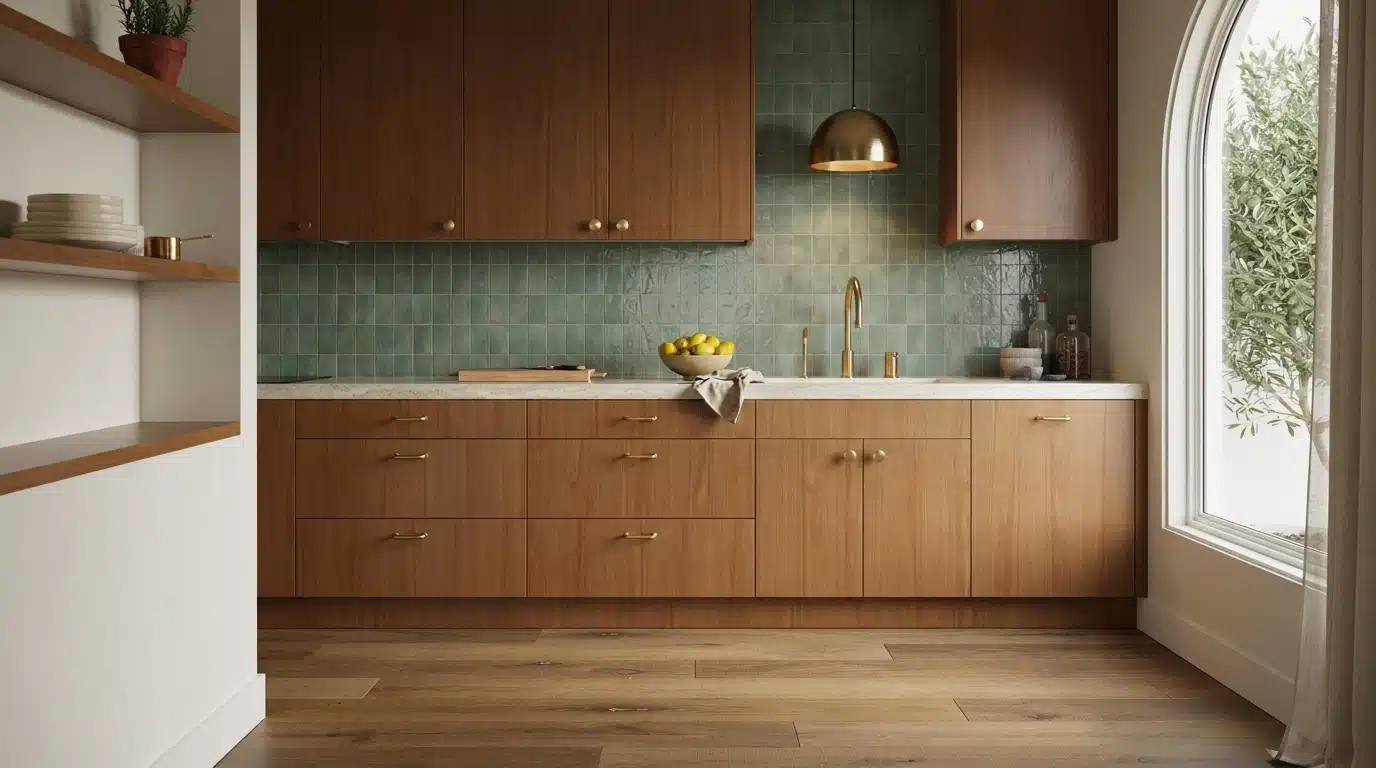
Brass knobs and handles add a warm, metallic touch to cabinets. This small detail brings a bit of shine against matte wood surfaces.
It also ties in well with vintage-style lighting elsewhere in the home. Brass tends to age well, too, developing a soft patina over time that only adds to its charm.
14. Vintage-Inspired Appliances
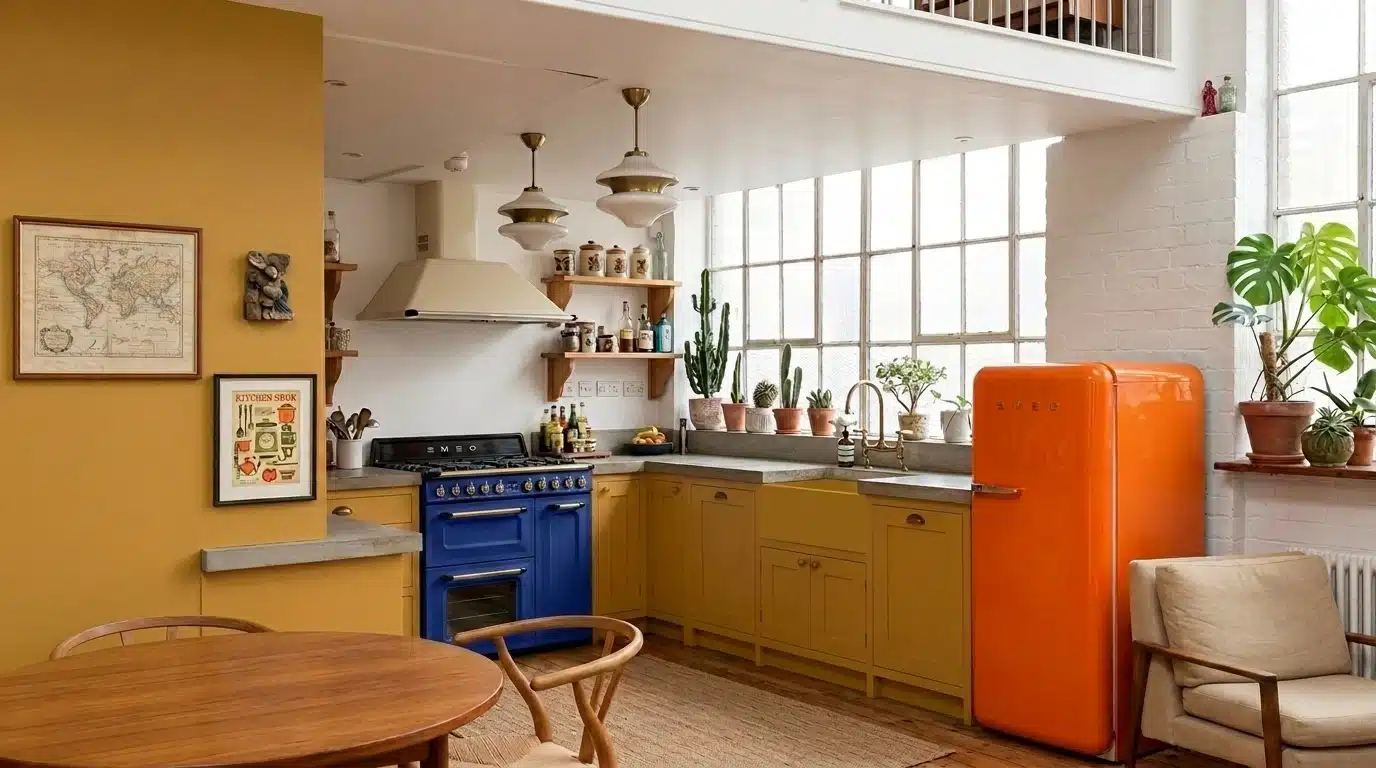
Appliances with rounded edges and retro colors bring charm to the kitchen. These pieces often become a fun focal point on their own.
Pairing them with simple cabinetry keeps the look balanced rather than busy. Colors like mint green, red, or pale yellow work especially well, adding personality without clashing with the surrounding wood tones.
Mid-Century Modern Dining Room Ideas
Dining rooms in this style stay warm and welcoming. A few key choices bring that classic look to any table setting.
15. Iconic Round Dining Table

Round and oval tables are common in this style. These shapes make conversation easier and fit well in smaller rooms. Tapered wood legs keep the table looking light, not heavy.
Since there are no sharp corners, round tables also work well in tight spaces, letting more chairs fit comfortably around them.
16. Accent with Wallpaper
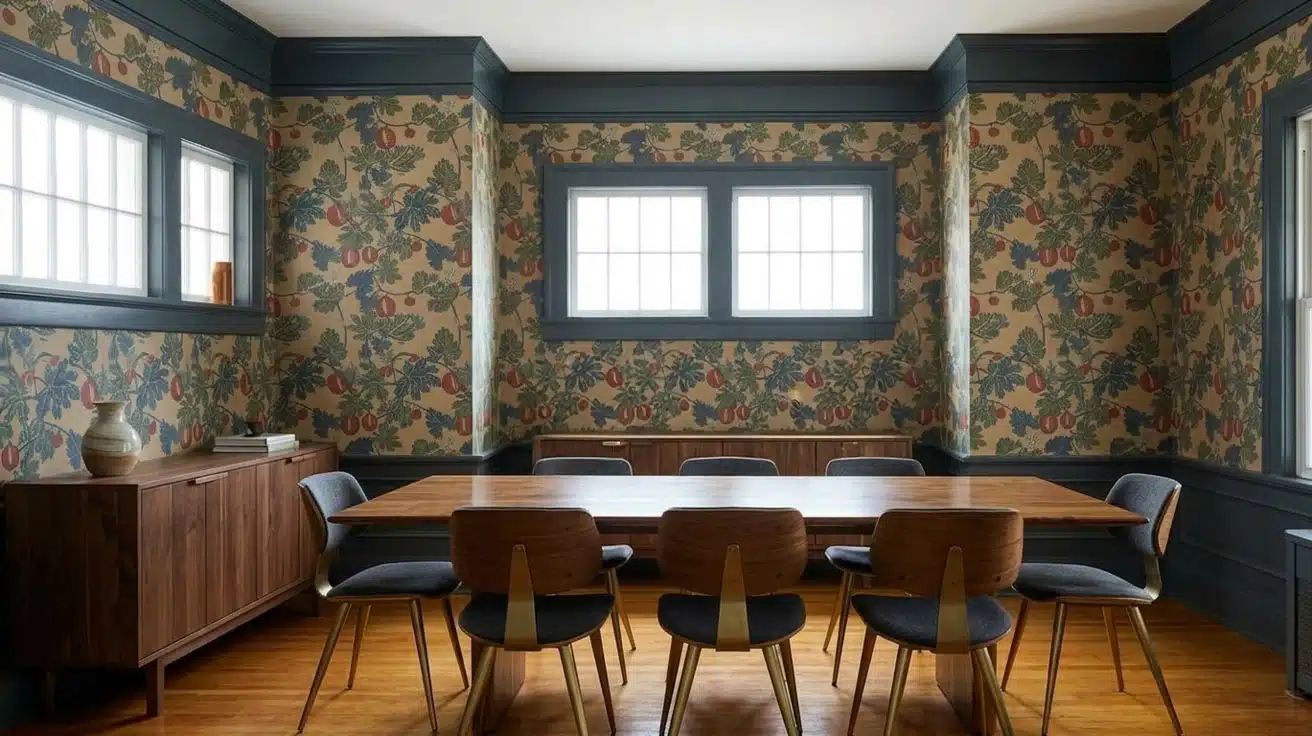
A patterned wallpaper on one wall adds character without overwhelming the room. Simple geometric or botanical prints work best for this style.
This accent wall also pairs well with wood furniture, giving the space a finished, styled look.
17. Statement Lighting
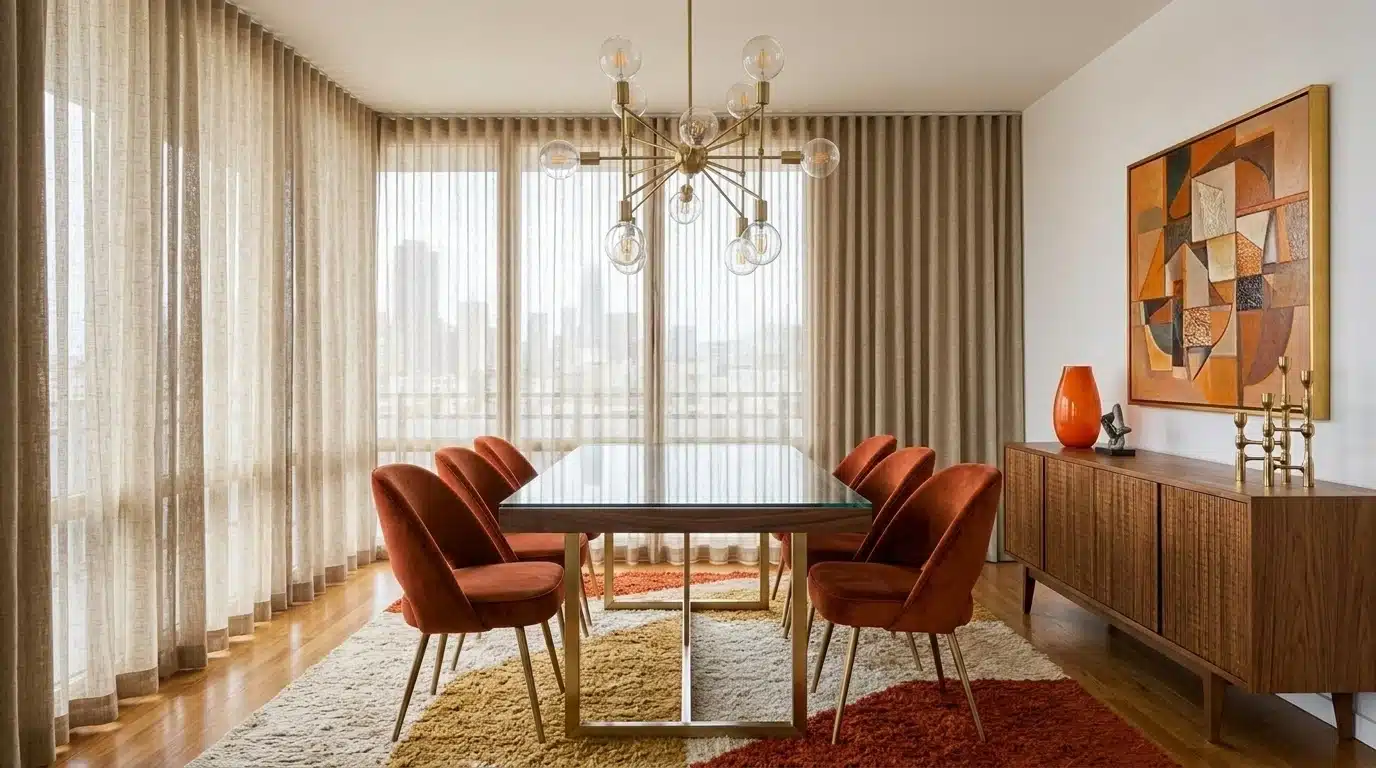
A bold pendant light above the table becomes the room’s focal point. Globe shapes, or Sputnik-style fixtures, work especially well here.
This lighting adds character without taking up floor space. Hanging the fixture at the right height, just above eye level when seated, keeps the light both practical and good-looking.
18. Geometric Painted Wallpaper or Murals
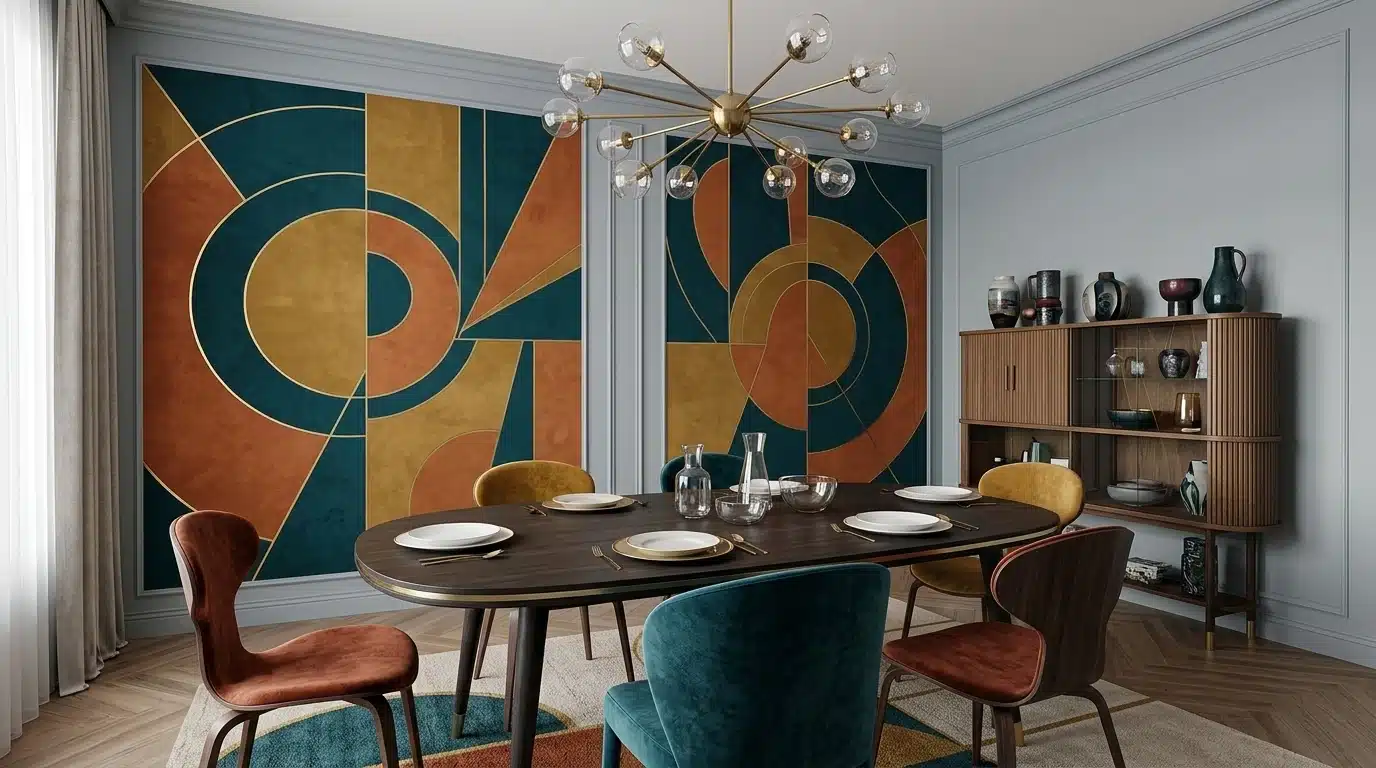
Bold geometric patterns painted directly on a wall bring a playful, artistic touch. Murals with simple shapes and warm tones also work well as a focal point.
Both options let homeowners add color and pattern without committing to a full wallpaper install.
19. Mixed Wood Finishes
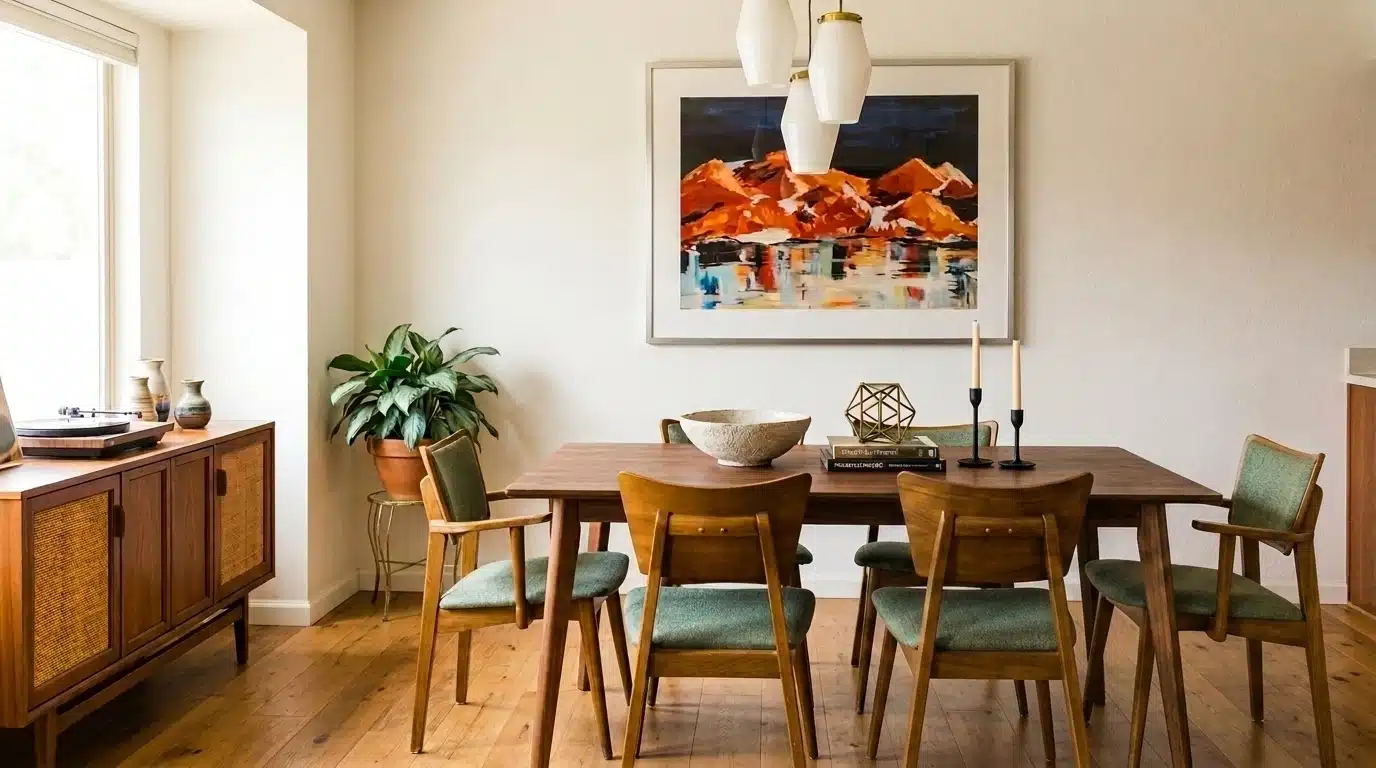
Pairing different wood tones adds depth to a dining space. A walnut table with oak chairs, for example, creates a nice contrast.
Mixing tones also gives homeowners more freedom, since chairs and tables don’t need to come from the same set to look good together.
20. Upholstered Dining Chairs
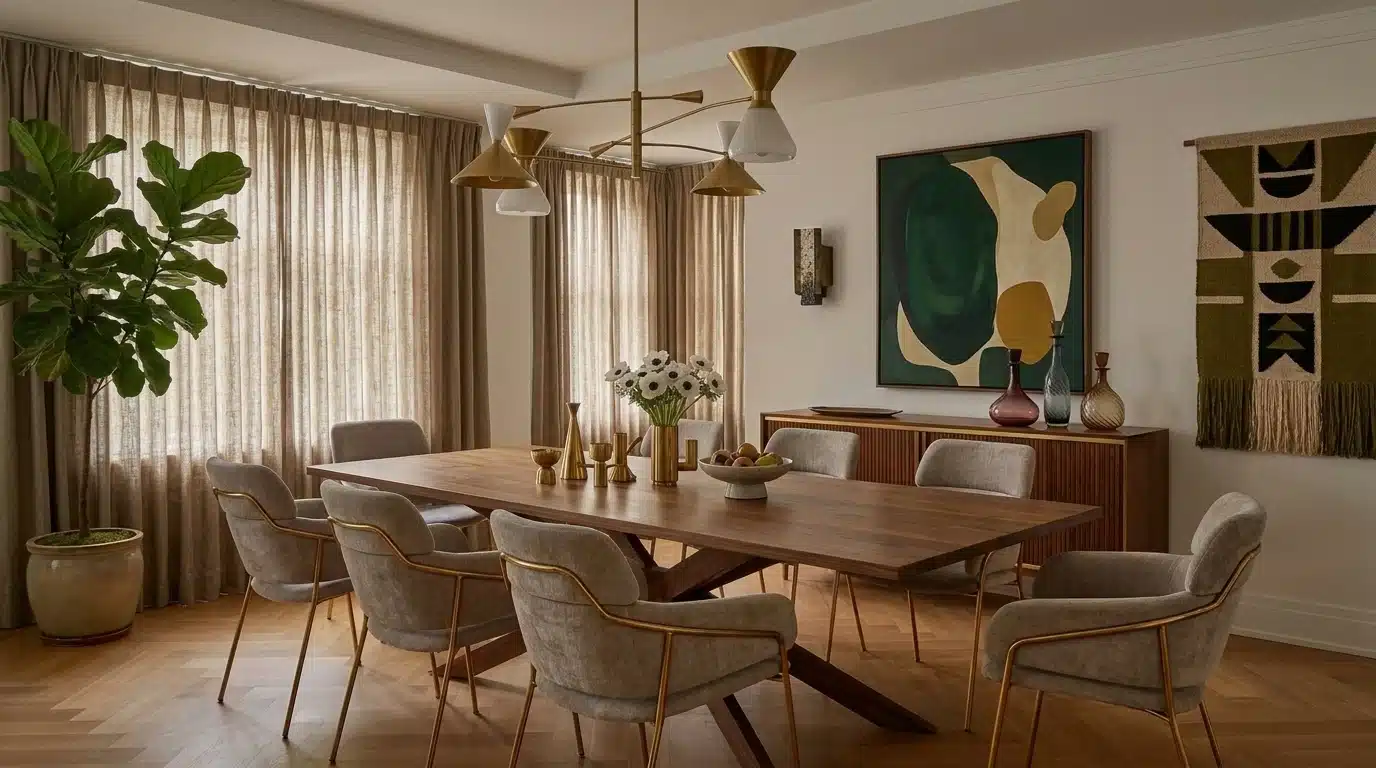
Chairs with padded seats and wood frames add comfort without losing the style’s clean look. Fabric or leather seats pair well with tapered wood legs, keeping the set balanced.
These chairs also make long dinners more comfortable for everyone at the table.
21. Area Rugs to Define the Space
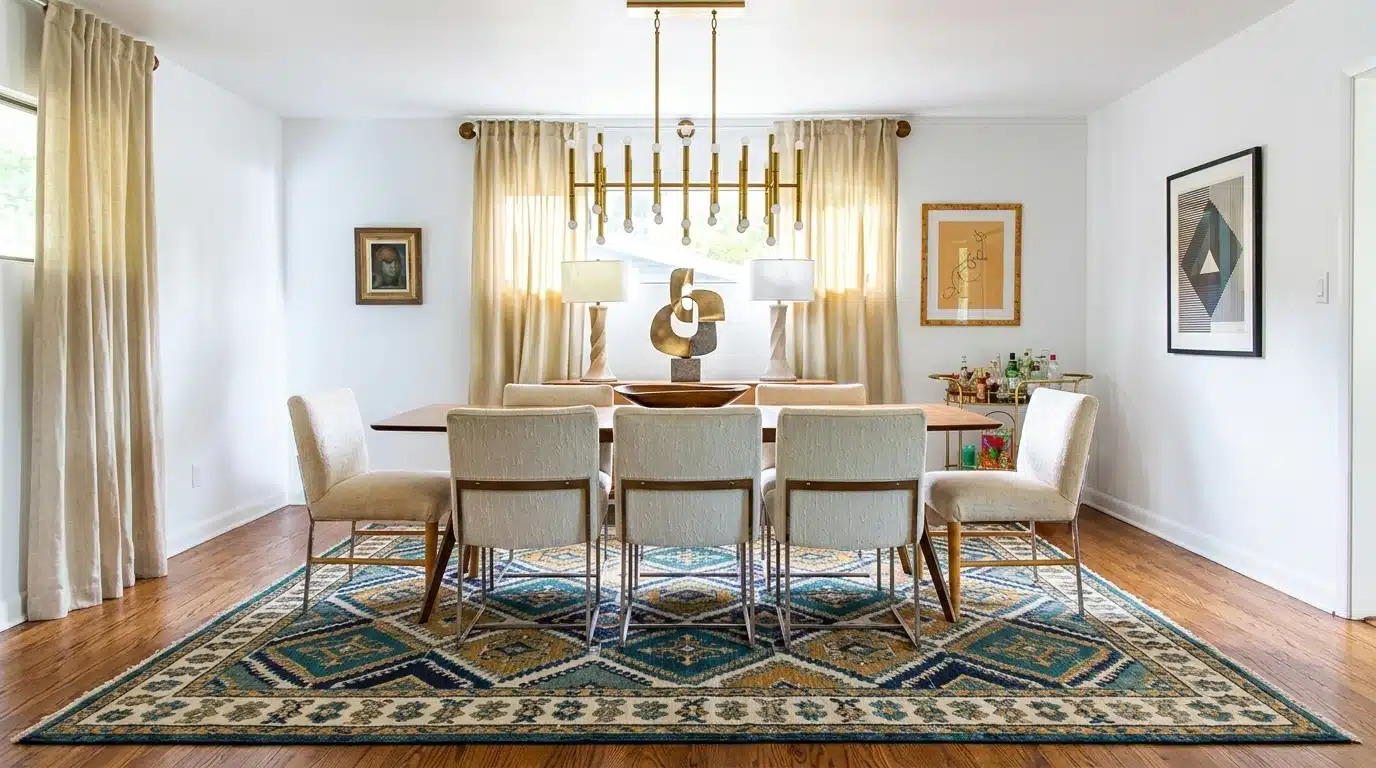
A rug under the dining table helps mark out the space, especially in open floor plans. Low-pile rugs work best, since they don’t catch on chair legs.
Choosing a rug in a warm, neutral tone keeps the focus on the furniture above it.
Classic Mid-Century Color Palettes
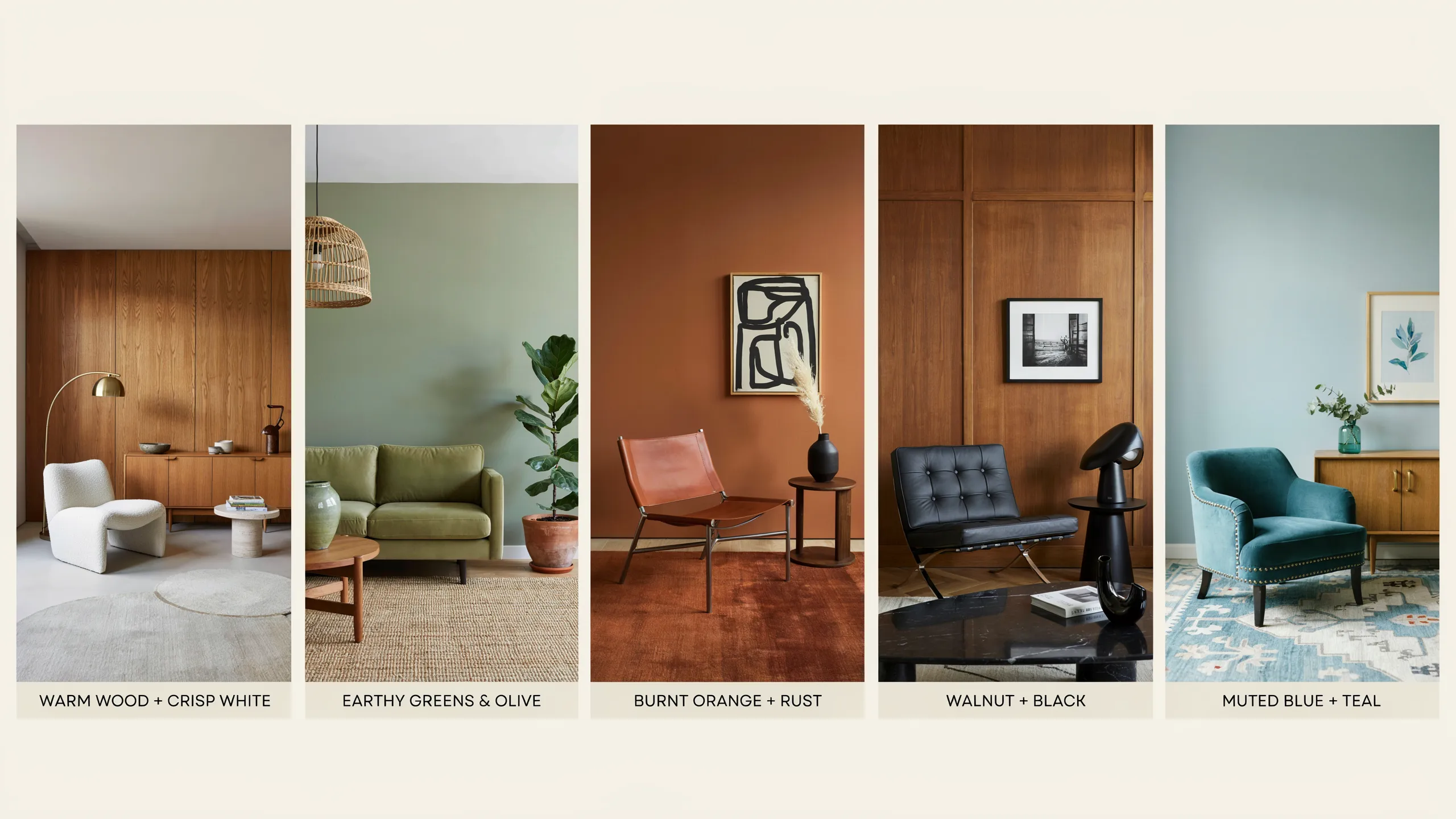
Color plays a huge role in this style, and certain combinations have stood the test of time. These palettes bring warmth and character to any room without feeling dated.
Warm wood with crisp white
Warm wood tones paired with crisp white walls create a bright, balanced base. This combination keeps a room feeling open, while the wood adds just enough warmth to stop it from feeling too plain.
Earthy greens and olive tones
Olive and sage tones bring a calm, natural feel into living spaces. These shades work well on walls, cushions, or upholstery, and they pair easily with wood furniture.
Burnt orange and rust
These warm shades bring energy without overwhelming the room. Rust tones often appear on accent chairs or rugs, lending a space a bit of retro charm.
Walnut with black details
Dark walnut furniture paired with black details creates a bold, grounded look. Black metal legs or frames add a modern edge to classic wood pieces.
Muted blues and teal
Soft blue and teal tones add a cool contrast to warm wood. These colors work well on accent walls or fabric, balancing out the warmth found elsewhere in the room.
Styling Formula for Mid-Century Modern Interior Design
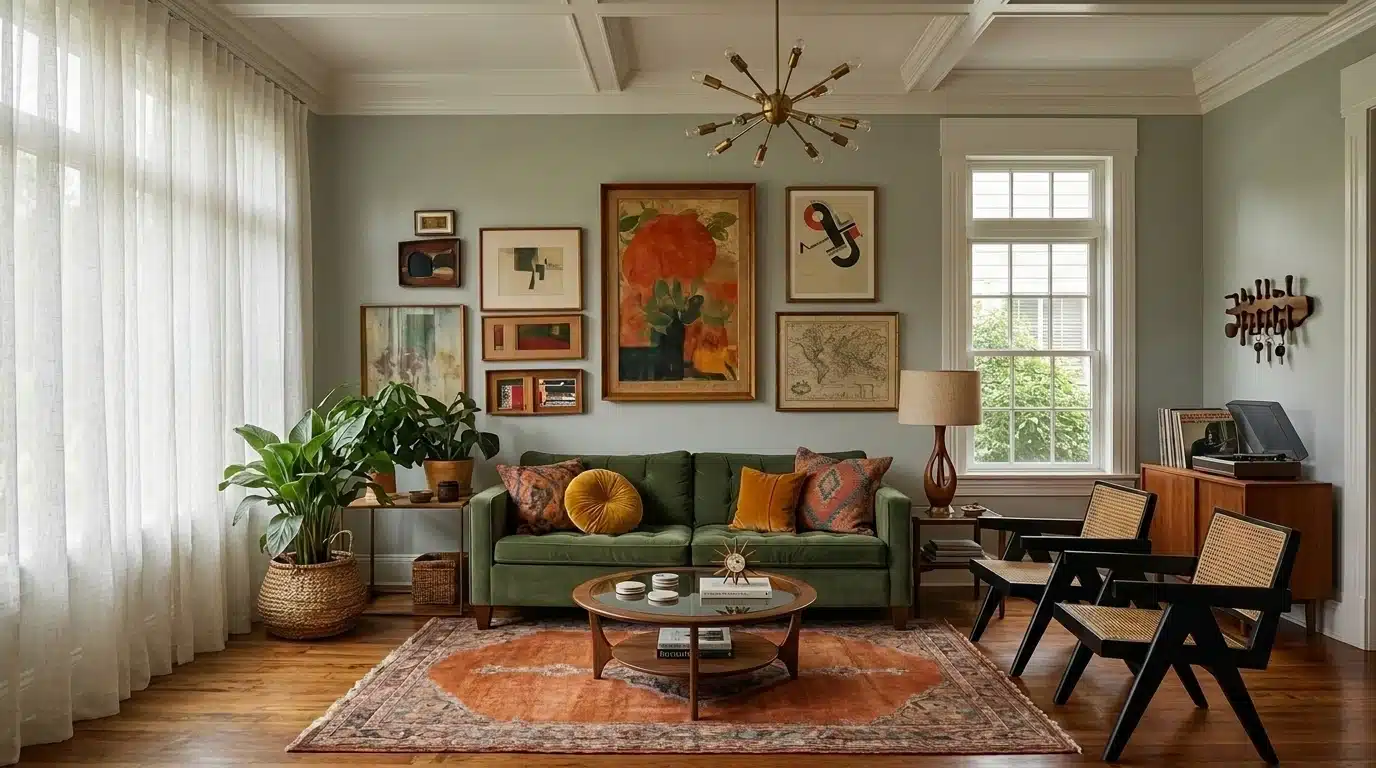
Getting this style right isn’t about luck. Designers often follow a simple sequence of steps to ensure every room feels put together.
Step 1: Start with Architectural Features
Designers first look at a room’s existing structure, like windows, beams, or built-in shelves. These features often set the tone for the whole space.
Working with what’s already there keeps the design feeling natural, not forced.
Step 2: Build Around One Statement Furniture Piece
A bold chair or sculptural sofa often becomes the room’s starting point. Every other choice, from color to layout, works around this one piece.
This keeps the room focused instead of scattered.
Step 3: Introduce Layered Lighting
Good lighting comes from more than one source. A floor lamp, a pendant light, and a table lamp together create a warm, balanced glow.
This layering also lets a room adjust for different times of day.
Step 4: Add Texture Before Accessories
Rugs, cushions, and throws go in first, followed by smaller decor items. This step builds a solid base of comfort and warmth.
Adding texture early also makes it easier to see what accessories the room still needs.
Step 5: Finish with Greenery and Artwork
Plants and wall art go in last, once the bigger pieces are set. These final touches add life and personality to the space.
This step also makes the room feel complete, not empty or half-done.
How Do Mid-Century Modern Houses Blend Indoor and Outdoor Living?
This style always seeks to connect a home to the outside world. A few smart design choices make that connection feel natural and easy.
Floor-To-Ceiling Windows
Large windows that stretch from floor to ceiling bring in plenty of natural light. They also give a clear view of the garden or yard outside.
This feature makes rooms feel bigger and more connected to nature.
Sliding Glass Doors
Sliding doors open up a wall between indoor and outdoor spaces. They let fresh air move through the home with ease.
This setup also makes it simple to step outside without breaking the room’s flow.
Courtyard Inspiration
Some mid-century homes include a small courtyard at the center of the house. This space brings light and greenery right into the middle of the home.
It also gives families a private outdoor spot, away from the street.
Patios with Matching Interiors
Patios that use the same materials as the home’s interior feel like an extension of the living room. Matching wood tones or tile patterns keeps the space feeling connected.
This makes moving between indoors and outdoors feel smooth and natural.
Natural Landscaping
Simple gardens with native plants and clean lines suit this style well. Overly fussy landscaping can clash with the home’s clean look.
Keeping plants low-maintenance also fits the practical spirit of mid-century design.
Making Mid-Century Modern Interiors Work for You
Mid-century modern interior design never asked for a big budget or years of training. It just asks for the right choices, made one room at a time.
From walnut cabinets in the kitchen to a bold lounge chair in the living room, every idea points back to the same goal: a home that feels warm, open, and easy to live in.
Anyone starting this kind of makeover doesn’t need to change everything at once. One new lamp, one wood accent wall, or one statement chair can shift a whole room.
Frequently Asked Questions (FAQs)
1. Is Mid-Century Modern Furniture Expensive?
Not always. Vintage finds, thrift stores, and modern reproductions offer budget-friendly options. Prices vary based on material, brand, and whether pieces are original or newly made.
2. Can Mid-Century Modern Style Work in a Small Apartment?
Yes. Its clean lines and low-profile furniture actually suit small spaces well. Fewer, well-chosen pieces make rooms feel open instead of cramped.
3. Is Mid-Century Modern the Same as Retro Style?
Not exactly. Retro often mixes styles from several decades, while mid-century modern refers to a specific design period with defined principles and materials.