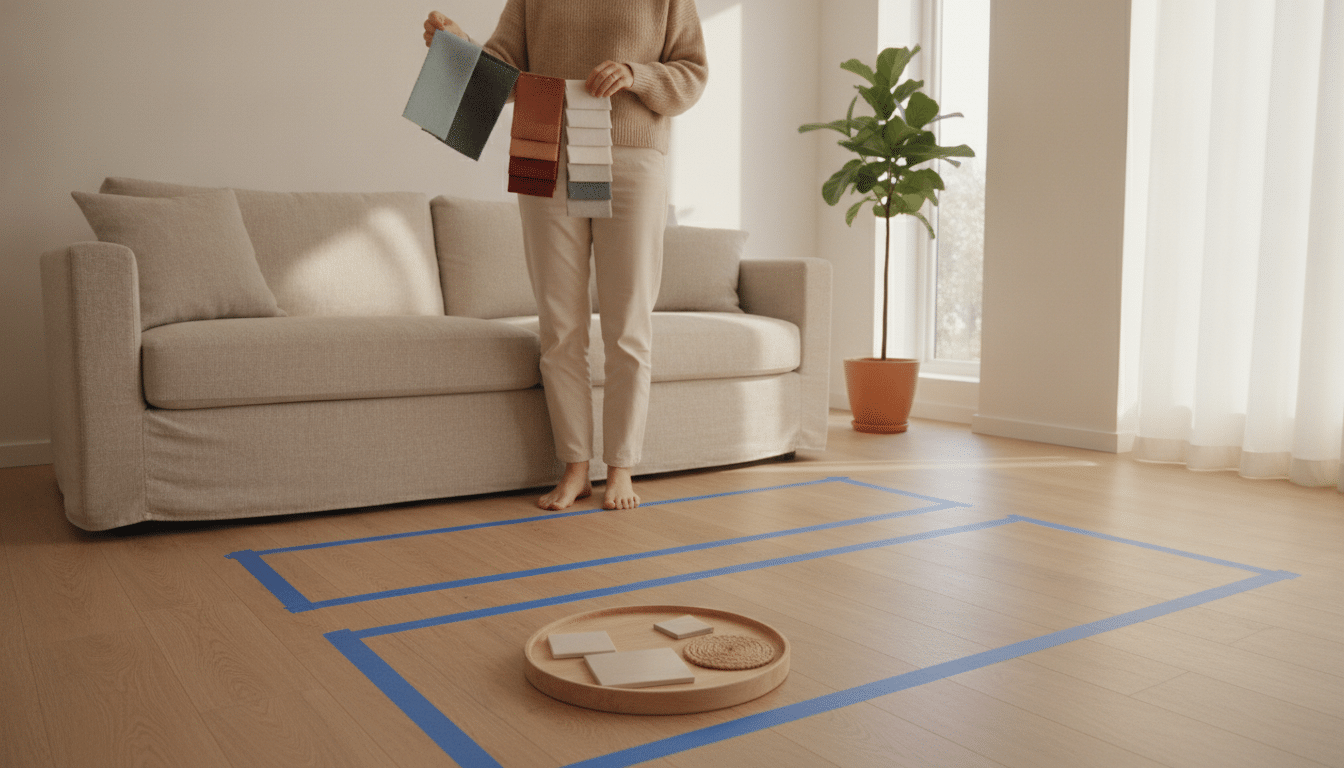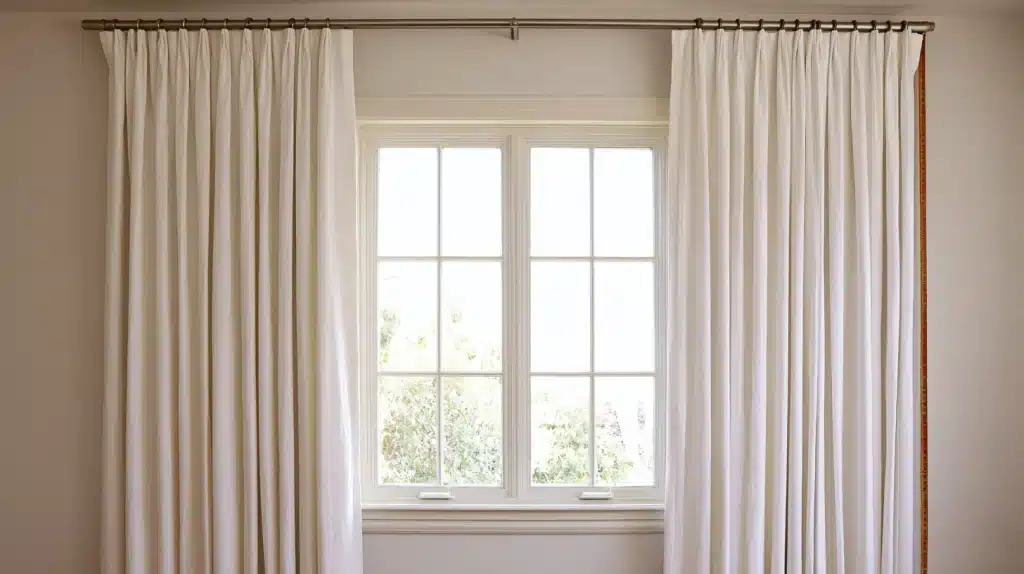
Most curtain returns come down to one thing: somebody eyeballed it. Learning how to measure for curtains properly takes maybe fifteen minutes and a tape measure.
It’s the difference between panels that puddle stylishly on the floor and panels that hover three inches above it like they got cold feet.
People pick beautiful fabric, get the width close enough, and still end up disappointed, because nobody mentioned that a grommet header needs noticeably more fullness than a rod pocket to look the same when closed.
Here’s the full process, start to finish: rod placement, width, drop, and the part most guides skip entirely: how the math changes once you factor in the type of curtain header you’re buying.
How to Measure for Curtains: Tools You’ll Need
Skip the cloth tape measure from your sewing kit. A steel or fiberglass tape holds its shape across long spans, so you won’t fight sag on a wide window.
If you’ve got anything wider than about eight feet, grab a 25-foot tape; the standard 12-footer will leave you re-measuring in sections and adding up the pieces, and small errors add up.
You’ll also want a step stool if your rod sits near the ceiling, and something to write the numbers down immediately.
Trust your memory here, and you’ll swap the width and the drop by the time you reach the checkout page.
Decide Where The Rod Goes First
You can’t work out how to measure for curtains until you know where the hardware is going, because the rod position is what you’re actually measuring to, not the window frame itself.
This decision comes first because it changes every number that follows: get it wrong, and you’ll have to re-measure width and drop from scratch later.
Inside Mount
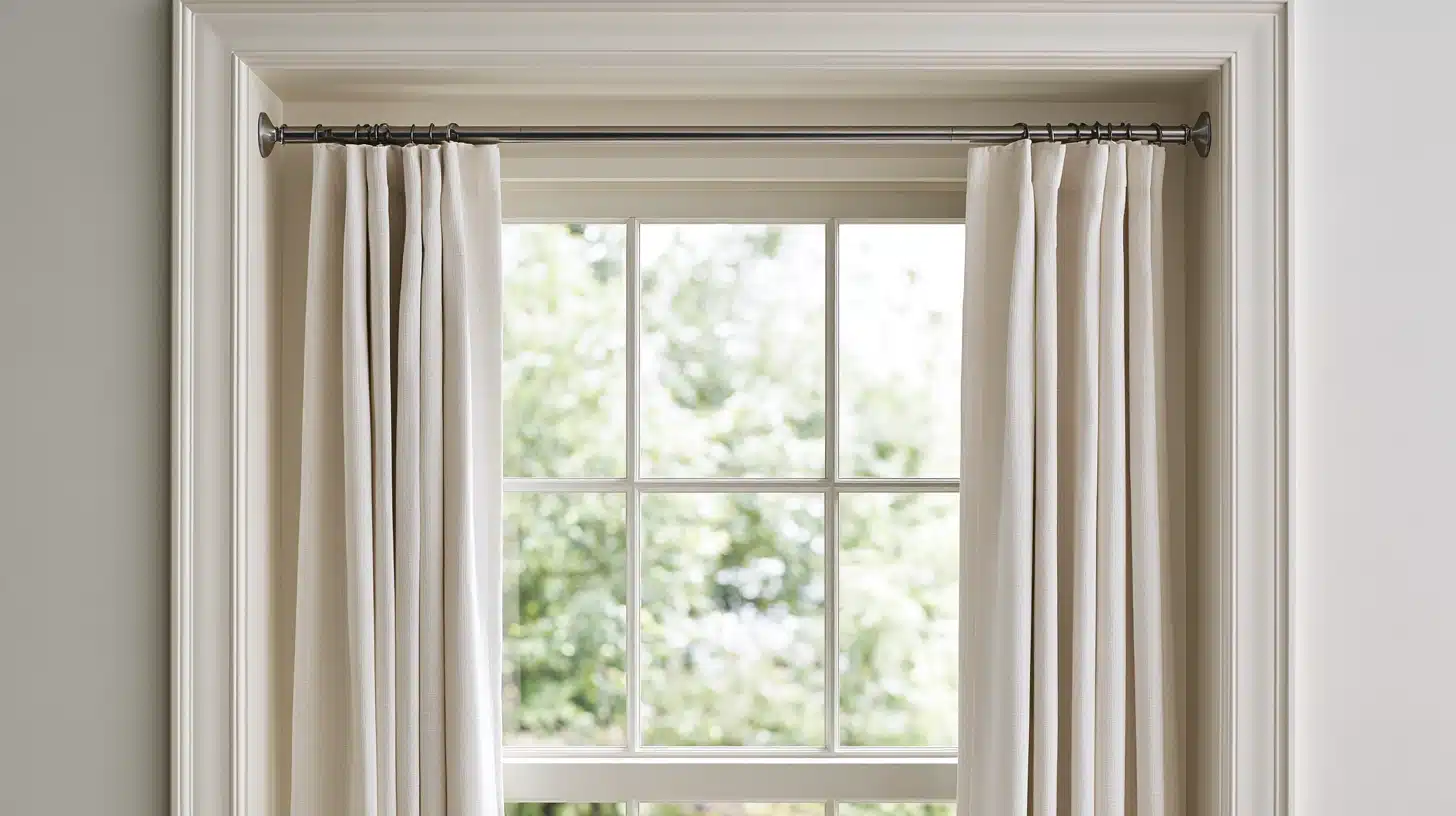
An inside mount sits within the window frame itself and needs at least two inches of depth to hold the bracket without the curtain rubbing the glass.
It looks clean and tucked in, which works well in kitchens, bathrooms, and anywhere a curtain would otherwise stick out past the wall.
The tradeoff is that it visually caps the window at its actual size; you can’t make a small window look bigger this way.
Outside Mount
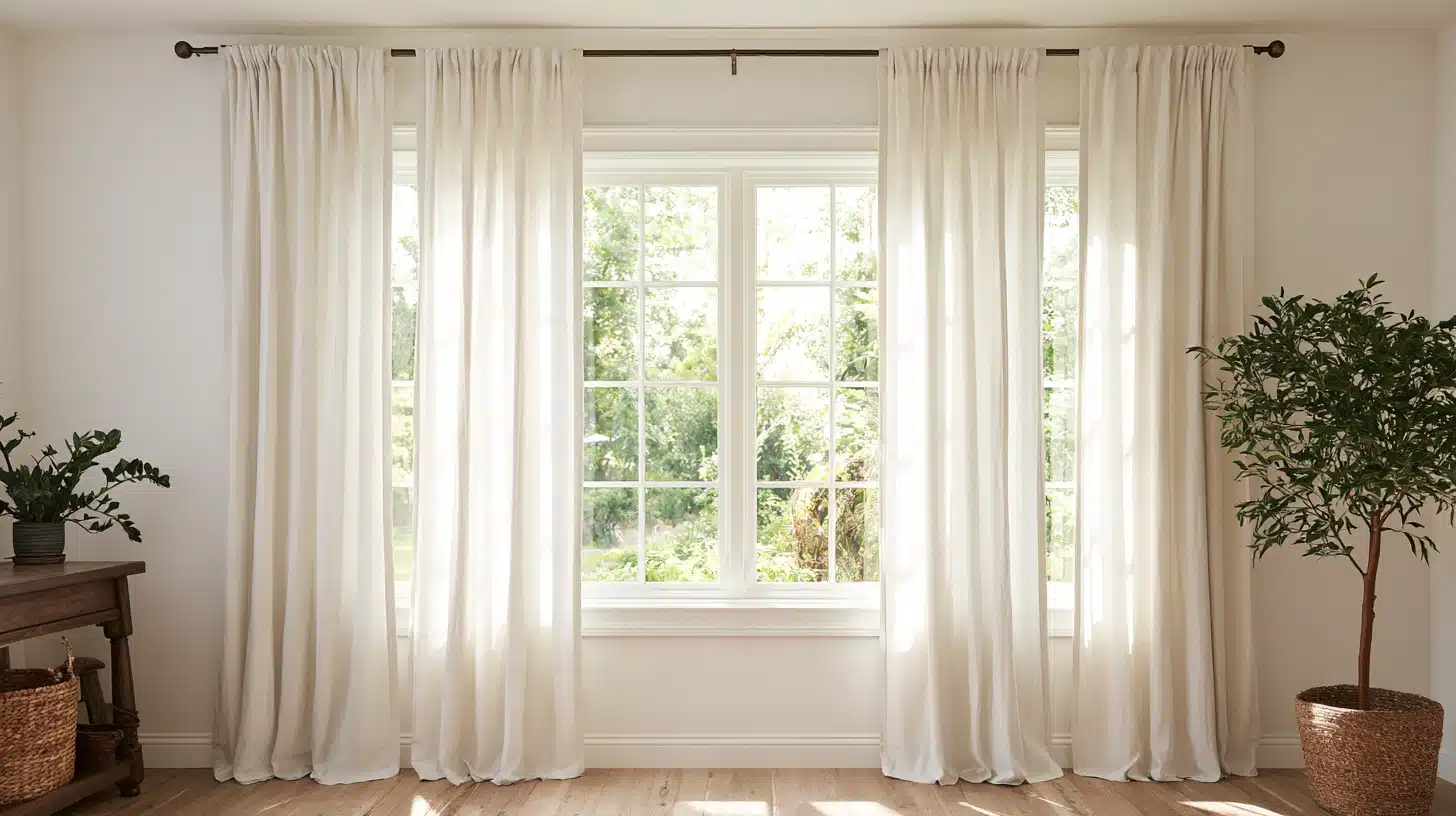
An outside mount hangs the rod on the wall above and around the frame.
It’s the more common choice for living rooms and bedrooms because it lets you extend the rod past the window edges.
It makes the window look bigger, and it lets curtains stack fully off the glass when opened, so you don’t lose daylight to bunched fabric in front of the panes.
How to Measure for Curtains?
Measuring The Curtain’s Width
Start with the width of your rod, not the window. If the rod isn’t up yet, decide how far past the window frame it’ll extend, typically 4 to 10 inches on each side for an outside mount, and measure that total span.
Curtains need extra fabric to hang with any body; a panel cut to the exact width of the rod looks flat and stingy when closed.
A 60-inch rod wants about 120 to 150 inches of total curtain width, split across however many panels you’re hanging.
Heavier, structured fabrics can sit at the lower end of that range; sheer or lightweight fabrics look better pushed toward the higher end.
Measuring Curtain Length (The Drop)
The drop starts from wherever the curtain actually hangs: the bottom of the rings, the ring pin holes, or the top of the track. Measure straight down from there to your target floor point.
- Floor-length stops right at the floor, or hovers about half an inch above it so it doesn’t drag.
- Sill-length ends just below the windowsill, a common choice above a kitchen sink or radiator.
- A Puddle adds several extra inches so the fabric pools on the floor, which looks striking in a formal room but is less practical with pets or foot traffic through that spot.
Ready-made panels are sold in a handful of set lengths, and it helps to know them before you shop: 63, 84, 96, 108, and 120 inches are the sizes you’ll see most often on packaging.
If your measured drop lands between two of those numbers, size up; you can always hem a panel shorter, but you can’t add fabric to one that’s too short.
How Measurements Change by Curtain Heading Type?
Skip this part, and your curtains may end up the right size but still look wrong, flat instead of full, or gappy at the folds.
The heading style, how the fabric attaches to the rod, changes both where you measure from and how much extra width you need for the pleats or gathers to sit correctly.
Grommet/Eyelet Curtains
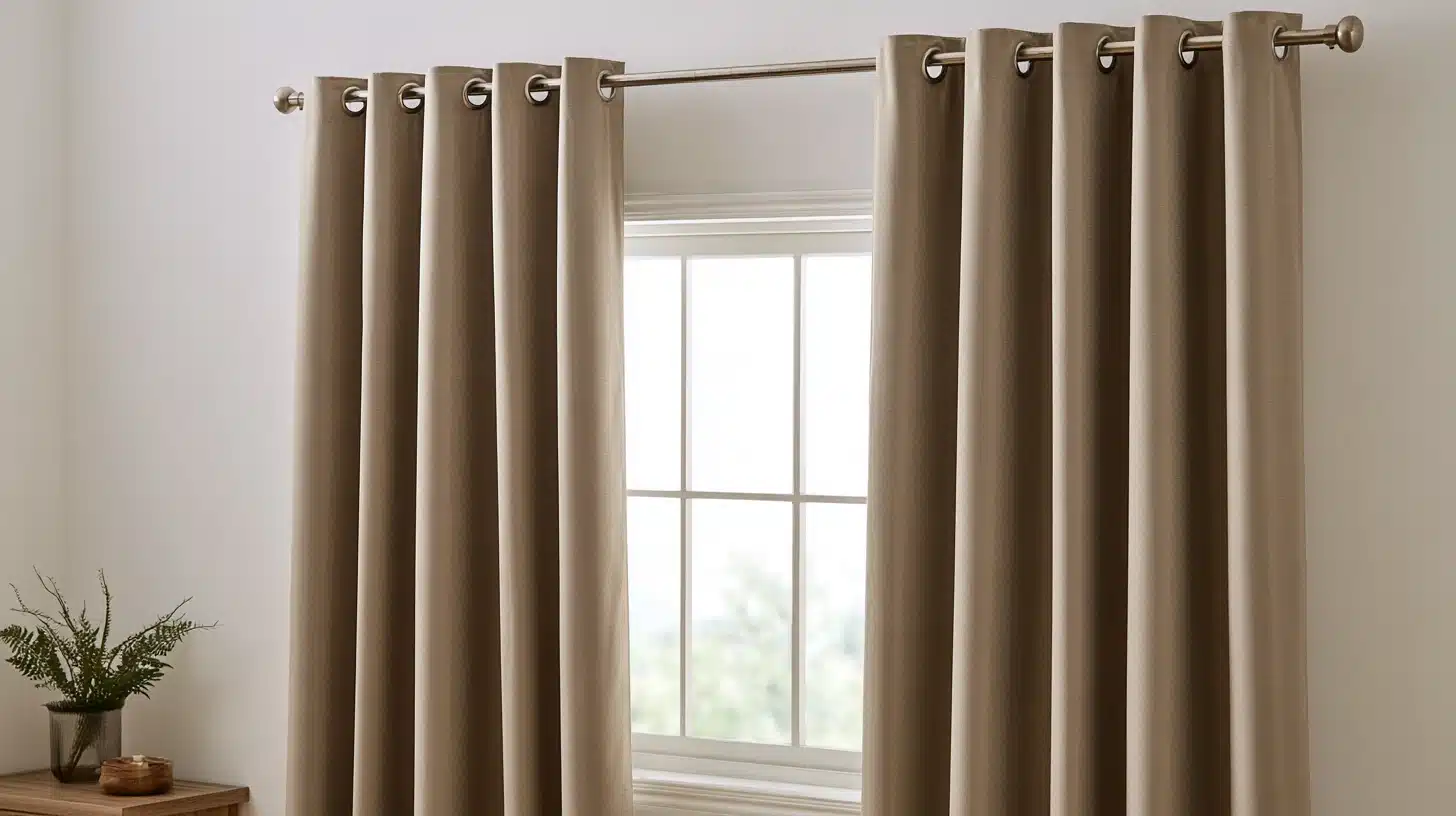
These curtains thread the rod directly through metal-ringed holes, so the fabric can’t gather as tightly as a pleated header.
These generally need a fuller width, closer to 2 to 2.5 times the rod width, to avoid a stretched, gappy look between the grommets.
Rod Pocket and Tab-Top Curtains
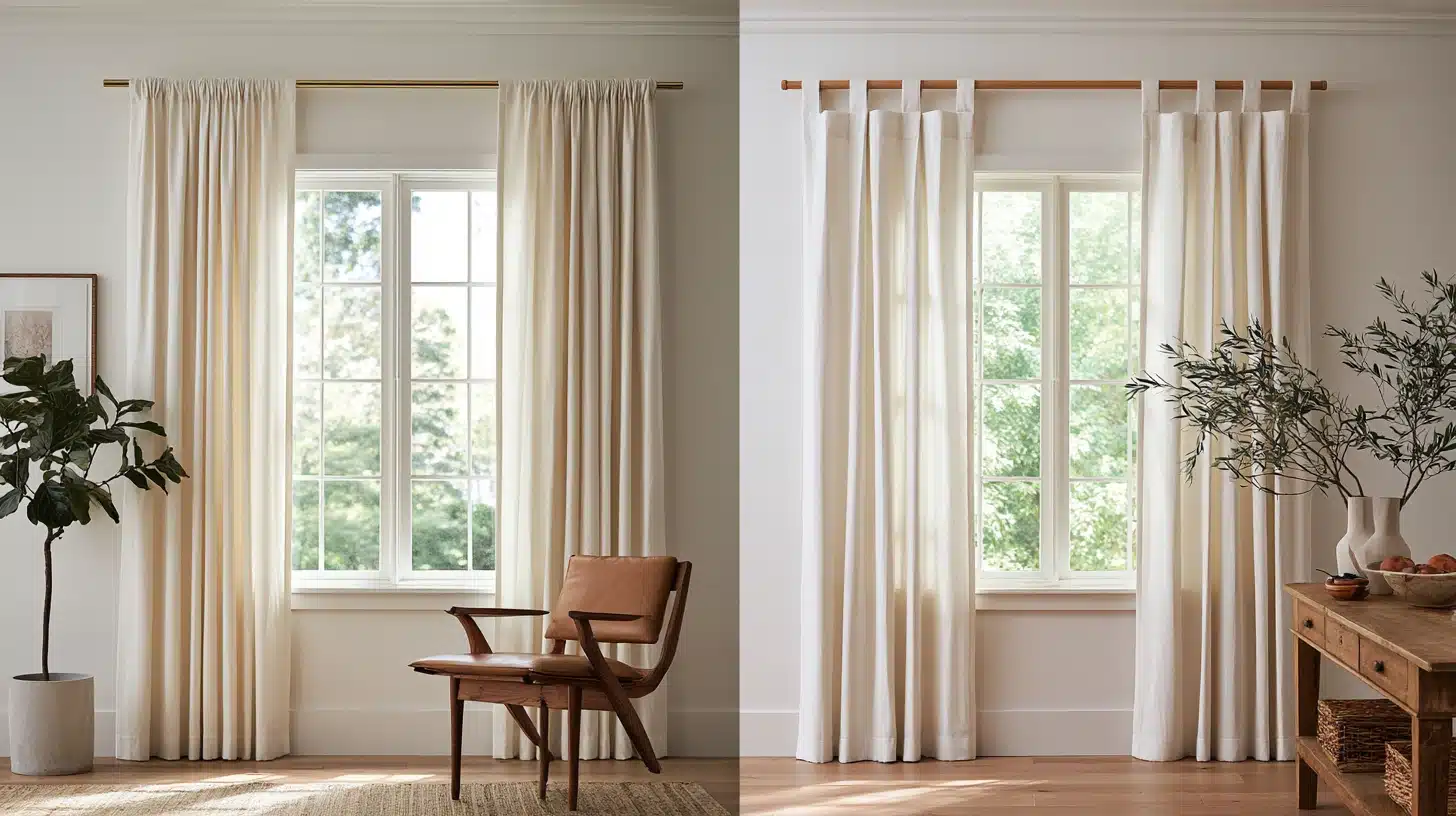
These curtains slide over the rod with a fabric sleeve, which naturally bunches.
Two times the rod width is usually enough fullness here, and the drop is measured from the top of the pocket, not the very top edge of the fabric, since a bit of the header stands up above the rod once it’s hung.
Pleated Headers
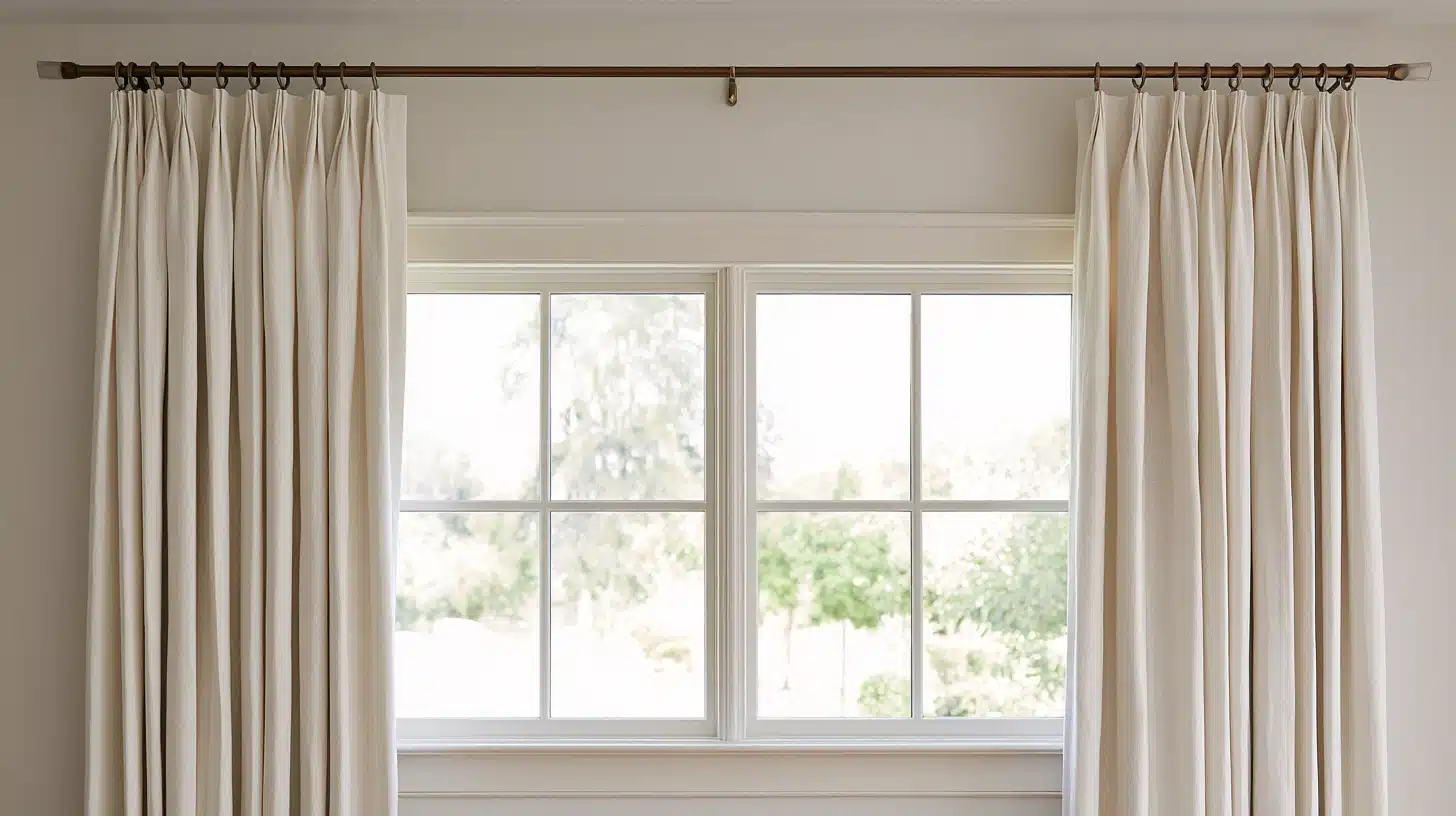
Pleated headers (pinch pleat, box pleat, and similar styles) build the fullness into the sewing itself, with the pleats folding the fabric into place.
Pinch pleat and box pleat headers generally want 2 to 2.5 times the rod width; same ballpark as grommets, plus another 3 to 4 inches per side for the returns, the fabric that wraps back to the wall at each end of the rod.
Skip the returns and the end pleats look pulled tight instead of finished.
Flat Panel and Pencil Pleat Curtains
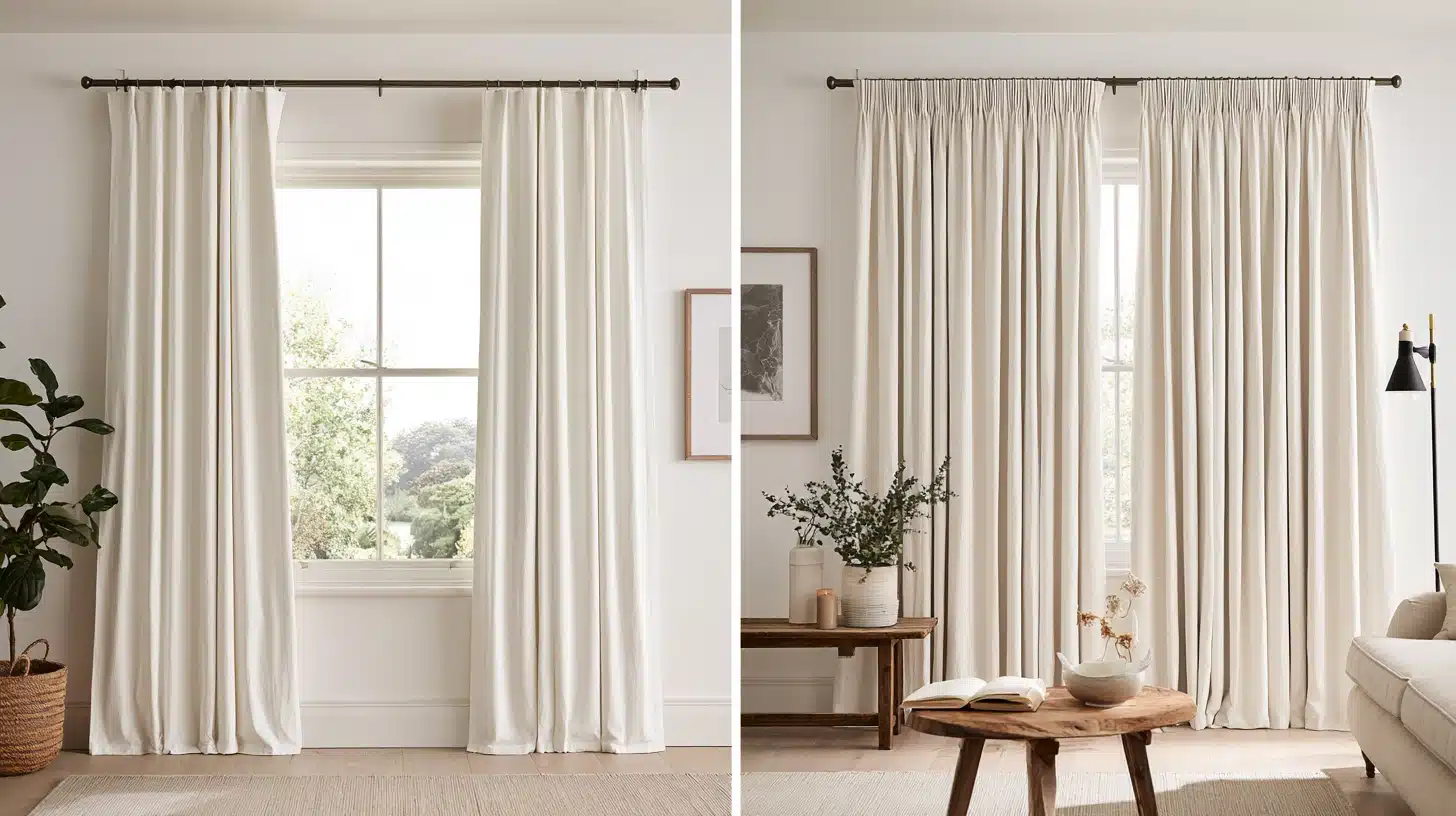
Flat panel and pencil pleat curtains sit closer to the rod pocket math, generally double the rod width.
Pencil pleat tape lets you adjust the gather by pulling the cords, so it’s more forgiving if your measurement is a little off.
If you’re not sure which category your curtain style falls into, check the product listing before you finalize your width; it’ll usually say.
Matching Your Numbers to Standard Panel Sizes
Once you have a target total width, divide it by the panel width you want to buy. A 10-foot rod, for example, needs somewhere between five and six panels if you’re buying 54-inch-wide ones.
Wider panels mean fewer seams down the middle of your window, which looks cleaner. Narrower panels are easier to find in specific colors and patterns, though, since they’re the more common retail size.
An extra half-panel’s worth of fabric is much cheaper than realizing you’re short and reordering later, and it leaves a buffer if the fabric shrinks slightly after its first wash or steam.
Common Measuring Mistakes That Ruin the Fit
A few errors show up again and again. Cutting the length too short leaves a gap above the floor that reads as unfinished; there’s no fixing that after the fact short of buying new curtains.
Going too long is the safer mistake, but only up to a point; drag too much fabric across the floor and you’re inviting dirt, wear, and a tripping hazard in high-traffic areas.
And skimping on width is the one that surprises people most: curtains cut too narrow won’t fully close, or they’ll hang flat instead of falling in soft folds.
If you’re stuck between two sizes, go wider. Skimpy curtains are the mistake people notice from across the room.
A Quick Recap: How to Measure for Curtains
Getting this right isn’t complicated. Once you know how to measure for curtains properly, it’s just sequential: rod placement, then width, then drop, then a check against your specific heading style.
Do those four things in order and skip the mental math shortcuts, and the curtains that show up at your door will actually fit the window you measured, not just the window you guessed at.
Write every number down as you go, in inches, and don’t round to the nearest convenient figure just to finish faster; that habit is exactly how an eighty-four-inch panel ends up stopping four inches shy of the floor.
And if you skipped straight to buying without checking your heading style first, go back. That’s the step people forget, and it’s the one that moves your width number the most.
Frequently Asked Questions (FAQs)
1. Do I Need to Remove Old Curtains Before Measuring?
No. Measure to where the new rod or track will sit, regardless of what’s currently hanging there.
2. Should I Use Double Rods for Sheers Under Drapes?
Yes, if layering. Double rods hold sheers and drapes separately, each with its own correct drop and width.
3. How Do I Measure an Angled Bay Window?
Measure each window section separately, plus the connecting angles, since one flat measurement won’t fit the curve.
4. Does a Vaulted Ceiling Change the Rod Height?
Not directly. Mounting height depends on your window frame position, not ceiling slope, unless the two intersect.