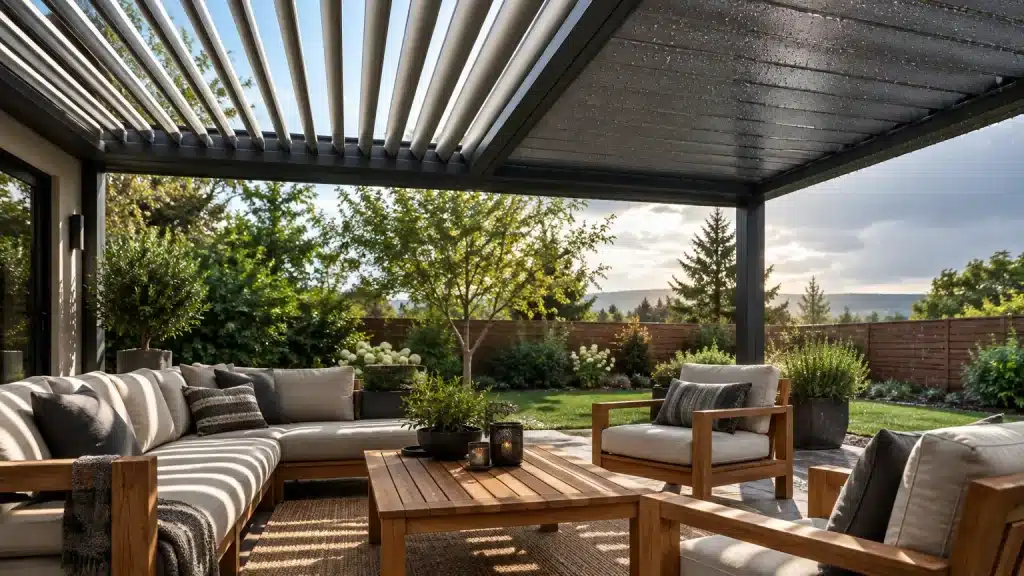
Weather changes fast, and a good patio has to handle every kind of day. One minute, the patio is sunny, and the next, a storm has everyone grabbing cushions.
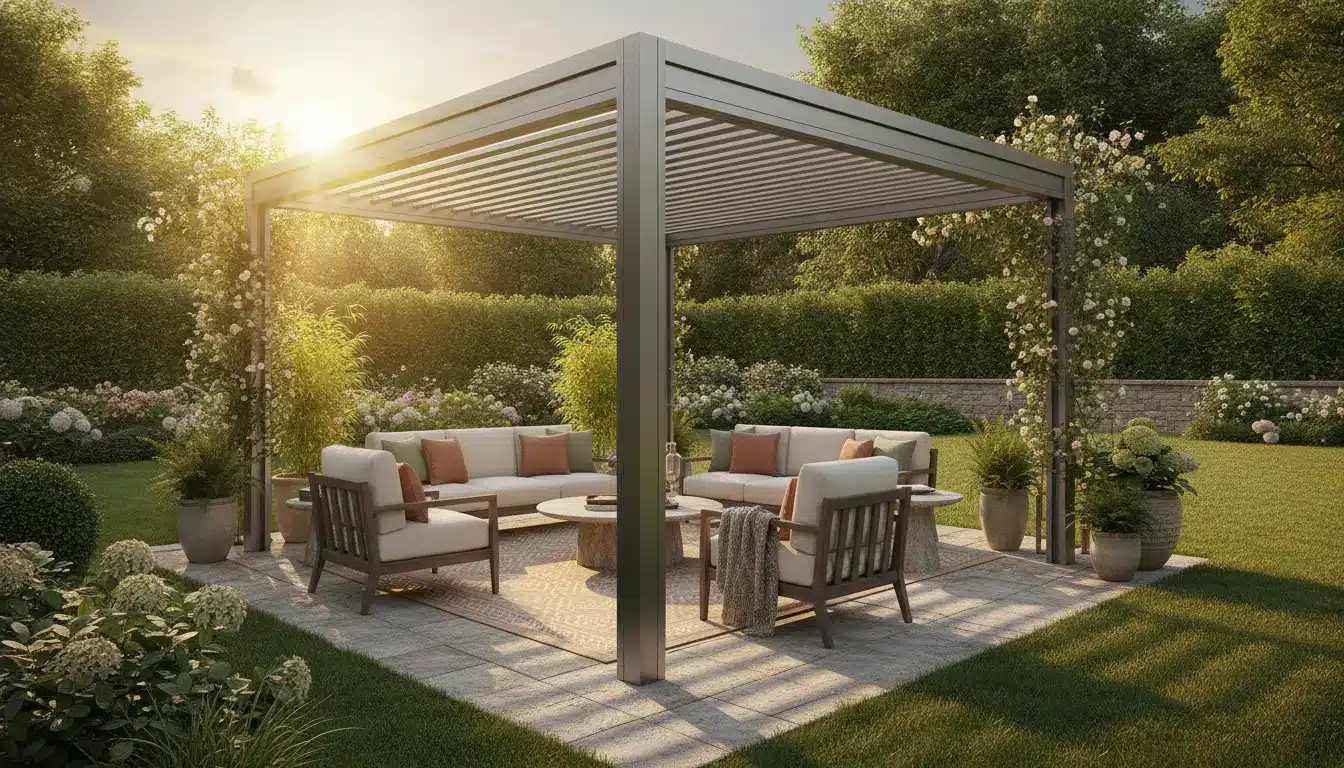
Owners with Outdoor Elements Louvered Roof Systems tilt the blades to match the sky, while a fixed roof stays put.
A fixed roof stays exactly the same whether the day is sunny or stormy. Movable blades change that by letting the roof respond to whatever the sky does. When the backyard has to host dinners from spring through winter, adjustable louver patio covers make sense.
Why Weather Makes Patios Hard to Enjoy
Open patios give families room to relax, but they leave everyone fully exposed. Direct sun can heat furniture and floors until nobody wants to sit down.
Rain brings its own trouble, from soaked cushions to ruined plans for guests. Wind can scatter lightweight items and make a backyard dinner feel rather unpleasant. Even on a mild afternoon, guests end up squinting into the glare and shifting their chairs around. The host stops chasing shade once the roof adjusts throughout the day, and the gathering stays comfortable.
How Louver Blades Handle Sun and Heat
Louver blades pivot, so owners can tilt them to follow the sun all day. Angled blades block direct rays while still letting soft daylight reach the space.
Under the tilted blades, the whole patio stays cool enough for kids to walk across barefoot. Gaps between tilted blades also let trapped hot air rise and drift away overhead. Owners can open the roof fully on cool mornings to welcome the gentle sunshine. Under a fixed roof, guests sit in the same shade at breakfast as they do at noon.
What Happens When Rain Arrives
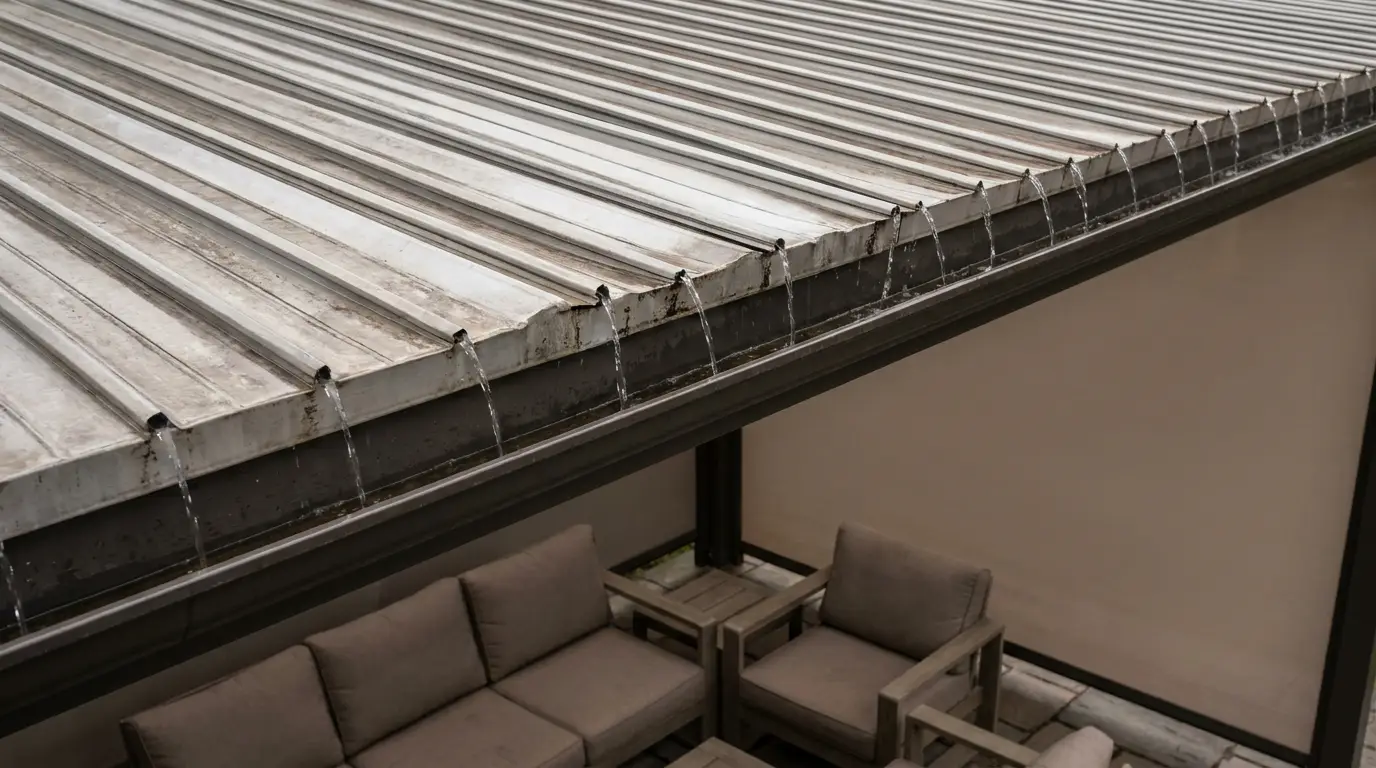
Closed louver blades overlap to form a tight barrier against heavy, falling rain. Water runs along the closed blades and drains into gutters along the edges.
Hidden channels inside the frame then carry that water down through the posts.
Once the blades close, the cushions stay dry while rain pounds the roof right overhead. Owners can also tilt the blades slightly to enjoy fresh air after a shower. Open slat pergolas let rain fall through, which defeats the purpose of a roof.
How Louvers Cope With Wind and Snow
Strong frames and secure blade mounts help the roof stand up to gusty days. Homeowners can open the blades during mild breezes to keep fresh air moving.
Snow and ice need extra planning, so local building codes and load ratings matter. Closed blades can give snow a smooth surface to slide off instead of collecting.
Cold evenings feel milder when a closed roof holds in warmth from patio heaters. Families can still gather on the patio in January, since the roof adjusts to every season.
Choosing Materials That Last Outdoors
Material choice matters just as much as blade design when weather is involved. Powder coated aluminum resists rust and holds its color through years of sun. Quality gaskets and seals between blades keep moisture from sneaking through closed gaps.
Motorized controls can make adjusting the roof quick and easy for everyone at home.
Sensors for rain and wind can even close the blades when owners are away. When the parts are built to last, owners spend their weekends on the patio instead of fixing things.
A patio shouldn’t sit empty just because the forecast looks a little unpredictable. Once a family can shape the roof, the weather stops running the weekend. Picture a rainy Saturday where the card game carries on and nobody’s scrambling indoors.
It’s a small shift, but it changes how often the backyard actually gets used. Before buying anything, it’s smart to check local codes and ask about wind ratings. Do that homework early, and the next storm becomes just another cozy night outside.