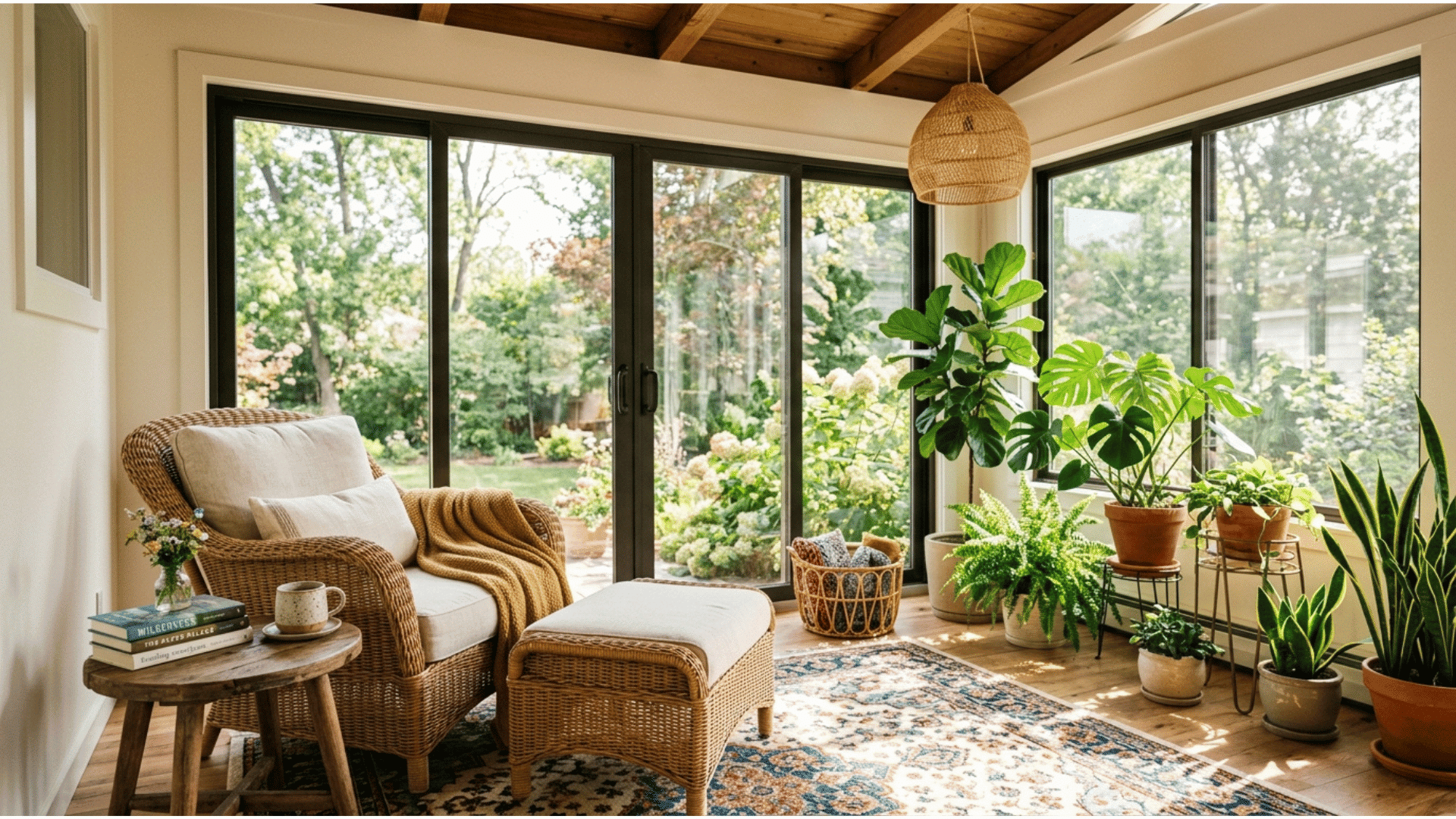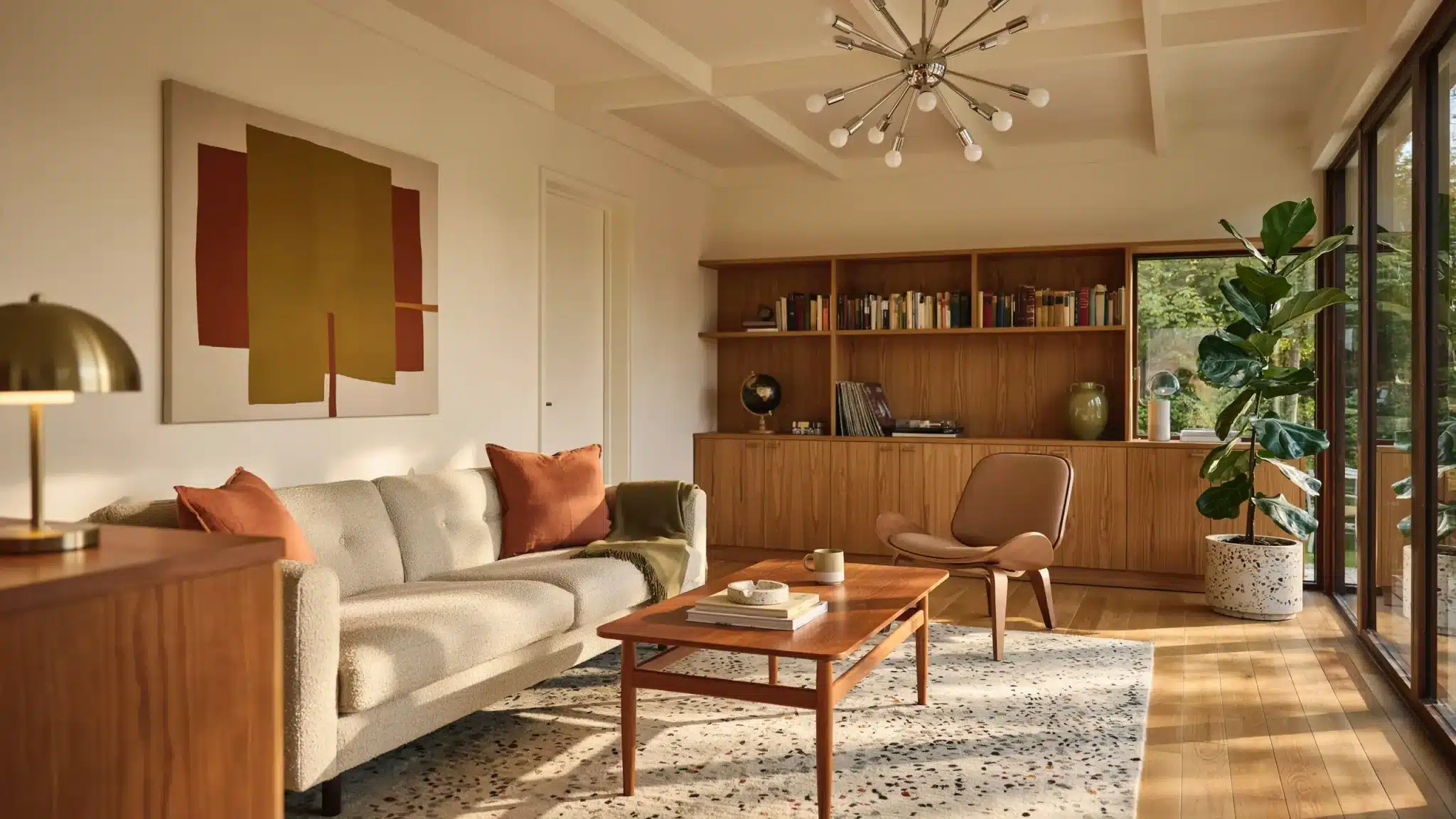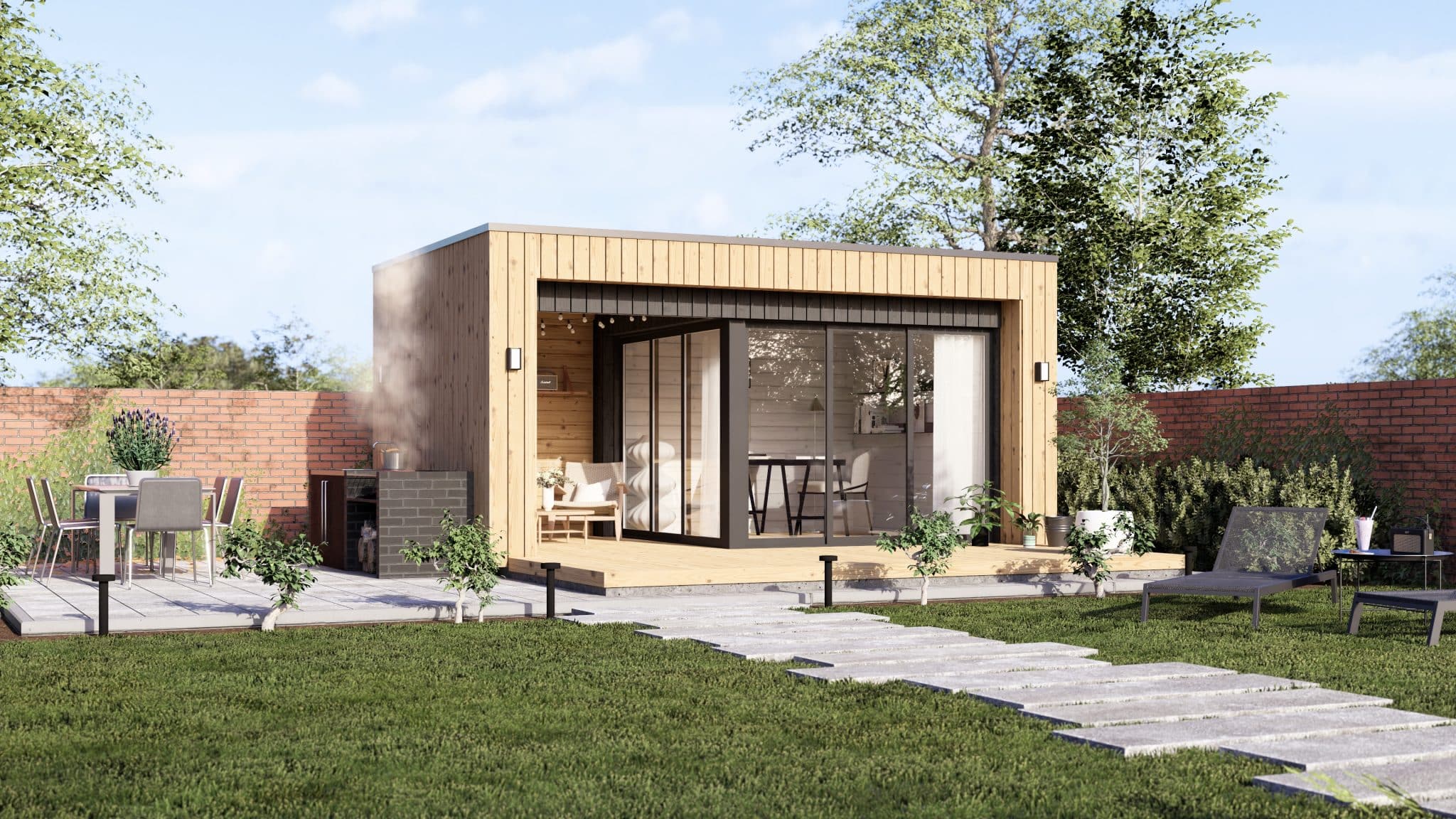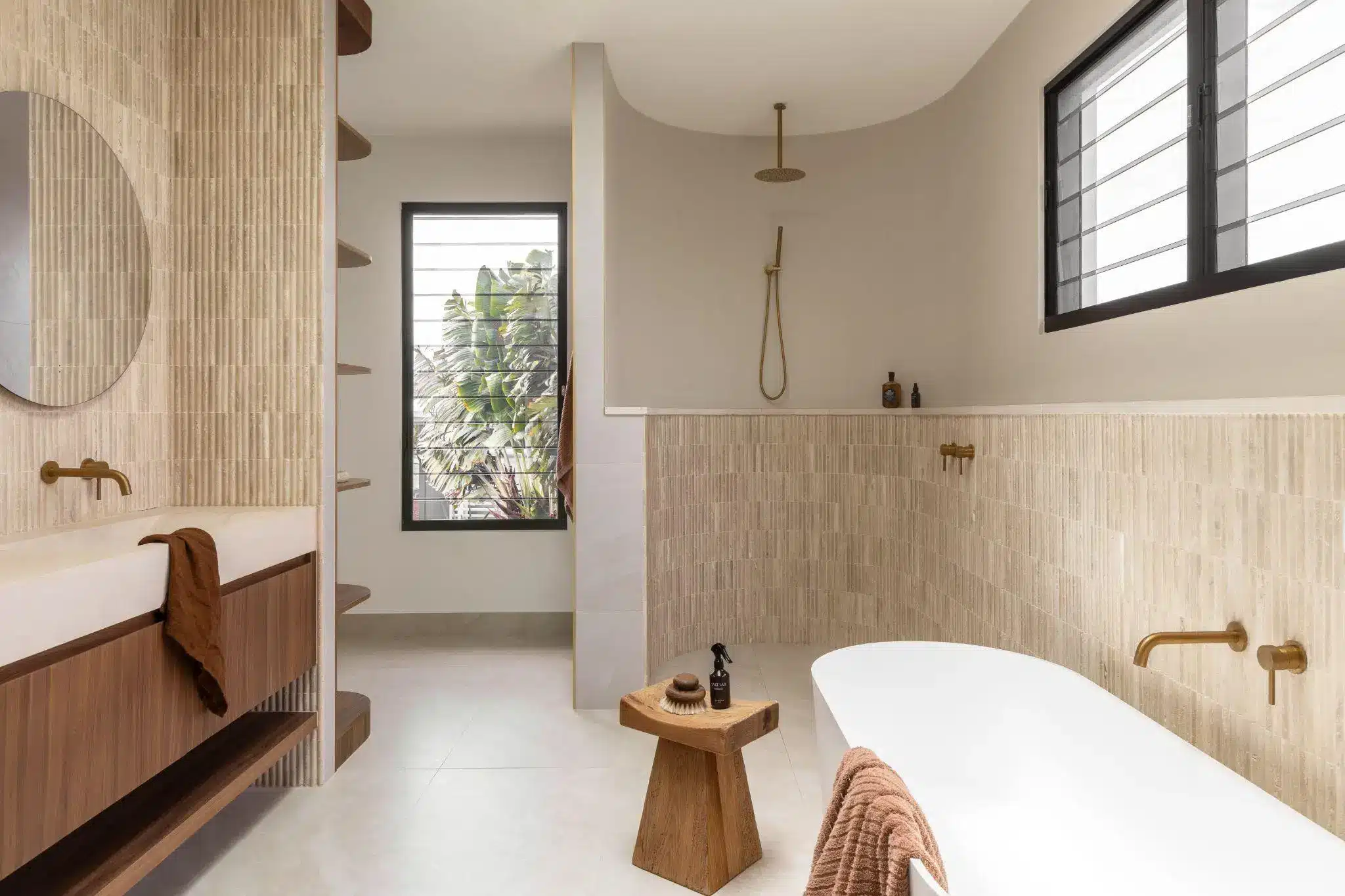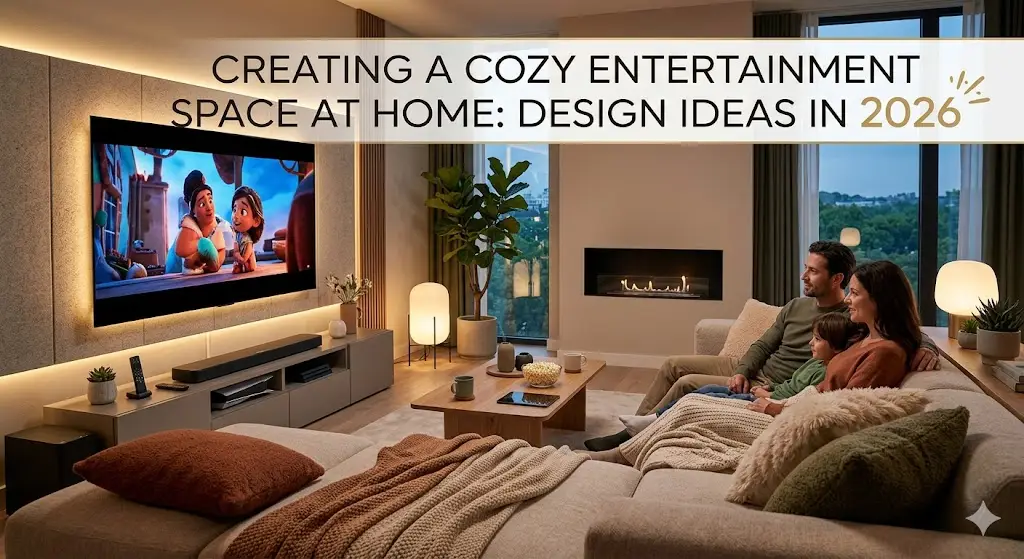
In the architectural world of 2026, the notion of the home entertainment space has evolved psychologically and structurally. The “instant house” – with its sterile, highly contrived, utilitarian entertainment spaces that looked like a showroom – is now a thing of the past. A new trend has emerged in favour of emotional, sensory and holistic well-being.
The home is no longer simply a vessel for habitation, but a contributor to human health. The design solutions of today go beyond mere appearance to an interior space that supports psychological recovery and physiological equilibrium. If you’re planning to renovate, here are the best interior design trends for a cosy entertainment space in 2016.
The Rise of the “Chameleon” Layout
The key attribute of the 2026 entertainment room is its versatility. The once-segregated home cinema, often hidden away in a windowless basement, is quickly giving way to the “chameleon” or multi-functional entertainment lounge.
An increase in urban density, diverse family structures, and the rise of remote work require the space to be multifunctional. As a result, contemporary design demands a symphony of modular design. The spatial geometry of the space is the key to the success of the multi-purpose space. With traditional geometric ratios used to achieve optimum acoustic response and visual angles, the ultimate goal is to achieve a ratio of 1:1.6:2.3.
To enable true multi-functionality within these ratios, bulky furniture is giving way to modular ecologies. The “Collage Room” ethos supports flexible seating. Sectionals can be pushed to the sides to create conversation clusters or reading corners during the daytime, but easily merge to create a single island for viewing at night. This flexibility is complemented by retracting elements, including short-throw and hidden motorized lifts, which allow large screens to disappear when the room is used for social gatherings.
Next-Level Ergonomics: Zero-Gravity and Adaptive Support
The amount of time spent engaging in digital entertainment and social networking has created a physical strain on the human body, which requires a new approach to seating. The lines between high-precision orthopedic office seating and plush lounge room furnishings have fully eroded, and a new concept of “workspitality” has emerged.
The visual preference of designers is for low, sculptural forms. The plethora of curved forms and rounded edges offers soft edges. Behind these sophisticated aesthetics lies cutting-edge mechanical technology. Luxury entertainment chairs now offer standard features of “Zero Gravity” seat designs. Using a dual-motor electric system with dynamic coordination, these seats recline the user to an exact angle of 128-135 degrees, raising the legs above their heart. This replicates stress-reducing postures, significantly relieving spinal compression and promoting circulation. Additionally, flexible lumbar supports automatically adjust to the user’s position, stiffening to support the lower part of the spine for gaming and gentling for comfortable movie-watching.
The Multi-Platform Ecosystem and Decentralized Entertainment
Home entertainment has evolved from a centralized to a distributed model. The central 120-inch OLED TV is no longer the only multimedia device. Today, multiple members of the family, or even guests, are engaged in multiple digital entertainment activities, with HD movie streaming on the television, gaming on the tablet and immersive gaming in virtual reality.
To accommodate this, new ergonomic accessories such as 360 degree tablet floor stands and revolving lap desks integrated into armrests are also being introduced in living rooms. In this environment, comfort and connectivity is important whether it be playing a game with friends on a gaming console, keeping up with social media or even trying a new online casino from the comfort of the living room. In fact, as iGaming moves towards using immersive 3D social spaces in 2016, the need for secure and comfortable device support is a living room must-have.
What’s more, the rise of mainstream Augmented Reality (AR) and Virtual Reality (VR) devices require space. The trend towards lightweight and easily moved furniture is perfectly suited to the task of removing furniture to make space for room-scale gaming.
Atmospheric Color Drenching and the “Hollywood Cottage”
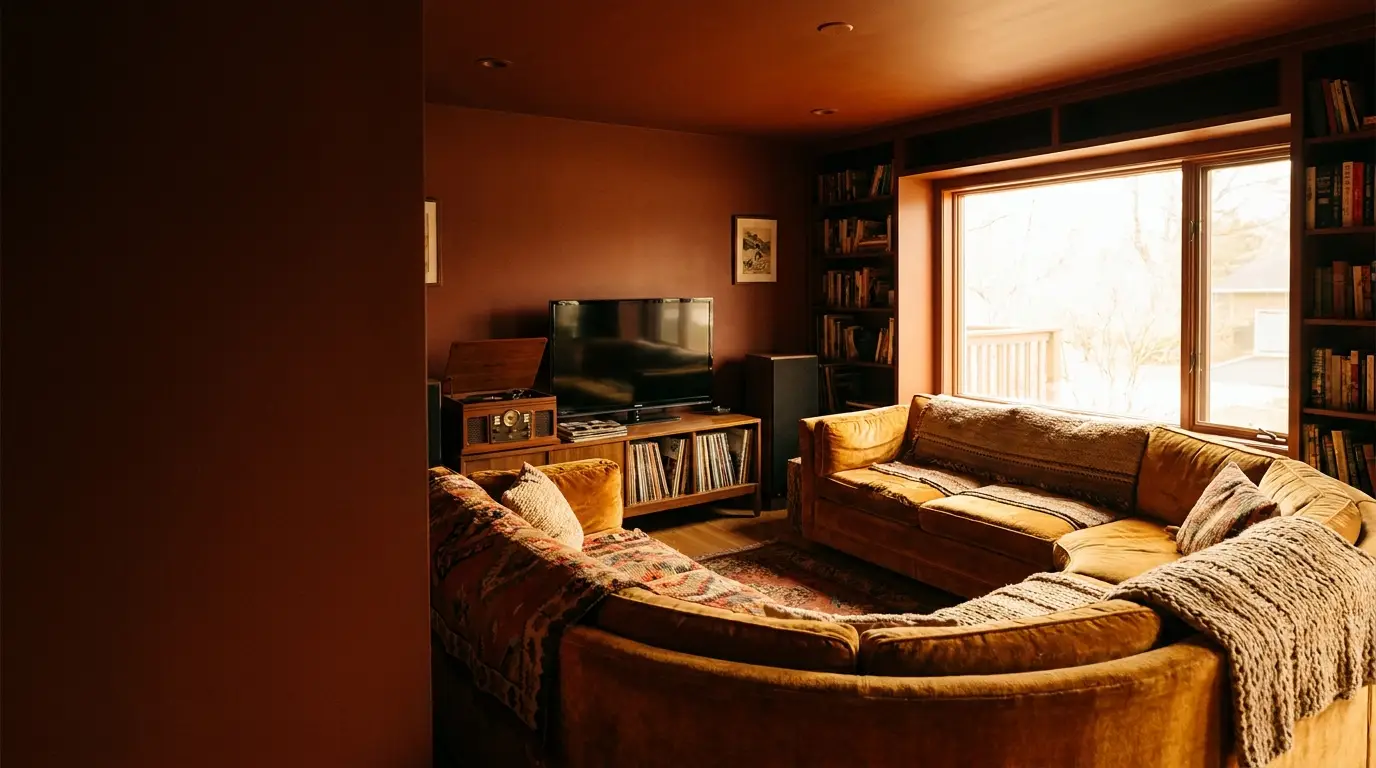
The cool, sparse interiors of the early 2020s with their “millennial grays” and white rooms have been abandoned. In 2026, interior design has moved towards warmer, earthly tones that convey comfort, tradition and peaceful elegance.
Neutrals now have personality, with toned whites such as “Cloud Dancer” (a warm white undertone) and mushroom greiges grounding interiors in a sense of biological rejuvenation. When it comes to media rooms, the contemporary design trend is “colour drenching” where the walls, ceilings and trim are painted in a unity of colour, such as warm mahogany, deep emerald or complex browns. These colours have a practical purpose by absorbing ambient light reflections from projector screens, enhancing the depth of the visual media.
In terms of style, the “Hollywood Cottage” style brings nostalgia to tech spaces. Gilded, heavy picture frames, woven textiles, reclaimed wood and veined stone are juxtaposed to form a maximalist, textured “haute comfort” milieu that helps conceal the presence of digital screens.
Organic Acoustics and Biophilic Illumination
Sound absorbers have been elevated to the level of primary architectural elements. Premium spaces no longer rely on cheap polyurethane foam – they use high-density recycled PET felt and mineral wool. Visually, these sound treatments follow biophilic, organic shapes – waves, petals, and funky 3D textures that scatter sound, while also serving as contemporary artworks. Wood slat systems are extremely popular as TV backdrops, lifting the eye upwards, and interacting with sound waves in between the slats.
Lighting is also vital in determining physiological comfort. The 2026 world embraces layered smart lighting in concert with the human body. The latest “tunable white” Color Correlated Temperature (CCT) LED lights automatically follow the sun, providing cool blue light in the morning, and warm yellow light in the evening to preserve circadian rhythms. Architectural lighting is also becoming “invisible” with LED linear lighting strips hidden behind custom millwork to create a gentle, ambient glow, removing screen glare.
Invisible Tech Infrastructure: Wi-Fi 7 and Smart Automation
Visual clutter is a quick recipe for a cluttered environment, so raw technological power is now seamlessly integrated into furniture. GaN (Gallium Nitride) power modules and Qi2 wireless charging are embedded beneath side tables and sofas to provide fast, magnetic wireless charging.
This crowded digital landscape is backed by the universal rollout of Wi-Fi 7. Thanks to the Multi-Link Operation (MLO) and 320 MHz ultra-wide channels, Wi-Fi 7 virtually eliminates stutters, allowing for 8K streaming and VR gaming without lag.
The smart home has also overcome its fragmented nature with universal standards such as Matter and Thread. With powerful Edge AI and mmWave radar sensors, the room’s master operating system knows what’s happening. It knows if you’re there, and if you’re even breathing, so ambient lighting remains on and the HVAC system is in optimal mode until the room is truly empty.
Conclusion
The 2026 residential entertainment space is a masterfully engineered blend of architecture, materials and invisible technology. Overcoming the rigidity of starkly defined single-purpose spaces, these are now “chameleon” rooms that are multi-functional. Biophilic hues, natural acoustic solutions and circadian lighting create a healing retreat. At the same time, sophisticated technology – from zero-gravity furniture to ultra-low-latency Wi-Fi 7 – provides a seamless experience. The pinnacle of luxury in 2026 residential design is sophisticated technology that is natural, supportive and cozy.