A bookshelf can be the best-looking spot in a room, full of color, texture, and personality, or it can be the messiest one, with books shoved in wherever they fit and nothing feeling right.
Styling a bookshelf isn’t random, even though it can feel that way at first.
It follows a few simple formulas you can follow, and this blog walks you through each step, with expert tips and real pictures.
In this blog, you’ll learn why bookshelf styling matters, how to style a bookshelf and decorations with clear steps, expert tips for styling a shelf, and lastly, some ideas for bookshelf styling.
How Does a Styled Shelf Change the Whole Room Game?
A bookshelf is one of the few pieces of furniture that has to work twice as hard. It stores your books, and it decorates the wall behind them.
Arranged with a little intention, it becomes the first thing people notice when they walk in.
It often covers more wall space than any other single piece in the room, so an unstyled one drags the whole space down.
A styled one does the opposite; it makes the room feel considered, even finished, without adding a single extra item.
How to Style a Bookshelf without Any Clutter?
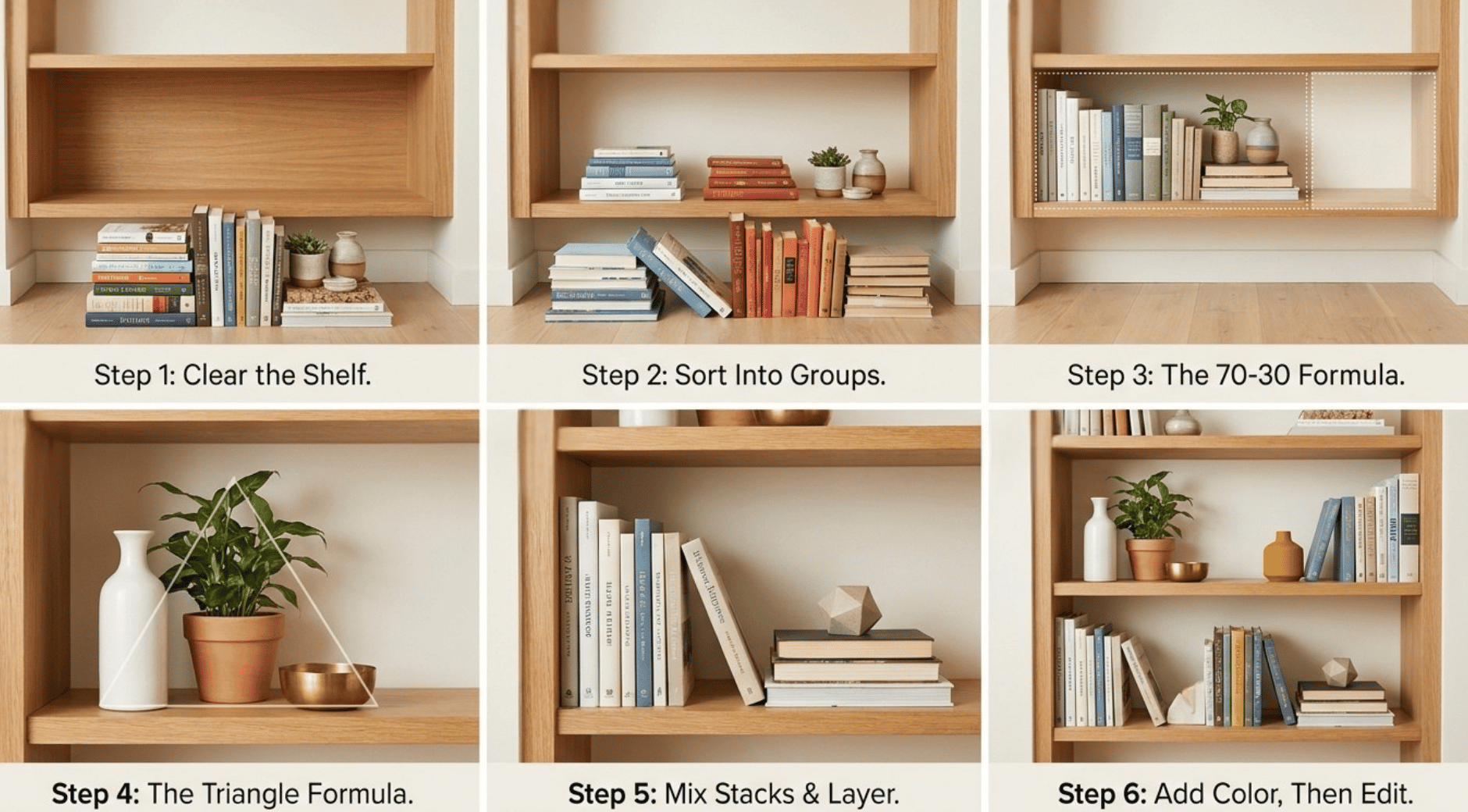
Styling a shelf comes down to six steps, plus a few formulas designers use again and again. Start by clearing the shelf, and end by grouping objects into small triangles.
Step 1: Clear the Whole Shelf First
Take everything off before you start. This gives you a blank slate. It also helps you see what you own rather than working around what’s already there.
Step 2: Sort Your Books Into Groups
Sort by category, color, or size, whatever fits how you use them. If you read often, group by subject. If looks come first, group by color or height instead.
Step 3: Use the 70-30 Formula
Fill about 70 percent of each shelf with books and objects. Leave 30 percent open.
Too much empty space looks bare. Too much clutter looks messy. This ratio sits right in the middle.
Step 4: Apply the Triangle Formula for Objects
Group decor in threes, one tall, one medium, one short. Your eye will naturally form a triangle shape between them. This one trick is behind most shelves that look put-together without much effort.
Step 5: Mix Stacks and Layer for Depth
Don’t stand every book upright in a straight row. Stack a few flat. Lean a couple against the side. Let one lie flat under a small object. Break the pattern every other shelf.
Then push some books toward the back and set an object, or a short stack, just in front of them.
Step 6: Add Color, Then Step Back and Edit
Pick one main color for 60 percent of the shelf. Use a second color for 30 percent. Add a pop of a third color for the last 10 percent. This keeps the look tied together instead of scattered.
Once it’s done, stand across the room and look at the whole shelf, not one part at a time.
If you want to build a color scheme that works across the shelf and the wider room, Interior Design’s color palette walks through how to choose and layer colors that feel cohesive rather than random.
Bookshelf Styling Ideas to Try
The fastest way to find your own style is to browse real examples first. Here are some looks to borrow from, depending on your space and taste.
1. Rainbow Color-Block Shelf
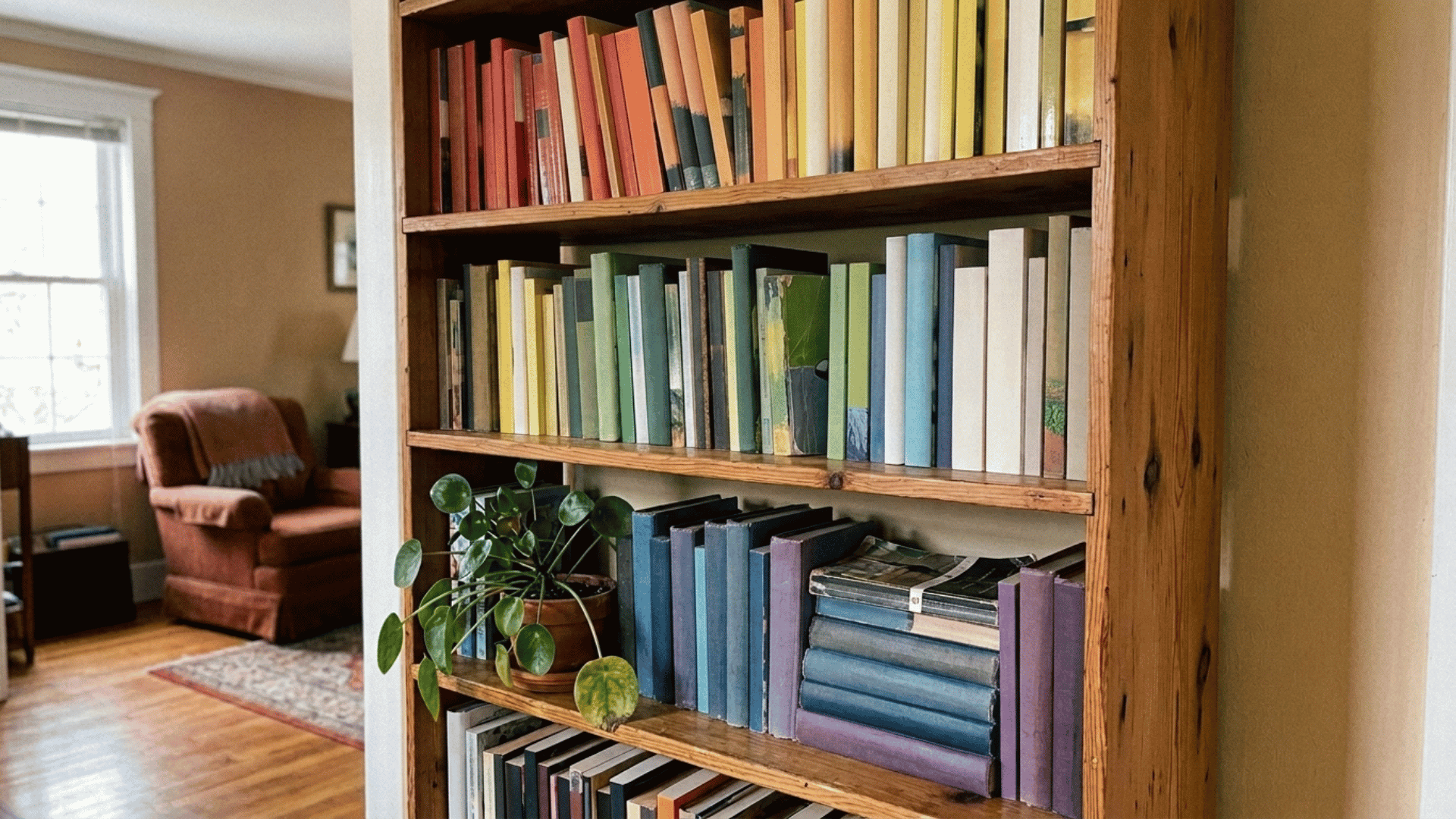
Books arranged by spine color from warm to cool tones, turning the whole shelf into one big graphic wall.
It’s bold, but it works best when every other object on the shelf stays neutral.
2. Minimalist Black and White
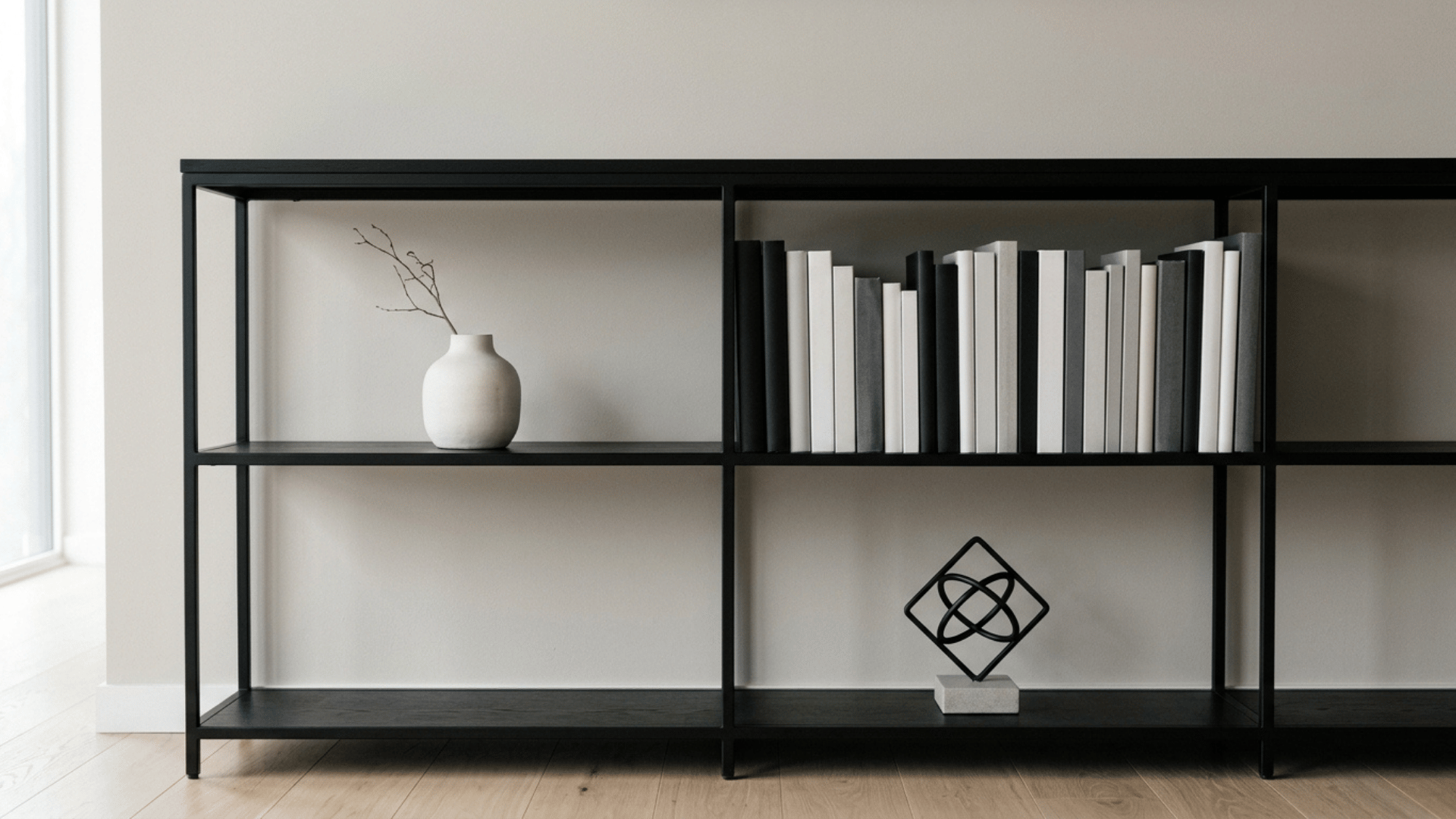
Only black, white, and gray books and objects, with plenty of open space between groupings. Less clutter here means every single piece gets noticed.
The monochrome palette creates a clean, modern look that feels calm and intentional.
Leaving extra space around each item helps the shelf feel organized rather than empty. Different shapes and finishes add interest while keeping the color scheme simple.
3. Maximalist Mixed Collection
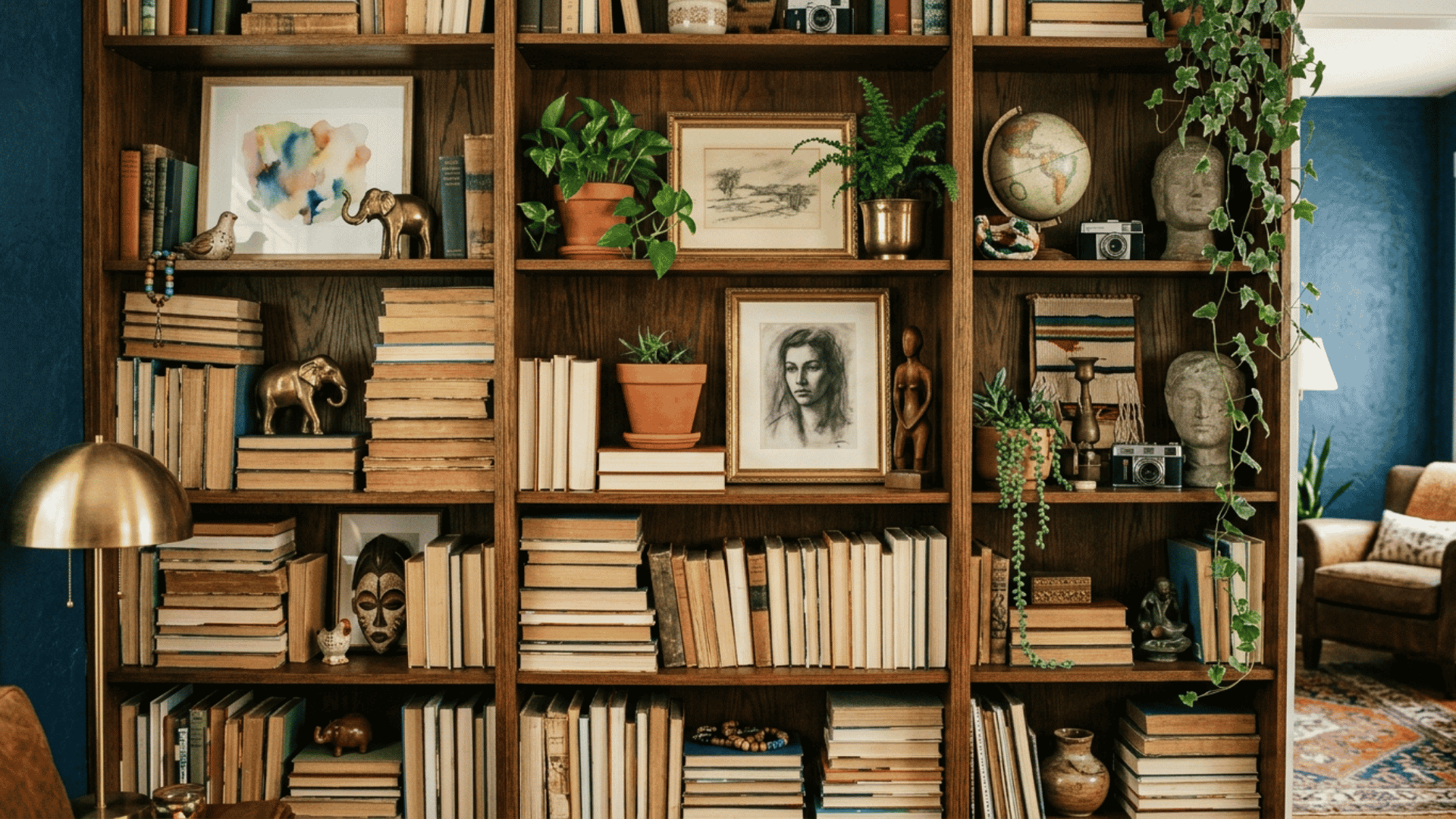
Layers of books, art, plants, and travel finds packed close together for a lived-in, curated look. Nothing matches on purpose, yet it still feels pulled together.
The mix of personal objects gives the shelf a story and makes it feel collected over time.
Combining different heights, colors, and textures keeps the arrangement interesting without looking messy.
4. Warm Wood and Neutral Tones
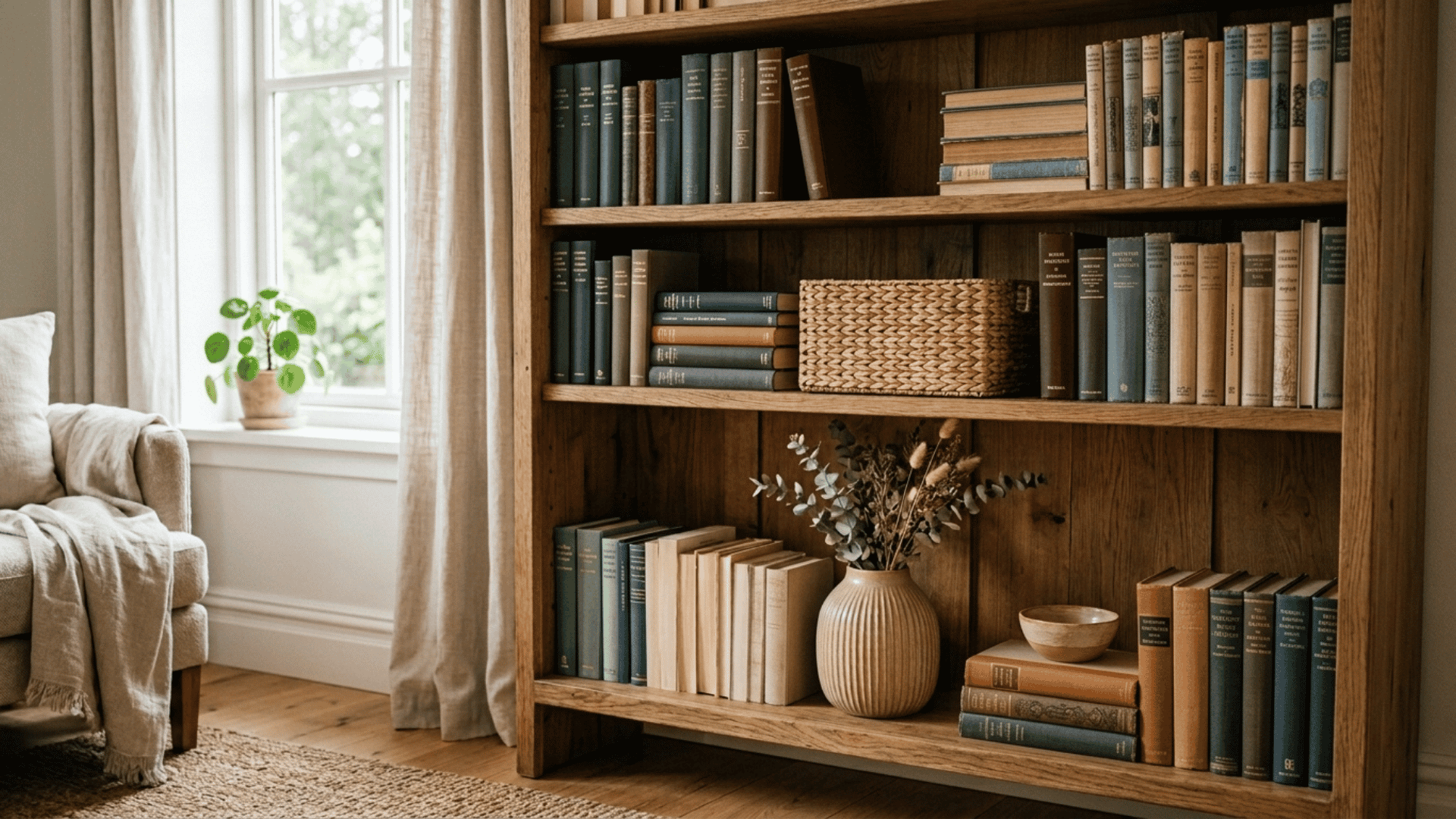
Natural wood shelves paired with cream and tan book spines, woven baskets, and a couple of ceramic pieces. The whole shelf feels calm and easy on the eyes.
The neutral palette creates a soft, balanced look that blends naturally with cozy interiors. Warm wood tones add depth while keeping the overall arrangement relaxed and inviting.
5. Small Apartment Ladder Shelf
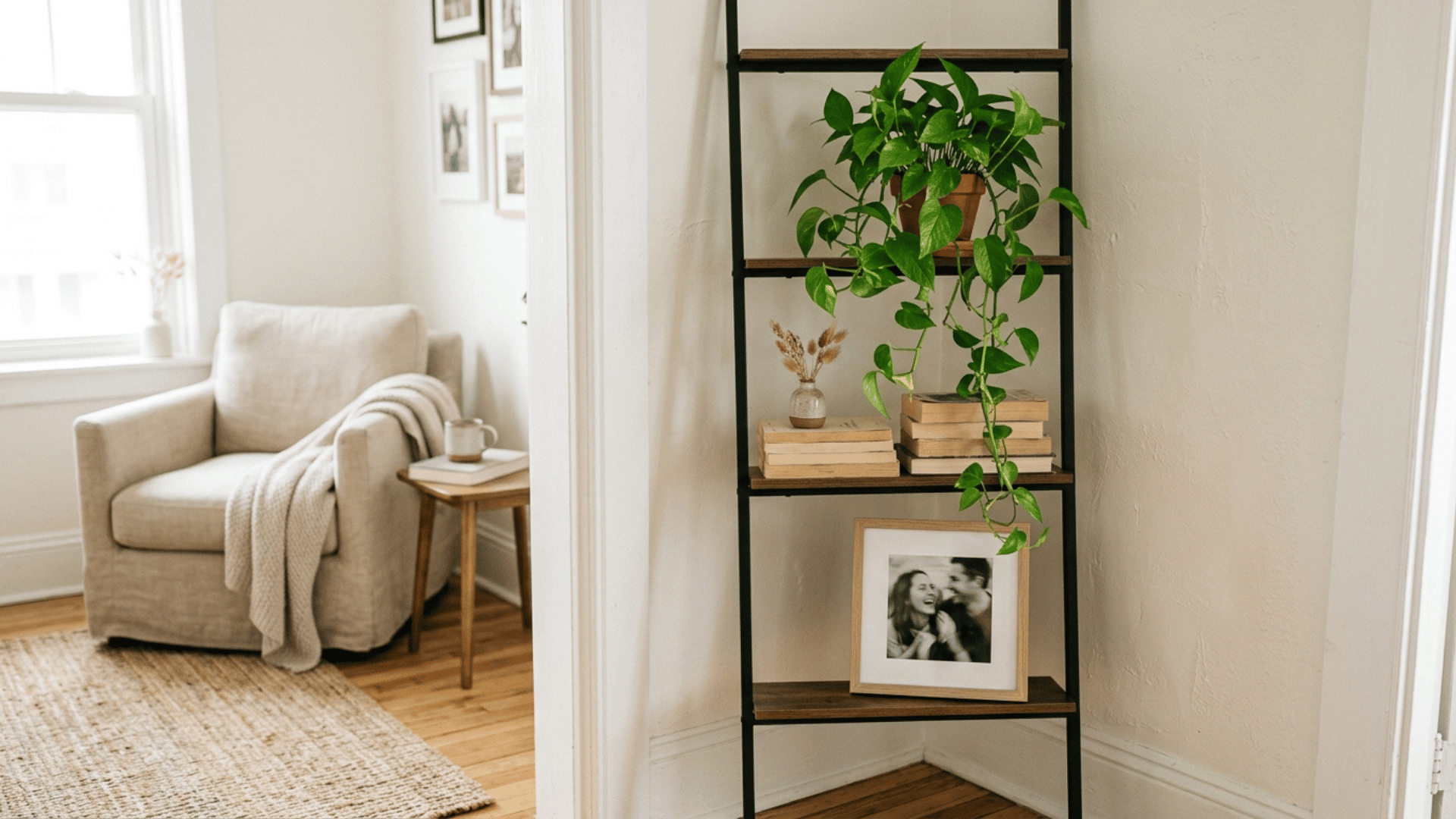
A narrow ladder-style shelf that proves you don’t need built-ins to style books well. A few books, one plant, and a small frame are all it takes.
The slim design works well in small spaces while still adding height and personality to a room.
Keeping the arrangement simple allows each item to stand out without making the shelf feel crowded.
A mix of books, greenery, and personal touches creates a balanced display with minimal effort.
6. Kid’s Room Reading Nook
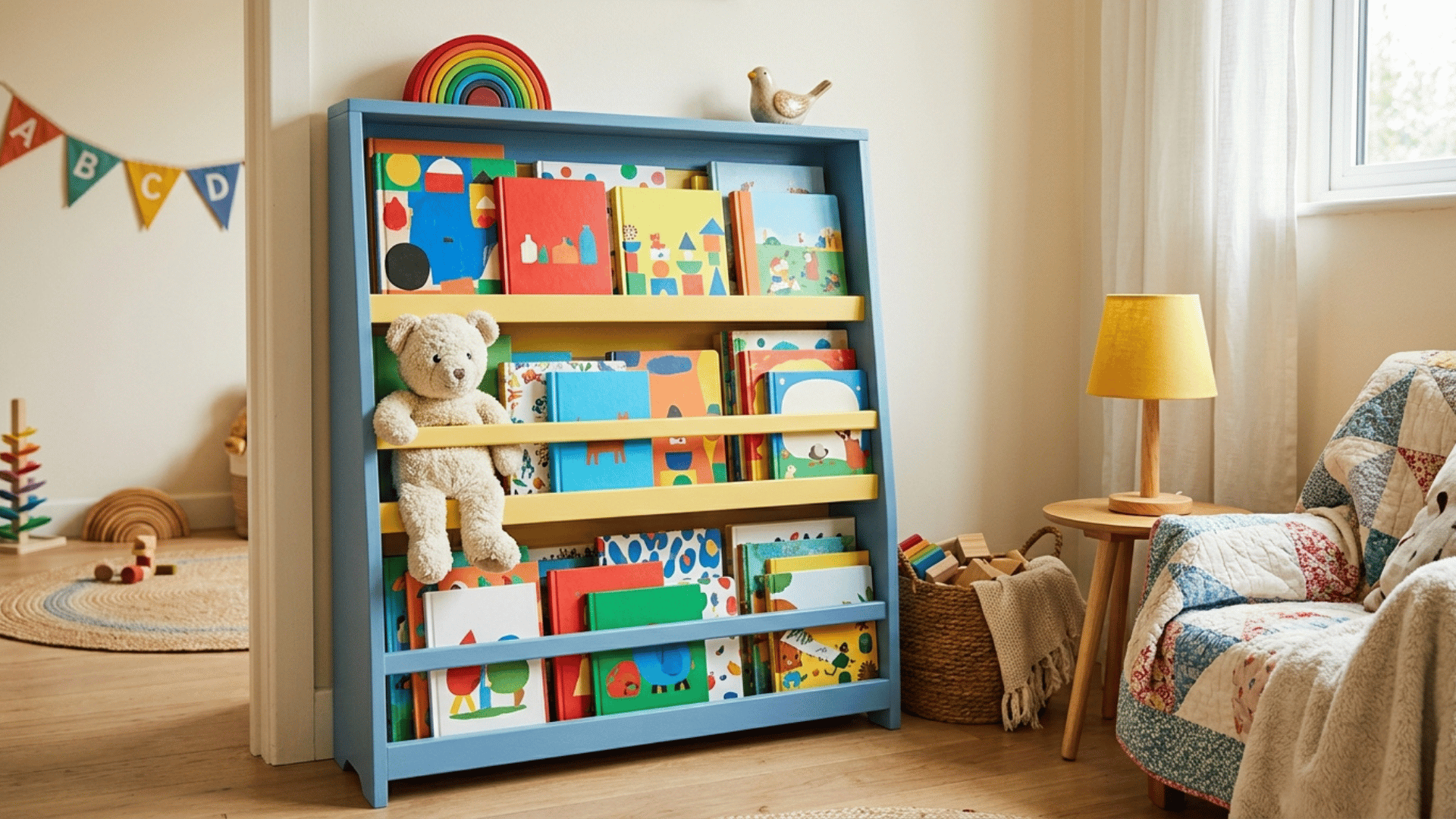
Colorful picture books facing outward so covers show, mixed with a few soft toys and a reading lamp. Facing books out makes them easier for little hands to grab, too.
The bright covers add color and make the shelf feel playful and welcoming for children. Soft toys and cozy accessories create a comfortable corner that encourages reading time.
7. Built-In Library Wall
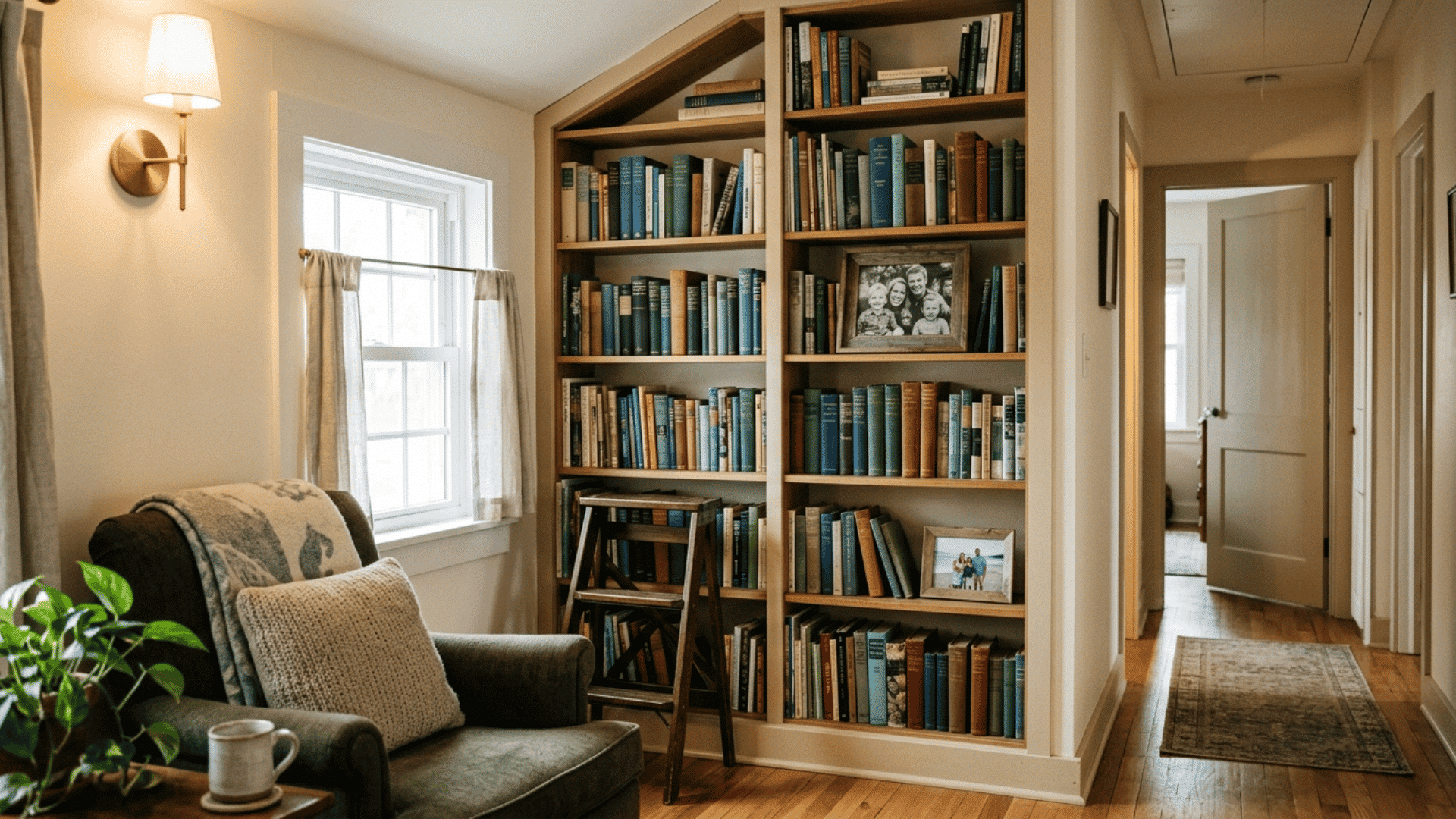
Floor-to-ceiling shelves, mostly filled with books, broken up by a rolling ladder and a few framed pieces. The scale alone makes this style feel like a real home library.
The tall shelving creates a dramatic focal point while making the room feel thoughtful and established.
A mix of books and artwork prevents the shelves from looking too heavy or repetitive.
8. Coastal Themed Shelf

Blue-and-white book spines paired with a few shells, driftwood, or a piece of woven rope for texture. The look stays light and breezy without feeling like a theme park.
The coastal elements add a relaxed feel while keeping the shelf clean and refined. Natural textures like wood, rope, and shells bring depth without overwhelming the simple color palette.
Keeping the accessories minimal helps the display feel inspired by the coast rather than overly themed.
This style works especially well in bright spaces where soft colors and natural materials can stand out.
9. Boho Eclectic Shelf
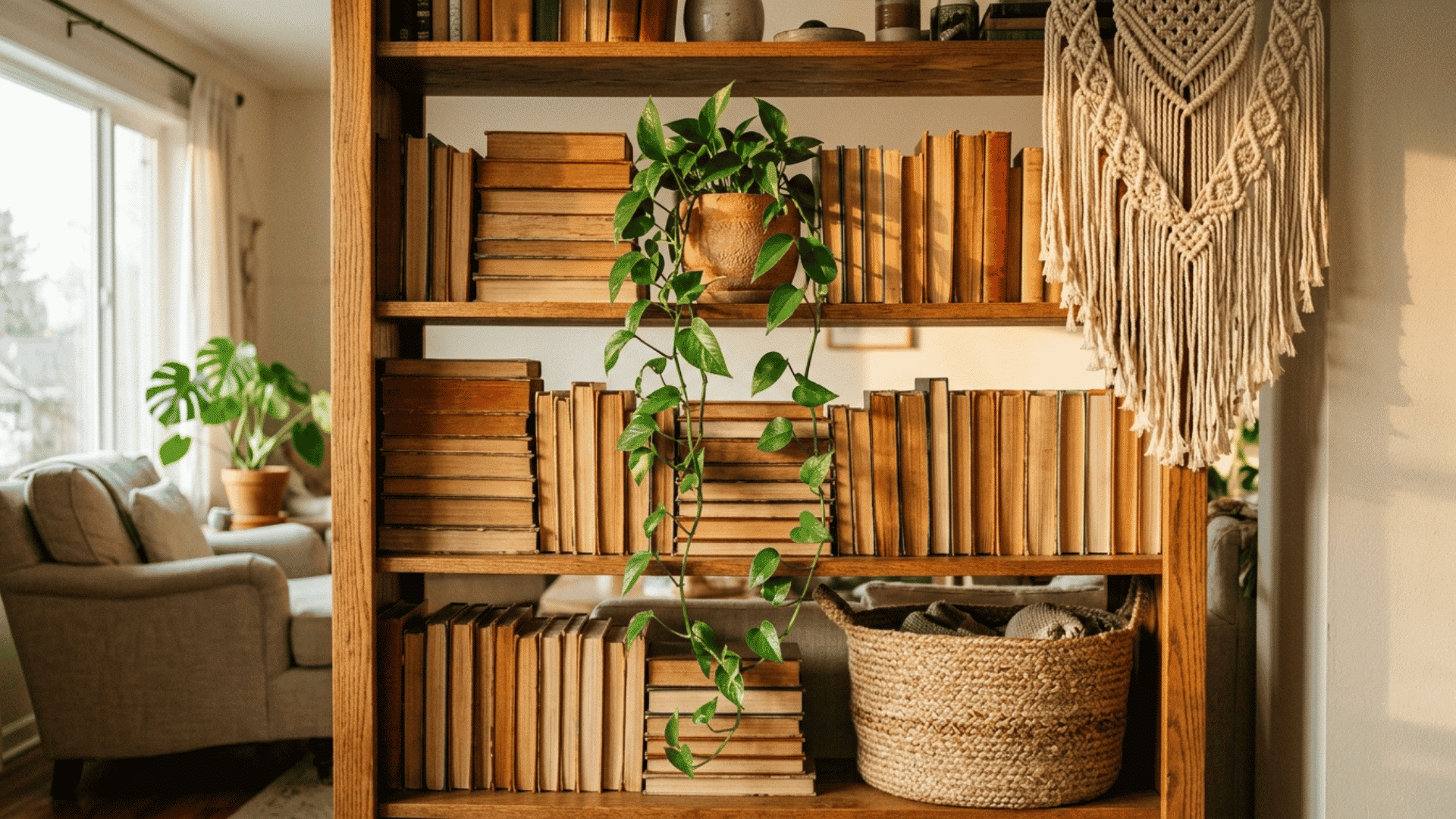
Terracotta pots, a small woven basket, and a stack of well-worn books in warm earthy tones layered together. Nothing here is matched on purpose, and that’s exactly the point.
The mix of natural materials adds warmth and makes the shelf feel relaxed and lived-in.
Different shapes and heights keep the arrangement interesting without making it look overly styled. The earthy palette creates a calm, grounded feel that works well with cozy interiors.
10. Vintage and Antique Shelf

Leather-bound books, an old brass compass, and a couple of aged frames give this shelf a collected-over-decades feel.
Small worn details make the whole thing feel more real.
Add antique-inspired pieces like old books, brass objects, or weathered frames to bring character and history to the shelf.
11. Monochrome Single-Color Shelf
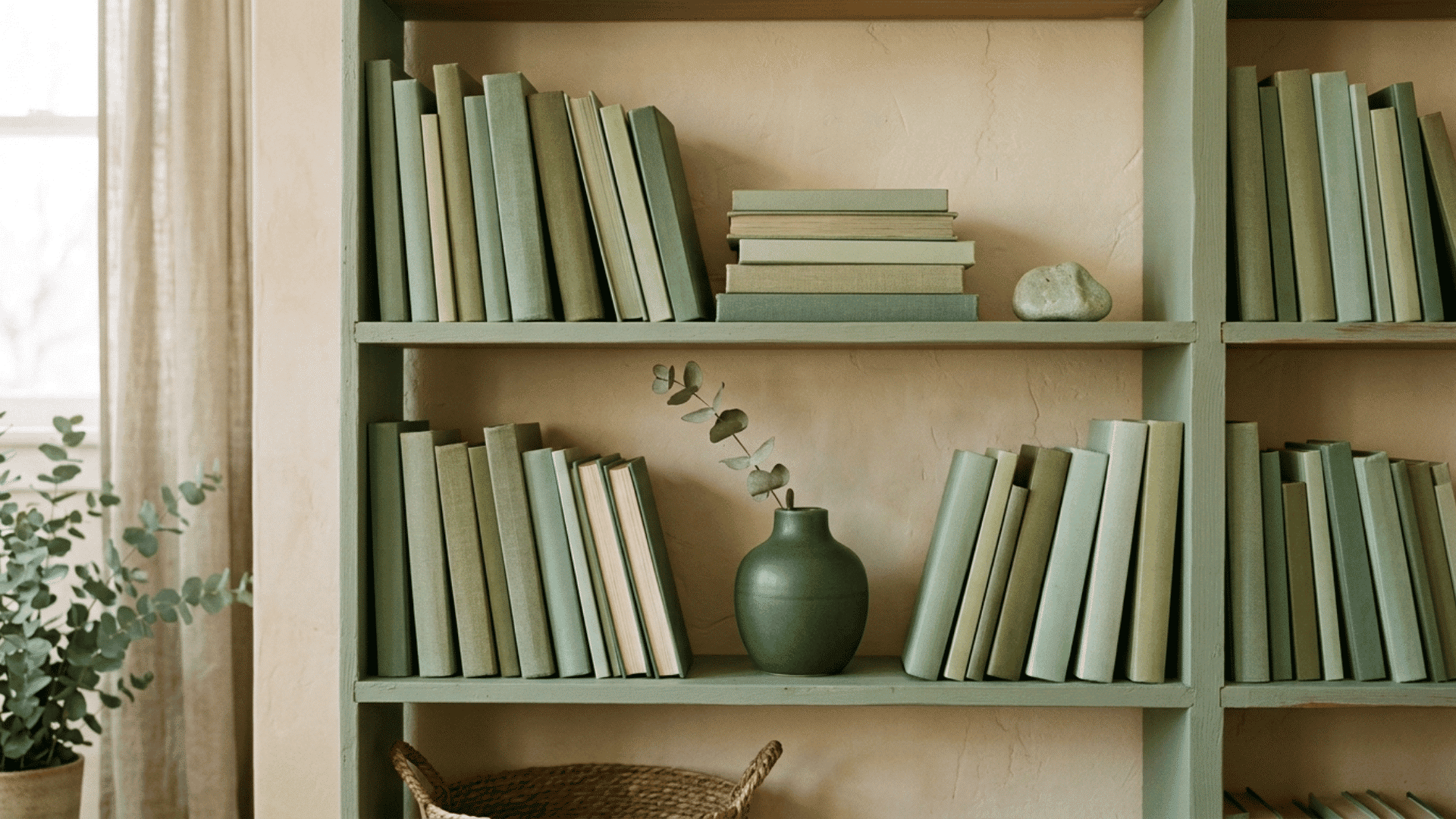
Every book and object on the shelf sits in one color family, like all shades of green or all shades of blue. It’s a simple trick that always looks intentional.
Using different tones within the same color keeps the shelf interesting while still creating a calm, coordinated look.
Mix lighter and darker shades to add depth without making the arrangement feel too busy.
This approach works especially well when you have a mix of books, artwork, and decorative pieces.
Final Thoughts
Learning how to style a bookshelf isn’t about buying more stuff or filling every empty space. It’s about arranging what you already own with a little more thought and care than before.
Start with one shelf instead of tackling the whole bookcase at once. Use the 70-30 and triangle formulas as your guide, and expect to reshuffle things a few times.
Pick one tip from this guide and try it today, whether that’s grouping books by color or adding a single plant. Small changes add up fast, and your shelf will look better by tonight.
However you decide to style it, the goal is a shelf that feels like yours, not a showroom. Take your time with it, and let it grow and change along with your collection.