Sintered stone is an engineered surface made from natural minerals, pressed together under intense heat with no resins or fillers added.
That’s what gives it an edge over marble, granite, and quartz.
It resists scratches, handles hot pans without scorching, and won’t stain from spills.
People are choosing it for countertops, backsplashes, flooring, and outdoor kitchens because it holds up better.
This blog covers what it’s made of, its standout features, common uses, and the pros and cons worth knowing before you buy, plus real cost numbers.
What is Sintered Stone?
It starts as raw mineral dust and ends as one of the toughest surfaces you can put in a kitchen.
Manufacturers start with a mix of natural raw materials, mainly Quartz, feldspar, clay, and mineral pigments, with no resins, plastics, or fillers involved.
These materials get ground into a fine powder, then pressed under extreme heat and pressure, often above 1200°C.
This mimics how igneous rock forms deep in the earth, just compressed into hours instead of thousands of years.
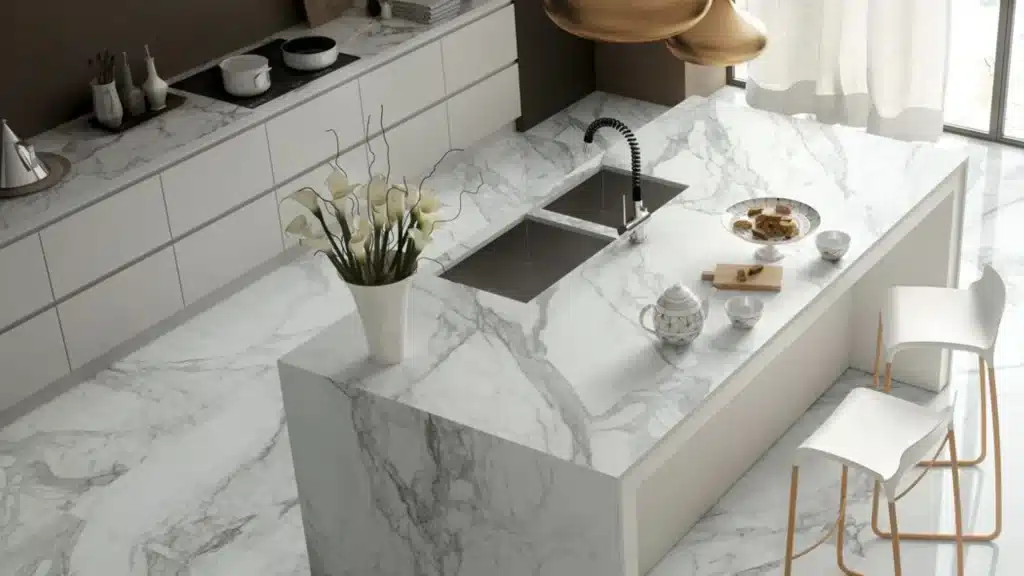
That strength and heat resistance make it a good fit for countertops, backsplashes, flooring, bathroom vanities, and outdoor kitchens, where it handles hot pans, resists moisture, and withstands UV rays without fading.
Click here for tips to clean granite countertops!
Key Features of Engineered Stone
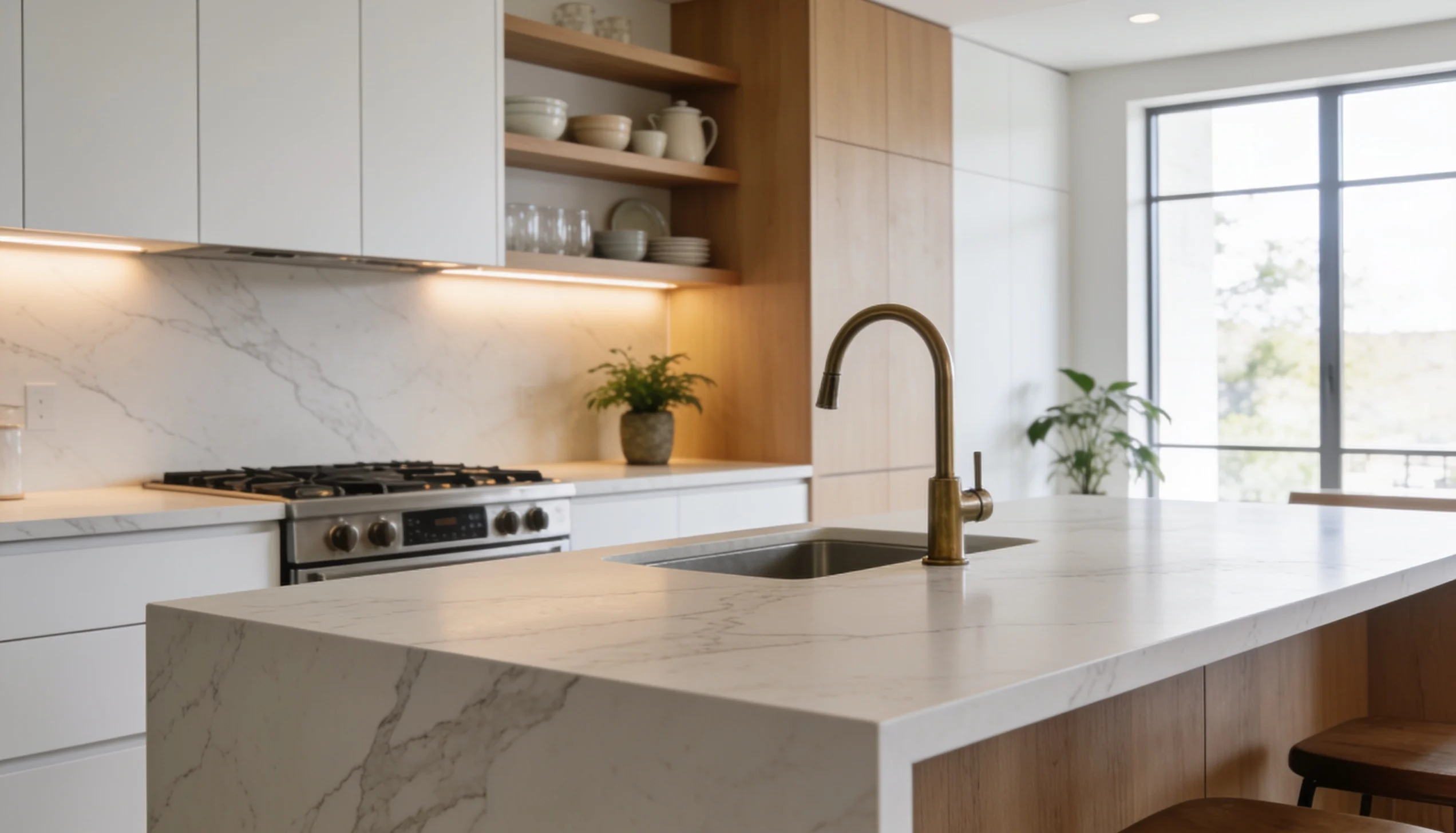
Five properties set this stone apart, and together they explain why architects and homeowners keep picking it over older materials.
Heat and Fire Resistance
Engineered stone can handle direct heat from pans straight off the stove. Since it contains no resins, there’s nothing inside the material to scorch or burn.
Scratch and Impact Resistance
The sintering process creates a dense, hard surface that resists everyday scratches from knives, pots, and pans, though sharp impacts on edges can still cause chipping.
Stain and Water Resistance
The stone is non-porous, so liquids like wine, coffee, and oil sit on the surface instead of soaking in. Spills wipe away easily and won’t leave lasting marks, even if left for a while.
UV Resistance for Outdoor Use
Quartz left outdoors often yellows within a couple of summers, but sintered stone won’t yellow or fade in constant sunlight, making it a solid pick for outdoor kitchens and patios.
Hygienic and Food-Safe Surface
The surface never absorbs water, so bacteria and mold have nowhere to grow. It never needs sealing, and cleaning is as simple as wiping it down with soap and water.
Why Should You or Should You Not Sintered Stone Countertop?
Installation runs $60 to $200 per square foot, depending on the brand and slab thickness.
In return, you get a surface that asks very little afterward; a damp cloth and mild soap handle most spills, and there’s no sealing or polishing to keep up with.
A simple look at what it delivers and what it asks of you, so you can decide if the price makes sense for your space.
Pros
These are the strengths that make it worth the higher price tag for many homeowners.
- Resists scratches, dents, and heavy daily use
- Handles direct heat without scorching or cracking
- Non-porous, so stains and bacteria don’t settle in
- Won’t fade or yellow in sunlight
- No sealing needed; cleanup is just soap and water
- Often pays for itself over time since installation runs $60 to $200 per square foot, but there’s no sealing, polishing, or special care to budget for afterward.
Cons
These are the tradeoffs worth thinking through before you commit to it.
- Costs more upfront than granite or standard quartz, often on the higher end of that $60 to $200 per square foot range
- Needs a trained fabricator to cut and install
- Edges can chip from a hard knock
- Not a realistic DIY project
- Harder to repair than laminate or butcher block
Sintered Stone vs Quartz vs Granite vs Porcelain
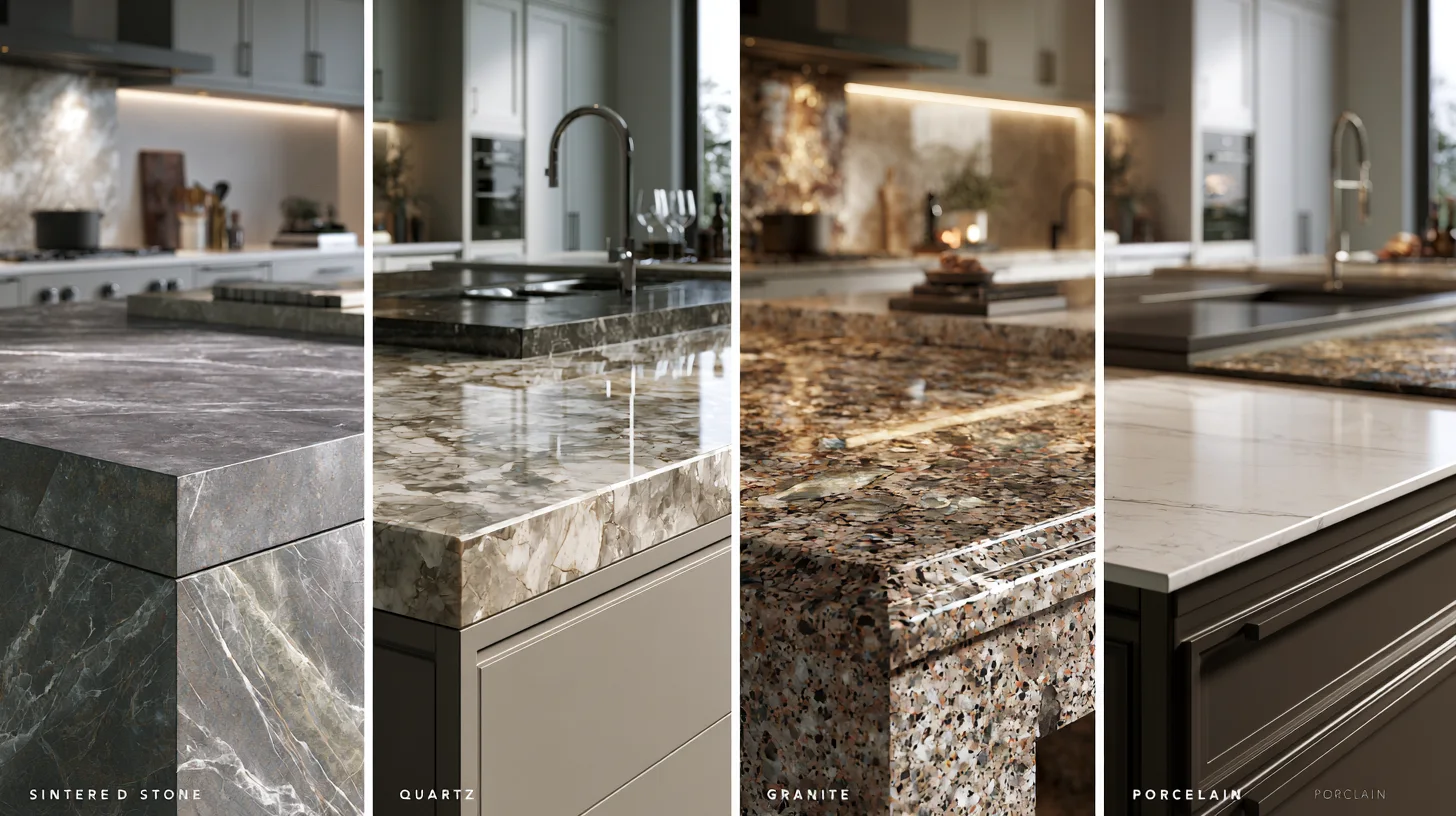
And this is how this stone behaves compared to the three most commonly used surfaces.
Quartz
Quartz contains resins so that it can scorch or discolor over a hot pan, but it handles direct heat without issue.
Both resist stains well, and neither needs sealing, so maintenance is similar on that front. This stone usually costs more, since fabrication requires specialized equipment.
Granite
Granite is porous and needs regular sealing, while this surface never needs sealing at all.
Both hold up well to scratches and heat, though granite is more prone to staining from oil or wine. And prices? They’re in a similar range.
Porcelain
These two materials are made through similar processes, so both resist heat, stains, and fading equally well.
This stone is typically thicker and more impact-resistant, while porcelain slabs run thinner and can crack under heavy pressure. Porcelain tends to cost less, making it the more budget-friendly pick.
Conclusion
This stone stands out for its ability to withstand heat, scratches, and sun exposure better than almost any other countertop material available today.
It skips sealing, resists stains, and holds its color for decades with minimal upkeep.
That said, the right choice still depends on your budget, your style, and how the space gets used day to day.
For kitchens and outdoor areas built for heavy use, this surface earns its higher price tag through sheer durability.
Frequently Asked Questions (FAQs)
1. How Long Do Sintered Stone Countertops Last?
With proper installation, these countertops typically last 25 to 50 years.
2. What Colors and Patterns Does it Come In?
It comes in a wide range, including finishes that mimic marble, concrete, wood, and solid stone tones.
3. Is it Eco-Friendly?
Yes, it’s made from natural minerals with no resins, and many manufacturers use recycled content.
4. What Thickness does this Stone come in?
Common thicknesses range from 6mm for wall cladding to 12mm or 20mm for countertops.