One day, your kitchen is fine. The next tiny flies are circling your fruit bowl and hovering over your sink.
If that sounds familiar, you are not alone.
Learning how to make a fruit fly trap at home is one of the quickest ways to get the problem under control
And you probably already have everything you need sitting in your kitchen right now.
Are Fruit Fly Traps Really Useful?
Yes, they work well when used correctly. Fruit fly traps do not just catch a few flies here and there.
A well-placed trap can significantly reduce a fruit fly population within a day or two, especially when you also remove the source attracting them.
Store-bought traps are available, but homemade traps using simple kitchen ingredients can be just as effective.
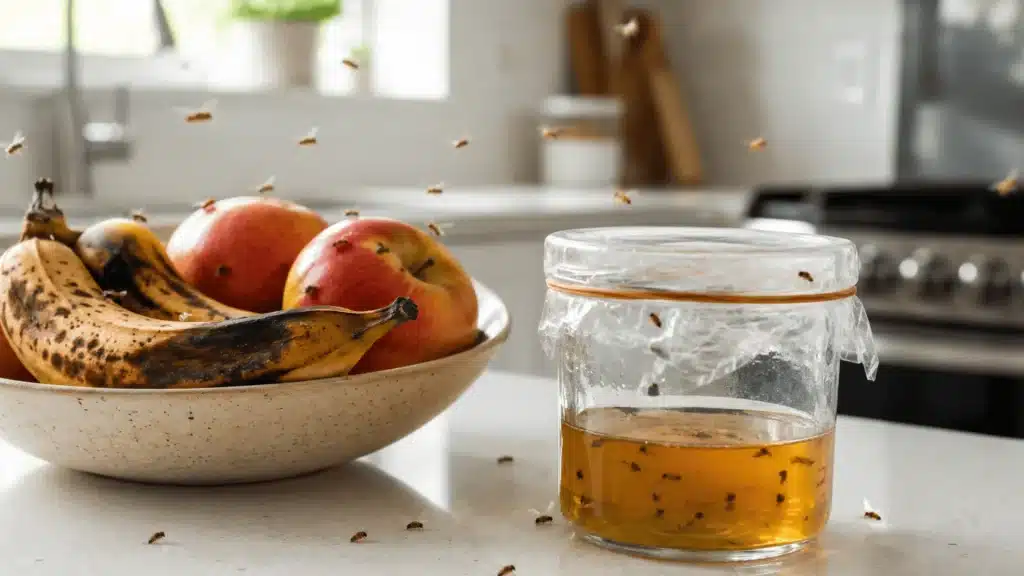
Apple cider vinegar, dish soap, and a small container are often enough to start catching flies quickly. The key is placing the trap close to where the flies are most active.
One thing to keep in mind is that traps alone may not solve a heavy infestation.
If flies keep coming back, there is likely a hidden breeding spot nearby, such as a forgotten piece of fruit, a damp drain, or a recycling bin that has not been rinsed.
Common Places Fruit Flies Hide
Fruit flies do not just hang around your fruit bowl. They tend to gather anywhere there are sticky spots, moisture, fermentation, or organic buildup.
This can attract ants, especially in warm kitchens.
Here are the most common spots:
- Kitchen drains are a major breeding ground because the damp buildup inside provides an ideal environment for eggs.
- Trash cans and recycling bins with sticky residue or old food scraps attract them quickly.
- Overripe or bruised fruit left on the counter is one of the most common culprits.
- Wet dish towels and sponges retain enough moisture to attract flies.
- Forgotten spills under appliances or inside cabinets can go unnoticed but still attract flies.
Related: How to eliminate ants from your home.
Things You Will Need
For the basic apple cider vinegar trap, gather:
- A small jar, bowl, or cup
- Apple cider vinegar
- A few drops of liquid dish soap
- Plastic wrap or a small piece of paper
- A toothpick or a pen to poke holes
Most of these are already in your kitchen.
If you do not have apple cider vinegar, white wine or red wine can also work as a substitute, though apple cider vinegar tends to attract fruit flies more reliably because of its strong fermented scent.
How to Make a Fruit Fly Trap
There are a few ways to set one up at home, but the apple cider vinegar method is the easiest place to start.
It takes less than five minutes and uses things you likely already have.
Apple Cider Vinegar Trap Method
This is the most popular homemade fruit fly trap because it is fast, cheap, and easy to use.
Step 1: Pour the Vinegar

Add about half an inch of apple cider vinegar to your container. You do not need to fill it up. A small amount is enough to attract flies without wasting the liquid.
Step 2: Add Dish Soap

Add two to three drops of liquid dish soap and stir gently.
The soap breaks the surface tension of the vinegar, so flies that land on it sink rather than fly away. Without the soap, flies can land, feed, and escape.
Step 3: Cover the Container
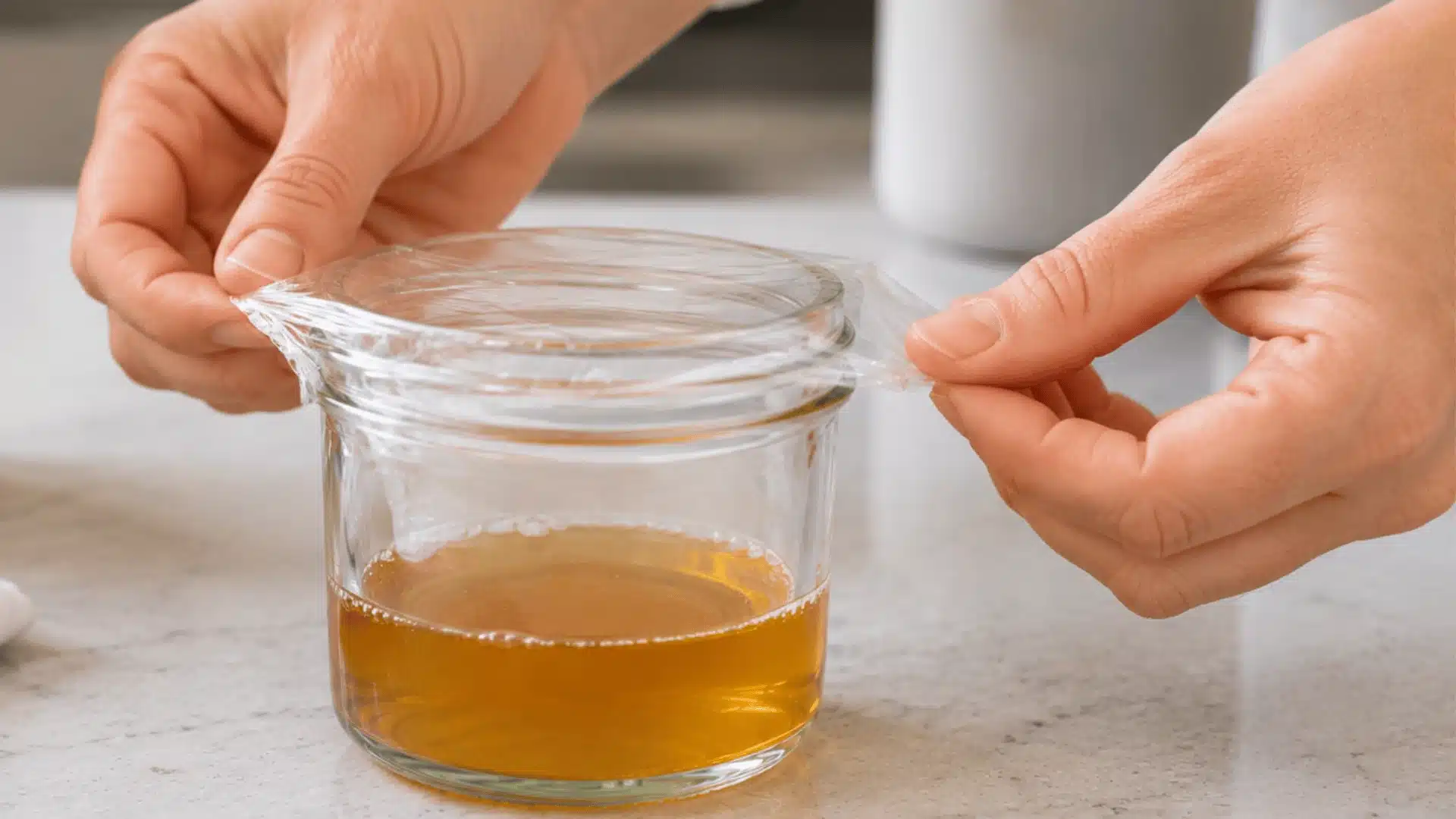
Cut a piece of plastic wrap large enough to cover the top of the container with a little overhang. Pull it snug and press the edges down to keep it in place.
You can use a rubber band to secure it if needed.
Step 4: Poke Small Holes
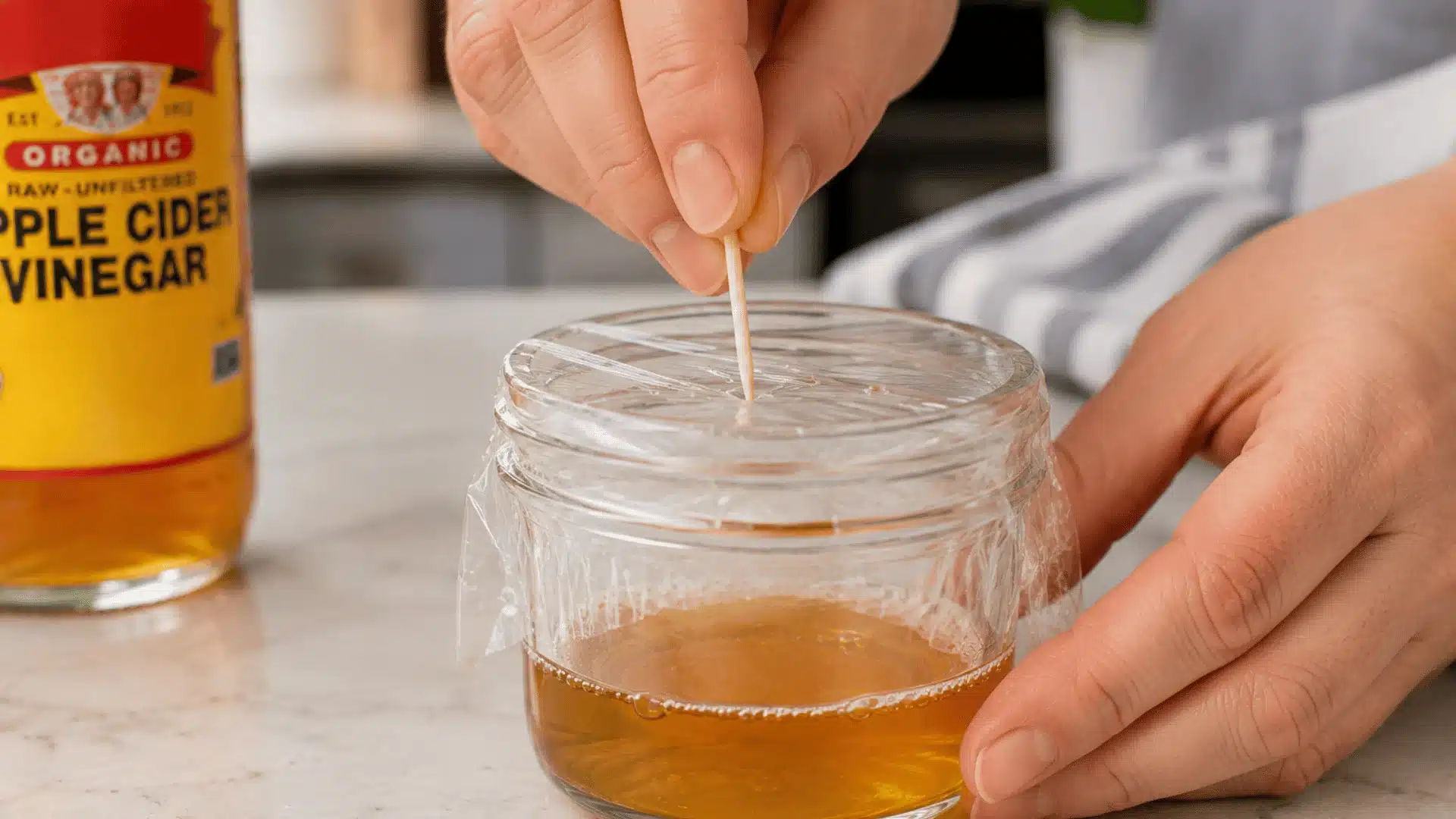
Use a toothpick to poke five to eight small holes in the plastic wrap.
The holes should be wide enough for a fruit fly to enter but small enough that they cannot easily find their way back out.
A common mistake here is making the holes too large, which lets flies escape just as easily.
Step 5: Place the Trap
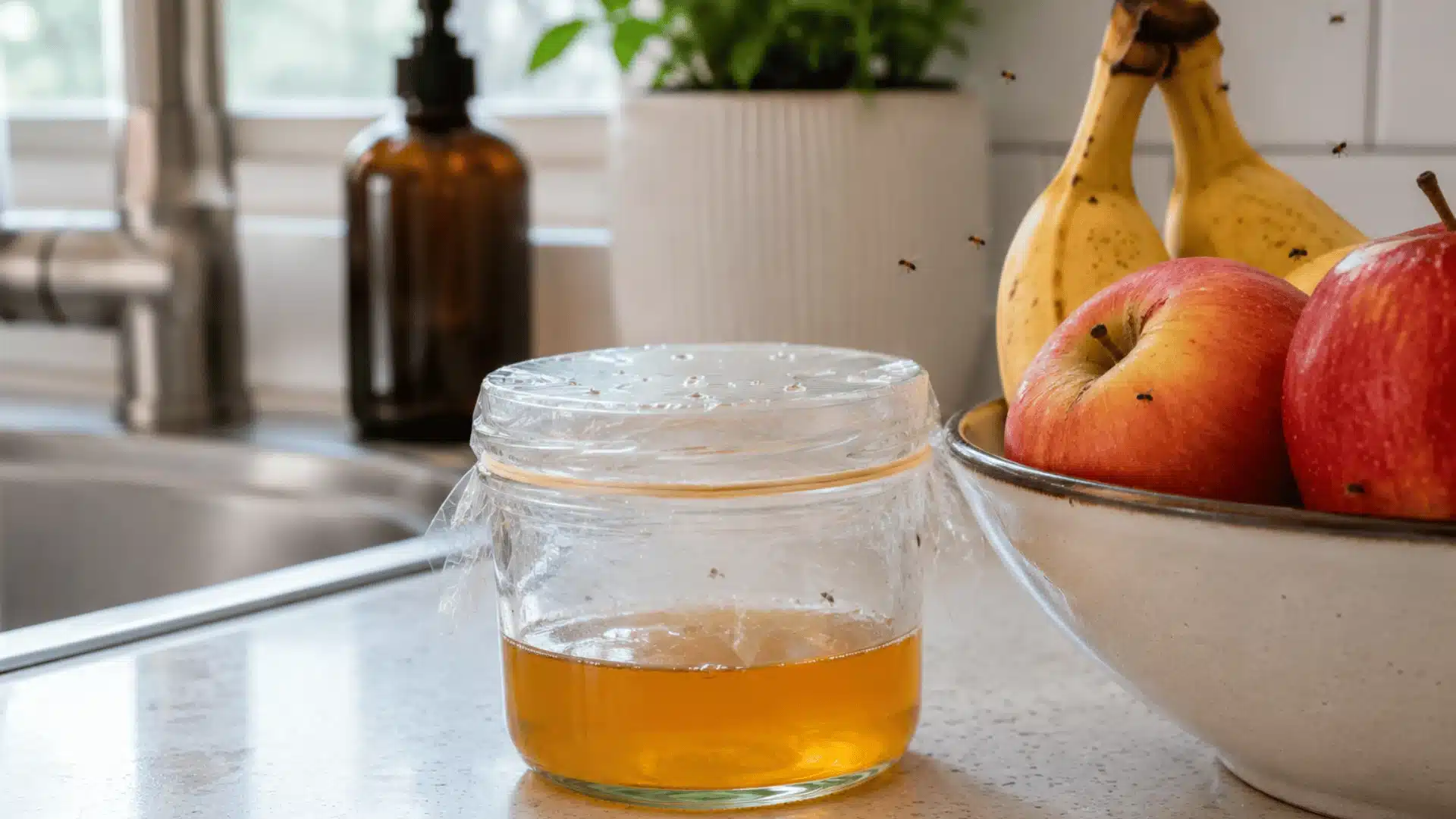
Set the trap near the area where you see the most fly activity, such as next to the fruit bowl, beside the sink, or near the trash can.
Check it after 24 hours to see how many flies it has caught.
Alternative Fruit Fly Trap Ideas
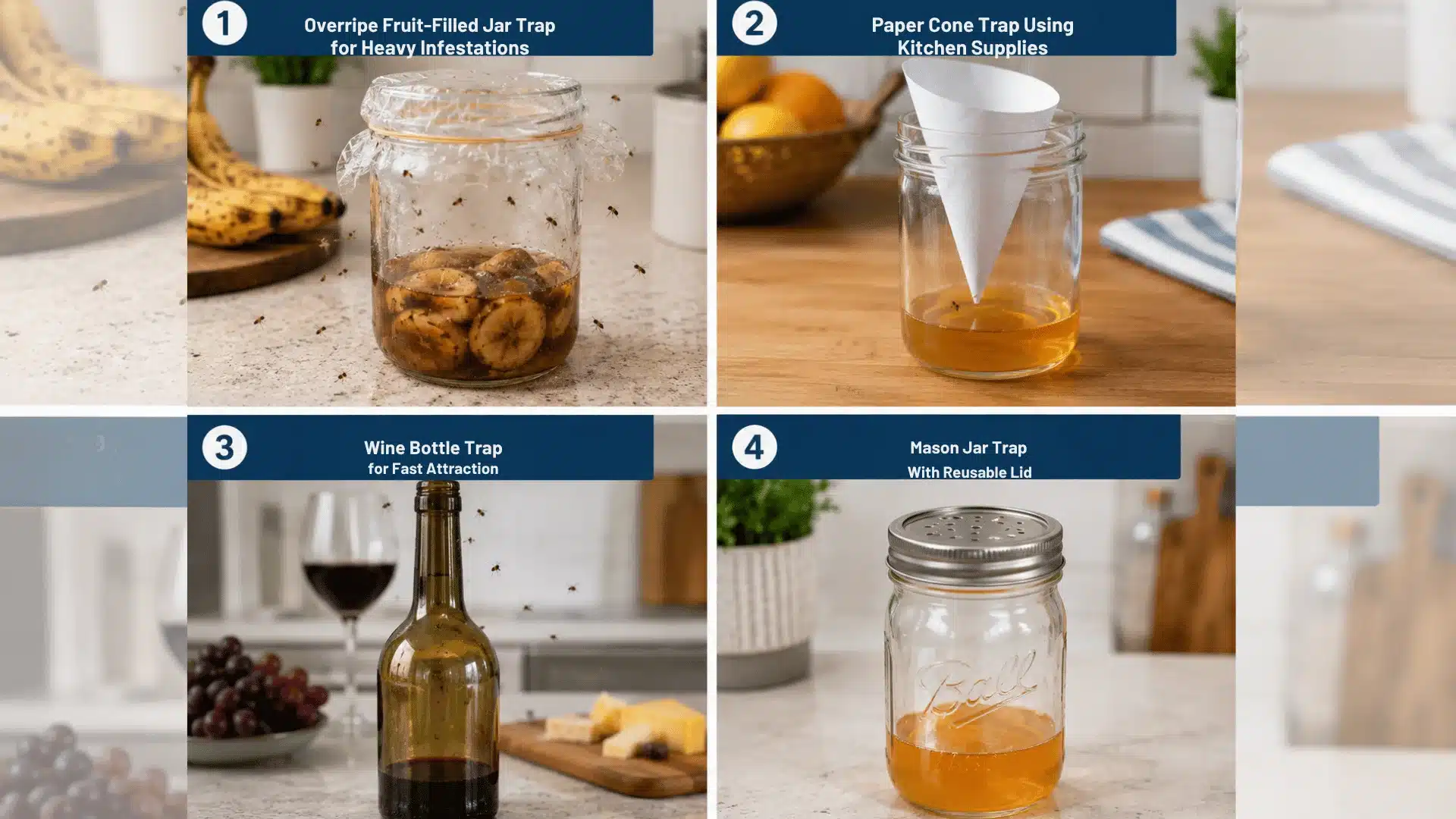
The vinegar method works well, but it is not the only option.
Here are a few other options worth trying if you want different results or do not have apple cider vinegar on hand:
Overripe Fruit-Filled Jar Trap for Heavy Infestations
Place a piece of very ripe or slightly rotting fruit at the bottom of a jar. Cover the top with plastic wrap and poke small holes in it.
The fruit produces carbon dioxide and fermentation odors that draw flies in fast. This method works especially well during warmer months when infestations can be heavier.
Empty and reset the trap every two to three days.
Paper Cone Trap Using Kitchen Supplies
Roll a piece of paper into a cone shape with a small opening at the narrow end.
Place a small amount of vinegar or a few drops of fruit juice at the bottom of a jar, then set the cone inside with the narrow end pointing down.
The cone acts as a funnel that guides flies in but makes it hard for them to get back out. It is a solid option if you do not have plastic wrap on hand.
Wine Bottle Trap for Fast Attraction
If you have a nearly empty bottle of wine, you already have a ready-made trap.
Leave about an inch of wine in the bottle and place it on the counter. Flies are drawn to the fermented scent and tend to fly in through the narrow neck.
The shape of the bottle makes it difficult for them to exit. Red wine works faster, but white wine also attracts them well.
Mason Jar Trap With Reusable Lid
If you want a trap you can clean and reuse, a mason jar with a metal lid works well.
Add your vinegar and soap mixture, then punch small holes in the metal lid before screwing it back on.
The lid is sturdier than plastic wrap and holds up better if the trap gets bumped. When it gets full, you can rinse the jar and reset it without needing new materials.
Best Places to Put Fruit Fly Traps
Placement matters as much as the trap itself. Putting it in the wrong spot means fewer flies will find it.
- Next to the fruit bowl: it is usually the best starting point since that is where most flies are first spotted.
- Near the kitchen sink or drain: it works well because drains are a common breeding area.
- Beside the trash can: It catches flies that are drawn to food scraps.
- On the counter near the stove: it helps if you often cook with produce and leave scraps out briefly.
- Inside a pantry or cabinet: it is a smart spot if you store onions, potatoes, or fruits in there
Avoid placing traps too far from fly activity. A trap sitting in the corner of a clean living room is unlikely to catch much.
Keep it close to the source and check it daily during the first few days to see which spot is most effective for your home.
Conclusion
Fruit flies are annoying, but they are not hard to deal with.
A few simple ingredients and the right placement can make a noticeable difference within a day.
Now that you know how to make a fruit fly trap at home, getting rid of them does not have to feel like a big task.
Start with one trap, find the hot spot, and clear out whatever is drawing them in.
Frequently Asked Questions (FAQ’s)
1. How Long Does It Take to Catch Fruit Flies?
Most homemade traps start catching fruit flies within a few hours. If nothing is caught after 24 hours, move the trap closer to the sink, trash, or fruit bowl.
2. Can Fruit Flies Make You Sick?
Fruit flies can carry bacteria from trash or drains onto food surfaces, though serious illness from them is uncommon.
3. Do Fruit Flies Go Away on Their Own?
They rarely leave on their own. Without removing the attracting source, the population usually grows instead of shrinking.