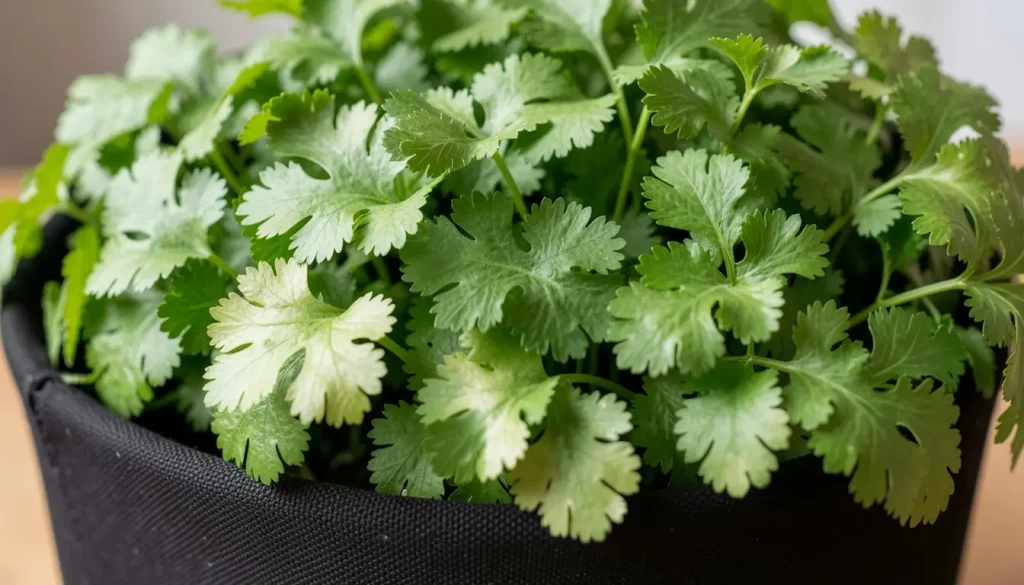
Cilantro makes everything taste better. But people never grow it at home.
Growing cilantro in your own garden is not complicated, but did you know that it is actually one of the easiest herbs you can grow?
This guide covers everything: how to plant it, how to keep it from bolting in summer, and when to harvest for the best flavor.
What is Cilantro and Why is it so Loved?
Cilantro comes from the Mediterranean and the Middle East.
It has been used in kitchens for thousands of years.
The leaves taste fresh, citrusy, and slightly peppery, while the seeds, called coriander, have a completely different, warm, nutty flavor.
It shows up everywhere in cooking and also works as a simple garnish, but what makes fresh cilantro special is its bright, clean flavor, which dried herbs simply cannot match.
Once you taste the difference, going back to the store-bought bunch feels like a step down.
Best Conditions for Growing Cilantro
They put seeds in any old pot, water it once, and think, “Why does nothing grow?” But cilantro is a little particular about where it lives.
Temperature
Cilantro grows beautifully between 50°F and 85°F.
If the temperature goes below that, the germination slows. And if it goes above it, the plant stops producing leaves and goes straight to seed.
In hot summers, morning sun with afternoon shade can add weeks to your harvest.
Sunlight
Cilantro needs 4 to 6 hours of direct sunlight daily.
Full sun in cooler months is okay, but in summer, the harsh afternoon sun heats the soil and triggers early bolting.
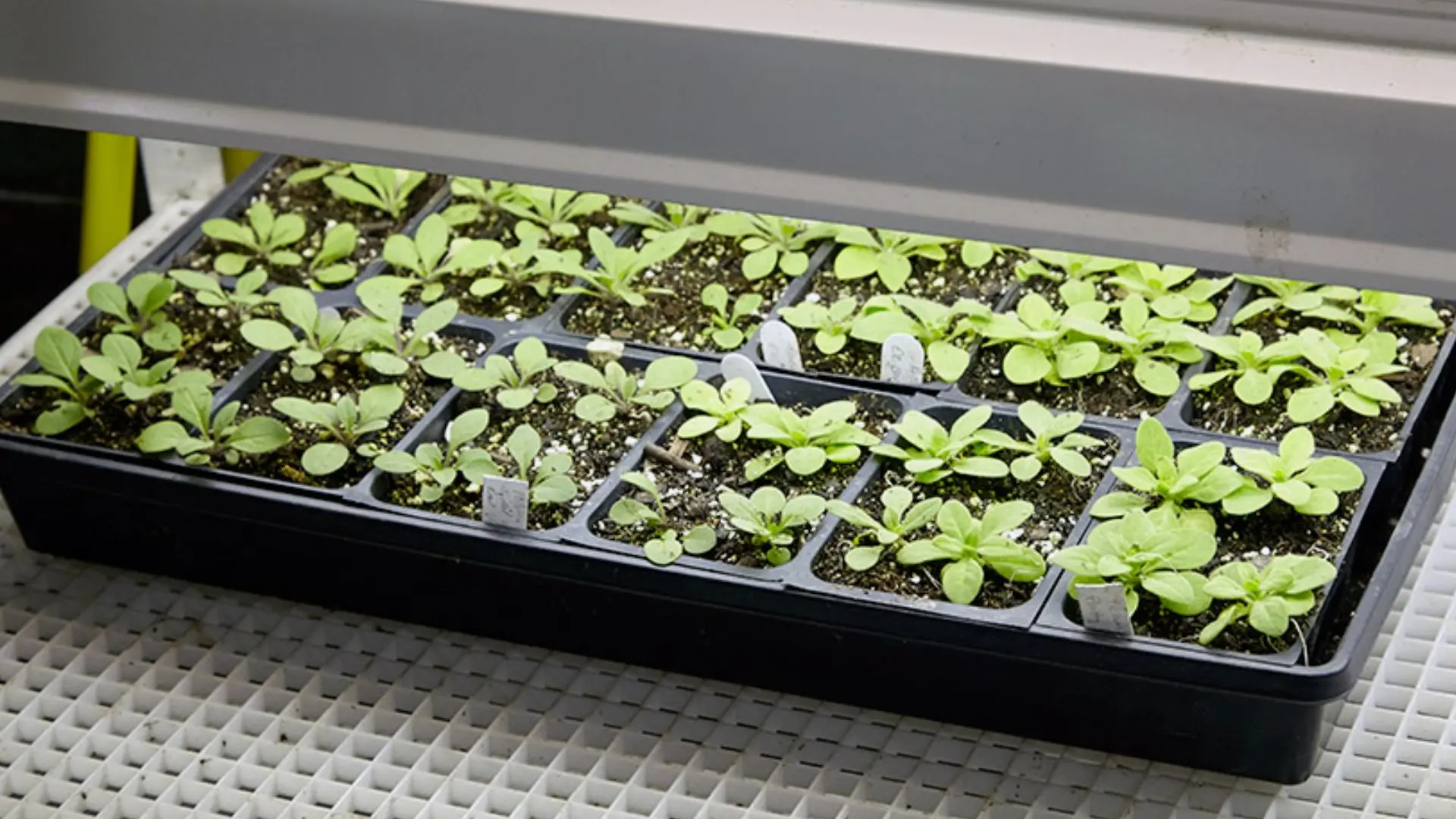
Indoors, a south- or west-facing windowsill is perfect. And if you have trouble finding natural light, a basic LED grow light running 12 to 14 hours a day is a reliable alternative.
Soil Condition and Containers
Cilantro needs loose, well-draining soil, as soggy soil kills it quickly. A sandy loam mix with compost works best, and for pots, go at least 8 inches deep.
It has a long taproot and dislikes shallow containers, so a 12-inch-wide pot gives each plant its space.
Getting Healthy and Flavorful Cilantro Plants
Cilantro needs consistent attention to stay leafy, fresh, and full of flavor. It’s not a lot, but a mere 5 minutes of your time can do the work.
- Water deeply but less often.
- Yellow, droopy leaves mean overwatering. Dry, crispy edges mean underwatering.
- In warmer regions, provide shade after midday to extend your harvest.
- Light compost at planting is enough. Too much fertilizer reduces leaf flavor.
- Basil, tomatoes, and spinach grow well nearby, but keep fennel far away.
How to Grow Cilantro from Seeds: Step-by-Step Instructions
Nursery seedlings are convenient, but cilantro doesn’t transplant well — its taproot hates being disturbed.
Starting from seed is actually the better move.
Step 1: Pick Good Quality Seeds
Start with fresh seeds from a reliable source. Old or poorly stored seeds take longer to sprout and often do not sprout at all.
Look for seeds labeled as slow-bolting varieties, as they produce more leaf growth.
Step 2: Prepare Your Soil
Fill your pot or garden bed with your soil mix.
Make sure the soil is loose and not compacted, and now water it lightly before planting so it is moist but not soaking wet.
Step 3: Space Your Seeds Correctly
Place seeds about 6 inches apart.
Press them gently about a quarter inch deep into the soil, and do not bury them too deep.
One useful trick: cilantro seeds are actually two seeds inside one husk. Gently crush them before planting to improve germination rates.
Step 4: Water Right After Planting
Water gently right after planting. Use a light spray so you do not wash the seeds away, and keep the soil consistently moist during the first week.
Do not let it dry out completely.
Step 5: Watch for Germination
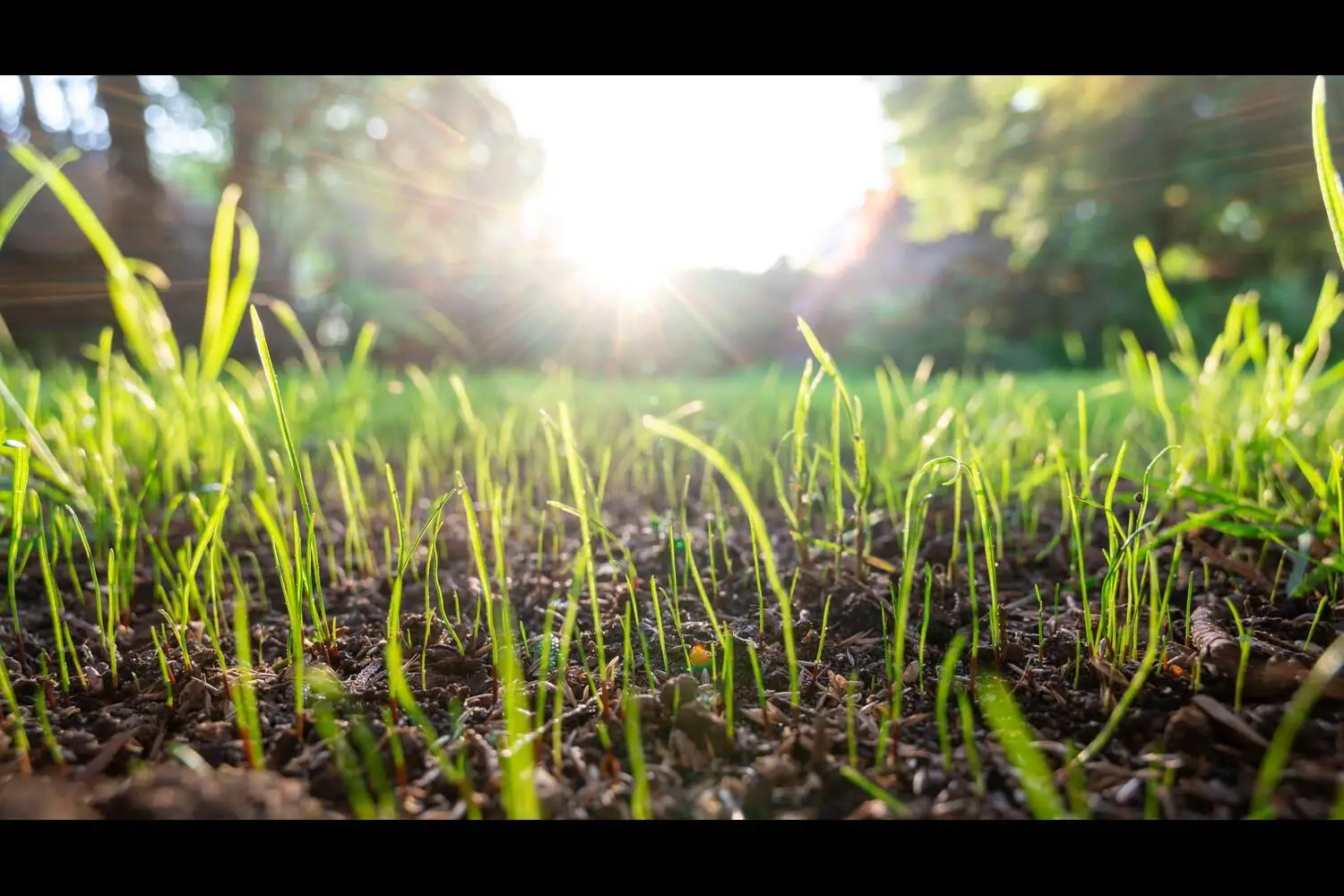
Cilantro seeds usually sprout within 7 to 10 days; in cooler conditions, it may take up to 14 days.
Once the seedlings appear, thin them out so each plant has enough space. Keep the strongest ones and remove the rest.
How do I Grow Cilantro Indoors?
A south- or west-facing windowsill that receives 4 to 6 hours of direct sunlight works best, or a basic LED grow light kept on for 12 to 14 hours daily does the trick.
If your stems are growing tall and thin, the plant is reaching for light.
Move it closer to the window or adjust your grow light down a notch.
Try this:
- Rotate your pot every few days for even light exposure.
- Pinch off top growth regularly to encourage fuller, bushier leaves.
Harvesting Cilantro for Maximum Flavor
Don’t wait too long to harvest, as Cilantro tastes best when picked early and often.
Once it bolts, leaves turn bitter, and the plant stops producing altogether, it is ready once the plant reaches 6 inches tall.
Look for full, flat, deep-green leaves, as younger leaves always have a stronger, fresher flavor.
If you spot flower buds forming, harvest immediately.
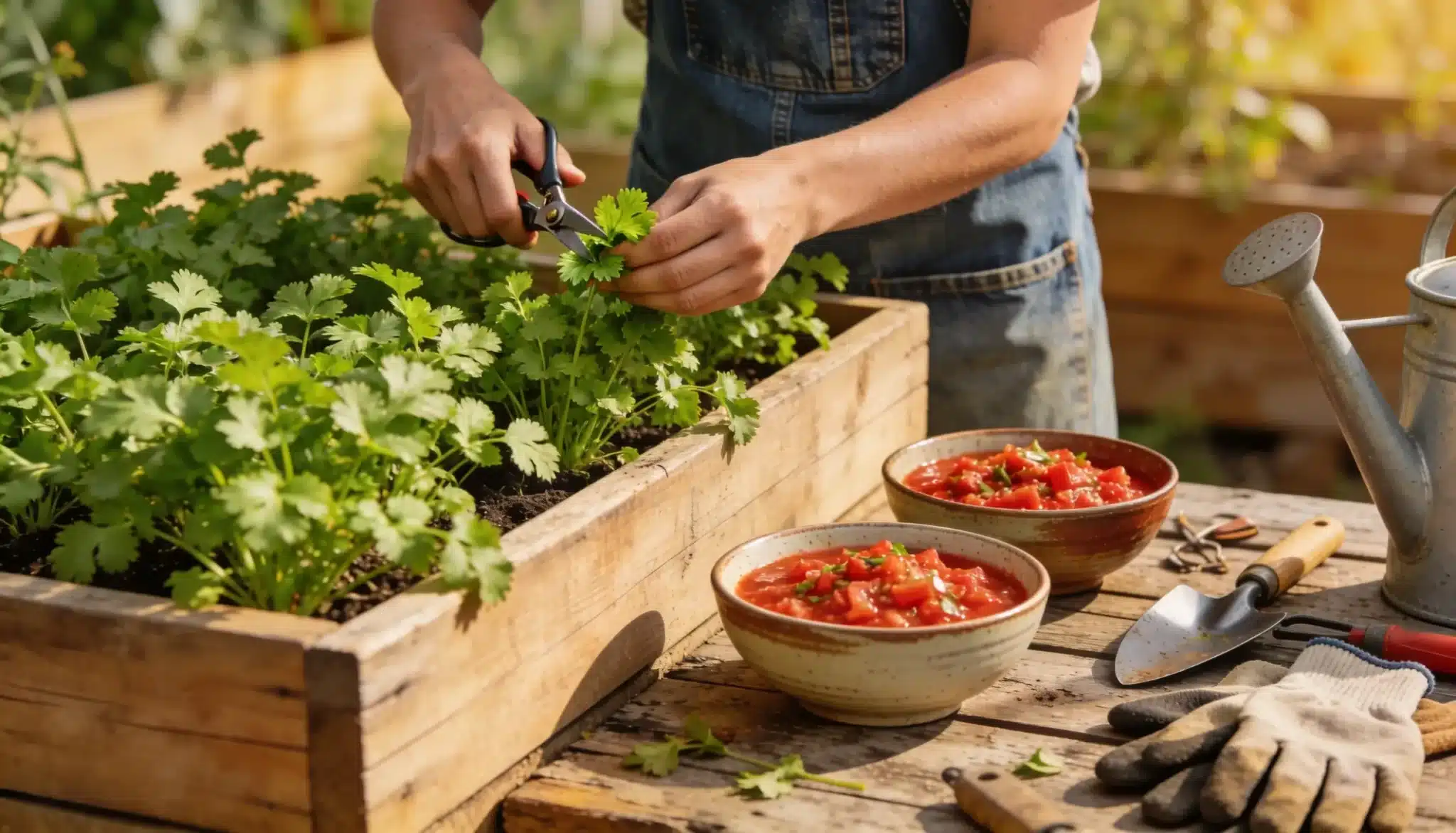
Use clean scissors or a sharp knife to cut the outer stems about one-third of the way from the top.
For a continuous supply, sow fresh seeds every two to three weeks.
Never remove more than one-third of the plant at one time to keep regrowth steady and consistent.
Cilantro vs Coriander: Are They Really Different?
Walk into any grocery store, and you will see both names.
Some recipes call for cilantro, while others call for coriander, and somehow they look exactly the same.
One plant with two completely different flavors, both incredibly useful in the kitchen.
- In the US and Canada, fresh leaves are called cilantro, and dried seeds are called coriander.
- In the UK, Australia, and most of Asia, the whole plant is simply called coriander.
- The leaves taste bright and citrusy. The seeds have a mild, grounded, slightly sweet flavor.
How to Store Cilantro?
You grew it, so do not let it go to waste by letting it sit in the fridge for 3 days before turning yellow and slimy.
In the fridge:
- Stand stems in a jar of water and loosely cover the leaves with a bag; it lasts up to two weeks.
- If you want no jar, then wrap stems in a slightly damp paper towel and refrigerate.
In the freezer:
- Chop the leaves and pack them into ice cube trays with a little water or oil.
- Drop a cube straight into soups, curries, or sauces whenever needed.
For coriander seeds:
- Let the plant flower and fully dry out before collecting seeds.
- Air dry completely and store in an airtight jar for up to a year.
Start Small. One Pot is Enough.
So, you went from someone who killed a cilantro plant to someone who actually knows what they are doing.
Growing cilantro is not complicated once you stop overthinking it.
Start small if you need to; one pot on a windowsill is enough, get comfortable with it, and then grow more.
Grab some seeds, find a sunny spot, and go. Drop a comment below if you run into trouble, or if it takes off faster than expected.
Frequently Asked Questions (FAQ’s)
1. Is Cilantro Good for Seizures?
Some early studies suggest cilantro may have anti-seizure properties. However, more research is needed before any medical claims can be made.
2. Do Coffee Grounds Help Cilantro Grow?
Coffee grounds can slightly improve soil drainage and add nutrients. But use them sparingly. Too much makes the soil too acidic for cilantro.
3. Will Cilantro Come Back Every Year?
Cilantro is an annual plant. It does not come back every year. However, it self-seeds easily, so new plants often sprout on their own.