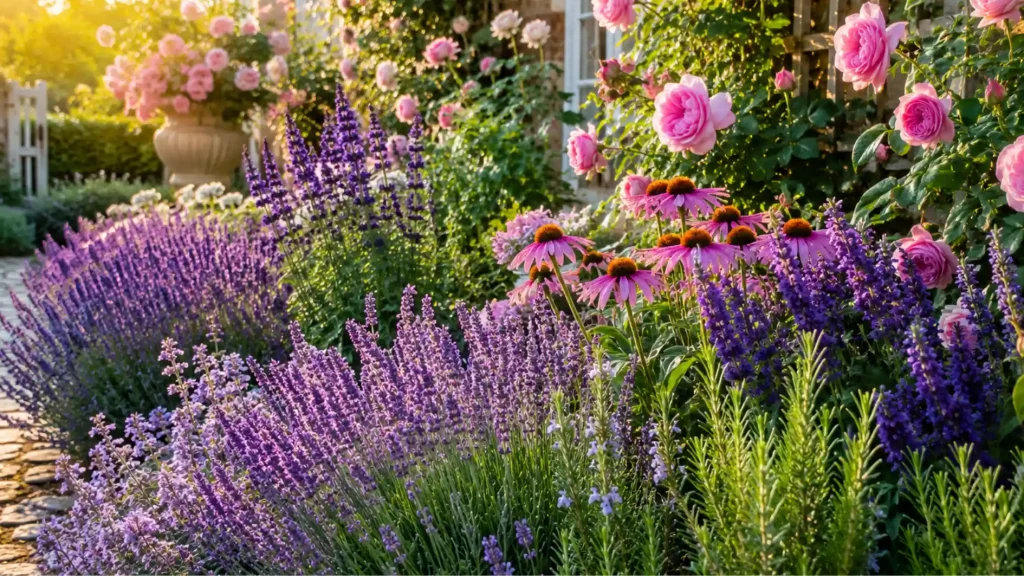
Lavender earns its spot in the garden three times over.
It smells great, blooms reliably, and keeps certain pests away without any effort on your part.
The bigger win is pairing it with plants that share its growing needs, because that is when a garden bed starts to look and work like it was planned properly
Choosing the best lavender companion plants means thinking about color contrast, soil needs, and which plants actually help each other grow.
Here are the top picks through my research that not only look great next to lavender but also share its growing needs, making the whole bed easier to manage.
Is Lavender a Herb or a Flower?
Lavender is technically a flowering herb, which is why it works in both a herb garden and a flower border without looking out of place in either.
The plant belongs to the mint family and has been used for centuries in cooking, medicine, and skincare.
But it also produces beautiful purple blooms that make it a favorite in ornamental garden beds.
So, depending on how you use it, lavender can sit comfortably in a herb garden alongside rosemary and thyme, or hold its own in a flower border with roses and salvia.
Most gardeners grow it for both. The fragrance alone tends to be reason enough.
Best Lavender Companion Plants
Lavender prefers well-drained soil, full sun, and does not like too much water, so its best companions share those same conditions.
From flowering perennials to culinary herbs, many options pair naturally with lavender without competing for nutrients or space.
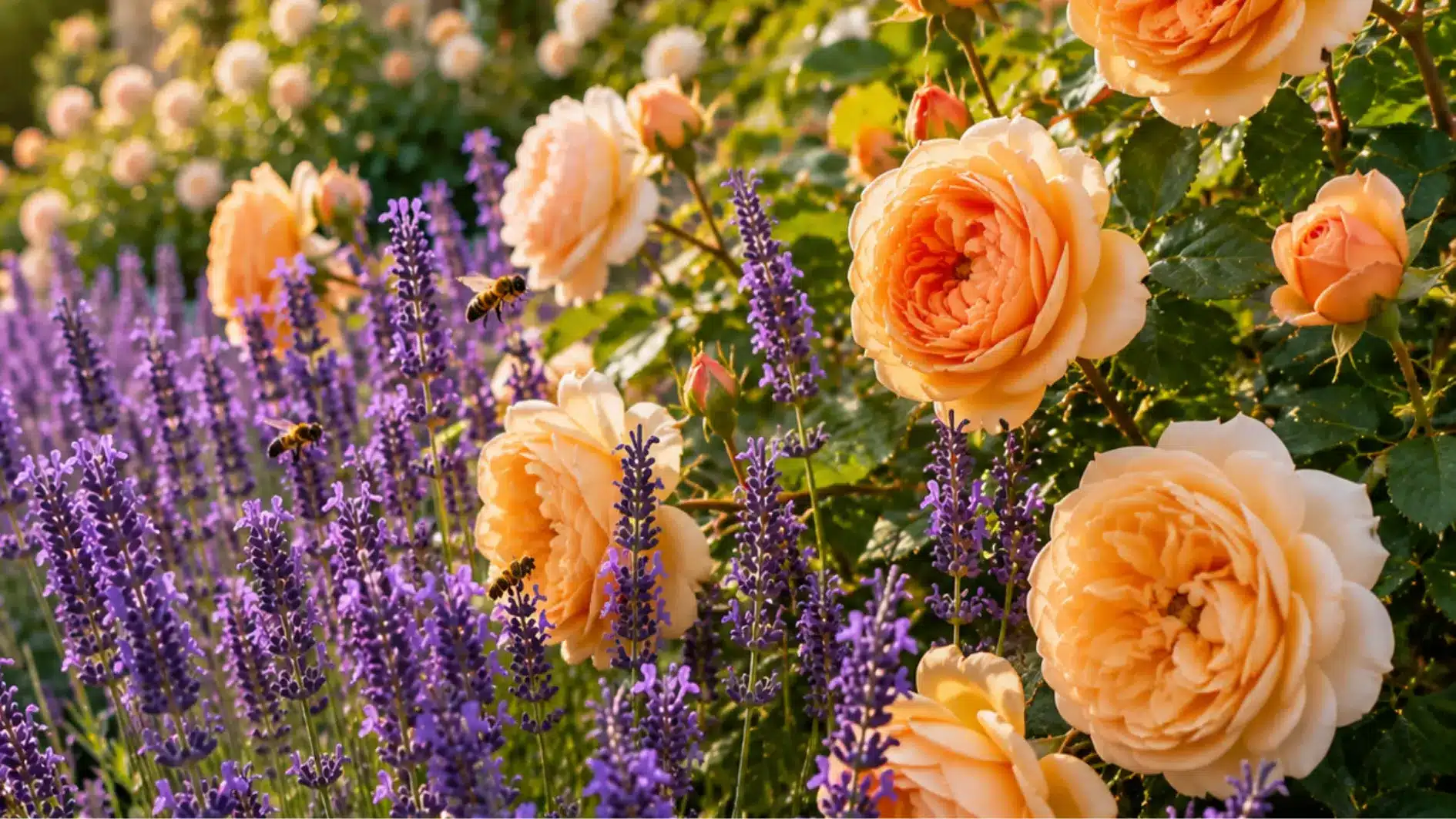
1. Rose (Rosa spp.)
- Exposure: Full sun (at least 6 hours daily)
- Habit: Upright, bushy, spreading, arching, or climbing
- Height/Spread: 6 inches to 30 feet tall, 1 to 15 feet wide
- Bloom Time: Late spring to early fall
- USDA Hardiness Zones: 2–11
Lavender repels aphids, which happen to be one of the most persistent rose pests, so the two plants genuinely benefit from being close together.
They bloom around the same time, love full sun, and together they create a color combination that is hard to beat.
Both plants prefer well-drained soil and do not require frequent watering, making them easy to manage together.
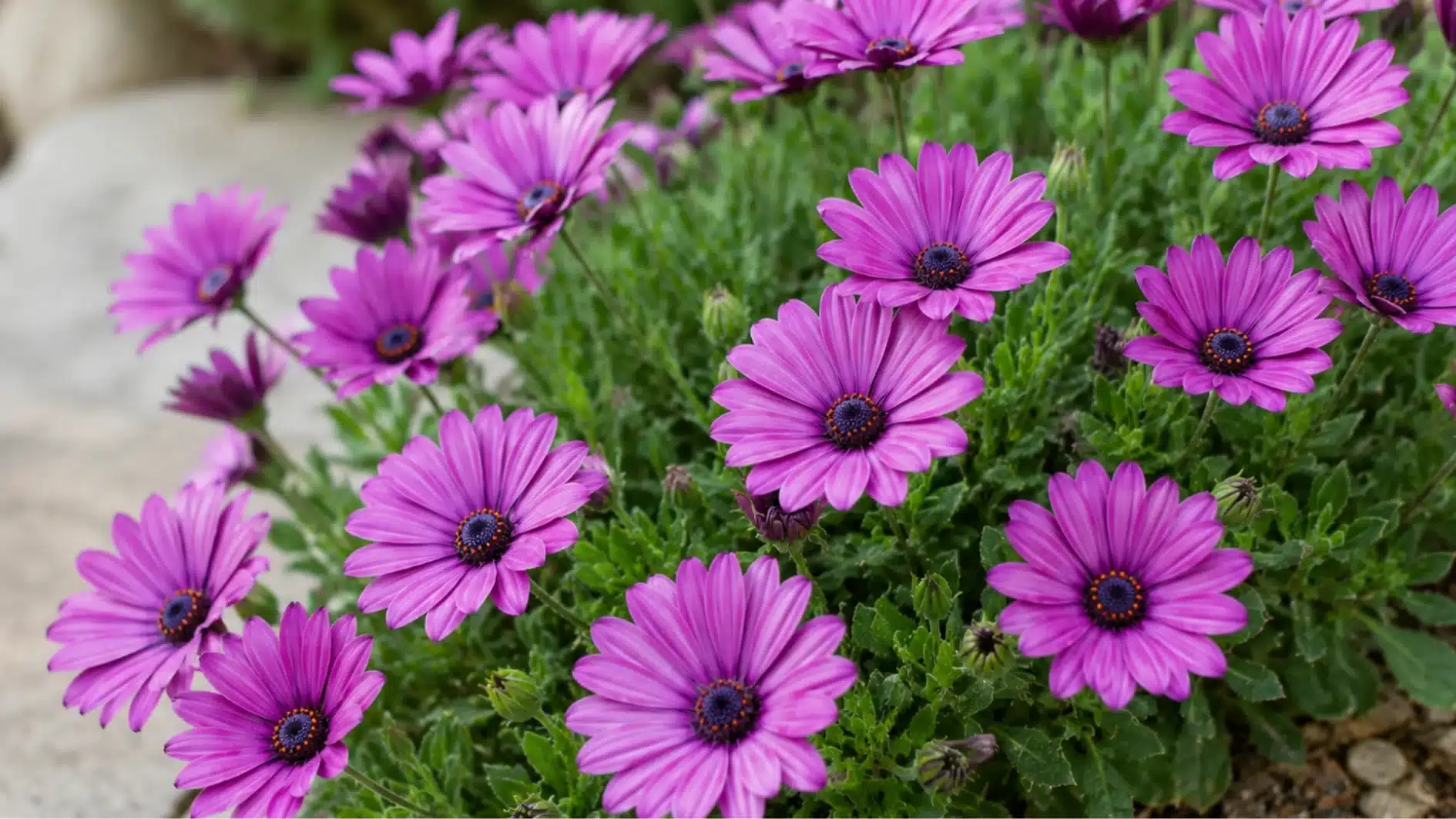
2. African Daisy (Osteospermum spp.)
- Exposure: Full sun (at least 6 hours daily)
- Habit: Mounding, spreading
- Height/Spread: 1 to 3 feet tall, 1 to 2 feet wide
- Bloom Time: Spring to fall (in cool climates); spring to early summer (in hot climates)
- USDA Hardiness Zones: 9–11 (grown as an annual in cooler zones)
African daisy is a bright, cheerful plant that pairs well with lavender.
Its bold purple, orange, yellow, and white blooms create a striking contrast against lavender’s purple flowers, making it one of the more eye-catching colour combinations you can put together with lavender.
Like lavender, African daisy loves full sun and thrives in dry, well-drained soil, so the two can grow side by side without much fuss.
It also attracts pollinators, which benefits every plant around it, including lavender.
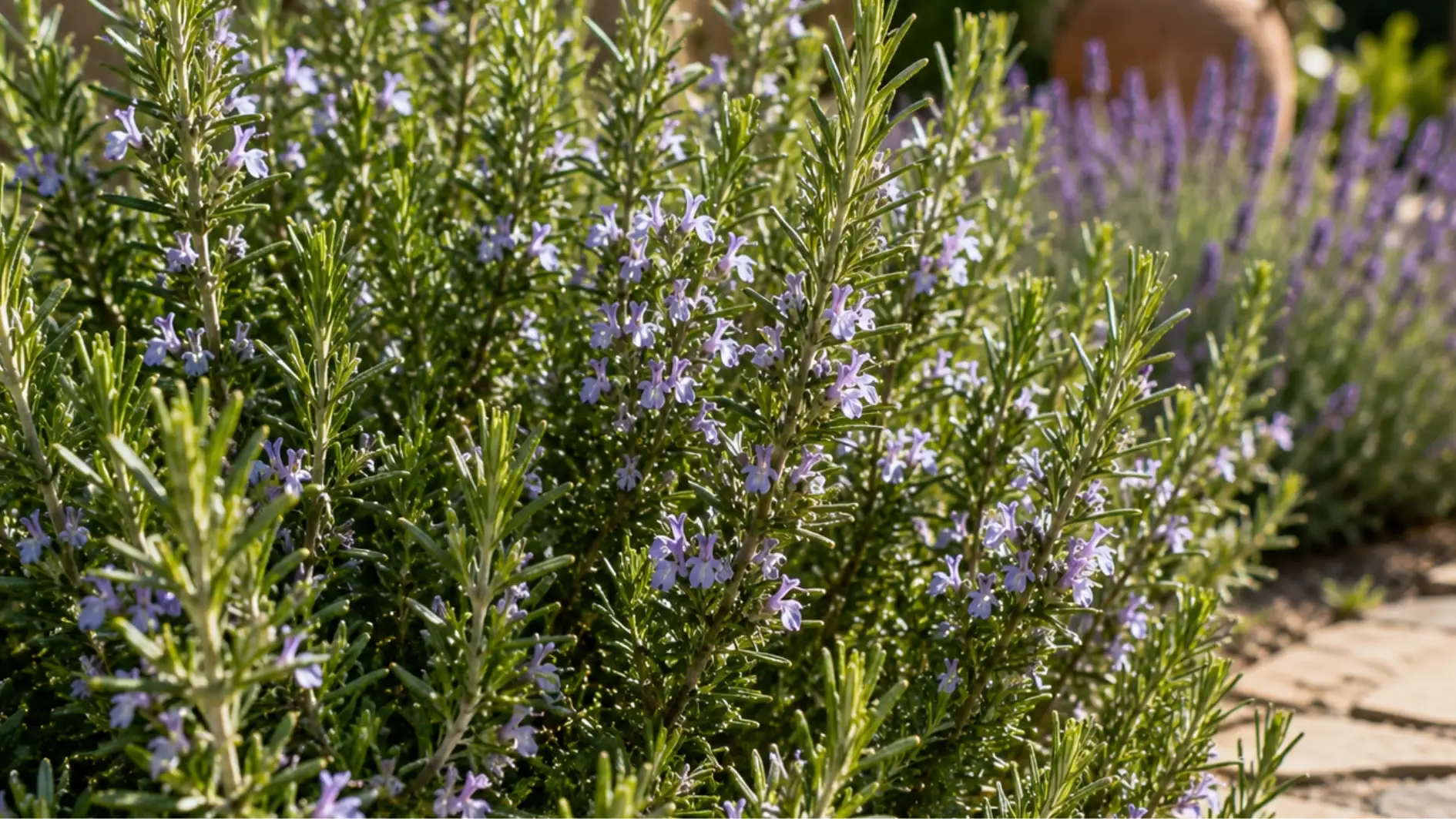
3. Rosemary (Salvia rosmarinus)
- Exposure: Full sun
- Habit: Upright or trailing (prostrate)
- Height/Spread: 3 to 5 feet tall, 4 to 8 feet wide (upright); 1 to 2 feet tall, 4 to 8 feet wide (trailing)
- Bloom Time: Late winter to spring, with sporadic blooms in mild climates
- USDA Hardiness Zones: 7–11
Rosemary and lavender are a natural match. Both are Mediterranean herbs that love full sun, dry soil, and minimal watering, so they thrive in the same conditions without either one struggling.
In the garden, rosemary’s upright, bushy shape contrasts nicely with lavender’s softer, rounded form.
Together they create a textured, aromatic border that looks as good as it smells.
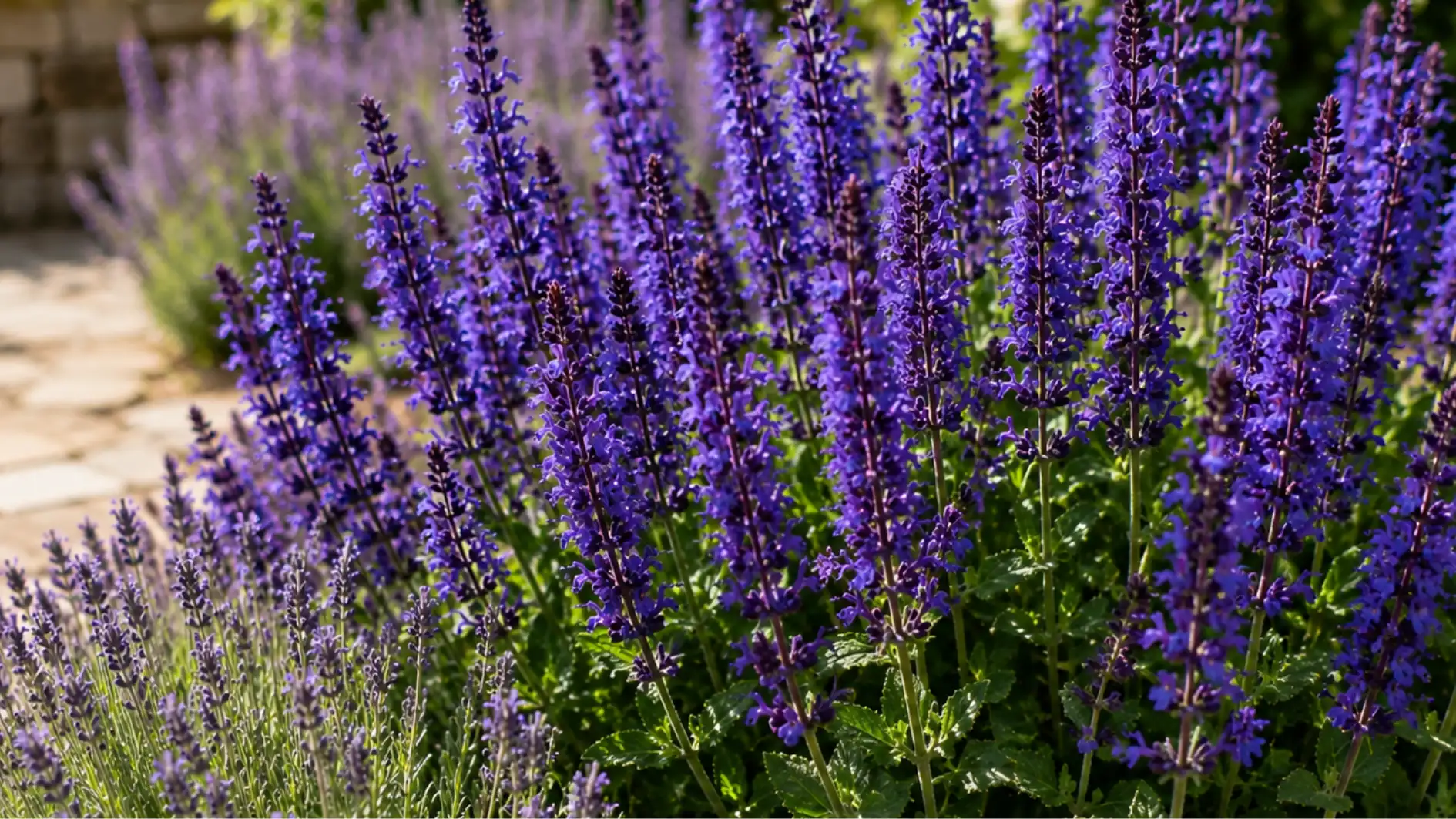
4. Salvia (Salvia spp.)
- Exposure: Full sun to partial shade
- Habit: Upright, clumping
- Height/Spread: 1 to 4 feet tall, 1 to 3 feet wide
- Bloom Time: Late spring through fall
- USDA Hardiness Zones: 3–11 (varies by variety)
Salvia is one of the best plants to grow alongside lavender. It comes in deep reds, purples, and blues, all of which complement lavender’s color beautifully.
Both plants love full sun and well-drained soil, and neither needs much attention once established.
Salvia also attracts bees and butterflies, which helps pollination across your entire garden bed.
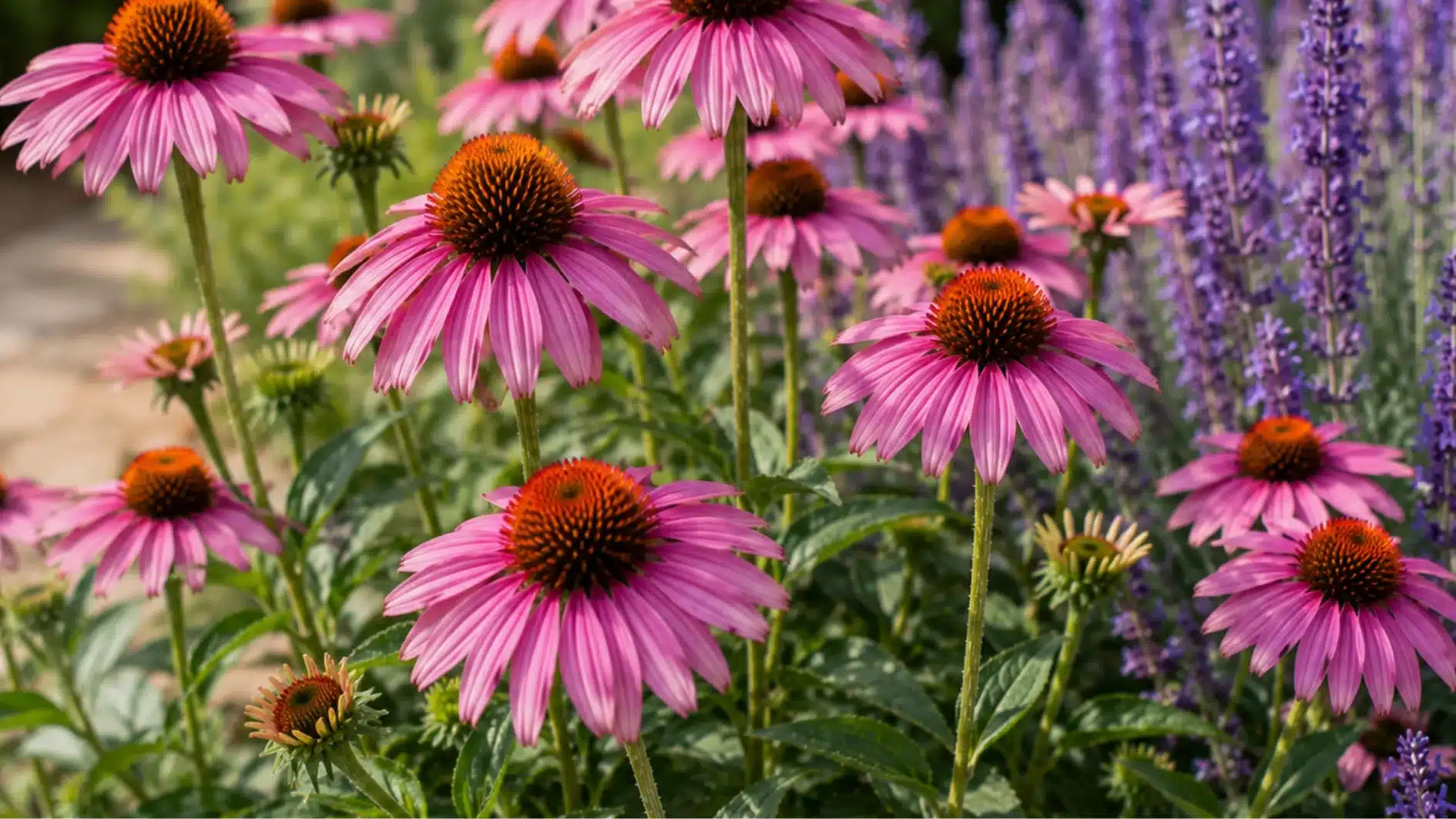
5. Echinacea (Coneflower) (Echinacea spp.)
- Exposure: Full sun to partial shade
- Habit: Upright, clumping
- Height/Spread: 2 to 5 feet tall, 1.5 to 2 feet wide
- Bloom Time: Midsummer through fall
- USDA Hardiness Zones: 3–9
Echinacea is one of the taller options on this list, and that height is part of what makes it work so well next to lavender.
Its tall, upright stems and large daisy-like blooms create a beautiful contrast against lavender’s low, wispy form.
Both plants are drought-tolerant and prefer well-drained soil, making them easy to grow together.
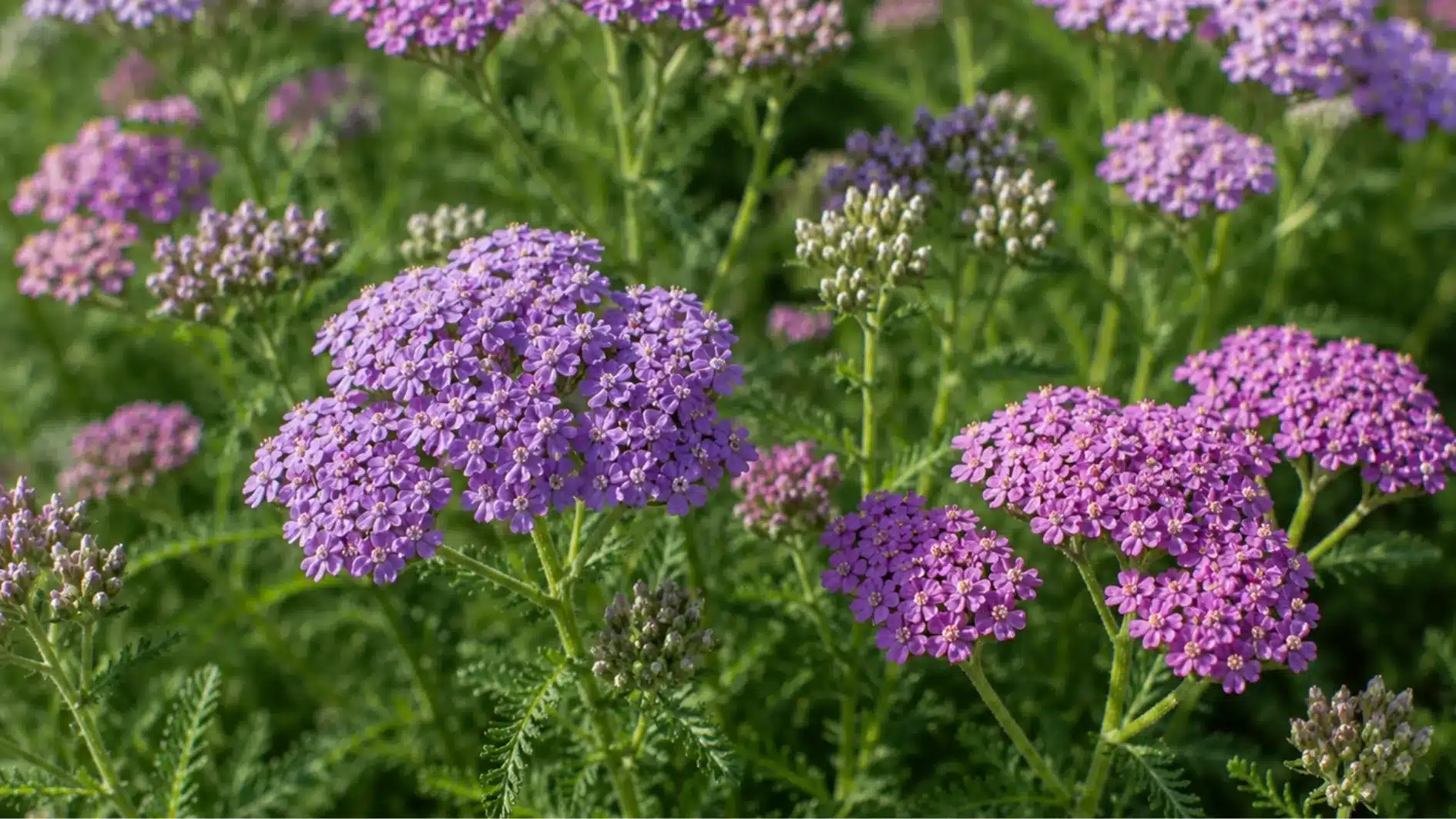
6. Yarrow (Achillea millefolium)
- Exposure: Full sun
- Habit: Upright, clumping (some varieties spreading)
- Height/Spread: 2 to 3 feet tall, 2 to 3 feet wide
- Bloom Time: Late spring through summer
- USDA Hardiness Zones: 3–9
Yarrow is an easygoing perennial that works well in hot, dry spots where some other plants would struggle.
Its flat-topped flower clusters in yellow, pink, red, and white sit naturally alongside lavender’s purple spikes, and the two bloom at similar times.
Yarrow also attracts butterflies and beneficial insects, making your garden more active and alive throughout the whole season.
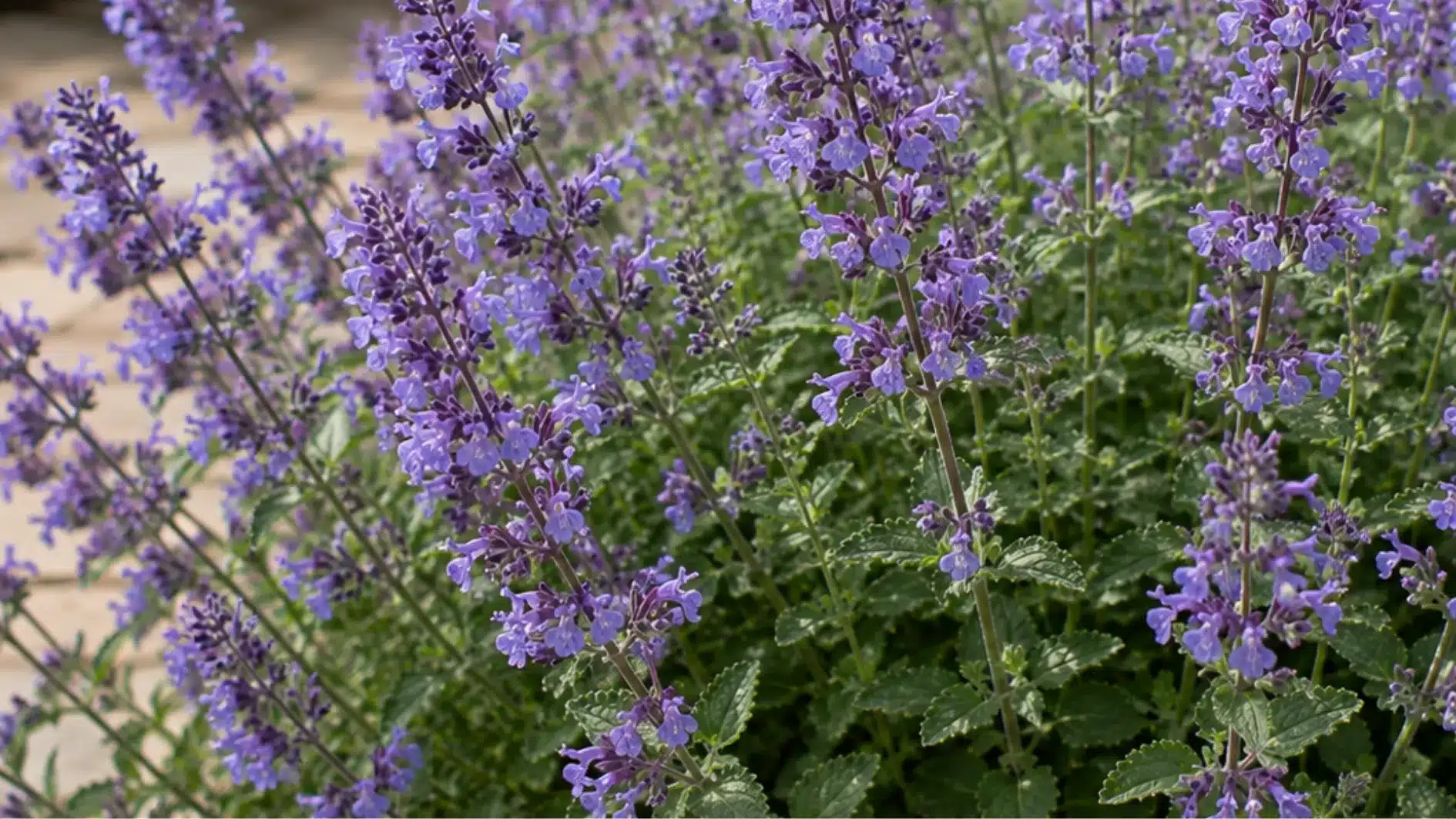
7. Catmint (Nepeta spp.)
- Exposure: Full sun to partial shade
- Habit: Mounding, spreading
- Height/Spread: 1 to 3 feet tall, 2 to 3 feet wide
- Bloom Time: Late spring through fall
- USDA Hardiness Zones: 3–8
Catmint and lavender might just be the most natural pairing on this list. Both produce soft purple-blue flowers, love full sun, and thrive in dry, well-drained soil.
Planted together, they create a soft, continuous wave of blue-purple that reads as intentional even if you did very little to plan it.
Catmint also blooms for a long time, often reblooming after it is cut back, so your garden stays colourful well into autumn.
It is low maintenance, deer resistant, and a favourite of bees and butterflies.
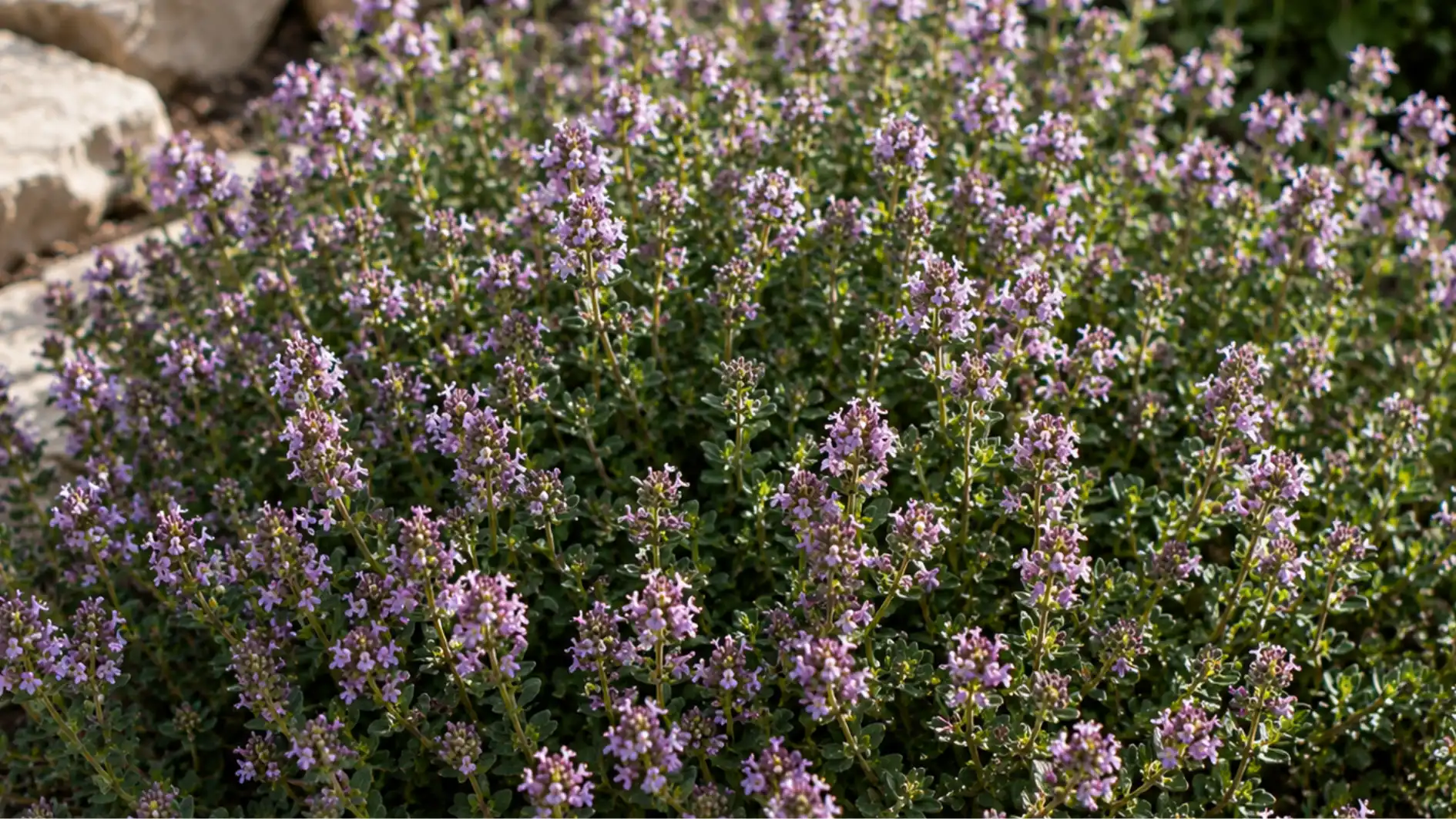
8. Thyme (Thymus spp.)
- Exposure: Full sun
- Habit: Low-growing, mat-forming or creeping
- Height/Spread: 1 to 12 inches tall, 12 to 18 inches wide
- Bloom Time: Late spring to early summer
- USDA Hardiness Zones: 4–9
Thyme is one of the most practical ground-level companions you can plant near lavender. Like lavender, it is a Mediterranean herb that prefers full sun, lean soil, and very little water once settled in.
Its low, creeping form works perfectly as a ground cover beneath taller lavender plants, filling in gaps and adding soft pink or purple blooms at the soil level.
Thyme also attracts pollinators and can help suppress weeds, making it as practical as it is pretty in the garden.
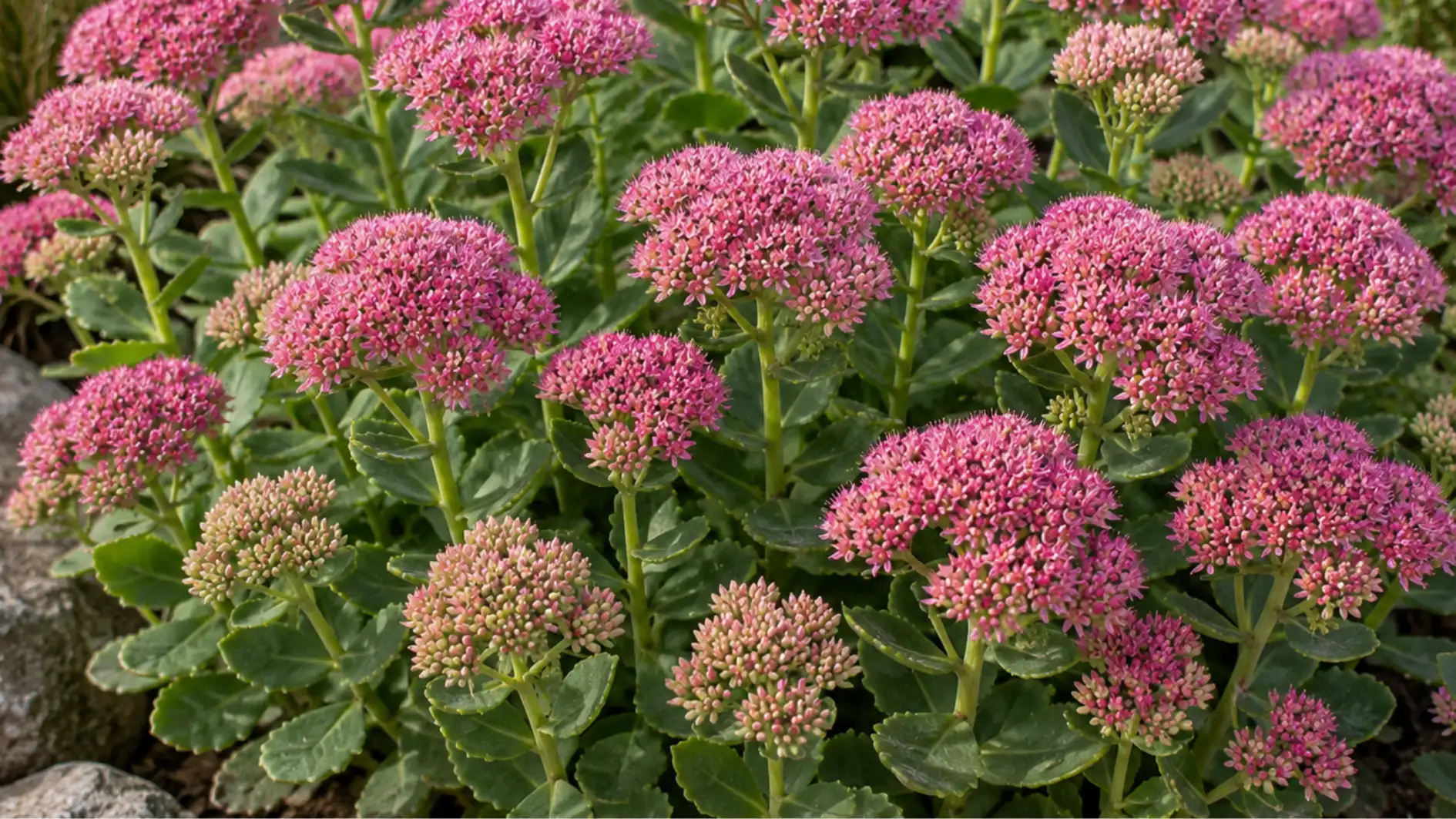
9. Sedum (Sedum spp.)
- Exposure: Full sun to partial shade
- Habit: Mat-forming, creeping, or upright clumping
- Height/Spread: 2 to 6 inches tall (creeping); 1 to 2 feet tall and wide (upright)
- Bloom Time: Late spring through fall (varies by variety)
- USDA Hardiness Zones: 3–11
Sedum brings a totally different texture to a lavender garden bed, thick, fleshy leaves in shades of green, burgundy, and silver that contrast beautifully with lavender’s slender stems and soft blooms.
Low-growing varieties work well as a ground cover at the base of lavender plants, while upright types like ‘Autumn Joy’ add bold clusters of pink and red flowers in late summer.
Both plants are drought-tolerant, love full sun, and need very little water once established.
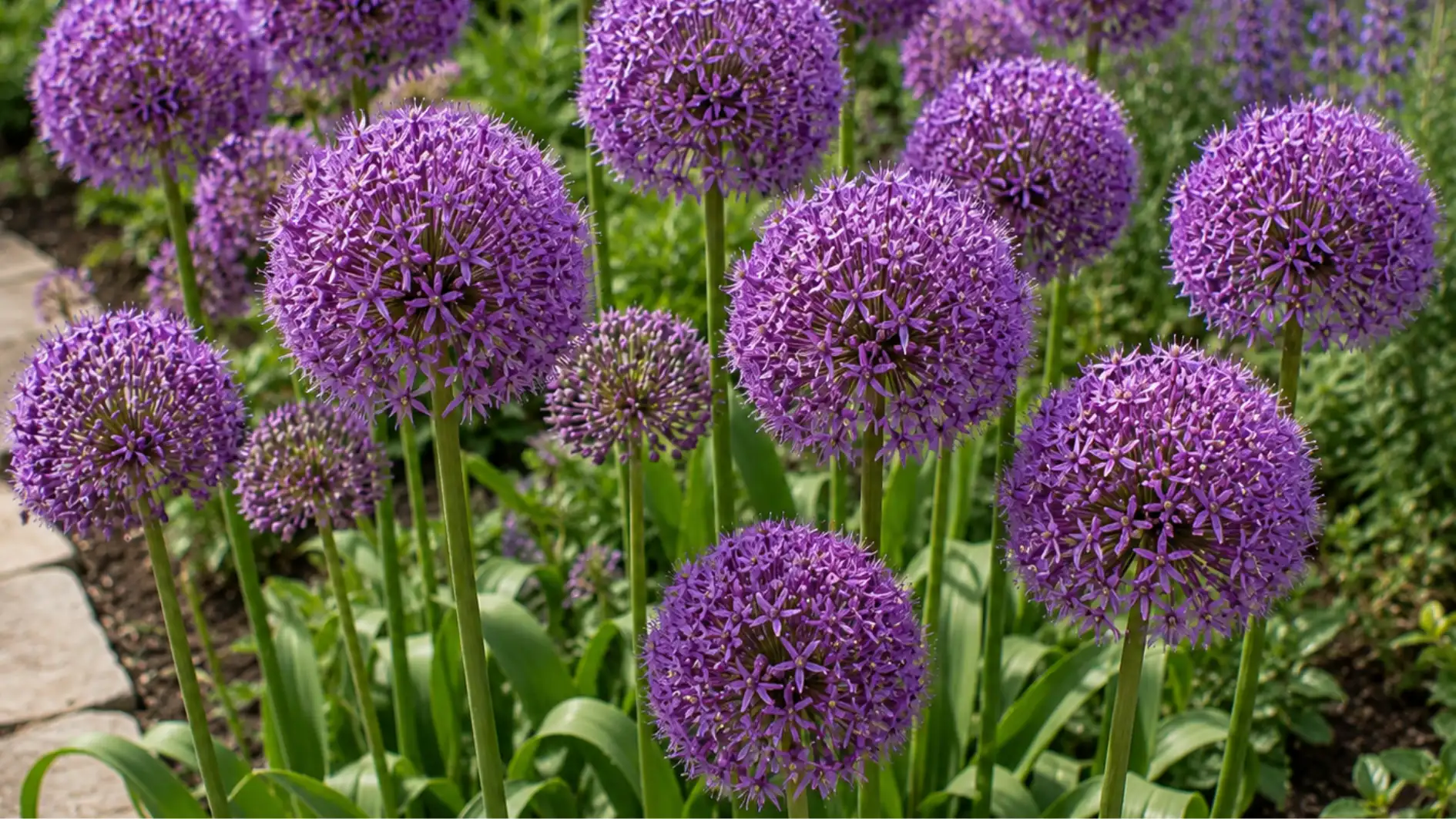
10. Allium (Allium spp.)
- Exposure: Full sun
- Habit: Upright, clumping
- Height/Spread: 6 inches to 4 feet tall, 6 inches to 1.5 feet wide (varies by variety)
- Bloom Time: Late spring to early summer
- USDA Hardiness Zones: 3–10
Alliums look different from almost everything else in a lavender bed, and that is exactly why they work.
Their tall, round globe-shaped flower heads in deep purple and lilac rise above lavender’s soft mounds. The visual difference in form globe on spike versus soft mound is one of the more interesting combinations you can put in a dry garden bed.
Both love full sun and well-drained soil, and alliums also help deter aphids and other pests, a real bonus for neighboring plants.
Once planted, allium bulbs come back each year with very little input, which makes them one of the more low-effort choices on this list.
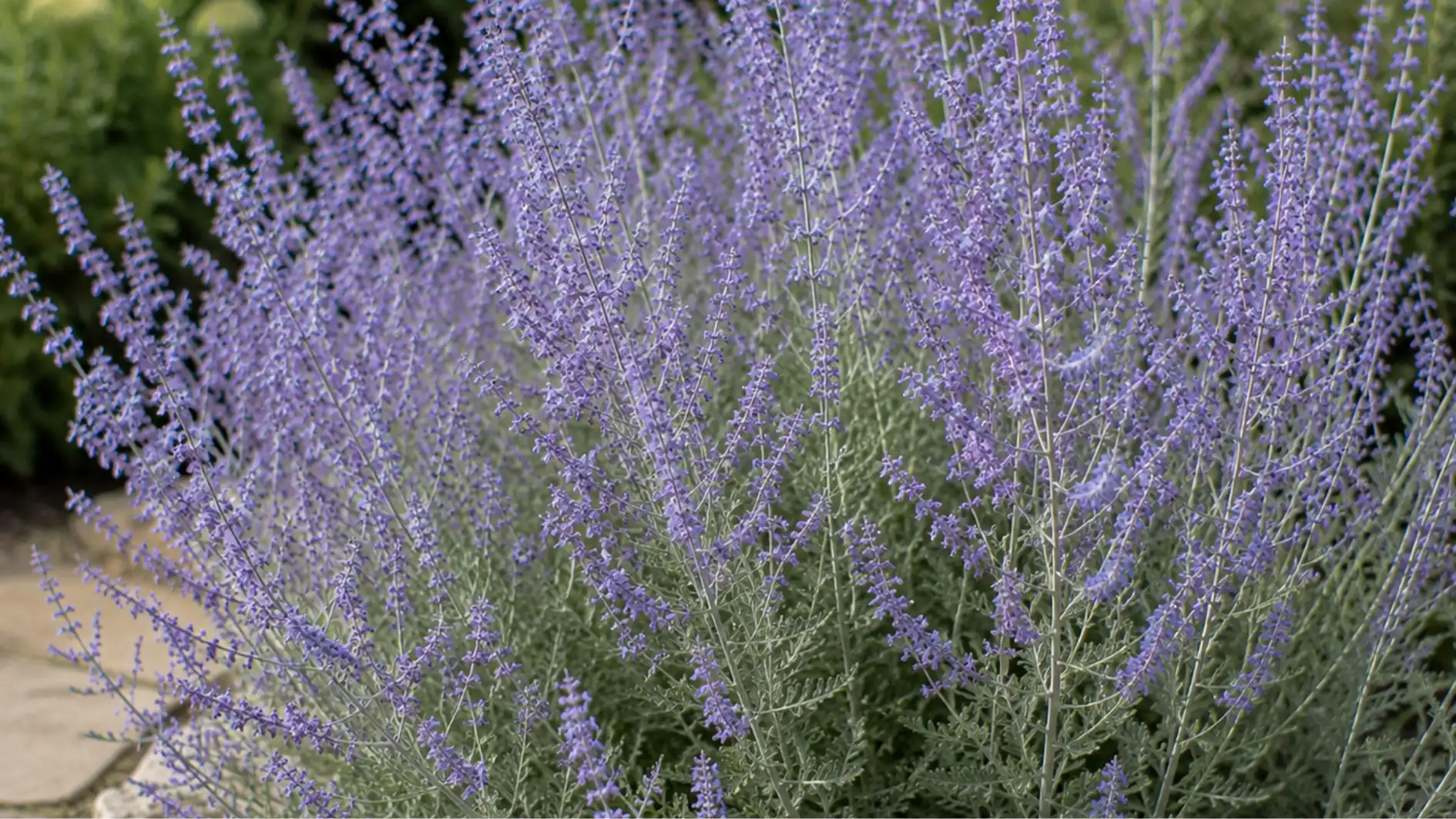
11. Russian Sage (Salvia yangii / Perovskia atriplicifolia)
- Exposure: Full sun
- Habit: Upright, airy, open
- Height/Spread: 2 to 4 feet tall, 2 to 4 feet wide
- Bloom Time: Midsummer through fall
- USDA Hardiness Zones: 4–9
Russian sage is one of the few plants that shares lavender’s silvery-grey foliage and blue flower tone, which means the two read as a coherent pair rather than a random mix.
Both have silvery-grey foliage, lavender-blue flowers, and a love for full sun and dry, well-drained soil.
Russian sage blooms from midsummer right through to fall, extending the color in your garden long after lavender has finished.
It is also deer-resistant, drought-tolerant, and a favorite of bees and butterflies.
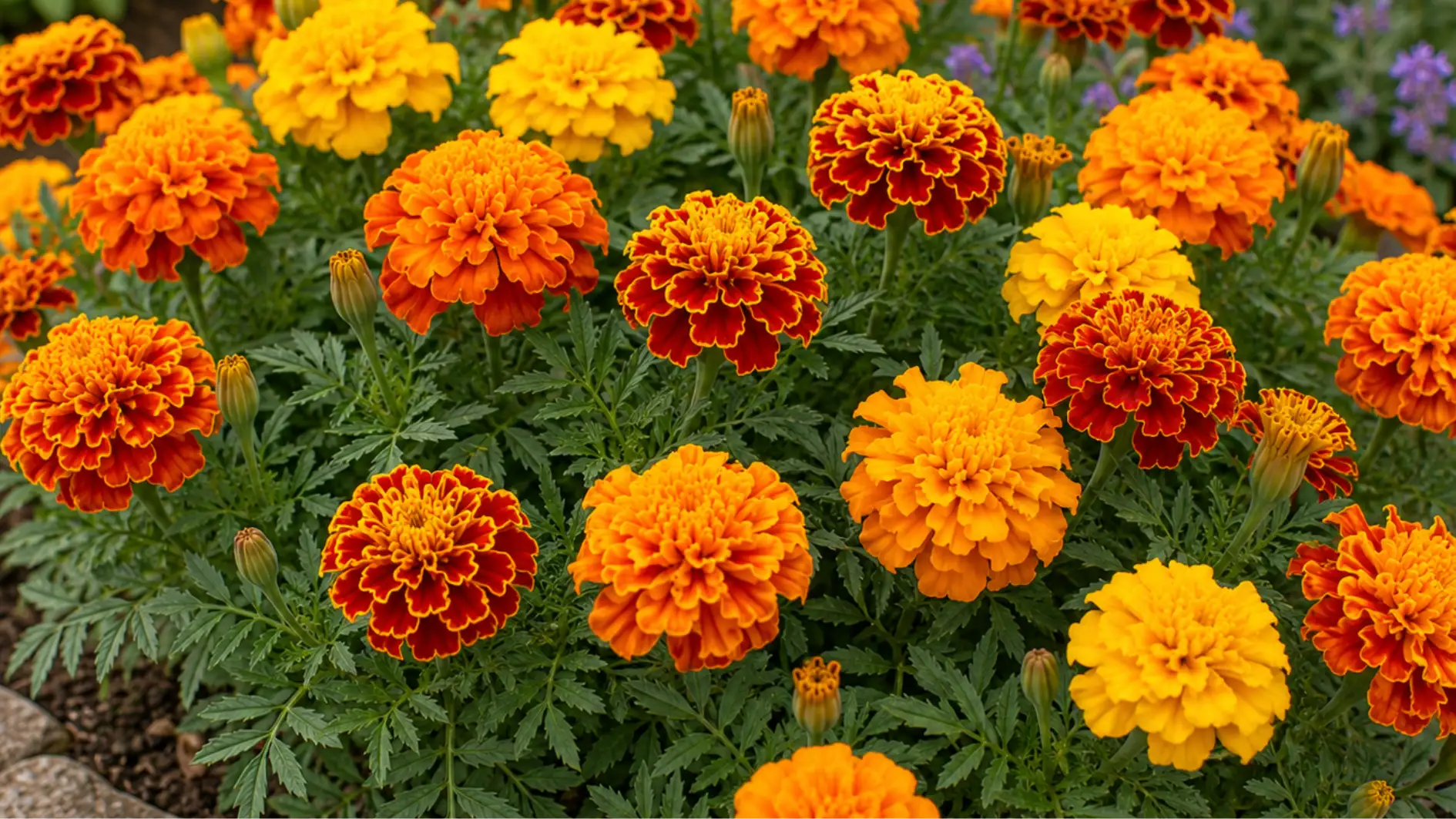
12. Marigold (Tagetes spp.)
- Exposure: Full sun
- Habit: Upright, bushy
- Height/Spread: 6 inches to 4 feet tall, 6 inches to 2 feet wide (varies by variety)
- Bloom Time: Summer to fall
- USDA Hardiness Zones: Grown as annual in all zones; perennial in zones 9–11
Marigolds and lavender might seem like an unlikely pair, but they work really well together.
Marigolds bring bold pops of orange, yellow, and red that create a striking contrast against lavender’s cool purple tones.
Both plants love full sun and do not need much water once settled in.
Marigolds are also well known for repelling pests such as aphids and whiteflies, which makes them a practical as well as pretty companion for lavender.
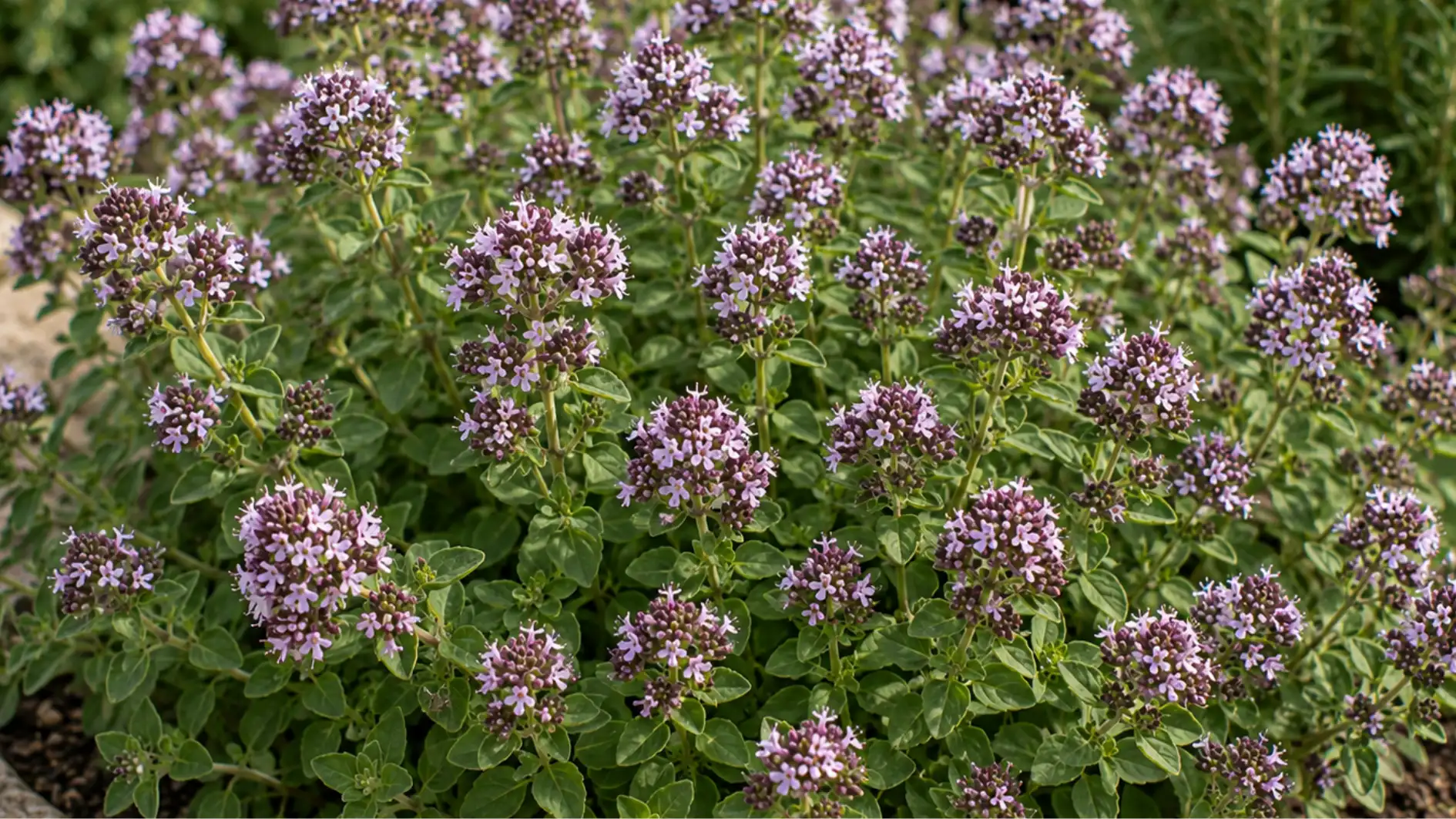
13. Oregano (Origanum vulgare)
- Exposure: Full sun to partial shade
- Habit: Bushy, spreading, low-growing
- Height/Spread: 1 to 2 feet tall, 1.5 to 2 feet wide
- Bloom Time: Midsummer to early fall
- USDA Hardiness Zones: 4–9
Oregano is another Mediterranean herb that thrives in the same conditions as lavender, full sun, well-drained soil, and very little water.
Its low, spreading form makes it a useful ground-level companion, filling in the spaces around lavender plants while keeping the soil covered.
When it blooms in midsummer, small clusters of pink, white, or purple flowers attract bees and other pollinators to the garden.
It is a practical and fragrant addition that works just as well in a herb garden as it does in a flowering border.
14. Verbena (Verbena spp.)
- Exposure: Full sun
- Habit: Trailing, mounding, or upright (varies by variety)
- Height/Spread: 6 inches to 6 feet tall, 1 to 3 feet wide
- Bloom Time: Late spring through fall
- USDA Hardiness Zones: 5–11 (varies by variety; many grown as annuals)
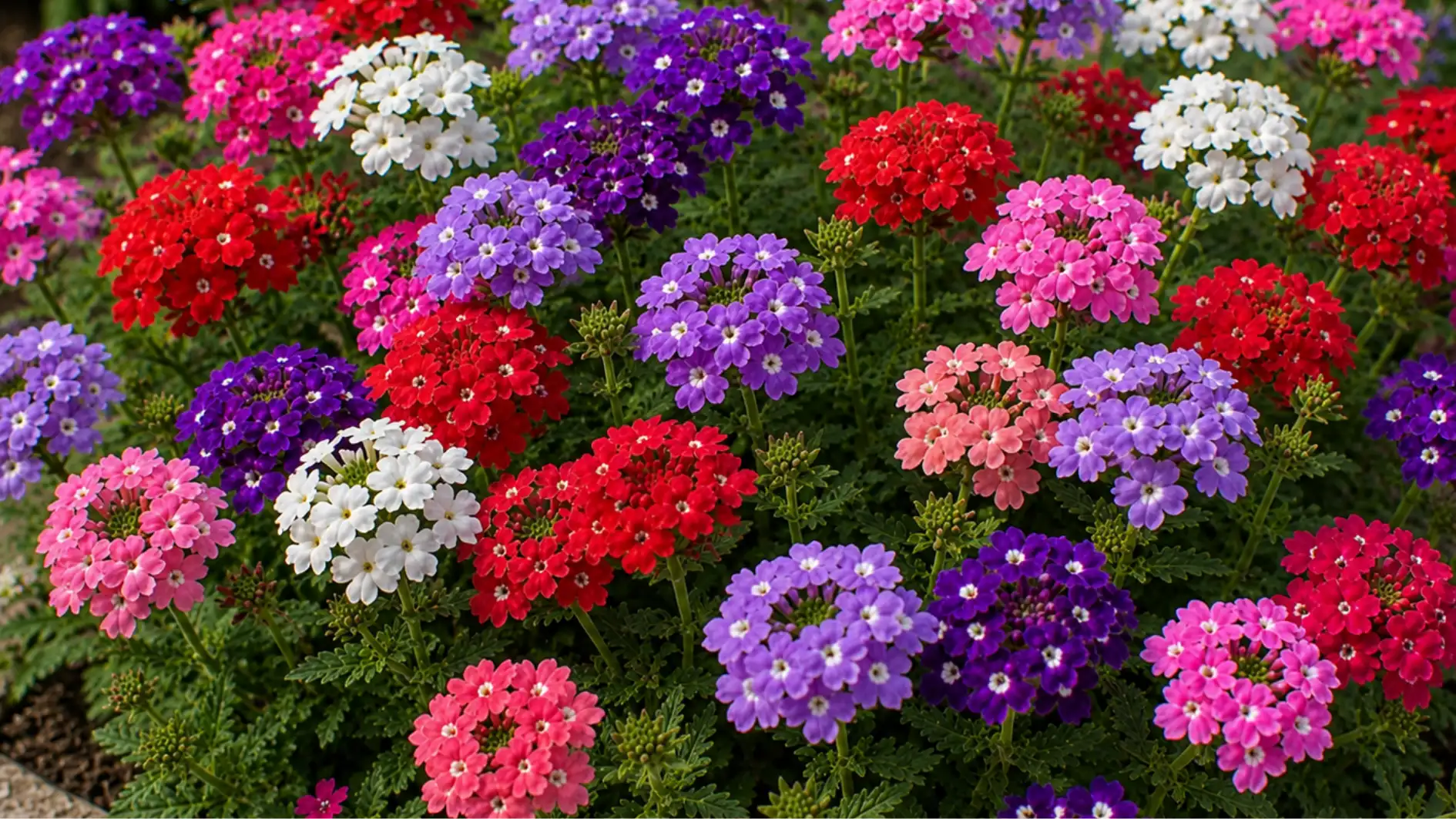
Verbena is a long-blooming, sun-loving plant that pairs naturally with lavender.
Its clusters of small flowers in purple, pink, red, and white add a generous splash of color to garden beds, and its trailing varieties work especially well spilling between lavender plants.
Both love full sun and well-drained soil, and verbena is drought-tolerant once established.
It is also a pollinator magnet; butterflies in particular are drawn to it, which helps bring more life and movement to your garden throughout the season.
15. Black-Eyed Susan (Rudbeckia hirta / Rudbeckia fulgida)
- Exposure: Full sun to partial shade
- Habit: Upright, clumping
- Height/Spread: 1 to 3 feet tall, 1 to 2 feet wide
- Bloom Time: Midsummer through fall
- USDA Hardiness Zones: 3–9
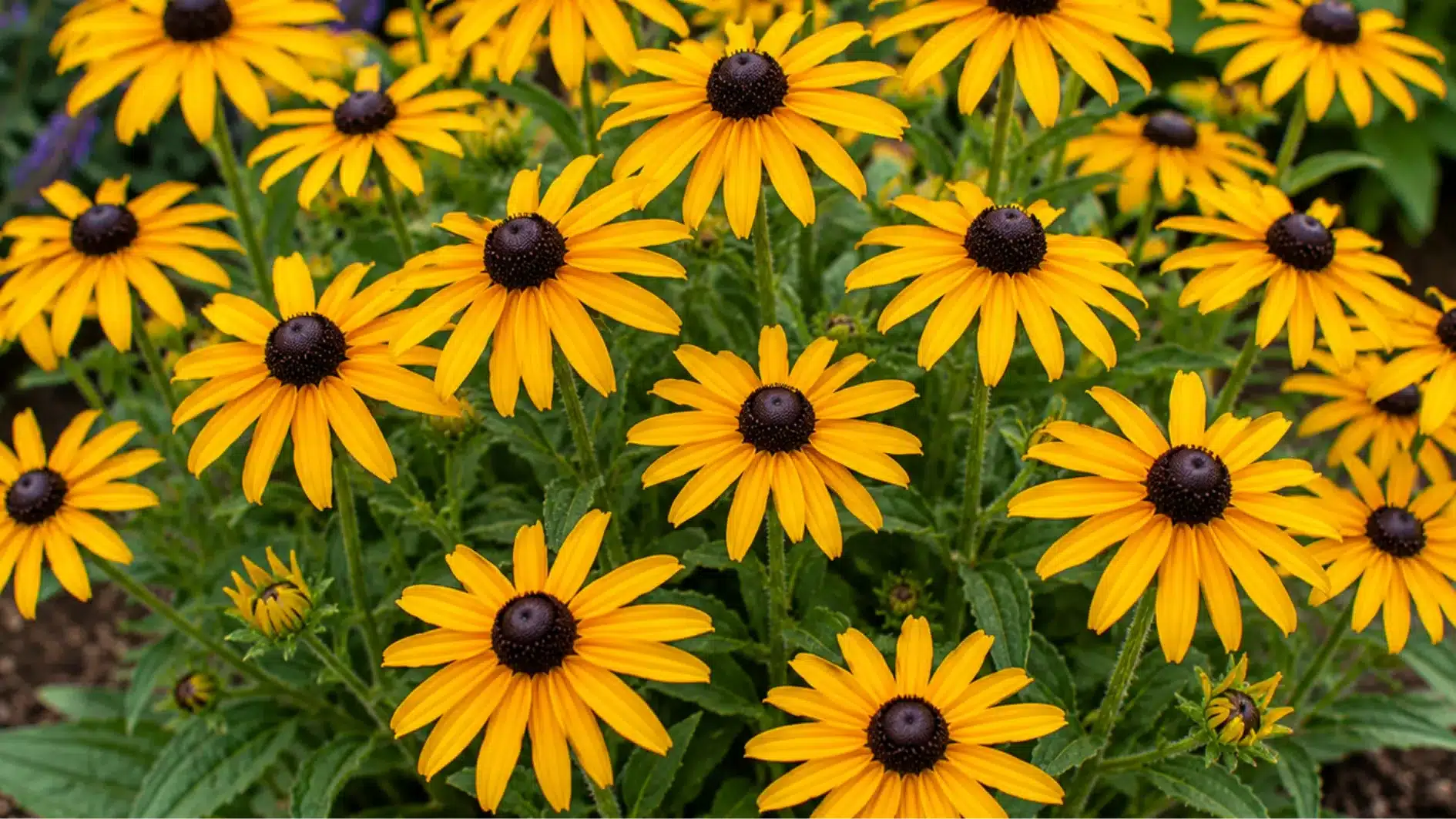
Black-Eyed Susan is one of the cheeriest plants you can add alongside lavender.
Its bold golden-yellow blooms with dark brown centers sit against lavender’s cool purple tones in a way that feels like a natural color opposite.
Both plants are drought-tolerant, love full sun, and prefer well-drained soil. Black-Eyed Susan blooms from midsummer right through to fall, keeping your garden colorful long after many other plants have finished.
The Wrong Companion Plants for Lavender
Lavender is a dry-soil, full-sun plant. Pair it with something that needs the opposite, and one of them will suffer.
Below are the plants worth keeping at a distance.
Hostas, Ferns & Astilbe
These are moisture lovers. They need consistently damp soil to thrive, which is the exact condition that causes lavender to develop root rot.
If you water them enough to keep the ferns or hostas happy, lavender roots will sit in damp soil for too long and rot. One of the plants will always be managed at the expense of the other.
Tomatoes, Peppers & Cucumbers
These vegetables need frequent watering and rich, fertile soil.
Lavender prefers things lean and dry.
Their growing needs simply do not line up, and trying to meet both will leave one plant unhappy.
Mint
Mint spreads fast through underground runners and can quickly crowd out lavender, stealing space and nutrients before you even notice it happening.
If you want to grow both, keep mint in a container.
Camellias & Rhododendrons
These plants prefer acidic, moisture-retaining soil, the complete opposite of what lavender needs.
Planting them side by side makes it nearly impossible to keep either one in good health.
Conclusion
Growing the right lavender companion plants can completely change your garden beds, adding color, texture, and a longer season of interest from spring right through to autumn.
Roses, catmint, echinacea, the specific choice matters less than making sure whatever you plant beside lavender can handle the same dry, sunny conditions.
Get the combination right, and your garden will not only look stunning, but it will also attract more pollinators and need far less maintenance overall.
Frequently Asked Questions (FAQ’s)
1. Can Lavender be Planted with Vegetables?
Lavender is not ideal near most vegetables. However, planting it along garden edges can help repel pests like aphids and moths naturally.
2. What to Plant with Lavender in a Container?
Thyme, rosemary, sedum, and trailing verbena all make great container companions for lavender.
3. Does Lavender Keep Bugs Away?
Yes, lavender naturally repels mosquitoes, aphids, moths, and fleas with its strong fragrance.