A yucca plant looks bold, grows slowly, and asks for very little in return.
But yellow leaves, drooping stems, and slow growth are signs that something is off, usually due to one small habit done wrong repeatedly.
This guide breaks down every part of yucca plant care, from choosing the right pot to fixing yellow leaves so the plant stays strong and healthy all year.
Biological Classification of the Yucca Plant
Yucca is a genus of perennial shrubs and trees in the Asparagaceae family, widely known for its sharp leaves and strong drought tolerance.
| Rank | Classification |
|---|---|
| Kingdom | Plantae |
| Clade | Tracheophytes |
| Clade | Angiosperms |
| Clade | Monocots |
| Order | Asparagales |
| Family | Asparagaceae |
| Subfamily | Agavoideae |
| Genus | Yucca |
How to Grow a Healthy Yucca Plant?
A yucca plant is a green plant with long, pointed leaves and a thick stem.
It is mostly found in hot, dry places like deserts, but many people also grow it indoors because it adds a fresh, natural look and needs less care.
Step 1: Select a Healthy Yucca Specimen
Choose a plant with firm, upright, deep green foliage and a well-structured stem.
Avoid specimens showing chlorosis (yellowing leaves), mushy stems, or signs of root rot and pest infestation before purchase.
Step 2: Set Up the Right Growing Conditions
Yucca plants require full sun exposure of 6 to 8 hours daily. Place near a south or west-facing window, ensure adequate air circulation, and maintain low humidity to prevent fungal issues.
Step 3: Choose the Right Pot and Planting Medium
Use a terracotta pot with drainage holes to prevent waterlogging. Fill with well-draining, sandy loam or cactus mix soil with a slightly acidic to neutral pH (6.0–7.0).
Avoid heavy clay soil, as poor drainage can lead to root rot.
Step 4: Water and Fertilize Correctly
Water deeply but infrequently, allowing the top 2 to 3 inches of soil to dry out completely between waterings.
Feed with a balanced slow-release fertilizer (10-10-10 NPK) once in spring and once in midsummer. Skip fertilization during winter dormancy.
Common Yucca Plant Problems and How to Fix Them
Yucca plants are strong and easy to care for, but sometimes they can still face a few common problems.
1. Leaves Turning Yellow
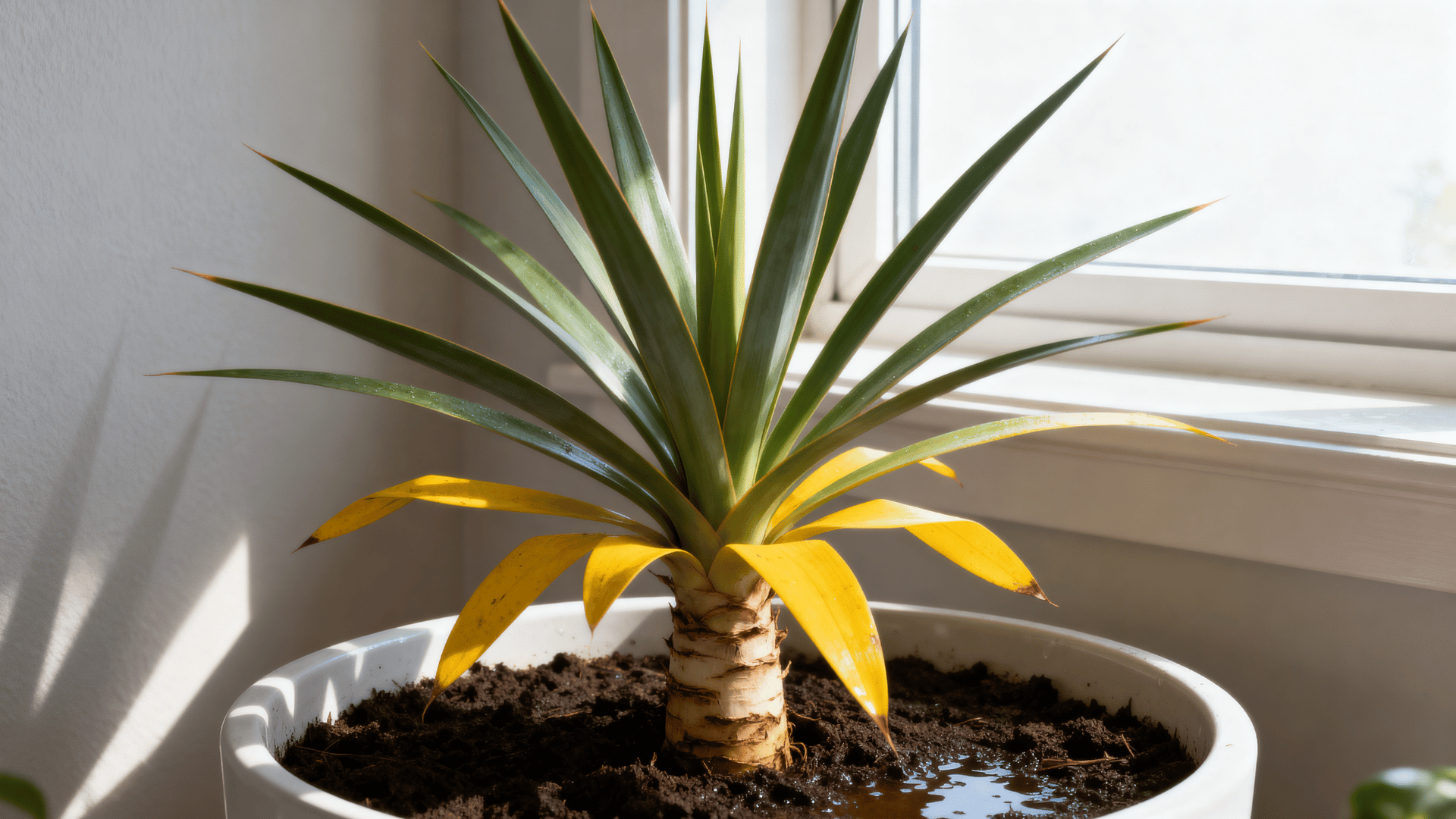
Yellow leaves are usually a sign that the plant is stressed or overwatered. In many cases, small changes in watering or sunlight can help the plant recover quickly.
Overwatering is one of the most common causes of yellow leaves because overly wet soil can damage the roots.
To help the plant recover, remove the yellow leaves and check whether the soil feels too wet before watering again.
2. Brown Tips on Yucca Leaves
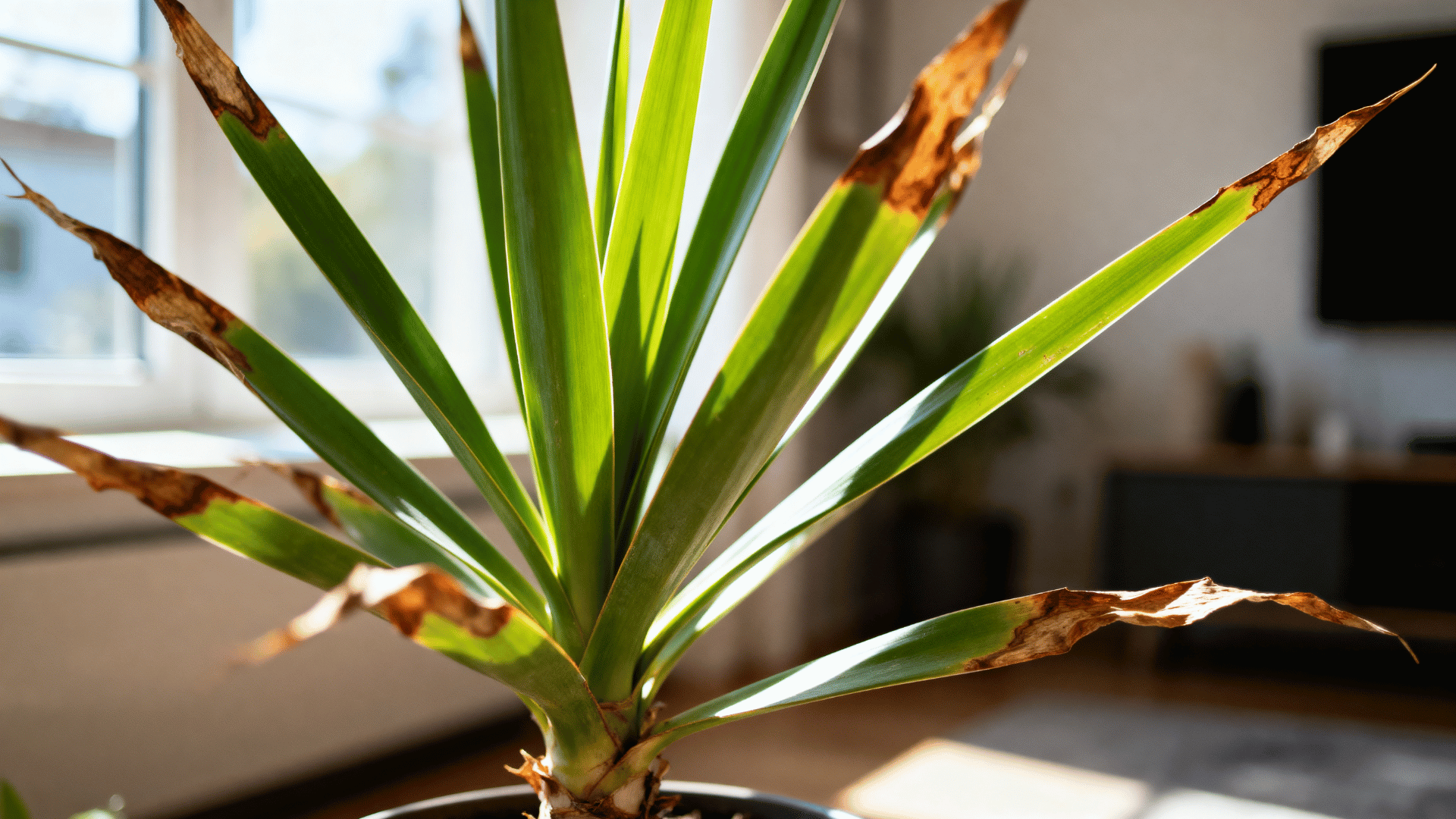
Brown tips often appear when the plant is not getting the right growing conditions. Paying strong attention to heat and air can help stop the tips from turning brown.
Too much direct heat from heaters or hot windows may also damage the leaves. Using too much fertilizer can burn the tips, and inconsistent watering can also cause the leaves to dry out and turn brown.
3. Root Rot
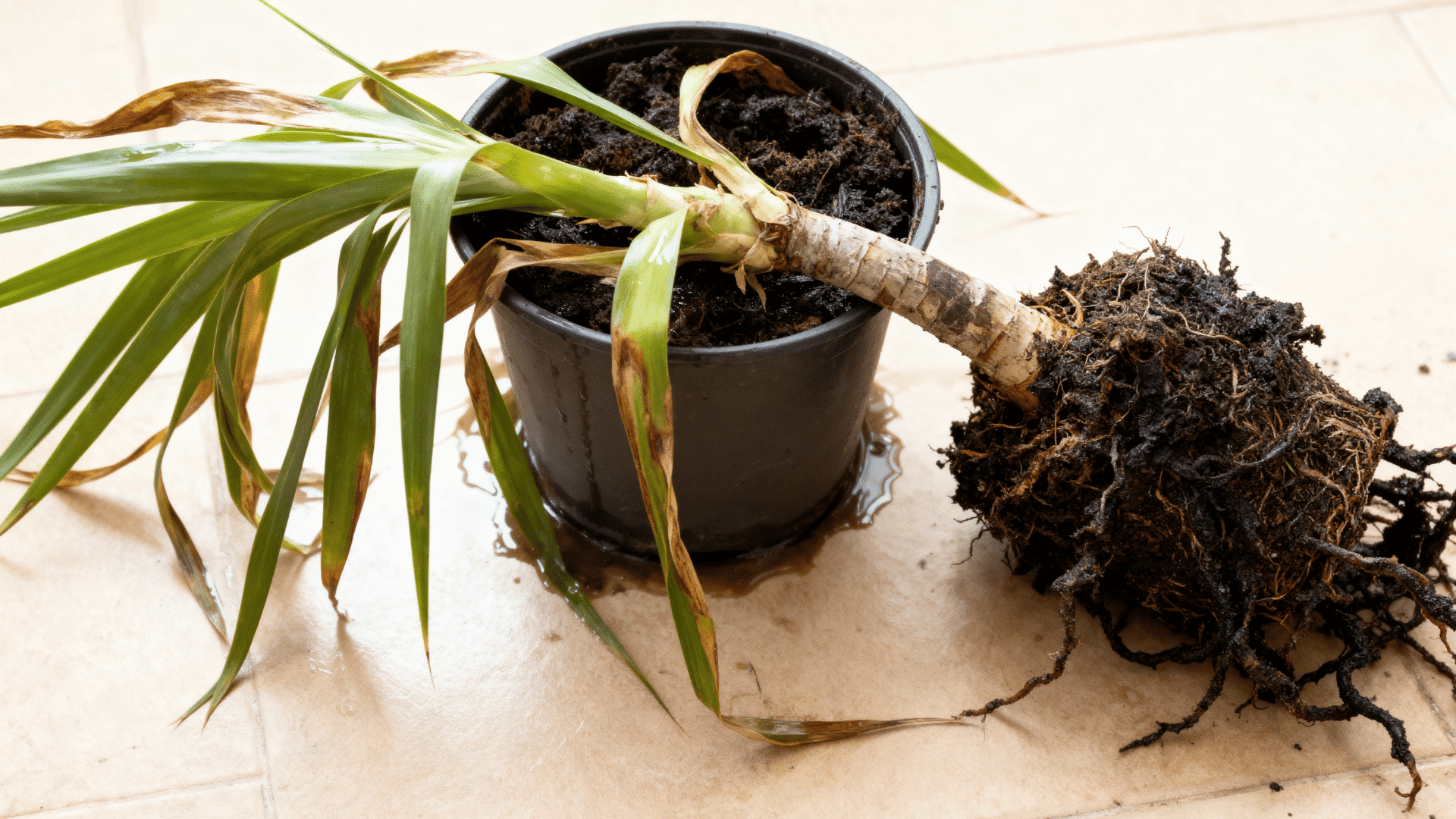
Root rot happens when the roots sit in water for too long and start to decay. It can weaken the plant and make it unhealthy if left unchecked.
Always use a pot with drainage holes so excess water can escape easily. Never allow extra water to remain in the tray under the pot.
4. Common Pests on Yucca Plants
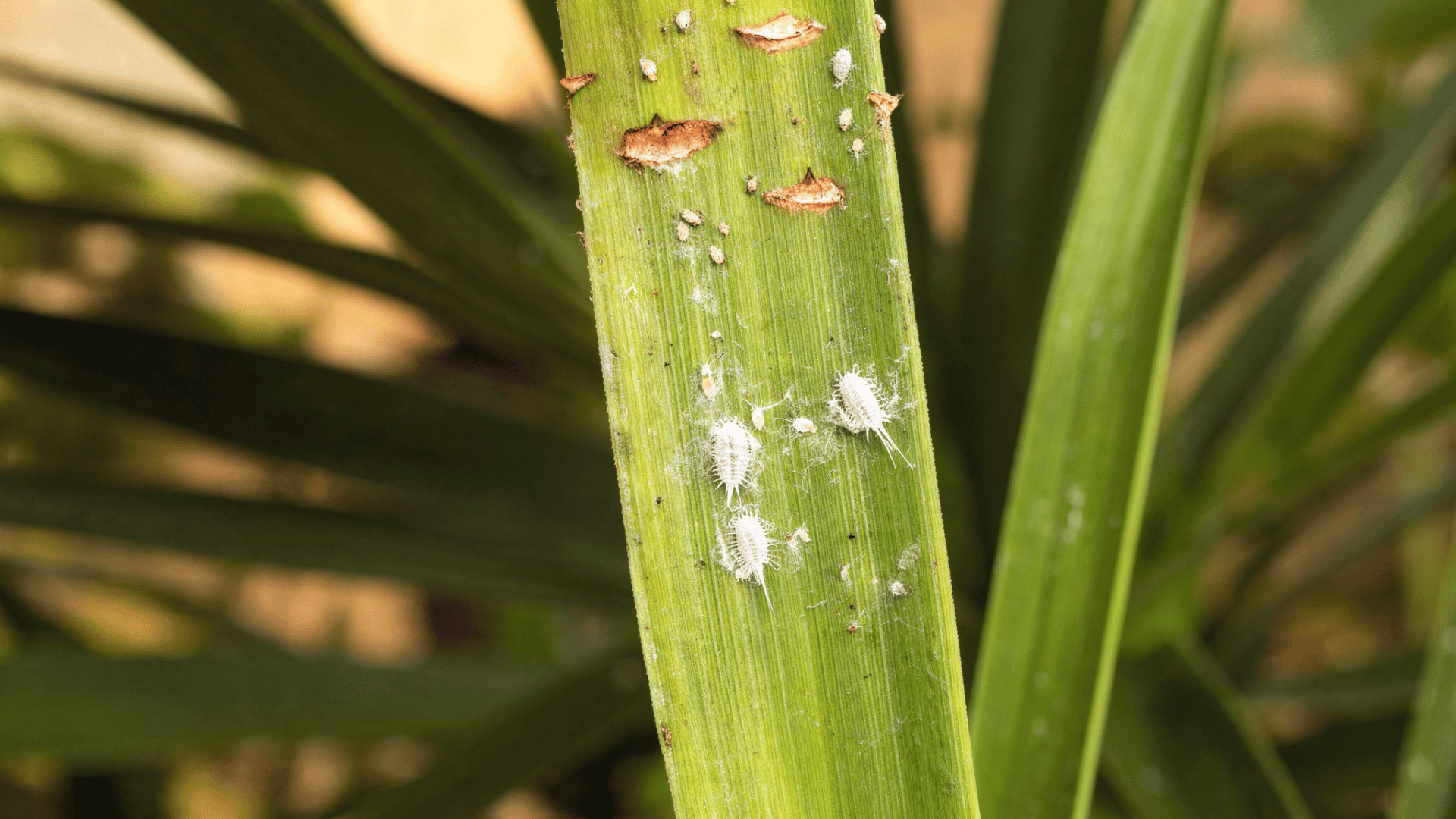
Small pests can sometimes attack yucca plants and damage the leaves, but they are usually easy to spot. Mealybugs are among the most common pests and often appear as small white cottony patches on the plant.
Cleaning the leaves with a damp cloth can help remove pests early before they spread. You can also use neem oil or a mild soap spray as a natural way to keep pests away.
Other Caring Tips for Yucca Plants
Yucca plants do not need too much attention. Here are a few simple yucca plant care tips that can help them stay healthy and look fresh for a long time.
- Turn the plant every few weeks so all sides get equal sunlight and grow evenly.
- Do not move the plant too often, as yucca plants like staying in one place.
- Check the pot tray regularly and remove extra water to avoid root problems.
- Use clean scissors or garden tools when trimming leaves to keep the plant safe from damage.
- During winter, water the plant less because yucca plants grow more slowly in colder months.
- Keep the plant away from very cold air or strong wind from open windows.
It’s a Wrap
Yucca plants are a great choice for anyone who wants a beautiful plant without spending too much time on care.
Yucca plant care is actually simple and requires little effort once you understand your plant. Even someone who has never grown yucca before can grow a strong, healthy yucca plant with regular attention.
If you have been considering adding a low-maintenance plant to your home, now is the perfect time to grow your own yucca plant and enjoy its freshness in your home every day.