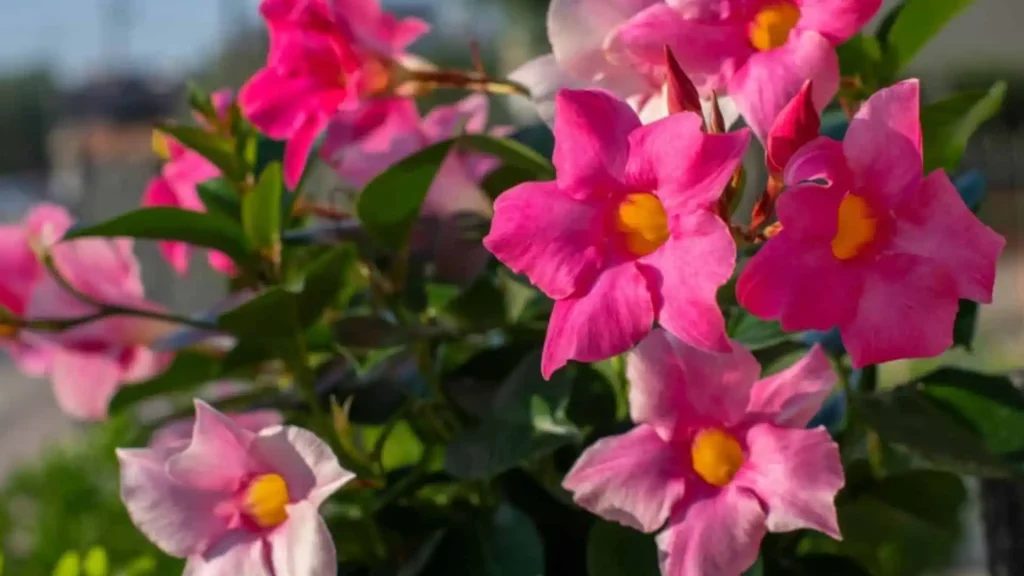
If you’re searching for beautiful, easy-to-care-for flowers, your search ends right here with the dipladenia.
It blooms in deep reds, pinks, and whites, and it does it for months. Imagine that kind of color on your porch or garden bed, who needs decor, right?
In this blog, you’ll get everything you need: how to grow it, care for it, and keep it thriving.
Know Dipladenia Plant More
Dipladenia is a flowering plant that originally comes from South America.
It belongs to the Apocynaceae family and is closely related to Mandevilla. In fact, you’ll often see the two names used for the same plant at garden centers.
The flowers come in shades of red, pink, and white, and they bloom all summer long.
Dipladenia tends to grow in a more compact, bushy shape. That makes it a great pick for containers, hanging baskets, or patio pots.
And if you treat it right, it keeps on blooming without much care.
How to Take Care of a Dipladenia Plant?
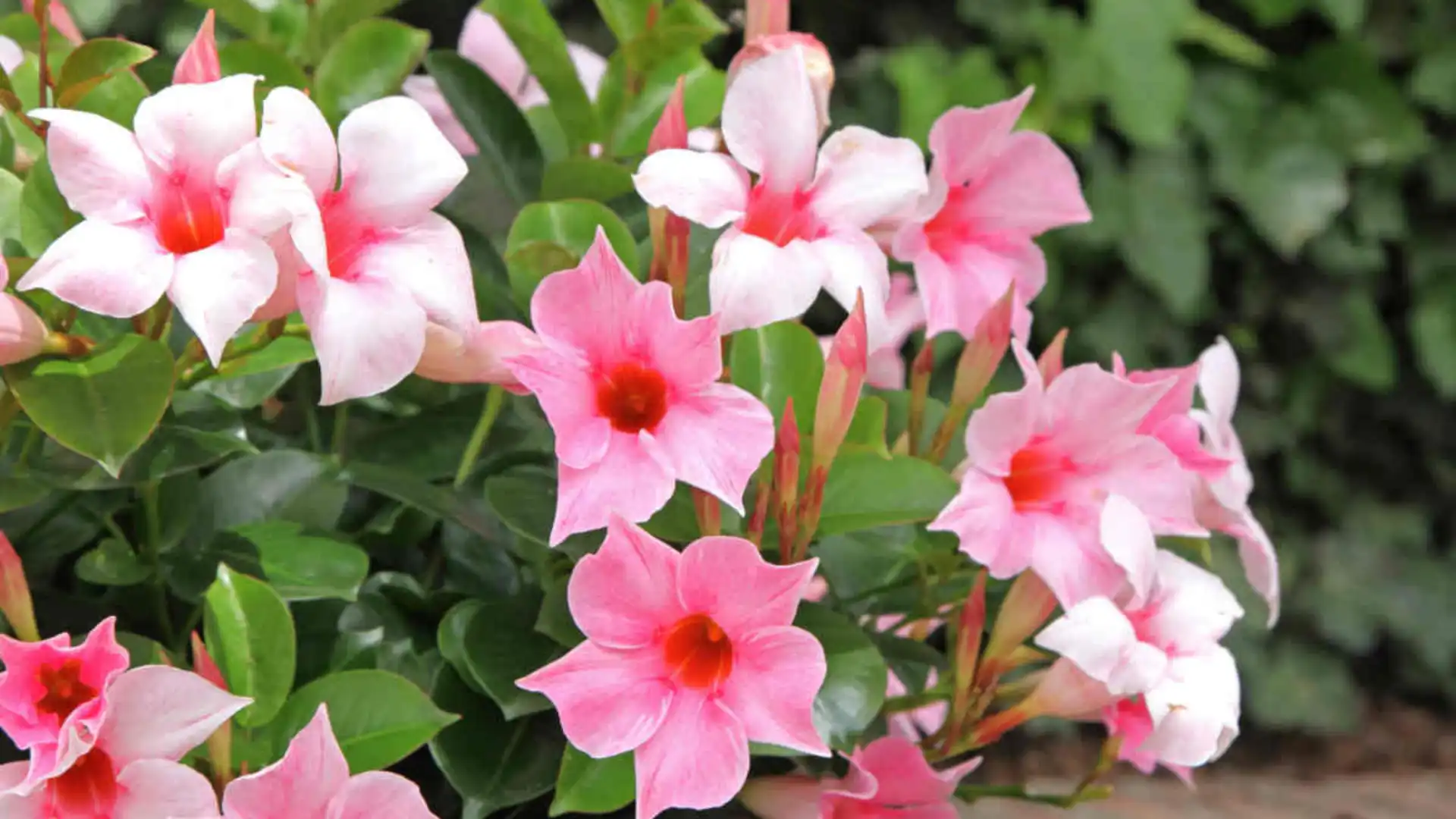
Caring for this plant is simple. A few consistent habits make the difference between a plant that struggles and one that keeps blooming.
The following are dipladenia plant care tips:
Sunlight Needs
Dipladenia loves the sun. It does best with at least six hours of bright light each day.
A south or west-facing spot works really well, but too much harsh afternoon sun can scorch the leaves, so if you live somewhere really hot, a little shade in the peak hours helps a lot.
For indoors, place it near your brightest window; without enough light, the plant stops blooming, and nobody wants that.
Watering
Overwatering is actually the fastest way to kill it, so always check the top inch of soil before watering.
If it feels dry, water it, and if it still feels damp, wait a day or two.
During the summer, it needs more frequent watering, and in winter, cut back quite a bit, as the plant needs very little water.
Make sure your pot has drainage holes, as standing water can lead to root rot, which is hard to fix.
The Right Soil
The plant likes well-draining soil that stays light; heavy, dense soil holds too much water, and that spells trouble for the roots.
Getting the soil right is one of the important ways to care for a dipladenia plant. Strong roots mean more blooms.
- Potting mix: Use a good-quality mix with perlite added. It keeps the soil loose and drains fast.
- Soil pH: Aim for 6.0-6.5. Slightly acidic soil helps the roots absorb nutrients better.
- Avoid garden soil: It compacts over time in pots, suffocating the roots.
Fertilizing
Feed your dipladenia every two weeks from spring through summer using a balanced liquid fertilizer; skip it completely in fall and winter.
Too much nitrogen pushes leaf growth and kills blooms. A phosphorus-rich feed works much better if you want flowers all season long.
Consistent feeding through the right months keeps the flowers coming, so don’t skip it.
Pruning and Deadheading
Pruning keeps your dipladenia looking full and fresh; without it, the plant gets leggy and sparse over time.
It responds really well to trimming. Pinch back new growth tips regularly to encourage bushier growth.
Remove dead or faded flowers straight away, as this signals to the plant to produce more blooms, and cut back long, straggly stems in early spring before new growth starts.
Never remove more than one-third of the plant at once.
A clean pair of scissors and five minutes every week can make your plant grow fuller and flower longer.
Is Dipladenia Annual or Perennial?
In warm climates, think USDA zones 9 to 11, Dipladenia is a true perennial.
It comes back year after year without much care. But if you live somewhere with cold winters, it behaves more like an annual.
You can bring it indoors before the cold hits. Keep it in a warm spot, cut back on watering, and it will survive the winter just fine.
So don’t give up on your plant when the season changes. With a little care, your Dipladenia can come back stronger the next year
So, with a little planning, even gardeners in cooler climates can enjoy flowers year after year.
Dipladenia vs Mandevilla