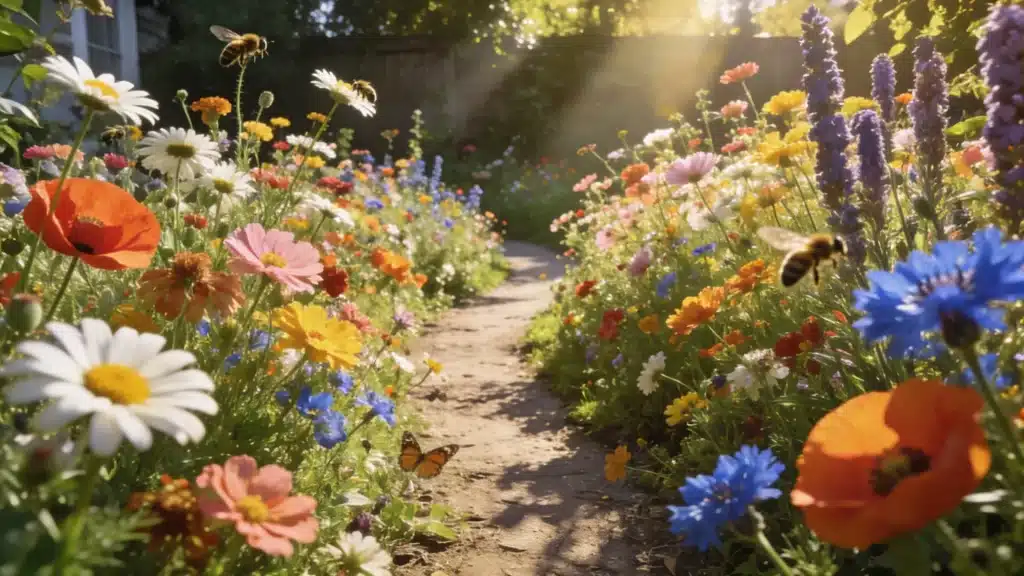
One corner of your backyard is just patchy grass and dry soil. A few months later, it has color from spring through autumn, bees show up every morning, and you have not watered it once in weeks.
Most people assume wildflower seeds grow anywhere on their own.
So they scatter a handful, wait, and get nothing.
The only thing standing between you and that kind of patch is learning how to plant wildflower seeds the right way.
It is not complicated, but a few small steps make all the difference between a garden that blooms and one that never gets going.
What Makes Wildflower Seeds Different?
Wildflowers are built differently from typical garden plants. They’ve grown in fields and roadsides for centuries without anyone tending to them, which is exactly why they work so well in a backyard setting.
No fertilizer schedules. No pruning routines. Just soil, sun, and the right starting point.
These aren’t your typical garden flowers. Wildflowers have grown in fields, meadows, and roadsides for centuries. They are built to survive in real outdoor conditions.
Most seed mixes from garden centers include a blend of annuals and perennials.
Annuals bloom in the first year. Perennials take longer to establish but return each season on their own. Checking the label for that split can save a lot of first-year disappointment.
How to Plant Wildflower Seeds: Step-by-Step Process
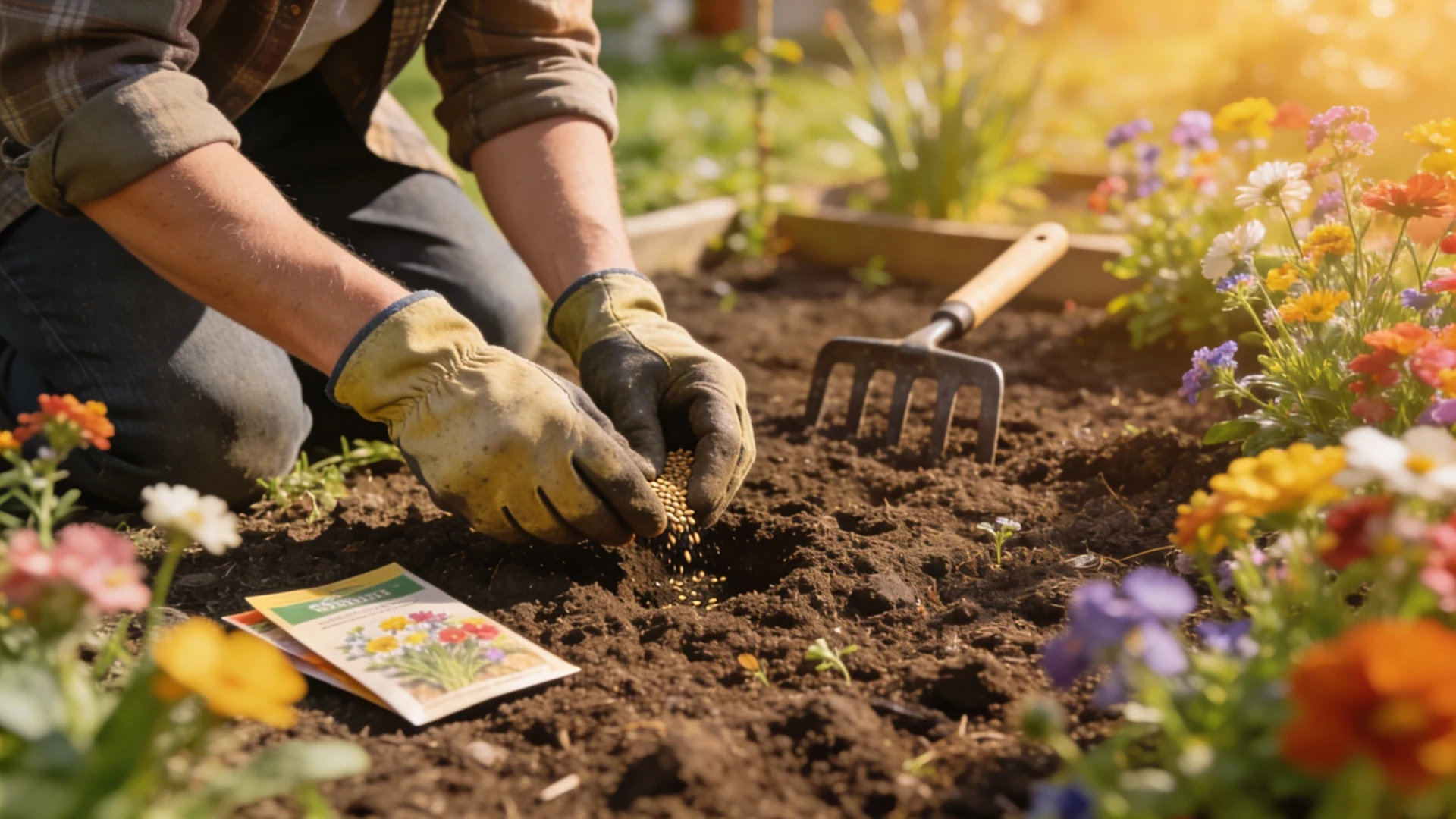
Skip the compost and fertilizer. Rich soil encourages leafy green growth instead of flowers.
Wildflowers are used to surviving in lean conditions, and that stress is part of what triggers blooming.
Step 1: Prepare the Ground
Clear the area of weeds, stones, and old grass. Loosen the top layer of soil with a rake. You don’t need to dig deep; just 2 to 3 inches is enough.
Avoid adding compost or fertilizer. Wildflowers grow better in poorer soil conditions.
Step 2: Sow the Seeds
Scatter the seeds evenly across the prepared area. Don’t bury them too deep. A light covering of soil about 2 to 3 mm is all they need.
Press the seeds gently into the soil using your hand or a flat board. This helps the seeds make good contact with the soil.
Step 3: Water After Planting
Give the area a gentle watering straight after sowing. Keep the soil moist for the first few weeks.
But don’t overwater. Soggy soil can cause seeds to rot before they sprout.
Quick Tip: Water little and often. A light spray works better than a heavy soak. Think of it like giving your seeds a drink, not a bath.
Benefits of Planting Wildflower Seeds
They are low-maintenance: You don’t need to water them every day. You don’t need to prune them constantly. They grow, bloom, and reseed on their own.
They support wildlife: Wildflowers attract bees, butterflies, and birds. They provide food and shelter for pollinators.
They save water: Most wildflowers become drought-tolerant once they’ve had a few weeks to settle. The tricky part is the first month. Overwatering early on is one of the most common reasons seeds rot before they ever sprout.
They bring lasting color: A well-planted wildflower patch can bloom from spring all the way through autumn. You get months of color without replanting every season.
They are budget-friendly: A single packet of wildflower seeds costs very little. Yet it can cover a large area of your garden. You get a lot for a small amount of money.
Different Methods of Planting Wildflower Seeds
Scatter Sowing by Hand
This is the simplest method. Just grab a handful of seeds and scatter them across the prepared soil. It’s free, easy, and needs no equipment.
Just keep in mind that hand scattering can be uneven. Some areas may end up with more seeds than others.
Using a Seed Spreader
A seed spreader is a small handheld or wheeled tool.
You fill it with seeds and walk across the prepared soil. It releases seeds at a steady, even rate as you move.
It works especially well for larger garden areas. You cover more ground in less time. And the coverage is far more consistent than scattering by hand.
Mixing Seeds with Sand
This method is popular among experienced gardeners.
Mix your wildflower seeds with dry sand before sowing. Use a ratio of one part seeds to five parts sand. The sand adds bulk to the mix. This makes it much easier to spread the seeds evenly by hand
Quick Tip: Use white sand so you can clearly see where you have already sown. This stops you from missing patches or doubling up.
Plug Planting for Quicker Results
Instead of sowing seeds directly into the ground, you grow them in small trays first. Fill each tray cell with a light seed compost.
Add one or two seeds per cell. Keep them indoors or in a greenhouse until they sprout.
Once the seedlings are a few inches tall, plant them directly into the ground. Space them about 6 to 12 inches apart, depending on the variety.
This method takes more effort up front. But it gives you quicker, more reliable results.
When Should You Plant Wildflower Seeds?
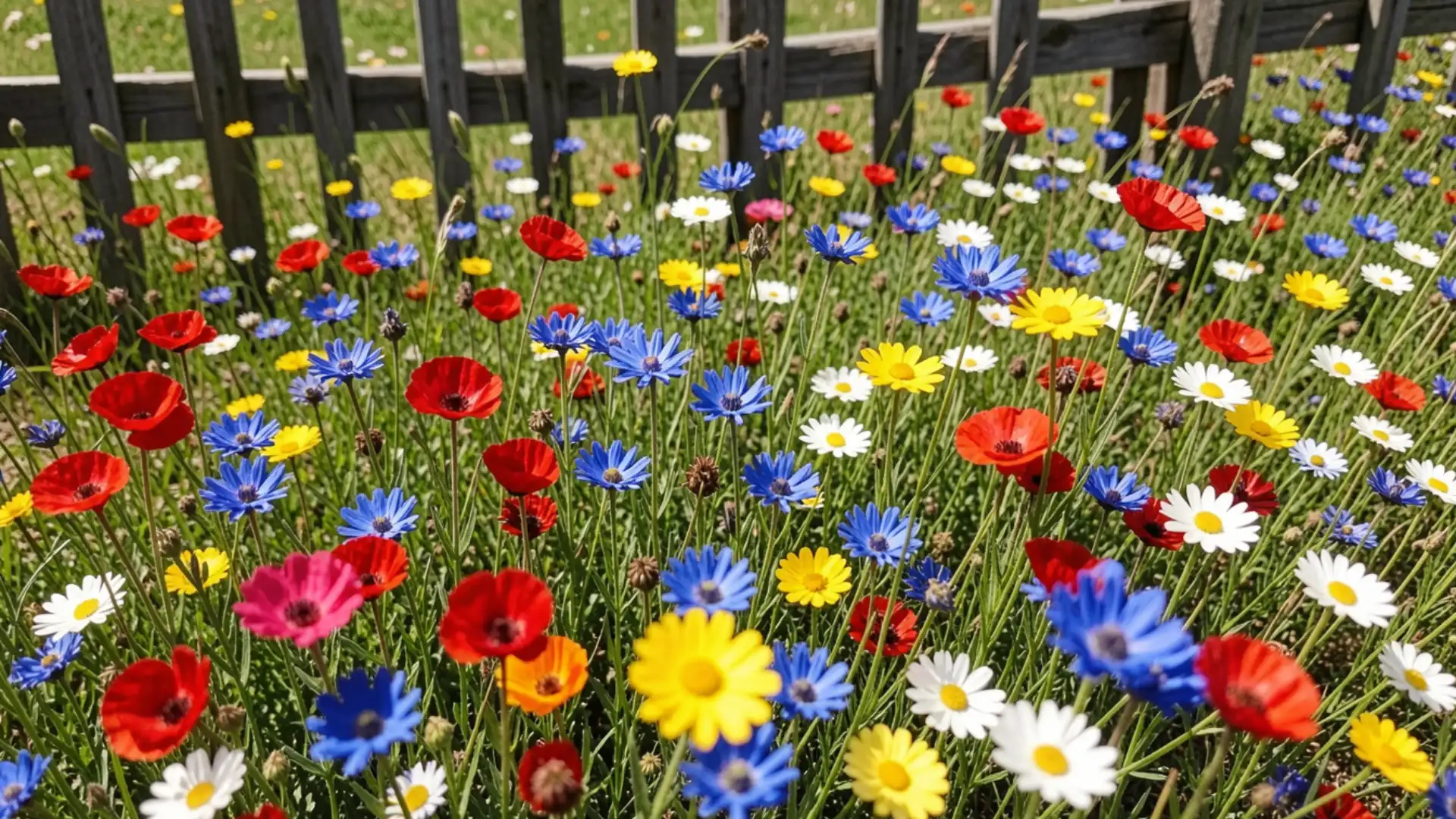
Timing matters more than most people think. Plant too early or too late, and your seeds may never sprout.
Best Seasons for Planting: Spring vs. Autumn
There are two ideal times to plant wildflower seeds: spring and autumn.
Spring planting
It works best between March and May. The soil is warming up, and days are getting longer. Seeds sprout quickly in these conditions.
Autumn planting
It works well between September and November. Seeds sit in the soil over winter. This cold period actually helps a wide variety of plants germinate better come spring.
Both seasons work well. If you’re a first-time planter, spring is the easier starting point because you can watch the soil warm up and react in real time.
How Your Local Climate Affects Timing
If you live in a warmer area, plant a little earlier in spring. If winters are harsh, autumn planting gives seeds more time to settle.
One simple rule: wait until the soil is no longer frozen. Avoid planting just before a long dry spell.
Signs That the Soil is Ready
You don’t need special equipment. Just look for these signs:
- The soil crumbles easily in your hand
- It is no longer soggy or waterlogged
- Weeds are beginning to sprout
If weeds are growing, your soil is ready. Wildflower seeds and weeds like the same conditions.
Where to Plant Wildflower Seeds in Your Backyard?
Location can make or break your wildflower patch. The right spot gives your seeds the best chance to grow and bloom well.
Choosing the Right Spot: Sunlight and Drainage
Wildflowers love sunlight. Pick a spot that gets at least six hours of direct sun each day. Avoid shaded areas under trees or next to tall fences.
Drainage matters too. Wildflowers don’t like sitting in wet soil. Avoid low-lying areas where water tends to collect after rain.
Small Spaces vs. Larger Patches
You don’t need a large backyard. A narrow strip along a fence, a neglected corner, or even a raised bed can work well.
Smaller patches are actually easier to manage in the first season because you can keep a close eye on soil moisture and early growth.
For larger areas, wildflowers are a great way to fill space. They spread naturally and cover ground quickly over time.
Time to Get Your Hands Dirty
Planting wildflower seeds doesn’t have to be complicated. Pick the right spot, prepare your soil, and sow at the right time. That’s really all it takes.
Your backyard could be full of color in just a few months. And the best thing is that wildflowers come back year after year with very little effort.
So grab a packet of seeds and get started.
Then drop a comment below; I’d love to see how your backyard turns out!
Frequently Asked Questions (FAQ’s)
1. Can I Just Sprinkle Wildflower Seeds?
Yes, but prepare your soil first for the best results.
2. How Long Do Wildflower Seeds Take to Grow?
Most wildflower seeds sprout within two to four weeks after sowing. Some varieties take a little longer, depending on the season and soil conditions.
3. Do Wildflower Seeds Grow Back Every Year?
Yes, many wildflower varieties reseed on their own and come back each year.