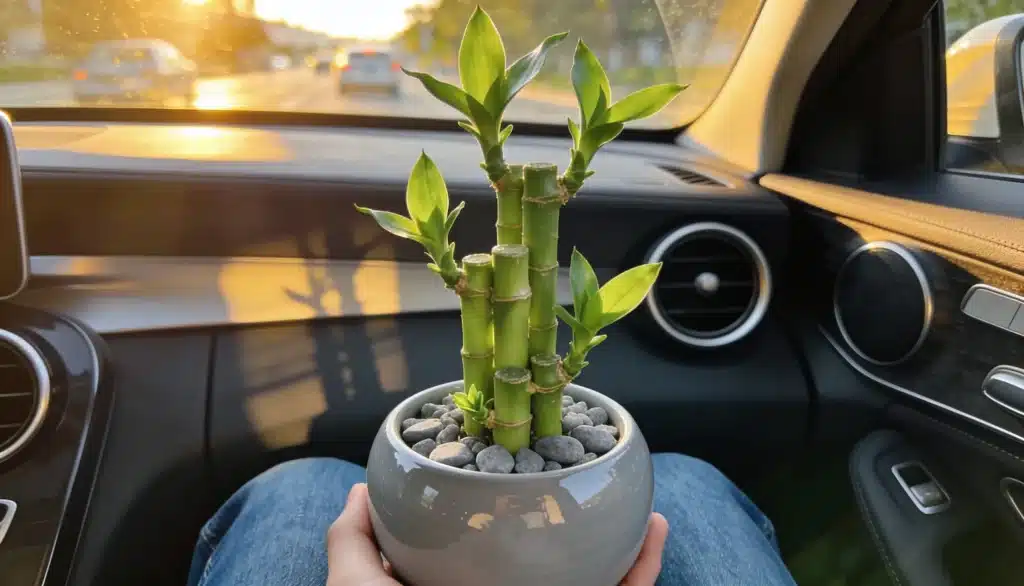
The lucky bamboo is one of the most popular indoor plants.
For centuries, this symbolic plant has been tied to good luck, wealth, and positive energy in the Feng Shui tradition.
Today, it sits on office desks, kitchen counters, and living room shelves, and is loved just as much for its look as its meaning.
The Story Behind Lucky Bamboo
Despite the name, lucky bamboo is not actually bamboo at all.
Its botanical name is Dracaena sanderiana, and it belongs to the Asparagaceae family, the same family as asparagus.
Native to the tropical rainforests of Central Africa, it was introduced to Asian markets decades ago and quickly became a staple of Feng Shui décor.
Today, the lucky bamboo plant is one of the most recognized houseplants.
You’ll find it in homes, offices, spas, and gift shops, sold in everything from simple single-stalk arrangements to elaborate tower displays.
It’s popular for a reason: it grows in water, tolerates low light, and looks good in almost any space.
History and Origins
Lucky bamboo has deep roots in Chinese culture, where it has been used in Feng Shui practices for over 4,000 years.
The plant is believed to carry “chi,” positive life energy, and is traditionally given as a gift to attract good fortune, health, and prosperity.
By the late 20th century, international trade had brought it far beyond its origins.
It caught on quickly as an easy-care, meaningful plant with strong visual appeal, and today, it’s one of the most recognized indoor plants across the country.
Common Varieties of Lucky Bamboo Plant
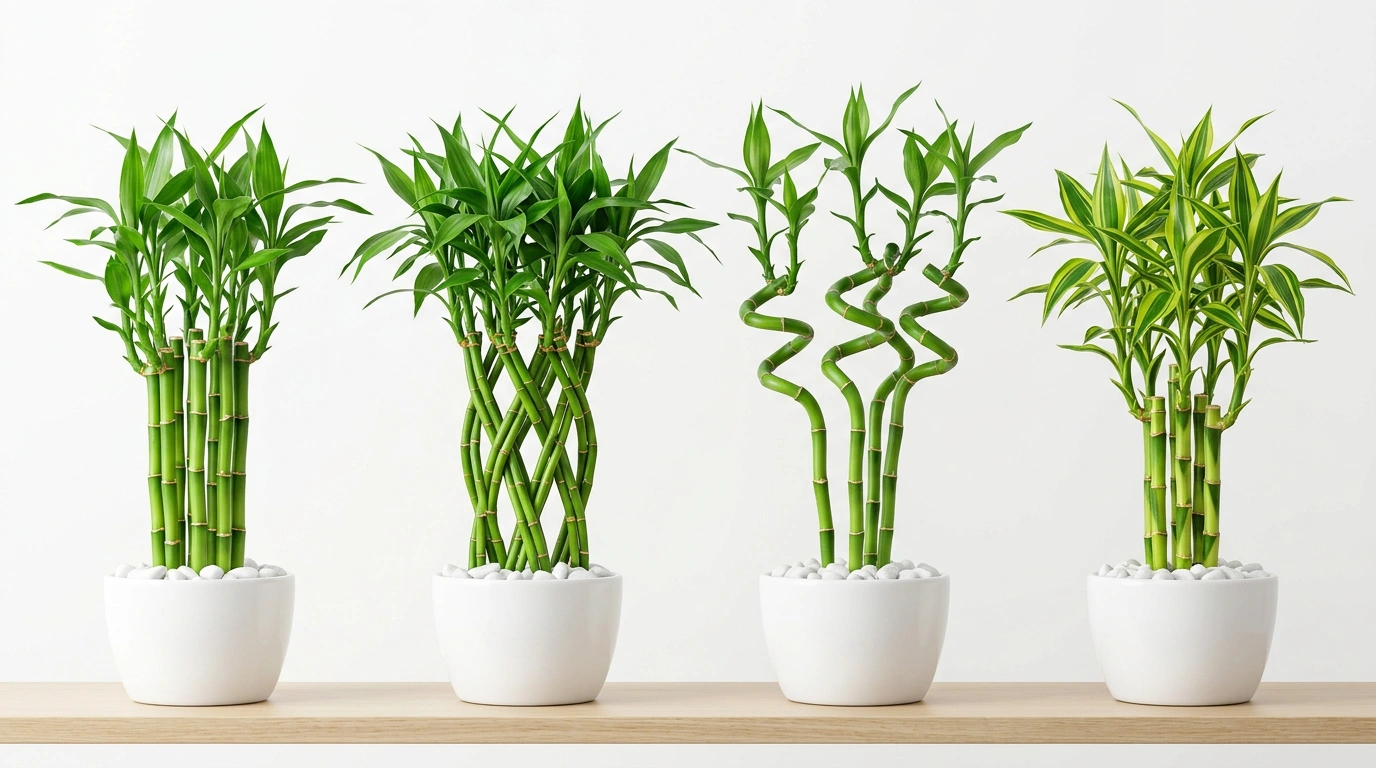
Lucky bamboo comes in several distinct forms, each with its own character.
Straight stalks are the most common, clean, upright, and minimal. They suit modern and office spaces well.
Braided stalks are grown by weaving multiple stems together as they grow, creating a twisted trunk effect that many buyers find visually striking.
Spiral stalks are shaped by rotating plants toward and away from light over time, a slow, intentional growing process that makes each one slightly unique.
Color-wise, most varieties are deep green. Some feature yellow-green tips or golden-yellow stalks, which are often associated with financial luck in the Feng Shui tradition.
Feng Shui and Symbolism
Lucky bamboo has been a symbol of good fortune for thousands of years, and in Feng Shui, it’s more than just décor.
The plant is believed to carry chi, or positive life energy, through its stalks. The number of stalks, the direction it faces, and where it sits in a room all play a role in the energy it’s said to attract.
Lucky bamboo thrives beautifully in living rooms, home offices, and entryways.
Place a 3-stalk arrangement on a work desk to boost focus, or an 8-stalk vase in the living room for prosperity.
Entryways welcome positive energy, while bathrooms with natural light add a serene, spa-like touch.
Stalk Numbers and Their Meaning
In Feng Shui tradition, the number of stalks in a lucky bamboo arrangement carries specific symbolic meaning. The following is what each number represents:
1 stalk: Simplicity, focus, and a fresh start.
3 stalks: Happiness, long life, and good fortune. The most commonly gifted arrangement.
5 stalks: Balance across five key areas of life: health, wealth, happiness, love, and longevity.
7 stalks: Good health and personal wellbeing.
8 stalks: Prosperity and financial growth. Eight is considered the luckiest number in Chinese culture.
Lucky Bamboo Plant Care Tips
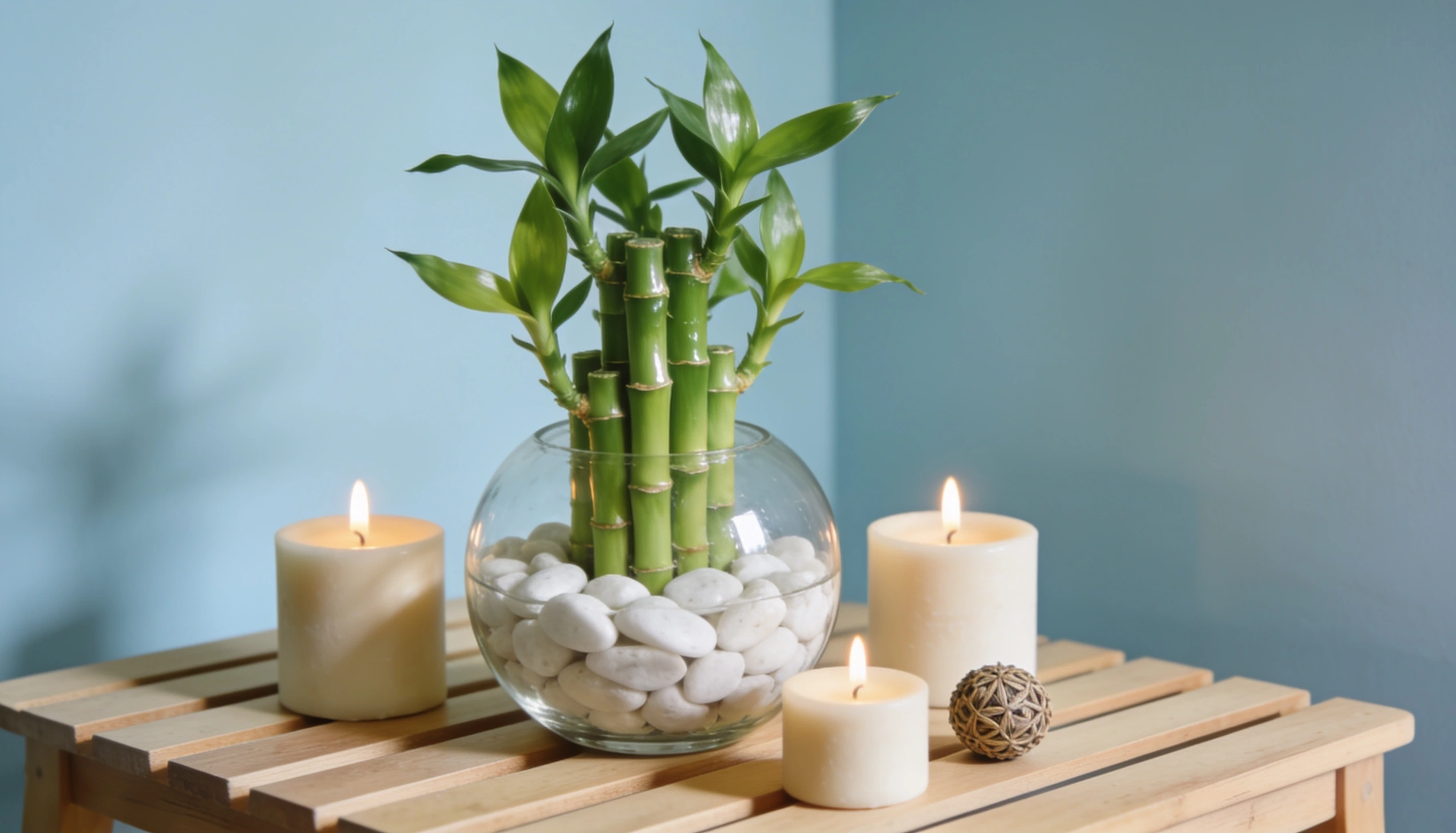
Lucky bamboo care is simpler than most people think.
This plant thrives in water or soil, asks for very little light, and fits comfortably in almost any corner of your home. Get the basics right, and it will stay green and healthy for years.
Watering Requirements of Bamboo
If your lucky bamboo is growing in water, change it every 7 to 10 days.
Use filtered or distilled water when possible, as tap water contains fluoride and chlorine that can cause leaf tips to brown over time.
If tap water is all you have, let it sit out overnight before using it.
Placement and Ideal Location
Place your plant in a spot with low to medium indirect light. A north or east-facing windowsill works well. Avoid direct sun, which scorches the leaves fast.
Keep it away from heating vents, air conditioners, and cold drafts.
Feeding and Fertilizing
Lucky bamboo doesn’t need much fertilizer; too much is actually one of the most common mistakes.
Use a diluted liquid fertilizer at roughly one-tenth of the standard dose once every four to six weeks during the growing season.
Skip fertilizing in winter.
Routine Maintenance of Bamboo
If you spot yellow leaves, remove them cleanly at the base with sharp scissors. Don’t leave dying leaves on the stalk; they can invite rot.
To encourage new shoots, trim leggy or overgrown stalks just above a node. New growth typically appears within a few weeks.
Conclusion
Lucky bamboo is one of those rare plants that delivers on every level.
It looks good, carries real symbolic meaning, and asks very little in return: clean water, indirect light, and an occasional trim.
Place it on your desk for calm, focused energy. Style it in your living room as a conversation piece. Or wrap one up as a gift for someone starting a new home or chapter.
The Feng Shui tradition behind it isn’t just folklore; millions of people across the world keep this plant close for a reason.
Give it a try. You won’t regret it.
Frequently Asked Questions (FAQ)
1. Is Lucky Bamboo Safe for Pets?
No, it is toxic to cats and dogs, so keep it well out of their reach.
2. How to Care for Rocks in a Lucky Bamboo Plant?
Place the stalks in decorative pebbles or rocks, fill the container with enough water to cover the roots, and change it every 7 to 10 days.
3. Does Lucky Bamboo Need a Special Pot or Vase?
Any container that holds water, such as glass vases, ceramic pots, or decorative bowls, does the job well.