Finding a good countertop fabricator nearby feels harder than it should. Most people don’t know what separates a great stone fabricator from an average one, and that gap costs money.
Picking the right one gets a lot easier with the right information. This post breaks down everything worth knowing about the cost of the work, so the next conversation with a fabricator feels confident, not confusing.
Skipping this step is how bad hires happen. Read through before making any calls. It saves time, money, and plenty of headaches down the road.
What is a Stone Countertop Fabricator?
A Stone countertop fabricator is a skilled professional who turns raw stone or engineered slabs, such as granite, marble, or quartz, into ready-to-install countertops.
They manage the entire process, serving as intermediaries between material suppliers and home installers.
It starts with templating, where exact measurements of the space are taken. Next, the layout stage ensures that natural stone patterns, such as veining, line up properly across the surface.
Cutting comes after, using diamond saws or CNC waterjets, with spaces carved out for sinks and cooktops. Edge profiling then shapes and polishes edges into styles like bullnose or beveled.
Once finished, the countertops are transported and installed on-site to ensure a clean, accurate fit in kitchens or bathrooms.
Different Types of Countertop Fabricators
A countertop or stone fabricator may go by different names, but the work they do is essentially the same!
| Term | Meaning |
|---|---|
| Stone Fabricator | Broader term cuts, finishes, and installs all stone materials like granite, marble, quartz, and limestone for countertops, vanities, backsplashes, and other slab projects |
| Countertop Fabricator | A more specific term focuses on countertops for kitchens and bathrooms, but performs the same tasks |
| Granite / Slab Fabricator | Alternate terms are often used interchangeably |
What Does a Countertop Fabricator Actually Do?
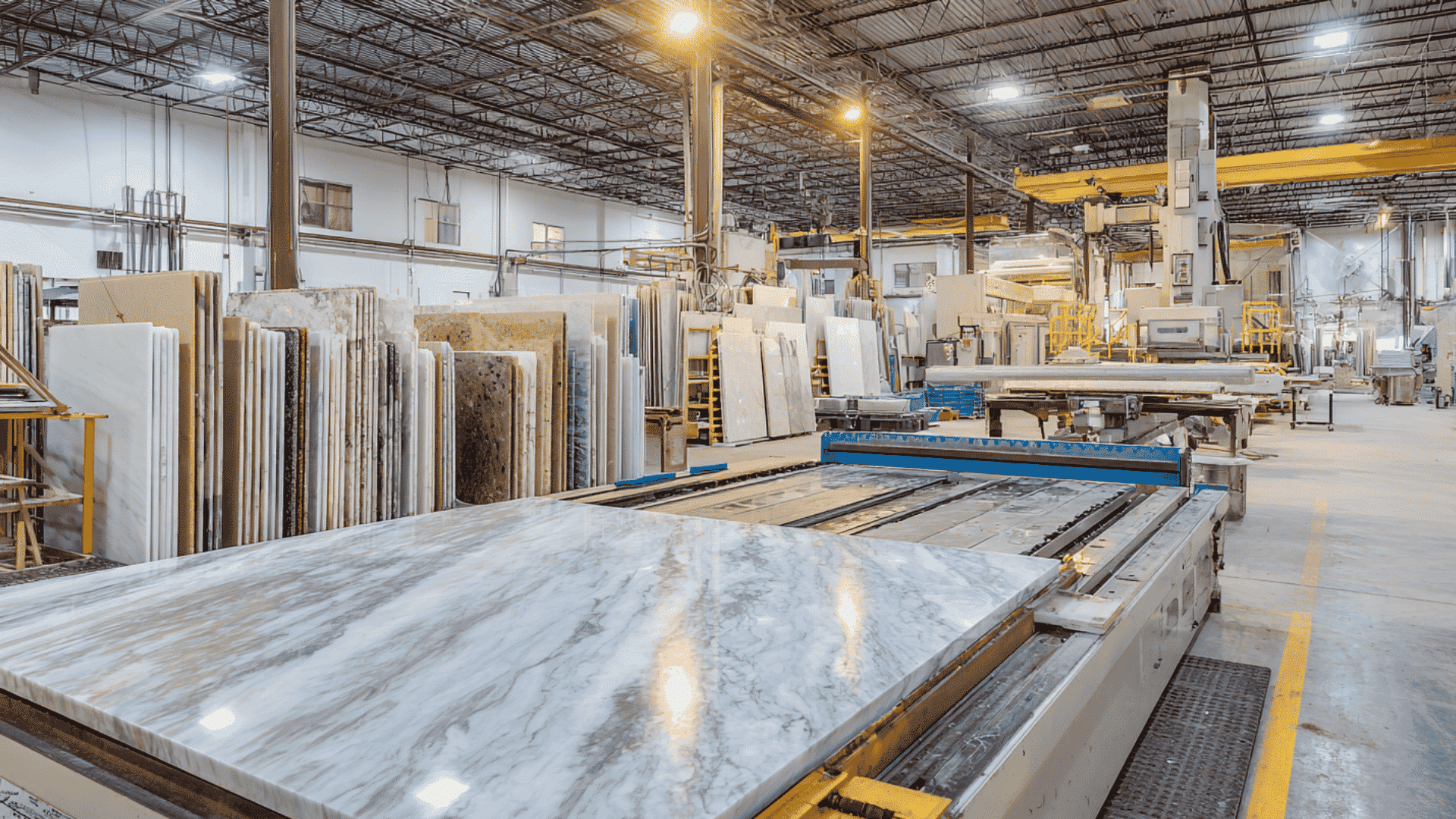
The quality of your countertops depends heavily on the fabricator’s skill. From measuring to installation, each step impacts fit, finish, and durability.
Step 1: Measurement and Templating
Technicians visit the home to record exact room dimensions using laser tools. Walls, corners, and appliance positions are mapped so the countertop fits without gaps or misalignment.
Even small surface irregularities are captured to guide fabrication. These measurements form the base reference for all later cutting work.
Accurate templating helps reduce fitting issues during installation and supports smooth alignment with cabinets and fixtures.
Step 2: Slab Selection and Layout Planning
Raw stone or engineered slabs are checked for color consistency, cracks, and natural patterns. Fabricators then position digital templates on the slab to decide the best visual arrangement.
The goal is to match veins and textures so the surface looks continuous after installation.
Careful layout planning also helps avoid weak points or waste areas in the material while maintaining visual balance in the design.
Step 3: Cutting the Material
Large slabs are placed into bridge saws or water-jet machines for cutting based on the mapped template. Computer controls guide the blade or jet to achieve precise shapes and dimensions.
This stage separates countertop sections from the main slab. Straight cuts and rough openings are created first, setting the foundation for sink areas and corner joins that will be refined in later stages.
Step 4: Shaping and Refining Edges
Cut pieces move to CNC machines that fine-tune dimensions and create openings for sinks and cooktops. Edge styles like eased, beveled, or rounded profiles are formed at this stage.
The shaping process removes roughness and prepares each section for a clean fit.
Machines handle most of the detailing, while technicians check alignment and consistency to match the original design plan.
Step 5: Polishing, Delivery, and Installation
Edges and surfaces are polished to achieve a smooth, finished look. After inspection, the countertop sections are transported carefully to the site.
Installers position each piece, level it, and join the seams to ensure a tight fit. Adhesives and supports secure the structure to cabinets.
Final adjustments are made to ensure stability, alignment, and a clean finish across the entire countertop surface.
How to Find Countertop Fabricators Near You?
Finding the right countertop fabricator nearby takes a few smart steps, but it gets easier when the right tools are used from the start.
Start with Local Directories and Databases
Major stone and quartz brands keep tight networks of approved installers worth checking first.
- Use The Stone Collection to find regional fabricators verified to work with premium slabs
- For specific engineered stone options, the Cambria Dealer Locator lists certified fabricators by area
- For general ratings and real customer photos, Yelp’s countertop fabricator listings show honest feedback from local homeowners
- Always pull at least three quotes, check portfolios, and ask whether digital templating is part of the process
Questions to Ask Your Countertop Fabricator Before Signing
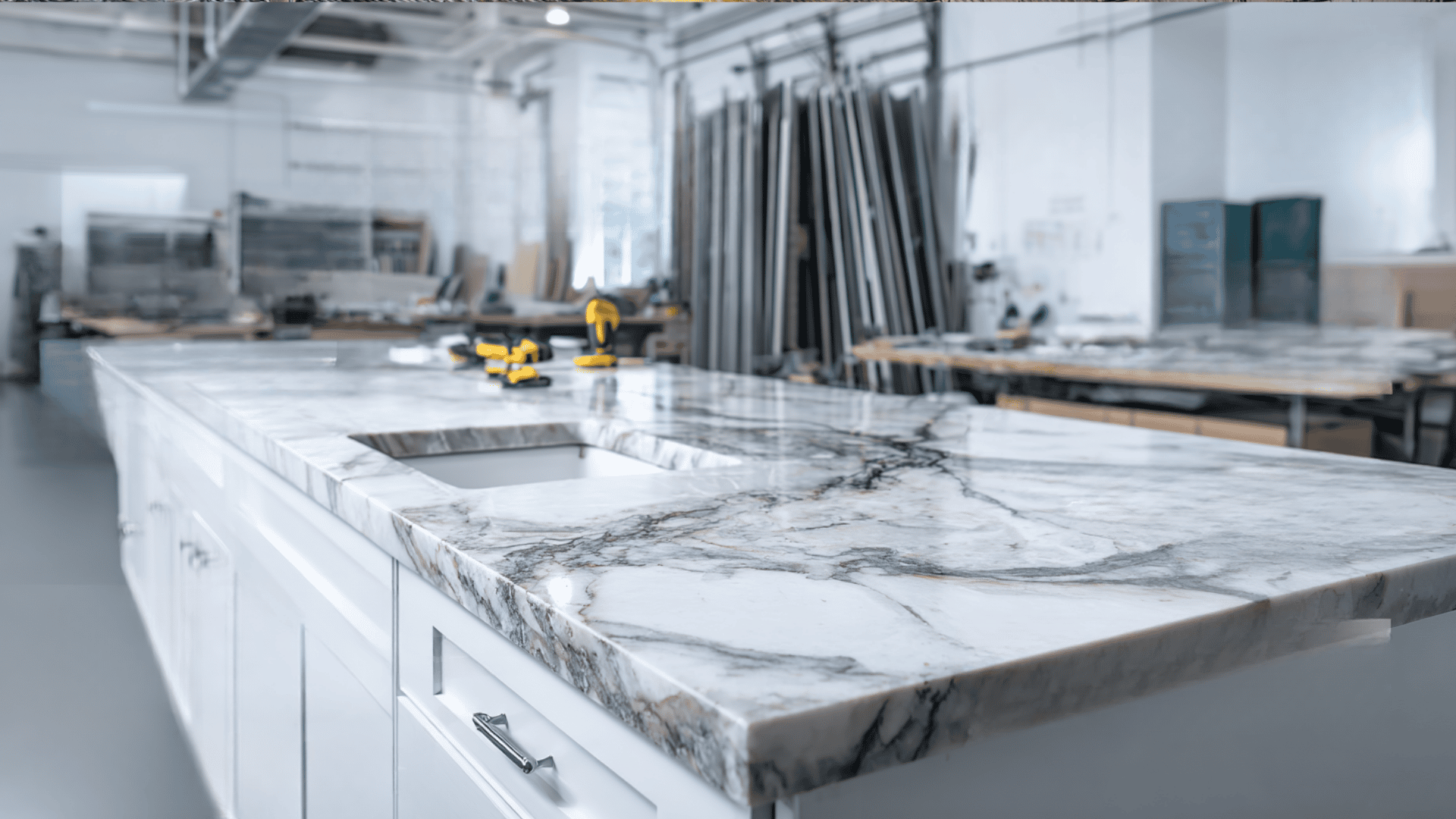
Before approving a countertop fabrication job, a few key questions help avoid confusion during design, installation, and aftercare.
- Are there any hidden costs?
- Who handles plumbing work?
- Where will seams be placed?
- Can the slab layout be approved?
- What does the workmanship warranty cover?
- How should the surface be maintained?
Red Flags of a Bad Stone Fabricator
Before approving countertop fabrication, a few checks help keep the project running smoothly and on track.
1. Seam Placement: Unplanned seam locations can break the visual flow of the countertop and make joins stand out.
2. Slab Pattern Mismatch: Without layout approval, natural veining may look uneven or disconnected across sections.
3. Hidden Extra Costs: Edge styles, sink cutouts, and upgrades can increase the final bill if not confirmed early.
4. Installation Responsibility Gaps: Unclear installer roles can lead to confusion if damage or fitting issues occur.
5. No fixed Timeline or Warranty Clarity: Uncertain schedules and weak warranty terms make post-installation support harder to manage.
Residential vs. Commercial Fabricators: Which Do You Need?
Understanding the differences helps ensure you get the right expertise for your countertops or stone installations.
| Aspect | Residential Fabricator | Commercial Fabricator |
|---|---|---|
| Project Scale | Home kitchens & bathrooms | Offices, malls, high-rises |
| Materials Used | Marble, travertine, quartz | Granite, bluestone, quartzite |
| Design Priority | Aesthetics & custom styles | Durability & heavy-traffic use |
| Durability Needs | Moderate durability | Heavy-duty, thicker slabs |
| Installation Complexity | Simple, attaches to existing space | Complex, needs structural support |
| Maintenance | Occasional resealing | Frequent maintenance |
| Cost | More affordable | Higher due to labor & equipment |
Cost Factors for Stone Fabrication
Planning a stone countertop project? what you’ll actually pay for materials, labor, and custom features.
- Typical Cost: $1,500–$8,000 for a 50 sq ft kitchen; average $3,139
- Materials per sq ft: Granite $25–200, Quartz $35–160, Marble $40–200 (grade-dependent)
- Common add-ons: Sink cutout $150–350, Cooktop cutout $100–250, Faucet hole $25–50
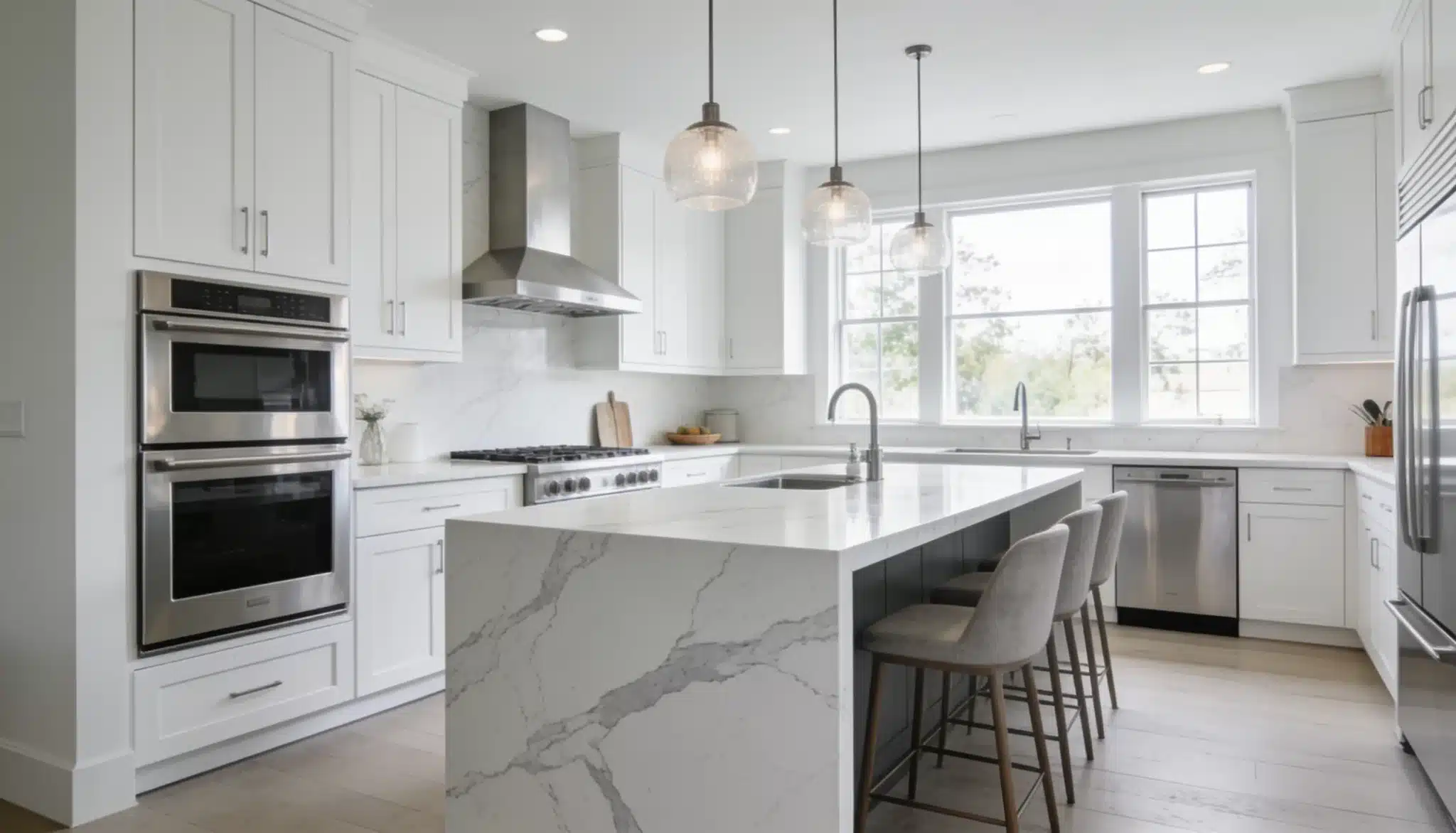
- Premium edges: Waterfall $300–1,200/side, Mitered $40–100/LF, Ogee $10–25/LF
Pro Tip: Request an itemized quote separating materials, fabrication, templating, and installation. Choose Level 1 granite or mid-range quartz for best value. Budget +15–20% for unexpected add-ons.
Costs may vary by location, materials, supplier, and time of purchase.
Conclusion
Hiring the right countertop fabricator makes the difference between a kitchen that looks average and one that holds up beautifully for years.
Stone fabrication is skilled work; the material, the cuts, the finish, and the installer all affect the final result. Cutting corners at this stage means paying twice later.
Every home renovation worth doing deserves a fabricator who knows the craft well.
Check out the countertop materials to pick the right stone before the first call gets made. It makes every conversation with a fabricator sharper and more productive.
Frequently Asked Questions
What Does Vinegar Do to Quartz?
Vinegar’s acidity can damage man-made quartz countertops by breaking down resin binders, leading to dull spots, etching, and permanent surface damage. Natural quartz is less affected.
What is the Safest Cleaner for Quartz Countertops?
A safe daily cleaner is warm water with mild dish soap, such as Dawn, applied gently with a microfiber cloth to avoid scratching or dulling the surface.
What is the 20-Minute Rule in Cleaning?
The 20-minute rule sets aside exactly 20 minutes daily to declutter or tidy a space, making cleaning manageable and maintaining consistent order.