Not all palm trees look the same. Some grow spiky trunks. Others fan out wide leaves that look like an open hand.
Once you know what to look for, you’ll spot the differences right away.
In this blog, we’ll walk you through types of palm trees, what makes each one unique, and how you can tell them apart with ease.
Popular Types of Palm Trees for Every Landscape
The following are a few popular palm tree types for every kind of landscape, so you can quickly spot the right match for your space and climate.
1. Mexican Fan Palm
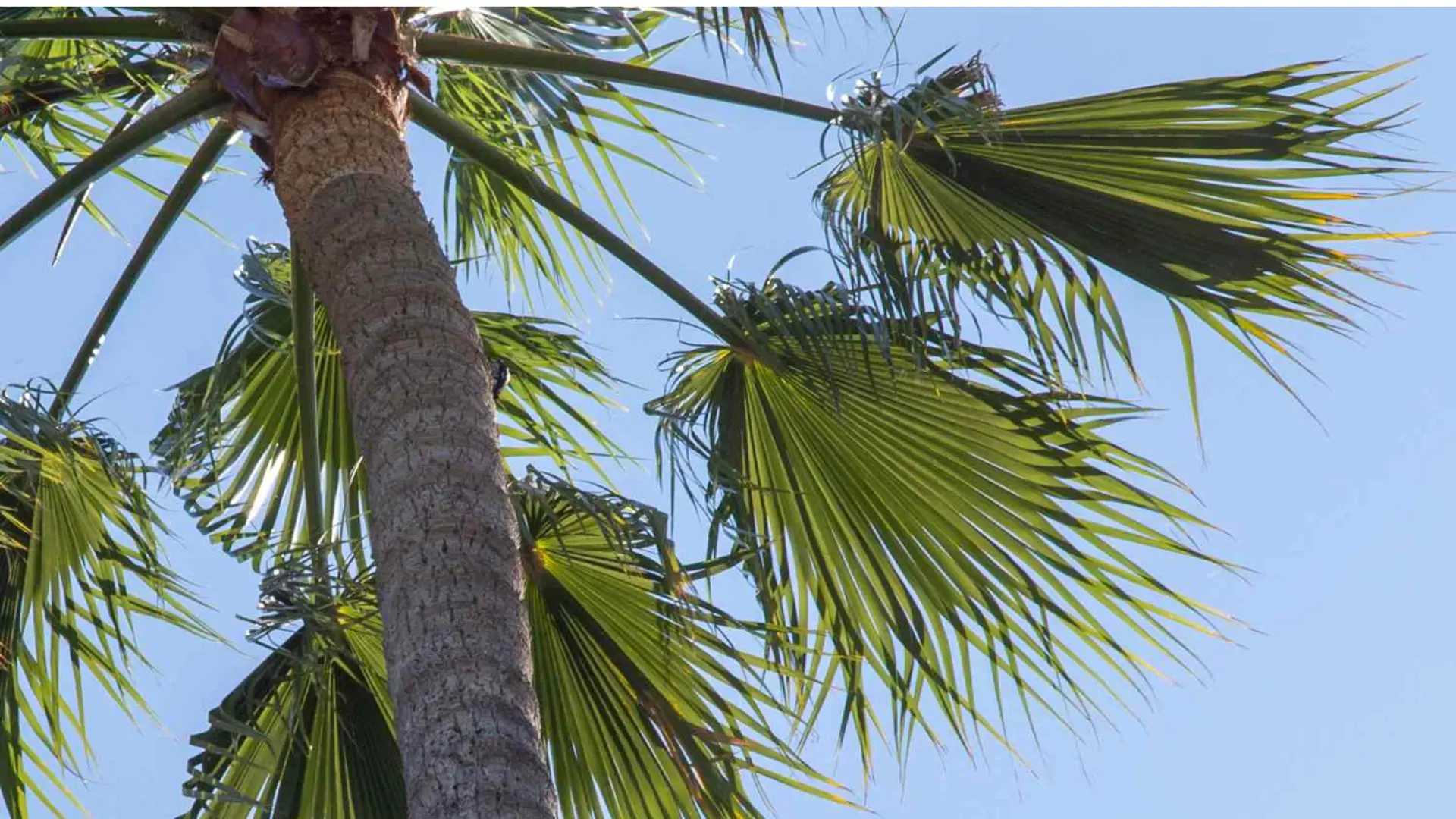
One of the tallest types of palm trees you will spot in cities. It grows fast and stands tall.
- Botanical Name: Washingtonia robusta
- Identification: Fan-shaped leaves, slim trunk, old leaves that hang like a skirt.
- Mature Height: Up to 30 meters (100 feet).
- Best Climate: Warm, dry zones with mild winters.
2. Chinese Fan Palm
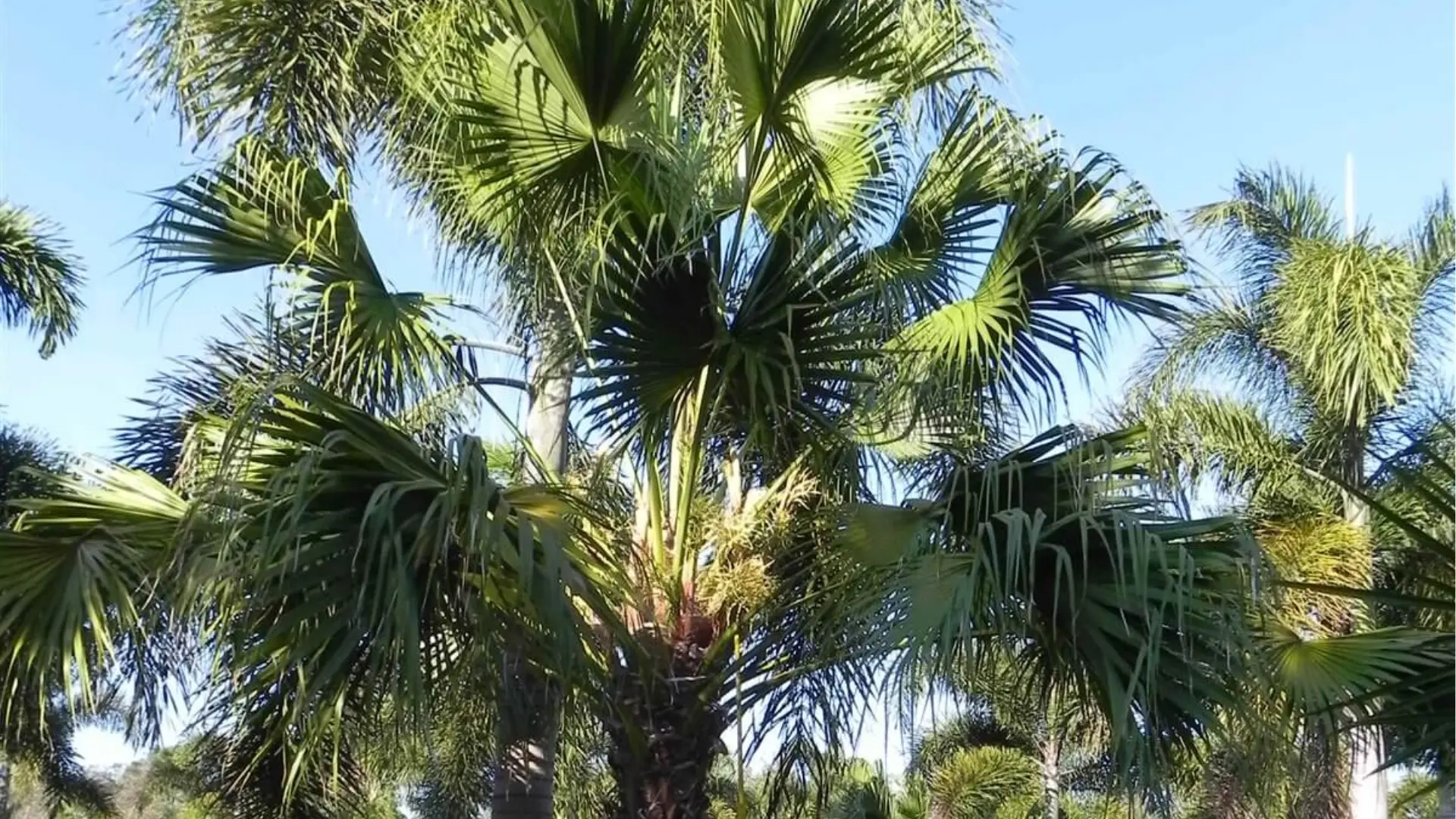
A softer, slower-growing plant, it’s loved for its droopy leaf tips and easy care.
- Botanical Name: Livistona chinensis
- Identification: Round leaves with thin tips that droop like fountains.
- Mature Height: 9 to 12 meters (30 to 40 feet).
- Best Climate: Warm, humid regions. Takes light frost.
3. European Fan Palm
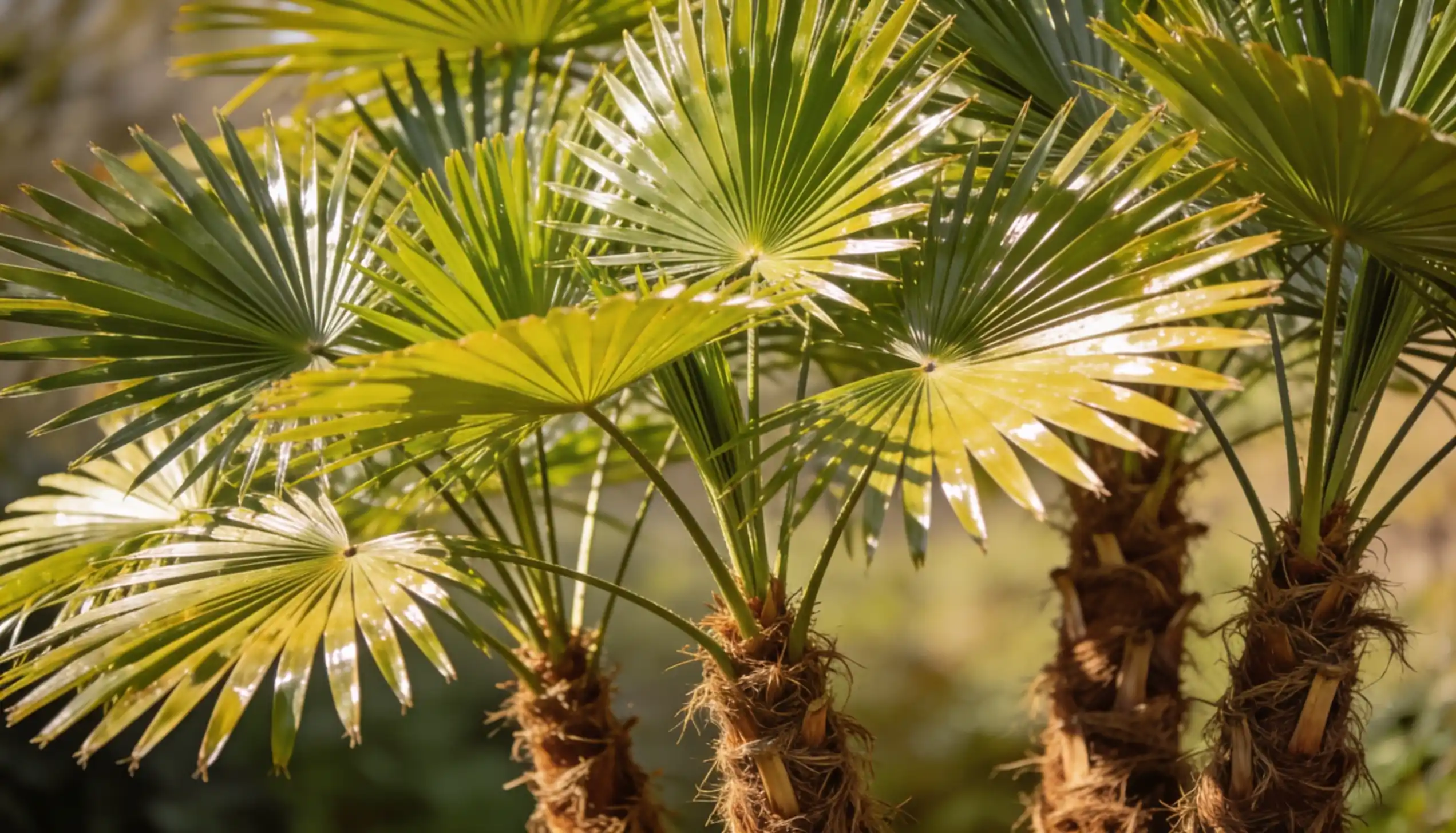
Small, tough, and bushy plant that often grows many trunks instead of one.
- Botanical Name: Chamaerops humilis
- Identification: Clumping trunks, stiff silver-green fan leaves.
- Mature Height: 2 to 5 meters (6 to 15 feet).
- Best Climate: Cooler zones. One of the most cold-hardy palms.
4. Bismarck Palm
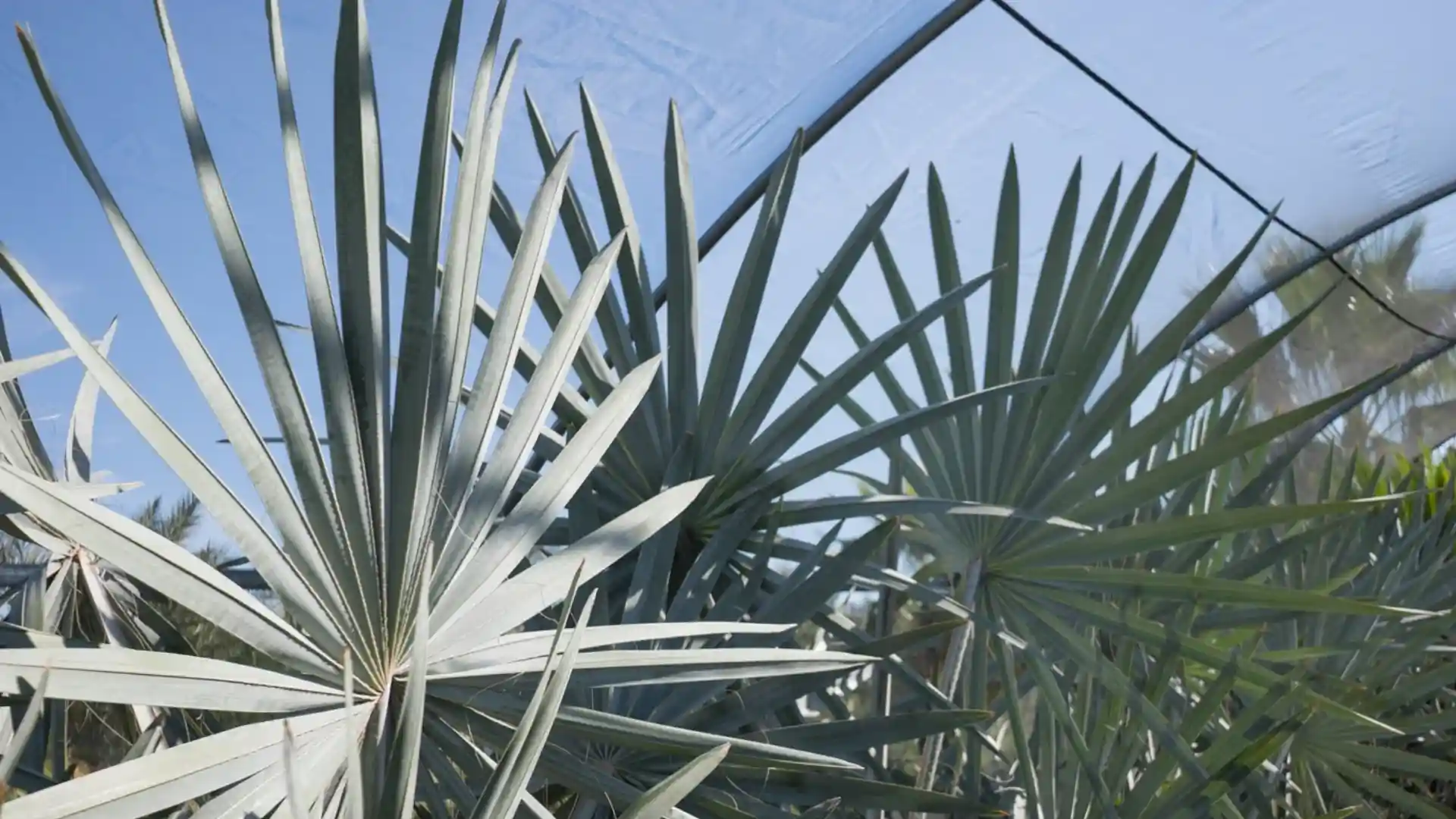
A bold, silvery giant tree, its huge blue-grey leaves turn every head.
- Botanical Name: Bismarckia nobilis
- Identification: Massive fan leaves with a striking silver-blue color.
- Mature Height: 12 to 18 meters (40 to 60 feet).
- Best Climate: Warm, frost-free regions.
5. Queen Palm
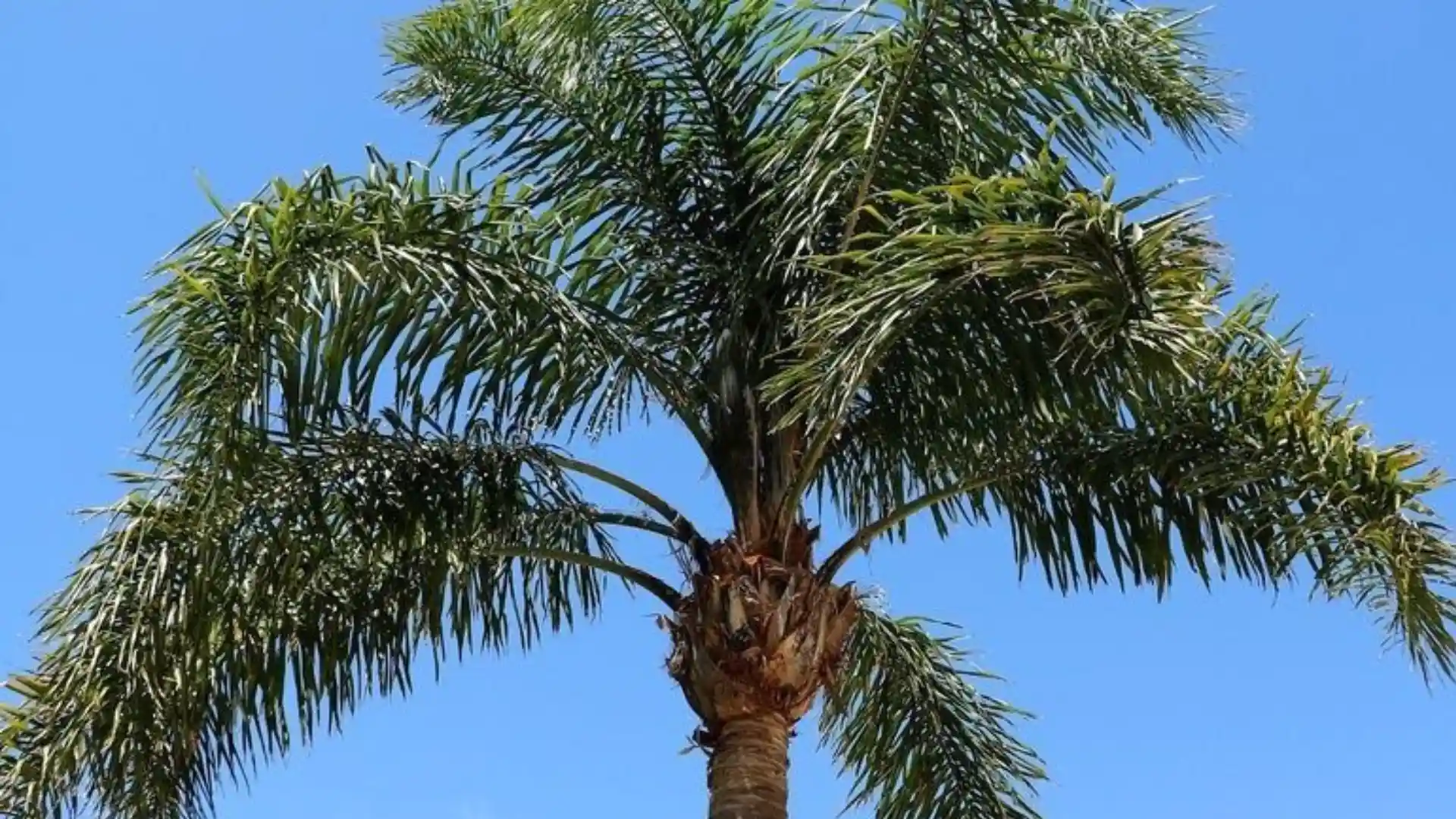
A graceful classic, tall, leafy palm tree which is common along sunny streets.
- Botanical Name: Syagrus romanzoffiana
- Identification: Glossy feather-like fronds and a smooth grey trunk.
- Mature Height: 12 to 15 meters (40 to 50 feet).
- Best Climate: Warm zones with mild winters.
6. Canary Island Date Palm
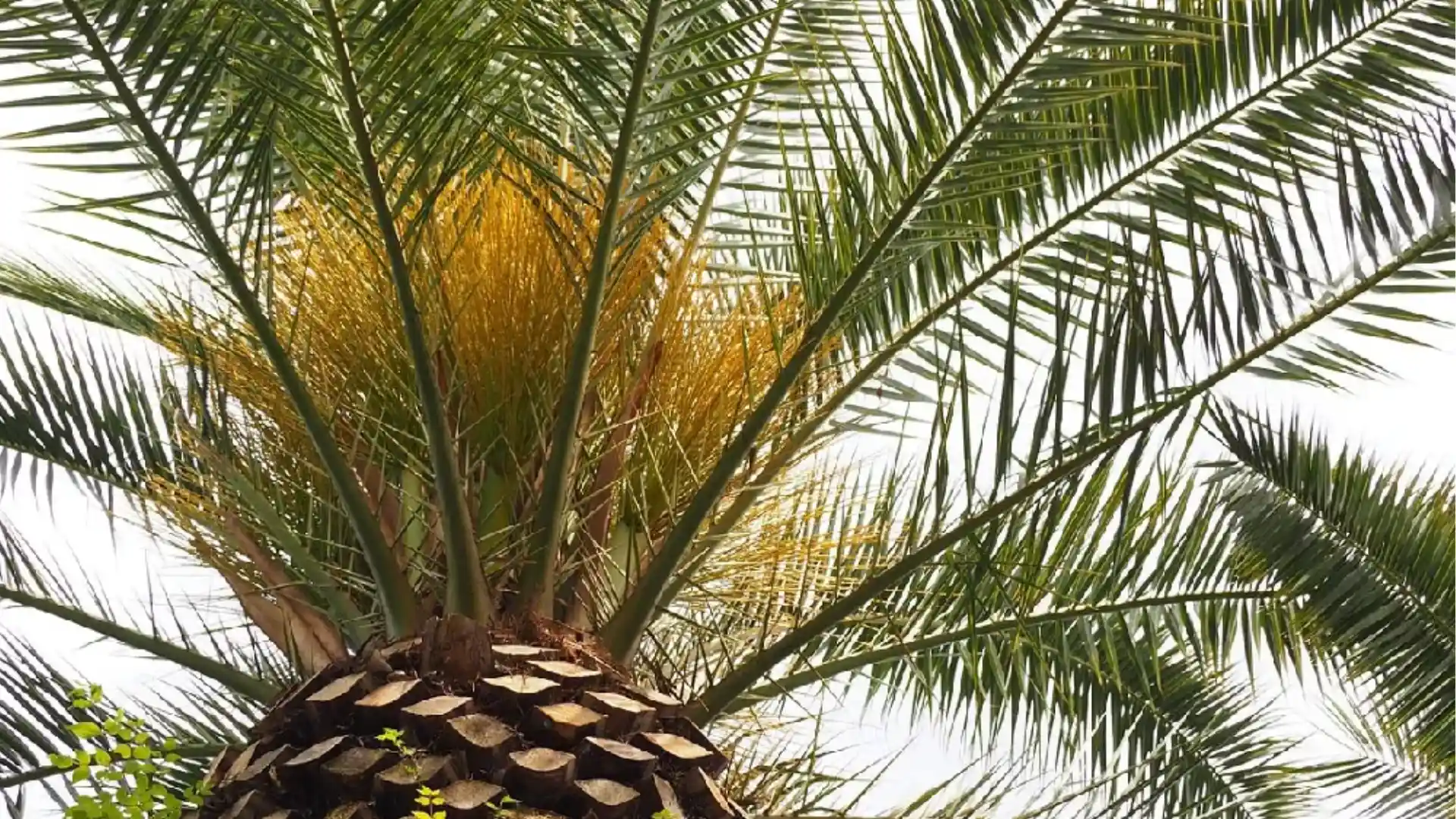
A thick, stately palm with a pineapple-shaped base, it is often called the pineapple palm.
- Botanical Name: Phoenix canariensis
- Identification: Stout trunk with a crown of long, arching feather fronds.
- Mature Height: 12 to 18 meters (40 to 60 feet).
- Best Climate: Warm zones. Takes brief cold spells.
7. Foxtail Palm
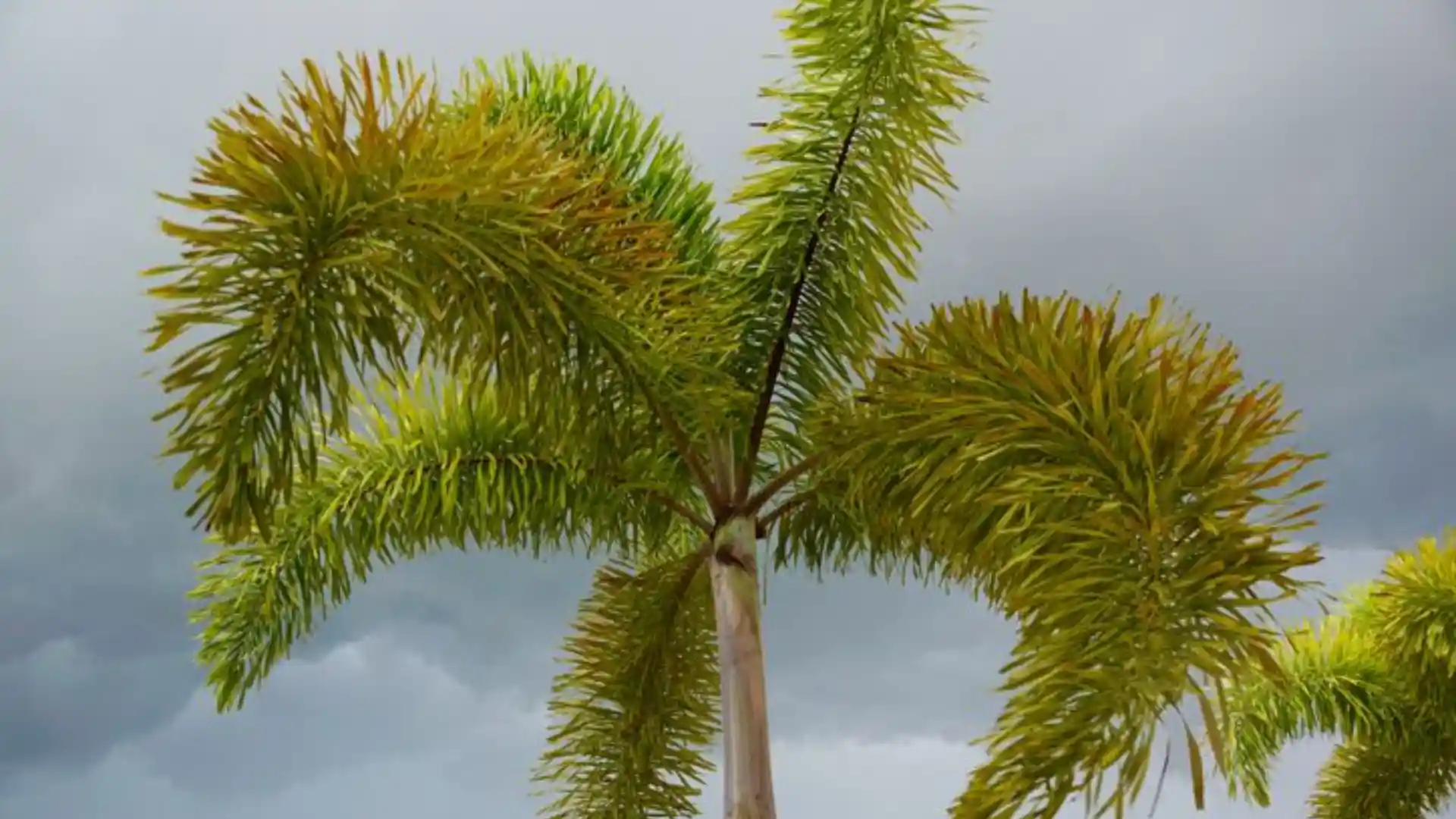
A neat, fluffy palm, its bushy fronds look just like a fox’s tail.
- Botanical Name: Wodyetia bifurcata
- Identification: Full, plumed fronds and a smooth, swollen grey trunk.
- Mature Height: 9 to 10 meters (30 feet).
- Best Climate: Warm, tropical, and subtropical regions.
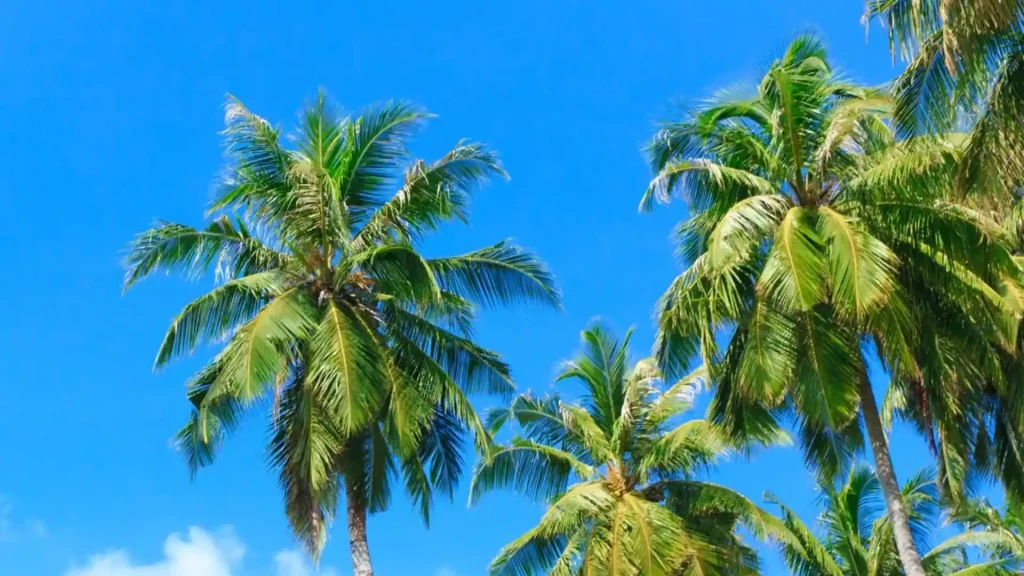
8. Coconut Palm
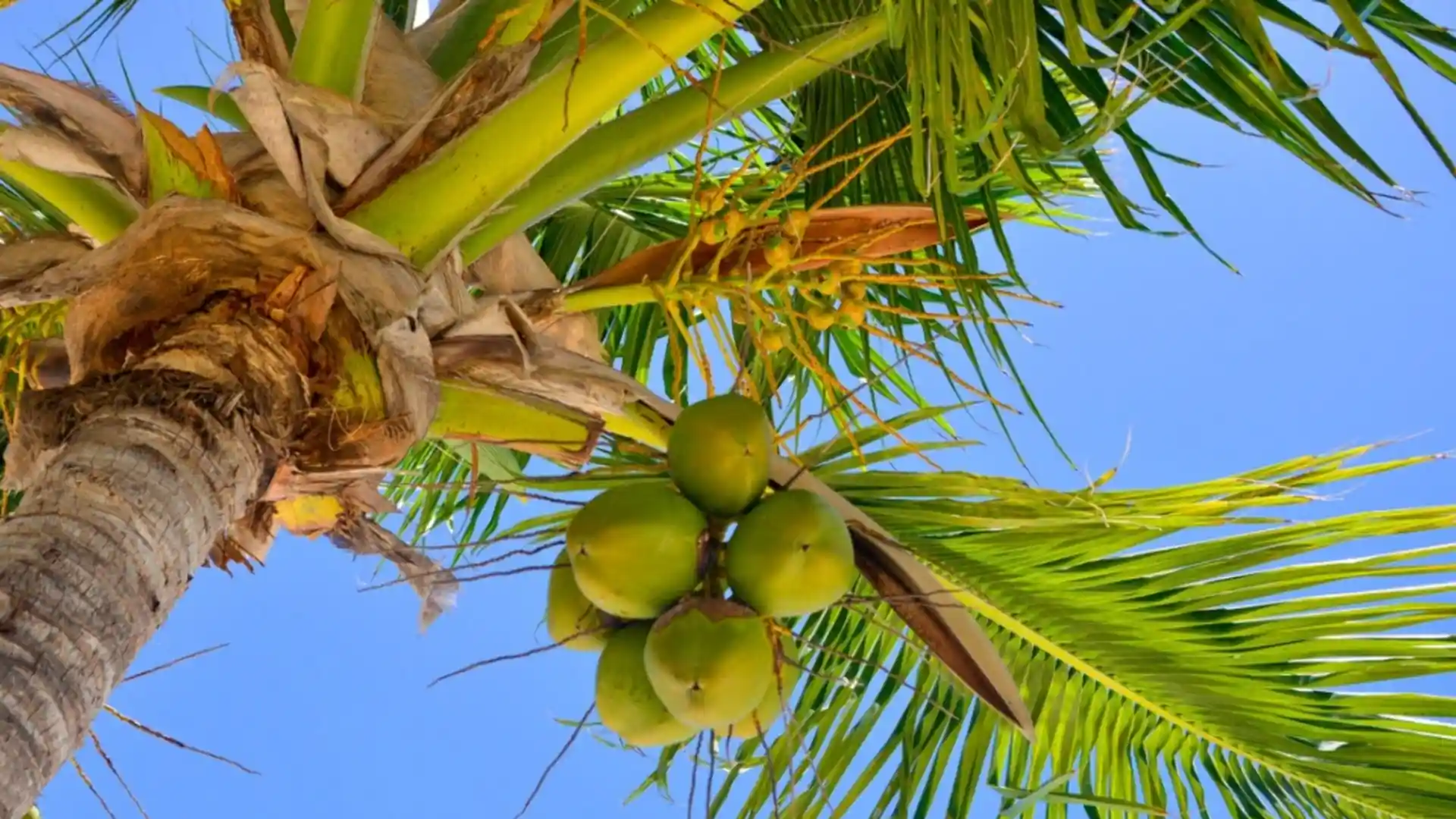
The face of every tropical beach, it is tall, leaning, and loaded with coconuts.
- Botanical Name: Cocos nucifera
- Identification: Curved trunk, long feather fronds, and clusters of coconuts.
- Mature Height: Up to 30 meters (100 feet).
- Best Climate: Hot, humid, coastal tropics.
9. Royal Palm
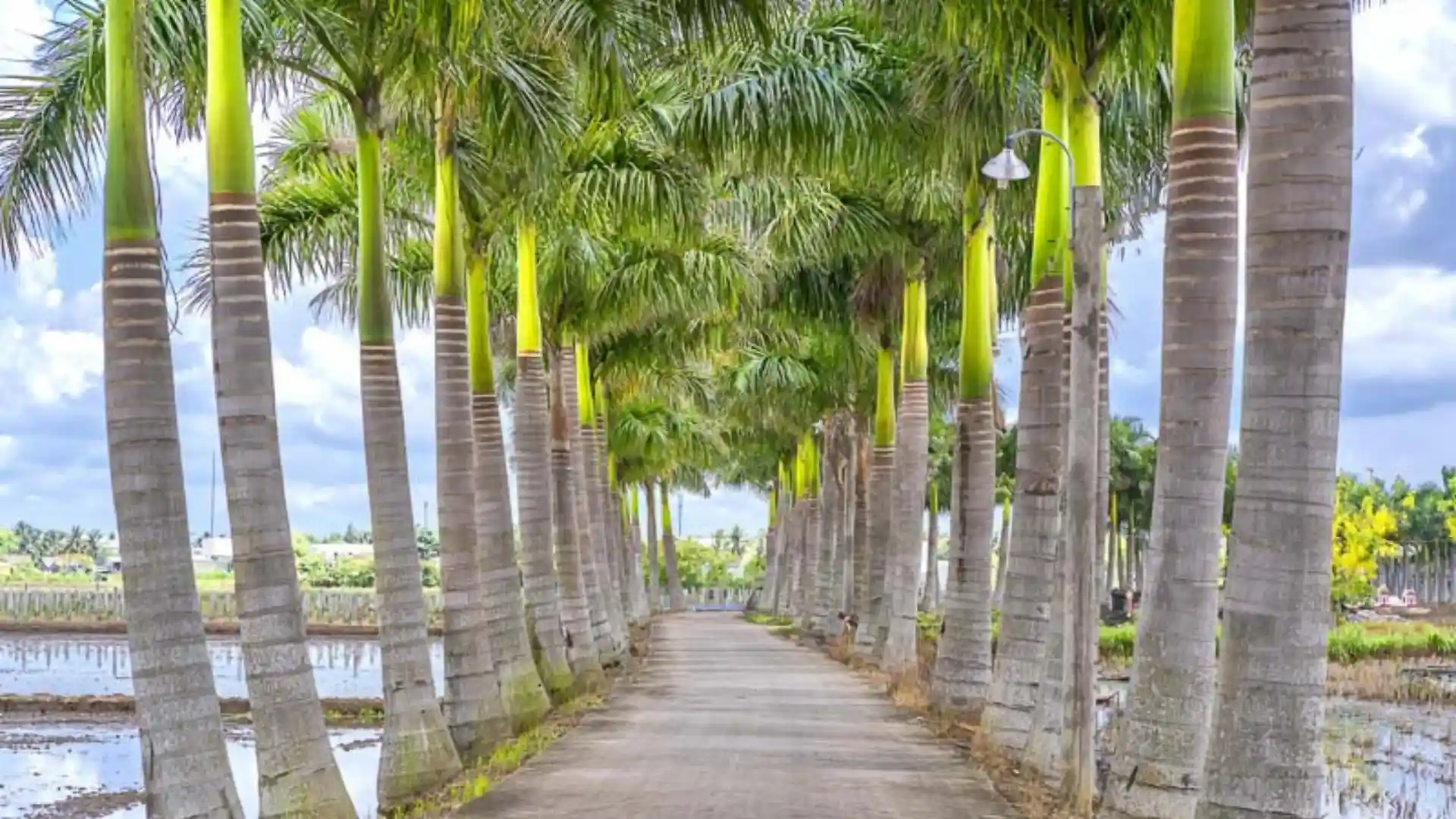
A tall, elegant showpiece, you see it lining grand avenues and estates.
- Botanical Name: Roystonea regia
- Identification: Smooth grey trunk, swollen green crownshaft, and big arching fronds.
- Mature Height: 15 to 21 meters (50 to 70 feet).
- Best Climate: Warm, tropical, frost-free regions.
10. Windmill Palm
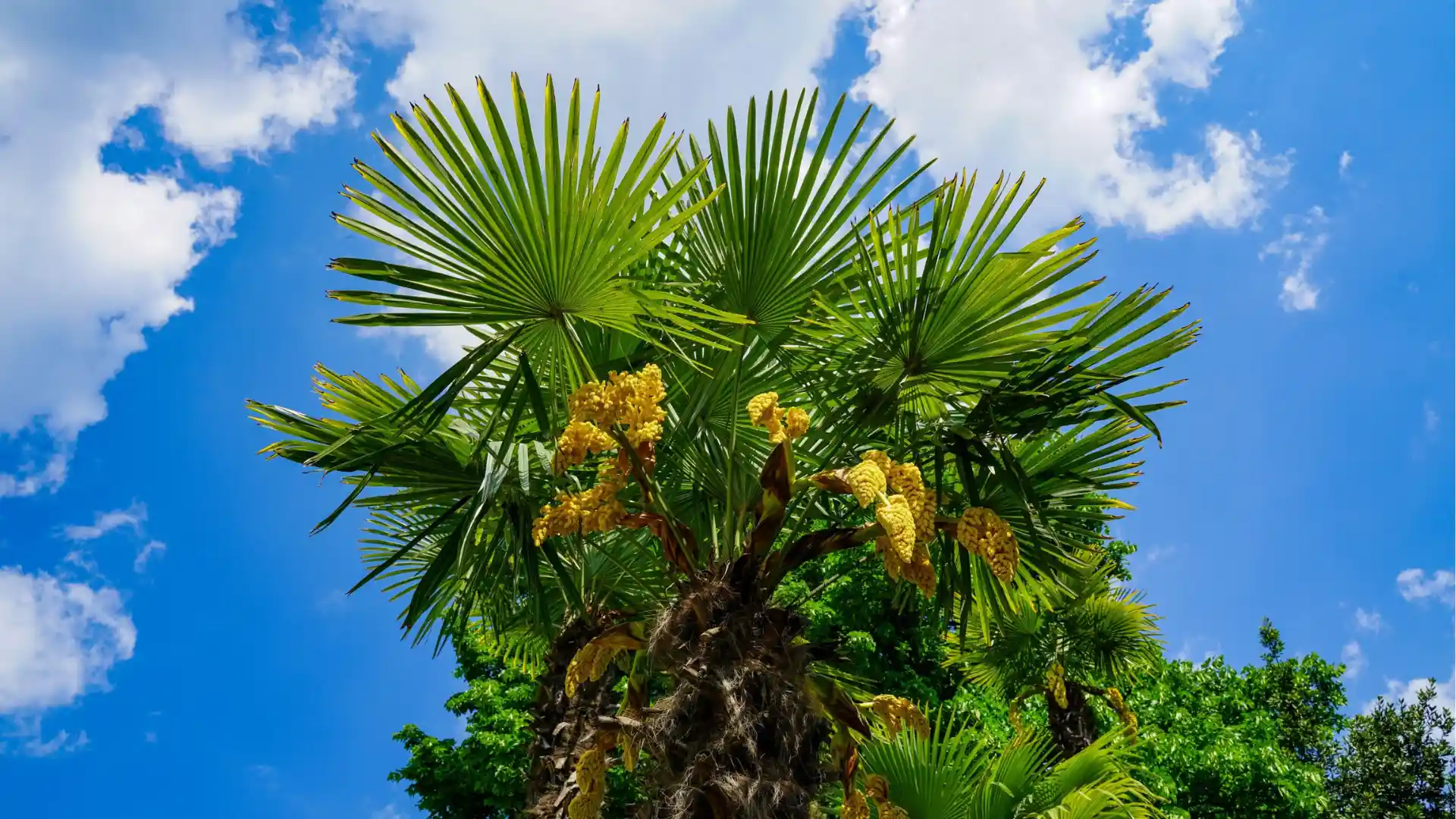
A hardy, hairy-trunked palm which shrugs off cold that kills most other palm trees.
- Botanical Name: Trachycarpus fortunei
- Identification: Fan leaves and a trunk wrapped in brown fiber.
- Mature Height: 6 to 12 meters (20 to 40 feet).
- Best Climate: Cool and temperate zones. Very cold-hardy.
11. Needle Palm
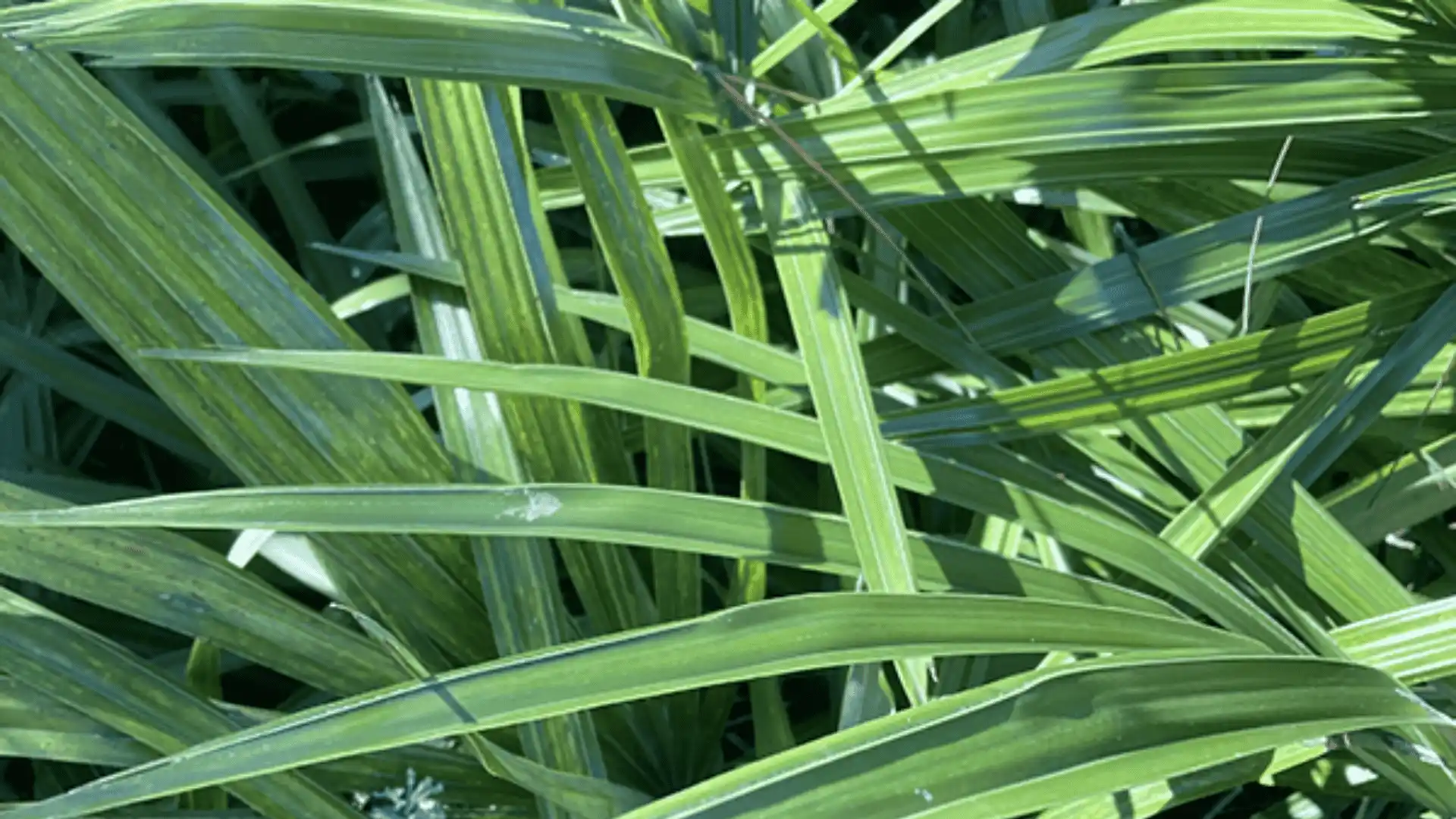
A small, shrubby palm, it is one of the toughest cold-hardy types around.
- Botanical Name: Rhapidophyllum hystrix
- Identification: Bushy fan leaves and sharp black needles at the base.
- Mature Height: 1 to 2 meters (3 to 6 feet).
- Best Climate: Cool zones. Handles hard frost.
12. Saw Palmetto
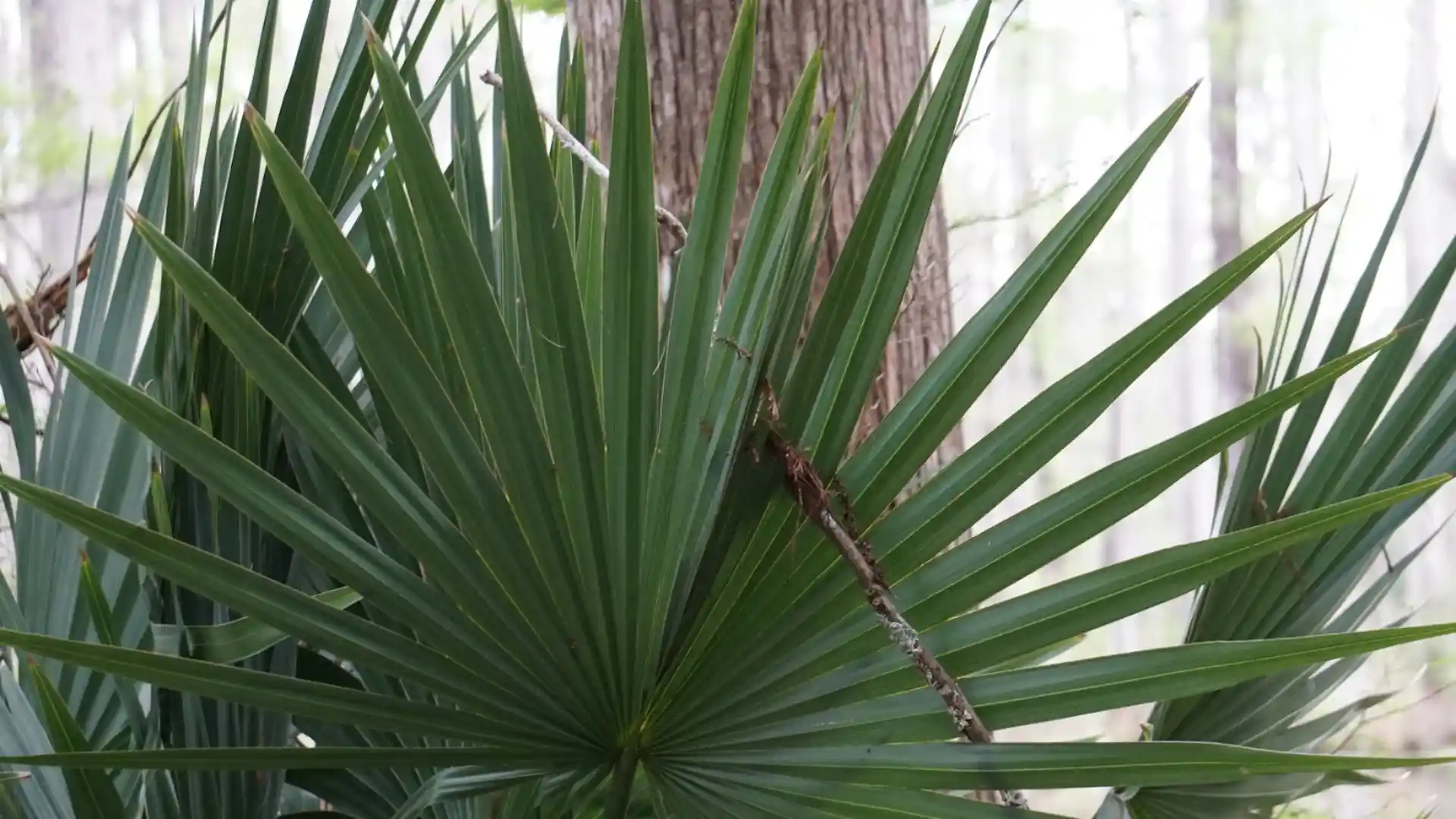
A low, spreading palm that is common in sandy woods across the southern states.
- Botanical Name: Serenoa repens
- Identification: Fan leaves and saw-toothed edges along the leaf stalks.
- Mature Height: 1 to 3 meters (3 to 10 feet).
- Best Climate: Warm zones. Takes some cold.
13. Jelly Palm
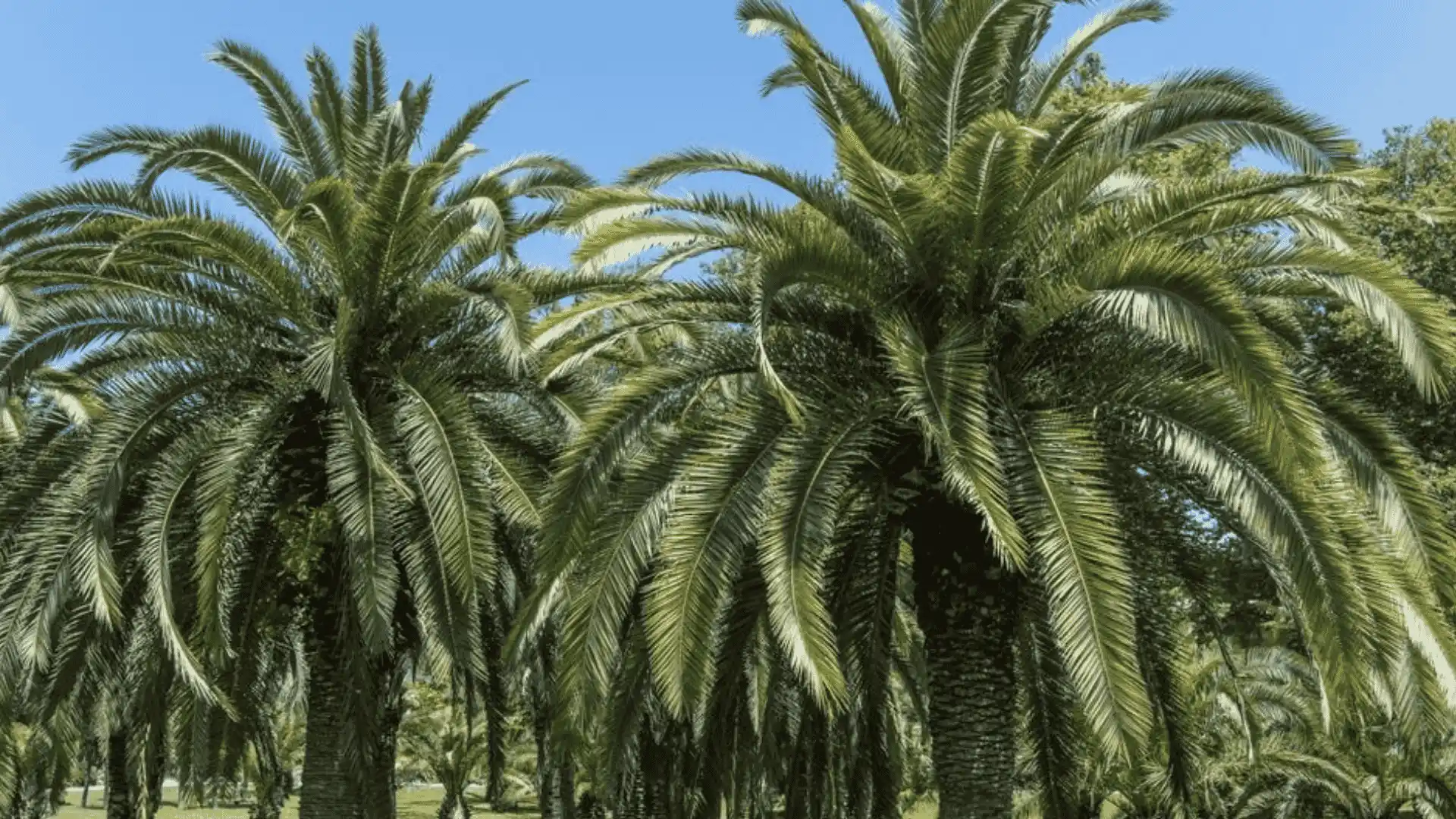
A cold-hardy feather palm, its sweet fruit makes tasty jelly.
- Botanical Name: Butia capitata
- Identification: Blue-grey arching fronds that curve back toward the trunk.
- Mature Height: 3 to 6 meters (10 to 20 feet).
- Best Climate: Warm and temperate zones. Frost-hardy.
14. Areca Palm
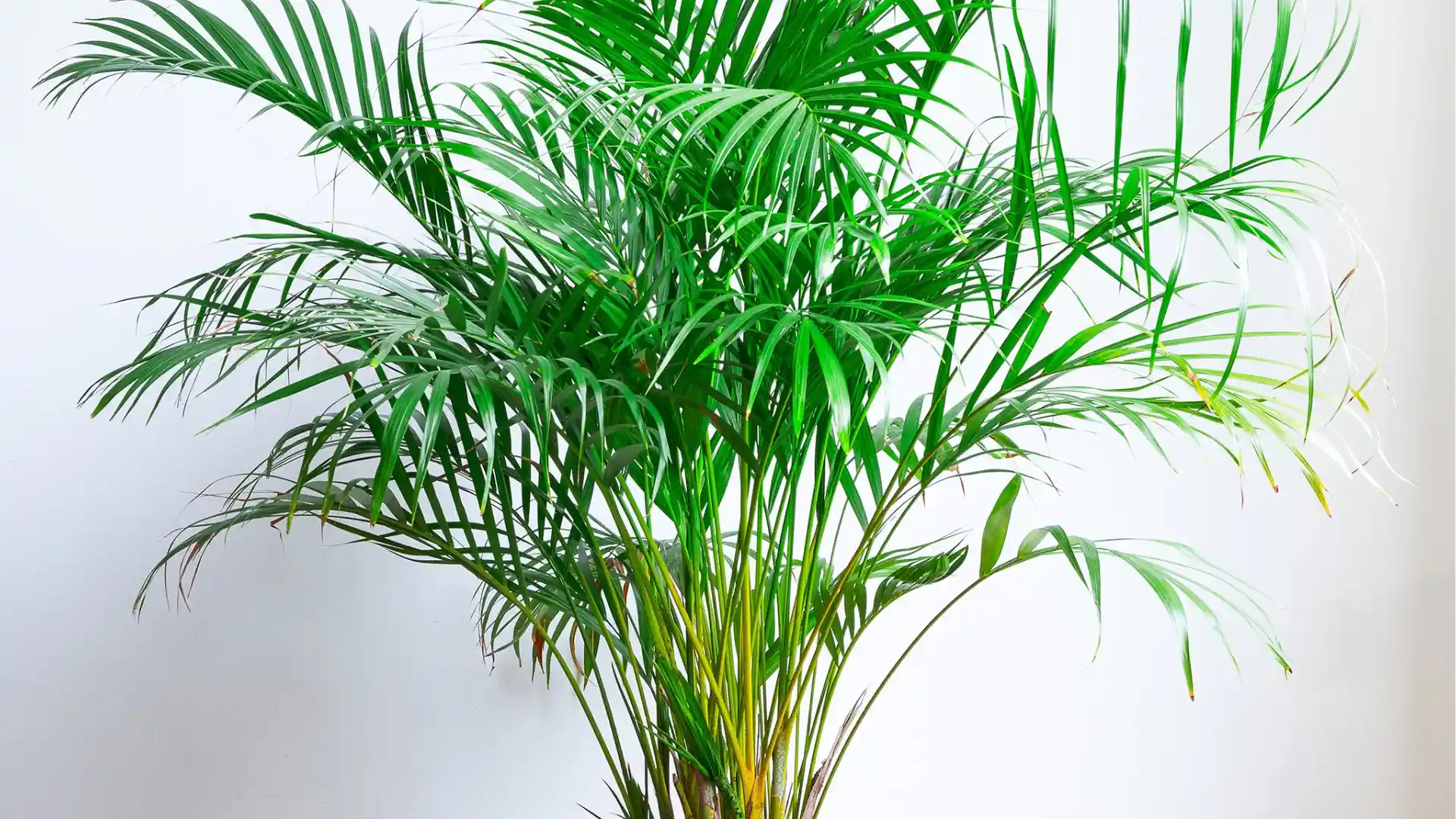
A favorite house palm because its clumping golden stems brighten any room.
- Botanical Name: Dypsis lutescens
- Identification: Many slim yellow-green stems with soft, arching fronds.
- Mature Height: 6 to 9 meters (20 to 30 feet) outdoors.
- Best Climate: Warm, humid, tropical regions.
15. Kentia Palm
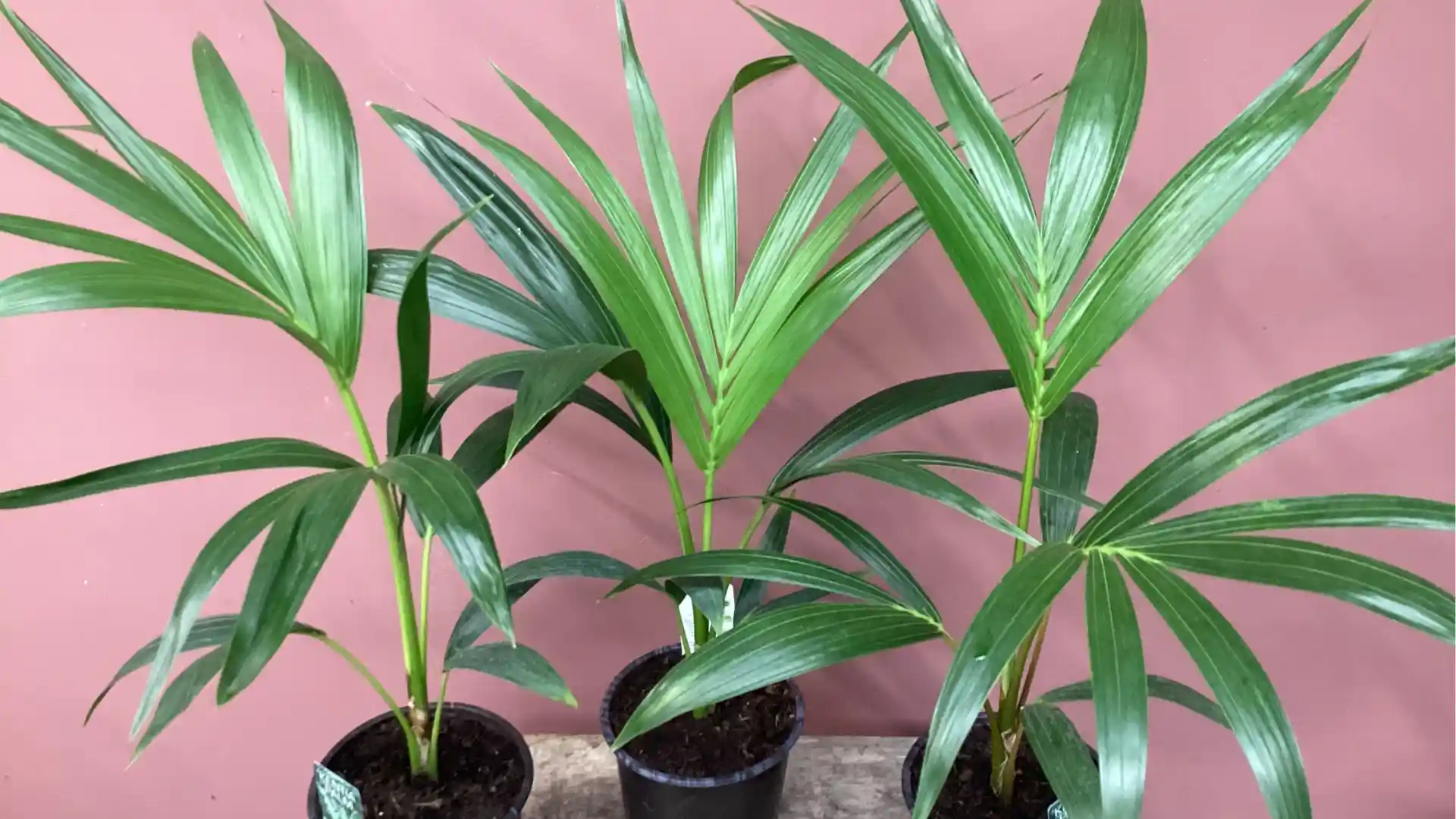
An elegant, slow-growing plant that tolerates low light and doesn’t need care.
- Botanical Name: Howea forsteriana
- Identification: Dark green feather fronds on slender, arching stems.
- Mature Height: Up to 12 meters (40 feet) outdoors.
- Best Climate: Mild, frost-free regions.
16. Parlor Palm
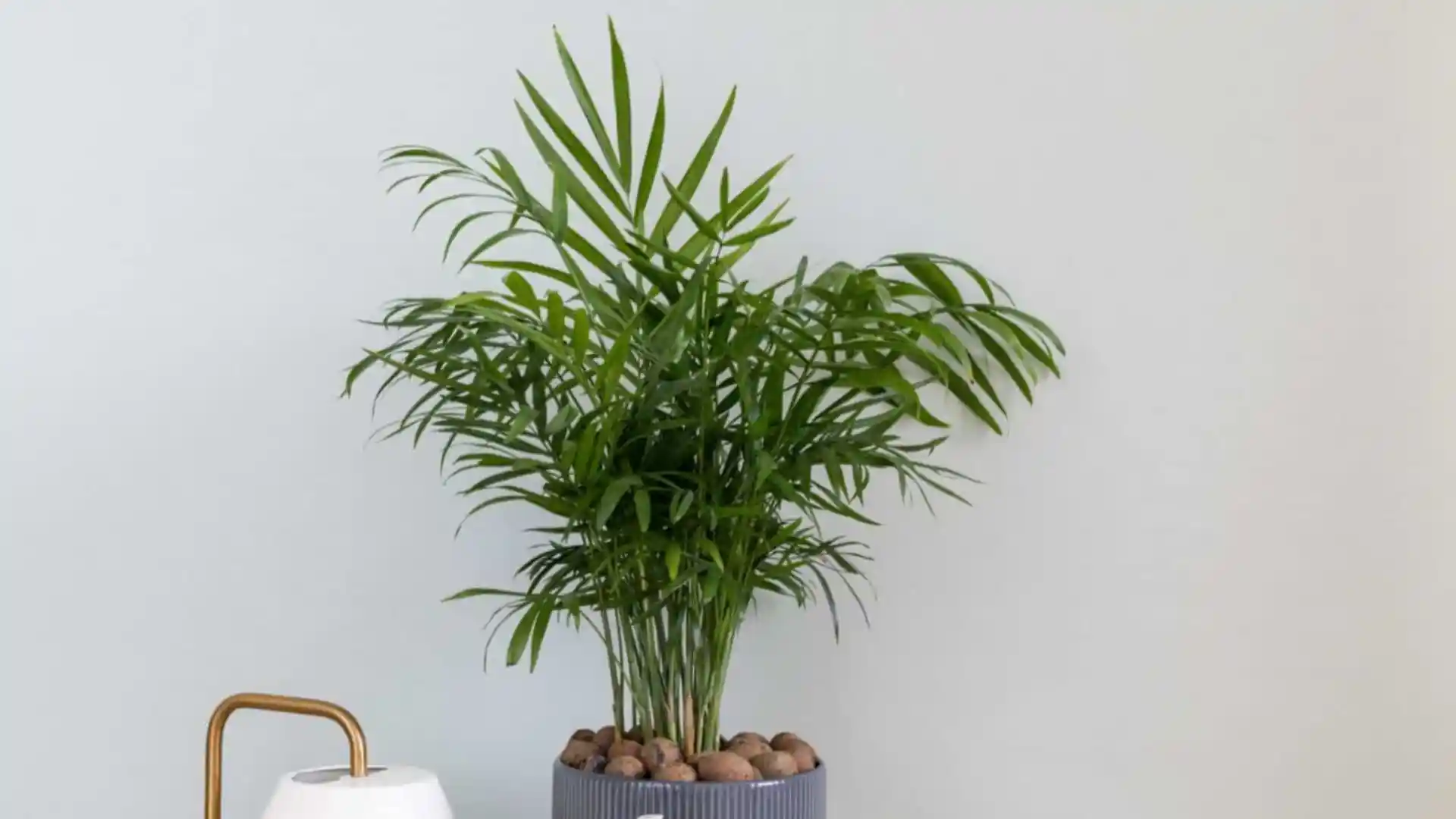
A small, easy indoor palm which has charmed homes for over a century.
- Botanical Name: Chamaedorea elegans
- Identification: Compact, bushy green fronds on thin stems.
- Mature Height: 1 to 2 meters (3 to 6 feet).
- Best Climate: Warm, shaded, tropical regions.
17. Lady Palm
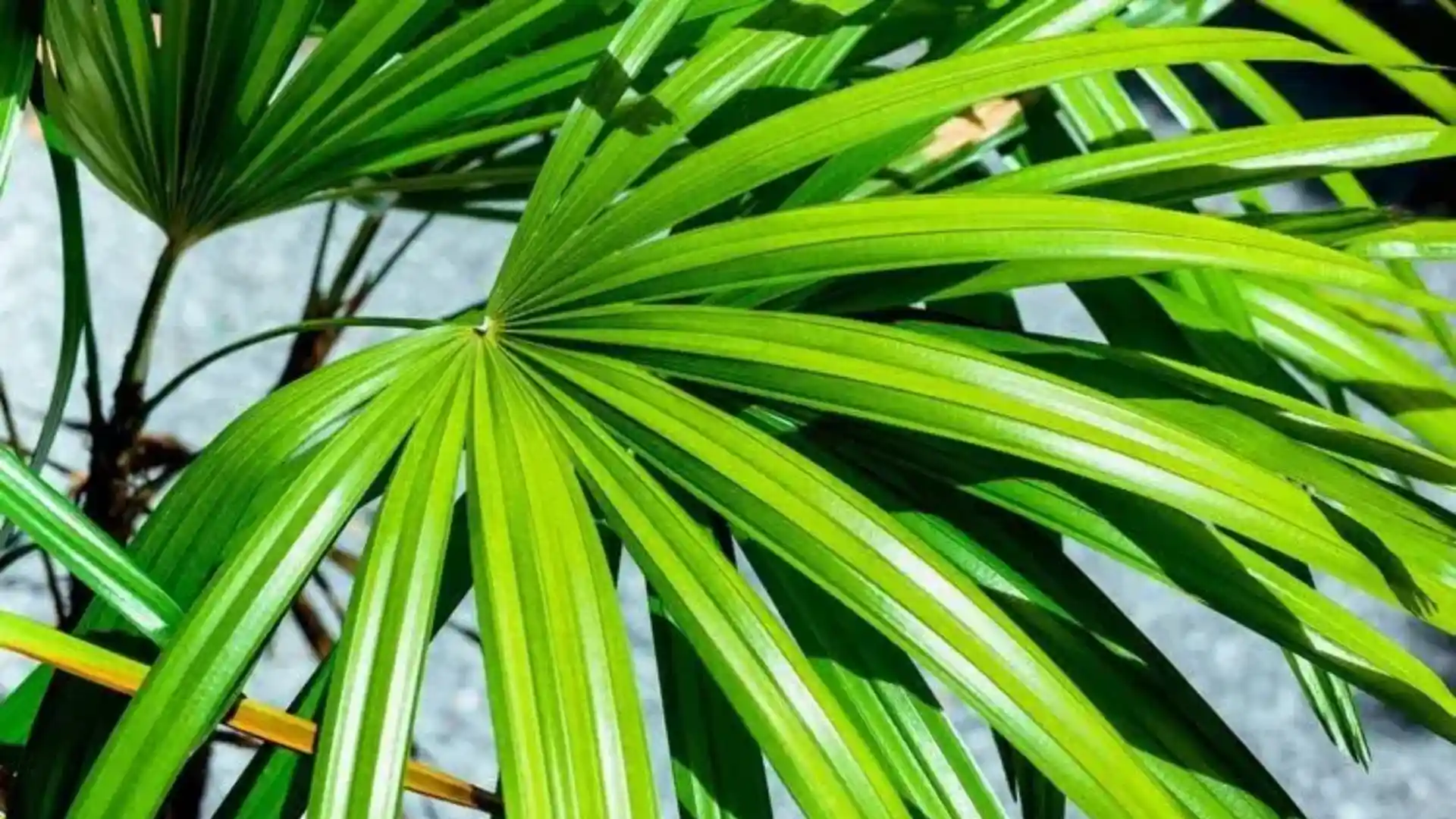
A graceful clumping palm. Its fan leaves give a clean, tidy look.
- Botanical Name: Rhapis excelsa
- Identification: Slim bamboo-like stems and split, finger-like fan leaves.
- Mature Height: 2 to 4 meters (6 to 13 feet).
- Best Climate: Warm and mild zones. Takes light cold.
To Wrap Up
Next time you walk past a palm tree, you can play a little game: check the leaves first and then look at the trunk.
You no longer have to squint and guess; you can point at a palm and name it like an old friend.
Maybe you want one for your own yard now. Pick a space and weather that suit you, and you will set it up to thrive.
Got a favorite from the list? Drop it in the comments below!
Frequently Asked Questions (FAQs)
1. What City is Known as The City of Palms?
Fort Myers, Florida, is widely known as the City of Palms, thanks to the rows of royal palms lining its streets and riverfront.
2. How Long Do Palm Trees Live?
It depends on the type. Many palms live 50 to 100 years. Some, like the coconut palm, can reach 80 years or more.
3. Can I Grow a Palm Tree from Seed?
Yes, but it takes patience. Palm seeds can take weeks or months to sprout, and the young plant grows slowly for years.